A Thursday Treat

Happy Thursday! So, I have fallen behind a bit in my Tolkien reading, and with Thanksgiving right around the corner, I’m going to take this week and next week off of the Blind Read blog. I can’t leave well enough alone however, so I’m going to give you all a little treat this week with a sneak preview of my New Novel “The Monster in the Woods.” It’s a fantasy/heist story with a mystery at it’s core, that follows a group of teens trying to figure out if the Monster threatening the town they live in is real or not. Told in a revolving POV, it’s a death defying adventure in the classic vein of The Goonies. Hope you enjoy and let me know what you think!
Chapter 1
Lishtest
There was a soft click and suddenly haunting beautiful music echoed across the camp, lending a surreal tint to the night. Fog had rolled through, which led to a particularly claustrophobic aura over the two guards. Jack sat cross legged with his back to the town wall, facing the fire and beyond into the woods. Taun sat to Jack’s left but parallel to the wall still facing the fire. Lishtest sat opposite Taun, studying the fog, polishing her pauldrons. Lish was their Captain and always believed in a clean, well oiled uniform. Tidiness meant order and order meant discipline, and Discipline meant she could keep people alive.
“Turn that thing off, man,” Taun complained. “It’s creepy enough out here without you giving it a soundtrack.”
“Come on! My son gave this to me,” Jack whined. “Behbet said my youngest walked into a store and listened to it for a minute. She said his eyes got this glazed over look to them, and then she said he turned to her and looked her in the eye and with a super serious expression said to her, ‘Dad should have this.’ It just hit me when she told me that. He’s my son, you know? But when she told me that, it was like, he thinks of me like I think of him. And I’m out here and he’s in there. I want to hear it to remind me of him, but I want him to know I have it, because it was so important to him. Even though it’s creepy as hell.”
“Damn man, I didn’t know,” Taun said. Lish looked up at Taun and she was surprised to see that he actually looked like he could be experiencing some kind of emotion.
“Naw, I gotta stop it,” Taun said and swiped the box from him. Lish smiled. Now he was acting like the Taun she expected.
It was their Tenth day and Eleventh night out beyond the walls of the town. They got very little sleep out here, despite the fact that the Ferrians probably would not be attacking any time soon. Their army was too green, too weak to take on Teriistown. It’s walls were too high and reinforced, their army was too powerful. They raised warriors afterall, drafted as children and taught to be soldiers all their lives. No matter how angry the Ferrians were at Duke Siiran for the new policy he had instilled on them she didn’t think they would come and revolt.
It was getting monotonous. Everyday, she would send out some mix of the three of them out to range and survey the forest, while the third stayed back at camp for hours on end with nothing to do but collect firewood and boil rations. They had just begun their fourth rotation, and discipline in camp was already deteriorating to the point where Taun felt he could take Jack’s music box, no matter how annoying the thing was. She was going to have to put her foot down.
“Give me the box,” Lish said, almost under her breath.
“Awe, Cap, we were just messing around,” Taun began, but she wouldn’t let him finish.
“Captain,” she said it a bit too harshly and internally winced, but there was no going back now.
“Sorry. Captain,” Taun said and handed the music box to her. “Just having a bit of fun.”
Lish took the music box, nodded slightly to Taun and took it to her tent. She opened her chest and buried it underneath her clothes, before coming back out and sitting by the fire. Good. Taun took it seriously. He still had respect for the uniform. As a captain, out here, beyond the wall, there was nothing more important that your soldier’s respect.
“Wait sir, so I cant have it back?” Jack said. “I didn’t do anything wrong!”
Damn, Lish thought. She leaned forward and looked directly into Jack’s eyes. The fire reflected in his eyes the anger back at her.
“Lieutenant. There are three of us out here. Are we friendly, yes. Is there a chain of command, yes. You both need to know that if one of you gets in trouble, you both get in trouble. Has it been that long since Basic Training?”
“My son gave me that music box.”
“And you can have it back in the morning,” Lish said, then leaned back on the stump.
“I’m not a child, and that box is important to me.”
“You are not a child, lieutenant. But Ferrians aren’t all that we are out here to watch out for, and there’s no reason to call more attention to ourselves than is particularly necessary. Playing it during the day when we can see into the woods is one thing, but playing it at dusk, while we have a fire to make the darkness darker, and there is a fog giving more cover, you’re really going to play music to mask the sound of something approaching?”
“Something approaching. Ferrian’s aren’t all? You really believe there’s some kind of monster in these woods?”
“I mean, did you see the Carpenter? Dude was shredded. I’m not even sure if they know if it’s really the Carpenter, he’s so messed up.” Taun responded.
Lish gave Taun a look. “No, I do not believe there is a monster in these woods, lieutenant. I do think there are some large animals, and maybe one that has grown a little too big and someone thought it was a monster. It doesn’t change the fact that something can still sneak up on us in this kind of environment, natural or not, if we’re making a whole bunch of noise. This conversation is not helping. Do I make myself clear?”
Before Jack could respond, Taun interrupted. “Did you hear that?”
“Oh shove it Taun,” Jack said.
“I’m being serious! That way,” Taun pointed off slightly north-east.
“Grab your weapons,” Lish said as she stood and glared out into the fog filled woods. She was looking for movement, but the firelight danced through the fog and her mind made her see figures dancing in the darkness.
She noted the action on Jack and Taun’s rifles and knew they were following her lead. Nothing like a threat to snap someone to attention. She worked with them enough to know that Taun was flanking out to the right, and Jack was moving the other direction. Lish would take the middle as the ranking officer.
She began to move toward the forest slowly. Her rifle held up, she strafed the forest edge. She took a moment to steady her breathing and felt adrenaline give her senses a lift. The forest was dark and thick with brambles, but came into focus as she moved away from the fire. She saw it. It was big, bigger than a bear. It’s hide was glinting from the fire which meant it had some kind of Chitin or armor, but she wasn’t sure if it had thick long hair, or tentacles. It’s eyes glowed green as it locked with hers.
She took another steadying breath while she raised her hand and pointed at it. “There,” She said in an octave lower than her normal voice.
The thing seemed to snuffle in anger, like her dog did as a kid if it didn’t get what it wanted. It seemed to blink in and out of existence for a moment. She couldn’t be certain how it moved, but all the sudden it was five foot to the left of where it was. Everything in her wanted to pull the trigger, but she didn’t know anything about it and she needed Taun and Jack to give her the signal that they were in place before she acted.
It blinked again and it was closer. It’s eyes never left hers, but there was something in them, something unnatural. Just two glowing orbs, no iris, no cornea. It really was a monster.
“Hup,” Jack called out. He was in place.
She rested her finger on the trigger and gently began to squeeze.
It looked at her again and somehow those orbs conveyed curiosity.
“Hup,” Taun called out.
Her finger squeezed and a moment later she heard the discharge of both their rifles.
The creature blinked again, and it was on Taun. He screamed. It was a sound Lish never thought a human could create. She slid another bullet into the chamber and slid the bolt handle shut in one fluid motion and fired again. Taun was using his rifle as a baton swinging it against the thing, as he tried to maneuver away, but it stayed on him.
She fired again and again and she heard the report of Jack firing as well, but the thing didn’t seem to even feel it. She couldn’t see it attacking Taun either, but his skin kept rending in places, spilling bright red against the foggy gray night.
Taun continued to battle and dance away from the creature, but she could see his movements were slowing.
“Jack, Fire!” She ordered. She grabbed a log she could swing and stuck it in the camp fire. The log took forever to light and Jack appeared next to her continually firing and reloading his rifle. Taun screamed one more gargling scream and then abruptly stopped.
Once the log was lit, she ran at the creature and it blinked again. It was suddenly right in front of her and that Green Orb was the size of her head. She shoved the log into the eye, fire first. The creature squealed and a moment later she felt herself flying through the air back towards the campfire.
She heard Jack’s battle cry, but it turned to a drowning gargle before she blacked out.
Magic Does Exist

It’s easy to write the phrase “with everything going on in the world.” There is, and will always be, a never-ending stream of horrible things happening, so perspective is more critical now than ever.
We live in a digital age, where news and op-eds are at our fingertips 24/7, and things like social media have fostered an interesting change to our psyche. We have created perspective silos, where we only see what we want to see, creating division between one another. Then we have politicians who are only out for themselves who are stoking this division.
These kinds of rifts have and will always be around, but one thing we have forgotten as a society, as humans, and as creative beings is that there is still magic in the world; and magic is what will save us from ourselves.

I was driving with my wife this past weekend on the central coast of California celebrating our tenth anniversary, and off the coast, oil rigs were sitting out in the ocean. I had no idea they were there (or that there was a drilling operation so close to our coast), so naturally, being a fantasist, I immediately thought they were some ship. My mind turned to Pirates out in the ocean, sailing the wide blue expanse in search of meaning and freedom and booty.
Of course, I didn’t verbalize this and asked what they were because I couldn’t get the visual out of my head (Though my wife is awesome and knew exactly what I was thinking and why I asked). When she told me what they were, I nodded, and we moved on, but there was magic in the world again for that brief moment. There was still the possibility of a real-life version of the Pirates of the Caribbean, where there were curses and magic and epic fights on the seven seas, where no one really dies, and you always find out that there is just one more item beyond reach that can give understanding and have the world make sense.
People, in this digital age, have forgotten that there is magic in the world. The drive to get clicks, and the pressure to be famous or influence and show how good your life is to strangers online has taken precedence over enjoying the little things.
Speaking of pirates, The Pirates of the Caribbean series was so popular (and Disney in general) because it introduced the world’s elements that were thought impossible.

On the one hand, you have the East India Company, which represents reality, corporations, and the everyday grind. Everything about that concept is about control and making the world smaller. About controlling the magic in the world for profit. The more we know about the world, the less magic there is, the less there is to wonder about, and we end up just accepting that the daily grind is all there is, and the company gets what it wants… good workers that realize there is nothing beyond their Friday paycheck.
Captain Jack introduces us to a character who knows there is magic left in the world. But not magic in the traditional sense. Not witches, wizards, and spells (though that can be a part of it), but wonder and imagination. We are asking people to grow up far too quickly, telling them that the harsh reality is all there is, and disparaging people who want to believe there is something more in the world. We tell people to “grow up,” stop being childish and take things more seriously.
But what does that do for you? If all you can do is internalize the cold, hard reality, it only leaves room for disdain, hatred, and sadness. Then disassociation is the only thing left, which isn’t a healthy alternative.
Fantasy isn’t necessarily escapism but a filter on the lens of the world. Fantasy allows you to experience the world in a way where magic still exists.
There is a reason that Disneyland is “the happiest place on earth,” and it’s because they focus on the individual details. They miss no brush stroke; every rock is overturned. There are hidden Mickeys throughout the park. Each land can let you immerse yourself in the wonder of that world. The details allow you to experience the magic that still exists in our world, so your mind can slip into that magic when you hear a song or see an article of clothing.
Magic and fantasy are not about escapism but realizing that the world isn’t myopic. Life isn’t dictated by corporations or political rhetoric. Life is created and run by magic, and things are still hidden. Look hard enough to find your hidden mickey in the sand, trees, or oceans. Be your own Imagineer and make your own mystery, create your own wonder. Discover your own treasure map that leads to some hidden fantasy, even if you can never find it.
Magic is still alive and well in the world, and we are here to experience it. Work will always be there; go and find your magic. Go and find your purpose.
Blind Read Through: J.R.R. Tolkien; The Book of Lost Tales, part 2, Túrin’s first tragedy
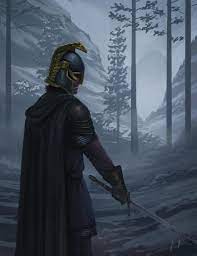
“To ease his sorrow and the rage of his heart, that remembered always how Úrin and his folk had gone down in battle against Melko, Túrin was for ever ranging with the mosst warlike of the folk of Tinwelint far abroad, and long ere he was grown to first manhood he slew and took hurts in frays with the Orcs that prowled unceasingly upon the confines of the realm and were a menace to the Elves (pg 74).”
Welcome back to another Blind Read! This week, we begin to learn a bit about Túrin and experience his first tragedy of character while trying to understand Tolkien’s purpose in the themes of this tale.
Tolkien spends much of his time in this early version of Turmabar, striving to show the differences between Men and Elves (the more Tolkien created, the less he described Elves as Gnomes. It seems like he started to think of Gnomes as anything fay-like, as the moniker became a catch-all). Men tended to be less unkempt, more creatures of passion, whereas Elves were much better groomed and stoic.
Through this time, Tolkien was still developing his story, language, world, and its peoples, and these lost tales were written as an exploratory first draft to get the world out of his head and onto paper, but, as evidenced by The Silmarillion, Tolkien was not happy with these early drafts. They lacked cohesion and a thematic goal.

An example of this is as follows: “Now Túrin lying continually in the woods and travailing in far and lonely places grew to be uncouth of raiment and wild of locks, and Orgol made jest of him whensoever the twain sat at the king’s board; but Túrin said never a word to his foolish jesting, and indeed at no time did he give much heed to words that were spoken to him, and the eyes beneath his shaggy brows oftentimes looked as to a great distance (pg75).”
Túrin is a Man (as in every other Blind Read; read this as Human whenever capitalized), and Men are described as much more feral creatures. This classification was the original intent of Men, specifically because of Tolkien’s experiences in The Great War, he distrusted human instinct and saw humans as impetuous and violent creatures. Violent and feral is a very apt description of how Túrin (and almost every other Human in this story thus far) is described. He is animalistic; he “seemed to see far things and to listen to sounds of the woodland that others heard not (pg 75).” “He was moody (pg 75).”
One function of this could be because the majority of Men in these early stories that came from Hithlum were captured by Melko and held as thralls and slaves for many years, and Túrin (in The Book of Lost Tales, not The Silmarillion) is no exception, but more realistically Tolkien initially created Men this way because they were not born of the gods the way the Eldar were. Their lives are short; thus, they are much more emotional and prone to reaction because they need to feel the depths of emotion and experience much quicker than their immortal brethren.
This version of Turambar is much less tragic and much more vicious. Orgof, the Eldar we saw above who was a playground bully of Túrin, takes the place of Saeros. In the later Silmarillion version, Saeros is still a bully, but when Túrin finds him in the wilds, he turns the tide and strips Saeros naked, intending to embarrass the bully. Saeros, terrified, tries to jump a Fjord and falls to his death. This accidental death is the first event that makes Túrin an outlaw, but in this version, nearly everyone in Doriath sympathizes with Túrin and tries to get him to come back, but his conscience is what pushes him further into exile.

This earlier version is entirely different:
“Then a fierce anger born of his sore heart, and these words concerning the lady Mavwin blazed suddenly in Túrin’s breast so that he seized a heavy drinking vessel of gold that lay by his right hand and, unmindful of his strength, he cast it with great force in Orgof’s teeth, saying: ‘Stop thy mouth therewith, fool, and prate no more.’ But Orgof’s face was broken and he fell back with great weight, striking his head upon the stone of the floor and dragging upon him the table and all it’s vessels, and he spake nor prated again, for he was dead (pg 75).”
Túrin’s actions were murder in this earlier version. It was an act of a feral and impetuous being, as we should expect from any Human in these early tales of Tolkien.
To take that a step further and show the difference between Elves and Men, Tinwelint and his court show incredible understanding. “Yet they did not seek his harm, although he knew it not, for Tinwelint despite his grief and the ill deed pardoned him, and the most of his folk were with him in that, for Túrin had long held his peace or returned courtesy to the folly of Orgof (pg 76).”
Meanwhile, Túrin runs away and joins a group of people in the woods described as “wild spirits (pg76).” Again, Túrin is a Human and feeds into his animalistic tendencies. His emotions are so high that he cannot understand that there could be clemency for him in Doriath because he does not hold any for himself. His emotions again overpower him, and he runs off to the only place where he feels at home, in the forest with ruffians.
This kind of childish behavior is endemic to Men in early Tolkien, and it isn’t until the later versions (I believe The Silmarillion is either the Third or Fourth draft) that they begin to get more depth and character. The whole point of these stories evolved from being a general history of our world to actual ages of time, and this time was the Age of the Eldar. Tolkien’s main goal, however, was leading his fairy tale, through Eriol and The Cottage of Lost Play, to the fourth Age. The Age of Men.
Join me next week as we introduce one of The Silmarillion’s best characters, Beleg, and discover Túrin’s second tragic act.
Somebody’s Watching Me

“And I don’t feel safe anymore,” Andy said. “And I have no privacy.”
“Dude, you gotta get over that shit!” Randy responded. “No one’s after you. You’re the most boring person in the damn world, man!”
“Seriously, dude, you gotta knock off the weed. That shit’s making you paranoid,” Chet added.
They sat around a roaring fire while they waited for the girls to freshen up in the cabin. Randy had already broken into the bottle of whipped cream Vodka and passed it to Chet.
“I’m not kidding, guys! I came home the other day with scratches on my front door. Like deep fucking grooves, man.” Andy shook his head. He didn’t tell his friends that the word “Queer” was carved into his front door. That wasn’t something you said to the captain of the wrestling team and the most popular kid in high school.
“Naw man, someone’s just playing a prank on you,” Randy said. “I mean, you hang with us. Who’s gunna fuck with you?”
“That’s what I’m talking about!” Chet laughed, smacking the bottle from his lips and slapping Randy’s palm.
“Are you boys done feeling each other up? It’s bad enough you roll around with each other while you wear tights,” it was Dolly Pemberton. She was the quintessential high school prom queen, with her perfect form and blonde hair.
She was flanked by Danielle Harris and Raquel Thorne, both probably more attractive than their more popular counterpart but less confident and thus beholden to their jerky friend who would be willing to throw either of them under the bus at the first possibility.
“Just get over here and take a swig,” Randy said, holding the bottle to Dolly. When she reached out for it, he held true to his name and pulled her to him, grabbed her ass, and gave her a horribly messy kiss, which she leaned into.
“Ugh, you guys,” Raquel sneered, pointing at Randy and Dolly. “are gross. Chet, babe, lets get outta here.”
“You ain’t gotta tell me twice,” Chet said, getting up and grabbing a six-pack. “You boys,” He said and winced at the sucking noises from Randy and Dolly. “Ok, you,” he turned and pointed at Andy, “have a good night and forget about that shit man. We’re out in the middle of nowhere. Ain’t no one coming out here. Let’s go baby.”
Chet and Raquel walked off arm in arm, leaving Danielle alone beside Andy.
“Hey Andy,” Danielle said, tucking her hair behind her right ear.
“Hey Danielle. Hey do you ever feel like someone is watching you?” Andy said.
“I wish,” She whispered to her intertwined hands in her lap.
“Say what?” Andy said, oblivious and confused.
“Nothing,” Danielle started, then looked him in the eyes. “You know what? Fuck it. I don’t feel that way and I want to. Let’s go.”
Danielle stood up and mocked throwing up at the sucking and smacking sounds of Randy and Dolly, and grabbed Andy’s hand.
“Oh, ok, where we going?” Andy asked.
“Well, they’re by the fire,” Danielle pointed at the two grossly inexperienced teens sucking faces near the fire. “and the other two went to the cabin, so there’s nowhere to go but the van.”
“You got it,” Andy said, too flabbergasted and embarrassed to deny her.
“Did you hear that?” Holly said, pulling away from Randy. It took an effort to separate, and she had to hit him a little to make him stop.
“Babe, you’re killing the mood,” Randy whined.
“I heard something. Like a growl. Besides, Tom Bunyan couldn’t bring down that wood,” Holly gestured to Randy’s crotch and pushed away from him.
“The growl was me,” Randy said and playfully snapped his teeth.
“No, you idiot, it came from the woods. Like, over there somewhere,” Dolly said, extricating herself from Randy’s claws.
“Fuck babe, come on, just give me at least a handy and we’ll go look together. Probably some rabbit or something,” Randy whined.
“I didn’t bring my tweezers, you dick,” Dolly said, squinting into the forest.
“At least I have one,” Randy retorted, then scrunched his face, realizing what he said.
“There’s something out there,” Dolly said. She took a few steps away from the fire. “Don’t you see that? It looks like a person wearing an apron.”
“Naw, babe, nothing th…” Randy was interrupted by another growl. This time, it was much louder and much closer.
“For sure there is something out there,” Dolly said, moving out into the woods.
“Babe, uh, don’t go out there,” Randy said. He put a hand over his erection like it needed protection more than he did.
“Hey! You in the apron! What are you doing out here?” Dolly said. Randy looked at what she was walking towards and saw it clear as day. It looked like someone wearing a stained apron standing about 200 yards away.
“Fuck, babe, get back here, you don’t know what the fuck they want,” Randy said.
“What the fuck do you want?” Dolly said, breaking into a run towards the apron.
“Babe, fucking stop!” Randy cried, standing next to the fire.
Dolly made her way out to the figure and stopped. Her laughter echoed in the forest. She turned back to Randy.
“It’s just an apron on a bush! It’s not a person!” Dolly said, then lifted her hand and pointed at Randy. “HOLY SHIT!”
“What?” Randy said, then heard a snap of a twig behind him. He turned in just enough time to see a horribly disfigured face moan and a machete swing down. He saw the treetops and the sky, then he saw the ground. It spun like that a few times until the oxygen ran out in his brain, and his eyes stopped working.
Dolly screamed louder than she ever had as the figure kicked Randy’s severed head into the fire and walked steadily towards her.
“What was that?” Raquel gasped, coming up for air from Chet’s mouth.
“Come on, babe, I didn’t hear anything,” Chet said, reaching around her back to unhook her bra. This was the fourth time he tried.
“No, seriously, Chet,” She slapped at his hands and sat up in bed. Moonlight streamed in through the warped glass of the cabin window and created strange shadows she hadn’t seen before.
“Babe, what the fuck? Just come back to bed, I got a hard-on, and it’s not going away on its own. Don’t tease me like that,” Chet whined, sitting on the bed.
“I think that was Dolly,” Raquel stood up, walked over to the window, and looked into the moonlit forest. “It’s so shadowy out there. I could have sworn she screamed.”
“Ugh! This ain’t cool, Raquel,” Chet stood up and took a few steps toward her but stopped beside the closet.
“I don’t care Chet. I have to go help my friend,” Raquel said and turned around. Chet was standing there with a surprised look on his face. His mouth was slightly ajar, and his eyes were unfocused, but he just stood there with his hands at his sides.
Shadows played across the room, and the closet door opened slightly more than it already had. But that’s strange, she thought. The closet door was closed just a minute ago.
Blood began to run out of the corner of Chet’s mouth as his eyes rolled back in his head.
“Chet?” Raquel took a step toward him.
His neck bulged strangely until something shiny poked its way through. Raquel couldn’t process what she saw until Chet fell forward, and a black-clad figure stood behind him, holding a large knife covered in dark blood.
Raquel screamed and fell to her knees. Pooled blood ran over her brown skin.
The hooded figure stepped forward, grabbed her hair, and pulled her neck back, exposing dark wine colored hickeys.
“You? Why?” Raquel cried.
The only response she got was a gravelly laugh before the knife tip entered her ear canal.
“Andy? Did you hear that?” Danielle turned in her seat to look out through the forest. They were sitting next to each other in the van’s back seat.
“Yeah, I did,” Andy said, looking scared and fiddling with his hands in his lap. “Danielle,” he began, “Do you ever feel like someone is watching you?”
“What? Hey Andy, I think we should probably go check on everyone else. That sounded like a scream.”
“Yeah, you’re right,” Andy said and sighed. “I just feel like there is someone always watching me. Like following me. I can’t even take a shower, because I feel like when I open my eyes someone will be standing there.”
“Andy, that sounds pretty fucking deep, but if Randy is raping someone out there…” Danielle began.
“He’s not, you don’t have to worry about that,” Andy said, putting his hand over hers as she tried to open the door to the van.
“What do you mean?” Danielle asked, looking back at Andy with concern in her eyes.
“I just don’t think Randy is in any kind of shape to rape anyone,” Andy said and sighed again.
“Andy…” Danielle began, putting her hand on his prying at his grip.
“People are watching everything I do. They scratched Queer into my front door. I mean, I know Randy is an asshole, but how the hell did he even know?”
“Andy, come on! No on thinks you’re gay,” Danielle said, the first look of concern for Andy crossed her face.
“That’s just it, Danielle,” Andy said, leaning in and grabbing her shoulders. Behind her in the forest, a hooded figure approached the van. “People have been watching me and they know about things that I’ve done and the people I’ve done it with.”
“Andy, what the fuck are you talking about?” Danielle cried. The figure stood right behind her outside of the van window.
“Danielle,” Andy said, grabbing her head and tilting his forehead to touch hers while looking into her eyes. “Don’t fuck with me, I know Randy told you all.”
“Fuck, no one cares Andy! So you messed around with another guy! No one cares!” Danielle squeaked as tears rolled from her eyes.
“I care,” Andy said, throwing her against the window just as the glass burst open and a knife slid across her throat.
“We can be together forever now, love,” Jason said as he removed the bloodstained hood. He leaned over and kissed Andy.
“No one can know,” Andy said.
“Babe? What do you…” Jason began as the echo of a pistol echoed in the forest night air. Jason’s head snapped backward, and his hands flew into the air as he fell back to the ground, the butcher knife in his hand.
Andy looked at him briefly, tilted his head, and then smiled. He took a deep breath and pulled a cell phone out of his pocket. He began to sob hysterically, then typed 911.
“Please help me! Someone has been watching me, following me. They killed all my friends. I shot him, oh my god I shot him…”
Andy hung up and immediately stopped sobbing. He smiled down at the two corpses by his feet he felt himself growing with arousal, but then turned and looked out into the forest with gritted teeth. He had a sneaking suspicion that someone was watching him.
Elsie Jones and the AI debate!

Hey everyone! There is some new and mixed information about the publication of the first book and series. The first three books are written and nearly done being edited (in fact the first twelve books are written), and I’ve been playing around with artwork for a while now.
Because these first three books are going to be different than the originals (the first book will have a completely different plot, the second book will have minor changes, and the third book will be completely re-edited for content and be much longer), I originally wanted to get some new artwork for them so everyone would be able to tell the two different editions apart.

I reached out to a few people, but the price was either going to be too high, or the job was going to be too encompassing. Kind of like signing on to a Marvel character knowing that you have to be involved for the next ten years of your life, the series is 15 books long and each book will require three to four pictures plus a color cover which is quite a bit of work. I can understand where someone would look at that and turn it down.
I then reached out to a friend of mine who is a little more techy than I am, and we decided to work together to try and get some AI artwork together to make the books come to life. I was never really thrilled about this prospect (the discussion of AI art is for a different blog, and is a much longer conversation), because I loved the funky feel of my original artist Jesse Velasquez’s drawings, and how they brought Elsie to life.

The concession I made was that each of the books has a different theme and each one of the books takes place in a different time period and space, so I thought it might be kind of interesting to have each book change slightly in it’s artwork; for example “Elsie Jones and the Captain’s Guard” takes place in “The Three Musketeers” so having a Baroque style art for that book, but when she travels to “The Casebook of Sherlock Holmes” the artwork would be Victorian in style.

Ultimately I wasn’t super happy with the results that we were getting because Elsie Jones is a character in my head and the AI generators that we were working with made the character look a little too much like a public figure, or she looked different in every picture (All the examples are spread throughout this post).

I got very close to including these pictures, but ultimately I just couldn’t do it, but that put me at a loss. All of a sudden, I was back to no artwork, but a bunch of incredible books, so I made a decision. I reached out to Jesse (the original artist) and asked him if he would mind me using the original art again for the new books. It wasn’t something I wanted, because the books are new and they deserve something new.
Luckily Jesse agreed and said he would get the art over to me so we could move forward and hit that August 1st publication date.

The wrinkle came this past week as we were talking and he asked me if I had any interest in getting new artwork for the books since they were going to be different. We talked back and forth about it, and came to the conclusion that we were going to do it. We were going to change the art and make this the new project that it deserves to be, and completely different from the original publications, August first publication date be damned (I mean, I’m self publishing them, so it’s a self-imposed date, but still).
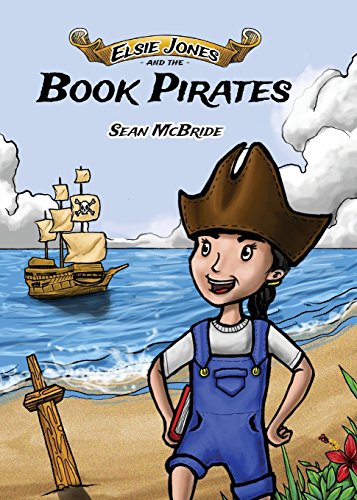
So that’s both the bad news and the good news. We’re going to have to wait a little longer to get the books, but they are going to have some incredible new art work, from an incredible artist. I CAN NOT State how absolutely happy I am that Jesse is willing to stay on board, because the world needs to both read these books and see an incredible artist and not some computer generated pictures.
Elsie Jones is Coming on 08/01
Hey everyone! I’m taking a week off from writing the Blind Read Blog and focusing on some extra editing, and I wanted to give everyone a special sneak peek of the upcoming Author’s editions of the New Elsie Jones Adventures, which will kick off with Elsie Jones and the Book Pirates on 08/01 of this year!
The Elsie Jones Adventures are a children’s chapter book series where Elsie Jones finds a mysterious secret room in her local library. In that room are fifteen books that, when she reads them, she is transported into their world and adventures with those characters.
Every book has action, humor, adventure, and fun little facts, so join me on this fun adventure!
Check out that special sneak peek below:
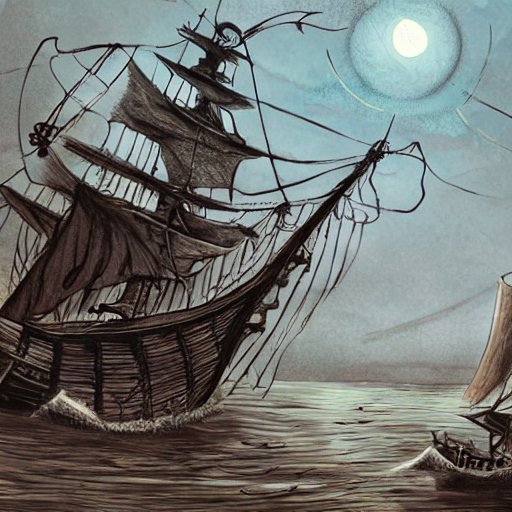
Beyond the door was an old wooden rickety staircase leading down. The walls on either side were brick, which was unlike the rest of the library. It looked so much older than everything else.
Elsie looked around to see if she could ask anyone if she was going in the right direction. When she didn’t see anyone, she considered returning to the main desk and getting her dad to accompany her.
“But I’m in the library,” she said to herself. “Nothing ever goes wrong in the library!”
“Shhhhh!” The person hissed again.
She took a deep breath and one more look around before walking down the steps. At the bottom of the staircase, she found another room filled with books. These books, however, were far older than any of the ones upstairs. Their covers were all shades of brown and red, and the titles faded on their spines. The other thing about this room was that the smell was different too. It smelled like old books. It reminded her of her grandfather’s office, and the memory made her smile.
She scanned the shelves, looking from history book to history book. She saw all kinds of interesting books. She ran her hand across the spines, enjoying the feeling of the old bindings when something odd happened. One of the books on the shelf had a red seven on the spine, just above the title, and when she touched the book, the red seven began to glow.
She pulled her hand back as if the book was hot and then looked at the title: Treasure Island by Robert Luis Stevenson.
“Why is there an adventure about Pirates in the history section?” Elsie asked.
She turned around, expecting the person to shush her again but didn’t hear anything. In fact, she thought she was alone down here in this old History section.
She paused just before touching the book again, but her curiosity got the better of her. It had a faded brown spine, the same as the ones next to it, but on the book’s cover, another bright shiny red seven glowed in the upper right corner.
“Whoa!” she exclaimed.
Excited, she flipped the cover open and saw an intricate drawing of a giant Pirate ship and a pirate with a pegleg and a large hat who held a sword in his hand.
The book was heavy, so she laid it on the ground for a better look. As she leaned over and flipped through it there were awesome color pictures of pirates fighting with swords, burying treasure, and sailing through storms. She also saw photos of a young boy doing all these things with the pirates.
“Oh, that would be so cool!” Elsie said.
“Squire Trelawney, Dr. Livesey, and the rest of these gentlemen having asked me to write down the whole particulars about Treasure Island,” She read.
Then something strange happened; the moment she spoke the pages started to turn on their own, flipping faster and faster until the pictures seemed to move. The pirates jumped on the ship and fought each other with their cutlasses. Elsie leaned back in surprise. One of the pirates turned to her and waved his hand, gesturing for her to join them.
Updates 01/05/23
Wow, what a year that was! I did not get anywhere near where I wanted to go in a writing sense, as work and life stuff enveloped much of my time, but it’s time for a new year, and it’s time for new resolutions. I received a typewriter and a new notebook for Christmas, which has invigorated my creative juices, so it’s time to get to work and get to some of these books I’ve been sitting on!
Elsie Jones Adventures:
The first three of these were already published traditionally, but the contract is up, and the rights have reverted back to me. So I’m going to self-publish and finally get this series out. So expect the first two in the series this year.
If you didn’t know, The Elsie Jones Adventures is a Chapter Book series suitable for kids 5-12. They follow Elsie Jones as she discovers a mysterious library and each book in the secret library pulls her into the plotline of that book, and she goes on the adventure with the characters! The series is filled with action and humor, but it also has lessons to learn along the way.
Book 1: Elsie Jones and the Book Pirates
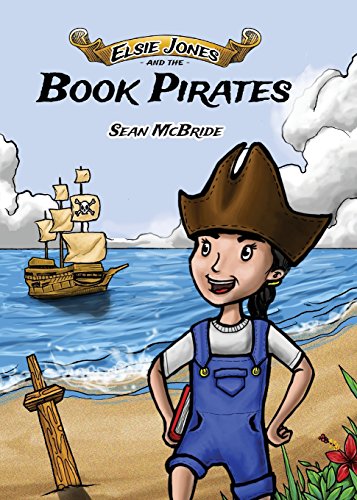
In this first book, Elsie finds a mysterious library and enters “Treasure Island” by Robert Louis Stevenson. She meets some new friends and goes on a Pirating adventure, but also discovers there is a strange group trying to destroy the special books in the library. Follow along with her on an adventure to stop them!
Book 2: Elsie Jones and the Revolutionary Rebels

In Elsie’s second adventure, she finds an old book named “Common Sense” by Thomas Paine, which transports her to Revolutionary Boston. She meets Ben Franklin and goes on a famous horse ride with Paul Revere, leading to a showdown at the house of a literary giant.
Book 3: Elsie Jones and The Captain’s Guard
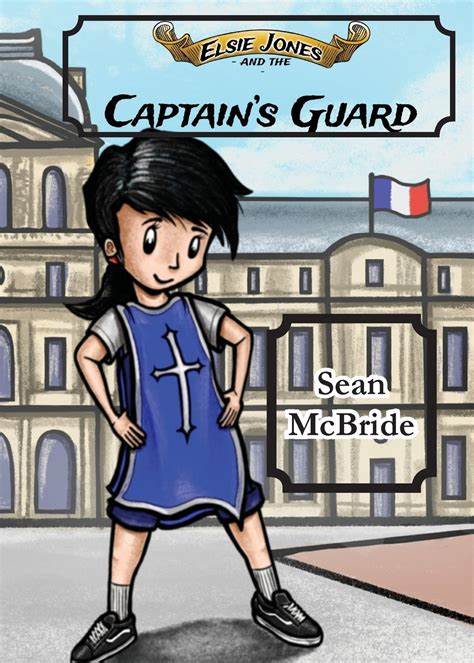
In Elsie’s Third adventure, she comes across “The Three Musketeers” by Alexandre Dumas and goes on an adventure with The famous French Musketeers. This book is filled with mystery, adventure, and swashbuckling fun, but it is on this adventure that Elsie realizes more is going on in these adventurous worlds.
You can find and purchase all three of these stories here or wherever books are sold. What will be released this year are “Author Editions” of these first three books. I wasn’t very happy with the end result when the publisher edited these books, so what you’ll get this coming year will be more extended and much more cohesive. The published books are still outstanding, don’t get me wrong, but since the rights have reverted back to me, I wanted to get the whole series out and make them as good as I possibly could. The originals still hold a place near and dear to my heart and will still be available.
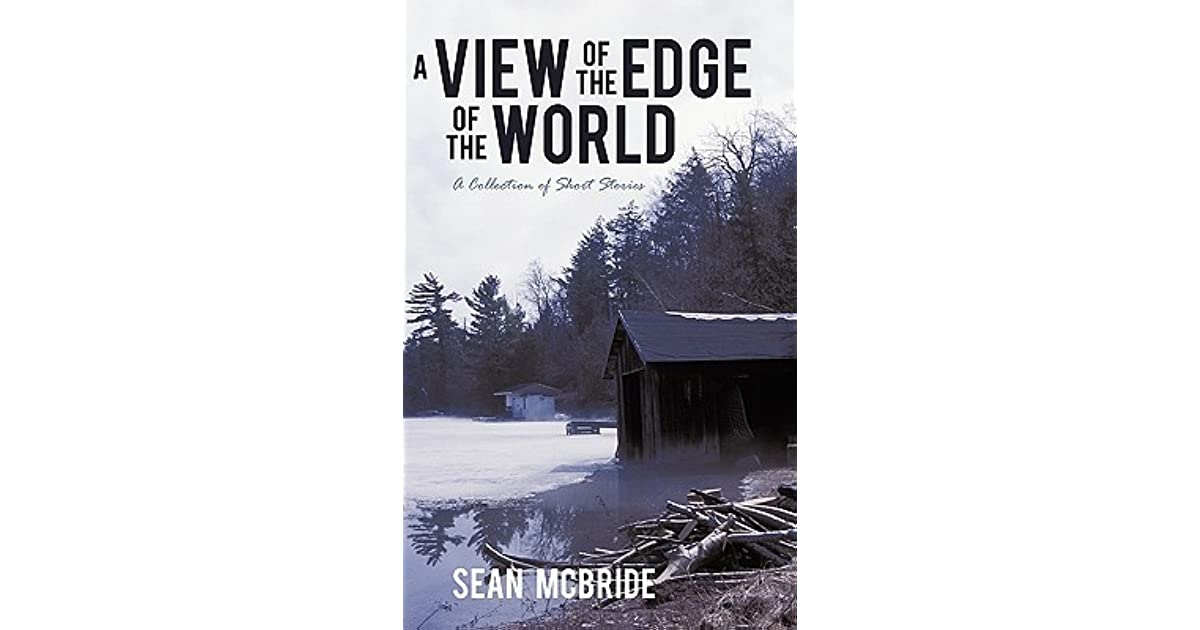
Now onto other projects! As always, my first book of short stories is also available on this website or wherever books are sold. It is a group of short stories heavily influenced by the original “Twilight Zone” television show with Rod Serling. The title is “A View of the Edge of the World.”
The Legacy:
I read an article back in 2001 in Rolling Stone magazine about an island off the coast of Nova Scotia. I started writing an adventure novel back then but never got around to finishing it; then a History Channel show called “The Curse of Oak Island” came out, and it reinvigorated my love for this strange, mysterious island. I finished writing the novel in 2021 and meant to edit it in 2022 and get it out, but other things got in the way. I hope to finish editing it this year, get an agent and a publisher, and get it out early next year.
This book is based on Oak Island, but it is very much an “Indiana Jones” type story with heavy historical references which push the story forward as the characters look to uncover the mystery. It reads as half Dan Brown and half-pulp adventure novel. I absolutely love this book and can’t wait for people to read this one (and probably it’s sequels, wink, wink)!
The Revolution Cycle:
This is an expansive Fantasy/Adventure story. It follows a revolution from start to finish and will do so over a proposed 10 books. I’ve written the outline for the first novel and will be diving into it this year. I don t think it will be finished, but I hope to get enough done this year so it can be released by the end of next year.
Book 1. The Monster in the Woods
This first book of the cycle will focus on a group of young protagonists in a school in a secluded Duchy. They question the propaganda fed to them, and they drift apart until one of them finds a mysterious clue left by their strange uncle after he goes off to fight a monster roaming the woods outside the Duchy walls.
This book will have heavy Goonies vibes framed as a fantasy novel Joe Abercrombie would be proud to write. Each successive novel will expand the world and bring the characters further into the fight until they are inextricably involved with the revolution.
Future Works:
Elsie Jones and The Westward Adventurers: The fourth book in the Elsie Jones series. Elsie enters the world of James Fenimore Cooper’s “The Pathfinder.”
Elsie Jones and the Transylvania Twist: The fifth book in the Elsie Jones series. Elsie enters the world of Bram Stoker’s “Dracula”
Elsie Jones and the London Fog: The sixth book in the Elsie Jones series. Elsie enters the world of Sir Arthur Conan Doyle’s “The Casebook of Sherlock Holmes.”
Elsie Jones and the Dark Samurai: The seventh book in the Elsie Jones series. Elsie enters the world of Basho’s Haiku.
Elsie Jones and The Last Knight: The eighth book in the Elsie Jones series. Elsie enters the world of Cervantes “Don Quixote.”
Elsie Jones and the Treasure of Tut: The ninth book in the Elsie Jones series. Elsie enters the world of Virgil’s “The Aeneid”
I have written through the twelfth book in the series, but I’m keeping the remaining books under wraps!
I will continue publishing my weekly blog, which currently covers the histories of J.R.R. Tolkien. Each Thursday, I break down the verbiage and story to make the difficult language more accessible for the everyday reader. Check out my previous Blogs on The Silmarillion and all of H.P. Lovecraft’s work here!
You can also find other essays, short stories, and poetry here on my website for free, so I encourage you to read them! There is a good chance I will compile much of them for a future book of short stories, so get them while they are free!
The too far in the future projects:
The remaining books in the Revolution Cycle
A Sequel to The Legacy
Elsinore: A Graphic Novel about a town on the border of Hell
A future Elsie Jones spin-off
Thank you to everyone who follows and for your support for all who have purchased my books! Please continue to do so, and I hope the content I put out brings you joy, wonder, and happiness! Here is to a wonderful and prosperous New Year (with quite a bit of content coming your way)!
Blind Read Through: J.R.R. Tolkien; The Silmarillion, Of Beleriand and its Realms, pt. 1

“Thus the realm of Finrod was the greatest by far, though he was the youngest of the great lords of the Noldor, Fingolfin, Fingon, and Maedhros, and Finrod Felagund. But Fingolfin was held overlord of all the Noldor, and Fingon after him, though their own realm was but the northern land of Hithlum; yet their people were the most hardy and valiant, most feared be the Orcs and most hated by Morgoth.”
Welcome back to another Blind Read! This week we delve into the realm of Beleriand and gain a greater understanding of where each faction of the Eldar takes as their home.
The book has gone beyond being very dry to transitioning to some fascinating tales. So, unfortunately, this chapter takes a step backward, but for an important reason:
“This is the fashion of the lands into which the Noldor came, in the north of the western regions of Middle-earth, in the ancient days; and here also is told of the manner in which the chieftains of the Eldar held their lands and the leaguer upon Morgoth after the Dagor Aglared, the third battle in the Wars of Beleriand.”
We finally get some reference to the locations and people described.
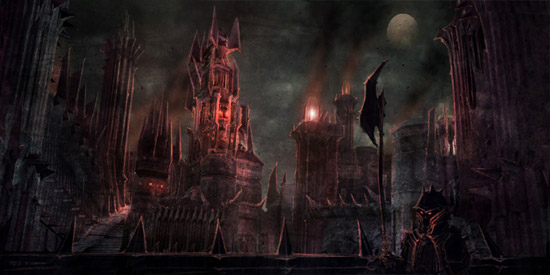
Tolkien was known to love nature and hate what industry did to the purity of the world. We can see this in The Lord of the Rings movies on full display with the destruction of Fangorn Forest through the industry of Isengard. Here, in the First Age, Morgoth does much the same. First, he makes his fortress in the wastes of the north and calls it Angband, otherwise known as “The Hells of Iron.” He then built a great tunnel leading out of Ered Elgin (Ered is the Elvish name for Mountain. Thus, Ered Elgin is called the Iron Mountains) for his minions to spread throughout Beleriand. At the end of this tunnel, he built a mighty gate, “But above this gate, and behind it even to the mountains, he piled the thunderous towers of Thangorodrim, that were made of the ash and slag of his subterranean furnaces, and the vast refuse of his tunnelings.”
This passage shows the Evil (with a capital E) in Tolkien’s eyes. The destruction of the world in the (false) name of progress.
But since this chapter glosses over events, for want of explaining locals, we switch to the other residents of Beleriand who managed to live with and in the world, just as Yavanna’s song of creation would have them.
“To the West of Thangorodrim lay Hísilómë, the Land of Mist…Hithlum it became in the tongue of the Sindar who dwelt in those regions.“

From my meager knowledge, I believe that the lands of Beleriand make up much of what we know of the landscape of Middle-earth in the Third Age, and based upon the name of the region, could this be what will become the Misty Mountains? There is no direct correlation except through the wording. However, Tolkien was always so specific with his world and language that I will go out on a limb and say it’s so.
Then we come across another little gem hidden in the text. Within Hithlum to the south is a region known as Dor-Lómin:
“But their cheif fortress was at Eithel Sirion in the east of Ered Wethrin, whence they kept watch upon Ard-galen; and their cavalry rode upon that plain even to the shadow of Thangorodrim, for from few their horses had increased swiftly…Of those horses many of the sires came from Valinor,”
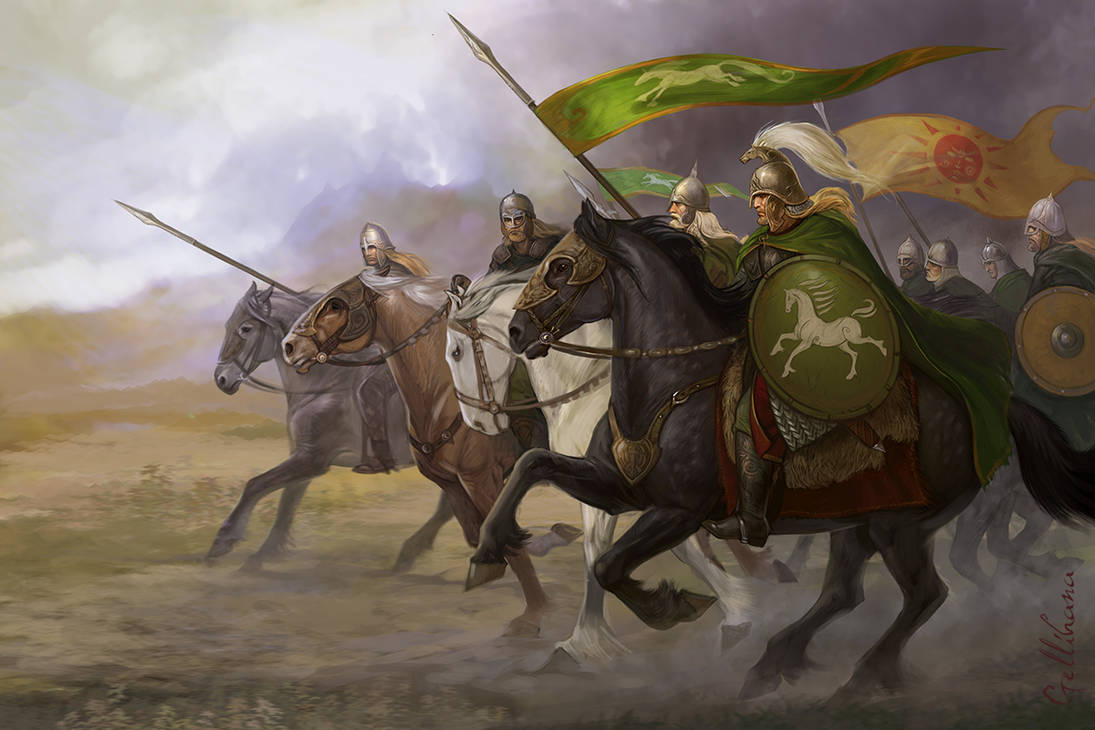
I have to wonder if these are the glorious beginnings of the wonderous horses of the Rohirrim, which we see in “The Two Towers” as the riders of Rohan, whose duty it was to guard the fields of that land. Again there is no definitive statement, but it makes quite a bit of sense.
Moving west still, we go to Nevrast, where “for many years was the realm of Turgon the wise, son of Fingolfin.” Nevrast was a marshy land settled between the sea and the mountains where most of the Grey-elves lived.
Directly east of Dor-Lómin, across Ered Wethrin and Tol (Elvish for River) Sirion, lay Dorthonion where “Angrond and Agnor, sons of Finarfin, looked out over the fields of Ard-galen.” and in the west of Dorthonion was the Tol Sirion, where Finrod ruled. It was there, “in the midst of the river he built a mighty watch-tower, Minas Tirith; but after Nargothrond was made he committed that fortress mostly to the keeping of Orodreth, his brother.“
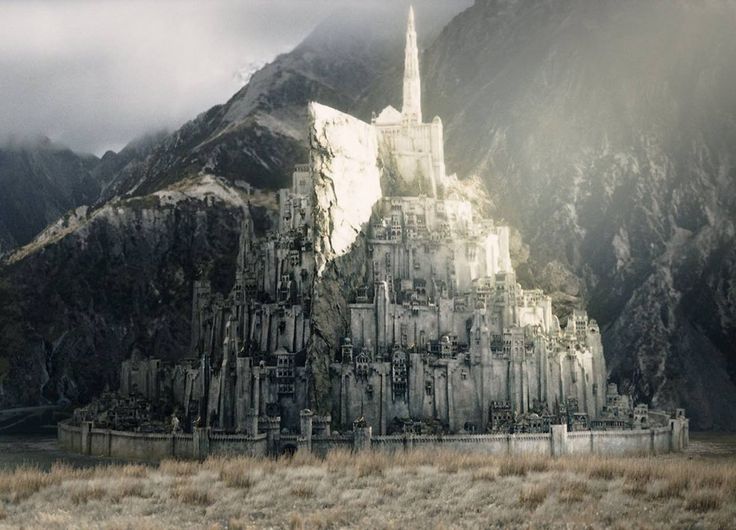
Minas Tirith! I had no idea Minas Tirith was built in the first age! No wonder it is so massive and beautiful! It was created in the “Pass of Sirion,” the largest and most prominent passage to Beleriand from Ard-galen and where Morgoth would most likely take a straight shot to attack that land. Minas Tirith, and Gondolin, which were built on the opposite side of the river, are the two most significant guardians of the land created by the Eldar.
The last region we’ll talk about this week is the March of Maedhros, which was east of Dorthonian. It was here “dwelt the sons of Fëanor with many people, and their riders often passed over the vast northern plain, Lothlann the wide and empty, east of Ard-galen, lest Morgoth should attempt any sortie against East Beleriand.”
This region was known as Himring, the Ever-cold, “and that was wide-shouldered, bare of trees, and flat upon its summit, surrounded by many lesser hills.” I thought about this area quite a bit, and I wonder if this might be Weathertop, where Frodo took the poison of the blade of the nine. The description of the geography seems appropriate, but I’m unsure of the region.
What is so fascinating is that the Gray Elves, or Sindar, had never gone to Valinor. Instead, Thingol married a Maiar named Melian, and they took up residence in Beleriand (look back at the Girdle of Melian here). Still, it was Fëanor and Fingolfin who came after during the departure of the Noldor from Valinor. These two relations took a protective stance against the rest of the realm.
All locations described in this part of the chapter are lookouts or guards surrounding Ard-Galen so that they might protect against Morgoth and his minions. The opening quote of this essay describes their purpose nicely because it’s curious that Thingol, the Elf who had been there the longest, with a Wife who is more powerful than any Eldar, would hide within their girdle. At the same time, the Noldor would be the protectors. But it is because of that hatred Fëanor had for Morgoth that this came to being.
When he died, his sons took up his mantle, and where they didn’t have the fire, he had to go after Morgoth actively; they took it as their duty to guard the land and stop The fallen Valar from further destruction.
Join me next week as we cover the remainder of Beleriand and complete this chapter!
Blind Read Through: J.R.R. Tolkien; The Silmarillion, Of The Beginning of Days
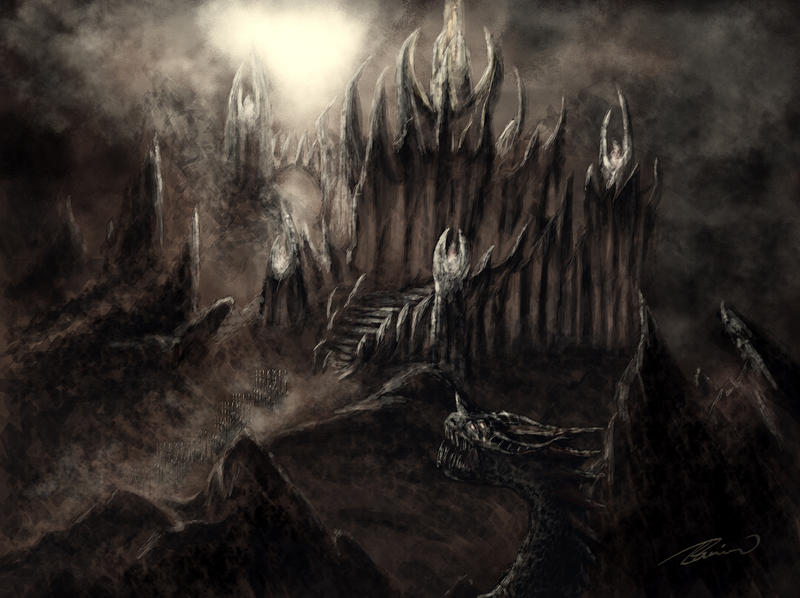
“Behind the walls of the Pelóri the Valar established their domain in that region which is called Valinor; and there were their houses, their gardens, and their towers. In that guarded land the Valar gathered great store of light and all the fairest things that were saved from the ruin; and many others yet fairer they made anew, and Valinor became more beautiful even than Middle-earth in the Spring of Arda; and it was blessed, for the Deathless dwelt there, and there naught faded nor withered, neither was there any stain upon flower or leaf in that land, nor any corruption or sickness in anything that lived; for the very stones and waters were hallowed.“
Welcome back to another Blind Read! This week we begin our pathway into the Quenta Silmarillion and learn of the beginning of the First Age, while getting some very useful backstory into the elves and man.
In the past few weeks we were introduced to the Valar and their predilections and abilities, which is imperative back story as we jump into the Silmarillion.
The story starts with mention of the First War, and if you remember, we don’t really know anything about it, because we’re getting everything from the Eldar, and the First War was before they came into their own in Arda. What we do know is that Melkor fought the Valar for control of the land, until Tulkas the Strong came down and “Melkor fled before his wrath and his laughter.“

With Melkor gone, at least temporarily, the Valar began to build Arda bringing “order to the seas and the lands and the mountains.” Once Yavanna planted seeds, the Valar realized they needed light to help life flourish, so Aulë “wrought two mighty lamps for the lighting of Middle-earth… One lamp they raised near the north of Middle-earth, and it was named Illuin; and the other was raised in the south, and it was named Ormal.”
The land flourished with the Valar and the light of the lamps, but Melkor had spies among the Maiar, “and because of the light of Illuin they did not perceive the shadow in the north that was cast from afar by Melkor.”
Because they didn’t notice Melkor, he came south and “began the delving and building of a vast fortress, deep under the Earth, beneath dark mountains… That stronghold was named Utumno.” His corruption spread from Utumno “and the Spring of Arda was marred.”
Another war broke out and Melkor “assailed the lights of Illuin and Ormal, and cast down their pillars and broke their lamps.” causing “destroying flame (which was) poured out over Earth,” scarring the land. The Valar were able to stop Melkor after this, but it was too late and “Thus ended the Spring of Arda.“
The Valar decided that there was no appropriate place to live, “Therefore they departed from Middle-earth and went to the land of Aman,” and to protect this land “they raised the Pelóri, the Mountains of Aman, highest upon Earth.” Upon the highest mountain Manwë (the Lord of Air and Winds) build his throne. “Taniquetil the Elves name that holy mountain.” Then we get the quote which opens this essay, and we understand that this land of Aman, had now become Valinor.
It was then, once they made their home in Valinor that Yavanna helped grow (through her song) the “Two Trees of Valinor;” Telperion and Laurelin. Telperion bloomed for six hours then stopped, then Laurelin bloomed for another six hours: “And each day of the Valar in Aman contained twelve hours, and ended with the second mingling of the lights, in which Laurelin was waning and Telperion was waxing.” It was a time of great joy for the Valar, to be free of Melkor and to continue to develop Valninor:
“Thus began the Days of the Bliss of Valinor; and thus began also the count of time.”
What significant about this is the aspect of time. The age of the Children of Ilùvatar was coming and the instance of time was it’s catalyst. The Elves are immortal, they “die not till the world dies, unless they are slain or waste in grief.” But men are mortal and they need to have a concept of time to understand what their life capability is. We’ll see more of this later in the essay.

But in this coming of the Children of Ilùvatar, Melkor still dwelt in Middle-earth, which is where the Children took up their home.
The Valar rarely came across Pelóri, but when they did they taught the Elves “the lore of all craftsmen: the weaver, the shaper of wood, and the worker in metals; and the tiller and husbandman also.” But it was the Noldor, the “most skilled of the Elves” whom were “the first to achieve the making of gems; and the fairest of all gems were the Silmarils, and they are lost.” I’m trying to take this one step at a time, but seeing as this history is called “The Silmarillion,” I’m sure they will come into play soon.
The Vanyar Elves were gifted the art of “song and poetry” by Manwë whom was named the “vicegerent of Ilùvatar, King of the world of Valar and Elves and Men, and the chief defense against the evil of Melkor.” he even wields a “scepter of sapphire, which the Noldor wrought for him.”
Then there was also Ulmo of the Oceans and seas. I’m going to give you a long passage and break it down, because to me, this is the most important passage in this chapter:
“In the deep places he gives thought to music great and terrible; and the echo of that music runs through all the veins of the world in sorrow and in joy; for if joyful is the fountain that rises in the sun, its springs are in the wells of sorrow unfathomed at the foundations of the Earth… And thus it was by the power of Ulmo that even under the darkness of Melkor life coursed still through many secret lodes, and the Earth did not die; and to all who were lost in that darkness or wandered far from the light of the Valar the ear of Ulmo was ever open; nor has he forsaken Middle-earth, and whatsoever may since have befallen of ruin or of change he has not ceased to take thought for it, and will not until the end of days.”
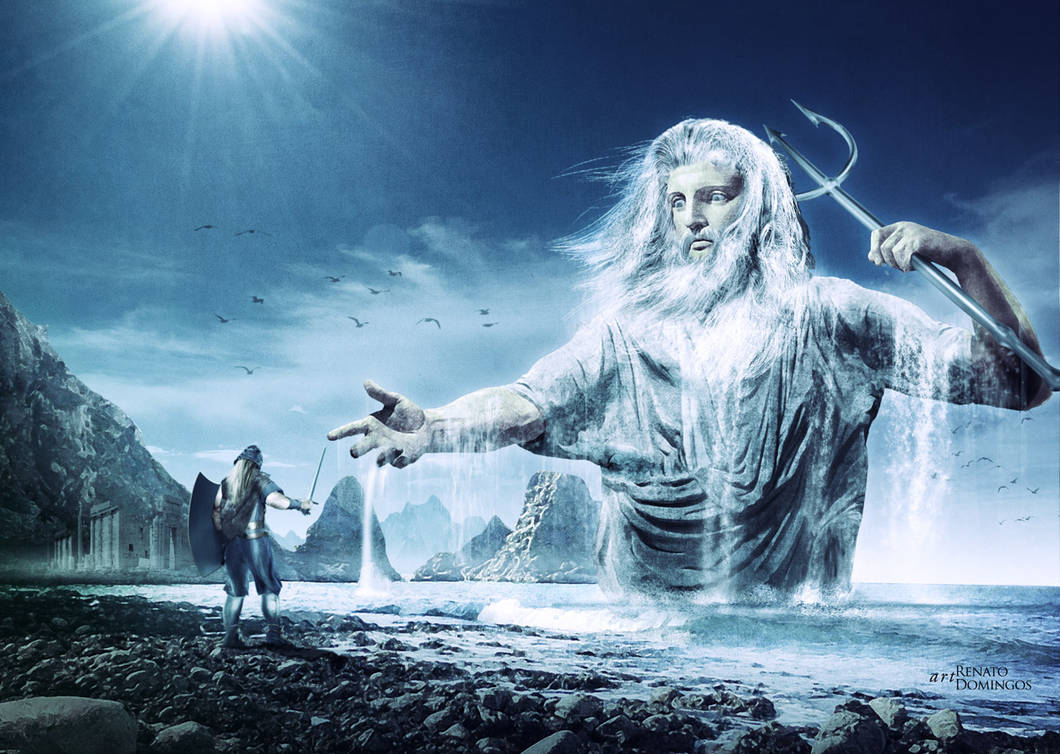
Not only is this passage poetic and beautiful, but it also gives form to the philosophy of Middle-earth as the personalities of the Valar form the very fabric of reality. There is and always will be a subset of people whom believe that the ideal of The Lord of the Rings is a power struggle between good and evil. Between happiness and sorrow. Between love and loss.
The end of the books and movies (as Frodo heads to Valinor) there is a certain forlorn sorrow, but infused within that thread is hope, and that’s what strikes me the most in this passage above. There is joyfulness, but that joyfulness is countered by “sorrow unfathomed.” The point is if there were only goodness, there would be no joyfulness. Men and Elves are the Children of Ilùvatar and thus are more open to emotion and feeling. The Valar only have a little bit. So if everything were always joyful, the point of joyfulness disappears because there is no counterpoint. It is only upon feeling sorrow that we understand what Joy truly is.
This sorrow does not mean the terror that Melkor had wrought, or even Sauron in The Lord of the Rings. This is speaking of the normal every day sorrow, and that comes along with the concept of time which the Valar created with the two great trees of Valinor. To burrow this down to brass tacks, it is the sorrow that Men have a finite time on Middle-earth that creates the joyfulness that they flourish off of. What Ulmo does is put the sorrow in “the foundations of earth” meaning both that it was around at earth’s inception, but it’s also deep in a well; deep in the earth; physically and metaphorically tying the song of the sorrow to Middle-earth as a place. Michael Ende used this concept to full effect in his Swamps of Sorrow of The Neverending Story.
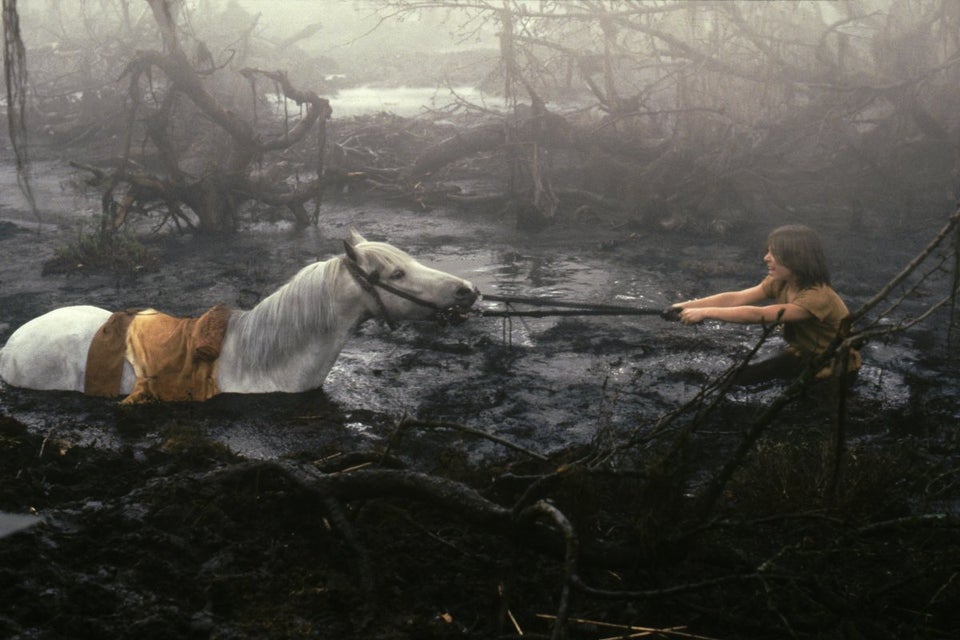
But what is the point of having Men and Elves live on Middle-earth? The Elves “shall be fairest of all earthly creatures, and they shall have and shall conceive and bring forth more beauty that all my Children.” So the Elves are there to make Middle-earth a wonderous and beautiful place. But what of Men?
“Therefore he willed the hearts of Men should seek beyond the world and should find no rest therein; but they should have a virtue to shape their life, amid the powers and chances of the world, beyond the Music of the Ainur, which is as fate to all things else; and of their operation everything should be, in form and deed, completed, and the world fulfilled unto the last and smallest.“
For this the Elves fear Men, “for it seems to the Elves that Men resemble Melkor most of all the Ainur, although he has ever feared and hated them, even those that serve him.” The Elves are there for much the same reason the Valar were… to continue to make the world beautiful. Man was there to give direction and purpose. This is a powerful responsibility and it’s why many are corrupted during their journey, but it also gives rise to the joyful sorrow that one feels as they look out across the crashing waves and into the depths of the beautiful Ocean and it’s terrible wine dark composure.
Join me next week as we move onto chapter two and learn more of the Valar Aulë and Yavanna!
Updates 08/26/21

Hello everyone!
I anticipated releasing the conclusion of Lurker at the Threshold today, but due to a WordPress blip, half of the essay was gone when I logged on this morning. So that essay will be coming to you next week while I re-write it, followed by an essay on some final thoughts of H.P. Lovecraft. What I want to spend the rest of this update doing is letting you know what’s coming after that!
Blind Read Series:

I’m going to transition directly from H.P. Lovecraft to J.R.R. Tolkien (I didn’t think there were enough initials in my titles!). I read The Hobbit as a child and loved it, but when I started to read The Lord of the Rings, I was stuck at Tom Bombadil. I eventually read that massive tome in three sections, but I’ve always been interested in Tolkien’s lost tales and histories. I know many people are, but the text itself is daunting, so I intent on continuing the Blind Read series and reading, analyzing, demystifying, and connecting all of Tolkien’s side tales and histories of Middle Earth. In three weeks from today I’ll release the first section of the Silmarillion!
Short Stories:
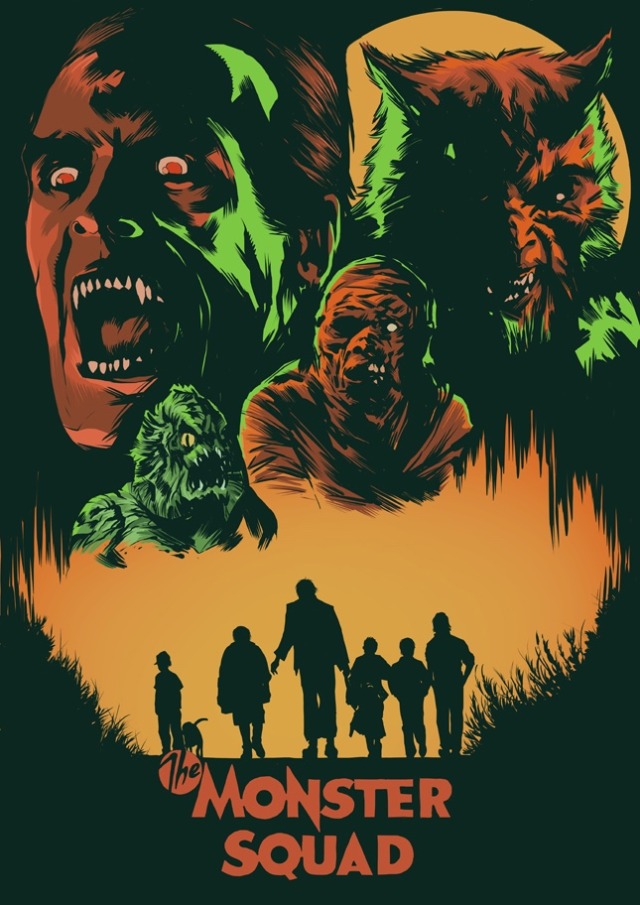
The weather is cooling and the spooky season is coming. I intend to write a number of short shorts (somewhere in the ballpark of 1000 words) to release periodically in the fall months. These are going to be similar to the Universal Monster shorts I did last year, but Halloween will be the connecting factor this year. This is a call back to all those terribly awesome 80’s horror/schlock films such as The Monster Squad, Fright Night, and Hocus Pocus (I know, I know, that one is the 90’s). So come join me for some kinda, maybe not so scary fun!
Elsie Jones Adventures:
Get ready for a new look of Elsie Jones! I’ve been passively looking for a new Illustrator to take over the series, but this fall I’ll continue in earnest. Get ready for a new authors edition of Elsie Jones and the Book Pirates, and a cleaner Elsie Jones and the Captain’s Guard. Twelve of the 15 books are written, so I anticipate a good release schedule! If you’re curious you can purchase any of the first three books here!

The Legacy:
Currently in it’s fourth edit. This is my adventure novel I finished last October. Think if Dan Brown partnered with Indiana Jones this is what you’d get! I’ve always loved the intrigue and the adventure of following the clues to discover and uncover a mystery! Inspired by the incredible Oak Island (research it if you don’t know about it). I’m hoping to have this published in some fashion in 2022.
The Monster in the Woods:
This is the first book in my Revolution Cycle. I’ve been stewing on this series for 20 years or so, and I’m finally getting it to where I want it. I’ve already written two novels that’s I’ve been unhappy with and consider exploratory novels into the world, but I’ve been spending quite a bit of time outlining everything that will go into this 10 book series. The first book is very heavily inspired by The Goonies (I’m catching a 80’s inspiration thread here), but the larger story is told with the backdrop of impending war, and how the group from the first book will deal with it. The Monster in the Woods is a Heist/Gooniesesque adventure, with a few twists along the way.
That’s all for now, with much more on the way!
Blind Read Through; H.P. Lovecraft: Through the gates of the Silver Key

“What happened then is scarcely to be described in words. It is full of those paradoxes, contradictions, and anomolies which have no place in waking life, but which fill our more fantastic dreams, and are taken as matters of course till we return to our narrow, rigid, objective world of limited causation and tri-dimensional logic.”
Welcome back to another mind bending Blind Read! We’ve learned about Randolph Carter in the past, including the indominable Silver Key, but this time we traverse through the doorway this magical talisman produces. Lets dive into a treatise on traversing space, time, dimension, and existence as we traverse through the gates of the Silver Key.
The opening few chapters is basically a rehash of the stories “The Dream-Quest of Unknown Kadath” “The Silver Key” and “The Statement of Randolph Carter.” The story is unique in it’s narration because most of Lovecraft is told from the perspective of a single narrator, but this story begins omniscient and doesn’t more into narration until Swami Chandraputra directly relates the events surrounding Randolph Carter.
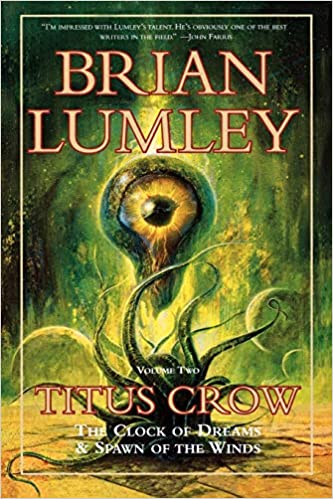
“In a vast room hung with strangely figured arras and carpeted with Bokhara rugs of impressive age and workmanship four men were sitting around a document-strown table.” These four men were Etienne-Laurent de Marigny (Later to be a mainstay in Brian Lumley’s Titus Crow Series), the aforementioned Swami, Ward Phillips, and Ernest B. Apinwall, whom is an executor of Carter’s estate and is trying to sell it all off.
Apinwall tells the other three his goal is selling off the Carter estate, because Carter himself has been gone nearly four years and it’s time to move on. The Swami objects and tells the group he has proof that Carter is alive and needs to make sure that Aspinwall doesn’t sell anything. Once we have the abridgement of Carter’s history we jump right into new territory with the quote which opens this essay.
The actual story is too complicated and intricate to tell in short form here, heck, Lovecraft could barely get it out in long form of the story itself, but the basics are that just beyond where Carter had already gone using the Silver Key, there are more gates, and these gates had only been transcended by a few mortals…ever. Carter traversed these gates and gained an understanding far deeper than any human could ever comprehend.
The story covers what we consider to be Lovecraft’s Dreamlands, so we’re not dealing with a horror story as it is, but something that goes so much farther than that. Serendipity comes to mind because I’ve recently been following Marvel and all that they have been working through, with perceptions of thought and reality and multiverse, which makes reading this story at this time seem so very apt. We’ll dig into what I’m talking about in a moment here, but first I would like to discuss the perception of gods and Gods in Lovecraft.
To open it up, I’d like to give you some straight text from this story:
Carter guessed what they were, whence they came, and Whom they served; and guessed, too, the price of their service. But he was still content, for at one mighty venture he was to learn all. Damnation, he reflected, is but a word bandied about by those whose blindness leads them to condemn all who can see, even with a single eye. He wondered at the vast conceit of those who had babbled of the malignant Ancient Ones, as if They could pause from their ever lasting dreams to wreak wrath upon mankind. As well, he thought, might a mammoth pause to visit frantic vengeance on an angleworm. Now the whole assemblage on the vaguely hexagonal pillars was greeting him with a gesture of those oddly carven scepters, and radiating a message which he understood…
There is a whole lot of theology and thought packed into that one little paragraph!
The first portion is the concept of damnation. If you’ve been following along with this blog then you know Lovecraft didn’t adhere to any specific religion; in the sense that the dogma of the church just didn’t make any kind of rational sense to him. This paragraph is the perfect example of that. People who are either willfully ignorant, or just plain blind to reality as Lovecraft saw it, didn’t understand that if there was a God or gods, then they really dont care about you. Rationally it doesn’t make sense for a supreme being to care about lesser beings, thus indicating that these “gods” were mammoths and we were angleworms. Because these beings dont really care about us, then damnation itself must be a construct of religion to keep people in line. Religion, like governance, is about control and comfort. Humans crave structure despite how we act and react sometimes, and to know that there is a heaven and a hell makes people more at ease. If they go to church on Sunday and say their prayers by night, they wont become a wolf when the wolf bane blooms and the autumn moon is bright. Damnation (at least what this story is trying to convey) is a construct of the mind, and for Carter, it isn’t until he breaks the barrier held in check by the Silver Key that he comes to this realization. He moves beyond one universe into multiple and lives countless lives and endless consciousness’ all at once; giving him a greater understanding than that of even the Mad Arab Abdul Alhazred and his ravings in the Necronomicon. Damnation is a state of mind, not a place.
To piggy back on that we have the conception of the gods in Lovecraft’s mythos. It has been played around with in stories such as “The Dream-Quest of Unknown Kadath”, but not elucidated with such clarity as it is right here in this paragraph. With the notable exception of Nyarlathotep, the gods of Lovecraft are omnipotent, they are not malignant. These gods transcended space, time, and universe, occupying all and none at the same time. They have lived for eternities and will live for eternities more. Their consciousness has developed for hundreds of thousands of millennia, and because of this, their scope is so much larger than the few thousand years humans have existed. In fact, the only reason Nyarlathotep has any kind of vengeance is because humans keep trying to invade and go beyond their bubble. He is a god who believes we are a stain on the beautiful tapestry of consciousness and wants to be rid of our parasitic species. When Cthulhu comes out of the sea at the end of “The Call of Cthulhu” he is not trying to destroy the world, but his simple visage shows the magnitude of what we dont know, and that in-and-of itself is enough to drive everyone, with the notable exception of Randolph Carter, insane. Damnation is tied so closely to the malevolence of gods and the insanity caused by them, but that’s just a construct so that mere mortals can understand. This whole story is all about how the life we live is an illusion of our own construct, and there is so much more beyond our ken.
So lets dig into that multiverse, shall we?
“The man of Truth is beyond good and evil…The man of Truth had ridden to All-Is-One. The man of Truth las learnt that Illusion is the only reality, and that substance is an impostor.”
Carter goes through the first Gateway of existence:
“Even the First Gateway had taken something of stability from him, leaving him uncertain about his bodily form and about his relationship to the mistily defined objects around him, but it had not disturbed his sense of unity. He had still been Randoplh Carter , a fixed point in the dimensional seething. now, beyond the Ultimate Gateway, he realized in a moment of consuming fright that he was not one person but many persons.”

I mentioned Marvel earlier, and I’ve just started watching WandaVision, like many of you may have as well. This show seems to be of a similar set up to Carter’s story. We have Wanda living in a dream world of her own construct (or maybe caused by another to keep her under control with those calls of “Who’s doing this to you Wanda?”) The layers are slowly being peeled back to revel a reality that may just be too difficult for her to comprehend, thus fracturing her mind. Or maybe she has already been through the gates of which Carter speaks of, and what we view every Friday night is a perception of her fractured mind? The idea of a multiverse is complicated, and Lovecraft here barely scratches the surface (hopefully, with the help of Rick and Morty writers, we’ll see a bit more cohesion in the Marvel Multi-Verse). Carter has lived many lives and we’ve seen that in previous stories (in “The Silver Key” Carter was both his adult self and his ten year old self), but when he goes beyond the ultimate door we find that there are many worlds which hold his consciousness. There are countless alien beings which have been “Randolph Carter”, just not in human form. These are not parallel universes, but unique and individual universes with single threads of consciousness which hold things together. Deja Vu? Strange memories of places and things you shouldn’t have? Sudden empathy or hate for a creature or thing? These are all because we have lived these experiences either concurrently or in the past…or even in the future.
Think of a cupcake stand. The saucers are the different universes of which there could be infinite, the pole holding them together is your consciouness and on each infinte saucer there is a different being with different experiences, but with your soul as the connector. Lovecraft describes it here as:
They told him that every figure of space is but the result of the intersection by a place of some corresponding figure of one more dimension – as a square is cut from a cube or a circle from a sphere. The cube and sphere, of three dimensions, are thus cut from corresponding forms of four dimensions that men known only through guesses and dreams; and these in turn are cut from forms of five dimensions, and so on up to the dizzy and reachless heights of archetypal infinity.
A slight change of angle could turn the student of today into the child of yesterday; could turn Randolph Carter into that wizard Edmund Carter who fled from Salem to the hills behind Arkham in 1692, or that Pickman Carter who in the year 2169 would use strange means in repelling the Mongol hordes from Australia; could turn a human Carter into one of those earlier entities which had dwelt in primal Hyperborea and worshipped black, plastic Tsathoggua after flying down from Kythanil, the double planet that once revolved around Arcturus; could turn a terrestrial Carter to a remotely ancestral and doubtfully shaped dweller on Kythanil itself, or a still remoter creature of trans-galactic Shonhi; or a four-dimensioned gaseous consciousness in an older space-time continuum, or a vegetable brain of the future on a dark radio-active comet of inconceivable orbit – and so on, in the endless cosmic circle.

In fact Carter did this. He transcended through the Ultimate Gate into Zkauba, the wizard of Yaddith, a strange bird-insect like creature and lived for years in this being, until he found his way to travel in a “thin envelope of electron-activated metal” (early TARDIS?) back to earth.
And then we find ourselves back in the room from the beginning of the story with Swami finishing his story and the group realizing that Swami’s accent was fake. That Swami’s face was a mask. The Swami himself…was not a Swami. To reveal the truth Carter pulls the mask off releveling the physiognomy of the bird-insect Zkauba as he never moved beyond that bodily form. Between everyone in the group only Apinwall, the lawyer, sees and in his madness at seeing beyond the gates of the Silver Key, flees the scene and doesn’t foreclose on Carter’s estate.
It’s a long strange ride and this being a Blind Read (The first time I’ve read it) I’m sure I missed volumes which others could fill in. As I get closer to completing the entire oeuvre of Lovecraft I’m constantly mystified at how intellectual all of the stories are and now fully understand the praise as one of the early incredible horror authors.
What do you think??
Join me next week as we delve into “The Whisperer in Darkness”
Post Script:
I’m going to be diving into the Titus Crow series now that I’ve gotten the Carter books under my belt. They follow Titus Crow and Etienne-Laurent de Marigny from this story (follow me on Goodreads if you want updates). That tale centers around the strange clock which is the center piece of Carter’s house which the four men discussed Carter’s fate.
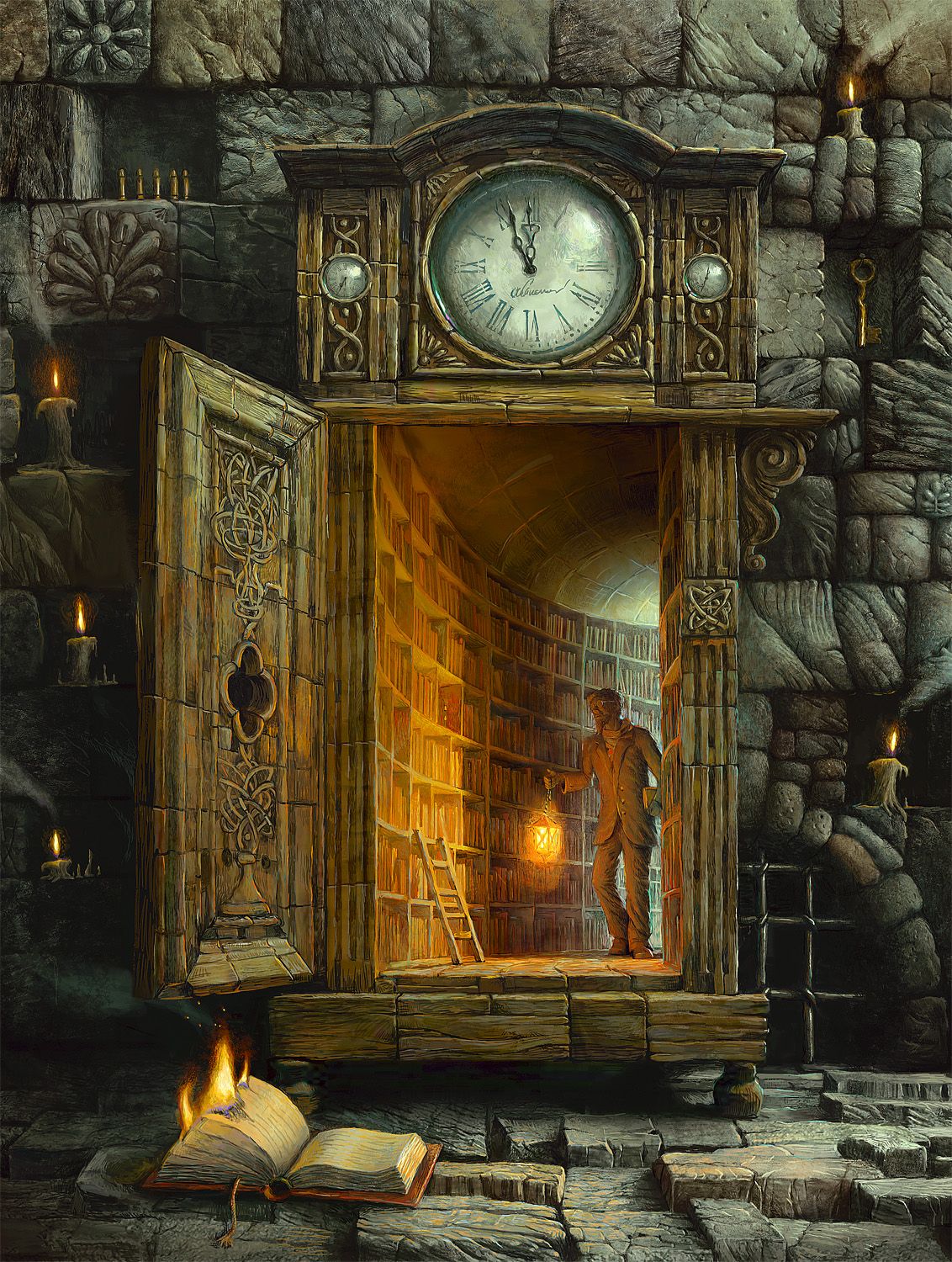
The reason I bring this up here is because it ties together the dream Lands and the waking world so perfectly, where I thought previously that they were two separate, mutually exclusive things. The strange clock has strange hieroglyphics on it instead of numbers:
To him let me say that the language of those hieroglyphics is not Naacal but R’Lyehian, which was brought to earth by the spawn of Cthulhu countless ages ago.
And in sunken R’lyeah sleeping Cthulhu lie…and with strange aeons even death may die.
The Spot
I’m taking the week off from the Blind Read series to catch up on work, so I’ll leave you with a Lovecraft inspired story. Here’s a horror short based in the madness of the mind…
THE SPOT
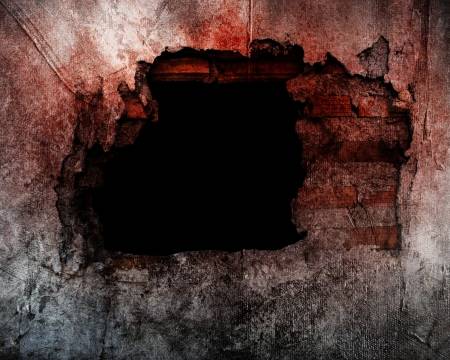
The black spot was still there. How many times have I scrubbed that damn thing? It’s always there, in the corner, next to the refrigerator, just above the counter in the kitchen. I used to put my knife block there to cover it. It was a large spot, but there were a lot of knifes in the set. It’s such an embarrassing spot. It makes me feel like people would look at it and think I didn’t clean. I mean, how can I ever have anyone over?
Who am I kidding? It’s not like I know anyone who would come over. Not like I have any friends. I can’t have friends. They might want to come over and then they would see the spot and then they would judge me. I have to get rid of it. Cleaning doesn’t seem to help, so I decide that the best thing that I can do is cut it out. Cut it out of the wall, cut it out of my life.
Ah it worked! I got it out of the wall! I went to the hardware store and I bought a drill and cut the embarrassing stain out of the wall. I bought drywall to cover it up and repainted it. It finally looks like the rest of the wall! I can be a normal person now. I can invite people over, I can have friends. This is the best day of my life!
The best day followed by the worst day. When I woke up today, I found a new spot and it’s larger than the last one. It’s in my living room this time. It’s large and ugly. It looks kind of black, but if you get closer to it, it almost looks brown. Where are these stains coming from? I have to go get the drill.
That one was much harder to get out. It ended up being a much larger hole than I anticipated. I started to cut and red liquid came out from the wall. For a moment I thought it was blood. It can’t be blood. Walls don’t bleed. But the liquid spread the stain. I had to cut out half of the wall. I didn’t have enough dry wall to cover it the spot I cut so I had to go back to the hardware store. The clerks there are friendly. Maybe they could be my friends. Maybe. But I have to get that spot out of the wall first.
It’s gotten worse. There is a human sized spot in my room. It’s deep brown. I’m not fooled by thinking its black anymore. The moment I put the drill to it, blood comes out. I know, I know. It can’t be blood, because walls don’t bleed. But it really seems like it. What’s even stranger is that when I cut, the house seems to groan. You know how old houses shift and they make noises? Creaks, cracks, pops? That’s what happens when I cut. I wish I had a friend who could come over and tell me that it’s just the creaks in the house. That it’s not something more strange. That it’s not blood.
I cut into the wall. I ignore the wall’s cries. I ignore the blood. Behind the drywall is something I can’t ignore though. The house has bones. Bloody bones in the walls. Bones where studs should be.
I got back to the hardware store. I need to get more dry wall. I need to get more paint. I’m so embarrassed though. They are nice to me there. I think they can be friends, but something has changed now. It is as though they know about my house, with its blood and its bones. They ask me why I’m wearing sunglasses and a hat and a large trench coat with the collar turned up. They say it’s good to see me, but I can tell that they’re lying.
I put up the drywall when I got home. I spackled it perfectly, then painted it over. No one would ever guess that there are bones and blood behind the wall.
There’s another spot. Another one! It’s in the shower. The brown spot almost makes it look like the wall is skin. Like it has texture. Like it has movement. I repeat the process. I ignore the groans. I ignore the blood. I ignore the bones. I act like nothing is there. I act like I have a normal house. I act like I’m normal.
There’s a new spot today. I don’t know how they keep appearing. I know how to fix it. I’ve done it so many times before. I know I just need to do it again. This must be what my life is. Just getting rid of these dark spots. Erasing anything that doesn’t seem normal. I will make sure that people think I’m normal.
I grab the drill. I run my hand over the spot. I wonder how I’m going to find the materials to fix the hole I create as I cut out this abnormality. I put the drill to my chest. Once I cut this spot out of me, I’ll be normal. I’ll be able to have friends.
The Expedition
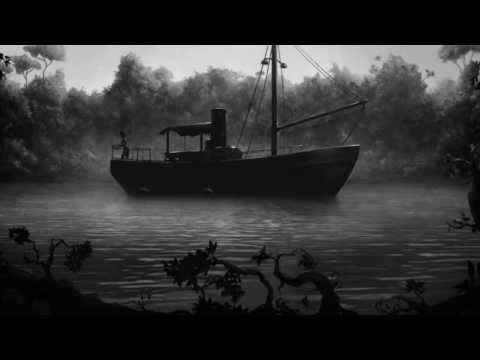
“It’s a beautiful place,” I said, looking out over the bow of the ship at the Amazonian jungle as it passed us by. I wasn’t lying. Such an untouched place brought a warmth to my heart, more so than any city ever could.
“It’s a dangerous place, Kay,” My boyfriend David said, “full of deadly creatures, deadly flora, and superstitious and territorial natives.”
“Which is why you brought me along,” Mark said, cocking his rifle and kicking a box of C4 housed under the windows of the boat. “Now hold on, while I dock this thing.”
We were headed to a sacred pool down in the Amazon jungle, following a lead to the find of the century. The missing link. For years my research kept hearing rumors of a fish man in the depths of the jungle, but it wasn’t until Mark and I found the skeletal hand with webbing on a tributary of the Amazon that brought some credence to those rumors.
“Did anyone else find it strange that those natives told us exactly where to look?” Edwin asked. He was our Anthropologist.
“Enough Edwin! We gave them more supplies than they could use in a year! Of course they were going to tell us where to go!” Mark said.
“I’m just saying. Native Amazonian’s historically aren’t too happy to work so well with others,” Edwin concluded.
“The natives are the last thing we have to worry about, Edwin. Let’s get camp set up, it’s starting to get dark. We don’t want to be caught outside with these deadly mosquitoes!” David laughed.
It didn’t take long to build camp, but David was right. The Mosquitoes were horrible. It was so nice to get inside the tent and block out the bugs.
“You hear that Kay? Sounds like laughter,” David said after we had settled down to sleep.
“David, get away from the side,” I cried.
“But I really think I heard laughter. It was strange, kind of gurgling. I’m gonna to take a look,” He said and left the tent. I sat there with my sleeping bag pulled tight under my chin, I mean I know that’s a stupid childish protective safety thing, but I really couldn’t help myself.
I was right to be worried, because after a few minutes I heard him scream.
“David!” I cried and unzipped my tent. I saw a shadow of someone walking by and my skin went cold. There was a strange earthy, wet smell in the air. It was like ozone blended with moss.
“What’s going on?” Mark called. I let out a little yip, embarrassed at my reaction, because he must’ve been the figure I saw.
“David heard laughter and went out to check it out. I heard him scream,” I said.
“Stay with me,” Mark said. He lifted his rifle. “We’ll move to the edge of the water. That way we can’t get surrounded by anything in the woods.”
“What’s going on guys?” Edwin ran up to join us.
“Stay close,” Mark responded. I couldn’t open my mouth. David had better be kidding, but you’d better believe I was going to kill him whether he was or not.
“Woah!” Edwin cried. “Look at this!”
He was bent over something stuck in the muck at the forest edge. Stuck in the ground was an old wooden pendant, petrified by time. It portrayed some strange bipedal fish creature. I turned it in the moonlight when something out of the corner of my eye made me look up.
Mark was standing on the edge of the water line looking past us into the jungle. The something that caught my eye was walking out of the water towards him. The water was black reflecting moonlight making the water look like oil. I thought the figure was David at first, but it was just my mind wishing for something that wasn’t true. The figure opened its arms. It had a huge arm span and its hands were webbed, its skin was scaly, and its neck had gills.
“Look out!” I cried. I was too late. The creature’s arms wrapped around Mark and its nails dug into him. He screamed as the creature bit into his neck from behind. I could see blood as black as the oily Amazon roll down Mark’s body as the creature ripped a piece of his neck free. He collapsed into the water.
“Run!” I cried.
We ran back to the metal safety of the ship. My heart was pounding and I was having trouble getting breath. Did I really just see that? I had to have imagined it, right? But, God the metallic stink of blood surrounded me, I couldn’t focus, I just wanted to be with David. I wanted him to hold me.
When Edwin and I approached the ship, I saw David on the other side of some bushes. My heart soared!
“David!” I cried. “David, get on the ship!”
We turned the corner and my knees gave out beneath me. It wasn’t David. Or rather, it was only part of him. His head was stuck down on a pole that was thrust into the ground. His eyes bugged out of his head, and his tongue lolled. Bugs crawled in and out of his grotesque mouth. I saw a mosquito feeding on one of his bulging eye balls.
I think I cried out. I think I sobbed, but the next thing I knew, Edwin and I were inside the metal boat. Edwin must have put a mop across the handle of the door, blocking us in. Didn’t he see David outside? How did he think a mere mop would stop that thing? Especially with exposed windows?
“Let’s get out of here. We got what we came for,” Edwin said, he was sobbing. Tears and snot running down his face.
“What? What do you mean we got what we came for?” I cried. We didn’t got anything but death!
Edwin held up the idol he found on the beach.
“Get rid of that fucking thing!” I yelled.
“No!” Edwin wailed. “It’s what we were paid for!”
The mop handle cracked as the creature slammed on the other side of the door.
“It’s coming for the idol! Get rid of it!”
Edwin took a few steps back, nearing one of the many windows in the cabin.
“No! Let’s just get the boat moving… ” Edwin said.
The creature’s hands broke through the window and grasped Edwin’s head. Its claws dug into his cheeks and he was momentarily lifted before his skin gave way and the claws tore up and back, ripping skin from his face, piercing his eyes and spraying blood across the room.
I grabbed the idol from Edwin’s dead hands and threw it out the window. I grabbed the broken mop handle in a futile attempt to defend myself.
Then the creature stepped into the room. It smelled of earth and blood and swamp water. It looked like a piranha, if a piranha was six foot tall. Its teeth were razor sharp and its claws were long and dripping with blood. Its green skin shone in the moonlight and it cocked its head to the side like a dog when it saw me.
“I’m leaving. You can go now. I…I won’t cause you any problems,” I called. I took a step back and my foot hit a box. I glanced down. It was the explosives. I knelt down and grabbed a packet of explosives and the detonator. The creature didn’t like that.
It screeched and opened its arms wide. Blood dripped from its hands and its mouth.
My heart was pounding so hard I thought it was going to leap from my chest. The creature took a step toward me and I threw the explosives at it. Its reflexes were incredible. It caught the C4 in the air and immediately turned to look at it.
“Fuck you,” I said, and depressed the button a split second before diving behind a table.
The echo of the explosion resonated in my ears, but somehow I got up and got to the wheel. I thrust the throttle all the way to the maximum. Fuck this place. I was getting out of here.
I managed a glance at the body of the thing. Its arm was completely gone. Disintegrated. Its head was half gone, the rest a toasted black. I had to get the thing off the boat. There was no way I was going to keep going with its corpse there, but I couldn’t think of that right now. I was shaking too bad, I just had to focus on getting out of the jungle.
I heard distant chanting. It got louder and louder and I felt bile rise in my throat. I peered out the window and I saw Amazonians at the shore line. They were dancing and shaking something in the air. The chant was a dissonant sound that made my skin crawl. I squinted at what they held. It was the same as we saw on the beach. The fish idol.
I went back to the wheel when I heard clicking behind me. Nails on metal.
By Any Means Necessary

I’d followed him here to a rundown flop house in the South Side of Chicago. I don’t think I have to tell you, this is not the place I’d like to be after dark. Then again the life of a private detective is never done. At least my protégé, Malcolm, was with me.
The tenement was just what you’d expect. It was filthy, both of bodily fluid and dirt. Stains covered the walls and strange ochre blotches littered the staircase. We ascended to what I hoped was an easy snatch and grab arrest.
We were after Dr. Jack Griffin. A man once reported missing, but recently showed his face…well I guess I can’t say that, now can I? He appeared, but his skin was covered in heavy duty bandages. He announced himself as he robbed the bank. Told everyone he was the illustrious Dr. Jack Griffin.
The guards chased him to the alleyway, but all they found was a trench coat, some shoes and socks, and a large swath of Ace bandages.
So how do I know it was Dr. Griffin, you ask? I took finger prints. It was a slam dunk match. I followed the trail here. Through the years, I’ve found it’s better to sneak up on your prey, so I decided to come at night. I regret that decision.
“Keep your eyes peeled. If you have to shoot, aim for the legs,” I told Malcolm. I made sure my voice was lower than the creaks of the staircase. No point in announcing our visit.
He nodded in response. Good lad, keeping quiet.
We reached the room in question. The door was ajar, so I held my hand out, indicating Malcolm should wait outside. Be prepared in case Griffin tried to escape by way of the stairs.
The room was a sight of horrors. I dared not engage the lamp, because what I saw was enough. It wasn’t a living space, but a laboratory. There were cages lining the walls with dead rotting creatures, and the ones who were alive were so emaciated they might as well be dead. Rats, dogs, rabbits, pigs, you name it. The smell was unbearable.
I slowly pressed the hammer back on my .38 special, wincing as it clicked into place. I moved through the room past lab equipment and what I can only describe as an autopsy table – mid procedure. I could swear that the temperature in this room was far cooler than it was in the hallway, but there was a notable absence of the monotonous drone of fans.
I observed a door with light emanating from behind it. I creeped over to it, pausing only once when the floorboards creaked beneath me. I was sweating profusely despite the cool temperature, the moisture ran down my forehead as I reached for the door handle to this door. I gripped it tightly and took a deep, silent breath.
The door was ripped from my hands and swinging open, revealing a stark bedroom. It had a single bed, upon which was the score from the bank. I lifted my pistol, bracing it with my off hand, and swung it around the room. I was sure Griffin opened the door and I was also sure he knew I was here.
But the room held nothing but the bed and the cash.
I took a few steps in, my arms rigid, holding the gun aloft. I bent at my waist and leading with the gun, peered beneath the bed. Nothing. I stood and looked back into the laboratory and saw what I could only describe as a figure running through the room.
“Griffin! Show yourself!” I yelled. Sneaking was useless. He knew we were there.
I somehow lost him in the room and I was suddenly overcome with horrid nausea. How could anyone live like this?
“Get ready to die,” a voice whispered in my ear. I could feel hot breath on my skin and I broke out in gooseflesh.
I spun around, nearly firing my gun. There was nothing. I must have imagined it.
“Fool,” That hot whisper assaulted my other ear.
I twisted again, this time firing. The bullet went through the wall out into the Chicago air.
The door to the hallway burst open and I caught a glimpse of Malcolm as his expression turned to surprised horror. I can’t explain what happened, but it look like he was pulled back, as though he were a vaudevillian actor being pulled off the stage by a hook. Although, there was no backstage for Malcolm. He went tumbling backwards down the staircase. I heard him scream then I heard a crunch followed by silence. I still could see nothing.
“Show yourself you coward!” I screamed.
Laughter echoed through the room. I feel that he was there with me and I have no idea how he was able to knock Malcolm down the stairs without me seeing.
“I must continue my research.”
The whisper was directly behind me. I felt his fingernails slide through my hair.
I twisted, flailing blindly with my fists. More laughter to my right.
“I thought I was curing cancer.”
He bit my ear lobe. I screamed and pulled away. I felt violated. Something as intimate as a bite. How had he gotten so close?
“But this is something so much more.”
I felt a punch in my stomach.
“So I must continue my research.”
I looked down. It was not a punch. It was a knife. I felt a hand cradle me but saw nothing. I watched as it unlevered itself from my stomach and slammed home again and again into my torso. The knife was moving of its own volition. How was this possible?
“By any means necessary.”
I could see blood spill down the handle of the blade. It covered what looked like a hand. A towel flew up from the table next to my body, as my sight began fading to black. It wiped the hand, and as the blood soaked the towel, the mystery hand it was wiping evaporated. It was the last thing I saw.
Blind Read Through: H.P. Lovecraft; The Case of Charles Dexter Ward pt 1.
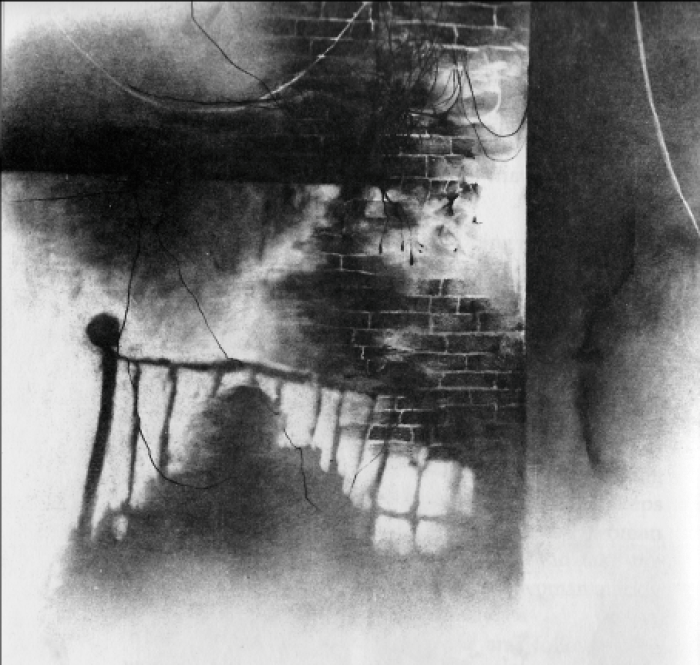
“He bore the name Charles Dexter Ward, and was placed under restraint most reluctantly by the grieving father who had watched his aberration grow from a mere eccentricity to a dark mania involving both a possibility of murderous tendencies and a profound and peculiar change in apparent contents of his mind.”
Welcome back to another blind read! It feels like it’s been a long drought since the last time we covered one of Lovecraft’s more popular pieces, and I gotta tell you, I was very excited to jump into this one.
Right from the start we enter into familiar territory. The POV is much more omniscient than much of Lovecraft (the majority of his stories seem to be told from a much more limited 3rd person, and much of that is from the perspective of an unreliable narrator), however the omniscient narrator spends this chapter describing the character of Ward, whom is a young man who has gone down a path that has led him to the strange.
We find that Ward is an inquisitive youth. He’s described as “a scholar and antiquarian”, but at some point (specifically at his last year of Moses Brown School, the feeder school to Brown University) “he suddenly turned from the study of the past to the study of the occult.”
Ward, while doing research into his past, found that one of his ancestors had some connection to the occult. One Joseph Curwen, “who had come from Salem in March of 1692, and about whom a whispered series of highly peculiar and disquieting stories clustered.” It was in this research of his ancestor that Ward began to go down the rabbit hole of the occult.
Whatever he did had strange consequences. It changed, not only his mind and the psychology behind it, but his actual physiology. There is a really fascinating section early on in the story where Lovecraft describes Ward’s “Organic processes”. The entire point of this is to show that Ward had tapped into something that changed him, but the brilliance of this section is that it encompasses the horror of Lovecraft perfectly:
“Respiration and heart action had a baffling lack of symmetry; the voice was lost, so that no sounds above a whisper were possible; digestion was incredibly prolonged and minimised, and neural reactions to standard stimuli bore no relation at all to anything heretofore recorded, either normal or pathological. The skin had a morbid chill and dryness, and the cellular structure of the tissue seemed exaggeratedly coarse and loosely knit.”
This was the most fascinating section to me because when you read the passage, something about what he’s describing feels off. You know that Ward has been effected by something, but as a reader, you are uncertain what it is. You know he’s still human, but you know that whatever he got himself into has done something to him, and it’s that word… something… that creates real fear. This ambiguous description is the cornerstone of Lovecraft’s genius of horror. He pontificates, but doesn’t out and out recount what is truly going on.
It wasn’t that Ward had become some creature (although he could… this is only the first chapter), just that there was something wrong with him. I see this all the time in bad horror, where the author tries too hard for the scare, and in doing so, usually describes the creature or describes in lurid detail what is happening to the character. When we actually get to see something our brain is able to put it in a box, and where that box may not be pleasant, it’s the first step in understanding. Lovecraft’s point is that we can never understand these types of horrors. He lets the reader’s mind do the work for them.
Even the titles elicit this with stories like “The Thing in the Moonlight” or “The Unnamable” prove that he understood what’s truly scary to people is what they don’t know, not what they do know. He describes things that are a little strange to unsettle the reader, but not to outright terrify. Lovecraft wants to do what his creations do, he wants to be that insidious pulling at the back of your unconscious that tells you something isn’t right, even though you don’t understand what that is.
The brilliance of this story is he places Ward into such a realistic place. He goes into great detail describing Providence, RI. So much in fact that there is criticism (actually from Lovecraft himself) that the novel is a “cumbrous, creaking bit of self-conscious antiquarianism” because of the detail he uses in describing Providence. Now, where he sees this as self aggrandizing, I find it a wonderful juxtaposition to the oddity that is Ward. The realism of his illustration of Providence grounds us, which makes the possibility of the unseen horrors corrupting that reality all the more… well… horrible.
Come back next week and read along as we cover chapter 2 “An Antecedent and a Horror” in The Case of Charles Dexter Ward!
Blind Read Through: H.P. Lovecraft; The Book

“It was a key – a guide – to certain gateways and transitions of which mystics have dreamed and whispered since the race was young, and which lead to freedoms and discoveries beyond three dimensions and realms of life and matter that we know.”
Welcome back to another blind read! I was excited to read this one because I thought it might have to do with the Necronomicon, but soon found out that the eponymous book was yet another tome of outlandish sorcery – but more on that later.
This fragment starts out with the old Lovecraft standby – the unreliable narrator. This one doesn’t mince words though, our narrator comes right out and says, “wow this is crazy, I don’t even know where I am, or even who I am half the time!”
Think I’m exaggerating? Here’s the beginning: “My memories are confused…I am not even certain how I am communicating this message…My identity, too, is bewilderingly cloudy.”
I’ve been debating on where to put this critique, but every other story is pretty jam packed with content, whereas this is a shorter fragment, so I think I’ll talk about this here…
I’m not thrilled about this unreliable narrator that Lovecraft loves to use. It’s fine every once and a while, but when you consistently re-use the same themes, it feels more like bad writing than a trend. I understand it for sure. Lovecraft is trying to set the stage and each unreliable narrator tends to have a different reason for their unreliableness (totally a word). This narrator is confused because of “… that worm riddled book…” he discovered. He delved so deep into it’s mysteries that it has altered his reality so that he’s not sure as to which reality he’s actually in.
The issue this creates is that the story is now forever stuck in the fantasy realm. The wonderful nature of Lovecraft is the creepy realism he develops with his mythology. He takes us to real places with dirty people (literally and figuratively) who are just trying to make a living, and these extraordinary things happen to them. By telling the story by an unreliable narrator it takes away some of the stakes. Could all of this insanity all be in their head? Could they just be lying? Are they under the influence of something like Opium of Peyote? All of these choices are fine for a story or two, but when we start out nearly every story with the narrator saying something along the lines of “I don’t even know where I am right now!” It becomes more about fantasy than horror and the stakes are lowered for the reader. Lovecraft dances this line superbly in most of his works, but it would be a better choice had the narrator understood what was happening, rather than telling us at the beginning of each story that it might not be true.
Just had to get that off my chest, but back to the story…
The narrator finds the old “wormy” book in some old book store and the shop keep is grateful to be rid of it (or is this some ploy? Could the shop keep with his “curious sign with his hand” be in on it?). When the narrator reads it he finds that, as the starting quote says, it is a key; a gateway to other worlds. I thought for sure this was the classic Grimoire I mentioned earlier but, “… the hand of some half-crazed monk, had traced these ominous Latin phrases in unicals of awesome antiquity.” So we know it’s not the Necronomicon because that tome was written by the Mad Arab Alhazred and he’d be writing it in either Arabic or Aramaic, so it must be something else. The first few pages are burned away, so no one really knows what the book is, however there are references to many other things within: “But still I read more – in hidden, forgotten books and scrolls to which my new vision led me…” So we know there is more to Lovecraft’s old forgotten mystery tomes than the Necronomicon and the Pnakotic Manuscripts.
This fragment was written just a few years before Lovecraft died, so who knows what he would have created as he expanded his universe (I’m sure other authors, like Clark Ashton Smith and August Derleth did, along with a multitude of others who followed, but I’m not there yet).
We even get a glimpse of some strange square building which terrifies the narrator into giving up his research and becoming a hermit. There’s mention that he has gone back in time, could this strange square building have been a Cthulhu temple in R’lyeh? The narrator doesn’t know, so we wont either.
But that’s all. This one is a fairly contained story, but there isn’t a whole lot to it. It feels like this is actually a character sketch for a future story, or that he was trying to work out what another old tome could be. Who knows? Maybe I’ll read another story during this blind read and come across a book which is a “key” somewhere else! Anyone out there, know which book this story is referencing?
I’ve purposely kept some of the better known Lovecraft stories for last. I wanted to try to get as much experience within the framework of his oeuvre before jumping into larger and more popular stories. To that end, I have just one more fragment to get to, “The Thing in the Moonlight” which will be next week (reading from the beautifully Michael Whelan illustrated Del Rey books), before heading into “The Case of Charles Dexter Ward.”
Come join me! Lets read along!
Blind Read Through: H.P. Lovecraft; The Strange High House in the Mist

Welcome back to another Blind Read! By the looks of things, I will have made it through all of Lovecraft by the end of the year. SO…If you have an author that you’d like to discuss, or have trouble reading let me know! Maybe they can be the next author covered in this series.
“At length, being avid for new strange things and held back by neither the Kingsporter’s fear nor the summer boarder’s usual indolence, Olney made a very terrible resolve.”
This story is a connector of the Dreamlands stories. In it we have a house perched on top of a tall cliff, with the only doorway leading out to the abyss of the cliff. Inside the house we have a protector. Someone who spends eternity guarding the world from the other gods and the incursion of the Dreamlands into our reality. We are enabled to see this house because our intrepid adventurer, whom out of curiosity and a lust for life, finds a way up to “The Causeway” and meets this caretaker.
We start the story describing the harbor town of Kingsport. Right from the very first paragraph we are given knowledge that the people of Kingsport know there are strange dealings around them. The feel of the town is one of mysticism. The fantastic nostalgia for a simpler time. A time when older gods ruled the world and people only wanted for basic survival. There was no rat race, but a desire for simplicity and knowledge. This is the core of Lovecraft, both person and writings. He believed in simplicity, and loathed materialism. You can see this starkly in his portrayals of cities like New York, as he yearns to stay in his protected, almost mythical, section of New England.
Thomas Olney, our main character, is new to Kingsport and he hears stories about the house from sailors and an old bearded man in town. He can occasionally catch glimpses of it as well through the thick mists that circle the craggy cliff it sits upon. His curiosity overwhelms him and he decides that the’s going to take the trip up to it. It is a dangerous and arduous journey, but eventually he gets there and finds that the only ingress to the house are the closed windows, and a door that opens out over the cliff. He hears someone approach and hears the door creak open, so he hides beneath the sill of a window, only to be pulled into the house. The man who pulled him into the house is young and bearded and he is reminiscent of the grouchy old man in the village who seems to know about this house.
The bearded man tells stories to Olney; “…and heard how the kings of Atlantis fought with slippery blasphemies that wriggled out of rifts in the oceans floor, and how the pillared and weedy temple of Poseidonis is still glimpsed at midnight by lost ships…”
This is both a reference to R’lyeh, the city where Cthulhu is buried in slumber, and Dagon, one of the pantheon of lesser gods and linked with Poseidon. In other stories there is mention that the god like men of Atlantis fought off the Elder Gods, Cthulhu being one of them. Where they couldn’t defeat them, they buried R’lyeh, the lost city, and trapped Cthulhu within the earth. Dagon is the fish god, and still calls creatures from the sea in a slow effort to gain back control. See The Shadow over Innsmouth.
Olney is also told of older things: “Years of the Titans were recalled, but the host grew timid when he spoke of the dim first age of chaos before the gods or even the Elder Ones were born, and when the other gods came to dance on the peak of Hatheg-Kla in the stony desert near Ulthar, beyond the River Skai.”
There is a lot to unpack there, but basically we have the establishment of what Lovecraft himself called “Yog-Sothothery”, later to be coined “The Cthulhu Mythos” by August Derleth, one of Lovecraft’s closest friends and writing partners. The other gods were first; terrible creatures and malevolent in nature. The Elder Ones came later. Creatures like Azathoth. Then later, came the deep ones like Cthulhu. The River Skai also has importance in the Dreamcycle as we see in the Dream Quest of Unknown Kadath and other stories.
Shortly after describing this, something comes to the door of the house. The bearded man hurries and locks the door, then goes around the house and shutters all the windows. It’s a suspenseful scene as he tells Olney to get low and be quiet. “And the bearded man made enigmatical gestures of prayer…“. The bearded man is setting wards against shadows that are gathering in the room, “For there are strange objects in the great abyss, and the seeker of dreams must take care not to stir up or meet the wrong ones.”
All of this information, plus numerous mentions of dreams and dream seekers, leads me to believe that this house is a way point. This house, in between Kingsport and Arkham, is an thin place that connects the dream world to the real world. The keeper, the bearded man, must be careful not to let these ancient horrors through the world. He gives the information to Olney, just like he gave it to The Terrible Old Man (Lovecraft even capitalized this honorarium in the story) so many years before. They get just enough information to be afraid of the house, and potentially keep others away. Olney never goes back, and in fact he loses some of his natural curiosity because of the shock of the experience, and eventually moves away. But still that Strange High House in the Mist stays and guards against the others from transcending into our world.
What do you think?
Blind Read Through: H.P. Lovecraft; The Horror at Red Hook
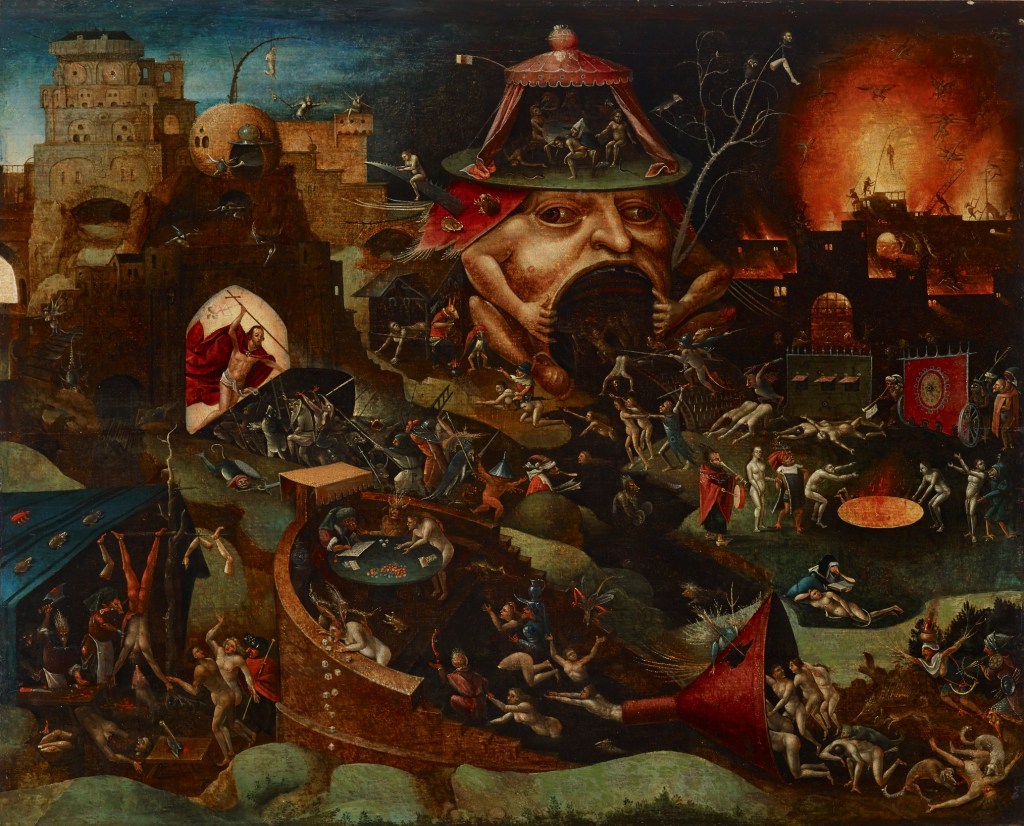
“But at this time it was all horribly real, and nothing can ever efface the memory of those nighted crypts, those titan arcades, and those half-formed shapes of hell that strode gigantically in silence holding half-eaten things whose still surviving portions screamed for mercy or laughed with madness.”
Wow, what a wild ride this story was. This was probably the scariest and most classic horror of any H.P. Lovecraft that I’ve read up to date.
As the story begins we are introduced to detective Thomas F. Malone who is on extended medical leave for trauma. The first portion of the story describes how he’s living and dealing with this trauma, of which we are still ignorant.
The second portion of the story covers Red Hook. We get a call back to HE, as there is a similar tenement structure our narrator experienced there. This story also takes place in New York, which is absolutely unique for Lovecraft. It does not hold the same atmosphere as much of his work, but from the start of this story the tone has a much darker and sinister feel. The basis in New York gives Lovecraft the ability to explore different themes than the usual fantasy/cosmic horror that he frames in New England.
The third portion of the story is the introduction to Malone’s quarry, Robert Suydam. “Suydam was a lettered recluse of an ancient Dutch family,” and he purchased a space in the run down, twisting alleyways of Red Hook. After a strange trip to Europe, Suydam began to deteriorate. His personal hygiene took a hit, he lost friends, and “When he spoke it was to babble of unlimited powers almost within his grasp, and to repeat with knowing leers such mystical words or names as ‘Sephiroth’, ‘Ashmodai’ and Samael’.” And there it is. We have three demons from the Kabbalah and Christian religions. The text has gone beyond the normal Lovecraft, no longer in the world of the cosmic horror. We are no longer in the dreamlands (though there is a little bit of dream stuff to come), we have now crossed over into religious horror. To me this raised my hackles. I find this subject matter far more terrifying that anything I have yet come by within Lovecraft’s oeuvre.
The fourth section of the story delves into the police work. Trying to uncover just what strange dealings that Suydam has been up to. They raid his home, which is empty, and they come across blasphemous art work and things that Malone simply “did not like”. They also found an inscription:
O friend and companion of night, thou who rejoices in the baying of dogs and spilt blood, who wanderest in the midst of shades among the tombs, who longest for blood and bringest terror to mortals, Gorgo, Mormo, thousand-faced moon, look favourably on our sacrifices!
I had no idea what this meant. Though obviously a atmospheric quote, I believed it had deeper meaning. Lovecraft infuses lots of Greek mythology and heritage within his work. There is a certain amount of admiration he obviously felt for the culture and the artwork. He loves the idea of marble structures and busts and even includes some of that iconography in this story as well. So when I came across this quote, it was no surprise to me that it was about Hecate, the Greek Goddess of the underworld, ghosts, and magic. This story was not going to deal with cosmic horror, it was going to deal with something closer to home. It was about Hell.
The next short section of the story tells of a journey Suydam takes across the sea, where he dies. He instructs that his body be conveyed to the bearer of the note provided.
Then we move into the Horror. Malone goes to Red Hook and investigates, noticing a melee. He goes to allay the fight and finds strange sounds and smells while all the participants of the battle flee. Malone suspects something nefarious behind a large door, so he takes a stool and breaks the door open, “whence poured a howling tumult of ice-cold wind with all the stenches of the bottomless pit, and whence reached a sucking force not of earth or heaven, which, coiling sentiently about the paralysed detective, dragged him through the aperture and down unmeasured spaces filled with whispers and wails, and gusts of mocking laughter.“
Malone is sucked into Hell. He experiences some truly horrific scenes, perfect for any fan of this type of fiction, and much more evocative than anything I’ve experienced from Lovecraft. We see Suydam giving himself over to a demon, finally getting what he was after, and becoming one with hell.
The final section explains how the mysterious group brought Suydam’s body back to that experience and how Malone could hear that same refrain from some “hag” speaking to young children about Hecate. The knowledge of the fate of Suydam and that whatever devious magic caused it is still alive and well in Red Hook is what truly throws Malone over the edge.
When I think of Lovecraft I don’t generally think “disturbing”, but I have to say that this one was up there. That penultimate chapter covering Malone’s experiences in Hell were truly unsettling.
What do you think?
Blind Read Through: H.P. Lovecraft; Hypnos
Welcome back to the creeping revision of H.P. Lovecraft’s work! This week I’m delving into Hypnos and it’s duality meaning.
The basic story is that the classic unreliable narrator meets a man who had a god-like face almost as ‘white as the marble of Pentelicus.’ The man had passed out in a train station, and our narrator went to him and when the man opened his eyes the narrator knew ‘he would be thenceforth my only friend.’ They discuss the universe and everything within it, and the narrator sculpts his friend. Our narrators new friend has a secret desire that he dare not speak of, to rule and go past the barriers of our known world. They experiment in drugs and try to get into the sleep world (which I can only imagine is a precursor, or even the beginnings of the dream-cycle pantheon). Then one one of these trips the friend (unnamed…for now), goes past an impassible barrier in the dream world, and comes back terrified and visibly aged. The two then vow to sleep as little as possible, also with the help of drugs. They age horribly and they pass their time in big groups and go to as many parties as possible, until one night as they are sleeping something strange happens as a light glows over his friends head and our narrator can see the disembodied face that looks as his friend once did before he went through the impassible barrier. The police come and gather the narrator and tell him that he has been alone, that all along he has been alone…that there was no friend. the only evidence is a bust of his friend with the name Hypnos.
There is an emerging theme that I had never known about from hearing about Lovecraft and that is the drugs. There have been many stories thus far eliciting that the narrators are using drugs to help them get past the barriers and see what is beyond. One cant help but think of the drug dreams of Irving Welch, and wonder if these are stories of fever dreams. It would be a provocative theory, though probably an unpopular one, but I would need to read more to see if the thread continues.
The connectors in the story are traced back to Greece. The narrator is a sculptor and he says he spends his free time sculpting his friend, who has a forehead as white as the marble of Pentelicus…a mountain in Athens known for it’s marble. Then at the end we find that the friends name was Hypnos, which was the Greek demi-god of sleep. So we come to a crossroads. The story is either telling us that the narrator finds this marble bust, and through his drug or fever dream, thinks that the bust opens its eyes and becomes his friend. Remember that the friend was found asleep in the train station, a place where it would make sense for a bust to be. Our narrator is lost in the HYPNOtic gaze of the bust, steals it and the drugs bring him through the adventures. The strange light over his friend at the end, is actually light over the bust and the cracking of the narrators reality. Remember that the idea was put there by drugs (one can only guess that it was a hallucinogenic), and he then stayed awake with the help of drugs. Sleep deprivation on top of a psychotic break will only deepen psychosis.
The other option, is that the events of the story are unfolded exactly how they are told, but frankly with the evidence that Lovecraft deposits throughout the story, this is not very likely. In any case, this was probably my favorite story thus far, right up there with The Tomb and The Tree.
Join me on Thursday this week (08/17) for one of Lovecraft’s Poems “Nathicana”. and if you want to read along with me I’m reading the Del Rey edition of “The Doom That Came to Sarnath”. ISBN: 0345331052
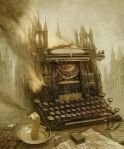



 Sean McBride
You must be logged in to post a comment.