Thankful for Fantasy

“Fantasy is a necessary ingredient in living, it’s a way of looking at life through the wrong end of a telescope, and that enables you to laugh at life’s realities.” – Dr. Seuss.
“Fantasy, abandoned by reason, produces impossible monsters, united with it, she is the mother of the arts and the origin of marvels.” Francisco Goya.
“Fantasy is hardly an escape from reality. It’s a way of understanding it.” Lloyd Alexander
I’ve spent the more significant part of the last seven years writing a weekly blog that covers famous fantasy authors, and believe it or not, I’ve only gotten through two different authors. H.P. Lovecraft and, currently, J.R.R. Tolkien.
Meanwhile, during that time, media like Critical Role and Stranger Things have increased the popularity and accessibility of Dungeons and Dragons (and general role-playing games).
“Fantasy is a necessary ingredient in living, it’s a way of looking at life through the wrong end of a telescope, and that enables you to laugh at life’s realities.” – Dr. Seuss.
“Fantasy, abandoned by reason, produces impossible monsters, united with it, she is the mother of the arts and the origin of marvels.” Francisco Goya.
“Fantasy is hardly an escape from reality. It’s a way of understanding it.” Lloyd Alexander
I’ve spent the more significant part of the last seven years writing a weekly blog that covers famous fantasy authors, and believe it or not, I’ve only gotten through two different authors. H.P. Lovecraft and, currently, J.R.R. Tolkien.
Meanwhile, during that time, media like Critical Role and Stranger Things have increased the popularity and accessibility of Dungeons and Dragons (and general role-playing games).
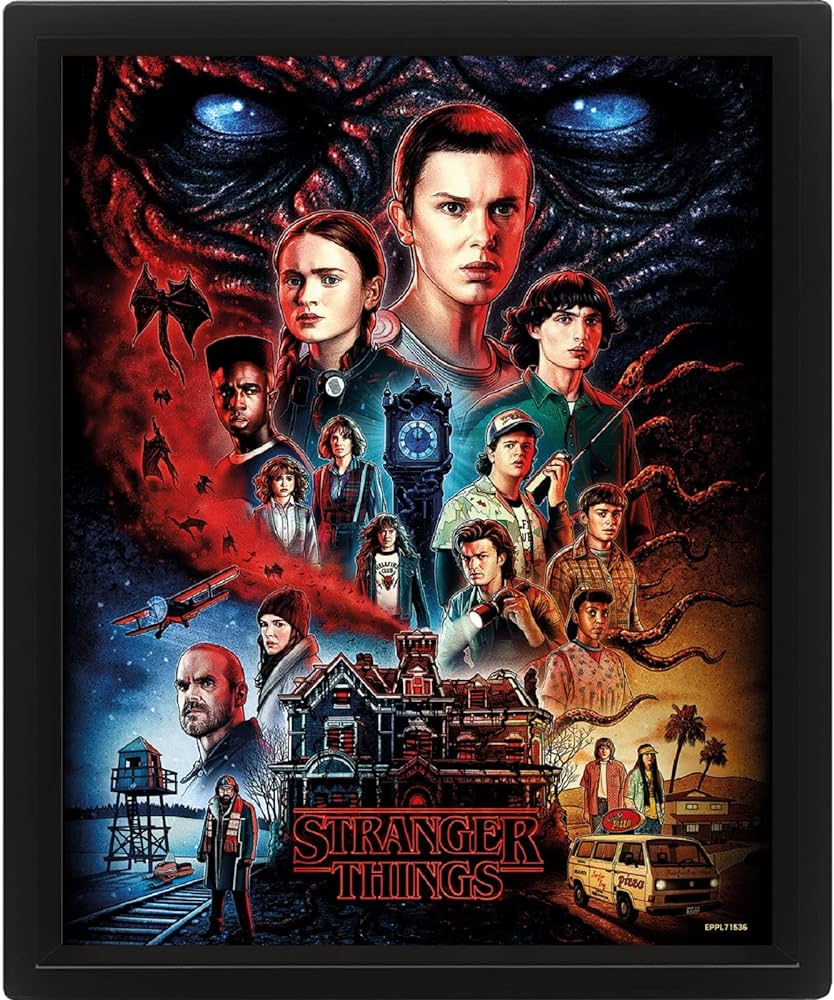
I’m happy about this resurgence. I’ve played role-playing games and read fantasy books my entire life, but it’s hard to explain what it does to someone who doesn’t appreciate it.
I will tie Horror with Fantasy here (just like Lovecraft was also part of my blog) because they are the same.
Horror, just like anything else, has levels. There is Horror that is just there for the scared or the gross-out, but excellent Horror is there to explore grief, courage, and the human condition. The use of subtext is paramount because the antagonists in good Horror are almost always the characters themselves. It is something internal they must work through, some wound that they never dealt with that manifests into some epic evil.
Likewise, in Fantasy, you might have a simple story of a group on some adventure, but excellent Fantasy incorporates themes of PTSD, hope, and friendship. In good Fantasy, characters go through outrageous ordeals and must live with their decisions. In most Fantasy, the odds are overwhelming, and the protagonists must gather their courage and face stronger foes that outnumber them.
So what does that do for the person consuming that media? Why is Fantasy an essential part of our collective consciousness, even when describing things that don’t occur in this world?
It’s because of what Fantasy does; it deals with deeper issues and it’s escapism. When you are dealing with something as serious as PTSD, facing that condition straight on with a realistic dramatic story that shows a character going through what you had gone through actually might not help that much. Sure, you can have the experience of seeing someone go through whatever you went through. Still, a dramatic, visceral take might trigger you more (I hate to use the word trigger because it’s overused in our modern parlance and diminishes people who genuinely have to deal with such things, but it’s the most appropriate word in this instance).

Take a book like “The Stormlight Archive” by Brandon Sanderson. It’s a High Fantasy series where each character has to deal with something horrendous. Whether it’s war, abuse, or death and grief, each character must navigate and work through these problems subtly while at the same time dealing with the fantasy world they live in.
The fantasy aspect takes away some of the real-world stings of events and enables us as readers to process some of the trauma realistically, much more than being faced with Horror and made to deal with it head-on.
This idea is precisely the point of the Lloyd Alexander (novelist, most well known for his fantasy books for young readers) quote above. Fantasy allows you to have an extremely complex reality and break it down in a way conducive to healing, enabling understanding.

Likewise, Dr. Seuss’s quote might seem a little out of place, but what he’s saying is that Fantasy allows us to take something from our lives and then take it to its extreme, which turns something potentially harmful into something absurd. It will enable you to release some of the gravity of reality because you can suddenly see that those things weighing on you may not be as bad as they seem if you have to sit in their emotion.
Nostalgia and levity, perspective, and release are what these two quotes are all about. We read these types of Fantasy when we see something like Tolkien. Lloyd Alexander (If you have not read or seen the Disney version of The Black Cauldron, stop what you’re doing and do so). But there is another type of Fantasy. A much darker aspect, and that is what Goya speaks of in his above quote.
Goya is talking about Exorsizing our Demons, and it’s why people love the darker turn of Fantasy and all of Horror. Everyone has fears and demons that they harbor inside, and everyone has to deal with them to a certain degree.
One of the steps of recovery from trauma (and of psychological trials like anxiety) is verbalizing or visualizing the actual trauma. It becomes much easier to deal with if you can manifest your fear and see it for what it is. A famous psychological test is the “Then what” test. You state your fear (I’m going to fail a test); once externalized, you ask, “Then what?” (My grade will go down). “Then what?” (I’ll have to study harder. My parents will be mad at me.) “Then what?”
Eventually, you get to a point where there is nothing in the well to worry about, and looking back, the fear is diminished because the result is very rarely the worst-case scenario in the first place.
Goya is manifesting the worst-case scenario and bringing it to the forefront, except what happens in Fantasy? Very rarely, the worst-case scenario. The giant monster emerges (the worst fear), and the protagonist prevails (even if they don’t eliminate the big bad).

Fantasy is a way to face your fears and prevail over them. Fantasy is a way to show that it’s possible.
So, on this Thanksgiving Day, I’m thankful for Fantasy. I am no longer hiding the fact that I love the genre and that it can be less than Literature because what good Fantasy does is heal our souls, and everyone needs a little healing sometimes.
A Thursday Treat

Happy Thursday! So, I have fallen behind a bit in my Tolkien reading, and with Thanksgiving right around the corner, I’m going to take this week and next week off of the Blind Read blog. I can’t leave well enough alone however, so I’m going to give you all a little treat this week with a sneak preview of my New Novel “The Monster in the Woods.” It’s a fantasy/heist story with a mystery at it’s core, that follows a group of teens trying to figure out if the Monster threatening the town they live in is real or not. Told in a revolving POV, it’s a death defying adventure in the classic vein of The Goonies. Hope you enjoy and let me know what you think!
Chapter 1
Lishtest
There was a soft click and suddenly haunting beautiful music echoed across the camp, lending a surreal tint to the night. Fog had rolled through, which led to a particularly claustrophobic aura over the two guards. Jack sat cross legged with his back to the town wall, facing the fire and beyond into the woods. Taun sat to Jack’s left but parallel to the wall still facing the fire. Lishtest sat opposite Taun, studying the fog, polishing her pauldrons. Lish was their Captain and always believed in a clean, well oiled uniform. Tidiness meant order and order meant discipline, and Discipline meant she could keep people alive.
“Turn that thing off, man,” Taun complained. “It’s creepy enough out here without you giving it a soundtrack.”
“Come on! My son gave this to me,” Jack whined. “Behbet said my youngest walked into a store and listened to it for a minute. She said his eyes got this glazed over look to them, and then she said he turned to her and looked her in the eye and with a super serious expression said to her, ‘Dad should have this.’ It just hit me when she told me that. He’s my son, you know? But when she told me that, it was like, he thinks of me like I think of him. And I’m out here and he’s in there. I want to hear it to remind me of him, but I want him to know I have it, because it was so important to him. Even though it’s creepy as hell.”
“Damn man, I didn’t know,” Taun said. Lish looked up at Taun and she was surprised to see that he actually looked like he could be experiencing some kind of emotion.
“Naw, I gotta stop it,” Taun said and swiped the box from him. Lish smiled. Now he was acting like the Taun she expected.
It was their Tenth day and Eleventh night out beyond the walls of the town. They got very little sleep out here, despite the fact that the Ferrians probably would not be attacking any time soon. Their army was too green, too weak to take on Teriistown. It’s walls were too high and reinforced, their army was too powerful. They raised warriors afterall, drafted as children and taught to be soldiers all their lives. No matter how angry the Ferrians were at Duke Siiran for the new policy he had instilled on them she didn’t think they would come and revolt.
It was getting monotonous. Everyday, she would send out some mix of the three of them out to range and survey the forest, while the third stayed back at camp for hours on end with nothing to do but collect firewood and boil rations. They had just begun their fourth rotation, and discipline in camp was already deteriorating to the point where Taun felt he could take Jack’s music box, no matter how annoying the thing was. She was going to have to put her foot down.
“Give me the box,” Lish said, almost under her breath.
“Awe, Cap, we were just messing around,” Taun began, but she wouldn’t let him finish.
“Captain,” she said it a bit too harshly and internally winced, but there was no going back now.
“Sorry. Captain,” Taun said and handed the music box to her. “Just having a bit of fun.”
Lish took the music box, nodded slightly to Taun and took it to her tent. She opened her chest and buried it underneath her clothes, before coming back out and sitting by the fire. Good. Taun took it seriously. He still had respect for the uniform. As a captain, out here, beyond the wall, there was nothing more important that your soldier’s respect.
“Wait sir, so I cant have it back?” Jack said. “I didn’t do anything wrong!”
Damn, Lish thought. She leaned forward and looked directly into Jack’s eyes. The fire reflected in his eyes the anger back at her.
“Lieutenant. There are three of us out here. Are we friendly, yes. Is there a chain of command, yes. You both need to know that if one of you gets in trouble, you both get in trouble. Has it been that long since Basic Training?”
“My son gave me that music box.”
“And you can have it back in the morning,” Lish said, then leaned back on the stump.
“I’m not a child, and that box is important to me.”
“You are not a child, lieutenant. But Ferrians aren’t all that we are out here to watch out for, and there’s no reason to call more attention to ourselves than is particularly necessary. Playing it during the day when we can see into the woods is one thing, but playing it at dusk, while we have a fire to make the darkness darker, and there is a fog giving more cover, you’re really going to play music to mask the sound of something approaching?”
“Something approaching. Ferrian’s aren’t all? You really believe there’s some kind of monster in these woods?”
“I mean, did you see the Carpenter? Dude was shredded. I’m not even sure if they know if it’s really the Carpenter, he’s so messed up.” Taun responded.
Lish gave Taun a look. “No, I do not believe there is a monster in these woods, lieutenant. I do think there are some large animals, and maybe one that has grown a little too big and someone thought it was a monster. It doesn’t change the fact that something can still sneak up on us in this kind of environment, natural or not, if we’re making a whole bunch of noise. This conversation is not helping. Do I make myself clear?”
Before Jack could respond, Taun interrupted. “Did you hear that?”
“Oh shove it Taun,” Jack said.
“I’m being serious! That way,” Taun pointed off slightly north-east.
“Grab your weapons,” Lish said as she stood and glared out into the fog filled woods. She was looking for movement, but the firelight danced through the fog and her mind made her see figures dancing in the darkness.
She noted the action on Jack and Taun’s rifles and knew they were following her lead. Nothing like a threat to snap someone to attention. She worked with them enough to know that Taun was flanking out to the right, and Jack was moving the other direction. Lish would take the middle as the ranking officer.
She began to move toward the forest slowly. Her rifle held up, she strafed the forest edge. She took a moment to steady her breathing and felt adrenaline give her senses a lift. The forest was dark and thick with brambles, but came into focus as she moved away from the fire. She saw it. It was big, bigger than a bear. It’s hide was glinting from the fire which meant it had some kind of Chitin or armor, but she wasn’t sure if it had thick long hair, or tentacles. It’s eyes glowed green as it locked with hers.
She took another steadying breath while she raised her hand and pointed at it. “There,” She said in an octave lower than her normal voice.
The thing seemed to snuffle in anger, like her dog did as a kid if it didn’t get what it wanted. It seemed to blink in and out of existence for a moment. She couldn’t be certain how it moved, but all the sudden it was five foot to the left of where it was. Everything in her wanted to pull the trigger, but she didn’t know anything about it and she needed Taun and Jack to give her the signal that they were in place before she acted.
It blinked again and it was closer. It’s eyes never left hers, but there was something in them, something unnatural. Just two glowing orbs, no iris, no cornea. It really was a monster.
“Hup,” Jack called out. He was in place.
She rested her finger on the trigger and gently began to squeeze.
It looked at her again and somehow those orbs conveyed curiosity.
“Hup,” Taun called out.
Her finger squeezed and a moment later she heard the discharge of both their rifles.
The creature blinked again, and it was on Taun. He screamed. It was a sound Lish never thought a human could create. She slid another bullet into the chamber and slid the bolt handle shut in one fluid motion and fired again. Taun was using his rifle as a baton swinging it against the thing, as he tried to maneuver away, but it stayed on him.
She fired again and again and she heard the report of Jack firing as well, but the thing didn’t seem to even feel it. She couldn’t see it attacking Taun either, but his skin kept rending in places, spilling bright red against the foggy gray night.
Taun continued to battle and dance away from the creature, but she could see his movements were slowing.
“Jack, Fire!” She ordered. She grabbed a log she could swing and stuck it in the camp fire. The log took forever to light and Jack appeared next to her continually firing and reloading his rifle. Taun screamed one more gargling scream and then abruptly stopped.
Once the log was lit, she ran at the creature and it blinked again. It was suddenly right in front of her and that Green Orb was the size of her head. She shoved the log into the eye, fire first. The creature squealed and a moment later she felt herself flying through the air back towards the campfire.
She heard Jack’s battle cry, but it turned to a drowning gargle before she blacked out.
Magic Does Exist

It’s easy to write the phrase “with everything going on in the world.” There is, and will always be, a never-ending stream of horrible things happening, so perspective is more critical now than ever.
We live in a digital age, where news and op-eds are at our fingertips 24/7, and things like social media have fostered an interesting change to our psyche. We have created perspective silos, where we only see what we want to see, creating division between one another. Then we have politicians who are only out for themselves who are stoking this division.
These kinds of rifts have and will always be around, but one thing we have forgotten as a society, as humans, and as creative beings is that there is still magic in the world; and magic is what will save us from ourselves.

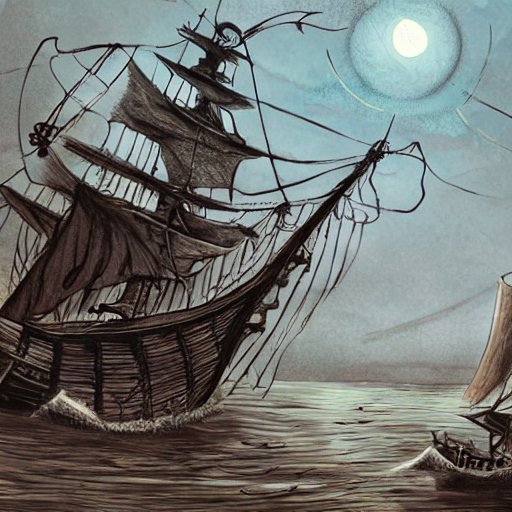
I was driving with my wife this past weekend on the central coast of California celebrating our tenth anniversary, and off the coast, oil rigs were sitting out in the ocean. I had no idea they were there (or that there was a drilling operation so close to our coast), so naturally, being a fantasist, I immediately thought they were some ship. My mind turned to Pirates out in the ocean, sailing the wide blue expanse in search of meaning and freedom and booty.
Of course, I didn’t verbalize this and asked what they were because I couldn’t get the visual out of my head (Though my wife is awesome and knew exactly what I was thinking and why I asked). When she told me what they were, I nodded, and we moved on, but there was magic in the world again for that brief moment. There was still the possibility of a real-life version of the Pirates of the Caribbean, where there were curses and magic and epic fights on the seven seas, where no one really dies, and you always find out that there is just one more item beyond reach that can give understanding and have the world make sense.
People, in this digital age, have forgotten that there is magic in the world. The drive to get clicks, and the pressure to be famous or influence and show how good your life is to strangers online has taken precedence over enjoying the little things.
Speaking of pirates, The Pirates of the Caribbean series was so popular (and Disney in general) because it introduced the world’s elements that were thought impossible.

On the one hand, you have the East India Company, which represents reality, corporations, and the everyday grind. Everything about that concept is about control and making the world smaller. About controlling the magic in the world for profit. The more we know about the world, the less magic there is, the less there is to wonder about, and we end up just accepting that the daily grind is all there is, and the company gets what it wants… good workers that realize there is nothing beyond their Friday paycheck.
Captain Jack introduces us to a character who knows there is magic left in the world. But not magic in the traditional sense. Not witches, wizards, and spells (though that can be a part of it), but wonder and imagination. We are asking people to grow up far too quickly, telling them that the harsh reality is all there is, and disparaging people who want to believe there is something more in the world. We tell people to “grow up,” stop being childish and take things more seriously.
But what does that do for you? If all you can do is internalize the cold, hard reality, it only leaves room for disdain, hatred, and sadness. Then disassociation is the only thing left, which isn’t a healthy alternative.
Fantasy isn’t necessarily escapism but a filter on the lens of the world. Fantasy allows you to experience the world in a way where magic still exists.
There is a reason that Disneyland is “the happiest place on earth,” and it’s because they focus on the individual details. They miss no brush stroke; every rock is overturned. There are hidden Mickeys throughout the park. Each land can let you immerse yourself in the wonder of that world. The details allow you to experience the magic that still exists in our world, so your mind can slip into that magic when you hear a song or see an article of clothing.
Magic and fantasy are not about escapism but realizing that the world isn’t myopic. Life isn’t dictated by corporations or political rhetoric. Life is created and run by magic, and things are still hidden. Look hard enough to find your hidden mickey in the sand, trees, or oceans. Be your own Imagineer and make your own mystery, create your own wonder. Discover your own treasure map that leads to some hidden fantasy, even if you can never find it.
Magic is still alive and well in the world, and we are here to experience it. Work will always be there; go and find your magic. Go and find your purpose.
Elsie Jones and the AI debate!

Hey everyone! There is some new and mixed information about the publication of the first book and series. The first three books are written and nearly done being edited (in fact the first twelve books are written), and I’ve been playing around with artwork for a while now.
Because these first three books are going to be different than the originals (the first book will have a completely different plot, the second book will have minor changes, and the third book will be completely re-edited for content and be much longer), I originally wanted to get some new artwork for them so everyone would be able to tell the two different editions apart.

I reached out to a few people, but the price was either going to be too high, or the job was going to be too encompassing. Kind of like signing on to a Marvel character knowing that you have to be involved for the next ten years of your life, the series is 15 books long and each book will require three to four pictures plus a color cover which is quite a bit of work. I can understand where someone would look at that and turn it down.
I then reached out to a friend of mine who is a little more techy than I am, and we decided to work together to try and get some AI artwork together to make the books come to life. I was never really thrilled about this prospect (the discussion of AI art is for a different blog, and is a much longer conversation), because I loved the funky feel of my original artist Jesse Velasquez’s drawings, and how they brought Elsie to life.

The concession I made was that each of the books has a different theme and each one of the books takes place in a different time period and space, so I thought it might be kind of interesting to have each book change slightly in it’s artwork; for example “Elsie Jones and the Captain’s Guard” takes place in “The Three Musketeers” so having a Baroque style art for that book, but when she travels to “The Casebook of Sherlock Holmes” the artwork would be Victorian in style.

Ultimately I wasn’t super happy with the results that we were getting because Elsie Jones is a character in my head and the AI generators that we were working with made the character look a little too much like a public figure, or she looked different in every picture (All the examples are spread throughout this post).
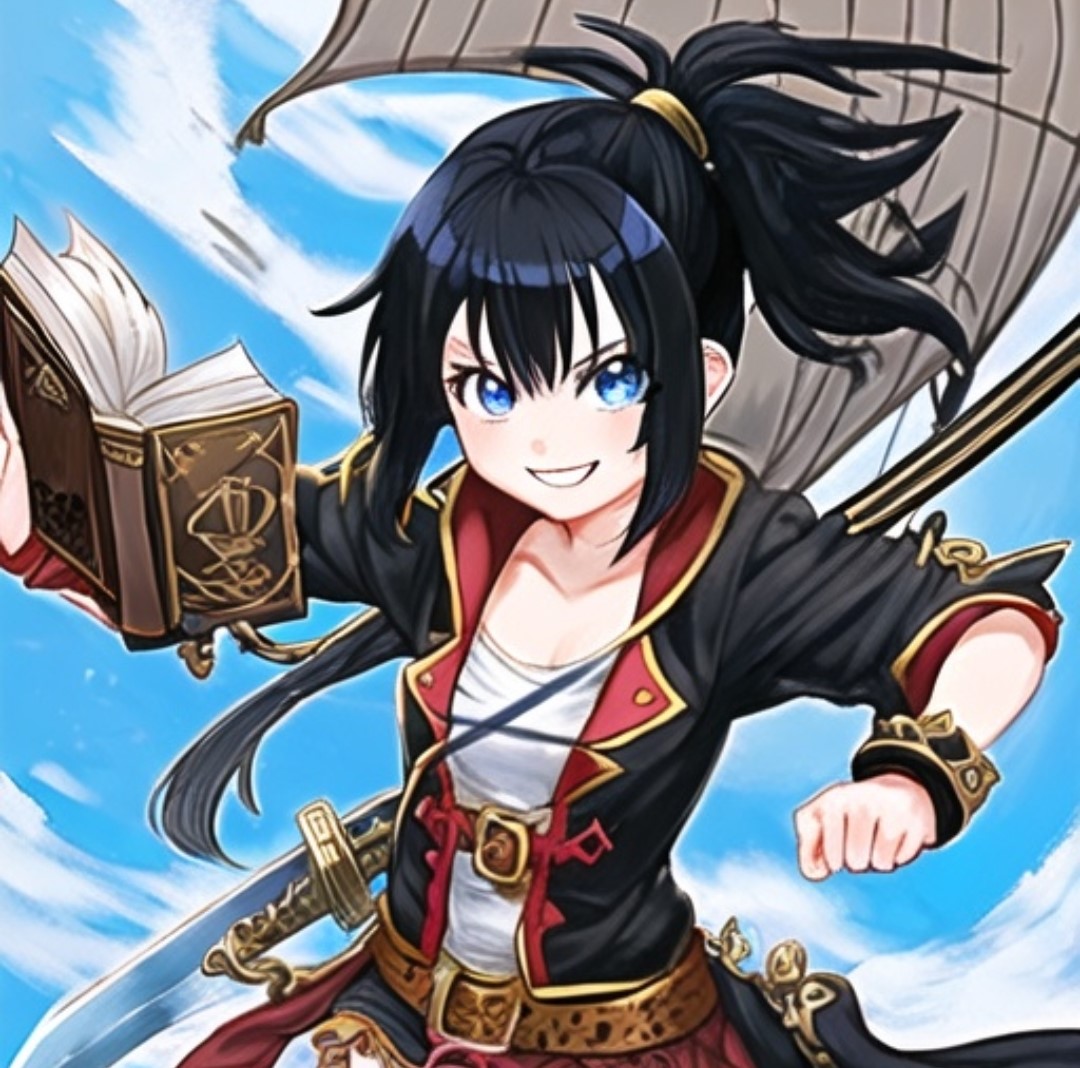
I got very close to including these pictures, but ultimately I just couldn’t do it, but that put me at a loss. All of a sudden, I was back to no artwork, but a bunch of incredible books, so I made a decision. I reached out to Jesse (the original artist) and asked him if he would mind me using the original art again for the new books. It wasn’t something I wanted, because the books are new and they deserve something new.
Luckily Jesse agreed and said he would get the art over to me so we could move forward and hit that August 1st publication date.
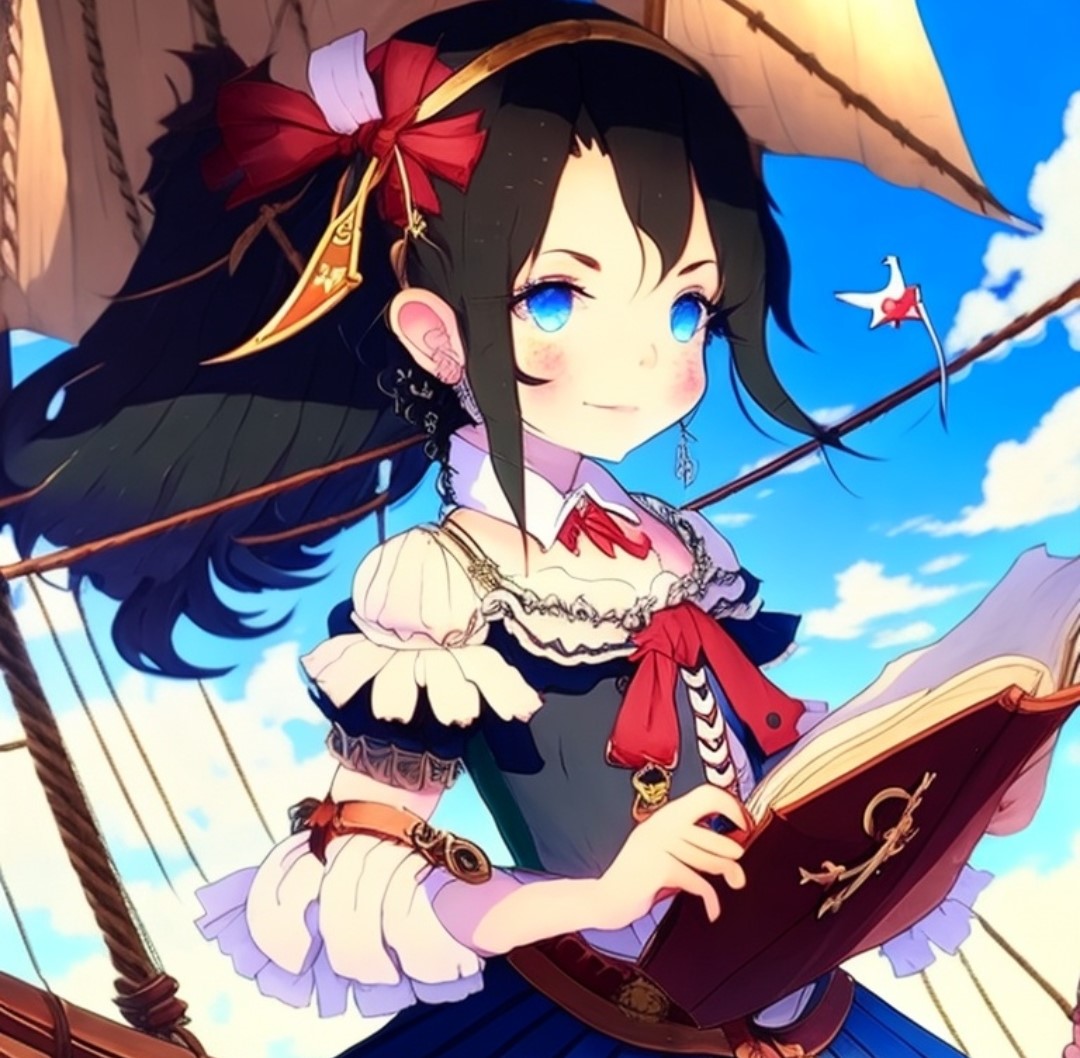
The wrinkle came this past week as we were talking and he asked me if I had any interest in getting new artwork for the books since they were going to be different. We talked back and forth about it, and came to the conclusion that we were going to do it. We were going to change the art and make this the new project that it deserves to be, and completely different from the original publications, August first publication date be damned (I mean, I’m self publishing them, so it’s a self-imposed date, but still).
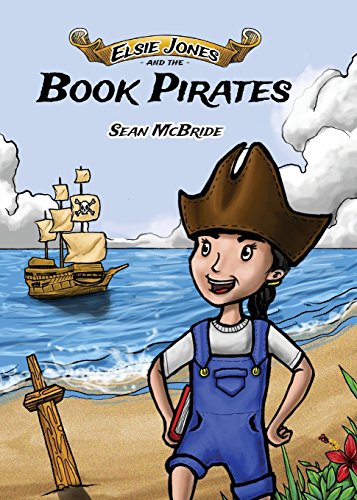
So that’s both the bad news and the good news. We’re going to have to wait a little longer to get the books, but they are going to have some incredible new art work, from an incredible artist. I CAN NOT State how absolutely happy I am that Jesse is willing to stay on board, because the world needs to both read these books and see an incredible artist and not some computer generated pictures.
Elsie Jones is Coming on 08/01
Hey everyone! I’m taking a week off from writing the Blind Read Blog and focusing on some extra editing, and I wanted to give everyone a special sneak peek of the upcoming Author’s editions of the New Elsie Jones Adventures, which will kick off with Elsie Jones and the Book Pirates on 08/01 of this year!
The Elsie Jones Adventures are a children’s chapter book series where Elsie Jones finds a mysterious secret room in her local library. In that room are fifteen books that, when she reads them, she is transported into their world and adventures with those characters.
Every book has action, humor, adventure, and fun little facts, so join me on this fun adventure!
Check out that special sneak peek below:
Beyond the door was an old wooden rickety staircase leading down. The walls on either side were brick, which was unlike the rest of the library. It looked so much older than everything else.
Elsie looked around to see if she could ask anyone if she was going in the right direction. When she didn’t see anyone, she considered returning to the main desk and getting her dad to accompany her.
“But I’m in the library,” she said to herself. “Nothing ever goes wrong in the library!”
“Shhhhh!” The person hissed again.
She took a deep breath and one more look around before walking down the steps. At the bottom of the staircase, she found another room filled with books. These books, however, were far older than any of the ones upstairs. Their covers were all shades of brown and red, and the titles faded on their spines. The other thing about this room was that the smell was different too. It smelled like old books. It reminded her of her grandfather’s office, and the memory made her smile.
She scanned the shelves, looking from history book to history book. She saw all kinds of interesting books. She ran her hand across the spines, enjoying the feeling of the old bindings when something odd happened. One of the books on the shelf had a red seven on the spine, just above the title, and when she touched the book, the red seven began to glow.
She pulled her hand back as if the book was hot and then looked at the title: Treasure Island by Robert Luis Stevenson.
“Why is there an adventure about Pirates in the history section?” Elsie asked.
She turned around, expecting the person to shush her again but didn’t hear anything. In fact, she thought she was alone down here in this old History section.
She paused just before touching the book again, but her curiosity got the better of her. It had a faded brown spine, the same as the ones next to it, but on the book’s cover, another bright shiny red seven glowed in the upper right corner.
“Whoa!” she exclaimed.
Excited, she flipped the cover open and saw an intricate drawing of a giant Pirate ship and a pirate with a pegleg and a large hat who held a sword in his hand.
The book was heavy, so she laid it on the ground for a better look. As she leaned over and flipped through it there were awesome color pictures of pirates fighting with swords, burying treasure, and sailing through storms. She also saw photos of a young boy doing all these things with the pirates.
“Oh, that would be so cool!” Elsie said.
“Squire Trelawney, Dr. Livesey, and the rest of these gentlemen having asked me to write down the whole particulars about Treasure Island,” She read.
Then something strange happened; the moment she spoke the pages started to turn on their own, flipping faster and faster until the pictures seemed to move. The pirates jumped on the ship and fought each other with their cutlasses. Elsie leaned back in surprise. One of the pirates turned to her and waved his hand, gesturing for her to join them.
Blind Read Through: J.R.R. Tolkien; The Book of Lost Tales, Part 1, The Cottage of Lost Play

“Then said Lindo: ‘Of what shall the tales be tonight? Shall they be of the Great Lands, and of the dwellings of Men; of the Valar and Valinor; of the West and its mysteries, of the East and its glory, of the South and its untrodden wilds, of the North and its power and strength; or of this island and its folk; or of the old days of Kôr where our folk once dwelt? For that this night we entertain a guest, a man of great and excellent travel, a son meseems of Eärendel, shall it be of voyaging, of beating about in a boat, of winds and the sea (pg 18).”
Welcome back to another Blind Read! This week we begin The Book of Lost Tales, Part 1, with the first chapter, “The Cottage of Lost Play.”
This week we begin to see the history of Middle-earth through a story-telling lens. The book begins with a traveler, “a man of great curiosity, was by desire of strange lands and the ways and dwellings of unaccustomed folk brought in a ship as far west even as the Lonely Island, Tol Eressëa in the fairy speech, but in which the Gnomes call Dor Faidwen, the Land of Release, and a great tale hangs thereto (pg 13).“
This “man of great curiosity” is a man from England named Eriol, and he is the basis for all that comes after in this precursor to The Silmarillion.

Tolkien intended for the history of Middle-earth to intersect with our age, and this first section seems to be proof of that. Beyond the fact that the way Tolkien describes Eriol, it does seem as though he is representing himself. After all, Eriol learns the history of Middle-earth, and it would stand to reason that if Middle-earth was our world, Tolkien was only passing on the oral history of what he had “learned.”
That may not make sense right off the bat, so let’s break things down a little.
This chapter is about Eriol traveling from England to Tol Eressëa, an island off the coast of Valinor where the Teleri Elves lived. When Eriol gets to the island, he finds a small cottage in a field owned by a couple named Lindo and Vairë.
“Small is the dwelling, but smaller still are they that dwell here – for all who enter must be very small indeed, or of their own good wish to become as very little folk even as they stand upon the threshold (pg 14).“
Knowing that Eriol is an Englishman (despite that he seems to be from the Middle Ages), we see that Middle-earth is connected with our world, and the histories held within are our histories.
Indeed Tolkien even calls Eriol “a son of Eärendel (pg 13).” If you remember your Silmarillion history, Eärendil was the son of Tuor, a man and cousin of Turin Turambar and Idril of the Noldor of Gondolin. He eventually wed Elwing, who gave birth to Elros, who chose to be a man and became the ancestor of the Númenoreans. She also gave birth to Elrond, who we all know.
Tolkien isn’t calling Eriol Eärendel’s direct son but a descendant of him, proving that both our world and the world of Middle-earth are the same.
Lindo and Vairë, however, seem to be descendants of the shire folk, with their kindness and manners. They also are descendants of the Valar, as “He was of Aulë’s kindred (pg 16).“
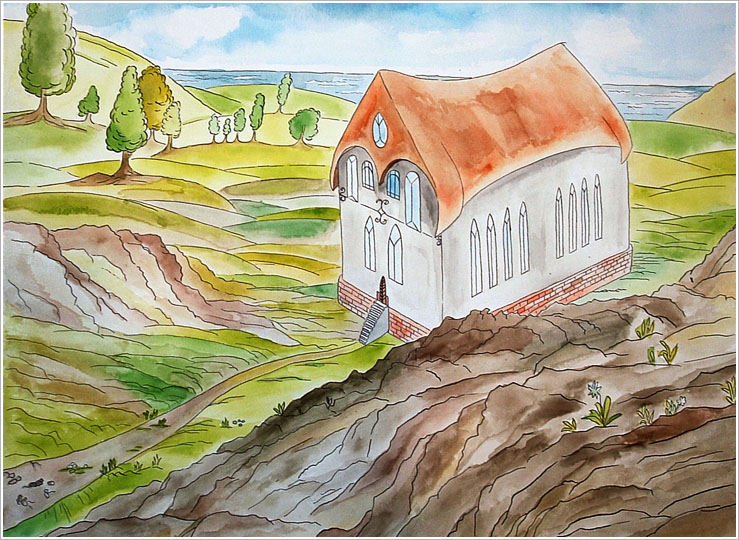
They invite Eriol into their house, and soon there is a sound of a gong; “That is the voice of Tombo, the Gong of the Children (pg 15.).” The Gong calls the Children in from playing to come and listen to “the telling of tales (pg 15).”
Soon the tiny Cottage was regaled with the tales, and this is how we learn the history of Middle-earth – as it’s portrayed to Eriol.
But why did Eriol happen upon this Cottage? It was not a mistake:
“It had long, said he, been a tradition in our kindred that one of our father’s fathers would speak of a fair house and magic gardens, of a wonderous town, and of a music full of all beauty and longing (pg 20).“
The children who sat around at night would listen to these tales and eventually leave the island and the Cottage. These were the children of the Noldori and the Teleri (at this point, Tolkien was calling Gnomes. I’m not sure when he switched to Elves.), but they were descendants of Eärendel, which is who spawned the human race as we know it now.
Tolkien was a historian and linguist who was fascinated with how different cultures had similar roots. The origin of this Book of lost Tales was to explore these roots. The Lord of the Rings hadn’t blossomed in his mind (made apparent by his usage of Gnomes in this early iteration), and he wrote this chapter to explain this origin.
The Children who gathered around to hear these tales at Tol Eressëa became the people who started the different cultures which would eventually become our world. Tolkien even stamps that theory in the second to last paragraph, spoken by Eriol:

“Now these are tidings sad and yet good to hear, and I remember me or certain words that my father spake in my early boyhood. It had long, said he, been a tradition in our kindred that one of our father’s fathers would speak of a fair house and magic gardens, or a wonderous town, and of a music full of all beauty and longing – and these things he said he had seen and heard as a child, though how and where was not told (pg 20).“
Eriol’s father had left the island of Tol Eressëa. He remembered the stories, customs, and language, but he could remember nothing of the island itself. The Valar had hidden the island, and all that left it were doomed to forget about it.
They created an oral tradition formed into the Germanic languages and tales of North Western Europe. This also explains how the majority of the Hobbit and the beginning of The Lord of the Rings had so many songs and poems. Tolkien was trying to show how real the world was by including an oral tradition in story.
Tolkien’s purpose for telling these tales, even The Hobbit and The Lord of the Rings, was to explain why these traditions existed. Not only the language, which everyone assumes is why he created the history, but of the practices and mythologies of the region.
Join me next week as we delve deeper into “The Cottage of Lost Play” with Christopher’s Commentary!
Updates 01/05/23
Wow, what a year that was! I did not get anywhere near where I wanted to go in a writing sense, as work and life stuff enveloped much of my time, but it’s time for a new year, and it’s time for new resolutions. I received a typewriter and a new notebook for Christmas, which has invigorated my creative juices, so it’s time to get to work and get to some of these books I’ve been sitting on!
Elsie Jones Adventures:
The first three of these were already published traditionally, but the contract is up, and the rights have reverted back to me. So I’m going to self-publish and finally get this series out. So expect the first two in the series this year.
If you didn’t know, The Elsie Jones Adventures is a Chapter Book series suitable for kids 5-12. They follow Elsie Jones as she discovers a mysterious library and each book in the secret library pulls her into the plotline of that book, and she goes on the adventure with the characters! The series is filled with action and humor, but it also has lessons to learn along the way.
Book 1: Elsie Jones and the Book Pirates
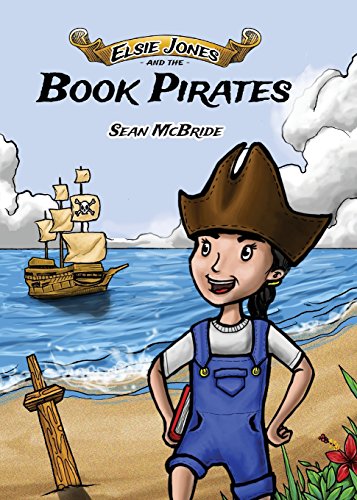
In this first book, Elsie finds a mysterious library and enters “Treasure Island” by Robert Louis Stevenson. She meets some new friends and goes on a Pirating adventure, but also discovers there is a strange group trying to destroy the special books in the library. Follow along with her on an adventure to stop them!
Book 2: Elsie Jones and the Revolutionary Rebels

In Elsie’s second adventure, she finds an old book named “Common Sense” by Thomas Paine, which transports her to Revolutionary Boston. She meets Ben Franklin and goes on a famous horse ride with Paul Revere, leading to a showdown at the house of a literary giant.
Book 3: Elsie Jones and The Captain’s Guard
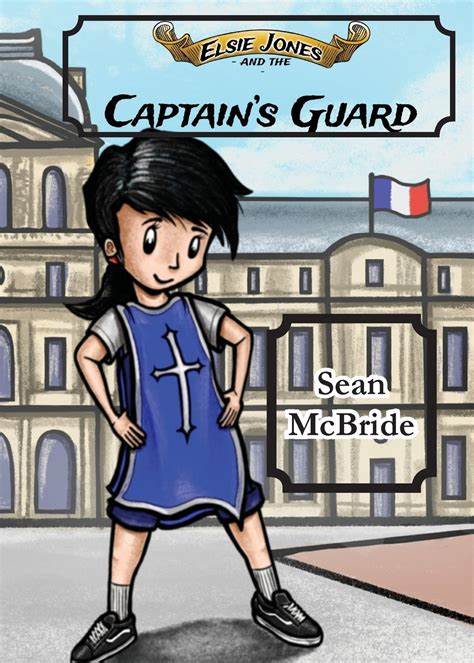
In Elsie’s Third adventure, she comes across “The Three Musketeers” by Alexandre Dumas and goes on an adventure with The famous French Musketeers. This book is filled with mystery, adventure, and swashbuckling fun, but it is on this adventure that Elsie realizes more is going on in these adventurous worlds.
You can find and purchase all three of these stories here or wherever books are sold. What will be released this year are “Author Editions” of these first three books. I wasn’t very happy with the end result when the publisher edited these books, so what you’ll get this coming year will be more extended and much more cohesive. The published books are still outstanding, don’t get me wrong, but since the rights have reverted back to me, I wanted to get the whole series out and make them as good as I possibly could. The originals still hold a place near and dear to my heart and will still be available.

Now onto other projects! As always, my first book of short stories is also available on this website or wherever books are sold. It is a group of short stories heavily influenced by the original “Twilight Zone” television show with Rod Serling. The title is “A View of the Edge of the World.”
The Legacy:
I read an article back in 2001 in Rolling Stone magazine about an island off the coast of Nova Scotia. I started writing an adventure novel back then but never got around to finishing it; then a History Channel show called “The Curse of Oak Island” came out, and it reinvigorated my love for this strange, mysterious island. I finished writing the novel in 2021 and meant to edit it in 2022 and get it out, but other things got in the way. I hope to finish editing it this year, get an agent and a publisher, and get it out early next year.
This book is based on Oak Island, but it is very much an “Indiana Jones” type story with heavy historical references which push the story forward as the characters look to uncover the mystery. It reads as half Dan Brown and half-pulp adventure novel. I absolutely love this book and can’t wait for people to read this one (and probably it’s sequels, wink, wink)!
The Revolution Cycle:
This is an expansive Fantasy/Adventure story. It follows a revolution from start to finish and will do so over a proposed 10 books. I’ve written the outline for the first novel and will be diving into it this year. I don t think it will be finished, but I hope to get enough done this year so it can be released by the end of next year.
Book 1. The Monster in the Woods
This first book of the cycle will focus on a group of young protagonists in a school in a secluded Duchy. They question the propaganda fed to them, and they drift apart until one of them finds a mysterious clue left by their strange uncle after he goes off to fight a monster roaming the woods outside the Duchy walls.
This book will have heavy Goonies vibes framed as a fantasy novel Joe Abercrombie would be proud to write. Each successive novel will expand the world and bring the characters further into the fight until they are inextricably involved with the revolution.
Future Works:
Elsie Jones and The Westward Adventurers: The fourth book in the Elsie Jones series. Elsie enters the world of James Fenimore Cooper’s “The Pathfinder.”
Elsie Jones and the Transylvania Twist: The fifth book in the Elsie Jones series. Elsie enters the world of Bram Stoker’s “Dracula”
Elsie Jones and the London Fog: The sixth book in the Elsie Jones series. Elsie enters the world of Sir Arthur Conan Doyle’s “The Casebook of Sherlock Holmes.”
Elsie Jones and the Dark Samurai: The seventh book in the Elsie Jones series. Elsie enters the world of Basho’s Haiku.
Elsie Jones and The Last Knight: The eighth book in the Elsie Jones series. Elsie enters the world of Cervantes “Don Quixote.”
Elsie Jones and the Treasure of Tut: The ninth book in the Elsie Jones series. Elsie enters the world of Virgil’s “The Aeneid”
I have written through the twelfth book in the series, but I’m keeping the remaining books under wraps!
I will continue publishing my weekly blog, which currently covers the histories of J.R.R. Tolkien. Each Thursday, I break down the verbiage and story to make the difficult language more accessible for the everyday reader. Check out my previous Blogs on The Silmarillion and all of H.P. Lovecraft’s work here!
You can also find other essays, short stories, and poetry here on my website for free, so I encourage you to read them! There is a good chance I will compile much of them for a future book of short stories, so get them while they are free!
The too far in the future projects:
The remaining books in the Revolution Cycle
A Sequel to The Legacy
Elsinore: A Graphic Novel about a town on the border of Hell
A future Elsie Jones spin-off
Thank you to everyone who follows and for your support for all who have purchased my books! Please continue to do so, and I hope the content I put out brings you joy, wonder, and happiness! Here is to a wonderful and prosperous New Year (with quite a bit of content coming your way)!
Updates 09/29/22
Hey everyone! I needed to take a week off from the blog because my work obligations were too heavy this week, so I figured I’d give an update on everything coming in the next six months! I’ve been working hard on other projects besides the Blind Read Blog, and the spoils of that work will soon pay off! Let’s get to it then.
Blind Read Series:
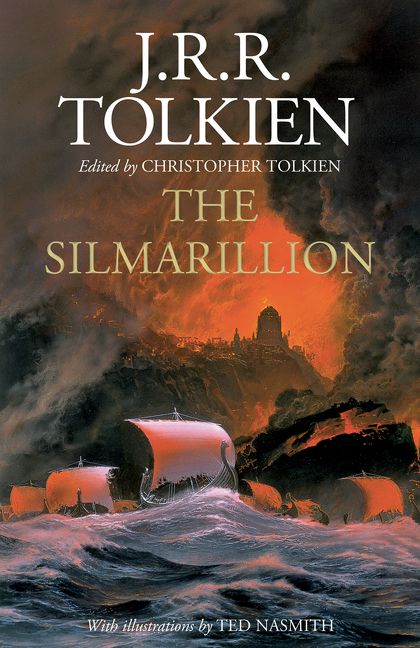
There are probably about five more weeks left in The Silmarillion, but I also plan on doing an episode by episode “Blind Watch” analysis with Amazon Prime “The Rings of Power” as well as analyzing the original movies and contrasting them with the information from the earlier ages of Middle-earth. Once The SIlmarillion is completed, I’ll move onto “The Book of Lost Tales, Part 1.” The formatting for these Blogs will be slightly different however, because this books seems to be more of a early/poetic version of The Simlarillion.
Short Stories:
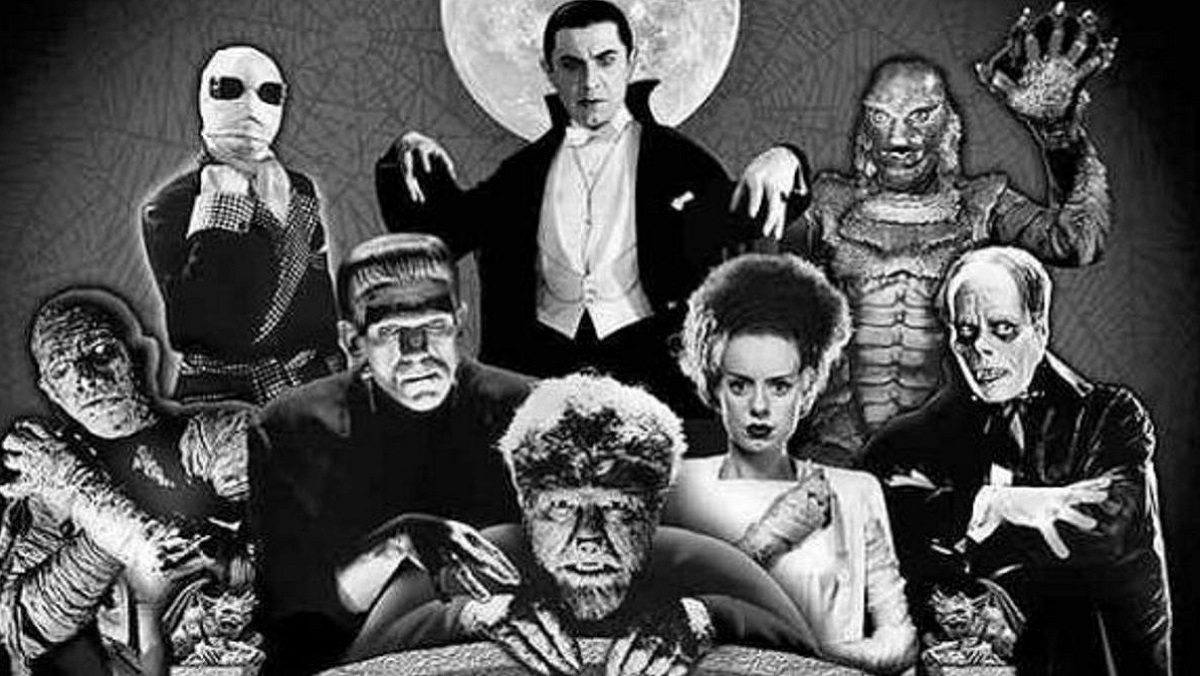
I’m bringing back the Universal Monster horror shorts, which will be published every Saturday, from Ocotber 1st through the end of the year. I’ll have some surprise new stories (there are only 7 published shorts previously) mixed in there as well for the next 14 weeks! These stories are all pretty short (between 1k and 3k words) so they’re a quick and fun introduction to Autumn!
Elsie Jones Adventures:

This is my children’s chapter book series which features Elsie, a head strong young girl who finds a mysterious room in her local library that has some interesting books hidden within. Books that pull her into them and make her go on the adventures of their stories! The only catch is that there is a nefarious man with an army of agents who have found their way into the books as well. Featuring classics such as Treasure Island, Dracula, The Casebook of Sherlock Holmes, and the Three Musketeers (maybe even some Tolkien inspired tales), Elsie must find a way to protect literature from the nefarious Dark Hats.
The first three books are available on this website and wherever books are sold, but the Author editions will be coming out starting next spring followed by the remaining 12 books every few months!
The Legacy:
I grew up in the era of Indiana Jones and The Goonies. These action packed adventures have always fueled my imagination, then in college I read a Rolling Stone article about a mysterious Island off the coast of Nova Scotia called Oak Island. They have since made a History Channel show about the treasure hunt on the island, but I wanted to make my very own Indiana Jones type story which could follow around a group of adventurers through multiple books. The Legacy is their attempt to solve the mystery of Oak Island. I’m now in the third draft and getting very close to submissions. Expect this book early 2024.
The Revolution Cycle:
This is my Magnum Opus. This will be a fantasy adventure told over ten books. It will cover a Revolution from it’s start to finish, beginning with the first book “A Monster in the Woods.” The first book will be a heist/fantasy plot line surrounding a group of teenagers who find some information that will change the world, all while trying to stay safe and away from a creature whom seems to be stalking them, and a despotic Duke trying to catch them. Featuring court dances, politics, and romance, but relying heavily on adventure and a smattering of horror, anyone who loved the nostalgia of the 80’s adventures as much as I do will love it.
The outline is complete and once Elsie Jones is in a rythym of publishing, this will get more attention.
As always thank you for coming here and reading my blog! If there is any kind of short story you’d like to see over the next fourteen weeks, I have 3 slots available and I’d love to write one surrounding your favorite horror/mystery!
Blind Read Through: J.R.R. Tolkien; The Silmarillion, Of the Voyage of Eärendil and the War of Wrath
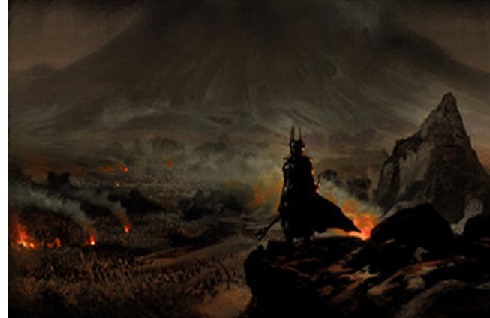
“The meeting of the hosts of the West and the North is named the Great Battle, and the War of Wrath. There was marshalled the whole power of the Throne of Morgoth, and it had become great beyond count, so that Anfauglith could not contain it; and the North was aflame with war.”
Welcome back to another Blind Read! This week we review The War of Wrath and the end of the Quenta Silmarillion.
Last week we learned of Eärendil and Elwing and their plea to the Valar to come and help the people of Beleriand. Through those two half-elves’ sacrifices, they gained Valinor’s assistance against Morgoth. “Yet it is said that Morgoth looked not for the assault that came upon him from the West; for so great was his pride become that he deemed that none would ever again come with open war against him.”
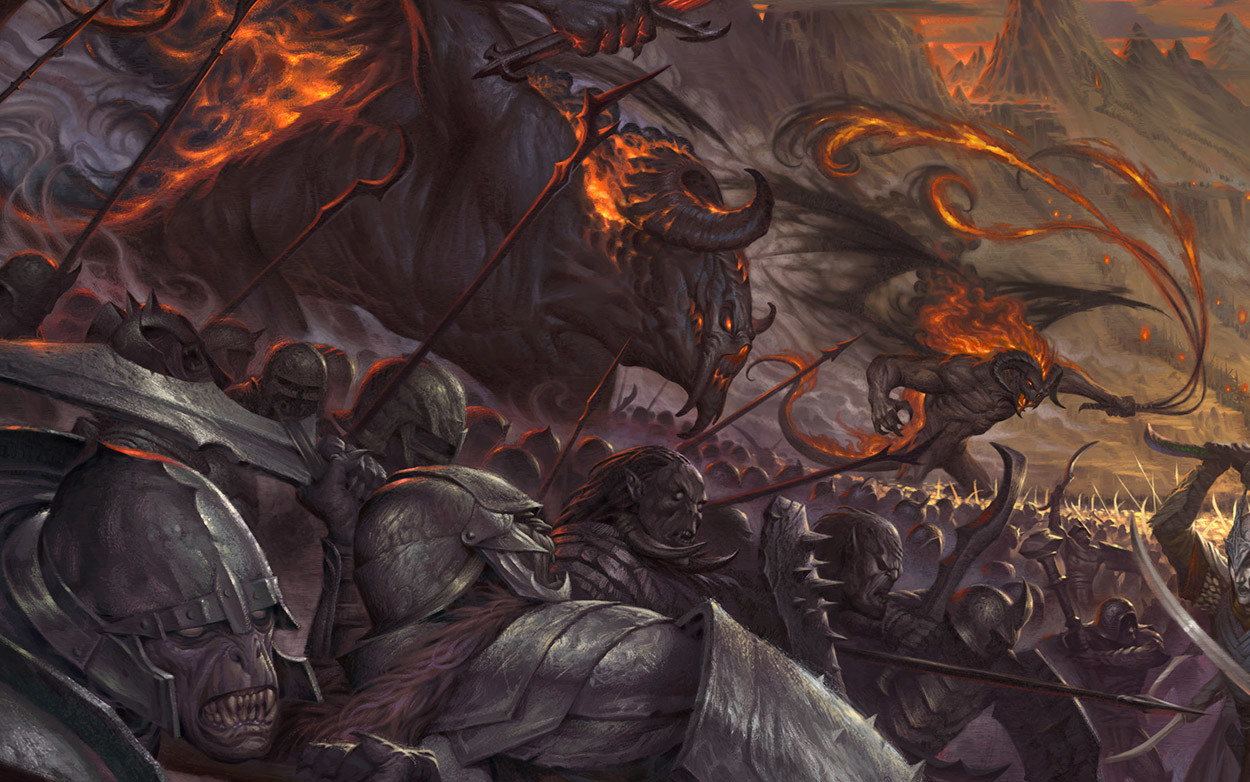
Yet come they did. The Valar came along with the Noldor, who never left Valinor and the Vanyar. Even a host of Teleri marched to battle despite their kin’s memory of the slaying at Swanhaven (Fëanor and his followers) because they “hearkened to Elwing.” Which leads directly into the opening quote of this essay.
The power of Morgoth’s armies was immense, but it could not stand up to the Valar. “The Balrogs were destroyed, save some few that fled and hid themselves in caverns inaccessible at the roots of the earth; and uncounted legions of the Orcs perished like straw in a great fire.”
Morgoth made one last ditch effort and sent out the horror of the fleet of dragons from the pits of Angband. “And so sudden and ruinous was the onset of that dreadful fleet that the host of the Valar was driven back, for the coming of the dragons was with great thunder, and lightning, and a tempest of fire.“
The power of the dragons was immense, but the King of the Eagles, Thorondor, came with his host along with Eärendil upon the flying Vingilot. They met the dragons in the sky and turned the tide. Eärendil even killed Ancalagon the Black, “the mightiest of the dragon-host,” who was so large that he could crush mountaintops under his claws. When Ancalagon fell from the sky, “he fell upon the towers of Thangorodrim, and they were broken in his ruin.“

Finally, the host of Valar was victorious. They descended into earth to gather Morgoth, but the dark king “fled into the deepest of his mines and sued for peace and pardon; but his feet were hewen from under him, and he was hurled upon his face. Then he was bound with the chain Angainor which he haed worn aforetime, and his iron crown they beat into a collar for his neck, and his head was bowed upon his knees. And the two Silmarils which remained to Morgoth were taken from his crown, and they shone unsullied beneath the sky; and Eönwë took them, and guarded them.“
The battle was so devastating that it ended the epoch. The world was physically changed from the drama of the fight. “and the sea roared in through many chasms, and there was confusion and great noise; and the rivers perished or found new paths, and the valleys were upheaved and the hills trod down; and Sirion was no more.“
Many landmarks are the same throughout the ages of Middle-earth (for example, Gondolin is undoubtedly Minas Tirith); however, the landscape is entirely different in the first age from what I know of the Third Age. This battle, “The War of Wrath,” was so devastating that the actual earth was rent and made new. There is a minimal description of the fight in the book; in fact, most of Tolkien’s descriptions are in this essay, but this devastation shows the outright power of the Valar. The book is long and challenging to read, so while reading through the mythos of the Elves as they came to Beleriand, I somewhat forgot that the Valar created the world with their music. A being who can make a world would have the power to destroy or remake that same world. The remaking of Beleriand was either a happy accident or the intent of the War of Wrath because the Valar wanted to eliminate the memory and the scar of Morgoth from the world.
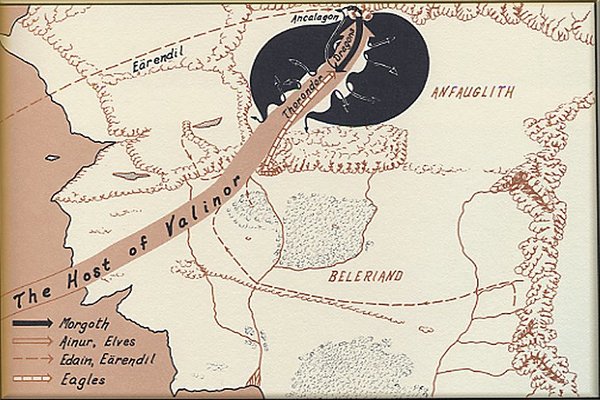
Thus ended the Silmarillion and the reign of Morgoth, but it would not be Tolkien if we didn’t have a little “there and back again.”
The surviving sons of Fëanor, Maedhros and Maglor, still had not held up their oath to their father. So after Eönwë called Elves back to Valinor in the West, they still schemed and wondered if it were worth a battle with the Valar to take the Silmarils back, knowing it would cost them their lives.
They decided to send a message to Eönwë and ask for the two remaining Silmarils, “But Eönwë answered that the right to the work of their father, which the sons of Fëanor formerly possessed, had now perished, because of their many merciless deeds, being blinded by thier oath, and most of all because of their slaying of Dior and the assualt upon the Havens.”
Maedhros and Maglor took council with each other, with Maglor wanting to submit and break their oath because “‘whether we keep our oath or break it; but less evil shall we do in breaking.” But Maedhros knowing the evil they had already committed, talked Maglor into trying to fulfill their oath.
The two Noldor broke into the camp of Eönwë, killed the guards, and took the Silmarils. But an alarm was raised, and the camp came against them. They were immediately caught, “but Eönwë would not permit the slaying of the sons of Fëanor,” and he allowed them to take the Silmarils. He could see the future because the Silmarils caused the remaining sons of Fëanor great pain. So much pain, Maedhros threw himself into a great chasm with the Silmaril so that it was “taken into the bosom of the Earth.“
Maglor threw the Silmaril into the sea because he could not bear the pain, but the pain did not abate once the Silmaril was gone because it was the knowledge of all the wrongs he perpetrated made manifest. So Maglor spent the rest of his days “singing in pain and regret by the waves.”
Most of the Eldalië went back west into the undying lands, but a few stayed, building upon the future of Middle-earth.
“Among those were Círdan the Shipwright, and Celeborn of Doriath, with Galadriel his wife, who alone remained of those who led the Noldor to exile in Beleriand. In Middle-earth dwelt also Gil-galad the High King, and with him was Elrond Half-elven, who chose, as was granted him, to be numbered among the Eldar; but Elros his brother chose to abide with Men. And from these bretheren alone has come among Men the blood of the Firstborn and a strain of the spirits divine that were before Arda; for they were the sons of Elwing, Dior’s daughter, Lúthien’s son, child of Thingol and Melian; and Eärendil their father was the son of Idril Celebrindal, Turgon’s daughter of Gondolin.“
I believe this is the foundation of the Nùmenorians from Elros’ line, and we all know what becomes of Elrond’s line. Not to mention Galadriel, prominently featured in the new Rings of Power Amazon original.
Thus the Silmarillion or the great long struggle of the First Age ends. Morgoth was “thrust through the Door of Night beyond the Walls of the World, into the Timeless Void.” And he is never to return.

Tolkien ties up all the loose knots but one, which I believe he did on purpose because it is the draw to bring the reader back to the next portion of the book: Akallabêth and Of the Rings of Power and the Third Age. The loose knot? What happened to Sauron? He was not mentioned during the War of Wrath, and one can only imagine he is hidden away in Taur-Nu-Fuin, which becomes Mordor in later Ages.
There is a very satisfying conclusion to the tale, and I can’t wait to get into Akallabêth because I believe it describes the events of the Second Age and what The Rings of Power show is partially based on.
Let’s find out next week as we start our journey with Akallabêth!
Blind Read Through: J.R.R. Tolkien; The Silmarillion, Of Tuor and the Fall of Gondolin

“Therefore in that time the very entrance to the hidden door in the Encircling Mountains was caused to be blocked up; and thereafter none went ever forth from Gondolin on any errand of peace or war, while that city stood. Tidings were brought by Thorondor Lord of Eagles of the fall of Nargothrond, and after of the slaying of Thingol and of Dior his heir, and the ruin of Doriath; but Turgon sht his ear to word of the woes without, and vowed to march never at the side of any son of Fëanor, and his people he forbade ever to pass the leaguer of the hills.”
Welcome back to another Blind Read! This week we witness the fall of the Elves’ last great city and Beleriand’s continued destruction.
Tolkien starts by reminding us of Tuor, Túrin’s cousin, who was captured at a young age by Easterlings and Orcs and kept in captivity for three years. Once he escaped, he spent the next four years living in solitude and “did such hurt to the Easterlings” that they set a bounty on his head.
Ulmo, the only Valar that seemed to care for the Children of Ilúvatar, “had chosen Tuor as the instrument of his designs” and saved Tuor by bringing him through a tunnel filled with raging water to Nevrast by the sea.

Tuor stayed there for some time until he finally found “the deserted halls of Vinyamar beneath Mount Taras, and he entered in, and found there the shield and hauberk, and sword and helm, that Turgon had left there by the command of Ulmo long before.”
There are many callbacks to previous chapters, but they raise more questions than answers. For example, did Ulmo foresee this destruction coming to Beleriand when the Noldor left Valinor? Is that why he instructed Turgon to leave equipment there? Because he knew there would eventually be someone to come and take it to make some stand? And an even bigger question, Ulmo is the protector of the Children of Ilúvatar, but does this foreknowledge make him complicit in the destruction? Or was there no other way around it?
In any case, in Vinyamar, Tuor came across Voronwë, the son of Aranwë, one of the Elves that Turgon sent to sea. Voronwë, understanding that Tuor was on a mission from Ulmo, assisted him in getting to Gondolin. Along the way, they passed a tall man, “clad in black, and bearing a black sword…” which is Tolkien’s way of setting the timeline for us because this is very obviously Túrin heading back to Hithlum.
Tuor finally makes it to Gondolin and is led before King Turgon “and all that heard the voice of Tuor marvelled, doubting that this were in truth a Man of mortal race, for his words were the words of the Lord of the Waters.“

Tuor “gave warning to Turgon that the Curse of Mandos now hastened to its fulfillment, when all the works of the Noldor should perish; and he bade him depart, and abandon the fair and mighty city that he had built, and go down Sirion to the sea.”
Again here we have information of foreknowledge by the Valar. This First Age seems more and more like a punishment for leaving Valinor in the first place. It almost feels like the Valar wanted the Eldar with them in Valinor, leaving the world of Beleriand for Men and Dwarves.
There is even a passage where Turgon thinks back on something Ulmo said to him when he was getting to Beleriand, “Love not too well the work of thy hands and the devices of thy heart; and remember that the true hope of the Noldor lieth in the West, and cometh from the sea.”
Not only does Ulmo tell him that they will only be there for a little while and they truly belong to the West, but he then tells Turgon how to live so that he can return to finish his existence. Turgon, being Noldor through and through, “was become proud” and ignored those words. Even Maeglin, his nephew, believed in Gondolin and continued to hide, which leads directly to the quote which opened this essay.
So they stayed, and Tuor stayed with them. In time Tuor fell in love with Idril, daughter to Turgon, and they eventually married “and thus there casme to pass the second union of Elves and Men.” But Maeglin loved his cousin and held Tuor in great animosity. He took Idril from Maeglin, but not only that; he was an outsider and a Man to boot!
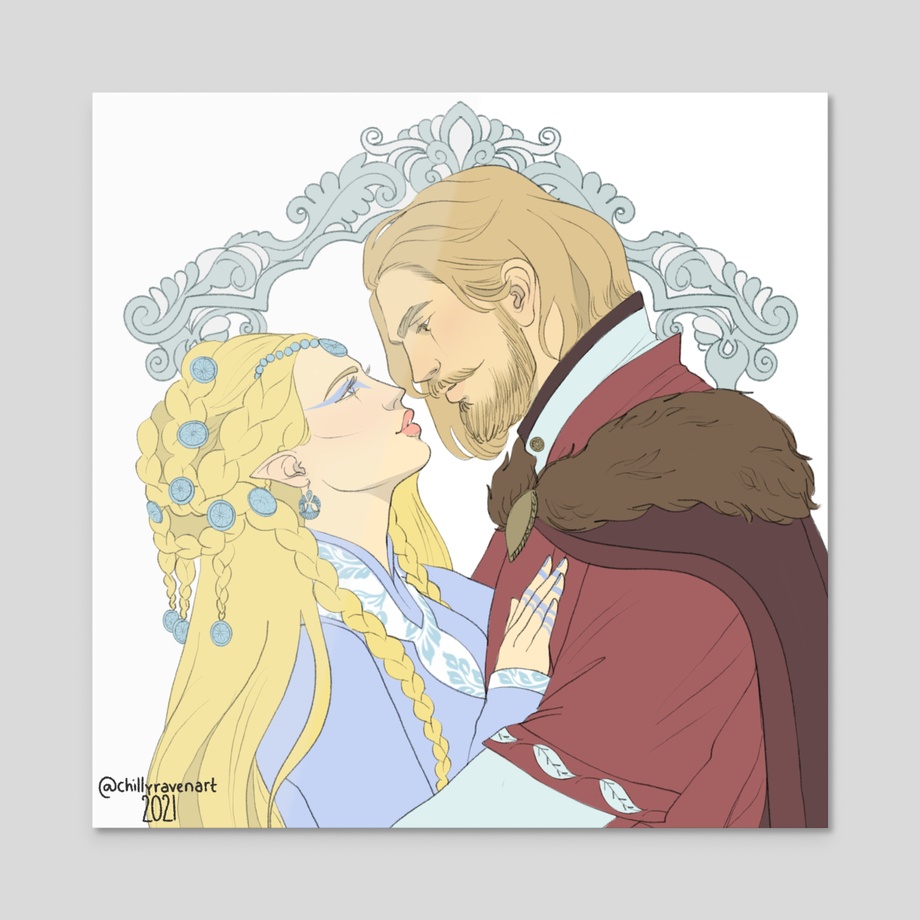
The following spring Eärendil was born of Tuor and Idril, and Maeglin’s resentment grew. We have already seen in the chapter about Maeglin that he strove to make unique and powerful weapons and armor, but we see here that he ranged deep into the mountains and far from home, trying to get materials for these forgings.
We also know that Húrin cried out to the mountains that hid Gondolin, hoping for help from Turgon, and Morgoth’s agents watched so they knew the general region of Gondolin. So when Maeglin searched for materials, Morgoth’s agents caught him and brought him to Angband.
He was tortured there and made a deal with Morgoth. His torment, hope for the future, and resentment led him to this betrayal, far more than any of the torture Morgoth put him through. The deal was that Maeglin would reign underneath Morgoth’s rule in Gondolin and take Idril’s hand in the process.
It took years for Morgoth to make his move, but in the Summer when Eärendil was seven, Morgoth released his fury upon Gondolin.
“Of the deeds of desperate valour there done, by the cheiftans of the noble houses and their warriors, and not least by Tuor, much is told in The Fall of Gondolin: of the battle of Ecthelion of the Fountain with Gothmog Lord of Balrogs in the very sqaure of the King, where each slew the other, and the defence of the tower of Turgon by the people of his household, until the tower was overthrown; and mighty was its fall and the fall of Turgon in its ruin.“

Tuor and Idril escaped with their son, but Maeglin caught them. Tuor and Maeglin had a mighty battle, but eventually, Tuor “cast him far out, and his body as it fell smote the rocky slopes of Amon Gwareth thrice ere it pitched into the flames below.” Thus Maeglin ended.
But Tuor and his family’s exit was not complete. They escaped through the mountains, but a group of Orcs and a Balrog found them. Glorfindel saved them while riding the King of the Eagles, Thorondor. They had a mighty battle, and eventually, Glorfindel and the Balrog fell from the mountain and perished.
Finally, their escape was complete, and they fled south with Ulmo’s aid down the Sirion to the sea, where they met up with Elwing, who held Nauglamír and the Silmaril.
Morgoth felt his sack of Beleriand was complete, “recking little of the sons of Fëanor, and of their oath, which had harmed him never and turned always to his mightiest aid; and in his black thought he laughed, regretting not the one Silmaril that he had lost, for by it as he deemed the last shred of the people of the Eldar should vanish from Middle-earth and trouble it no more.”
Meanwhile, Ulmo called for forgiveness of the sons of Fëanor and to rescue them from Morgoth’s wrath, but Manwë was unmoved by Ulmo’s cries; “and the oath of Fëanor perhaps even Manwë could not loose until it found its end, and the sons of Fëanor reliquished the Silmarils, upon which they had laid their ruthless claim. For the light which lit the Silmarils the Valar themselves had made.”
What I find so interesting about this is that the Noldor don’t have the Silmarils anymore, but Morgoth does. So the Valar are blinded by their Hubris and can’t see past the fact that the Silmarils were taken in the first place, despite Fëanor making them.
There is one Silmaril left that Morgoth does not possess, and it’s in the hands of a young Elf who just met a young half-elf. Eärendil and Elwing, heirs of the great Kings of Middle-earth. Do they sail to Valinor and hand the Silmaril back to Manwë? Is that what brings the change and leads the Valar to battle against Morgoth?
There’s only one chapter left, so let’s find out next week in “Of the Voyage of Eärendil and the War of Wrath!”
Blind Read Through: J.R.R. Tolkien; The Silmarillion, Of the Ruin of Doriath, Part 2

“Thus it came to pass that when the Dwarves of Nogrod, returning from Menegroth with diminished host, came again to Sarn Athrad, they were assailed by unseen enemies; for as they climbed up Gelion’s banks burdened with the spoils of Doriath, suddenly all the woods were filled with the sound of elven-horns, and shafts sped upon them from every side. There very many of the Dwarves were slain in the first onset; but some escaping from the ambush held together, and feld eastwards towards the mountains. And as they climbed the long slopes beneath Mount Dolmed there came forth the Shephers of the Trees, and they drove the Dwarves into the shadowy woods of Ered Lindon: whence, it is said, came never one to climb the high passes that led to their homes.”
Welcome back to another Blind Read! This week we come back to the tragic conclusion of the Ruin of Doriath and understand how the races came to hate each other.
Last week we left off with the murder of King Thingol in his very chambers. The power of the Silmaril, which the Dwarves forged into Nauglamir, was too great and created envy that overrode their memory and senses. They were suddenly angry because they felt Thingol didn’t deserve Nauglamír, as it was a gift to Finrod made by the Dwarves. So when Thingol asked them to reforge it with the Silmaril, they did so without hesitation. Still, after giving it back, the absence of the light of Valinor made them regret their decision, so they struck Thingol down, took Nauglamír, and fled Menegroth.

But they were “pursued to the death as they sought the eastward road, and the Nauglamír was retaken, and brought back in bitter grief to Melian the Queen.” Her thoughts grew dark, “and she knew that her parting from Thingol was the forerunner of a great parting and that the doom of Doriath was drawing neigh.”
In her grief, her magic waned, and the Girdle protecting Doriath fell, “and Doriath lay open to its enemies.” So she gave Nauglamír, inlaid with the Silmaril, to Mablung and asked him to send word to Beren and Lúthien, then “she vanished out of Middle-earth, and passed to the land of the Valar beyond the western sea, to muse upon her sorrows in the gardens of Lórien, whence she came.“
Two dwarves escaped the attack on the murderers of Thingol, however, and went back to their kin in Nogrod. These Dwarves vowed vengeance and gathered a great host to march on Doriath, “and there befell a thing most grievous among the sorrowful deeds of the Elder Days.”
The Dwarves lost many of their kin in the battle in Menegroth, but they sacked the city; “ransacked and plundered.” Finally, they killed Mablung and took back Nauglamír and the Silmaril.
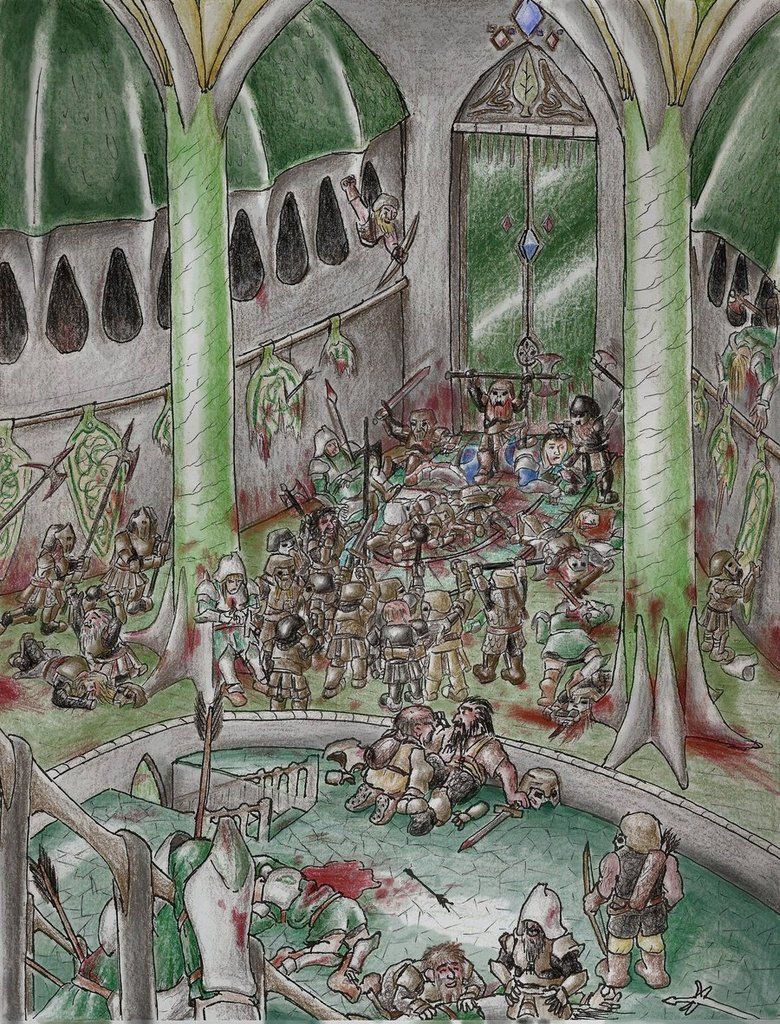
Word spread quickly of the terrible act the Dwarves perpetrated, and soon Beren and Lúthien heard of it. So Beren gathered his son Dior and a host of Green Wood Elves and went after the Dwarves; their confrontation is the opening passage of this essay.
They slaughtered the Dwarves, Beren himself killing the King of Nogrod. Then, finally, the Elves and Beren drowned the treasure of Menegroth in the river Ascar, all that is, but Nauglamír and the Silmaril.
Now the Silmaril was back in his hands, the item he fought so hard to win Lúthien’s hand in marriage by cutting it out of Morgoth’s crown. He took it to Lúthien, and she wore it for protection, and “it is said and sung that Lúthien wearing that necklace and that immortal jewel was the vision of greatest beauty and glory that has ever been outside realm of Valinor.”
Dior, Thingol’s heir, took it upon himself to bring the glory of Doriath back. So he brought his wife Nimloth, his boys Eluréd and Elurín, and his daughter Elwing to Menegroth, and there he became the new King of Doriath and raised a new kingdom there.
There, in Menegroth, Dior brought greatness back until one day a group of Green Elves came calling. They brought with them Nauglamír and the Silmaril. Proof that Beren and Lúthien, his parents, had passed from the world of Men and Elves. “But the wise have said that the Silmaril hastened their end, for the flame of the beauty of Lúthien as she wore it was too bright for mortal hands.“
Dior knew this, but the call of the Silmaril was too strong, so he began to wear it, and in doing so, the Silmaril called for another end of Doriath.
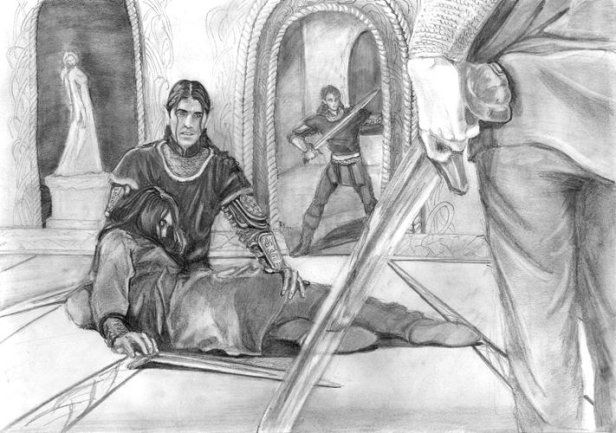
The Sons of Fëanor laid a new claim to the Silmaril and demanded that Dior relinquish the jewel. When he refused, “Celegorm stirred up his brothers to prepare an assault on Doriath.”
They fought a battle that all would remember. Celegorm, Curufin, and dark Caranthir all died by Dior’s hand, but they, in turn, killed the new king of Doriath and Dior’s wife, Nimloth. The “cruel servants of Celegorm” also took Dior’s boys Eluréd and Elurín and set them to be lost and starve in the woods. The only survivor of the household was Elwing, who was given Nauglamír, and fled to the sea at the mouth of the River Sirion.
“Thus Doriath was destroyed, and never rose again.”
The sons of Fëanor sought, all the way back when they were still in Valinor, to gain the three gems known as the Silmarils their father made. The light of the trees of Valinor infused within them gave a longing call to the life they once had lived. So they spent more time on Beleriand than they did in Valinor, pining for the gems which reminded them of the world they left behind.
The Murder of the King of Nogrod also had a lasting effect on the Dwarves, and because of their stubbornness was something their race never forgot, even though the whole war was pretty much their fault in the first place. Beyond that, the Elves have proven time and time again that they can’t trust anyone, not even their own kin.

I find it fascinating that the whole world was turned upside down because of these artifacts that were only sought because of their beauty. They were created to be an homage to the light of Valinor, and they became the destruction of Beleriand. The strange part about that is that they don’t hold any specific power; it’s just that they are beautiful, which shows the ignorant and selfish nature of the Elves. They are called the Children of Ilùvatar, and that is precisely how they act, like petulant children who can’t share.
Only two chapters are left, and one has to wonder where the Valar are. Will Melian inform them about how bad the infighting had gotten? How will Morgoth be handled? Where will Elwing and the Silmaril end up next?
Let’s find out next week as we dive into “Of Tuor and the Fall of Gondolin.”
Blind Read Through: J.R.R. Tolkien; The Silmarillion, Of The Ruin of Doriath, Part 1

“It is told that a seer and harp-player of Brethil named Glirhuin made a song, saying that the Stone of the Hapless should not be defiled by Morgoth nor ever thrown down, not though the sea should drown all the land; as after indeed befell, and still Tol Morwen stands alone in the water beyond the new coasts that were made in the days of the wrath fo the Valar. But Húrin does not lie there, for his doom drove him on, and the Shadow still followed him.“
Welcome back to another Blind Read! This week Húrin, Túrin’s father, returns to the story as the second of the great kingdoms of the First Age topple.
Tolkien introduces us to this chapter by letting us know that Morgoth had been watching the events closely in Doriath and “In all ways Morgoth sought most to cast an evil light on those things that Thingol and Melian had done, for he hated them, and feared them.“
After twenty-eight years, Morgoth released Húrin from his captivity in Angband, “and he feigned that in this he was moved by pity as for an enemy utterly defeated.“

But Húrin was a marked man. He had been in captivity for so long that no one believed that he wasn’t a thrall of Morgoth. So he went to his people in Hithlum, but they shunned him in fear that he might lead an army to their front door because why would Morgoth suddenly release him after twenty-eight years if not to use him?
They were right to be scared because the agents of Morgoth watched his every move from a distance unbeknownst to Húrin.
Turned away from his people, Húrin turned to Gondolin, but the same fate held him there. Gondolin stayed hidden from him against Throndor, the great eagle’s wishes. Turgon decided too late to trust Húrin, and he never saw the human again. Still, his curse stuck with the Elf because, under the view of Morgoth’s spies, Húrin cried out to the mountains where the hidden entrance was to let him in, “and now Morgoth smiled, for he knew now clearly in what region Turgon dwelt.” We are told a few sentences later, “This was the first evil that the freedom of Húrin achieved.“
The despair of Húrin deepens and he stumbles around until he finally comes upon a large stone, “But Húrin did not look at the stone, for he knew what was written there.” Namely the memorial for his children. Sitting at the stone, he finds Morwen, spent and ready to pass away. She doesn’t seem surprised to see him, almost as if he were a shade coming to her in the twilight. They speak for a moment and watch the sunset together, holding hands as she passes away.

He builds a monument for her, and this monument is the opening quote of this chapter.
Húrin’s loss and desperation is where the story of Doriath’s fall begins. Húrin travels the land and eventually comes across the ruin of Nargothrond, the house of Finrod Felagund, where Glaurung the dragon made a home and gathered all the treasures of the Elves together. An old character reemerges as we find him sitting on the stores of Gold. It is Mîm, the petty dwarf who betrayed Túrin.
They exchange words, and Húrin slays him. “Then he entered in, and stayed a while in that dreadful place, where the treasures of Valinor lay strewn upon the floors in darkness and decay; but it is told that when Húrin came forth from that wreck of Nargothrond and stood again beneath the sky, he bore with him out of all that great hoard but one thing only.” Nauglamír, the Necklace of the Dwarves, made for Felagund by Nogrod and Belegost, is one of Finrod’s most prized possessions.

Taking the prize, Húrin traveled to Doriath, eventually stood before Thingol, and threw Naulamîr at the King’s feet. He disparaged Thingol for not protecting his family, and by throwing the necklace at his feet, he intimated that Felagund was willing to go and fight, whereas Thingol thought he was too important; thus, Thingol was a coward and a breaker of promises.
Thingol accepted the jibes, but Queen Melian stood and spoke to Húrin, telling him the truth of the matter, that they did everything they could for Húrin’s family, short of imprisoning them to restrain them. She finished, “With the voice of Morgoth thou dost now upbraid thy friends.“
Húrin realizes his mistake and understands that the only thing keeping him alive was his anger, so “it is said that Húrin would not live thereafter, being bereft of all purpose and desire, and cast himself at last into the western sea; and so ended the mightiest of the warriors of mortal Men.“
But the damage had been done. Nauglamír was now in Menegroth at Thingol’s feet. The power of the Silmarils burned in Thingol’s memory as he looked at Nauglamír, “and it came into his mind that it should be remade, and in it should be set the Silmaril.”
Thingol went to the Dwarves and asked them to reforge the necklace, which they did in earnest. But the power of Fëanor’s creation created corruption, much like the One Ring in the Third Age. The Dwarves wanted nothing more than to keep Nauglamír once they forged it; “By what right does the Elvenking lay claim to the Nauglamír that it was made by our fathers for Finrod Felagund who is dead?“
I’ve looked for it before, but this is the tipping point between Dwarves and Elves. They are mortal enemies when we see them in the Third Age (The Lord of the Ring and The Hobbit). So, where did that rift begin? So far in the First Age, they have pretty much worked together. The Dwarves of the Blue Mountains even forged Nauglamír for an Elven King and then did it again to add a Silmaril for Thingol.

So what caused the rift? The fire of Fëanor. The Silmarils hold the light of Valinor, and for these Elves, it is the last vestige of the beauty of that land for them. So few are still alive that even looked upon the light of the trees of Valinor before the Sun or the Moon, and the only three left in Beleriand are Thingol, Melian, and Morgoth.
The Simarils remind them of the innocence of youth. A time when there was no strife and the music of the Ainur filled the world. They recalled a time of beauty and creation.
So when the people of Beleriand looked upon it, they felt that love and innocence and fought for it, even if they didn’t realize why. And what happens when you desire something so much, and you have no idea why? What happens when someone else tries to take this thing you love?
“The then lust of the Dwarves was kindles to rage by the words of the King; and they rose up about him, and laid hands on him, and slew him as he stood. So died in the deep places of Menegroth Elwë Singollo, King of Doriath, who alone of all the Children of Ilùvatar was joined with one of the Ainur; and he who, alone of the Forsaken Elves, had seen the light of the Trees of Valinor, with his last sight gazed upon the Silmaril.“
Join me next week as we conclude “Of the Ruin of Doriath!”
Blind Read Through: J.R.R. Tolkien; The Silmarillion, Of Túrin Turambar, Part 5

“And with the beginning of spring Túrin cast off his darkness, and grew hale again; and he arose, and he thought that he woudl remain in Brethil hidden, and put his shadow behind him, forsaking the past. He took therefore a new name, Turambar, which in the High-elven speech signified Master of Doom; and he besought the woodman to forget that he was a stranger among them or ever bore any other name.“
Welcome back to another Blind Read! This week we conclude the tragedy of Túrin Turambar.
Last week we left off with Túrin heading back to Dor-lómin, ignoring Gwindor’s dying wish. This week we pick up with Túrin finding his home but also finding that his mother and sister were gone, so he stopped by the house of Brodda the Easterling. This event is where Túrin completes his transition and becomes Darth Vader (forgive the crossover). The Easterlings tell Túrin that Morwen fled, and the shock of the knowledge opened his eyes, “and the last of Glaurung’s spell were loosed.” In a fury at his loss and stupidity, “he slew Brodda in his hall, and other Easterlings that were his guests.” Once again, becoming a hunted man, only this time by the people of his birth.
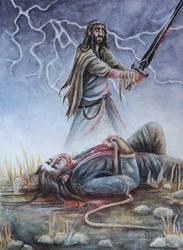
And yet Túrin justifies these murders and, in fact, every transgression of his life: “then those deeds wrought are not evil to all. And where else might I have better bestowed my kin, even had I come sooner? For if the Girdle of Melian be broken, then last hope is ended. Nay, it is better indeed as things be; for a shadow, I cast wheresoever I come. Let Melian keep them! And I will leave them in peace unshadowed for a while.” Morgoth will follow his movements because he is an incredible warrior and ignores all else. His youth and hubris show again to justify murder.
So Túrin left to search for Finduilas but found some men in the woods who told him an orc brigade killed her. They showed Túrin the body of the elf-maiden, and he went into a pang of great sadness. The opening quote of this essay comes at this point, making a turning point where Túrin accepts that he is “the Master of Doom.”
Tolkien takes us back to Doriath, where the word that there were some survivors out of Nargothrond, and Morwen, Túrin’s mother, decides she will go and find her son. Unable to stop her in this quest, Thingol bids Mablung go and protect her, but Nienor, Túrin’s sister, disguises herself to go along as well. This is the beginning of a disturbing parallel to the Beren and Lúthien tale. Remember all the times Lúthien disguised herself to go after Beren? Here we have Nienor, whom Túrin hasn’t seen for many years, and in that time, has grown into a woman, sneak out to go help find him, disguised much like Lúthien.
So this group rides out to Nargothrond, only to find Glaurung, so they retreat in haste, but in confusion, Nienor falls from her steed. She gets caught in the gaze of Glaurung, and he understands who she is through his magic. He wipes her memory and personality and turns her into a vegetable.

Mablung finds her and brings her with him, but Orcs assail them in the wild, and in the intervening traveling, Nienor has begun to gain her wits, if not her memory. Finally, the Elves kill the orcs, but Nienor was spooked, and she ran as swift as a horse and got lost in the wilds.
Nienor wandered through the forest; “Nothing did she remember save a darkness that lay behind her, and a shadow of fear; therefore she went warily as a hunted beast, and became famished.” Then she passed into Brethil.
Terrified and alone, she lay down on Haudh-en-Elleth, the burial mound of Finduilas – Gwindor’s prophesy was coming home to roost.
Túrin finds her there and brings her home, comforting her. She cannot even remember her name or that Túrin is her brother.
She had to be taught things “as to an infant” because Glaurung’s magic was that strong, but she learned and became a clan member. Many people had fallen for her, but it was Túrin who asked her hand in marriage, “but for that time she delayed despite her love.” Which was undoubtedly a familial love, not romantic love.
It took three years and a promise not to go to battle if she would marry him, and finally, she did, but even this oath Túrin forsook.
Orcs came and attacked Brethil, and Túrin stayed back at home for a while but eventually took up his black sword and met the orcs in battle. Because of his abilities in battle, word got out that the Black Sword was in Brethil.
Glaurung set a plan and got another army ready to march to Brethil, but he let those plans leak so that the people knew about their fate ahead of time. Terrified, they went to Túrin for advice, “and he counseled them that it was vain to go against Glaurung with all their force” and that he should try to go against the great dragon himself to trick him.
Túrin set off after the dragon, but Nienor was scared to be left behind, so she set off with a company of men after her husband/brother.

Túrin finally found Glaurung sleeping and, through the perils of getting to him, ended up reaching the dragon alone, the few men with him killed.
Túrin, undeterred, found Glaurung still sleeping. “Then he drew Gurthang, and with all the might of his arm, and of his hate, he thrust it into the soft belly of the Worm, even to the hilts.“
Glaurung was grievously injured, but he gazed into Túrin’s eyes and paralyzed the hero.
Meanwhile, Nienor heard Glaurung’s mighty cry and the people of Brethil thought that the dragon was killing the men who went forth, so she left to find him with Brandir, who loved her. He tried to lead her away, but Nienor told him,”‘The Black Sword was my beloved and my husband. To seek him only do I go. What else could you think?” But Brandir suspected the truth; Túrin and Nienor were brother and sister. What’s worse is now they are expecting a child. So Brandir only wanted to protect her.
But being part of the curse of Túrin, she left Brandir and went to find her Husband. When she finally did, lying on the ground seemingly dead, she wept until Glaurung lifted his head and saw her.
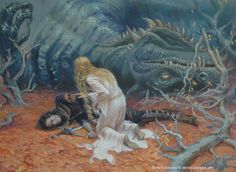
Using the last ounces of his life, Glaurung removed the spell, and Nienor suddenly remembered who she was and what she had been doing for the last number of years. She felt the child in her belly, and “she ran from him distraught with horror and anguish, and coming to the brink of Cabed-an-Aras she cast herself over, and was lost in the wild water.”
We see the parallel in the foreshadowing of Saeros at the beginning of this chapter, coming to fruition here.
Túrin woke with Glaurung’s passing and came back to Brethil. He should have been a hero, but when he heard that his wife was dead, and he learned that Brandir had come back to camp telling everyone that Túrin and Nienor (or Níniel as they called her in the base) were dead because of Túrin, what was Túrin to do? Why, what he always did! He killed Brandir in a fury of emotion but soon learned that Brandir was telling the truth and the only exaggeration was that he thought Túrin was dead when he saw his unresponsive form.
Overwhelmed, Túrin felt there was only one more thing to do. So he pulled his sword, Gurthang, and asked it, “Wilt thou therefore take Túrin Turambar, wilt thou slay me swiftly?“

And his sword responded, “Yea, I will drink they blood gladly, that so I may forget the blood of Beleg my master, and the blood of Brandir slain unjustly. I will slay thee swiftly.”
Túrin threw himself on Gurthang, and Gurthang kept his promise and immediately took Túrin’s cursed life.
He died a hero and lay under carven runes in Doriath from then on, a hero despite his curse, and Nienor’s name was on the marker, “but she was not there, nor was it known wither the cold waters of Teiglin had taken her.”
This quote is how Túrin’s tale ends, an ultimate Shakespearean tragedy. But before I let you go, I want to note two things. The first is when Túrin speaks to his sword; not only does Gurthang respond to him, but they both speak in almost biblical language. I think this is Tolkien’s way of indicating Ilùvatar’s influence on the humans, despite his seeming indifference. Just a theory, but the language change has been happening more and more, so I’m going to keep track of when it happens.
The second item is, despite the horror and despair throughout this tale, as in all Tolkien, there’s a measure of hope at the core. Túrin was a great hero, and sometimes heroes need to be formed by adversity. Glaurung had terrorized Beleriand for hundreds of years and was near unbeatable, yet this man, cursed or not, was able to singlehandedly slay the scourge of Beleriand.
It should indicate hope moving forward despite the next chapter’s title: “Of the Ruin on Doriath.”
Blind Read Through: J.R.R. Tolkien; The Silmarillion, Of Túrin Turambar, part 4

“And Túrin hastened along the ways to the north, through the lands now desolate between Narog and Teiglin, and the Fell Winter came down to meet him, for in that year snow fell ere autumn was passed, and spring came late and cold. Ever it seemed to him as he went that he heard the cries of Finduilas, calling his name by wood and hill, and great was his anguish; but his heart being hot with the lies of Glaurung, and seeing ever in his mind the Orcs burning the house of Húrin or putting Morwen and Nienor to torment, he held on his way, and turned never aside.”
Welcome back to another Blind Read! This week we continue on the journey of Túrin as Beleriand takes another turn towards the horror and desolation of Morgoth.
We left off last week with Túrin coming to Nargothrond with Gwindor, then soon after with Finduilas, Gwindor’s love, falling in love with Túrin.
Despite this perceived betrayal, Gwindor didn’t hold it against Túrin. He just considered it part of Túrin’s curse, and over time Túrin came to great glory in Nargothrond. They took his council and “built a mighty bridge over the Narog from the Doors of Felagund, for the swifter passage of arms.” They built up a vast store of arms, and “Then the servants of Angband were driven out of all the land between Narog and Sirion eastward, and westward to the Nenning and the desolate Falas.”

Gwindor spoke out against the council of Túrin, but “he fell into dishonour and one heeded him.” The problem was the curse of Túrin. The Noldor of Nargothrond thought no one was making a concerted effort to push back against Morgoth, so they heeded Túrin and moved from guerilla tactics to open warfare. The tactics worked initially, but Morgoth turned his full might against Nargothrond’s insurrection.
While the Noldor were active in the war against the evil of Angband, messengers came from the south from Círdan the Shipwright. “The Evil of the North has defiled the springs of Sirion, and my power withdraws from the finger sof the flowing waters.” So Ulmo told Orodreth, the Lord of Nargothrond, that he could not protect them in this open battle, surreptitiously telling Orodreth to return to hiding.
Yet Túrin again convinced the Noldor that they should continue the fight. “And in the autumn of that year, biding his hour, Morgoth loosed upon the people of Narog the great host that he had long prepared; and Glaurung the Urulóki passed over Anfauglith, and came thence into the north vales of Sirion and there did great evil.“
The host of Nargothrond went out to meet the armies of Angband in battle, “and none but Túrin defended by his dwarf-mask could withstand the approach of Glaurung…On that day all the pride and host of Nargothrond withered away; and Orodreth was slain in the forefront of the battle, and Gwindor son of Guilin was wounded to death.” but before Gwindor died, he told Túrin:
“Let bearing pay for bearing! But ill fated was mine, and vain is thine; for my body is marred beyond healing, and I must leave Middle-earth. And though I love thee, son of Húrin, yet I rue the day that I took thee from the Orcs. But for thy prowess and thy pride, still I should have love and life, and Nargothrond should yet stand a while. Now if thou love me, leave me! Haste three to Nargothrond, and save Finduilas. And this last I say to three; she alone stands between thee and thy doom. If thou fail her, it should not fail to find thee. Farewell!”
You may have noticed the overwhelmingly biblical way of speech Gwindor uses when he doesn’t sound like this earlier in the story. I think that’s because this is Tolkien’s way of foreshadowing what is to come.
Túrin is a reckless youth, and death and bad luck seem to follow him. This cavalcade of events is the true tragedy of his story because he is such a good warrior, leader, and influencer, but his youth, temper, and impetuosity get in his way. He is very much Hotspur from Hamlet. He is too quick to anger and fist.
From Saeros to Mîm, to Beleg, then Gwindor and beyond, Túrin caused their deaths because of his Hubris and impetuousness. One might look at Beren and think he had the same qualities, but Beren took precautions before he did anything. Túrin wants to meet the world head-on and take it by the throat, and has since he was a youth. An illustration of this example is below.
Túrin ran back to Nargothrond, but because he advised Orodreth to build that bridge over the Narog, the armies of Angband marched into Nargothrond without issue, and “the dreadful sack of Nargothrond was well neigh achieved.”
Túrin stood alone as Glaurung came out of the tunnels and stood before him “and opened wide his serpent-eyes and gazed upon Túrin. Without fear Túrin looked into them as he raised up thew sword; and straightaway, he fell under the binding spell of the lidless eyes of the dragon, and was halted moveless.”
Instead of trying to help the captives and free people as Beren would have done, Túrin decided to take the whole army of Angband by himself. Glaurung, knowing this about the man, merely held him with his magical gaze while the Orcs took Elven women and children, Finduilas among them screaming for Túrin to help her, away to be thralls in Angband.
Glaurung then tells Túrin that Morwen, his mother, and all his kin in Dor-Lómin are going to be killed by agents of Angband:
“Haste thee now, son of Húrin, to Dor-Lómin! Or perhaps the Orcs shall come before thee, once again. And if thou tarry for Finduilas, then never shalt thou see Morwen again, and never at all shalt thou see Nienor thy sister; and they will curse thee.“
Here we get the opening quote of this essay, as Túrin strives to find Dor-Lómin and his family. He may have still been under Glaurung’s spell when he made this decision, but it honestly matches his attitude.
He ignores all others’ advice and goes out on his own to do what he thinks is best without all the information, while only a few days before, his friend Gwindor told him he would be doomed for the rest of his life if he didn’t go after Finduilas. However, he ignores her cries because of an offhand comment from a dragon who only wanted him gone so it could horde the gold of Nargothrond to make its bed (in the shadow of Smaug from the Hobbit).
This tale is a tragedy in the Shakespearean manner because these terrible events could have been avoided if Túrin would listen to others and not run off on his own.
But what end would come to Túrin? Join me next week as we conclude, Of Túrin Turambar!
Blind Read Through: J.R.R. Tolkien; The Silmarillion, Of Turin Turambar, part 3

“But as he stood, finding himself free, and ready to sell his life dearly against imagined foes, there came a great flash of lightning above them; and in its light he looked down on Beleg’s face. Then Túrin stood stonestill and silent, staring on that dreadful death, knowing what he had done; and so terrible was his face, lit by the lightning that flickered all about them, that Gwindor cowered down upon the ground and did not raise his eyes.”
Welcome back to another Blind Read! This week we continue to see how Túrin progressed, along with a few more tragedies he had to endure.
We left our heroes betrayed by the Dwarf Mîm. Mîm showed the agents of Morgoth to his home where Túrin, Beleg, and the Outlaws were hiding. Unfortunately, the Orcs took them by surprise, slaying most of them and kidnapping Túrin. We start this week with Beleg, after shunning Mîm for his betrayal, set out to track the orcish horde who had kidnapped his friend.
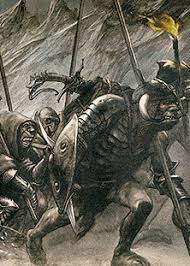
He never lost the track, “and not even in the dreadful woods of Taur-nu-Fuin did he swerve from the trail, for the skill of Beleg was greater than any that have been in Middle-earth.” and he came upon an injured Elf laying at the foot a great dead tree.
This Elf was Gwindor, son of Guilin, who we last saw captured in Nirnaeth Arnoediad by Morgoth and imprisoned to work, forging, and mining gems. But by “secret tunnels known only to themselves the mining Elves might sometimes escape.”
Gwindor saw the group of Orcs pass and saw Túrin with them, chained. Gwindor tried to persuade Beleg not to follow, but nothing could stop Beleg from his quest, so they followed the trail to Thangorodrim. It is here we see the true glory of Beleg Strong Bow.
“When all the camp were sleeping Beleg took his bow, and in the darkness shot the wolf-sentinels, one by one and silently. Then in great peril they entered in, and found Túrin fettered hand and foot tied to a withered tree.”
They snuck in, gathered Túrin, and carried him to a nearby dell, and Beleg took out Anglachel, that cursed blade forged by Eöl the Dark Elf, to cut his bonds. “But fate was that day more strong, for the blade slipped as he cut the shackles, and Túrin’s foot was pricked.”

After being beaten and enslaved, he was not in his right mind, and he only knew that someone was hurting him again, but he was free from his bonds, so he lept up “and grappling with him in the darkness, he seized Anglachel, and slew Beleg Cúthalion thinking him a foe.”
We then get the opening quote for this essay. A great storm arose at the death of Beleg and wiped the trail of Túrin and Gwindor, and the Orcs left empty-handed and returned to Morgoth. The man and the Elf buried Beleg there with his bow.
“Thus ended Beleg Strongbow, truest of friends, greatest in skill of all that harboured in the woods of Beleriand in the Elder Days, at the hand of him whom he most loved; and that grief was graven on the face of Túrin and never faded.”
When Tolkien calls this story a tragedy, this is the heart of it. We experienced a story of love and heroism with Beren and Lúthien, and this tale is the other side of the token.
Much of Tolkien is about good versus evil. The battle for the nature of the world. But when the world becomes corrupted, what does it mean to win? The Lord of the Rings has little snippets of these tragedies, but The Silmarillion is unfettered with the need or desire to hold a traditional narrative; thus, Tolkien can show his true intentions.
Tolkien lived and fought through World War One, and where his tales are not allegories, they mirror his experience. In war, you have two similar people; one comes out with what they desired, and one does not. The point is the struggle and how they hold themselves through the process. Of course, the lives of individuals go deeper than this generalization, but the fact is valid.
This tale is a tragedy, and the Beren and Lúthien tale is the book’s heart.
The whole book has a melancholy feel to it. From the first page, you can feel the horrible things coming, and that transcends the entire history (at least so far), but what Tolkien does so well is the infusion of hope in the most desperate times.
At this point in history, Morgoth has won. Over half of Beleriand is his, and he is killing more of the residents. What’s worse is the agents of Morgoth either kill or actively work to drain spirits. Only these few heroes like Turin and Beleg keep the hope alive.
So Túrin walked the lands with Gwindor, grieved and seemingly lost, until they came to the River Sirion and he lay in the waters, and the Love of Ulmo allowed him to release his pain, “and his tears were unloosed at last, and he was healed of his madness.”
He and Gwindor head to Nargothrond to continue the fight and the journey.

The people of Nargothrond welcomed Gwindor with open arms, and they accepted Túrin because he was traveling with the Elf. In time, he grew to be respected, primarily because of his appearance. The Elves knew he was the son of Húrin and Morwen, but he also knew the speech and language of Doriath so that “even among the Elves he might be taken for one from the great houses of the Noldor; therefore many called him Adanedhel, the Elf-Man.” Though we know that being associated with the Noldor isn’t always the best thing.
The smiths in Nargothrond reforged Anglachel to rid it of its horrible connotation, and Túrin renamed it “Gurthang, Iron of Death.” He proved himself to those Elves and became known as Mormegil, The Black Sword. He was considered invisible, so they gave him Dwarven hewn armor and a “dwarf-mark all gilded.”
When Gwindor and Túrin made it back to Nargothrond, Gwindor picked back up with Finduilas, daughter of Orodreth, the current King. Gwindor loved Finduilas to his fullest extent (and is insinuated that he always had), but the curse of Túrin followed even this Elf who broke his bonds. Finduilas fell in love with Túrin and out of love with Gwindor.
Finduilas could not help her love, even after being told that “this man is not Beren.” insinuating that Beren was a once-in-a-lifetime person who could hold onto the love of an Elf and make it work. But the heart wants what the heart wants.
Túrin, taken by surprise, did not return the love, honoring his friendship with Gwindor; but that relationship had turned. Gwindor approached Túrin, and the man tried to plead his case, but Gwindor spoke words no more factual said:
“The doom lies in yourself, not in your name.”
Join me next week as we continue the journey of Túrin!
Blind Read Through: J.R.R. Tolkien; The Silmarillion, Of Túrin Turambar Part 2
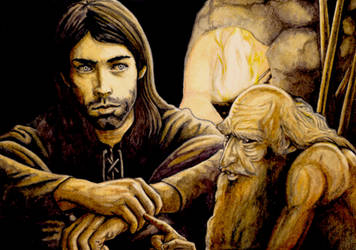
“And now there came another dwarft bearing light to greet him, and they spoke together, and passed swiftly down into the darkness of the cave; but Túrin followed after, and came at length to a chamber far within, lit by dim lamps hanging upon chains. There he found Mîm kneeling at a stone couch beside the wall, and he tore his beard, and wailed, crying one name unceasingly; and on the couch there lay a third. But Túrin entering stood beside Mîm, and offered him aid. Then Mîm looked up at him, and said: ‘You can give no aid. For this is Khîm, my son; and he is dead, pierces by an arrow. He died at sunset. Ibun my son has told me.”
Welcome back to another Blind Read! This week we continue our journey with Túrin as he navigates his trials and tribulations. Last week we read that Tolkien called this story “The Tale of Grief,” and we traverse this story; we’ll see why!
We jump in right where we left off. Túrin leads a band of Outlaws and Beleg Strongbow, picking up the mighty sword Anglachel and some lembas bread and going back out into the wilds to watch over Túrin.
Túrin, however, told Beleg that if he were to find him again, it would be on the slopes of Amon Rûdh, an isolated mountain peak just east of Doriath. So it’s either divine providence or sheer luck that the group of Outlaws would come across three dwarves. So naturally, being outlaws, they attacked the group (I’m assuming to rob them, but it’s not clear. Dwarves were known for their smithing and the gems they mine from the mountain cores) and captured one of them.
This dwarf, named Mîm, pleaded with Túrin “and offered as ransom to lead them to his hidden halls which none might find without his aid.”
And where is this home? “High above the land lies the house of Mîm, upon the great hill; Amon Rûdh is that hill called now, since the Elves changed all the names.”
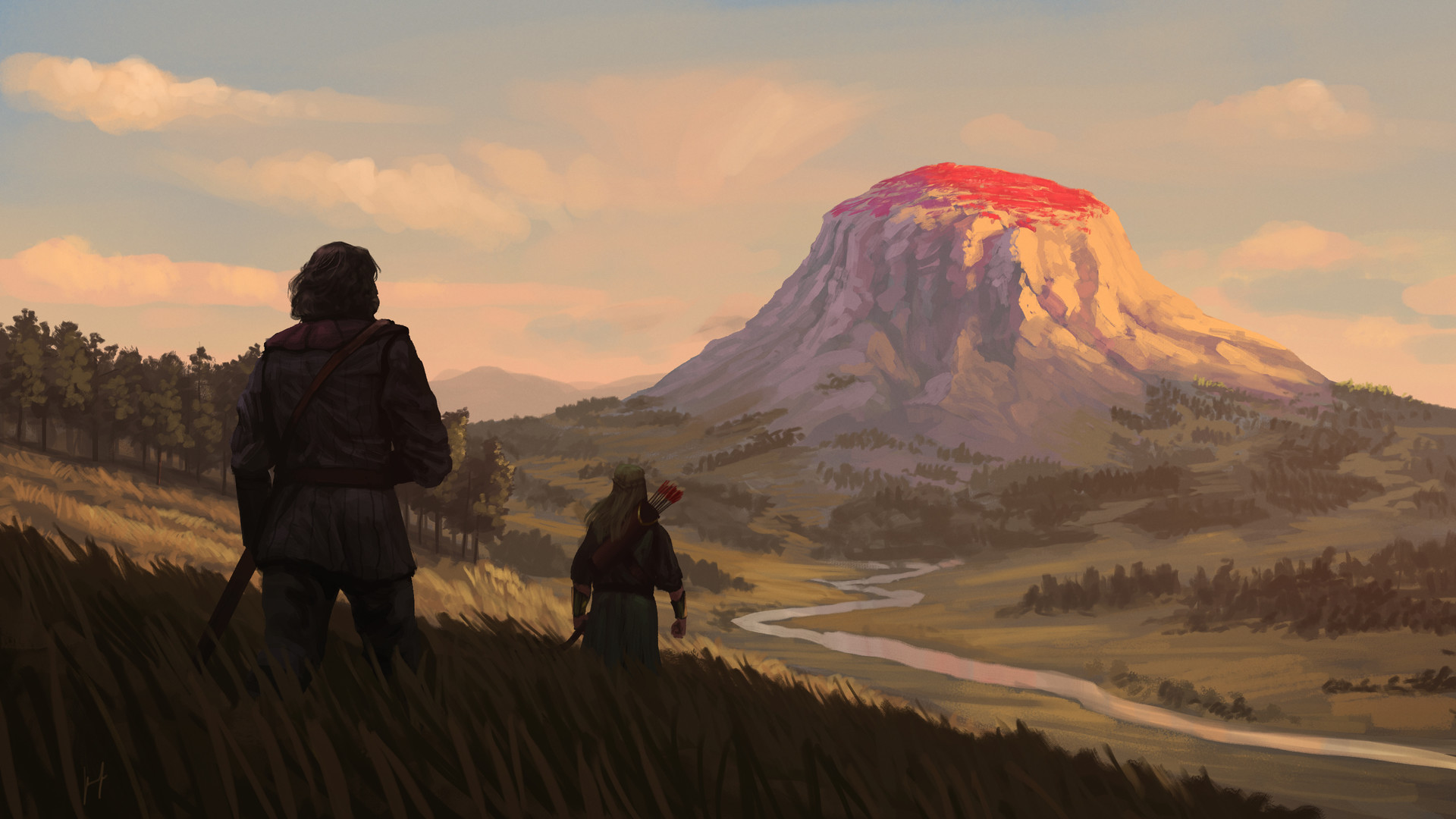
On the journey to the peak, Tolkien gives us a little taste of what to expect on this journey. One of the Outlaws sees a red flower, seregon, on the ridge, and with the sun shining through it, he says, “There is blood upon the hill-top.”
He thinks this because of how the sun reflected off this flower. Still, in the Quenya tongue, sereg means blood, indicating that whatever happens here won’t be a happy-go-lucky experience.
The trouble starts immediately once the group gets into Mîm’s cave, as we get the quote that begins this essay. It was Túrin who killed Khîm with an arrow. It was Mîm’s clan the outlaws attacked below the peak.

Túrin is apologetic but stands tall. He owns the fact that he applied the killing blow, and because of Dwarven mentalities, Mîm respects him, saying, “You speak like a dwarf-lord of old.“
Túrin learned of Mîm and his people, who were known as the Noegyth Nibin, or the Petty Dwarves. They were outcasts from the Blue Mountains, and they came into Beleriand first, before even the Noldor made their dangerous trip across the sea to this land. As a result, they lost their crafting abilities and “became diminished in stature.” Orcs and Noldor hunted them and considered all creatures of Beleriand enemies, so “they took to lives of stealth, walking with bowed shoulders and furtive steps.”
They were the Dwarves who dug the tunnels which became Nargothrond, but the Noldor pushed them out, and they came here to Amon Rûdh, the Bald Hill, where they made their home.
Living on the hill was difficult, especially since it was “said that the winters worsened in Beleriand as the power of Angband grew.” But Túrin lived there with Mîm and the remaining dwarves and outlaws. Eventually, while holed up in the hill, a figure appeared from the terrible cold no one else dared traverse.
“suddenly among them a man, as it seemed, of great bulk and girth, cloaked and hooded in white; and he walked up to the fire without a word. And when men sprang up in fear, he laughed, and threw back his hood…and in the light of the fire Túrin looked again on the face of Beleg Cúthalion.”
Beleg again tried to coax Túrin to return with him to Doriath, even bringing “out of Dimbar the Dragon-helm of Dor-lómin” to pull at his heartstrings. But Túrin remained steadfast, so Beleg stayed with him. “Those that were hurt or sick he tended and gave them lembas of Melian,” but despite his care, it is evident that he was only there for Túrin, and “hatred of Mîm for the Elf that had come into Bar-en-Danwedh grew ever greater, and he sat with Ibun, his son in the deepest shadows of his house.”
Spring had finally come to Beleriand, but Angband’s reach had grown, and many had lost hope, but “Túrin put on again the Helm of Hador; and far and wide in Beleriand, the whisper went, under wood and over stream and through the passes of the hills, saying that the Helm and Bow that had fallen in Dimbar had arisen again beyond hope. Then many who went leaderless, dispossessed but undaunted, retook heart, and came to seek the Two Captains.” Dor-Cúarthol, the Land of Bow and Helm, and Túrin who “named himself anew” as Gorthol, the Dread Helm.
Their deeds were known far and wide, but finally, Morgoth took notice and realized that Gorthol was Túrin, “Then Morgoth laughed.“
A raiding party of Orcs took Mîm and Ibun captive while they were gathering roots, and Mîm led those Orcs back to his home with a promise that they would not harm Gorthol (Túrin).
“Thus was Bar-en-Danwedh betrayed, for the Orcs came upon it by night at unawares, guided by Mîm. There many of Túrin’s company were slain as they slept; but some fleeing by an inner stair came out upon the hill-top, and there they fought until they fell, and thier blood flowed out upon the seregon that mantled the stone. But a net was cast over Túrin as he fought, and was enmeshed in it, and overcome, and led away.“
Beleg found Mîm after the battle, the dwarf finding Anglachel on the ground and brandishing it at the giant Elf. But Mîm was no match for the large ranger, and Beleg took the sword back from the diminutive dwarf. Then, as Mîm fled, Beleg called after him:
“The vengeance of the house of Hador will find you yet!“
Beleg knew that Túrin had been captured and taken to Angband, so he healed himself from battle and set off to help his friend in the shadow of the bloody seregon on the hilltop.
Join me next week as we continue the tale of Túrin Turambar!
Blind Read Through: J.R.R. Tolkien; The Silmarillion, Of Turin Turambar, Part 1

“And now again the might of Angband was moved; and as the long fingers of a groping hand the forerunners of his armies probed the ways into Beleriand. Through Anach they came, and Dimbar was taken, and all the north marches of Doriath. Down the ancient road they came that led through the long defile of Sirion, past the isle where Minas Tirith of Finrod had stood, and so through the land between Malduin and Sirion, and on through the eaves of Brethil to the crossings of Teiglin. Thence the road went on in the Guarded Plain; but the Orcs did not go far upon it, as yet, for there dwelt now in the wild a terror that was hidden, and upon the red hill were watchful eyes od which they had not been warned. For Túrin put on again the Helm of Hador; and far and wide in Beleriand the whisper went, under wood and over stream and through the passes of the hills, saying that the Helm and Bow that had fallen in Dimbar had arisen again beyond hope.”
Welcome back to another Blind Read! This week we are regaled with one of Tolkien’s famous Lays, which later became the book “The Children of Húrin.”
“Here that tale is told in brief, for it is woven with the fate of the Silmarils and of the Elves; and it is called the Tale of Grief, for it is sorrowful, and in it are revealed most evil works of Morgoth Bauglir.”
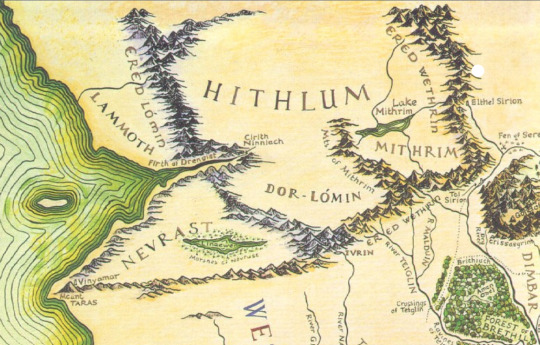
We left off the last chapter with Húrin, Lord of Dor-Lómin (the human duchy by Hithlum in the North East), captured by Morgoth and tied to a pole enduring horrible torture but giving nothing up to that horrific diety.
In that time after Nirnaeth Arnoediad, Easterlings came to Dor-Lómin. These men were subservient to Morgoth, who “despised the remnant people of Hador, and oppressed them, and took their lands and their goods, and enslaved their children.” Still, Morwen, Húrin’s wife and Túrin’s mother, was feared. “and they whispered among themselves, saying that she was perilous, and a witch skilled in magic and in league with the elves.” This fear gave more freedom to Túrin, and she was able to “send him away in secret, and to beg King Thingol to harbour him, for Beren son of Barahir was her father’s kinsman, and he had been moreover a friend of Húrin.“
Beleg Strongbow, part of Beren’s fellowship, found Túrin outside Doriath. Beleg brought Húrin to Menegroth and sent a contingent of Elves to get Morwen back with him. Still, because of the strife of her people, she decided to stay with them in Dor-Lómin but sent back a keepsake for Húrin: “when the Elves departed, she sent with them the Dragon-helm of Dor-Lómin, greatest of the heirlooms of the house of Hador.“
Túrin grew solid and proud in Menegroth under the tutelage of both Thingol and Beleg Strongbow, but he needed more because he “was filled with fear for his mother and his sister.” So he donned his armor and the Dragon-helm and joined Beleg in battle on the marches of Doriath.
Túrin gained notoriety, but that is dangerous for a human in the land of Elves. Because “Now one there was in Doriath, of the people of the Nandor, high in the councils of the King; Saeros was his name.“
Saeros was jealous of Túrin because of his relationship with Thingol, so he bullied and taunted him to the point that Túrin fought back, throwing a goblet and striking Saeros in the face.
Embarrassed, Saeros approached Túrin in the forests outside of Menegroth and tried to best him in a fight. However, Túrin, who had been fighting against Orcs in the marches, quickly overtook him and forced Saeros to do what Saeros frequently said the human woman did, “Run naked as a hunted beast through the woods.”
Saeros was so terrified at his predicament, that he “fell into a chasm of a stream, and his body was broken on a great rock in the water.“
Túrin, knowing that he was a Man among a gathering of Elves, doesn’t feel safe, despite others telling him that Saeros’ fall was not his fault. So he decides to flee the judgment of the Elves, “deeming himself an outlaw and fearing to be held captive.”
Captivity is a prominent theme in this book, and I also think in the larger world of the Lord of the Rings. There are many passages where the characters in question (Beren, Túrin, Fingolfin, Morgoth, Hador, etc.) intimate, or Tolkien tells us through exposition, that they would do anything to escape captivity. Captivity and loss of their freedoms are central themes in these books. The people caught (Maedhros and, more recently, Húrin) were tortured perpetually.
Despite being captured and tortured, I don’t think Tolkien wrote a history of his world to have all characters be afraid of being captive, but instead I think it was Tolkien’s fear of progress and industry which spurned this theme.
When a character gets imprisoned, it’s always in a bleak tower away from all nature. In some ways, I think Tolkien was projecting his fear of what would happen to society if it succumbed to industry. People would no longer be free to head off into the forest and enjoy some good pipe tobacco and a book. Instead, they would be enslaved to the industry and metaphorically tied to towers to watch Morgoth’s fires (or Mordor’s) burn eternally.
The fear of death is secondary to being forced to do another’s bidding. The wars of Beleriand and the wars of the Third Age of Middle-earth are all for this exact reason, much as the real war Tolkien fought in, The First World War. They were wars for the freedom to be who you wanted and move about unmolested. I think that’s why these books still resonate so many years later.
So to escape this enslavement, Túrin ran from Menegroth. He was mistaken, though, because Thingol “took Húrin’s son as my son,” and Thingol grieved that Túrin didn’t believe he would be welcomed back into Menegroth. Beleg Strongbow, also aggrieved, responded to Thingol:
“I will seek Túrin until I find him, and I will bring him back to Menegroth, if I can, for I love him also.”
Beleg ranged and found Túrin, now chief of an outlaw brigade in the forests outside the Girdle of Melian. He tried to persuade Túrin to go back, but because of pride or embarrassment, Túrin refused. He wanted to be his own man, so he sent Beleg away. But Beleg knew that after the battle of Unnumbered Tears, Beleriand was not safe for Túrin to wander with just a few brigands, so he went back to Thingol and asked the King’s leave to guard Túrin from a distance. Thingol agreed and told him to take anything except the King’s sword to aid him in his quest.
“Then Beleg chose Anglachel; and that was a sword of great worth, and it was so named because it was made of iron that fell from heaven as a blazing star; it would cleave all earth-delved iron. One other sword only in Middle-earth was like to it. That sword does not enter into thi tale, though it was made of the same ore by the same smith; and that smith was Eöl the Dark Elf, who took Aredhel Turgon’s sister to wife.“
Thingol warns Beleg, “There is malice in the sword. The dark heart of the smith still dwells in it. It will not lvoe the hand it serves; neither will it abide you long.”

There is no greater foreshadowing than this statement.
Beleg leaves with Anglachel and a gift of Lembas “the waybread of the Elves, wrapped in leaves of silver, and the threads that bound it were sealed at the knots with the seal of the Queen, a wafer of white wax shaped as a single flower of Telperion.”
“and he returned to them no more.”
Join me next week as we continue the tale of Túrin Turambar!
Blind Read Through: J.R.R. Tolkien; The Silmarillion, Of the Fifth Battle: Nirnaeth Arnoediad

“Great was the triumph of Morgoth, and his design was accomplished in a manner after his own heart; for Men took the lives of Men, and betrayed the Eldar, and fear and hatred were aroused among those that should have been united against him. So from that day the hearts of the Elves were estranged from Men, save only those of the Three Houses of the Edain.”
Welcome back to another Blind Read! This week we return to war and learn of the battle of Unnumbered Tears and how the Elves’ mistrust of each other and the other races ultimately led to the destruction that came in this battle.
Tolkien starts us off with a small send-off to Beren and Luthien. We learn they “passed beyond the River Gelion into Ossiriand, and dwelt there in Tol Galen the green isle, in the midst of Adurant, until all tidings of them ceased,” they were never to be heard from again.
I believe Tolkien added that little epilogue to their story at the beginning of this chapter because he wanted to have a happier ending for them. When they are together, there is a bit of sadness in the tone of Tolkien’s writing, a melancholy subsumed beneath their love and happiness together. I believe he wanted to start this chapter with that tone partly because they isolated themselves from the hatred of the Noldor, and it’s precisely that viciousness that causes Morgoth’s successes in this battle.
The chapter begins by telling of Maedhros deciding to take arms up against Morgoth because, through Beren and Lúthien’s actions, he saw that Morgoth was fallible. He also understood that alone, the Elves could not fight him. They needed to come together and make a collective assault.
But the Noldor were too prideful. They could not let old grievances lie. The sons of Fëanor said they would only fight with Thingol if he submitted the Silmaril, but he didn’t trust them. Orodreth also would not march with Maedhros “because of the deeds of Celegorm and Curufin.“
So Maedhros turned to the Naugrim (Dwarves) and Men. Fingon in Hithlum to the east, “ever the friend of Maedhros,” also came to aid. Maedhros looked upon his army and “made trial of his strength too soon” and “resolved to assault Angband from east and west.” He would attack from the east and draw out Morgoth’s armies, while Fingon and the Men would pincer from the West.
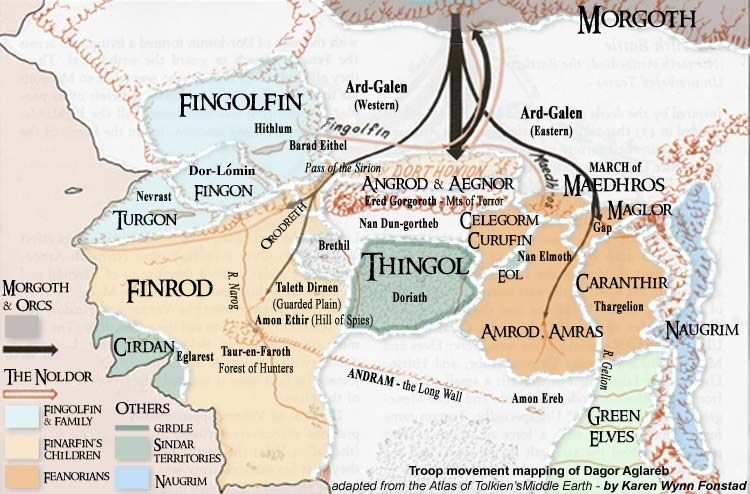
A great army amassed in the east, and they were ready to fight, but Morgoth’s deception continued. One of the Men, Uldor the accursed, was a spy for Morgoth and was able to delay Maedhros from the attack.
Seeing the might of Fingon’s army, Turgon of Gondolin decided that he must help and sent a leaguer from Hidden Gondolin. But Morgoth had planned and built a massive army. So he sent forth the largest army of Orcs the world had seen, “and yet but part of all that he had made ready.”
Morgoth’s Captain had orders to bring Fingon to the battlefield, but he could not taunt him out, so they sent a party and asked for a parley. Here is where the true evil of Morgoth appears. Gelmir, a Lord of Nargothrond, was sent out to answer the parley, but the legion of Morgoth captured him, “and they hewed off Gelmir’s hands and feet, and his head last, within sight of the Elves.“
This betrayal lit a fire in the Noldor, and Morgoth’s plan succeeded. They charged the field of battle, just as he had planned.
“And in the plain of Anfauglith, on the fourth day of the war, there began Nirnaeth Arnoediad, Unnumbered Tears, for no song or tale can contain all it’s grief. The host of Fingon retreated over the sands, and Haldir lord of the Haladin was slain in the rearguard; with him fell most of the Men of Brethil, and came never back to their woods.”
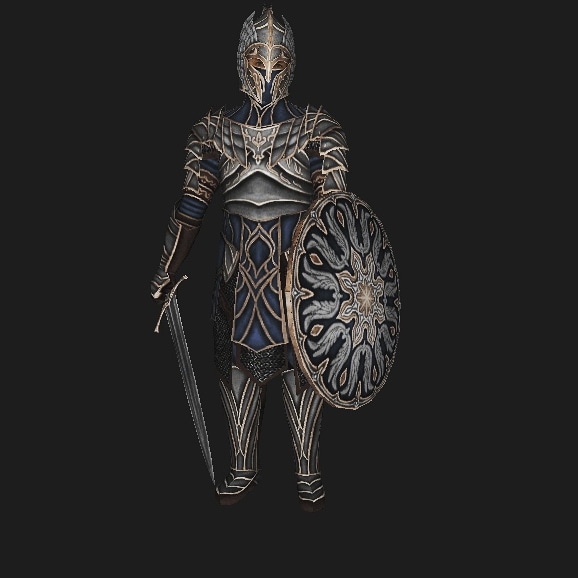
But Turgon and the Gondolindrim came to the rescue, breaking the ranks of Orcs. But this was Morgoth’s plan all along because now that he had weakened the West, Maedhros finally joined the battle on the east, and “Morgoth loosed his last strength, and Angband was emptied. There came wolves, and wolfriders, and there came Balrogs, and dragons, and Glaurung father of dragons.“
They battled fiercely, but the force was not Morgoth’s greatest weapon because “…neither by wolf, nor by Balrog, nor by dragon, would Morgoth have achieved his end, but for the treachery of Men. In this hour the plots of Ulfang were revealed. Many of the Easterlings turned and fled, their hearts being filled with lies and fear; but the sons of Ulfang went over suddenly to Morgoth and drove in upon the rear of the sons of Fëanor, and in the confusion that they wrought they came near to the standard of Maedhros.“
The remaining sons of Fëanor could flee, “gathering a remnant of the Noldor and the Naugrim,” and most of the treacherous men were slain by Morgoth when they came to collect on the reward he had promised them for their betrayal.

It came down to one last force to make a stand. The Dwarves of Belegost, “and thus they won renown.” They could withstand heat much better than either Men or Elves, and “it was their custom moreover to wear great masks in battle hideous to look upon.” So the Dwarves drove off Glaurung and the dragons losing Azaghâl, Lord of Belegost.
Meanwhile, Fingon and Turgon were surrounded by “a tide of foes thrice greater than all the force that was left to them.” A multitude of Balrogs surrounded Fingon, and Gothmog turned to face Fingon. “That was a grim meeting.”
They battled one on one in a brutal and epic fight until one of the Balrog “cast a throng of fire about him.”
“Then Gothmog hewed him with his black axe, and a white flame sprang up from the helm of Fingon as it was cloven. Thus fell the High King of the Noldor; and they beat him into dust with their maces, and his banner, blue and silver, they trod into the mire of his blood.“
Once Fingon had died, Húrin and Huor, the Men of Hador, told Turgon to retreat, and they would guard his exit. Fingon was able to withdraw back into the mountains, to hold fast in Gondolin to be the last bastion of the North against Morgoth. While Húrin and Huor fought against Morgoth’s armies and died, “Thus was the treachery of Uldor redressed.“
Húrin made a name for himself fighting the Troll-guard of Gothmog, crying out, “Aurë entuluva!” (Day shall come again!) with every kill, he too eventually fell.
“Thus ended Nirnaeth Arnoediad.“
The opening quote of the essay follows. The lords of the North were defeated, and they no longer held their lands. “The Orcs and the wolves went freely through all the North and came further southward into Beleriand. They destroyed the Havens and círdan and took over all of the North, leaving only Gondolin, the hidden kingdom, and Doriath, the last two great kingdoms.“
There are tales of courage and horror following the battle of Unnumbered Tears, and Tolkien leaves us with a paragraph of woe and hope in the great horror that Beleriand had become:
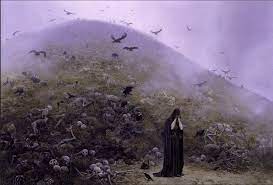
“By the command of Morgoth the Orcs with great labour gathered all the bodies of those who had fallen in the great battle, and all their harness and weapons, and piled them in a great mound in the midst of Anfauglilth; and it was like a hill that could be seen from afar. Haudh-en-Ndengin the Elves named it, the Hill of Slain, and Haudh-en-Nirnaeth, the Hill of Tears. But grass came there and grew again long and green upon that hill, alone in all the desert that Morgoth made; and no creature of Morgoth trod thereafter upon the earth beneath which the swords of the Eldar and the Edain crumbled to rust.“
Blind Read Through: J.R.R. Tolkien; The Silmarillion, Of Beren and Lúthien, Conclusion

“They came at last to the gates of Menegroth, and a great host followed them. Then Beren led Lúthien before the throne of Thingol her father; and he looked in wonder upon Beren, whom he had thought dead; but he loved him not, because of the woes that he had brought upon Doriath. But Beren knelt before him, and said: ‘I return according to my word. I am come now to claim my own.‘”
Welcome back to another Blind Read! This week we pick up right where we left off. Beren and Lúthien survived the battle with Sauron and were in the outskirts of the forests of Doriath.
Celegorm and Curufin found them there and attacked them, thinking of kidnaping Lúthien and taking her as a bride of the Noldor, when a familiar face came to their rescue:
“Then Beren throttled Curufin; but Death was near him, for Celegorm rode upon him with a spear. In that hour Huan forsook the service of Celegorm and sprang upon him…”
With the help of Huan, the sons of Fëanor were subdued and yielded to Beren and Lúthien, but revenge was in the Noldor hearts. Curufin shot a bow as they retreated, intending to kill Lúthien, but Beren dove in front of his love and took the arrow to his chest.

Huan gathered herbs after chasing off Curufin and Celegorm, and “with that leaf she staunched Beren’s wound, and by her arts and by her love she healed him; and thus they returned to Doriath.”
But Beren couldn’t take the thought of failing on his quest twice, so in the middle of the night, when Lúthien slept, he left to pursue the Silmaril.
When Lúthien woke, however, she saw that he was gone and sang her song to Huan for help. “Huan, consenting once more to be her steed, had borne her swiftly hard upon Beren’s trail.” Huan took the guise of Draugluin, Sauron’s wolf captain, and Lúthien took the guise of Thuringwethil, who “was the messenger of Sauron, and was wont to fly in vampire’s form to Angband.”
In these disguises, they caught up with Beren. Beren is quiet at first, hoping to shield Lúthien from “the shadow of Morgoth,” but Huan speaks up: “From the shadow of Death you can no longer save Lúthien, for by her love she is now subject to it. You can turn from your fate and lead her into exile, seeking peace in vain while your life lasts. But if you will not deny your doom, then either Lúthien, being forsaken, must assuredly die alone, or she must with you challenge the fate that lies before you.“
Encouraged, Beren decided he could no longer deny Lúthien and donned the werewolf disguise; Lúthien put on her vampire bat costume and found their way to Angband.

Meanwhile, Morgoth, aware the Huan was near, “chose one from among the whelps of the race of Draugluin; and he fed him with his hand upon living flesh, and put his power upon him.“
This whelp grew to enormous size and became Carcharoth, the Red Maw.
Carcharoth stationed himself in front of the gates, so when Beren and Lúthien came upon him, he stood tall before them, but it was Lúthien who threw off her disguise and stood “small before the might of Carcharoth, but radiant and terrible.” She cast a spell over him with her song and sent him into a deep slumber.
Disguised, the two made it to Morgoth’s chambers, but Lúthien’s disguise didn’t fool Morgoth. “Then Morgoth looking upon her beauty conceived in his thought an evil lust and a design darker than any that had yet come into his heart since he fled from Valinor.”
There is only inference to what he had in mind, but the way Tolkien writes him, there is some terrible sexual connotation which is supposed to indicate the level of evil Morgoth has become. But, of course, the world Tolkien grew up in was one of war, so physical damage might not indicate being evil, only a means to an end. Still, sexual torture and unnecessary damage to “the fairer” sex shows just how deep a level of moral poverty is in Morgoth.

So how do you counter that? By having Lúthien trick him and cast a spell upon him to make him fall asleep and fall from his throne, “The iron crown rolled echoing from his head.” I’ll post the passage in the postscript if you want to read it, but it shows Lúthien is the real hero, despite building Beren up at the beginning of the chapter. She was able to stand up to the horrible abuser and put him into his rightful place, without fear but with determination.
Beren took up his knife, Angrist, and cut off a Silmaril from the crown, but the blade snapped before he could take more.
The two lovers fled the hall, meaning to escape from Angband before Lúthien’s spell wore off, but Carcharoth had already risen and was blocking the gate, sealing them in. The two fierce warriors battled the beastly wolf, but when it saw the Silmaril, he bit for it and took Beren’s hand at the wrist, Silmaril and all.
Lúthien again healed Beren’s wounds, but they tarried too long, and the host of Angband had awoken. All seemed lost, but Huan again came to the rescue. He saw that Carcharoth had fled Angband and caused devastation upon his path, so Huan called for Thorondor, the King of the Eagles, and they flew to Angband and lifted Beren and Lúthien to the woods bordering Doriath.

Thingol was surprised to see the two lovers because of the tales he had heard. He was ready to attack the sons of Fëanor because of rumors that Curufin killed Beren and the Celegorm was to wed Lúthien, but Beren one-handed, and Lúthien appeared before Thingol and Beren gave his speech which started this essay.
Thingol asked for the prize, and Beren held out his stump. Then, understanding, Thingol’s demeanor softened towards Beren: “And it seemed to Thingol that this Man was unlike all other mortal Men, and among the great in Arda, and the love of Lúthien a thing new and strange; and he perceived that any power of the world might not withstand their doom. Therefore, at last, he yielded his will, and Beren took the hand of Lúthien before the throne of her father.“
It seemed as though the chapter should end because the lovers were married, and all parties were happy, yet Carcharoth was ravaging the north, “And Beren, hearing of the onslaught of the Wolf, understood that the quest was not yet fulfilled.“
They formed a hunting party with Huan, Mablung of the Heavy Hand, Beleg Strongbow, Beren, and Thingol to go and end Carcharoth. Upon finding him, there was a significant battle, but one last time, Huan came to the rescue and killed the Red Maw. Carcharoth had one final blow and poisoned Huan to Death: “Beren spoke not, but laid his hand upon the head of the hound, and so they parted.”
They cut open Carcharoth’s stomach, and Beren held the Silmaril aloft, stating, “Now is the quest achieved.”
When they returned to Doriath, Lúthien sang a song of love and sorrow to Mandos the Valar so that she and Beren could stay together in their passion.
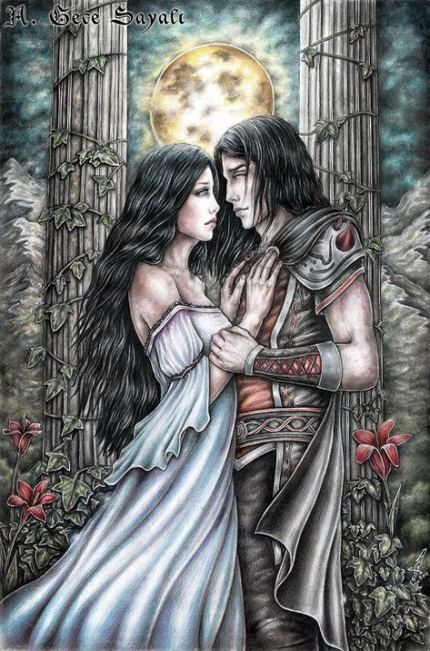
“These were the choices that he gave to Lúthien. Because of her labours and her sorrow, she should be released from Mandos, and go to Valimar, there to dwell until the world’s end among the Valar, forgetting all griefs that her life had known. Thither Beren could not come. For it was not permitted to the Valar to withhold Death from him, which is the gift of Ilúvatar to Men. But the other choice was this: that she might return to Middle-earth, and take with her Beren, there to dwell again, but without certitude of life or joy. Then she would become mortal, and subject to a second death, even as he; and ere long she would leave the world for ever, and her beauty become only a memory in song.”
“This doom she chose.”
Beren and Lúthien lived to the end of their days, mortal and happy, and this opened the door to all others who love and told they shouldn’t, including Aragorn and Arwen.
The world of Beleriand is in turmoil, and there is another battle on the horizon.
Join me next week as we delve into “Of the Fifth Battle: Nirnaeth Arnoediad.”
Post Script:
“Then suddenly she eluded his sight, and out of the shadows began a song of such surpassing loveliness, and such blinding power, that he listened perforce; and a blindness came upon him, as his eyes roamed to and fro, seeking her.
And his court were cast down in slumber, and all the fires faded and were quenched; but the Silmarils in the crown on MOrgoth’s head blazed forth suddenly with a radiance of white flame; and the burden of that crown and of the jewels bowed down his head, as though the world were set upon it, laden with a weight of care, of fear, and of desire, that even the will of Morgoth could not support. Then Lúthien catching up her winged robe sprang into the air, and her voice came dropping down like rain into pools, profound and dark. She cast her cloak before his eyes, and set upon him a dream, dark as the Outer Void where once he walked alone. Suddenly he fell, as a hill sliding in an avalanche, and hurled like thunder from his throne lay prone upon the floors of hell. The iron crown rolled echoing from his head. All things were still.”
Blind Read Through: J.R.R. Tolkien; The Silmarillion, Of Beren and Lúthien, pt. 2

“My fate, O King, led me hither, through perils such as few even of the Elves would dare. And here I have found what I sought not indeed, but finding I would possess for ever. For it is above all gold and silver, and beyond all jewels. Neither rock, nor steel, nor the fires of Morgoth, nor all the powers of the Elf-kingdoms, shall keep from me the treasure that I desire. For Lúthien your daughter is the fairest of all the Children of the World.”
Welcome back to another Blind Read! This week we continue the tale of the star-crossed lovers while deconstructing themes of selfishness and fear in Elvishkind, which we’ve mentioned before.
Last week we learned of Beren’s beginnings and his fight to exit Dorthonian and head south to Doriath. The path was dangerous, and by the time he made it to Doriath, he was “grey and bowed as with many years of woe, so great had been the torment on the road.” But it was there in the forests he espied “Lúthien… the most beautiful of all the Children of Ilúvatar.”
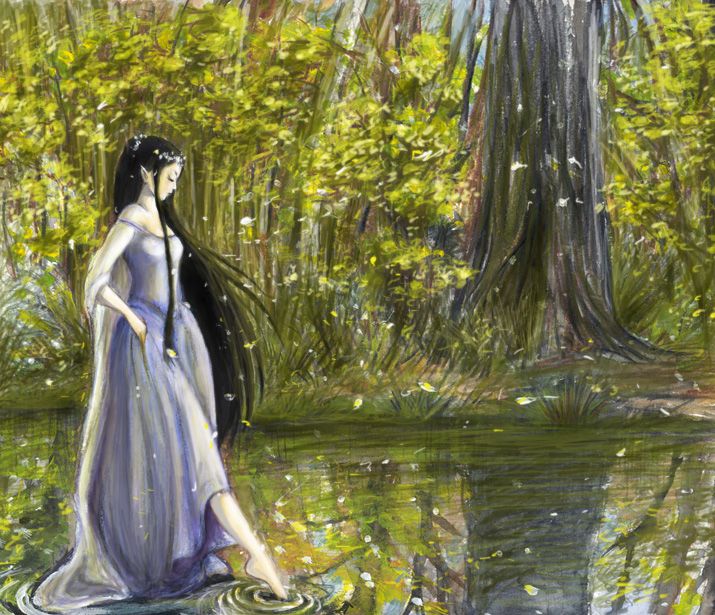
She was dancing and singing in the woods in a beautiful voice “he called her Tinúviel, that signifies Nightingale,” and upon viewing her and listening to her song, “all memory of his pain departed from him.“
He was instantly in love with her light and beauty, and he followed her dumbfounded, trying to speak but muted by her brilliance. When he was finally able to talk, Beren approached Lúthien, and Tolkien gives us a curious passage: “But as she looked on him, doom fell upon her, and she loved him.“
We will see soon that though this is Tolkien’s heart of The Silmarillion, Beren and Lúthien’s love signifies the end of Elvish rule in Beleriand. Morgoth is merely a means to an end, but the Hubris of the Elves marks their destruction. Whether it be Fëanor and his firey drive to kill Morgoth, Turgon’s desire to forsake others for his own people’s safety, or Thingol’s parental urge to “know” what is suitable for his daughter, these are the traits that brought the Elves down, not Morgoth.
Lúthien hid her love for Beren for a while, just as she hid him in the forest. She knew her love for a human was wrong, but she couldn’t help herself because “no others of the Children of Ilúvatar have had joy so great, though the time was brief.”
But there was a danger because “Daeron the minstrel also loved Lúthien, and he espied her meetings with Beren and betrayed them to Thingol.”

Thingol was beyond angry, but it was because of his Hubris as an Elf and fear as a father. He declared Beren a thief and a scoundrel, though reading it closely, one can tell that he can’t believe a man was able to do what no other being could – traverse the Girdle of Melian and enter the lands. He was also terrified of this man taking his daughter and what kind of dangerous life she would have with him because his pride could not allow Beren to remain in Doriath.
Lúthien speaks to Beren’s defense before Thingol tells her, “Let Beren speak!” Beren’s response is the quote that opens this essay.
Thingol still tries to find a way around his predicament. Finally, he accuses Beren of being a thrall or a spy of Morgoth, to which Beren responds:
“By the ring of Felagund, that he gave to Barahir my father on the battlefield of the North, my house has not earned such names from any Elf, be he king or no.“
He shows the Ring of Felagund, which we will see in the Third age, on the hand of Aragorn. Viewing this Ring and hearing his wife Melian’s caution, Thingol devised a plan. He tells Beren that if he wants his daughter’s hand in marriage, he would, “Bring to me in your hand a Silmaril from Morgoth’s crown.”

Then, “he wrought the doom of Doriath and was ensnared within the curse of Mandos.” Because of his fear, he gave Beren an impossible task, bringing Doriath into the larger world. If Beren failed, Thingol would lose his daughter because of the knowledge of condemning Beren to an impossible task. If he succeeded, having a Silmaril would bring down the wrath of both the Noldor and the Valar. Thingol sealed his fate.
Beren, of course, accepts the mission. The young warrior heads north out of Doriath towards the wastes of Taur-Nu-Fuin, what was once Dorthonian – what was once his home. As he traveled, Beren realized he was spied upon, so he shouted to the hidden warriors and showed the Ring of Felagund; “Thus Beren came before King Finrod Felagund.”
He told the King what had befallen his father, and he said of his adventures, finally revealing to the King his quest to secure a Silmaril for Thingol so that he may be with his love. Finrod tells him:
“It is plain that Thingol desires your death; but it seems that his doom goes beyond his purpose, and that the Oath of Fëanor is again at work. For the Silmarils are cursed with an oath of hatred, and he that even names them in desire moves a great power from slumber; and the sons of Fëanor would lay all the Elf-kingdoms in ruin rather than suffer any other than themselves to win or possess a Silmaril, for the Oath drives them.”
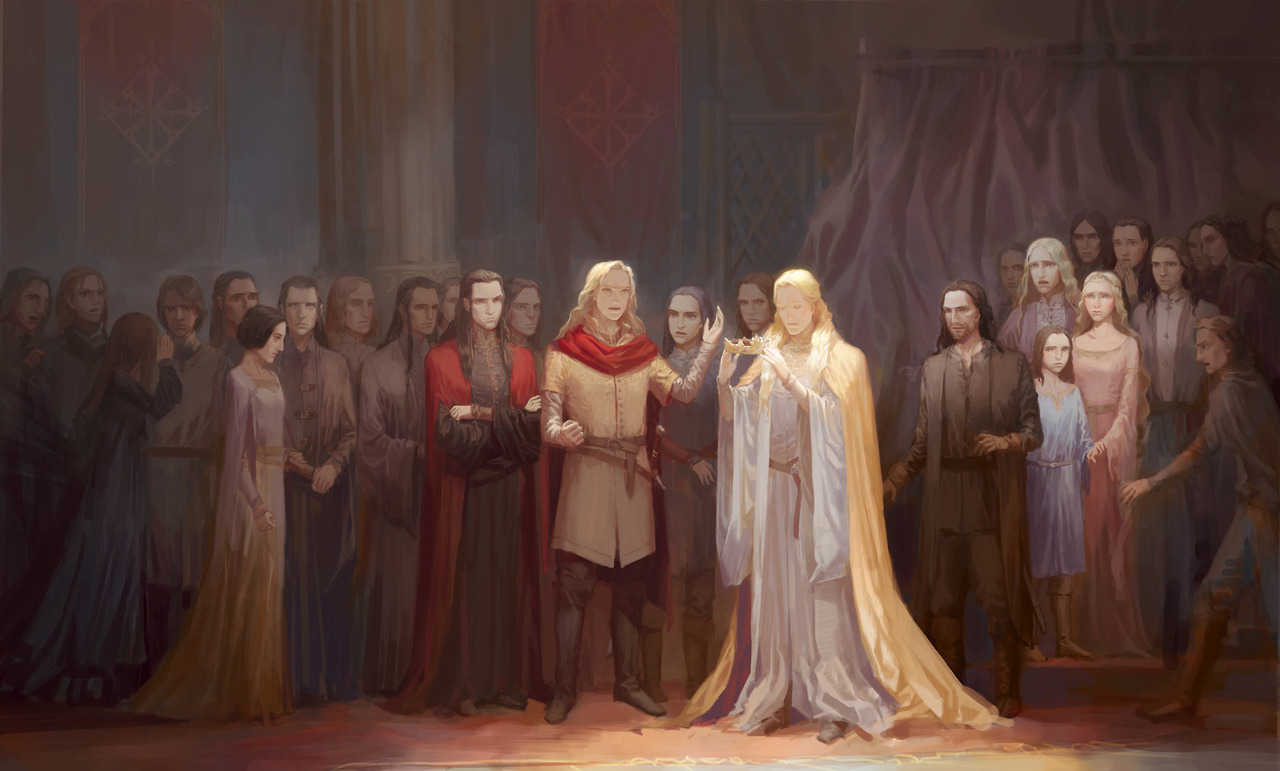
Beren’s appearance came after the time of the Battle of Sudden Flame, when Curufin and Celegorm had fled to Nargothrond with them. The curse of Fëanor was strong, and the Hubris of the Noldor was even more potent. The sons of Fëanor would take their desire to gain the Silmarils to any extent, and Finrod knows this.
“And after Celegorm Curufin spoke, more softly but with no less power, conjuring in the minds of the Elves a vision of war and the ruin of Nargothrond. So great a fear did he set in thier hearts that never after until the time of Túrin would any Elf of that realm go into open battle; but with stealth and ambush, with wizardry and venomed dart, they pursued all strangers, forgetting the bonds of kinship.“
Much like we have seen in the Third Age, the Silmarils call out to the Noldor as the One Ring does. But unfortunately, their power corrupts absolutely, and their meaning has blinded the Noldor to bring about their demise.
Curufin and Celegorm, knowing they are the next in line to be King if Finrod falls in battle, encourage him to go and help Beren steal a Silmaril from Morgoth, “whatever betide.“
Join me next week as we continue Beren’s quest for the Silmaril and Lúthien’s hand in marriage!
Blind Read Through: J.R.R. Tolkien; The Silmarillion, Of Beren and Lúthien

“Among the tales of sorrow and of ruin that come down to us from the darkness of those days there are yet some in which amid weeping there is joy and under the shadow of death light that endures. And of these histories most fair still in the ears of the Elves is the tale of Beren and Lúthien. Of their lives was made the Lay of Leithian, Release of Bondage, which is the longest save one of the songs concerning the world of old; but here the tale is told in fewer words and without song.”
Welcome back to another Blind Read! This week we begin the epic tale of Beren and Lúthien by witnessing Beren’s beginnings and growth into the epic warrior he was to become.
The quote above begins the chapter, and we quickly learn of the Outlaws of Dorthonian led by Barahir, Beren’s father. These were the last twelve human men living in Dorthonian because “Barahir would not forsake” it. Pursued by Morgoth, these men hid in the moors of the highlands of that region at a lake named “Tarn Aeluin.”
“The waters of Tarn Aeluin were held in reverence, for they were clear and blue by day and by night were a mirror for the stars; and it was said that Melian herself had hallowed that water in days of old.“
These Men lived in peace for several years until one of the Outlaws, Gorlim, came home from a battle and “found his house plundered and forsaken, and his wife gone; whether slain or taken he knew not.”
Despite plundering this house, the Outlaws remained hidden and were a thorn in Morgoth’s side, so he “commanded Sauron to find them and destroy them.“

Sauron learned of Gorlim’s loss and, with his sorcery, set an illusion of Gorlim’s wife in the house. Then, when he came back from ranging, he saw her image in the place, “and her face was worn with grief and hunger, and it seemed to him that he heard her lamenting that he had forsaken her.”
Sauron’s trap had worked. Agents of Sauron captured Gorlim and “tormented him, seeking to learn the hidings of Barahir and all his ways. But nothing would Gorlim tell.”
The torment continued until Sauron finally offered Gorlim’s wife back to him. “Then Sauron laughed; and he mocked Gorlim, and revealed to him that he had seen only a phantom devised by wizardry to entrap him; for Eilinel (Gorlim’s wife) was dead.“
But he still promised to bring her back, and “In this way the hiding of Barahir was revealed.”
Morgoth’s agents descended on the troop and brutally slaughtered them. Fortunately, Beren, son of Barahir, was off-ranging when the devastation happened.
Beren returned after having a prophetic dream, telling of his father’s murder, but he was too late. He saw his fellow Outlaws dead next to the Tarn Aeluin. “There Beren buried his father’s bones, and raised a cairn of boulders above him, and swore upon it an oath of vengeance.”
Beren tracked the Orc party to their camp “at Rivil’s Well above the Fen of Serech.“
“There their captain made boast of his deeds, and he held up the hand of Barahir that he had cut off as a token for Sauron that their mission was fulfilled; and the ring of Felegund was on that hand. Then Beren sprang from behind a rock, and slew the captain, and taking the hand and the ring he escaped.“
For four years, Beren wandered Dorthonian as a “solitary outlaw.” Finally, he became one with the land, and “he became the friend of birds and beasts, and they aided him… and from that time forth he ate no flesh nor slew any living thing that was not in the service of Morgoth.”
Beren “did not fear death, but only captivity, and being bold and desperate he escaped both death and bonds; and the deeds of lonely daring he acheived were noised abroad throughout Beleriand, and the tale of them came even into Doriath.”

His deeds became so legendary that Orcs would flee instead of standing up against him if he were near. Finally, Morgoth became distraught that a man was causing such havoc in a land he was supposed to be in control of, so he ordered Sauron to flood the land with his armies to flush Beren out. “Sauron brought werewolves, fell beasts inhabited by dreadful spirits that he had imprisoned in their bodies.”
Dorthonian “was now become filled with evil, and all clean things were departed from it.” Sauron’s plan to find him didn’t work, but the land had become so overrun that Beren fled south, “There it was put into his heart that he would go down into the Hidden Kingdom” of Doriath.
“Terrible was his southward journey” through Ered Gorgoroth, where so many others had perished in that land “where the sorcery of Sauron and the power of Melian came together.“

Beren was known for many great deeds during his lifetime, and “that journey is not accounted least among the great deeds… but he spoke of it to no one after, lest the horror return to his mind.” That region is one of horror in Beleriand, save only for Angband itself. “There spiders of the fell race of Ungoliant abode, spinning their unseen webs in which all living things were snared; and monsters wandered there that were born in the long dark before the sun, hunting silently with many eyes.”
Imagine wandering through a land filled with creatures like Shelob from Return of the King and other creatures whose sole purpose was to destroy all that came from the light. This evil land survived independently from Morgoth because Ungoliant was the only creature Morgoth truly feared, yet Beren, with all his might,uuj]1 made his way through unscathed.
He finally “passed through the mazes that Melian wove about the kingdom of Thingol… grey and bowed as with many years of woe.”

But it was there in the forests of Doriath his journey was complete because “wandering in the summer in the woods of Neldoreth he came upon Lúthien, daughter of Thingol and Melian, at a time of evening under moonrise.“
The two star-crossed lovers have finally met. Join me next week as we discover how they last through a disapproving father and a curse that will come to doom Doriath.
Blind Read Through: J.R.R. Tolkien; The Silmarillion, Of the Ruin of Beleriand and the Fall of Fingolfin, Conclusion

“But at length, after the fall of Fingolfin, Sauron, greatest and most terrible of the servants of Morgoth, who in the Sindarin tongue was named Tol Sirion. Sauron was become now a sorcerer of dreadful power, master of shadows and of phantoms, foul in wisdom, cruel in strength, misshaping what he touched, twisting what he ruled, lord of werewolves; his dominion was torment.“
Welcome back to another Blind Read! This week we shift perspective from the Eldar battle against Morgoth to the war between Men and the Dark Lord, while we also get a taste of the Sauron, the Dark Lord of the future.

This portion of the chapter begins with a page break. It immediately switches to speaking about Barahir and his last stand against Morgoth with his minions in the woods of Dorthonian (the land to the north, just beneath the wastes of Ard-Galen). One of the objectives I’m looking for while reading through this book is to find the connectors with the Third Age and see how Beleriand became the Middle-earth we all know. This chapter speaks of Minas Tirith being near Tol Sirion, the river that flows by the mountains of Dorthonian and Mithrim. Dorthonian was a land once rife with greenery and trees, but with the Dagor Bragollach, or the Battle of Sudden Flame, Dorthonian turned into a place of ash. Tolkien tells us in this second half of the chapter that Sauron “took Minas Tirith by assault.” If we remember the map of Middle-earth in the Third Age, Minas Tirith was in Gondor, on the border of Mordor, land protected by mountains on all sides. Could it be that the once Elven stronghold of Dorthonian became Mordor?
It seems so as the Noldor and Men of Beleriand were forced out of their lands to the south, and “Many of the Noldor and the Sindar they (orcs) took captive and led to Angband, and made them thralls, forcing them to use their skill and their knowledge in the service of Morgoth.“
Much of Morgoth’s success in this late battle came from the work he seeded early on. His lies sowed misinformation and strife, making them distrustful of their kin. Hereafter Dagor Bragollach, Morgoth used these Elves and Men “…for his evil purposes, and feigning to give them liberty sent them abroad, but he chained their will to him, and they strayed only to come back to him again.“
These thralls proved his earlier lies that the Noldor couldn’t trust one another, so they stayed locked behind their doors. Doriath and Gondolin remained strong as the other kingdoms weakened. But through all of this, “To Men Morgoth feigned pity.” Many men went to Morgoth because they believed his sincerity, even while the world around them burned.
Some men stood and fought through all this deceit while the Noldor retreated; the Haladin, human friends of Thingol, sent word to him. As a result, the Elvish marchwarderns from Gondolin, led by Beleg Strongbow, and the Haladin (also known as the People of Haleth) destroyed the Orc-legion in the northwest.
But where the Eldar were a peaceful, non-violent people (with the exception of the Noldor), the Men of Beleriand were born without the light of the Valar and knew that they had to fight for what they needed to survive.
The disparity of existence led to strife between some bands of elves and men because the elves believed that they needed to be reserved. So it shows in the tale of Húrin and Huor (there is a book that we will eventually get to, which is a narrative tale of the Children of Húrin) as they went to a battle to save a company of men who were “cut off from the rest” at the Ford of Brithiach. They fought hard and valiantly but “would have been taken or slain, but for the power of Ulmo, that was still strong in the Sirion.“

Remember in “The Fellowship of the Ring” when Arwen takes Frodo after being stabbed by the Morgul blade on Weathertop? She says a prayer to Ulmo, and the waters rise (in the form of Horses) and wipe out the Nine Black riders as they pursue. This scene frames my concept of how Ulmo saved Húrin and Huor (who was merely 13 in this battle).
But Ulmo, though he loved the residents of Beleriand the most, was not the only Valar who would help. Thorondor, the King of the Eagles, created at the hand of Manwë, came down and brought the two men to Turgon, who housed them in Gondolin.
Thorondor will be familiar to everyone because he was the Great Eagle who came to Frodo and Sam’s rescue in “The Return of the King” and saved them from the cliffs of Mount Doom after they threw the ring into the fire.
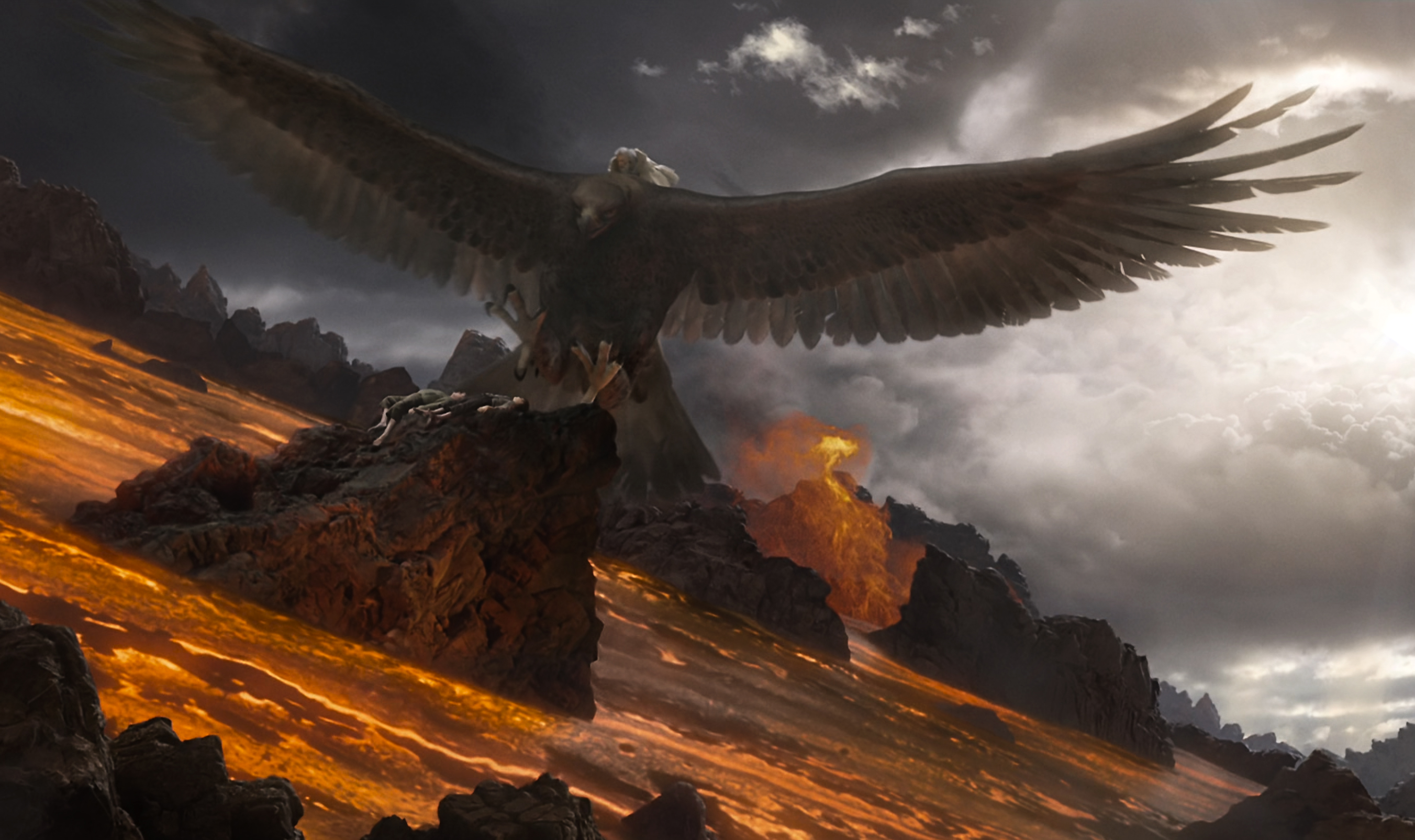
The battle raged on, and many Men and Elves died at the hands of Morgoth as Turgon kept Gondolin’s gates shut tight. Turgon had “received his guests well,” (Húrin and Huor) but because these Men grew without consciously knowing of the love and assistance of the Valar, they were angry and anxious to get back out and help their kin in the fight. So when they approached Turgon and his attendants, the King gave them surprising grace:
“The King’s grace is greater than you know, and the law is become less stern than aforetime; or else no choice would be given you but to abide to your life’s end.“
Turgon never let anyone leave for fear that they would reveal the secret location of Gondolin, but the Men held to their word, not even telling their family where they had been for the past months, thus strengthening the bond between Elf and Man.
But Turgon saw the writing on the wall and sent secret messengers to Valinor to ask for the succor of the Valar. Still, Valinor remained hidden from the exiled Noldor, holding to their word that the Noldor would never step foot on the shores of the Grey Havens. “Therefore none of the messengers of Turgon came into the West, and many were lost and few returned, but the doom of Gondolin drew nearer.”
“Rumour came to Morgoth of these things, and he was unquiet amid his victories, and he desired greatly to learn tidings of Felagund and Turgon.” So he sent out spies to learn where Nargothrond was hidden and understand where Turgon hid. But unfortunately, the secret of Gondolin still had not been released, so Morgoth didn’t even know of the great city’s existence.
His desire to eradicate the Noldor led him to send another wave of Orcs to wipe them out completely. “He sent a great force against Hithlum. The attack on the passes of the Shadowy Mountains was bitter, and in the siege of Eithel Sirion Galdor the tall, Lorn of Dor-Lómin, was slain by an arrow.“

The battle was pitch, and it looked grim for Hithlum until “the ships of Círdan sailed in great strength up the firth of Dengrist, and in the hour of need the Elves of the Falas came upon the host of Morgoth from the west.“
They pushed the host back to Angband, and in the absence of a ruler in Dor-Lómin, Húrin, son of Galdor the tall, took over and ruled while serving Fingon.
“His wife was Morwen Eledhwen, daughter of Baragund of the house of Bëor, she who fled from Dorthonian with Rían daughter of Belegund and Emeldir the mother of Beren.“
These “outlaws of Dorthonian” were accompanied by Beren, and Tolkien tells us that tale in the next chapter. Tolkien called the story of Beren and Lúthien “The Heart of The Silmarillion,” which makes me very excited to reach that chapter finally!
Join me next week as we start the journey “Of Beren and Lúthien.”
Blind Read Through: J.R.R. Tolkien; The Silmarillion, Of the Ruin of Beleriand and the Fall of Fingolfin
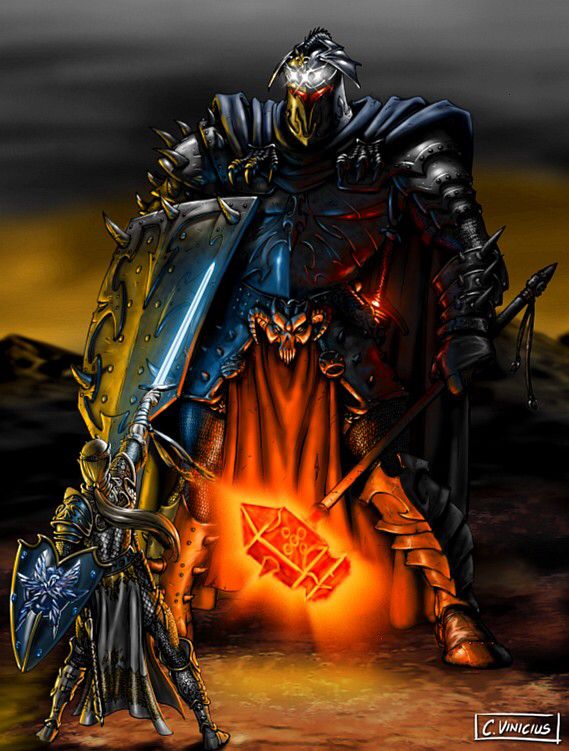
“Thus Ard-Galen perished, and fire devoured its grasses; and it became a burned and desolate waste, full of choking dust, barren and lifeless. Thereafter its name was changed, and it was called Anfauglith, the Gasping Dust. Many charred bones had there their roofless grave; for many of the Noldor perished in that burning, who were caught by the running flame and could not fly to the hills. The heights of Dorthonian and Ered Wethrin held back the fiery torrents, but their woods upon the slopes that looked towards Angband were all kindled, and the smoke wrought confusion among the defenders. Thus began the fourth of the great battles, Dagor Bragollach, the Battle of Sudden Flame.”
Welcome back to another Blind Read! This week we tell a tale of Hubris and horror; as the table is set, the players are in their places, and there is nothing left to do but act.
We begin by learning that Fingolfin, “the King of the North, and High King of the Noldor,” wanted to assault Angband and eliminate Morgoth. So he brought a council of Elves and Men together but could not get enough support to act against the horrid Valar in the mountains of Thangorodrim to the north.
But while this council was in session, during the sixth generation of men, Morgoth had similar hopes; “For Morgoth had long prepared his force in secret, while ever the malice of his heart grew greater, and his hatred of the Noldor more bitter; and he desired not only to end his foes but to destroy also and defile the lands that they had taken and made fair.“
Recall that Morgoth was an aspect of Ilúvatar, and his intentions started pure. His story is that of Lucifer the Lightbringer. He was an angel (Valar) who followed their own way, their own vision, and it led to their downfall. They both fell so far that nothing remained but a burning hatred for those they were supposed to love.

Tolkien also uses the imagery of fire, which Satan was known for, from the scene in Revelations where he was cast into the fire. Here, Tolkien takes that concept and gives the power of flame to Morgoth: “Then suddenly Morgoth sent forth great rivers of flame that ran down swifter than Balrogs from Thangorodrim, and poured over all the plain; and the Mountains of Iron belched forth fires of many poisonous hues, and the fume of them stank upon the air and was deadly.”
That quote leads directly into the passage which opens this essay, and we see that the horror of Morgoth’s wrath is spreading down to Dorthonian, where the seat of Turgon, Gondolin, resides.
And forgive the excessive quotes, but Tolkien describes the effects of the Battle of Sudden Flame better than I ever could:
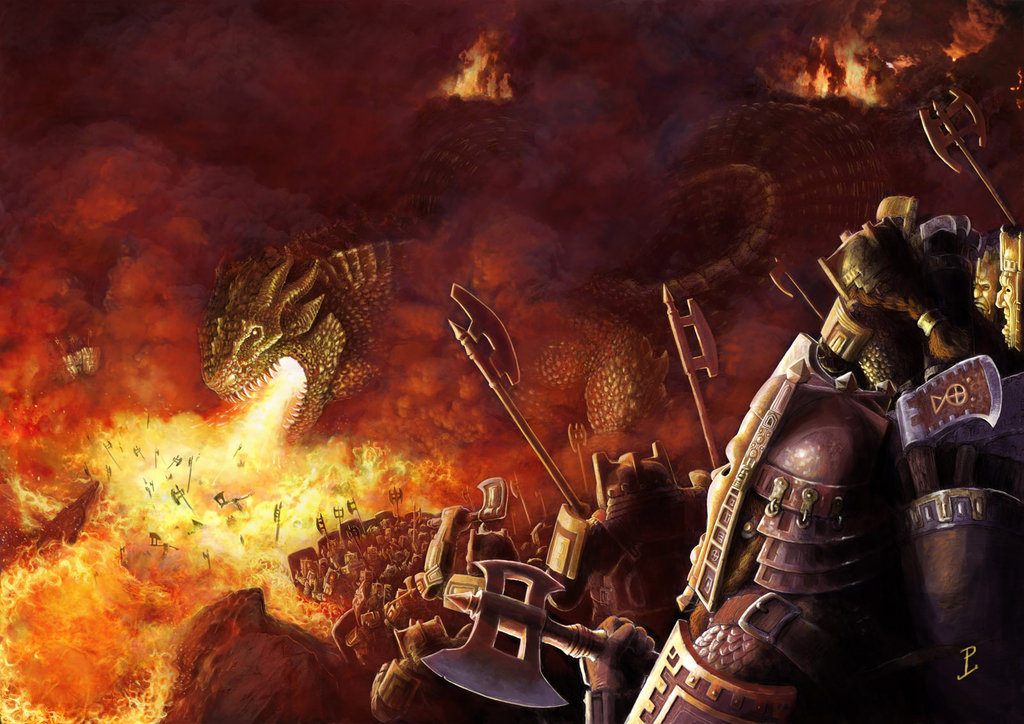
“In the front of that fire came Glaurung the golden, father of dragons, in his full might; and in his train were Balrogs, and behind them came the black armies of the Orcs in multitudes such as the Noldor had never before seen or imagined. And they assaulted the fortresses of the Noldor, and broke the leaguer about Angband, and slew whereever they found them the Noldor and their allies, Grey-elves and Men. Many of the stoutest of the foes of Morgoth were destroyed in the first days of the war, bewildered and dispersed and unable to muster their strength. War ceased not wholly ever again in Beleriand; but the Battle of Sudden Flame is held to have ended with the coming of spring, when the onslaught of Morgoth grew less.”
The Elves were in a bad state. The sons of Finarfin took the heaviest losses, particularly at the Pass of Sirion, so much so that King Finrod Felagund was cut off and would have died if Barahir, a man, brother of Bregolas of the house of Bëor, didn’t bring a company of men to come and save him and take him back to Nargothrond.
In the east, Fingolfin and Fingon retreated to Hithlum “because of the strength and height of the Shadowy Mountains, which withstood the torrent of fire, and by the valour of the Elves and the Men of the North, which neither Orc nor Balrog could yet overcome, Hithlum remained unconquered.”

But further east on the other side of Dorthonian, Celegorm and Curufin were getting slaughtered and lost the pass of Aglon to Morgoth. So those elves fled south to Nargothrond and the strength of Finrod Felgund.
It was only Maedros who stood up Morgoth’s armies, as he held the Hill of Himring just to the east of the Pass of Aglon. It was Maedros who had been captured and tortured by Morgoth, only to later be saved by his kin and the Eagles. Maedros called upon that anger and held fast against the horrible armies.
But he became the sole outpost as Glaurung appeared at Maglor’s gap to the east, and Morgoth’s armies took all the lands down into eastern Beleriand down to Mount Dolmed, burning and pillaging the land.

Concurrently, “…news came to Hithlum that Dorthonian was lost and the sons of Finarfin overthrown, and that the sons of Fëanor were driven from their lands.“
Fingolfin saw these kingdoms falling, and his kin dying. Anger over took his body and he rode out with mighty speed over the barred and burned lands, all the way to Angband, and when he got there he challenged Morgoth to single combat. Morgoth begrudingly accepted and they fought like no other fight written in Tolkien (I’ll have it down below for you to enjoy!).
Eventually Morgoth overtook Fingolfin and slay him in the shadow of Angband, thus ending the reign of one of the mighty Noldor kings. And there he would have stayed, as Morgoth threw his body to the wolves, but Thorondor, King of Eagles came down, scratched Morgoth’s face and took up the body of Fingolfin to bring back to the Grey Havens.
We are only halfway through this epic chapter through all of these battles. So I’m going to go a bit slower and give a few more quotes so we can enjoy the events of the end of the First Age.
Join me next week as we conclude “Of the Ruin of Beleriand and the Fall of Fingolfin.”
Post Script: The Battle between Morgoth and Fingolfin.
“Therefore Morgoth came, climbing slowly from his subterranean throne, and the rumour of his feet was like thunder underground. And he issued forth clad in black armour; and he stood before the King like a tower, iron-crowned, and his vast shield, sable unblazoned, cast a shadow over him like a stormcloud. But Fingolfin gleamed beneath it as a star; for his mail was overlaid with silver, and his blue shield was set with crystals, and he drew his sword Ringil, that glittered like ice.
Then Morgoth hurled aloft Grond, the Hammer of the Underworld, and swung it down like a bolt of thunder. But Fingolfin sprang aside, and Grond rent a mighty pit in the earth, whence smoke and fire darted. Many times Morgoth essayed to smite him, and each time Fingolfin leaped away, as a lightning shoots from under a dark cloud; and he wounded Morgoth with seven wounds, and seven times Morgoth gave a cry of anguish, whereat the hosts of Angband fell upon their faces in dismay, and the cries echoed in the Northlands.
But at last the King grew weary, and Morgoth bore down his shield upon him. Thrice he was crushed to his knees, and thrice arose again and bore up his broken sheild and stricken helm. But the earth was all rent and pitted about him, and he stumbled and fell backward before the feet of Morgoth; and Morgoth set his left foot upon his neck, and the weight of it was like a fallen hill. Yet with his last and desperate stroke Fingolfin hewed the foot with Ringil, and the blood gushed forth black and smoking and filled the pits of Grond.
Thus died Fingolfin, High King of the Noldor, most proud and valient of the Elven-kings of old.”
You can also listen to the battle below! Please give him a like and a follow!
Blind Read Through: J.R.R. Tolkien; The Silmarillion, Of the Coming of Men into the West
“‘Into Doriath shall no Man come while my realm lasts, not even those of the house of Bëor who serve Finrod the beloved.’ Melian said nothing to him at that time, but afterwards she said to Galadriel: ‘Now the world runs on swiftly to great tidings. And one of Men, even of Bëor’s house, shall indeed come, and the Girdle of Melian shall not restrain him; and the songs that shall spring from that coming shall endure when all Middle-earth is changed.'”
Welcome back to another Blind Read! This week feels more like the 6th book in a seven-book series, where everything is building to support the next book and conclude the series. There is not much substance in this chapter, but Tolkien introduces some interesting characters that will have a much more prominent place in the future of Beleriand.
At the beginning of The Silmarillion, Tolkien flat out tells us that it’s the story of the Eldar and the Silmarils. There are mentions and tales of other races, but their place is on the back burner. This chapter must happen because there is no precedent for Beren (whom I had only a fleeting memory was human. This chapter solidifies that fact.) without it.
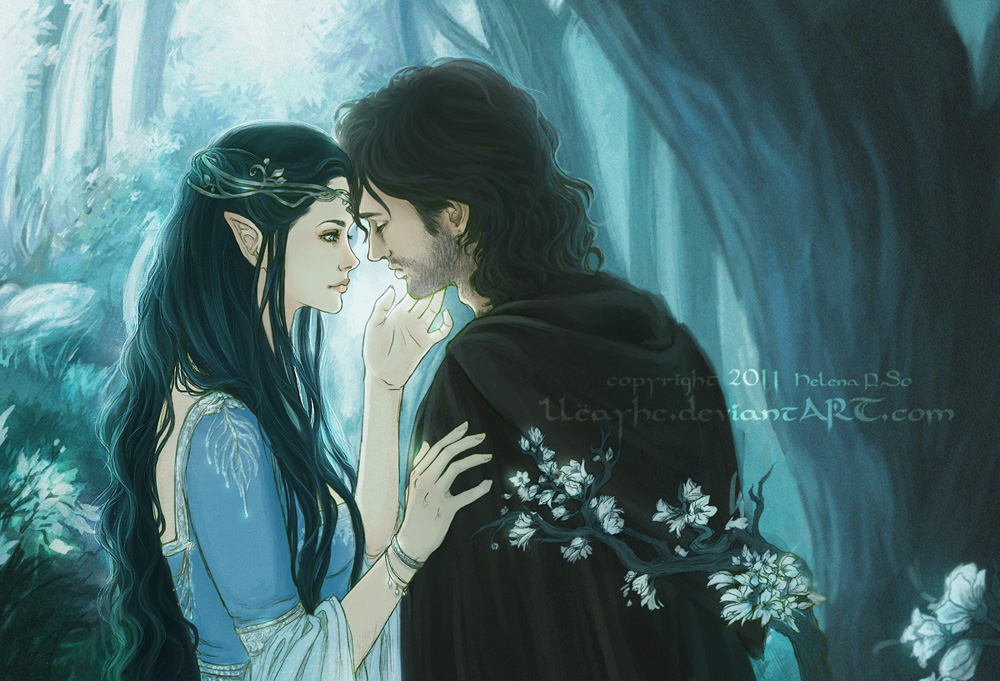
We learn that “three hundred years and more were gone since the Noldor came to Beleriand.” It wasn’t until now that Bëor made his way across the Blue Mountains to the west, where the Eldar had made its home. Bëor, whose name in the human tongue was Balan, was considered by the Noldor the “First Man” because he was the first one to make contact. They named him Bëor because “Bëor signified ‘Vassal’ in the tongue of his people.” He was the first Vassel to the Noldor, bowing to Finrod Felagund.
These men settled in Estolad, the land just below Nan Elmoth of Eöl fame (if you remember from the previous chapter, Eöl was the Dark Elf, Father of Maeglin). They stayed there for many years until we got the quote from the beginning of this essay. The “man” they are talking about is Beren, for he falls in love with the elvish maiden Lùthien (their tale is coming soon), and this seems to indicate some of the downfall of Beleriand.
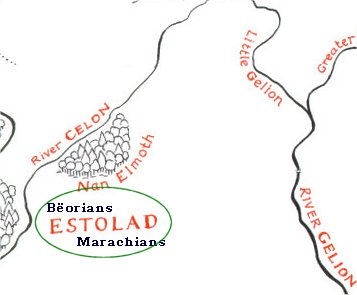
The Elves have a large amount of Hubris, and they see themselves as the perpetual rulers of Beleriand. This Hubris is what eventually leads to their downfall. This chapter holds the second instance of Thingol being obstinate in believing that the Girdle his wife holds over Doriath will protect them from all tragedies happening in the world, and it’s the second time Melian prophesizes that he’s wrong. This is where the quote to open this essay comes in, and I’m pretty sure the “One of Man” to enter Doriath is actually Beren, a great hero of the first age, and the man Aragorn looks up to the most.
We also get Tolkien’s version of the first Ruling Queen of the land with Haleth, who was able to bring her people through Nan Dungortheb, the horrid land of Ungoliant:
“That land was even not yet so evil as it became, but it was no road for mortal Men to take without aid, and Haleth only brought her people through it with hardship and loss, constraining them to go forward by the strength of her will.“
We bring this history of Men to a close by going through some genealogy. First, we learn that Boromir (namesake of the famous Lord of the Rings character) was the Great-Grandson of Bëor and the FatherFather of Beren:
“The sons of Hador were Galdor and Gundor; and the sons of Galdor were Húrin and Huor; and the son of Húrin was Túrin the Bane of Glaurung (the FatherFather of the Dragons of Morgoth); and the son of Huor was Tuor, FatherFather of Eärendil the Blessed. The son of Boromir was Bregor, whose sons were Bregolas and Barahir; and the sons of Bregolas were Baragund and Belegund. The daughter of Baragund was Morwen, the mother of Túrin, and the daughter of Belegund was Rían, the mother of Tuor. But the son of Barahir was Beren One-hand, who won the love of Lúthien Thingol’s daughter, and returned from the Dead; from them came Elwing the wife of Eärendil, and all the Kings of Númenor after.”
Follow all that? That’s alright, and it’s ok to get discouraged sometimes while reading this dense work. The important thing is to stay with it because the more you read, the more it makes sense, and then The Lord of the Rings and The Hobbit begin to have that full back story that makes sense and enriches those worlds. And that’s just based upon memory. So I intend to get through a few of these history books and then re-read those books to catch the world-building Tolkien infused within the world.
These events framed his mind when he sat down to write The Lord of the Rings and The Hobbit. Those Third Age works are informed by the history of this work, and that history keeps getting darker. The stage is set. We now have the Noldor in Beleriand, the Dwarves of the Blue Mountains, and Men have finally come to the west. Join me next week as we see the subsumed treachery of Morgoth take hold of the denizens of Beleriand in “Of the Ruin of Beleriand and the Fall of Fingolfin!”



 Sean McBride
You must be logged in to post a comment.