Blind Read Through: J.R.R. Tolkien; The Silmarillion, Of The Noldor in Beleriand

“And on a time Melian said: ‘There is some woe that lies upon you and your kin. That I can see in you, but all else is hidden from me; for by no vision or thought can I perceive anything that passed or passes in the West: a shadow lies over all the land of Aman, and reaches far out over the sea. Why will you not tell me more?‘”
Welcome back to another Blind Read! We do not quite jump back into the story this week but instead dive deeper into the politics of the Eldar in Beleriand and learn just how tenuous relations are.
Tolkien starts the chapter with a non sequitur. He tells how Turgon, the second son of Fingolfin, under the guidance of Ulmo, finds a location to build a city in the upper Sirion:
“Then Turgon knew that he had found the place of his desire, and he resolved to build there a fair city, a memorial of Tirion upon Túna.“
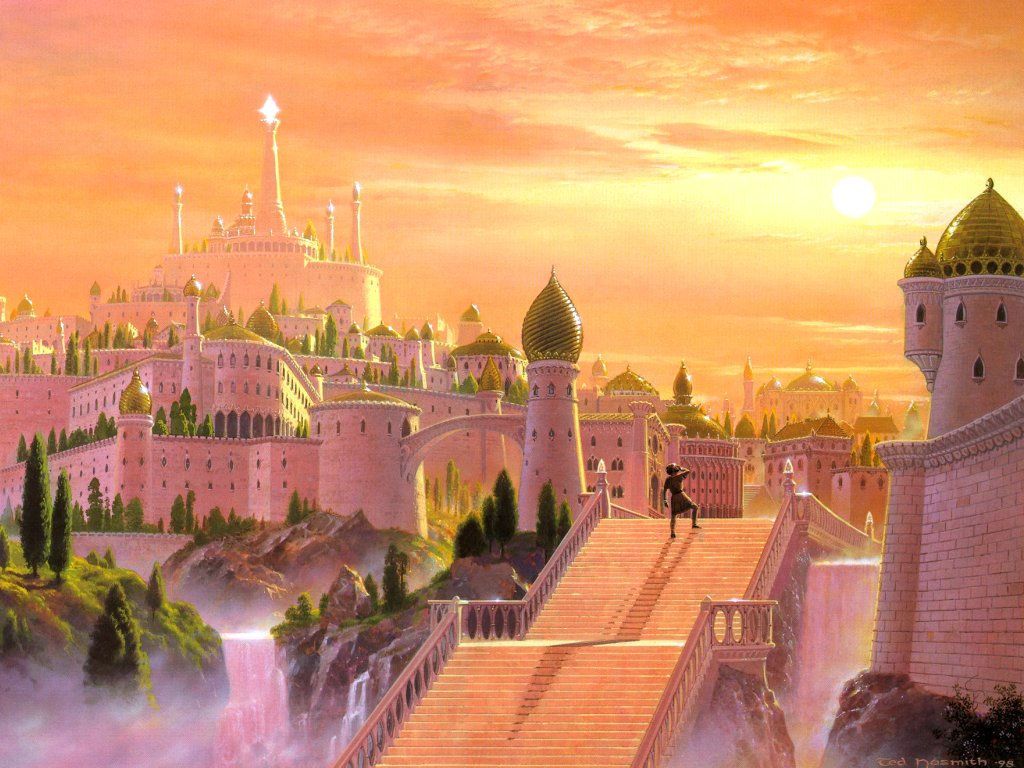
If you remember, Túna was a great green hill at the edge of Valinor, and Tirion was the great watchtower built there. If we remember from last week which great city was built upon the upper Sirion, we know that Turgon will build Gondolin “after two and fifty years of secret toil.”
Over the years, Turgon brought his people there from Nevrast (The north-western coast) in secret. As a result, they flourished in Gondolin; “their skill in labour unceasing, so that Gondolin upon Amon Gwareth became fair indeed and fit to compare even with the Elven Tirion beyond the sea.“
Tolkien gives us a page break and switches gears on us. We go south to Doriath, through the Girdle of Melian into Menegroth, “The Thousand Caves.”
We immediately get the quote that opens this essay and know that Tolkien is showing us the rift, which will give Morgoth enough space to wiggle in.
The conversation is between Galadriel and Melian, where Melian asks for the story of how the Noldor came to Beleriand. Unfortunately, Galadriel is cagey, and where she tells Melian the truth of what happened, Galadriel lies by omission. Melian sees through the deception:
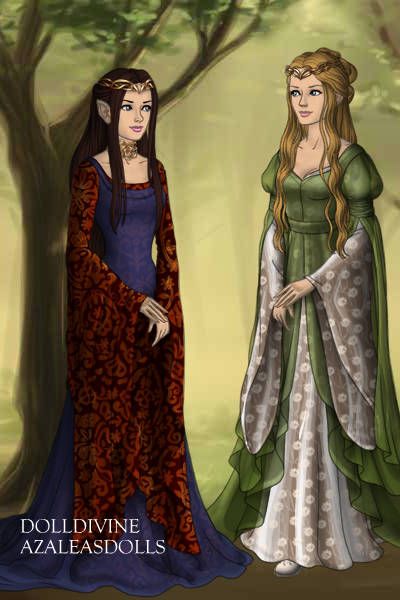
“I believe not that the Noldor came forth as messengers of the Valar, as was said at first: not though they came in the very hour of need.“
Galadriel decides that she must give more information, but does not want to betray her kin, so she “spoke to Melian of the Silmarils, and the slaying of King Finwë at Formenos; but still, she said no word of the Oath, nor the Kinslaying, nor the burning of the ships at Losgar.”
Melian takes it in but is not fooled. “Now much you tell me, and yet more I perceive. A darkness you would cast over the long road from Tirion, but I see evil there, which Thingol should learn for his guidance.”
It must be challenging to fool a Maiar.
She foretells “the Light of Aman and the fate of Arda lie locked now in these things (the Silmarils), the work of Fëanor, who is gone. They shall not be recovered, I foretell, by any power of the Eldar; and the world shall be broken in battles that are to come, ere they are wrestled from Morgoth.“
Thingol replies that he is not worried about it because Morgoth is their shared enemy, and Thingol believes that he is safe as long as Morgoth is around. Then, Melian gives one final chilling phrase: “Their swords and their councils will have two edges.”
We get another page break, indicating Tolkien is taking us to a different locale, thrusting us into a council of the Eldar of Beleriand. It is here that the truth comes out:
“‘I marvel at you, son of Eärwen,’ said Thingol, ‘that you would come to the board of your kinsman thus red-handed from the slaying of your mother’s kin, and yet say naught in defence, nor seek any pardon!’“
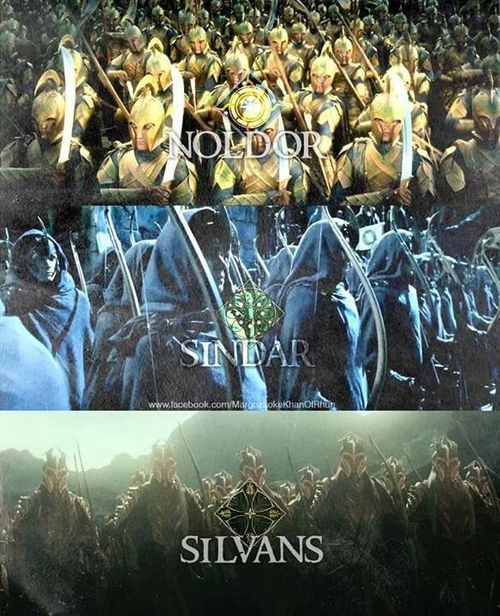
They argue, these sons of Finwë, but once all comes clear, Finarfin and Fingolfin, descendants from a Sindarin mother, are given amnesty from Thingol. It is the sons of Fëanor, the pureblood Noldor, who accept the wrath of Thingol:
“‘Go now!’ he said. ‘For my heart is hot within me. Later you may return if you will; for I will not shut my doors forever against you, my kindred, that were ensnared in an evil you did not aid. With Fingolfin and his people also I will keep friendship, for they have bitterly atoned for such ill as they did. And in our hatred of the Power that wrought all this woe our griefs shall be lost. But hear my words! Never again in my ears shall be heard the tongue of those who slew my kin in Alqualondë! Nor in all my realm shall it be openly spoken, while my Power endures. All the Sindar shall hear my command that they shall neither speak with the tongue of the Noldor nor answer it.“
The sons of Fëanor left, knowing that the words of Mandos, uttered so many years before, were coming true. The language of Noldor was not spoken outside of the clan. The Noldor learned and spoke the Sindarin tongue.
Here the rift created by Fëanor’s hot-blooded anger for Morgoth takes hold. The Noldor lived without consequence for hundreds of years, and now their lives have darkened.
While reading this history, I have been wondering how the Noldor would take the consequences spoken by Mandos, and I have been thinking that they will just become isolationists and not participate in future conflicts with Morgoth. However, now I wonder if there are insurgent feelings within the Noldor. Could they possibly bring the war to their kin?
Next week, let us find out in chapter sixteen, “Of Maeglin.”
Blind Read Through: J.R.R. Tolkien; The Silmarillion, Of Beleriand and its Realms, Pt 2.
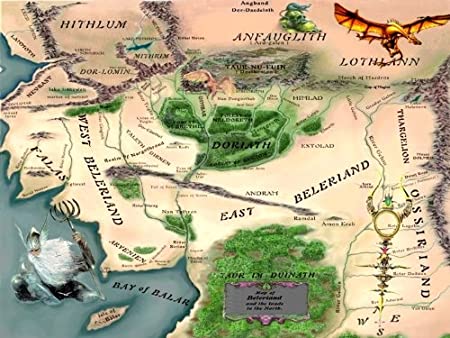
“Thus the sons of Fëanor under Maedhros were the lords of East Beleriand, but thier people were in that time mostly in the north of the land, and southward they rode only to hunt in the greenwoods. But there Amrod and Amras had their abode, and they came seldom northward while the Siege lasted; and there also other of the Elf-lords would ride at times, even from afar, for the land was wild but very fair. Of these Finrod Felagund came most often, for he had great love of wandering, and he came even into Ossiriand, and won the friendship of the Green-elves. But none of the Noldor went ever over Ered Lindon, while their realm lasted; and little news and late came into Beleriand of what passed int he regions of the East.”
Welcome back to another Blind Read! This week we finish covering the holdings of the denizens of Beleriand and try to take a deeper look into how that will shape the world.
We began last week by covering Morgoth’s home, so this week I wanted to start by revisiting another old nemesis, Ungoliant.

If you remember, she left Angband and went south through Dorthonian. On “the sheer precipices of Ered Gorgoroth, Mountains of Terror,” it was there that Ungoliant, the giant spider dwelt. It was also there in the Mountains of Terror that her “foul offspring lurked and wove their evil nets, and the thin waters that spilled from Ered Gorgoroth were defiled, and perilous to drink, for the hearts of those that tasted them were filled with shadows of madness and despair.“
It’s worthy to note that Shelob, the giant spider creature from Return of the King, was one of those offspring of Ungoliant. Mordor must have spawned in Dorthonian because the children of Ungoliant made their home on the side of those mountains which bordered Dorthonian (The area known as Nan Dungortheb), and that was the pass Frodo and Sam took, through the den of Shelob, to get to Mordor.

But back to the First Age. Directly south of Ungoliant’s hovel is “the guarded woods of Doriath, abode of Thingol, the Hidden King, into whose realm none passed save by his will.” Thingol’s realm takes up the majority of the very center of Beleriand guarded by the Girdle of Melian. Everything in Doriath, from the caves of Menegroth in the east to the south where the River Aros met the River Sirion is within Thingol’s rule and protection.
To the west of this confluence, there is a region named Aelin-uial, or The Twilight Meres; “the land rose into great wooded highlands of Taur-en-Faroth.” These highlands are the region where Finrod established Nargothrond.
Nargothrand was set in a part of a range of hills that spread from Taur-en-Faroth to East Beleriand and ended in a single stand-alone hill called Amon Ereb. It was there, on Amon Ereb, where Denethor I (again this is the Elf and not the Steward of Gondor from Return of the King) had his last stand against the minions of Morgoth to assist Thingol.
Tolkien takes us to the east of Beleriand and spends a page describing the River Gelion. “he rose in two sources and had at first two branches; Little Gelion that came from the Hill of Himring, and Greater Gelion that came from Mount Rerir.“
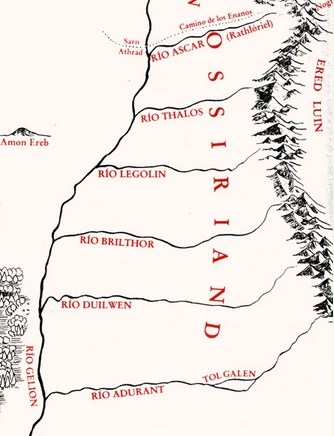
Gelion breaks up East Beleriand and creates two separate regions. Thargelion and Ossiriand, otherwise known as The Land of the Seven Rivers. In Ossiriand, a tributary of the southmost river, Tol Adurant, created Tol Galen, which made an island, “There Beren and Lúthien dwelt after their return.” We’ll get to it in a later chapter (I’m assuming, but there is a chapter called “Of Beren and Lúthien,” so that’s gotta be it, right?).
But we must understand that this is The Land of Seven Rivers, so there has to be some presence from Ulmo, the Valar of water. But, beyond that, this is also the land of the Green-Elves, who had some incredible talents:
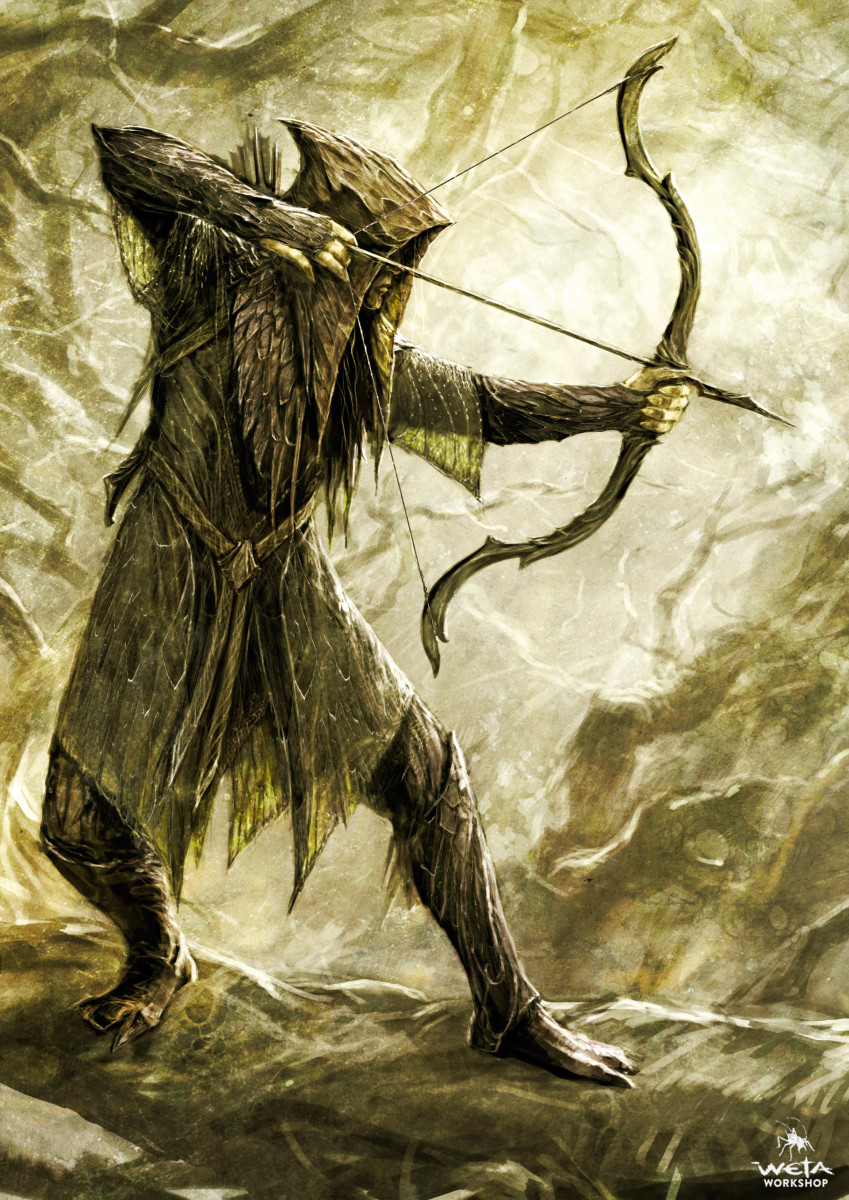
“The woodcraft of the Elves of Ossiriand was such that a stranger might pass through their land from end to end and see none of them. They were clad in green in spring and summer, and the sound of their singing could be heard even across the waters of Gelion; wherefore the Noldor names that country Lindon, the land of music.”
The mountains from which all seven rivers come are a mountain range named Ered Lindon (or Ered Luin). Because of the nature of the Green-Elves, I believe these Eldar are the most faithful to the Valar of any of the Elves remaining in Beleriand.
If you recall from the Ainulindalë (otherwise known as the Music of the Ainur), the Valar musical themes are what formed the world. It is still, even to this point in the First Age, music of the Valar that can augment the world or inspire change in minds. These Green-Elves are still signing and using music as part of their lives and religion. In contrast, no other Eldar, the Sindar in Doriath nor the Noldor in Mithrim, uses music anymore. One believes in isolationism (Thingol and Melian, ruling from their girdle), and the other believes in nationalism (putting down and only trusting those who are Noldor). The Green-Elves are the only ones who never lost their way… and they never even got to Valinor. I have to wonder if this is why Beren and Lúthien went there to recuperate.
Before I get too far into speculation, let’s take a step back because this chapter merely describes locations, not histories. So we jump from Ossiriand and go north to the March of Maedhros, which we touched on briefly last week.
Himring lies on the Western edge of the March of Maedhros, but if we follow this range east, it goes all the way to Mount Rerir where the River Gelion starts, and there in the shadows of Ered Lindon “was Lake Helevorn, deep and dark, and beside it, Caranthir had his abode.”
Caranthir was the fourth son of Fëanor and the most like his father: Quick to judgment and anger. He ruled “all the great land between Gelion and the mountains, and between Rerir and the River Ascar.” Below this was Ossiriand and above it was Lothlann. To the west was Beleriand and to the right beyond Ered Lindon was the Blue Mountains; the land of the dwarves. “it was here (in Thargelion) that the Noldor first met the Dwarves.“
The stage is now set. We know where the Eldar have taken their stake in Beleriand and its surroundings. I can only imagine that Tolkien wanted to clarify where everything was because he wanted to move forward with some action, some history, without forever having to explain where things were.
As we move forward, I’ll do my best to harken back to this chapter for clarity so everyone knows where in the land these events are happening. Not only for clarity but hopefully also for foreshadowing on events that we know occur in the future.
So join me next week as we continue on this incredible journey in “Of the Noldor in Beleriand.”
Blind Read Through: J.R.R. Tolkien; The Silmarillion, Of Beleriand and its Realms, pt. 1

“Thus the realm of Finrod was the greatest by far, though he was the youngest of the great lords of the Noldor, Fingolfin, Fingon, and Maedhros, and Finrod Felagund. But Fingolfin was held overlord of all the Noldor, and Fingon after him, though their own realm was but the northern land of Hithlum; yet their people were the most hardy and valiant, most feared be the Orcs and most hated by Morgoth.”
Welcome back to another Blind Read! This week we delve into the realm of Beleriand and gain a greater understanding of where each faction of the Eldar takes as their home.
The book has gone beyond being very dry to transitioning to some fascinating tales. So, unfortunately, this chapter takes a step backward, but for an important reason:
“This is the fashion of the lands into which the Noldor came, in the north of the western regions of Middle-earth, in the ancient days; and here also is told of the manner in which the chieftains of the Eldar held their lands and the leaguer upon Morgoth after the Dagor Aglared, the third battle in the Wars of Beleriand.”
We finally get some reference to the locations and people described.
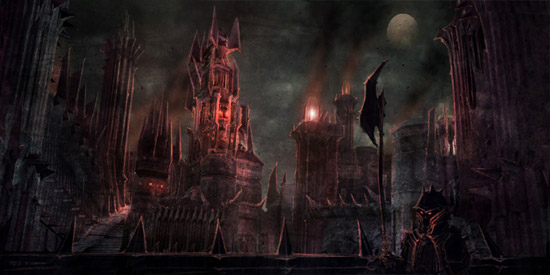
Tolkien was known to love nature and hate what industry did to the purity of the world. We can see this in The Lord of the Rings movies on full display with the destruction of Fangorn Forest through the industry of Isengard. Here, in the First Age, Morgoth does much the same. First, he makes his fortress in the wastes of the north and calls it Angband, otherwise known as “The Hells of Iron.” He then built a great tunnel leading out of Ered Elgin (Ered is the Elvish name for Mountain. Thus, Ered Elgin is called the Iron Mountains) for his minions to spread throughout Beleriand. At the end of this tunnel, he built a mighty gate, “But above this gate, and behind it even to the mountains, he piled the thunderous towers of Thangorodrim, that were made of the ash and slag of his subterranean furnaces, and the vast refuse of his tunnelings.”
This passage shows the Evil (with a capital E) in Tolkien’s eyes. The destruction of the world in the (false) name of progress.
But since this chapter glosses over events, for want of explaining locals, we switch to the other residents of Beleriand who managed to live with and in the world, just as Yavanna’s song of creation would have them.
“To the West of Thangorodrim lay Hísilómë, the Land of Mist…Hithlum it became in the tongue of the Sindar who dwelt in those regions.“

From my meager knowledge, I believe that the lands of Beleriand make up much of what we know of the landscape of Middle-earth in the Third Age, and based upon the name of the region, could this be what will become the Misty Mountains? There is no direct correlation except through the wording. However, Tolkien was always so specific with his world and language that I will go out on a limb and say it’s so.
Then we come across another little gem hidden in the text. Within Hithlum to the south is a region known as Dor-Lómin:
“But their cheif fortress was at Eithel Sirion in the east of Ered Wethrin, whence they kept watch upon Ard-galen; and their cavalry rode upon that plain even to the shadow of Thangorodrim, for from few their horses had increased swiftly…Of those horses many of the sires came from Valinor,”
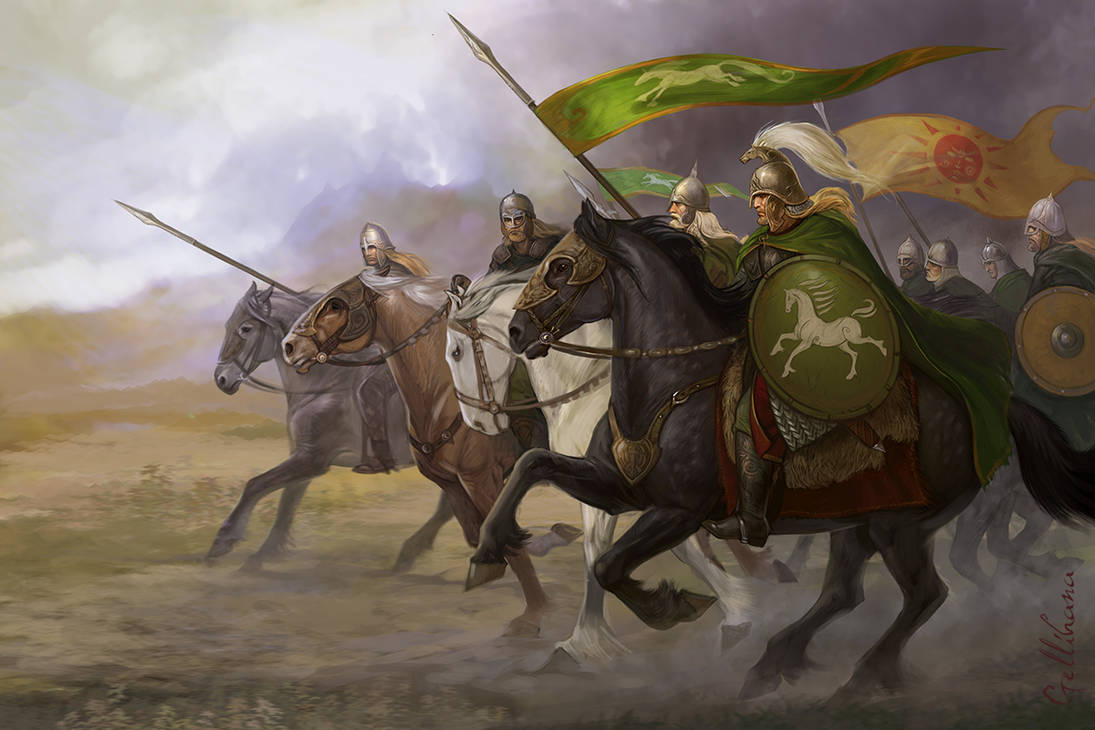
I have to wonder if these are the glorious beginnings of the wonderous horses of the Rohirrim, which we see in “The Two Towers” as the riders of Rohan, whose duty it was to guard the fields of that land. Again there is no definitive statement, but it makes quite a bit of sense.
Moving west still, we go to Nevrast, where “for many years was the realm of Turgon the wise, son of Fingolfin.” Nevrast was a marshy land settled between the sea and the mountains where most of the Grey-elves lived.
Directly east of Dor-Lómin, across Ered Wethrin and Tol (Elvish for River) Sirion, lay Dorthonion where “Angrond and Agnor, sons of Finarfin, looked out over the fields of Ard-galen.” and in the west of Dorthonion was the Tol Sirion, where Finrod ruled. It was there, “in the midst of the river he built a mighty watch-tower, Minas Tirith; but after Nargothrond was made he committed that fortress mostly to the keeping of Orodreth, his brother.“
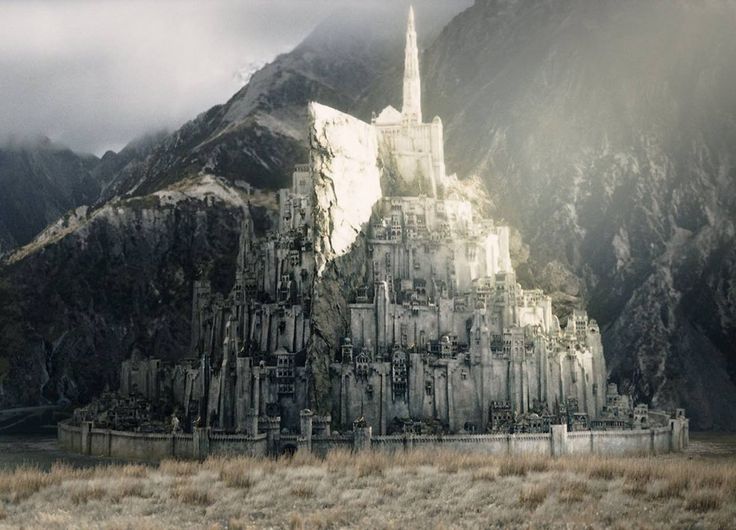
Minas Tirith! I had no idea Minas Tirith was built in the first age! No wonder it is so massive and beautiful! It was created in the “Pass of Sirion,” the largest and most prominent passage to Beleriand from Ard-galen and where Morgoth would most likely take a straight shot to attack that land. Minas Tirith, and Gondolin, which were built on the opposite side of the river, are the two most significant guardians of the land created by the Eldar.
The last region we’ll talk about this week is the March of Maedhros, which was east of Dorthonian. It was here “dwelt the sons of Fëanor with many people, and their riders often passed over the vast northern plain, Lothlann the wide and empty, east of Ard-galen, lest Morgoth should attempt any sortie against East Beleriand.”
This region was known as Himring, the Ever-cold, “and that was wide-shouldered, bare of trees, and flat upon its summit, surrounded by many lesser hills.” I thought about this area quite a bit, and I wonder if this might be Weathertop, where Frodo took the poison of the blade of the nine. The description of the geography seems appropriate, but I’m unsure of the region.
What is so fascinating is that the Gray Elves, or Sindar, had never gone to Valinor. Instead, Thingol married a Maiar named Melian, and they took up residence in Beleriand (look back at the Girdle of Melian here). Still, it was Fëanor and Fingolfin who came after during the departure of the Noldor from Valinor. These two relations took a protective stance against the rest of the realm.
All locations described in this part of the chapter are lookouts or guards surrounding Ard-Galen so that they might protect against Morgoth and his minions. The opening quote of this essay describes their purpose nicely because it’s curious that Thingol, the Elf who had been there the longest, with a Wife who is more powerful than any Eldar, would hide within their girdle. At the same time, the Noldor would be the protectors. But it is because of that hatred Fëanor had for Morgoth that this came to being.
When he died, his sons took up his mantle, and where they didn’t have the fire, he had to go after Morgoth actively; they took it as their duty to guard the land and stop The fallen Valar from further destruction.
Join me next week as we cover the remainder of Beleriand and complete this chapter!
Blind Read Through: J.R.R. Tolkien; The Silmarillion, Of the Return of the Noldor, Conclusion
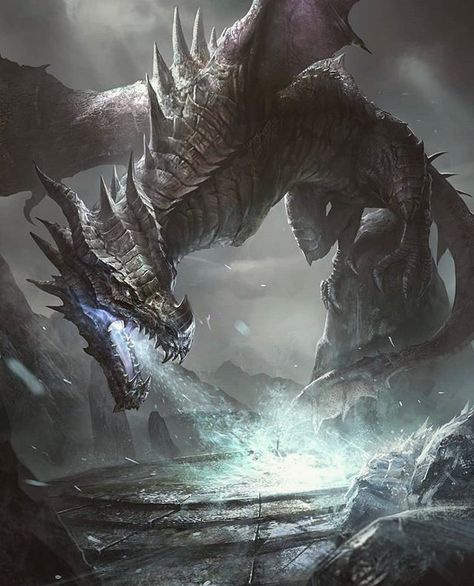
“In many parts of the land the Noldor and the Sindar became welded into one people, and spoke the same tongue; though this difference remained between them, that the Noldor had the greater power of mind and body, and were mightier warriors and sages, and they built with stone, and loved the hill-slopes and open lands.”
Welcome back to another Blind Read! This week we conclude “Of the Return of the Noldor.” and have a deeper discussion about how the world progresses.
We completed the last chapter with Fëanor dying, Maedhros (Fëanor’s son) kidnapped by Morgoth, and Fingon, son of the rival clan of Fingolfin, saving him.
This second portion of the chapter is about the Eldar taking a stake in the land. In contrast, the first half of the chapter was about the fury of Fëanor and the repercussions of that drive to destroy Morgoth (which ultimately failed. Morgoth is still in power at Angband in the north, and he still has the Silmarils). Finally, after “twenty years of the Sun had passed,” this chapter takes place when Fingolfin held a great feast known as the “Feast of Reuniting.”
This gathering brought together Eldar of all kinds together in the woods of Beleriand. They began to learn each other’s languages and healing began to happen, but still, Morgoth brooded in the north.
Tolkien then takes us another thirty years further into the future, past the time of ease and Elves coming together. During this time, Finrod took precedence ahead of all other Elves. Ulmo, the Valar of the Seas, gives both Finrod and Fingolfin a vision that shows trouble caused by Morgoth streaming out from Angband. Both relatives internalize this message and design not to address it with each other, thus preparing for the coming war separately instead of on a conjoined front.

Finrod then brings his sister Galadriel to Doriath, the region which houses Menegroth, the underground mansion of Thingol. “Then Finrod was filled with wonder at the strength and majesty of Menegroth, its treasures and armouries and its many-pillared halls of stone; and it came into his heart that he would build wide halls behind ever-guarded gates in some deep and secret place in the hills.” This “secret place in the hills” soon became known as Nargothrond, which was based on Menegroth and aided in construction by the Dwarves of the Blue Mountains. This secret mansion was the beginning of Finrod’s plans to protect his people against the might of Morgoth when he decided to attack.
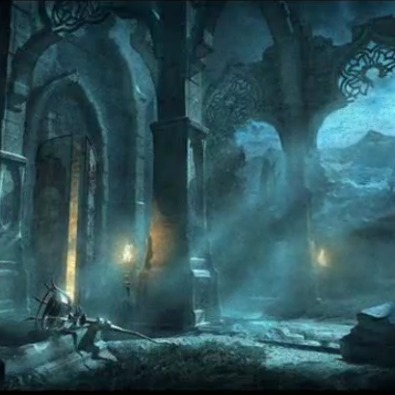
But what of Galadriel? She “went with him not to Nargothrand, for in Doriath dwelt Celeborn, kinsman of Thingol, and there was great love between them. Therefore she remained in the Hidden Kingdom, and abode with Melian, and of her learned great lore and wisdom concerning Middle-earth.“
Celeborn is still with her in the Third Age when the Fellowship goes to greet them. He is King to her Queen and stands beside her when they meet the nine wanderers. Here, she came to great power because she learned from Melian, a Maiar, second in power only to the Valar themselves (Gandalf himself is Maiar), which is why I believe she knows so much is so powerful by the time the Third Age comes around.
Concurrently, while Finrod is building his home, while Thingol is hiding in his girdle, while Fingolfin is making his lands in Mithrim, Morgoth stirred. “Believing the report of his spies that the lords of the Noldor were wandering abroad with little thought of war,” he decided to make his move. So his army of Orcs poured south through the fields of Ard-galen, “But Fingolfin and Maedhros were not sleeping,” and they led a host of warriors and utterly wiped out Morgoth’s brood.

“That was the third great battle of the Wars of Beleriand, and it was named Dagor Aglareb, the Glorious Battle.”
The Noldor pushed Morgoth back to Angband and laid siege to the fortress, “Yet the Noldor could not capture Angband, nor could they regain the Silmarils; and war never wholly ceased in all that time of the Siege, for Morgoth devised new evils, and ever and anon he would make trial of his enemies.”
Through hundreds of years following this, there were many skirmishes where Orcs would make their way out of Angband but got consistently pushed back. Even Morgoth’s “new evils” such as “Glaurung, the first of the Urulóki, the Fire Drakes,” could not forge a wedge into the foothold the Noldor had in Beleriand. In fact, after Glaurung’s defeat and retreat to Angband, “…there was the Long Peace of well-nigh two hundred years” where the Noldor and the Sindar built lives and homes in Beleriand.
We are beginning to see how its residents separate Beleriand. The Dwarves are in the Mountains of the East, concerned only with mining and producing their minerals. Many mention their isolationist stance. They don’t care what’s going on above ground in Beleriand and only work with the Noldor and Sindar because they trade.
The Sindar take up residence right smack dab in the middle of the land. Still, the Noldor take the western coast and the northwest with Mithrim (which I also find interesting because of the notorious mineral the Dwarves make into some of the most fantastic armor in the world – Mithril is very close in name to this Noldor held land).
Then there is Morgoth, who is held in his citadel in Angband in the north, too far north, in fact, for any map I’ve seen to show where Angband is.
So what happens next? Do we get any more information about the land and its peoples? Next week, let us find out in “Of Beleriand and it’s Realms.”
Blind Read Through: J.R.R. Tolkien; The Silmarillion, Of the Return of the Noldor pt. 1
“The hearts of the Noldor were high and full of hope, and to many among them it seemed that the words of Fëanor had been justified, bidding them seek freedom and fair kingdoms in Middle-earth; and indeed there followed after long years of peace, while their swords fenced Beleriand from the ruin of Morgoth, and his power was shut behind his gates. In those days there was joy beneath the new Sun and Moon, and all the land was glad; but still the Shadow brooded in the north.”
Welcome back to another Blind Read! This week we delve into the lore of the Noldor Elves and begin to see that despite the chapter name’s promise, Valinor is now beyond the reach of our supposed protagonists.
I began this chapter assuming that the title “Of the Return of the Noldor” would have to do with them returning to Valinor; however, as the chapter progressed, I realized that the name intended to show that the name’s meaning was the Noldor had returned to Beleriand to stay.
This chapter shows many great struggles over the land of Beleriand between the Eldar (the elves) and Morgoth, including two different “wars for Beleriand.“
We begin by rehashing previous chapters, the landing of Fëanor and his sons “on the outer shores of the Firth of Dengrist.” They “made their encampment” in Mithrim, in the northwest of Beleriand. Morgoth, seeing the flames of the ships they burned to stop Fingolfin from following them, anticipated their arrival and brought a host of foes to attack them. The skirmish is “the Second battle in the Wars of Beleriand,” and in Elvish, Dagor-nuin-Giliath, or “The Battle Under the Stars.”

We have jumped around in time in telling these histories because this battle took place before the creation of the Sun and Moon that we saw a few chapters ago. The altercation is known as “The Battle Under the Stars” because neither the Sun nor Moon had risen. Any light in Beleriand came from the stars of Valinor.
But Morgoth made an error in judgment because he didn’t truly comprehend the fury of Fëanor and his vast hatred for Morgoth:
“The Noldor, outnumbered and taken unawares, were yet swiftly victorious, for the light of Aman was not yet dimmed in their eyes.”
The starlight is the same light you see in Galadriel’s eyes in the movie, as she is the last of the Noldor who had lived to see the stars of Valinor.
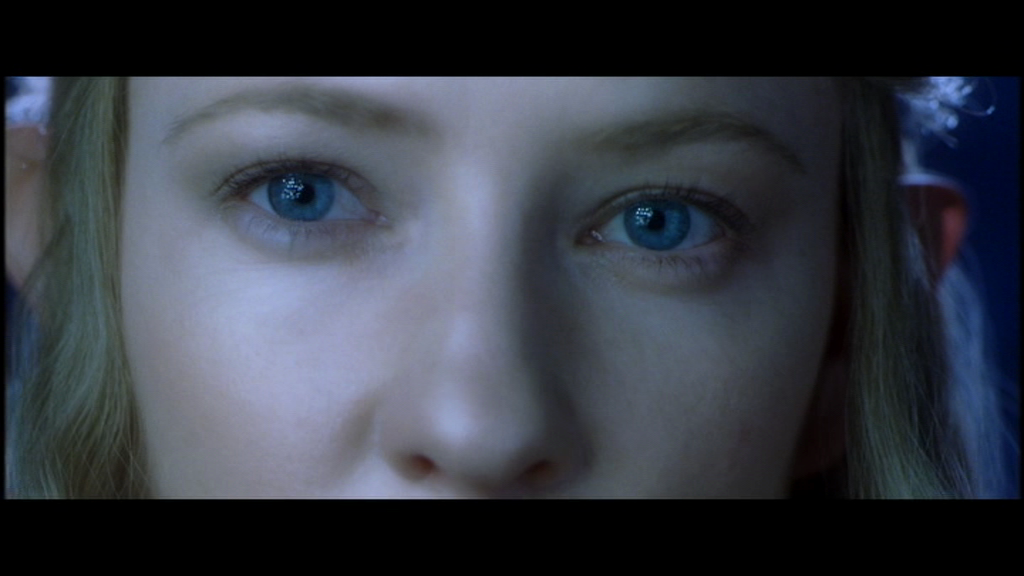
Fëanor pushed Morgoth’s forces back to Ard-galen (above the mountains at the very north of Beleriand) and his stronghold at Angband. The Noldor had won, but Morgoth struck a victory because “Fëanor, in his wrath against the Enemy, would not halt, but pressed on behind the remnant of the Orcs, thinking so to come at Morgoth himself.“
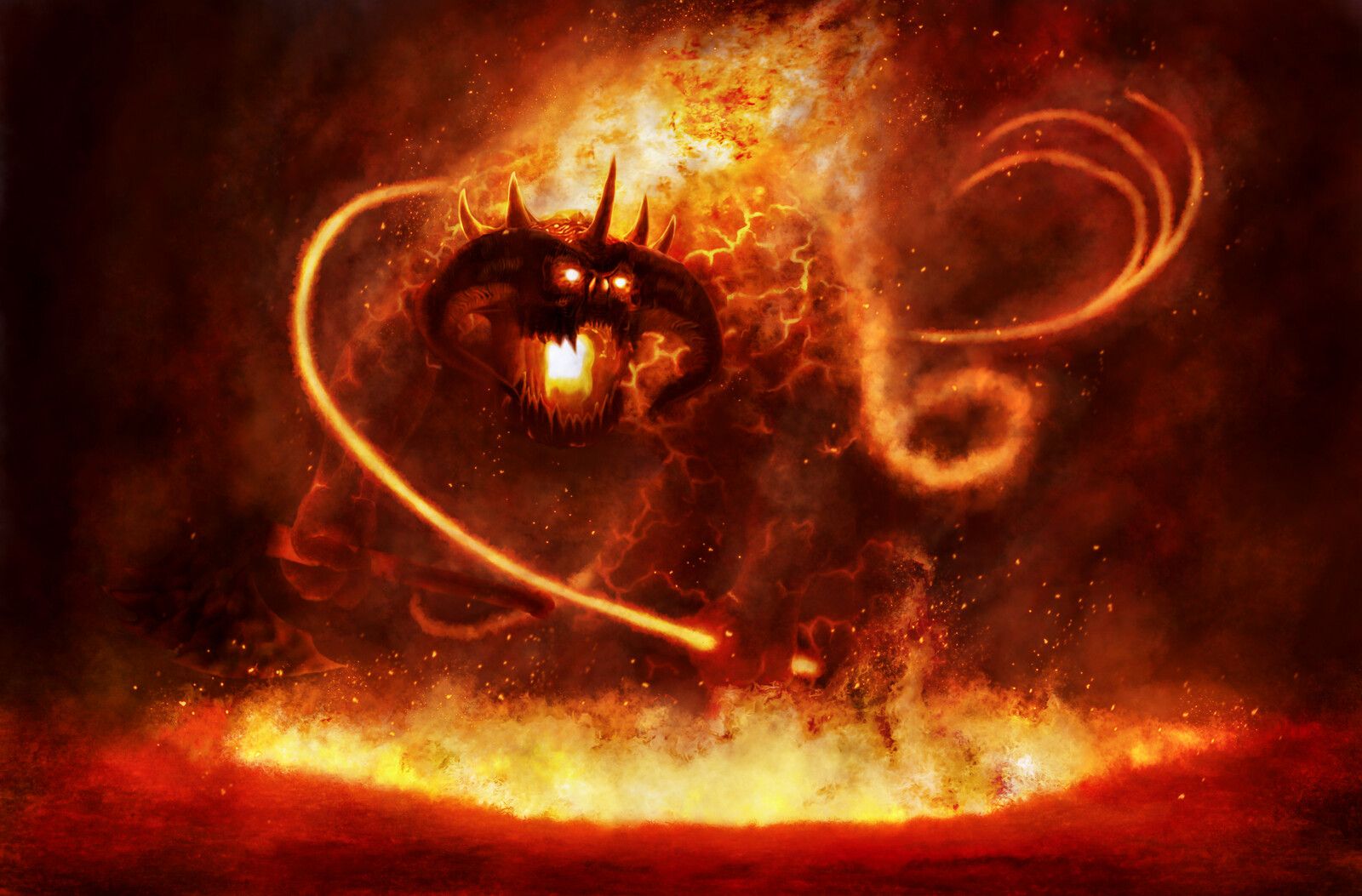
Fëanor became surrounded by Balrogs, and “at the last he was smitten to the ground by Gothmog, Lord of the Balrogs.“
Fëanor’s sons rescued him from Gothmog and the Balrogs, but the blow was fatal and knew, just before “his body fell to ash, and was borne away like smoke” that “no power of the Noldor would ever overthrow” Angband.

Maedhros, Fëanor’s eldest son, took control of the Noldor and accepted terms from Morgoth, “acknowledgeing defeat, and offering terms, even the surrender of a Silmaril.” Still, it was a trap, and Maedhros was captured, his host slaughtered.
Maedhros’ brother’s retreated to regroup, and at this time, Fingolfin made his way across the icy torrential pass between Valinor and Beleriand. At this time, the Sun rose in the sky, and the dark loving host of Morgoth retreated to the darkness of Angband and its surrounding mountains.
Fingon, the son of Fingolfin, saw more similarities between the Eldar than differences and made a daring plan to save Maedhros and try to bring the Elves together. First, he went to Angband. “Then in defiance of the Orcs, who cowered still in the dark vaults beneath the earth, he took his harp and sang a song of Valinor that the Noldor made of old, before strife was born among the sons of Finwë; and his voice rang in the mournful hollows that had never heard before aught save cries of fear and woe.“
Maedhros hears this song and cries out for him to end him and his torment, but Manwë (the Valar) also hears this song of hope and sends help. “There flew down from the high airs Thorondor, King of Eagles, mightiest of all birds that have ever been, whose outstretched wings spanned thirty fathoms; and stayed Fingon’s hand he took him up, and bore him to the face of the rock where Maedhros hung.“

Strife and distrust continued for many years, but there was gradual acceptance between the different tribes of Elves in Beleriand. The Dwarves, also distrusting, agreed to assist in light of the terror of Morgoth’s influence over the land.
The one hold out was King Thingol, who was safely interred in his “girdle of enchantment.” However, Thingol gave leave for the Noldor and the Naugrim (Dwarves) to stay in the surrounding lands:
“In Hithlum the Noldor have leave to dwell, and in the highlands of Dorthonion, and in the lands east of Doriath that are empty and wild; but elsewhere there are many of my people, and I would not have them restrained of their freedom, still less ousted from thier homes.“
I get the feeling that Thingol will play a much more significant role in things to come, but thus far, he has decided to hole up and take an isolationist stance against Morgoth. We see this echoed in The Lord of the Rings, as initially, the elves want nothing to do with the war against Sauron. Will Thingol change his mind?
Next week, let’s find out as we cover the second half of the chapter “Of the Return of the Noldor.”
Blind Read Through: J.R.R. Tolkien; The Silmarillion, Of Men

“To Hildórien there came no Vala to guide Men, or to summon them to dwell in Valinor; and Men have feared the Valar, rather than loved them, and have not understood the purposes of the Powers, being at variance with them, and at strife with the world.“
Welcome back to another Blind Read! This week we learn of a new species born into Beleriand, Men, and how they came to inherit the world.
This chapter is unique because it gives us a basic overview of how Men (Tolkien uses Men as a stand-in to mean Human-kind) came into being, but Tolkien does not expound upon the History of Middle-earth. Instead, this feels more like his effort to understand the motivations (and potential weaknesses) of Men as unknowing Children of Ilùvatar.
Tolkien tells us: “At the first rising of the Sun the Younger Children of Ilùvatar awoke in the land of Hildóren in the eastward regions of Middle-earth; but the first Sun arose in the West, and the opening eyes of Men were turned towards it, and their feet as they wandered over the Earth for the most part strayed that way.”
Men were called Hildor, otherwise known as the followers, not because they were sheep, but because they were born after Elves and Dwarves. They also had many other names, “the Usurpers, the Strangers, and the Inscrutable, the Self-cursed, the Heavy-handed, the Night-fearers, the Children of the Sun.“
Men were born after the glory of Valinor, and they knew only the cold, complex beauty of Beleriand. They awoke without the knowledge of the Valar or Ilùvatar, which was the Quendi birthright. They were born without knowledge of the light of the Trees of Valinor. All they had was the Sun.
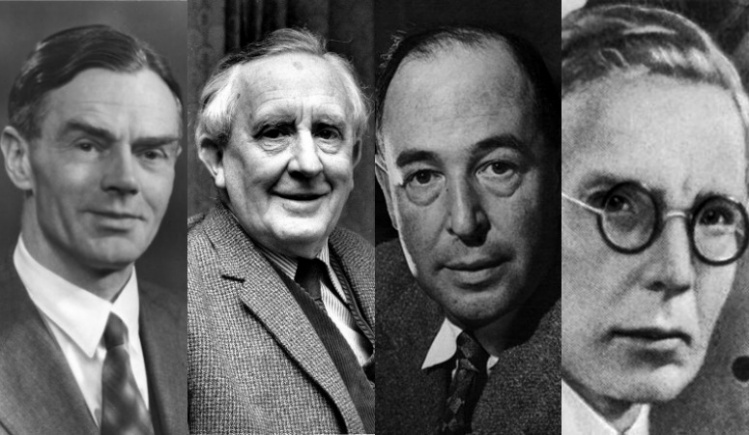
Tolkien fought in World War I, and where he contends that he doesn’t use or like allegory, much of his work is informed by the experiences of his life. In addition, he was a religious man, even co-sponsoring a writing group called the Inklings with C.S. Lewis. The concept of religion and God in The Great War led to his description of Men in The Silmarillion. A few chapters ago, I mentioned that Tolkien’s primary idea with these histories was to eventually tie it back to our Earth (which we caught glimpses of in the chapter last week (Of the Sun and the Moon and the Hiding Valinor). In this chapter, Tolkien tells us how humans were born into a world of ignorance and darkness, yet they strove for the light. As we saw in the quote earlier, Men went west following the Sun, despite their ignorance of its origin.
On top of that, Ulmo tried to get them messages without actually coming back to Middle-earth to inform Men: “and his messages came often to them by stream and flood. But they have not skill in such matters, and still less had they in those days before they had mingled with the Elves. Therefore they loved the waters, and their hearts were stirred, but they understood not the messages.“

I have never met a person who could stand before the Ocean and turn away. The waters bring life to us, and they stir our souls to peace. This connection to the water is what Tolkien was looking for to glue our world with Aman.
Beyond that, Tolkien tells us, “Men were more frail (than the Eldar), more easily slain by weapons or mischance, and less easily healed; subject to sickness and many ills; and they grew old and died.“
We also catch a glimpse of a story yet told; “None have ever come back from the mansions of the dead, save only Beren son of Barahir, whose hand had touched a Silmaril; but he never spoke afterward to mortal Men. The fate of Men after death, maybe is not in the hands of the Valar.”
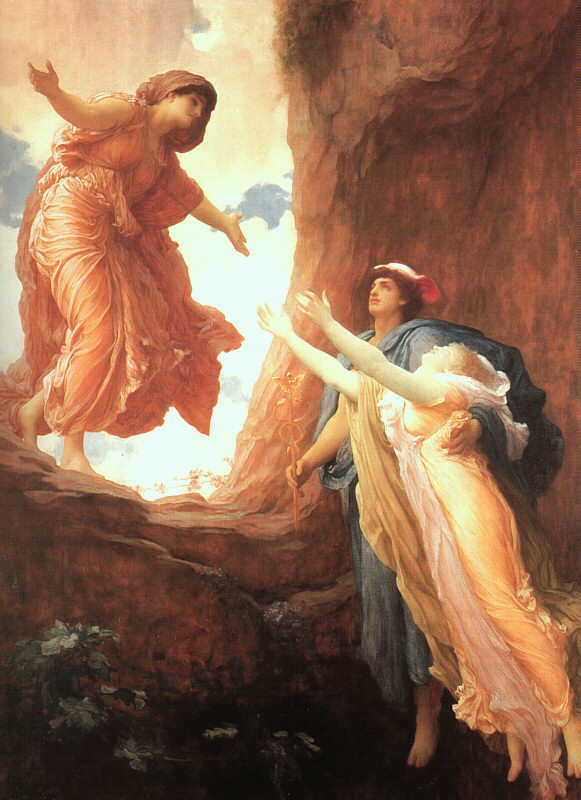
This paragraph shows Tolkien’s framing of an afterlife, with a Persephone-like callback. Beren dies and then comes back because he has more profound knowledge of the world because of his connection with the Silmaril, which garners its power from The light of the Trees of Valinor. Beren is brought back from the dead through the power of Heaven.
We end the chapter by Tolkien telling us, “those of the Elven-race that lived still in Middle-earth waned and faded, and Men usurped the sunlight.“
Men, the ignorant, had now taken over the world. The magic of the world (the Music of Ainur) began to fade, and a feeling of hard-and-fast reality began to occur.
This chapter is fascinating and tragically beautiful. It is very short (which is why I wanted to discuss various theories rattling around in my brain), but there is perhaps more weight in this chapter than in any previous one.
And where do we go from here? Join us next week as we progress in the story in the next chapter: “Of the Return of the Noldor.”
Blind Read Through: J.R.R. Tolkien; The Silmarillion, Of the Sun and Moon and the Hiding of Valinor

“Isil the Sheen the Vanyar of Old named the Moon, flower of Telperion in Valinor; and Anar the Fire-golden, fruit of Laurelin, they named the Sun. But the Noldor named them also Rána, the Wayward, and Vása, the Heart of Fire, that awakens and consumes; for the Sun was set as a sign for the awakening of Men and the waning of the Elves, but the Moon cherishes their memory.”
Welcome back to another Blind Read! Instead of continuing on the tale of the Wars of Beleriand, Tolkien takes a step back this week and gives us some worldbuilding. We are prepping for the coming of Man, and this chapter paves the way for that to happen.
The chapter opens by returning us to Valinor and the council of Valar as they try to discern a course of action in the wake of the death of Telperion and Laurelin (the Trees of Valinor).

Yavanna goes to the trees, mourning their passing until she realizes that “Telperion bore at last upon a leafless bough one great flower of silver, and Laurelin a single fruit of gold.“
Manwë then hallowed them, and Aulë made a vessel to hold and protect them and their light. These vessels were to “become lamps of heaven,” so the Valar “gave them power to traverse the lower regions of Ilmen.” Ilmen is their word for the sky or the heavens (specifically, Tolkien called it “The region above the air where the stars are” in the name index).
The Valar did so to bring light back to Middle-earth, but also because “Manwë knew also that the hour of the coming of Men was neigh.” Since the Valar went to war with Melkor over the Quendi, they decided that they must then do something for the subsequent children of Ilùvatar. Men were to be mortal, whereas the Elves were not, so as a gift to them, these “lamps of heaven” were to become the Sun and the Moon, which we see in the opening quote of this essay.
We get two understandings from creating these two celestial bodies—the knowledge of mortality and the future sign of the Elves.
We know that Men are mortal, though, in Middle-earth, they had very long lives. But why would men be mortal when all other creatures are immortal (in Aman, beings can be killed at any time, Men are the only ones who have a definitive end to their life span)?
It’s the coming of time.

Before creating the Sun and the Moon, there was no absolute distinction of the passing of time. These started a day and an evening before Men even existed, thus establishing time benchmarks.
Men came into being knowing that there were absolutes, and where Tolkien doesn’t come out and say so (at least not yet), there is little coincidence here because Tolkien chose his wording very carefully.
It is also the first time we see “Earth” in the text instead of using Aman or Eà. I had heard somewhere that Tolkien’s main goal was to tie the history of Middle-earth into our own, so it would make sense that this is an origin story of mythological levels.
The second understanding we get here is the sign of the Elves. The Leaf of Telperion becomes the sign for the Moon or of Twilight. The Elves in Middle-earth prefer to live in Twilight, and we even see this in “The Lord of the Rings” with Arwen, also called Arwen Evenstar. Remember that Tolkien was a linguist, so knowing how we think about language, the phrase “Evening Star” could become the contraction of Evenstar.
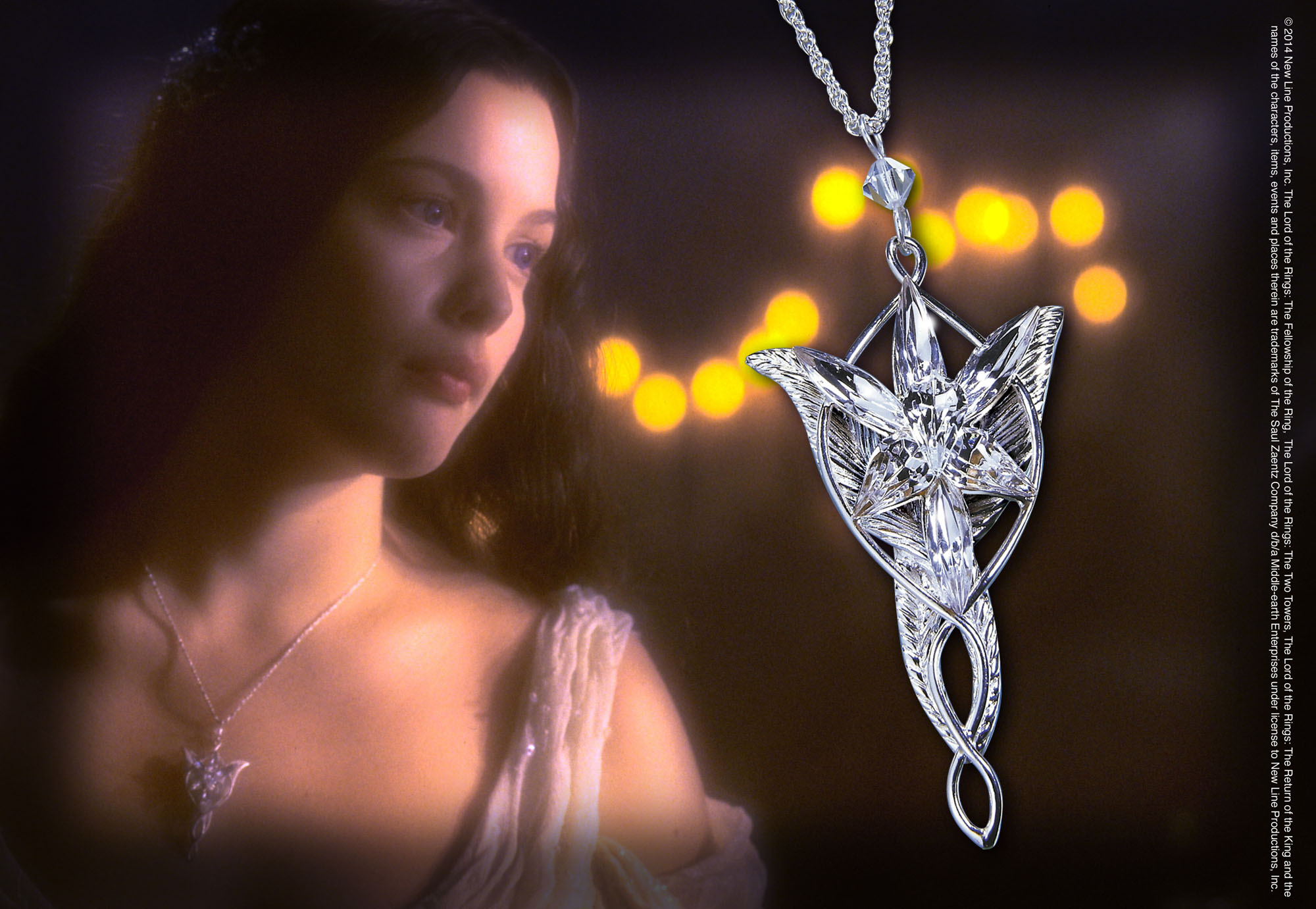
The Evenstar is quintessentially recognizable because it’s the trinket that holds her essence, which she gives to Aragorn.
Peter Jackson took some liberties with the movie because here in the text of The Silmarillion; it’s told that the Evenstar, the sign of the Elves, is a “Flower of Silver.“
There is a certain melancholy associated with the Elves because “Evening, the time of the descent and resting of the Sun, was the hour of greatest light and joy in Aman.”
The Elves didn’t like the light; they preferred the Twilight, which could be why they called the land in Valinor “The Grey Havens.” It was not to indicate depression, but of a final blessing, the last light to be with the Valar in Valinor where they are meant to be. The Grey Havens are almost a moniker for Heaven. The phrasing is so close that it’s hard to refute.

But it was also during this time that Heaven became challenging to attain. The Valar became concerned for Valinor because of Morgoth’s wrath. He settled into his rage, and the Valar finally came to realize that Morgoth was intractable; thus, they created a barrier around Aman:
“But in the Calacirya they set strong towers and many sentinels, and at its issue upon the plains of Valmar a host was encamped, so that neither bird nor beast nor elf nor man, nor any creature beside that dwelt in Middle-earth, could pass that leaguer.“
Thus the creed of Mandos we saw two chapters ago became true:
“Thus it was that as Mandos foretold to them in Araman the Blessed Realm was shut against the Noldor; and many messengers that in after days sailed into the West none came ever to Valinor – save one only: the mightiest mariner of song.“
So how does Fëanor take this? Does he get along with the new children of Ilùvatar, Men?
Find out next week in “Of Men.”
Blind Read Through: J.R.R. Tolkien; The Silmarillion, Of the Sindar

“And when the building of Menegroth was achieved, and there was peace in the realm of Thingol and Melian, the Naugrim yet came ever and anon over the mountains and went in traffic about the lands; but they went seldom to the Falas, for they hated the sound of the sea and feared to look upon it. To Beleriand there came no other rumour or tidings of the world without.”
Welcome back to another Blind Read! This week we take a step back from the Noldor and look at their Kin, the Sindar, who remained in Beleriand and forsook the light of Valinor. We also get a look at a brand new race, only glanced over in previous chapters.
This chapter looks to fill in the blanks from what transpired on Beleriand during the ages of Melkor on Valinor. In the first few sentences, Tolkien informs us of another famous legend of Middle-earth; a child of Eldar and Maiar. Next, we find that “at the end of the first age of Melkor… there came into the world Lùthien, the only child of Thingol and Melian.”
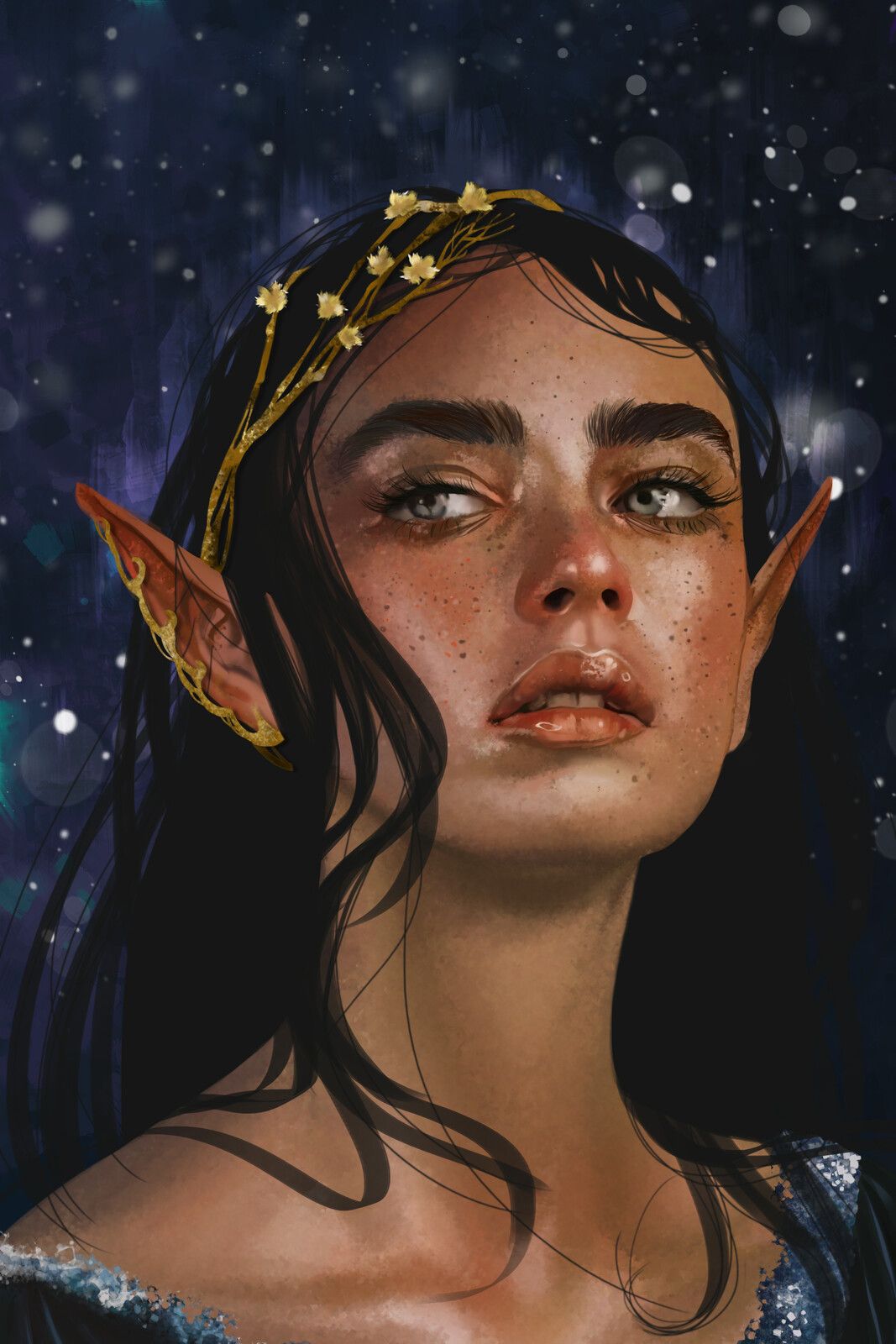
I don’t know much about Lùthien, but I know that she loved Beren and had such a well-known story; it’s even told during “The Lord of the Rings.” The good news is we won’t have to wait long because their tale is Chapter 19 in The Silmarillion.
This chapter goes back to the more complex language, as it’s more exposition than storytelling; however, I find it fascinating how many little details Tolkien inserts throughout the text. They are barely mentioned, but they give flavor to the world and take higher importance in “The Lord of the Rings.” For example:
“and there in the forest of Neldoreth Lùthien was born, and the white flowers of niphredil came forth to greet her as stars from the earth.”
The niphredil is a white flower that bloomed only in the moonlight with Lùthien’s birth, but they were also in Lothlorien during “The Fellowship of the Ring.”

These are the connections I was hoping to find in this project. They may be small and seemingly insignificant, but they bring together the world in such a way that makes it a cohesive history rather than just a series of tales. I’ll continue to point these little nuggets out as best as I can from my current understanding of the history of Middle-earth and its environs.
Back to the story:
“It came to pass during the second age of the captivity of Melkor that Dwarves came over the Blue Mountains of Ered Luin into Beleriand. Themselves they named Khazâd, but the Sindar called them Naugrim, the Stunted People, and Gonnhirrim, Masters of Stone.”
The Dwarves earned that name because they delved into the mountains, more specifically Ered Luin on the eastern side of Beleriand. There they built (or instead dug) their massive cities, Gabilgathol and Tumnunzahar, but the “Greatest of all the mansions of the Dwarves was Khazad-dûm, the Darrowdelf, Hadhodrond in the Elvish tongue, that was afterwards in the days of its darkness called Moria.”
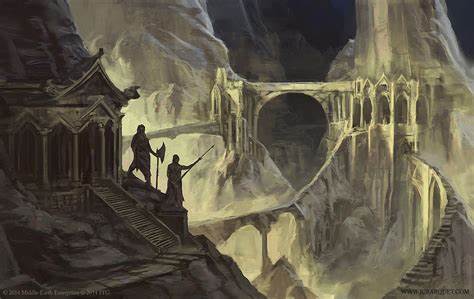
If you are reading this essay, you know what Moria is and will be, as it’s central to The Fellowship of the Ring, but what’s noticeably absent is the animosity the Dwarves and Elves feel for each other. There is even a passage where Tolkien tells us: “but at that time those griefs that lay between them had not yet come to pass…”
The Dwarves were eager to learn the Elvish tongue, and even though the Naugrim (Dwarven) tongue was “cumbrous and unlovely.” the Elves learned it back as well.
They trafficked goods with each other and praised one another. Then, after years of this communion, Melian “councelled Thingol that the Peace of Arda would not last for ever.”
So Thingol sought council with the Dwarves, and they agreed to dig him out of a dwelling for protection against a possible incursion from Morgoth and his minions. They called this underground mansion Menegroth or the Thousand Caves.
They did it at the right time because “…ere long the evil creatures came even to Beleriand, over passes in the mountains, or up from the south through the dark forests.”
Of course, there are Orcs, but we also see new creatures, Wolves and Werewolves. Seeing these new and horrid creatures, the Dwarves made for the Elves armor, which”surpassed the craftsmen of Nogrod, of whom Telchar the smith was greatest in renown.”
The Sindar drove off the creatures of darkness with the help of the “war-like” Dwarves. For a time, there was peace. Then, Denethor gathered the Elves who did not make the journey into Beleriand (no, not that Denethor. This is an Elf, Son of Lenwë, and a chieftain of nomadic/hunter-gather elves.) and brought to Menegroth.
During this gathering and goodwill, Morgoth and Ungoliant were busy fleeting Valinor and soon headed east to clash with King Thingol and the Thousand Caves. Orcs descended upon Menegroth in ferocity, and there was “fought the first battle in the Wars of Beleriand.“
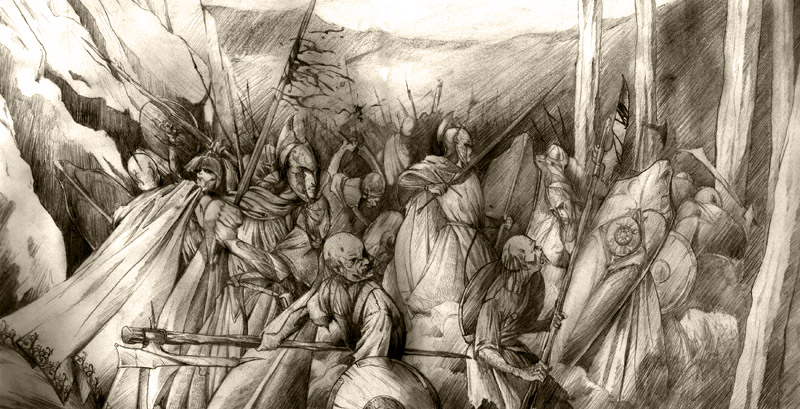
The Elves were victorious, but so brutal and quickly spawning the Orcs were, that Melian had to use some of her Maiar powers and formed “the Girdle of Melian, that none thereafter could pass against her will or the will of King Thingol.” They were thus protected, but unfortunately, outside of the field, the creatures of Morgoth roamed free.
But across the seas, things were stirring. It was just after the Girdle of Melian was created that Fëanor and his host made their way to Beleriand.
Now we have three forces coming together, and thinking back on the “Questionable decisions” Fëanor made that forced his wife from him, I have to wonder if this firey elf caused the Wars of Beleriand. Could he be the reason the Dwarves and Elves dislike each other? Could he be the cause of the Wars of Beleriand altogether?
Next week, let’s find out in “Of the Sun and Moon and the Hiding of Valinor.”
Post Script:
I had some difficulty with this chapter because my time frame kept getting confused. That’s because Tolkien uses “ages” as a time sobriquet. This chapter had the “first age of Melkor’s chaining.” which is different from the “first age of the Valar” and even more different from “the first age of man” or the “First age of Èa.”
It takes a minute to dig down into what’s happening, but this is Tolkien’s definition of time. The way he wrote these histories they were short stories he framed (or rather his son, Christopher, did) into a larger spectrum. So for his brain to formulate the times, they were ages, and the events could happen within those ages. We haven’t gotten to the language or time of Tolkien, but both of those will need individual essays.
Updates 08/26/21

Hello everyone!
I anticipated releasing the conclusion of Lurker at the Threshold today, but due to a WordPress blip, half of the essay was gone when I logged on this morning. So that essay will be coming to you next week while I re-write it, followed by an essay on some final thoughts of H.P. Lovecraft. What I want to spend the rest of this update doing is letting you know what’s coming after that!
Blind Read Series:

I’m going to transition directly from H.P. Lovecraft to J.R.R. Tolkien (I didn’t think there were enough initials in my titles!). I read The Hobbit as a child and loved it, but when I started to read The Lord of the Rings, I was stuck at Tom Bombadil. I eventually read that massive tome in three sections, but I’ve always been interested in Tolkien’s lost tales and histories. I know many people are, but the text itself is daunting, so I intent on continuing the Blind Read series and reading, analyzing, demystifying, and connecting all of Tolkien’s side tales and histories of Middle Earth. In three weeks from today I’ll release the first section of the Silmarillion!
Short Stories:
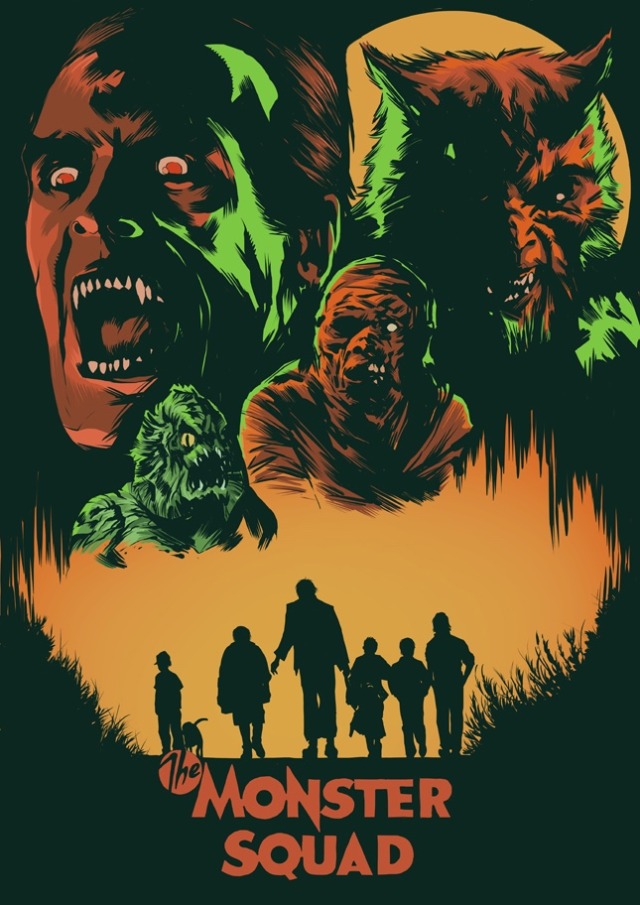
The weather is cooling and the spooky season is coming. I intend to write a number of short shorts (somewhere in the ballpark of 1000 words) to release periodically in the fall months. These are going to be similar to the Universal Monster shorts I did last year, but Halloween will be the connecting factor this year. This is a call back to all those terribly awesome 80’s horror/schlock films such as The Monster Squad, Fright Night, and Hocus Pocus (I know, I know, that one is the 90’s). So come join me for some kinda, maybe not so scary fun!
Elsie Jones Adventures:
Get ready for a new look of Elsie Jones! I’ve been passively looking for a new Illustrator to take over the series, but this fall I’ll continue in earnest. Get ready for a new authors edition of Elsie Jones and the Book Pirates, and a cleaner Elsie Jones and the Captain’s Guard. Twelve of the 15 books are written, so I anticipate a good release schedule! If you’re curious you can purchase any of the first three books here!

The Legacy:
Currently in it’s fourth edit. This is my adventure novel I finished last October. Think if Dan Brown partnered with Indiana Jones this is what you’d get! I’ve always loved the intrigue and the adventure of following the clues to discover and uncover a mystery! Inspired by the incredible Oak Island (research it if you don’t know about it). I’m hoping to have this published in some fashion in 2022.
The Monster in the Woods:
This is the first book in my Revolution Cycle. I’ve been stewing on this series for 20 years or so, and I’m finally getting it to where I want it. I’ve already written two novels that’s I’ve been unhappy with and consider exploratory novels into the world, but I’ve been spending quite a bit of time outlining everything that will go into this 10 book series. The first book is very heavily inspired by The Goonies (I’m catching a 80’s inspiration thread here), but the larger story is told with the backdrop of impending war, and how the group from the first book will deal with it. The Monster in the Woods is a Heist/Gooniesesque adventure, with a few twists along the way.
That’s all for now, with much more on the way!
Blind Read Through: H.P. Lovecraft; The Mystery of the Graveyard, The Mysterious Ship

“In the spring of 1847, the little village of Ruralville was thrown into a state of excitement by the landing of a strange Brig is the harbour. It carried no flag, and no name was painted on its side, and everything about it was such as would excite suspicion. It was from Tripoli, Africa, and the captain was named Manuel Ruello. The Excitement increased, however; when John Griggs, (The magnate of the village) suddenly disappeared from his home. This was the night of October 4th – On October 5th the Brig left.“
Welcome to another Blind Read! This week we work to find the threads which link the Mystery of the Graveyard and The Mysterious Ship to Lovecraft’s larger works, all the while uncovering the enigma of his mind and…potentially…how the mythos came into being. Both of these stories have their beginnings firmly in the dime and nickel novels of the time, pulling from their pulpy plots and over the top protagonists.
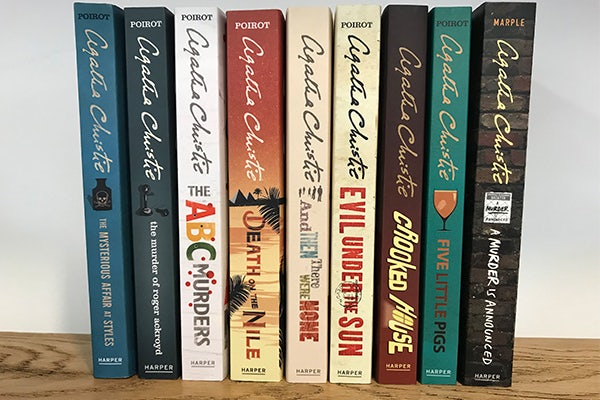
“The Mystery of the Graveyard” also goes by the alternate title “A Dead Man’s Revenge” and has remarkable plot twists for the length of the story. Agatha Christie could have had a run for her money if Lovecraft made the turn towards mystery instead of the darker pivot towards horror. He even has a hero detective protagonist to rival Hercule Poirot in King John.
The story begins with the funeral of Joseph Burns. Burns gave some very strange and specific requirements during his funeral. He asked the rector, Mr. Dobson, “Before you put my body in the the tomb, drop this ball onto the floor, at a spot marked ‘A.‘” Dobson goes down to the tomb and does so, but never returns. The mystery follows. The second chapter begins as Dobson’s daughter gets a letter from a mysterious Mr. Bell insisting he knows where her father is and extends a demand of a ransom to get him back. Flustered, she goes to the police and asks for King John who is “a famous western detective.”
The story runs around and around as King John strives to find Bell and figure out the mystery of where the rector went until, finally, he finds that the “A” in the tomb is a trap door that activates with pressure. Dobson fell into a sub-tomb and was hidden away there until he finally escaped. After the trial it was found that all along it was a revenge plot against the rector because Joseph Burns and his brother Francis Burns had a vendetta and hired Mr. Bell to trap and hold Dobson.
The story is told in twelve very short chapters…so short that in fact they are each only a few sentences long and every chapter has a title letting the reader know what to expect. This also strikes me as Lovecraft’s way of structuring his thoughts. When we look forward to other works like “The Case of Charles Dexter Ward” as a long example and my more recently reviewed “The Thing on the Doorstep” as a shorter example, Lovecraft has a certain structure in his writing in which is easier to elucidate with these stories. In both “The Case of Charles Dexter Ward” and “The Thing on the Doorstep” Lovecraft breaks his writing up into chapters, but instead of having a single narrative flow, those chapters are almost single distinct stories in and of themselves. For example in both stories the first chapter is about the protagonist of the story (other than the narrator of course). It gives the reader the background and the perspective of the (supposed) “hero” of the story. The second chapter of these stories gives background to the antagonist (Curwen in “Ward” and Asenath in “Doorstep”), then each subsequent chapter has an event which drives the narrative forward. “The Mystery of the Grave-Yard” is the same type of structure, though Lovecraft breaks this down even further, presumably so he can keep the narration on track…a common tool for very young, or beginning writers. Notice how he begins the plotting the same way (Chapter 1 is about the main focal point of the story, Dobson, and chapter two introduces Bell, the main antagonist), and then has each chapter surrounds an individual event. In his later years he does a better job at painting a bigger, more lush picture by expounding on detail and experience. Tone and atmosphere are what Lovecraft is missing in his Juvenilia, but it’s what he perfects later in life and makes him the legend of horror and supernatural that he is. This point is proven even more when we move onto the next story, “The Mysterious Ship.”
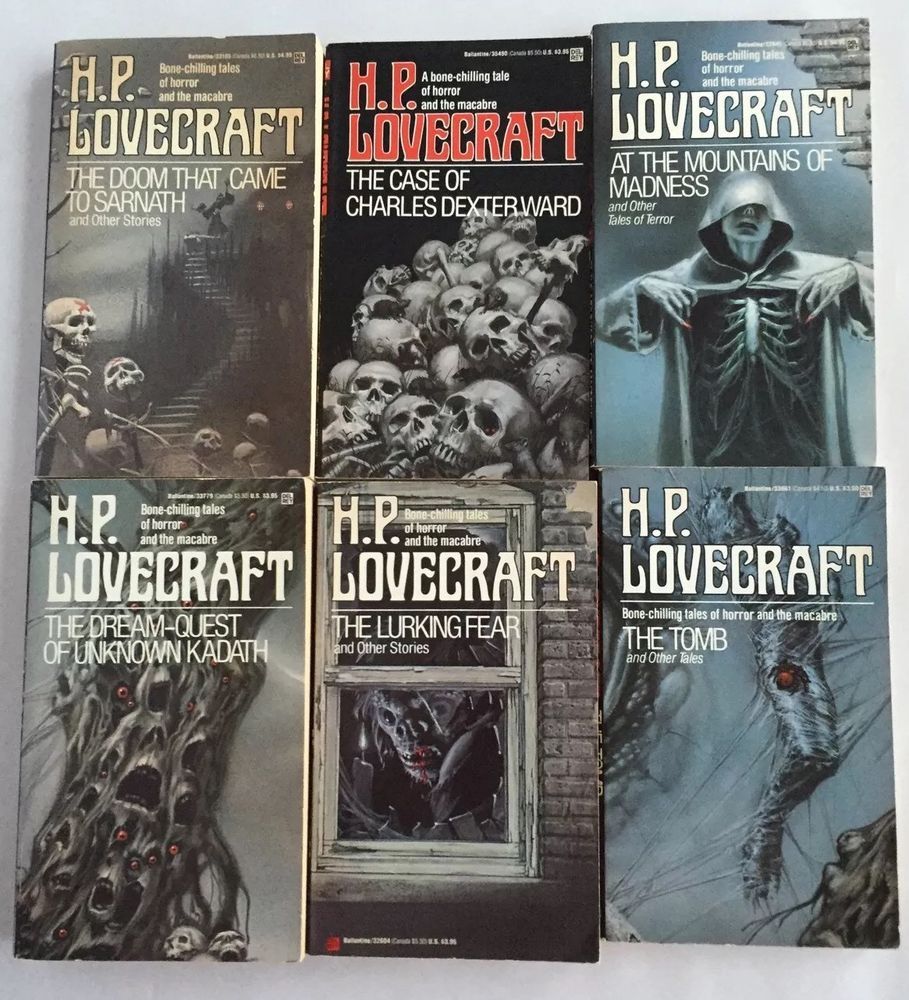
This second short is told two different times in the collection I have (I’ve actually gone through a number of different collections, starting off with the Del Rey books. Where the artwork in those books are excellent, the collections themselves aren’t that great. Language was changed and in the process, meaning seems to have changed. I’m currently working of the most recent Barnes and Noble edition which seems to be far superior), the first is an earlier shorter edition and the second is a more fleshed out atmospheric piece, where each chapter is just a few sentences longer and gives a clearer understanding and better atmosphere than the shorter one before it. These two vignettes give a better glimpse of the growth of the writer than nearly anything else I’ve seen. Lovecraft is devoid of the pomposity of literature of someone like Pynchon because Lovecraft’s first love was adventure. He wanted to tell stories that were weird and fun and wild, which led to his unique “serious, but pulpy” tales. He chose his archaic and complex writing style to compliment the wild stories he wanted to tell, not the other way around. It may seem like a small distinction, but it’s an important one.

Back to the adventure! The second story follows the titular ship which you can see in a little bit of detail in the opening quote to this essay (which is in fact the opening chapter of the longer version). It’s about a ship which journeys around and kidnaps people. The Captain and crew are eventually caught and the purloined victims are returned, bringing the story to a nice ending all tied up in a bow. The tale doesn’t have much in the way of satisfaction, but it does show Lovecraft’s love for adventure.

Between the two of these stories you can see the natural divergence of the path in which Lovecraft took. We have the standard horror or cosmic horror element with the Mystery of the Grave-Yard, in that atmosphere and the darker places he normalizes as just standard backdrops for the story…complete with sneaky plotters and nefarious acts. Then we have the adventurous bend we take with The Mysterious Ship, which feels like the beginnings of the dreams lands and such stories as “The Dream-Quest of Unknown Kadath.” These tales aren’t so much focused on the horror elements as they are on the adventurous journeys the protagonists (well really just Randolph Carter) take.
I kept these Juvenilia for the end because I wanted to have something to call back on while discussing them, and I can’t say how glad I am that I did. To be able to see the growth is tremendous and its always fun to see how a writer that I’ve become this involved in began.
Next week we dive into the last story Lovecraft wrote on his own. It means this series is rapidly coming to an end, but we still have a bunch of the stories which August Derleth wrote with Lovecraft’s notes and I plan on ending this series with Lovecraft’s essay on Horror.
Join me next week as we view the “Shadow out of Time.”
Blind Read Through: H.P. Lovecraft; The Horror at Red Hook
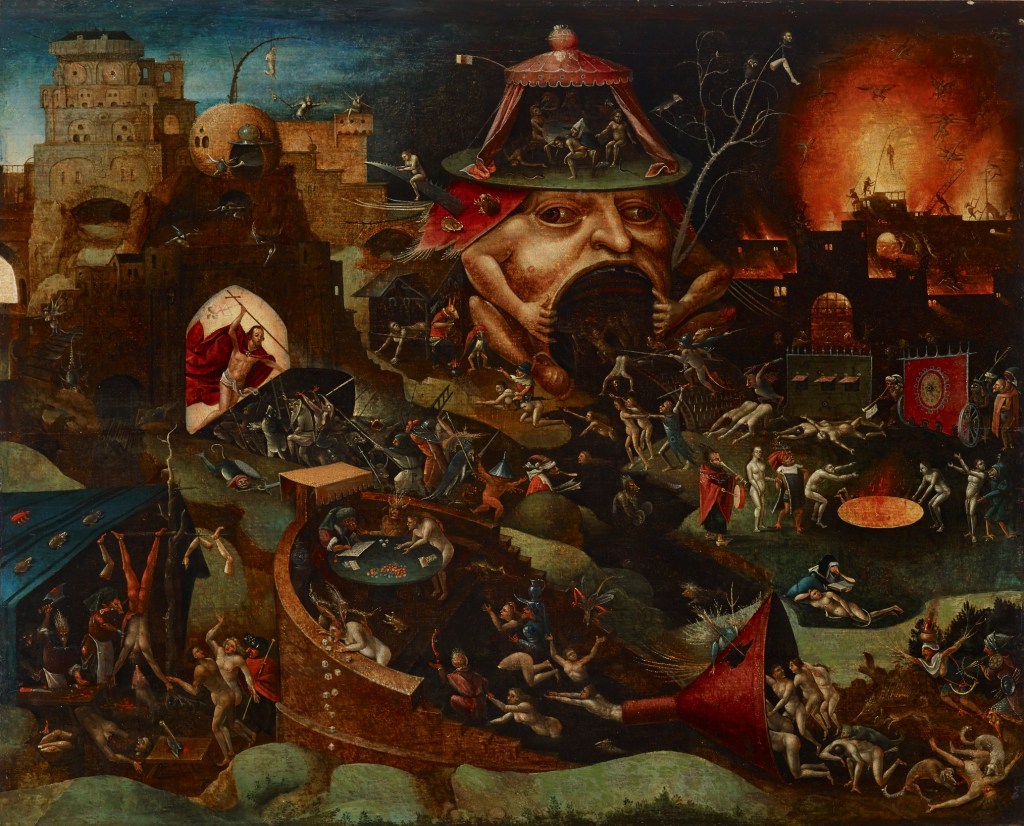
“But at this time it was all horribly real, and nothing can ever efface the memory of those nighted crypts, those titan arcades, and those half-formed shapes of hell that strode gigantically in silence holding half-eaten things whose still surviving portions screamed for mercy or laughed with madness.”
Wow, what a wild ride this story was. This was probably the scariest and most classic horror of any H.P. Lovecraft that I’ve read up to date.
As the story begins we are introduced to detective Thomas F. Malone who is on extended medical leave for trauma. The first portion of the story describes how he’s living and dealing with this trauma, of which we are still ignorant.
The second portion of the story covers Red Hook. We get a call back to HE, as there is a similar tenement structure our narrator experienced there. This story also takes place in New York, which is absolutely unique for Lovecraft. It does not hold the same atmosphere as much of his work, but from the start of this story the tone has a much darker and sinister feel. The basis in New York gives Lovecraft the ability to explore different themes than the usual fantasy/cosmic horror that he frames in New England.
The third portion of the story is the introduction to Malone’s quarry, Robert Suydam. “Suydam was a lettered recluse of an ancient Dutch family,” and he purchased a space in the run down, twisting alleyways of Red Hook. After a strange trip to Europe, Suydam began to deteriorate. His personal hygiene took a hit, he lost friends, and “When he spoke it was to babble of unlimited powers almost within his grasp, and to repeat with knowing leers such mystical words or names as ‘Sephiroth’, ‘Ashmodai’ and Samael’.” And there it is. We have three demons from the Kabbalah and Christian religions. The text has gone beyond the normal Lovecraft, no longer in the world of the cosmic horror. We are no longer in the dreamlands (though there is a little bit of dream stuff to come), we have now crossed over into religious horror. To me this raised my hackles. I find this subject matter far more terrifying that anything I have yet come by within Lovecraft’s oeuvre.
The fourth section of the story delves into the police work. Trying to uncover just what strange dealings that Suydam has been up to. They raid his home, which is empty, and they come across blasphemous art work and things that Malone simply “did not like”. They also found an inscription:
O friend and companion of night, thou who rejoices in the baying of dogs and spilt blood, who wanderest in the midst of shades among the tombs, who longest for blood and bringest terror to mortals, Gorgo, Mormo, thousand-faced moon, look favourably on our sacrifices!
I had no idea what this meant. Though obviously a atmospheric quote, I believed it had deeper meaning. Lovecraft infuses lots of Greek mythology and heritage within his work. There is a certain amount of admiration he obviously felt for the culture and the artwork. He loves the idea of marble structures and busts and even includes some of that iconography in this story as well. So when I came across this quote, it was no surprise to me that it was about Hecate, the Greek Goddess of the underworld, ghosts, and magic. This story was not going to deal with cosmic horror, it was going to deal with something closer to home. It was about Hell.
The next short section of the story tells of a journey Suydam takes across the sea, where he dies. He instructs that his body be conveyed to the bearer of the note provided.
Then we move into the Horror. Malone goes to Red Hook and investigates, noticing a melee. He goes to allay the fight and finds strange sounds and smells while all the participants of the battle flee. Malone suspects something nefarious behind a large door, so he takes a stool and breaks the door open, “whence poured a howling tumult of ice-cold wind with all the stenches of the bottomless pit, and whence reached a sucking force not of earth or heaven, which, coiling sentiently about the paralysed detective, dragged him through the aperture and down unmeasured spaces filled with whispers and wails, and gusts of mocking laughter.“
Malone is sucked into Hell. He experiences some truly horrific scenes, perfect for any fan of this type of fiction, and much more evocative than anything I’ve experienced from Lovecraft. We see Suydam giving himself over to a demon, finally getting what he was after, and becoming one with hell.
The final section explains how the mysterious group brought Suydam’s body back to that experience and how Malone could hear that same refrain from some “hag” speaking to young children about Hecate. The knowledge of the fate of Suydam and that whatever devious magic caused it is still alive and well in Red Hook is what truly throws Malone over the edge.
When I think of Lovecraft I don’t generally think “disturbing”, but I have to say that this one was up there. That penultimate chapter covering Malone’s experiences in Hell were truly unsettling.
What do you think?




You must be logged in to post a comment.