Blind Read Through: J.R.R. Tolkien; The Book of Lost Tales, Part 1, The Building of Valinor
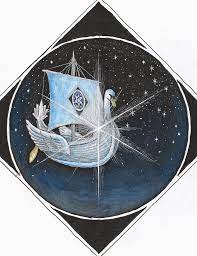
“There, said Aulë, would be a place well suited to great building and to a fashioning of realms of delight; wherefore the Valar and all their folk first gathered the most mighty rocks and stones from Arvalin and reared therewith huge mountains between it and that plain which now they name Valinor, or the land of the Gods (pg 70).”
Welcome back to another Blind Read! This week we continue our journey through the coming of the Valar as we delve into the Building of Valinor.
Last week we left off discovering who the Valar were, and this week we get into the details of the building of Valinor from the perspective of the Valar and Tolkien himself.
From our readings of The Valaquenta in The Silmarillion, we know that The Valar went to different parts of the world but wanted a place to call home. Valinor was that place. But even with the creation of Valinor, the Valar still had their various areas which they controlled. Ulmo ruled the deep seas, Manwë ruled the air and winds, etc. As these concepts formed in Tolkien’s mind (all early stages of developing the world), he envisioned this world as floating through the ethereal nature of space and time.

Remember that the original idea was that all of Middle-earth would eventually lead up to our historical timeline, acting as a sort of mythological foundation which he felt was lacking in the English tradition. He also based much of his work on Norse Mythological writings and practices, so what better format than having the entire Eä (read that as Earth) floating through the cosmic tapestry than on a Norse ship? Everything from Palisor to Valinor would live on this ship sailing through space.
Though he later dropped this idea for a globe world, it was evident that he loved the concept of the boat sailing through the cosmos and eventually re-used it. Enter Eärendil, arguably one of the essential characters in Middle-earth history. He and his wife Elwing stood up to Morgoth, and Eärendil sailed to Valinor with a Silmaril to protect it and make the Vala understand what they were up against. A mortal sailing to Valinor was prohibited, but instead of outright killing him (mainly because of his courage and selflessness in sailing there to save the world), they made him part of the cosmos, sailing his ship Vingilot “even to the starless voids.”
Tolkien never gave up on his ship idea, but he also never gave up on the concept of creating something from nothingness.
Moving back in time, as soon as the Vala created Valinor, it was still a dark place to be. “These were the days of Gloaming (Lomendánar), for light, there was, silver and golden, but it was not gathered together but flowed and quivered in uneven streams about the airs, or at times fell gently to earth in glittering rain and ran like water on the ground, and at that time Varda in her playing had set but a few stars within the sky (pg 69).”
The world was dark, and the only light came from the stars, yet the Vala wanted to build a complete world, so they came up with a rudimentary idea.
“Aulë suaded Melko to build two towers to the North and South, for he purposed to set upon them mighty lamps one upon each (pg 69).”
This passage differs from the Silmarillion because Melkor was a lousy actor. He created the world’s darkness and envied the other Valar and the Noldor, but more on that next week.
So they built these two lamps to light the world. “They sprang up through the lower air even to Ilwëand the stars, and Melko said they were of an imperishable substance of great strength that he devised; and he lied, for he knew that they were of ice (pg 69).”
Manwë and Varda gathered light from the stars and brought them down to fill these mighty lamps. Still, Melkor had tricked them because “it so happened that the blaze of those lights had melted the treacherous ice of the pillars of Melko, Ringil and Helkar, and great floods of water had poured from them into the Shadowy Seas (pgs 69-70).”
It is never outright stated why Melkor did this treacherous act. It is possible that Melkor was the Angel of Darkness, so he desired to keep the world in the Gloaming, but this is an early iteration of the mythos of Middle-earth, and Tolkien needed a Big Bad to push the story forward. So in the Book of Lost Tales, Melkor is just wrong from the start; there isn’t much in the text to brighten his character, much like Sauron.

But what Melkor didn’t realize is that Ilúvatar set the theme of the world’s construction, so when the globes holding the light of the stars fell to the Earth, they buried themselves. “Then came Palúrien, even Kémi the Earth-lady, wife of Aulë, mother of the lord of forests, and she wove spells about those two places, deep enchantments of life and growth and putting forth of leaf, blossoming and yeilding of fruit – but she mingled no word of fading in her song (pg 71).”
Trees began to grow from those lights buried in the Earth, one they named Laurelin and the other Silpion. These trees ended the Gloaming and produced light from their leaves and blossoms until the coming of the Sun and the Moon. Later Tolkien renamed the second tree, changing it from Silpion to Telperion, but this is the earlier iteration of the creation of the Trees of Valinor.
I prefer this iteration to the published version with Yavanna signing the Trees into existence because it ties much more to the legendarium. First, the trees came from the stars and set into the ship that sails the cosmos. Then later, once the first age was coming to a close, we have Eärendil voyaging through the cosmos for all eternity on his ship. There is something poetic about closing the loop to me, which is also what I appreciate about being able to read the earlier stages of Tolkien’s work.
Join me next week as we complete “The Coming of the Valar and the Building of Valinor!”
Blind Read Through: J.R.R. Tolkien; The Two Towers, Re-read

“‘All right!’ he said, ‘Say no more! You have taken no harm, There is no lie in your eyes, as I had feared. But he did not speak long with you. A fool, but an honest fool, you remain, Peregrin Took. Wiser ones might have done worse in such a pass. But mark this! You have been saved, and all your friends too, mainly by good fortune, as it is called. You cannot count on it a second time. If he had questioned you, then and there, almost certainly you would have told all that you know, to the ruin of us all. But he was too eager. But come! I forgive you. Be comforted! Things have not turned out as evilly as they might.'”
Welcome back to another Blind Read! This week we’re back with a bit of a lie, this isn’t quite a Blind Read, but it’s been so long since I’ve read these books it might as well have been!
Before we discuss the books, I want to start by saying how amazed I am at how close the Movies were to the books. After reading them more critically, it is obvious how much the producers revered the core material. The ability to create a new medium that was inclusive of all who did not read the books but to be honest enough to the core material that hardcore fans love is a masterstroke in adaptation.
The only significant difference the movies had was in Fellowship because they took out the entire Tom Bombadil sequence (rightly so). Still, even then, I’ve seen deleted scenes where the hobbits get swallowed up by Old Willow. We’ll cover the differences in The Two Towers below, but we also dive more into the world’s lore.

The first thing I’d like to mention is Treebeard and the Ents. The movie played up his slowness and mistrust, and where many lines are taken directly from the text, Treebeard was not very slow to action speaking of page count. Yes, he does suspect Merry and Pippin of being Orcs at first, but he quickly decides they aren’t. He then calls the council of Ents, and within a few pages, they choose to mount an attack on Orthanc. Again, the movie drew it out for drama, but the book had these events happening quickly.
However, the biggest oddity I noticed in the book was a seeming discrepancy between The Silmarillion and The Two Towers. When speaking of his race, Treebeard (also known as Fangorn) says the Elves created Ents. However, later in the book Gandalf (also known as Mithrandir, but more on that later) tells the remaining Fellowship that Fangorn is the oldest living creature on Middle-earth (remember that Elves, Vala, Maiar, and even Dwarves were created on Valinor). Tom Bombadil verifies this statement in The Fellowship of the Ring. I stopped and thought about this before I could move on because I know that Tolkien re-wrote much of the history and was still in his re-writes while writing The Lord of the Rings, but was there a discrepancy this bold?
I decided to go back and do some digging to figure it out.
Returning to The Silmarillion, I verified that Yavanna (the Vala who was the “lover of all things that grew in the earth”) created Ents as part of her music theme. Part of her reason for doing so was because of other creations, such as the Dwarves (who were created but kept at rest for many years). Yavanna feared the trees themselves would not have a means of protecting themselves against the push of other creatures’ industrial nature (something that echoes Tolkien himself), so she made the Ents to be shepherds and protectors of the trees and forests. Tolkien even had an early iteration where he called them Tree Ents because the word Ent was derived from the Old English word Eoten, meaning Giant, so they were Tree Giants meant to protect. Tolkien seeds this in The Fellowship of the Ring when Samwise relays a story from his cousin Hal, who saw a “treelike giant” north of the shire. This anecdote was Tolkien’s way of seeding their entrance into the books.
So we know that Yavanna created the Ents – why then does Treebeard say that they were a creation of the Elves? Looking back at the text, one can see where I went wrong. The Ents and Entwives were creatures of the earth, and where they were sentient, they couldn’t communicate with other animals. They were meant solely to be of and for nature, so Treebeard says that the Elves taught them to speak Elvish and opened their minds to interact with other sentient creatures. The Elves brought the Ents to life; they didn’t create them.
I could go on and on about Ents and make it their own essay, but since this is about a re-read of The Two Towers, I want to dig into a few other short items.
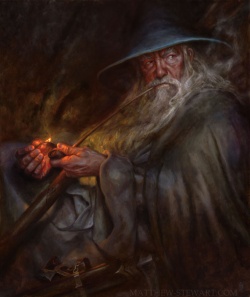
The first is Gandalf. In The Fellowship of the Ring, he is of the gray order of the Istari (Maiar wizards), but because of his fall against the Balrog in that first book, he came back as an Istari of the White order, which is one of the most powerful, second only to the Black Order. This book teaches that the Istari are immortal like their masters, the Valar. Gandalf returned as a white-order Istari because of the power vacuum of Saruman, who abandoned his order for power. Saurman did not specifically side with Sauron (which we learn in The Silmarillion). Still, the Palantir corrupted him enough that he thought he could become the most powerful being in Middle-earth.
It isn’t until Gandalf returns that the party nearly ceases calling him by his common “gray” name, Gandalf. Instead, once he takes up the white mantle, most characters call him Mithrandir for the remainder of the series.
Lastly, I would be remiss if I didn’t bring up what confused me the most when I read through the books before reading The Silmarillion—the Dúnedain and Aragorn’s lineage.
Throughout this book, there are constant references to Elendil and Eärendil, but I didn’t know who those people were other than they were Aragorn’s ancestors. Having that foreknowledge made the events and exposition of the story that much more lush and meaningful. It adds weight to Aragorn’s decisions and makes him a more dynamic character. Upon the first read, much of his character felt very one note and much more severe than was necessary. Still, after getting the history behind his lineage, one can genuinely feel the dynamics at play and the choices he must make as he forges his way to coming back to be King of the world of Men.
Come back next week as we continue “The Music of the Ainur” in the Book of Lost Tales!
Blind Read Through: J.R.R. Tolkien; The Book of Lost Tales, Part 1, The Music of the Ainur part 2
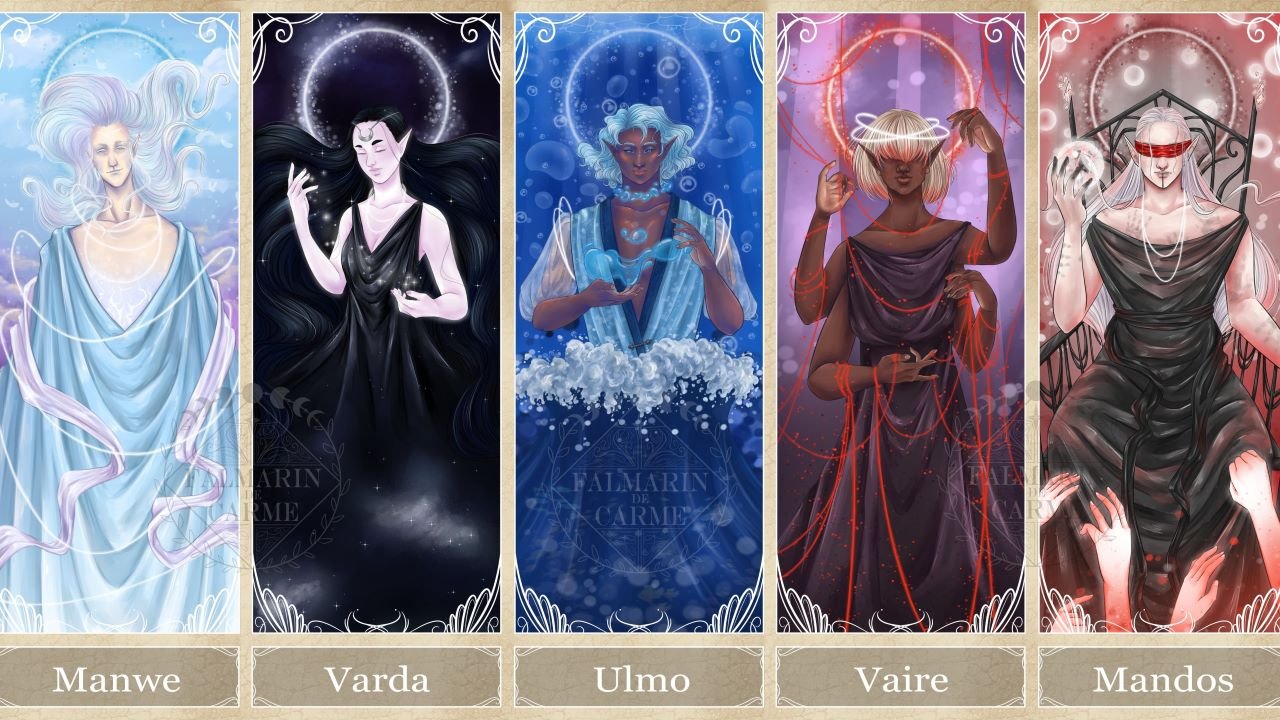
“Through him has pain and misery been made in the clash of overwhelming musics; and with confusion of sound and have cruelty, and ravening, and darkness, loathly mire and all putrescence of thought or thing, foul mists and violent flame, cold without mercy, been born, and death without hope. Yet is this through him and not by him; and he shall see, and ye all likewise, and even shall those beings, who must now dwell among his evil and endure through Melko misery and sorry, terror and wickedness, declare in the end that it redoundeth only to my great glory, and doth but make the theme more worth the hearing, Life more worth the living, and the World so much the more wonderful and marvellous, that of all the deeds of Ilùvatar it shall be called his mightiest and his loveliest (pg 55).”
Welcome back to another Blind Read! This week we delve into the philosophy of Tolkien as we review “The Music of the Ainur,” the second chapter of The Book of Lost Tales.
Tolkien himself was a deeply religious and highly intellectual man. He surrounded himself with others of all opinions (see his writing group The Inklings, which included C.S. Lewis), and at the forefront of his mind was an anthropologic focus on the world. This curiosity of how the world works is what created the fantasy world we all respect so much.
This chapter, in particular, is about how Ilùvatar (God in this iteration) created the world through his Angels, which he named Valar.
Rúmil tells the story to Eriol and begins his tale by saying, “Before all things he sang into being the Ainur first, the greatest is thier power and glory of all his creatures within the world and without (pg 52).”
This passage marks Ilúvatar as a great creator. There is nothing closer to authentic Christianity than this first chapter, as it shows Ilúvatar’s great power and ability of forethought and humility.

Rúmil goes on, “Upon a time Ilúvatar propounded a mighty design of his heart to the Ainur, unfolding a history whose vastness and majesty had never been equalled by aught that he had related before, and the glory of it’s beginning and the splendour of its end amazed the Ainur, so that they bowed before Ilúvatar and were speechless (pg 53).”
Thus enters the theme of Predestination. Ilúvatar creates a concept that has a beginning and an end. But for such a grand creator, that is not satisfactory because there is no surprise in the world, no joy in watching the events of his grand scheme unfold. To counter this problem, Ilúvatar tells his Angels (they are interchangeably called Ainur and Valar), “It is my desire now that ye make a great and glorious music and a signing of this theme; and (seeing that I have taught you much and set brightly the Secret Fire within you) that ye exercise your minds and powers in adorning the theme to your own thoughts and devising (pg 53).”
Ilúvatar allows the Vala to create the middle of his great tale with their own “secret fire.” We learned in The Silmarillion (and to a lesser extent here) that the Vala all have their own minds, and they all have their passions. This is what the secret fire is, a passion for seeing something created, which is mirrored in Tolkien himself as he created the world of Middle-earth. That is not to say that Tolkien thought himself a god, or even to the level of the Valar, but he saw it as his duty to show that there was great beauty in the world. He wanted to elicit this emotion from people because of his experiences in the Great War. Let me explain:
“Yet sat Ilúvatar and hearkened till the music reached a depth of gloom and ugliness unimaginable; then did he smile sadly and raised his left hand, and immediatly, thoguh none clearly knew how, a new theme began among the clash, like and yet unlike the first, and it gathered power and sweetness (pg 54).”
This passage shows both the power and the weakness of the Valar, which in turn displays just how human they were. Which makes sense because we, as people, are the antecedents of the Angels. Humans are called Ilúvatar’s second children (after the Elves). The Valar wanted to create something with the same power as Ilúvatar, but they became despondent when things turned dark, and their grand theme became black with peril.
Indeed it was Melkor, later called the Dark Lord and master of Sauron, who saw this darkness and believed it was the only way to the end of the story.

“Mighty are the Ainur, and glorious, and among them is Melko the most powerful in knowledge (pg 54).”
Tolkien believed there was a balance to the world, making Predestination possible. Each Valar had their power or strength; Ulmo had control over water, Manwë had power over the air (The great eagles which bore Gandalf away from Orthanc and Frodo and Sam away from Mount Doom were agents of Manwë), and Aulë had control of the earth. But it was Melkor who had the greatest knowledge, and what Tolkien learned in World War I was that one could have a perception of darkness or a general concept of pain, but until you have the experience, you never really have knowledge of it.
Knowledge equals pain, which is a prime theme in Tolkien’s work. That may seem particularly depressing, but you cannot appreciate the most glorious mornings until you see the darkest of nights (this echoes in Sam’s speech at the end of The Two Towers. “They were holding on to something…”). Ilúvatar created Melkor to have the knowledge and sing about that knowledge which fostered despair in the world, but he could do nothing to change it. He became the Dark Lord because once the Children of Ilúvatar were created, they received gifts to experience the world’s joys and perils, whereas Melkor could only see troubles and darkness.
The Eldar were given long life and foresight that they would live to see the end of all time, which made them happier than humans. But to humans, Ilúvatar gave the gift of death.
Doesn’t it seem like much of a gift? Well, it harkens back to the question of knowledge. If you knew your time was short, you would live a more extraordinary life, a life filled with great pain and great joy, rather than being stuck in the middle and being “emotionless” as the Elves were.
This ability to have great highs and lows was specifically why Ilúvatar sang Melkor (also known as Morgoth) into existence. He knew what the Valar would do, but also knew it was necessary for a full experience of the world.
Come back next week for a recap and reread of “The Two Towers!”
Blind Read Through: J.R.R. Tolkien; The Book of Lost Tales, Part 1, Chapter 2: The Music of the Ainur
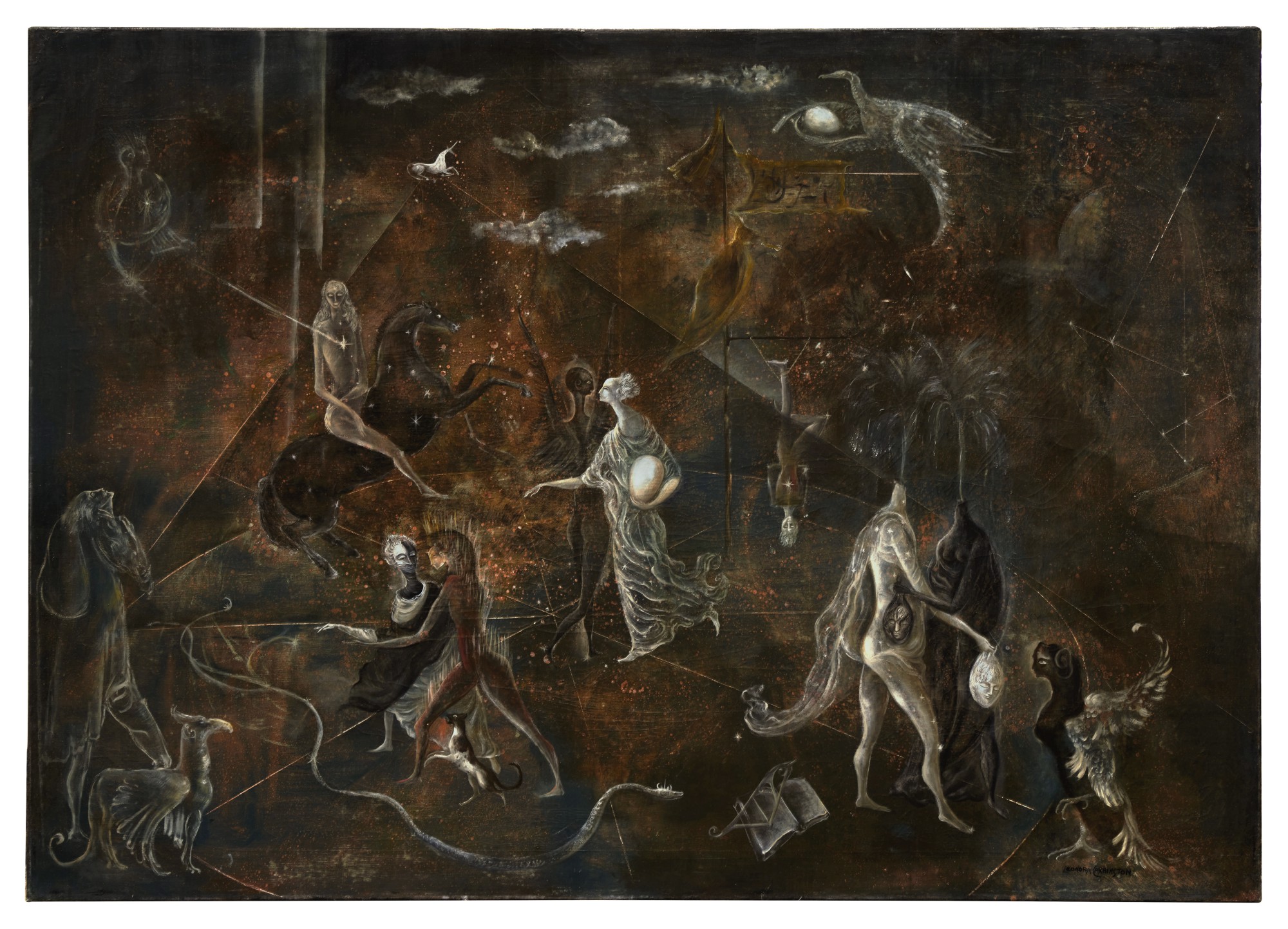
“Then slept Eriol, and through his dreams there came a music thinner and more pure than any he heard before, and it was full of longing. Indeed it was as if pipes of silver or flutes of shape most slender-delicate uttered crystal notes and threadlike harmonies beneath the upon upon the lawns; and Eriol longed in his sleep for he knew not what (pg 46).”
Welcome back to another Blind Read! This week we head back to The Book of Lost Tales and tackle Chapter Two’s opening, “The Music of the Ainur.” Christopher added something new to this chapter from the notes of this father and the result sheds light on the meaning of the chapter. When he began writing Eriol’s story, Tolkien created a transitional piece between the beginning of the story of the Ainur and The Cottage of Lost Play. We’ll be covering that transitional piece this week because there is so much in it that warrants discussion before we move on!
Before we get too far into it, I want to delve a little deeper into the difference between Gnomes and Elves, which has been a strange adjustment because I wasn’t sure if Tolkien was calling all Elves (otherwise known as Eldar) Gnomes or if it was only Noldor (also known as Noldori) Elves. Part of the confusion comes in because of all the different names involved.
Tolkien wanted the world to be lush and complete, but because of who he was and his background, Worldbuilding to Tolkien didn’t mean delving into culture, landscape, or image. Instead, to Tolkien, what made people unique was how they communicated, meaning language. Thus, the language and the beings who utilized this language changed through his world’s creation.
For example, the Teleri later become the Vanyar, The Noldoli (Gnomes) later become the Noldor, and the Solosimpi later become the Teleri. Why did he make all of these changes? Because of language.
The perfect example of this is what we began with: Gnomes. The word Gnomes brings to mind that small bearded garden variety with red pointy hats. I’m sure at some point in the writing of this epic; an editor approached Tolkien who mentioned that that word did not elicit that “They were a race high and beautiful… They were tall, fair of skin and grey-eyed, though their locks were dark, save in the golden house of Finrod (pg 44).” (just to be clear we are explicitly talking about the Gnomes or Noldor Elves. Christopher goes out of his way to make sure that is clear: “Thus these words describing characters of face and hair were written of the Noldor only, and not of all the Eldar… (Pg 44)“
So why did Tolkien call them Gnomes? Yep, you guessed it. Language! “I have sometimes used ‘Gnomes’ for Noldor and ‘Gnomish’ for Noldorin. This I did, for whatever Paracelsus may have thought (if indeed he invented the name) to some ‘Gnome’ will still suggest knowledge.”
In Greek, gnome meant thought or intelligence. Which then translated into words such as gnomic or gnostic. When Tolkien mentions Paracelsus, he refers to the 16th-century writer who used gnome as a synonym for pygmaeus, which means “earth-dweller.”
Tolkien was trying to establish that the Noldor were intelligent creatures who understood how the world worked. But he was also trying to create a distinction between the Noldor and the Valar. The two types of beings were almost interchangeable because they were both created by Ilúvatar.
At the beginning of this interlude, Eriol asks for clarification (Tolkien’s way of trying to clarify it himself): “Still there are many things that remain dark to me. Indeed I would fain to know who be these Valar; are they the Gods?” to which Lindo responds “So they be (pg 45).” And yet later, when describing gnomes, “nor might one say if he were fifty of ten thousand (pg 46).”

So he creates differences through the use of language. Both from the meaning of their names and the languages they speak. These themes also carry over into The Lord of the Rings because everyone has their distinct dialect, from Rohan to Gondor, from The High Elves of Rivendell to the woodland elves in Lothlórien. Here on Tol Eressëa, “there is that tongue to which the Noldoli cling yet – and aforetime the Teleri, the Solosimpi, and the Inwir had all their differences (pg 48).”
Language was a big theme in this introduction to make sure the reader understands what they are getting themselves into, but there are two other themes Tolkien stamps down, which carry over into all of his other writing; dreams and music.
All of these things are interconnected, and I chose the quote to open up this essay because it holds the essential themes Tolkien has brought into this tale.
If we remember from the first chapter (or go back and read it here), Eriol is a human of modern times. He travels and finds his way to Tol Eressëa, and he is a means to an end to tell the story of the beginning of time and the first age. What I find particularly interesting is that Tolkien intended there to be a “dream bridge” between Tol Eressëa and the rest of the world. So that outsiders could not find it while awake, and their knowledge of the isle would fade upon waking as dreams do; but dreams also leave us with subconscious memory, and feeling that stick with us, though we don’t remember details.
This intermittent chapter begins with Eriol heading to a room and falling asleep, and in that sleep, “came a music thinner and more pure than any he had heard before (pg 46).”
The Music of the Ainur, which we will get more into next week, is how the Valar (also known as Ainur) created the world. Their music brought into being plants, animals, and earth, as well as emotion and consciousness. This “pure music” is what Eriol hears in his mind as he sleeps. It is not the sound as it was when it created the world, but Tol Eressëa is so close to the center of everything that it echoes what came before. He hears the music of creation, and he doesn’t consciously recognize it, but he subconsciously melds into it.
I also find it interesting that he falls asleep and delves into dreams directly before being told the tale. Could it be that the entirety of The Book of Lost Tales is told through the Music of the Ainur while Eriol is sleeping?
Let’s see if we find out next week as we begin the Music of the Ainur!
Blind Watch: The Rings of Power; Episode 8, Alloyed

“I leapt from that ship because I believed in my heart that I was not yet worthy of it. I knew that somehow, my task here was not yet complete. And when I surfaced all I could do was swim and pray I had chosen wisely. I did not cross that bitter Ocean, onyl to drown now. And nor will I let you.”
Welcome back to another Blind Watch! This week we conclude The Rings of Power and close up all the messy and misused storylines.
There will be heavy spoilers in this essay, so if you have not watched the episode or show yet, please stop now and head back to Amazon and watch it!
This episode finally reveals who Sauron is as well as one other major character in the mythology.

The show begins by having “the stranger” walking through the woods. He has been exiled from the wandering Hobbits (though they are not called that yet), and the mysterious and dangerous wanderers dressed in all white appear before him and all but tell him he is Sauron. Then, they use out-of-place magic to fool him, but the entire exchange doesn’t make sense.
First, let’s follow along with the show’s storyline and assume that this tall Stranger is, in fact, Sauron (he’s not, and we find out later who he is). It doesn’t make sense that Sauron wouldn’t know who he is at this point in history. He was already in Middle-earth from the end of the First age. The only time in Middle-earth’s history that it would make sense that Sauron might not know who he was (that never happened in any Tolkien I have read) was after the Drowning of Númenor, when he was cast down into the abyss, shed his mortal form and retreated to Barad-dûr. The fact that he shed his human form is the only factor in thinking he might not know who he was, so instantly, we see this Stranger is not Sauron.
What bothers me about this interaction is how lazy the writers were. Why would Sauron’s servants not know who he was? Especially servants who were this powerful in magic? Notwithstanding that there never were any magic users mentioned in Sauron’s entourage, these characters are just a means to an end to show the power of the Stranger and to show who he is, which is an Istari, otherwise known as a Wizard. Namely, this Stranger is who I thought he was all along: Gandalf the Gray.
It is Halbrand who turns out to be Sauron in disguise. I’m a little discouraged that I didn’t catch this sooner, but the writers changed the history so wholly to make it challenging to understand who he was, so I’ll give myself a little grace. Afterall, the whole point of this first season wasn’t to tell a wonderful story about Middle-earth, they wrote it to hide who Sauron was and to make a dramatic reveal.
To met he problem isn’t that Sauron turned out to be Halbrand. Sauron did, after all, disguise himself to influence the making of the Rings of Power. In the Silmarillion, he disguises himself as Annatar, the Lord of Gifts, to control the Noldor Elves and influence them create the rings in the first place.
Elrond and Gil-Galad suspected Annatar was not who he said he was, so he left Lindon and went to Eregion, where they crafted the Rings. But, unfortunately, while they were making all the Rings of Power (not just the three for the Elves), Sauron retreated to Mount Doom and created the One Ring to rule them.
So the fact that the showrunners decided to change Sauron’s disguise from Annatar to Halbrand is acceptable. My problem comes in with how they introduced and framed him. Sauron is a master of deception, so much so, that he destroyed two different empires with influence alone (meaning that he didn’t raise an army against them).
But why was Sauron stranded on a raft? Do the showrunners want us to believe that he foresaw Galadriel jumping off her boat and swimming to a broken-down ship in the middle of the sea? And even if that was the case, there are far easier ways for him to ingratiate himself within the Elven culture.
Having Halbrand come up with such a soft cover as “King of the Southlands,” which was so easy to figure out “bloodline was broken,” is unlike Sauron. It makes him seem weak and lazy, which he is not.
Not to mention that there never was a human king in Middle-earth before Númenor. They were all traveling bands who were subjects of the Elven Kings.
The whole point of the entire show wasn’t to make an incredible Lord of the Rings show, but to hide the information about who Sauron was so they could have that reveal in the last episode. All the character’s motivations were to hide who he was, all the action was to hide who he was, and all the plot was to conceal Sauron’s true identity. I don’t mind that the showrunners wanted to change history, however, it doesn’t thrill me. The fact that they very obviously sat around a writing room and said they wanted the final reveal to be who Gandalf is and who Sauron is, then framed the rest of the show around that is just lazy.
This is why people don’t like the show. It’s not necessarily how they changed history because, without a doubt, this story is different from Tolkien’s. It’s not the show’s visuals because the special effects are spectacular. It’s how the writers decided that one event was enough to drive eight episodes. It’s how they took away the agency of every character to fit in with some big reveal (which was pretty lackluster).
I’m not sure if I’ll be watching the second season, if and when it comes out, but it’s no longer a Tolkien show, so there will not be another Blind Watch covering the events if there does turn out to be a second season.
Thank you all for reading, and join me next week as we complete The Silmarillion!
Updates 01/05/23
Wow, what a year that was! I did not get anywhere near where I wanted to go in a writing sense, as work and life stuff enveloped much of my time, but it’s time for a new year, and it’s time for new resolutions. I received a typewriter and a new notebook for Christmas, which has invigorated my creative juices, so it’s time to get to work and get to some of these books I’ve been sitting on!
Elsie Jones Adventures:
The first three of these were already published traditionally, but the contract is up, and the rights have reverted back to me. So I’m going to self-publish and finally get this series out. So expect the first two in the series this year.
If you didn’t know, The Elsie Jones Adventures is a Chapter Book series suitable for kids 5-12. They follow Elsie Jones as she discovers a mysterious library and each book in the secret library pulls her into the plotline of that book, and she goes on the adventure with the characters! The series is filled with action and humor, but it also has lessons to learn along the way.
Book 1: Elsie Jones and the Book Pirates
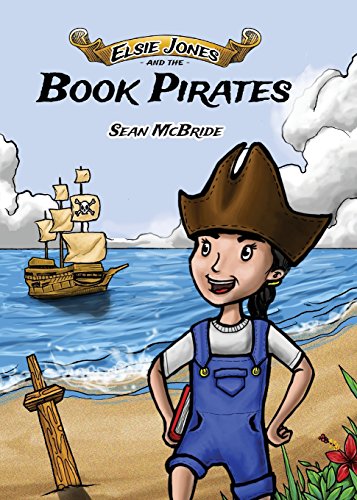
In this first book, Elsie finds a mysterious library and enters “Treasure Island” by Robert Louis Stevenson. She meets some new friends and goes on a Pirating adventure, but also discovers there is a strange group trying to destroy the special books in the library. Follow along with her on an adventure to stop them!
Book 2: Elsie Jones and the Revolutionary Rebels

In Elsie’s second adventure, she finds an old book named “Common Sense” by Thomas Paine, which transports her to Revolutionary Boston. She meets Ben Franklin and goes on a famous horse ride with Paul Revere, leading to a showdown at the house of a literary giant.
Book 3: Elsie Jones and The Captain’s Guard
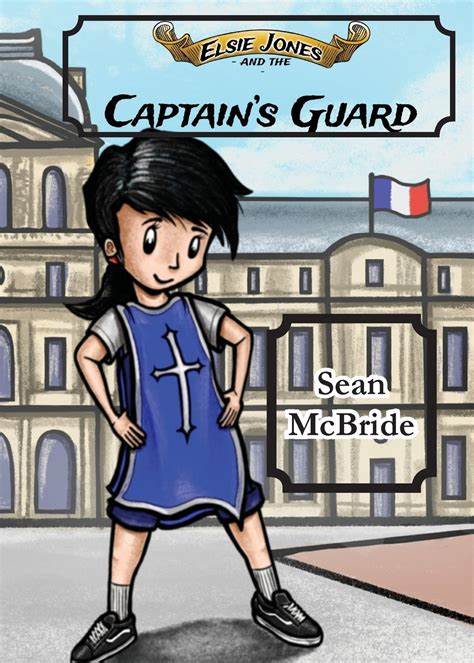
In Elsie’s Third adventure, she comes across “The Three Musketeers” by Alexandre Dumas and goes on an adventure with The famous French Musketeers. This book is filled with mystery, adventure, and swashbuckling fun, but it is on this adventure that Elsie realizes more is going on in these adventurous worlds.
You can find and purchase all three of these stories here or wherever books are sold. What will be released this year are “Author Editions” of these first three books. I wasn’t very happy with the end result when the publisher edited these books, so what you’ll get this coming year will be more extended and much more cohesive. The published books are still outstanding, don’t get me wrong, but since the rights have reverted back to me, I wanted to get the whole series out and make them as good as I possibly could. The originals still hold a place near and dear to my heart and will still be available.
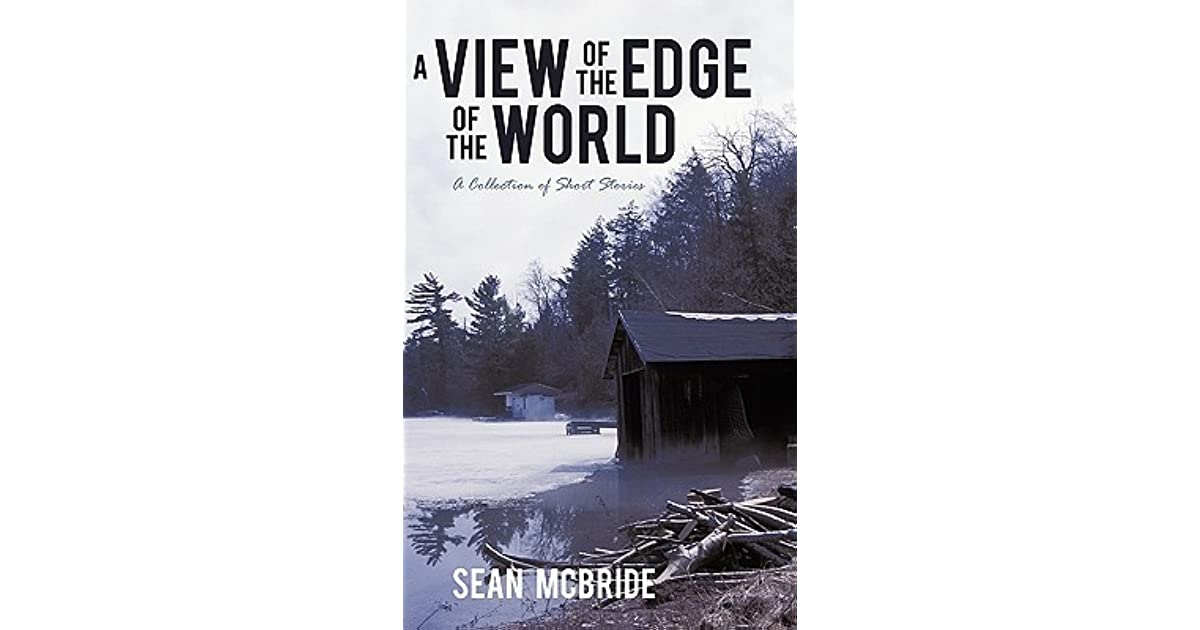
Now onto other projects! As always, my first book of short stories is also available on this website or wherever books are sold. It is a group of short stories heavily influenced by the original “Twilight Zone” television show with Rod Serling. The title is “A View of the Edge of the World.”
The Legacy:
I read an article back in 2001 in Rolling Stone magazine about an island off the coast of Nova Scotia. I started writing an adventure novel back then but never got around to finishing it; then a History Channel show called “The Curse of Oak Island” came out, and it reinvigorated my love for this strange, mysterious island. I finished writing the novel in 2021 and meant to edit it in 2022 and get it out, but other things got in the way. I hope to finish editing it this year, get an agent and a publisher, and get it out early next year.
This book is based on Oak Island, but it is very much an “Indiana Jones” type story with heavy historical references which push the story forward as the characters look to uncover the mystery. It reads as half Dan Brown and half-pulp adventure novel. I absolutely love this book and can’t wait for people to read this one (and probably it’s sequels, wink, wink)!
The Revolution Cycle:
This is an expansive Fantasy/Adventure story. It follows a revolution from start to finish and will do so over a proposed 10 books. I’ve written the outline for the first novel and will be diving into it this year. I don t think it will be finished, but I hope to get enough done this year so it can be released by the end of next year.
Book 1. The Monster in the Woods
This first book of the cycle will focus on a group of young protagonists in a school in a secluded Duchy. They question the propaganda fed to them, and they drift apart until one of them finds a mysterious clue left by their strange uncle after he goes off to fight a monster roaming the woods outside the Duchy walls.
This book will have heavy Goonies vibes framed as a fantasy novel Joe Abercrombie would be proud to write. Each successive novel will expand the world and bring the characters further into the fight until they are inextricably involved with the revolution.
Future Works:
Elsie Jones and The Westward Adventurers: The fourth book in the Elsie Jones series. Elsie enters the world of James Fenimore Cooper’s “The Pathfinder.”
Elsie Jones and the Transylvania Twist: The fifth book in the Elsie Jones series. Elsie enters the world of Bram Stoker’s “Dracula”
Elsie Jones and the London Fog: The sixth book in the Elsie Jones series. Elsie enters the world of Sir Arthur Conan Doyle’s “The Casebook of Sherlock Holmes.”
Elsie Jones and the Dark Samurai: The seventh book in the Elsie Jones series. Elsie enters the world of Basho’s Haiku.
Elsie Jones and The Last Knight: The eighth book in the Elsie Jones series. Elsie enters the world of Cervantes “Don Quixote.”
Elsie Jones and the Treasure of Tut: The ninth book in the Elsie Jones series. Elsie enters the world of Virgil’s “The Aeneid”
I have written through the twelfth book in the series, but I’m keeping the remaining books under wraps!
I will continue publishing my weekly blog, which currently covers the histories of J.R.R. Tolkien. Each Thursday, I break down the verbiage and story to make the difficult language more accessible for the everyday reader. Check out my previous Blogs on The Silmarillion and all of H.P. Lovecraft’s work here!
You can also find other essays, short stories, and poetry here on my website for free, so I encourage you to read them! There is a good chance I will compile much of them for a future book of short stories, so get them while they are free!
The too far in the future projects:
The remaining books in the Revolution Cycle
A Sequel to The Legacy
Elsinore: A Graphic Novel about a town on the border of Hell
A future Elsie Jones spin-off
Thank you to everyone who follows and for your support for all who have purchased my books! Please continue to do so, and I hope the content I put out brings you joy, wonder, and happiness! Here is to a wonderful and prosperous New Year (with quite a bit of content coming your way)!
Born To Run

“Gabe! Oh God please get over here! I don’t know what to do. It’s horrible!”
It was Henry… I hadn’t heard from Henry for quite some time. We were flat mates back in college; the days of too much drinking and too many drugs. We’d grown apart over time, not because of any interpersonal issues, just time and space. He’d become a Chemist and I became a police detective. My policing skills made it all the more disturbing that he was calling me out of the blue.
“Henry, slow down. What’s going on?” I asked.
“My lab. It’s been destroyed and… my assistants… Gabe. They’re dead! Someone killed them!” Henry wailed.
“Call the police Henry, meaning right now. As soon as I get off the phone. I’ll be there as soon as I can.”
I grabbed my coat and exited my brownstone. Snow was coming down in droves which always seemed to make it harder to get a cab. When I finally flagged one down, I got in and the world was drowned out by Bruce Springsteen’s new hit blaring over the radio.
The cab made its way across town as slow as molasses, belying the song blaring on the radio. We apparently were not “Born to Run.”
My hackles rose as soon as we pulled up to Henry’s lab. The windows were smashed and the snow beneath them was spattered with red spots. I hoped it wasn’t blood, but as a detective I knew better.
I tossed the cabbie a tenner and knocked on the door to the lab. I checked to make sure my pistol was in its holster under my coat and took out my Moleskine.
The door flew open and Henry stood there looking frantic. His eyes were sunken and his skin was jaundiced. He looked like he hadn’t slept for days. Springsteen echoed behind him in his lab.
“Gabe! Thank God! Get in here! I don’t know what to do!”
“Slow it down Henry, tell me what’s going on,” I said entering the lab. It was a disaster. Broken glass everywhere. The ground was littered with viscous liquid, but what was worse was the bodies. Two people were dead on the ground. I didn’t even need to inspect them, their terrible wounds told me all I needed to know.
A woman had her head turned around backwards, her spine creating strange bluish-purple bulges in her neck where the bone was trying to break free.
A man was lying in a pool of blood with what looked to be a sword sticking out of his back. That must have been what created the blood spatter on the snow outside. I walked to the end of the room to switch off the radio. I couldn’t focus with that music blaring.
“They told me that a man named Edward came here looking for me. Looking for a new formula I’d created,” Henry said.
“Did they see him?” I started, then looked back at my disheveled friend, “wait, did you say they told you?”
“Yes! They told me he came in here and tore the place apart looking for more of my formula and when he couldn’t find it…” Henry trailed off.
“Henry,” I said. “How could they have told you if they were dead when you got there?”
His face looked surprised for a moment, then it twisted somehow. His skin rippled, his hair grew, his eye color changed. He was not the Henry I once knew.
“Oh you are so smart, Gabe!” His voice was not Henry’s. This voice was lower, rockier.
I reached for my pistol but he was faster than light. He was upon me before I could draw the revolver and his sharp teeth dug into my shoulder.
I screamed in agony and threw him away from me.
I managed a glance at him as I fumbled for my Smith and Wesson. What I saw was not human. His nails had grown long and sharp and his joints snapped and twisted into something more bestial. His eyes were bloodshot, matching my blood which covered his mouth and nose.
“Henry,” I cried, pulling the gun and pointing it. “What was in that formula?”
He laughed and sprung. I do not believe in the supernatural, but I swear he covered the fifteen feet between us with a single bound. His nails dug at my shoulders and his teeth snapped at my face. The pistol went off and he squealed like a rat.
I fell backward when he let go and fired another bullet off after him. I swear it hit him. I saw the blood spray off him but he didn’t stop moving.
The lights suddenly went out, plunging the lab into darkness. The only light in the room was the dim illumination of the lamp from the street.
“Henry!” I cried. “Henry, I don’t know what you’ve done, but we can reverse this! Did the formula make you become Edward?”
Laugher echoed through the laboratory. Springsteen came back on the radio.
“Henry! You called for help! I know you called for me to help you get rid of this Edward. Come out and let me help you!” I cried.
He sprang at me from my flank and I felt nails rake across my back.
I screamed and fired my pistol again.
At night, we ride through mansions of glory, in suicide machines…
“Is there an antidote, Henry?” I cried into the darkened room.
…this town rips the bones from your back…
I heard the laughter of the insane in the room.
“You really don’t understand, Gabe,” he laughed.
I could see his eyes reflecting through the darkness.
…it’s a death trap, it’s a suicide rap…
“The serum wasn’t to help me control the urges.”
…we gotta get out of here…
I lost him. I couldn’t see where he was. I took a deep breath and braced my pistol in both hands.
“You see Gabe,” He began before singing along with The Boss “I gotta find out how it feels. Don’t you want to know how it feels?”
He was suddenly in front of me and I felt his nails claw into me again. I shot my gun, but it was errant. He was gone again before I could respond.
Laughter echoed in the darkness.
…Tramps like us, baby we were born to run…
“Once I took the serum there was no more Henry. There was only Edward,” his laughter echoed inside my head. I was suddenly dizzy. I felt consciousness retreating from me. I looked down to where he scratched me. There was no scratch. I saw a syringe sticking out of me.
…I want to die with you…
“I didn’t call you here to stop Edward,” His gravelly voice said.
…on the streets tonight…
“I called you here to have a partner.”
I felt intense anger. I leaned into the hate. It felt good.
…Tramps like us, baby we were born to run…
The Power of Imagination
In a time of such division. A time where people across the world are scared of terrorists. A time where people don’t trust and fear their leaders. A time when we seem to be moving apart from one another instead of moving closer to each other. A time where fear is perceived to be more prevalent than love.
There is hope.
We as a people go through waves and there are always troughs as much as there are peaks. You can see it in the way the cultural perspective has shifted.
The popular things now are reality TV, minimalistic music based around repetitive beats and repetitive lyrics, poorly written books meant to shock or entice.
We have weaved ourselves into a trough of apathy and complacency, where we let others tell us what to do or think and our entertainment is not there to entertain, but to anesthetize.
But out of the malaise comes art of quality.
Small at first. A book here. A movie there. A song. A painting. A TV show.
Something that comes along that makes us think again. That makes us wonder. That makes us hope.
They come from the strangest places. Disney’s Wall-E. Bad Robot’s Star Trek. Netflix’s Stranger Things.
You might be thinking what does this have to do with where the country is? What does this have do with us as a people?
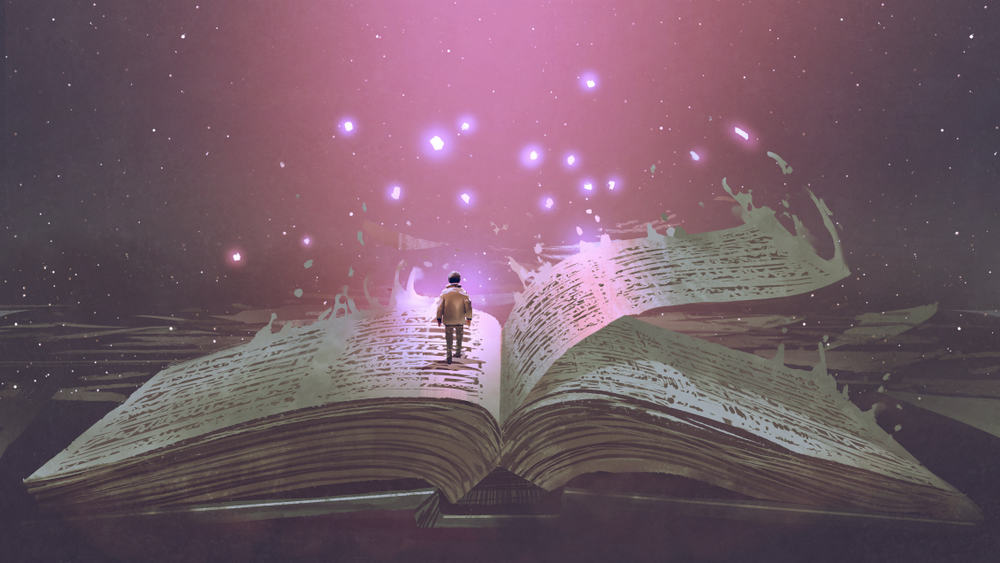
It’s about the power of Imagination (with a big I). We as a species have separate processing systems in our brain. One processes logic and the other processes creativity. The creative part of your brain controls your emotions. It follows that when you feel fear or hopelessness you have an absence of creativity.
The more imagination we develop, the more we will be able to process, the less we’ll fear; the more we will hope and dream.
Art leads the world. Star Trek had one of the first interracial couples (and many of the first inter species couples). Star Wars ended the gritty anti hero hate that was brewed during the Cold War.
We went through such a boon in the 90’s that we couldn’t help but slip back. The Cold War came to and end, Apartheid ended, the global economy was growing more than ever in history.
So we relaxed. We let our imaginations grow cobwebs. But the more you see unique new shows. The more unique new art you see. The more intricate the lyrics of the music you listen too. The better the writing of the books you read…
Know that the more and more good or great art you see and intake, the more and more the culture is shifting. Our hope comes from our imagination, so lets be more childlike. Lets go on adventures. Lets fight more dragons. Lets have more tea parties. Lets Imagine.
Blind Read Through: H.P. Lovecraft; The Unnamable
This story gives great perspective on Lovecraft himself, and we get a sneak peek at the illustrious Randolph Carter.
What was so great about this story was getting to see what Lovecraft really felt about the construction of his stories. Carter, who is apparently a writer as well, has a long conversation with a friend of his about how to tell a story. His friend persists that there is no scientific was that anything in the scientific world could be unnamable. Any kind of creature would have to be contained within some sub-classification or genus, but then suddenly, at the end of the story, a creature of some sort comes out of an old house they have been sitting next to and attacks them. Manton, the friend has a mental break down because what he saw he cannot classify.
What gives the story a bit more depth is that it seems as though the subtext was that Manton stayed at the place where the story unfolds and saw something horrible when he was younger (which is probably the same creature he sees at the end of the story). The point is that he has spent his life trying to categorize to deny the horrible, un-categorizable thing he saw as a child.
Carter also seems to serve as a duplicate for Lovecraft himself. There is a theme that streams through Carter’s descriptions, which stream through all of the Lovecraft that I’ve read thus far.
This was a really great story on the essence of horror tales, and about the writing process in general.
What do you think?
Join me next Tuesday for a blind read of “The Outsider”
The Drifter

Today in honor of finishing one of my books which is based upon poetry, I’m submitting some poetry of my own. I wrote this one a few years ago, but I never published it here. Enjoy!
Driftwood finds it’s way to sand, how is it that it’s so hard for me to find land?
and this state of constant wonder, leads me divided; torn asunder
in this horrid devil’s playground in my head…
My fingers tell the story, of the broken trumped up glory
when my mind refused to listen, drowned out by broken pistons
the silence beating louder than my heart…
The darkened frozen night glows, and the turgid sky just bellows
of my time examining seams, on the boulevard of broken dreams
as words flow down as kindling for my hearth…
But those wounds of empty pages, who speak louder than the ages
as the clock runs down to zero, I’m not a battered, broken hero,
just a man who wont give up until he wins…


 Sean McBride
You must be logged in to post a comment.