Blind Read Through: J.R.R. Tolkien; The Book of Lost Tales, Part 1, Religion of Valinor
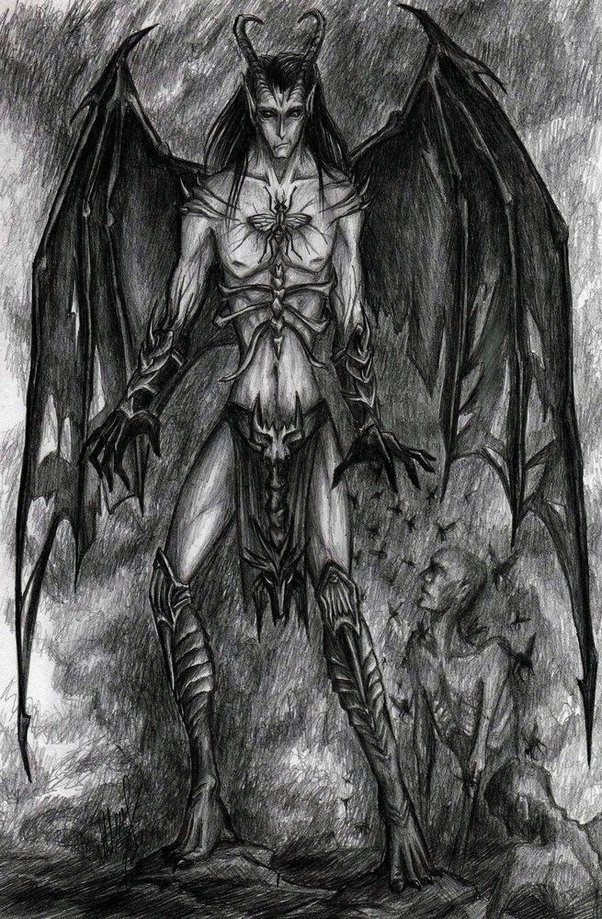
“So fair were these abodes and so great the brilliance of the trees of Valinor that Vefántur and Fui his wife of tears might not endure to stay there long, but fared away for to the northward of those regions, where beneath the roots of the most cold and northerly of the Mountains of Valinor, that rise here again almost to their height nigh Arvalin, they begged Aulë to delve them a hall. Wherefore, that all the Gods might be housed to thier liking, he did so, and they and all their shadowy folk aided him. Very vast were those caravans that they made stretching even down under the Shadowy Seas, and they are full of gloom and filled with echoes, and all that deep abode is known to Gods and Elves as Mandos.”
Welcome back to another Blind Read! This week we conclude the chapter “The Coming of the Valar and the Building of Valinor” with a philosophical conclusion.
I’ve been trying not to spend too much time reviewing the events of the chapter as I go through because that would make these essays neverending and redundant, so the point is to show a much deeper and more analytic approach to Tolkien’s work.
That being said, what I love about this chapter, more so than anything in The Valaquenta (The Second Chapter of the Silmarillion covering these events) is that Tolkien was leaning into his religion. Because these stories are supposed to be a founding mythology for our world, Tolkien created a semi-Christian theology in these early chapters.

The first clue was that he calls the Valar gods (small g) throughout this book; however, he conspicuously dropped that moniker in the Silmarillion, choosing to have them be “beings of great power.”
The adjustment of the Valar might seem like a slight change, but it shows how Tolkien wanted to shape the world’s religions, just like he shaped the landscape and the language.
The Valar take a step down from being gods and become something more akin to Angels. They know what is happening in Middle-earth, and in fact, they foretell it through their music, but rarely do they interject with their power, preferring the people of Middle-earth to deal with their troubles on their own. Ulmo was the only Valar who interposed himself, and that’s because he was the Vala of water, so he was always in some way amongst the residents of that land.
There is also Melkor, who plays a much more sinister role in The Book of Lost Tales. Melkor in The Silmarillion (the later version of history) begins as an almost sympathetic character. He is one of the Valar who feels slighted by what he was given, as opposed to what the other Vala were given. Then when Ilùvatar’s children come around (Eldar and Men), he becomes jealous, which leads to his downfall. Yes, there are times early in the book when Melkor does mischievous deeds, but that’s just what they are. It isn’t until much later, once he joins forces with Ungoliant, the giant spider queen (and mother of Shelob), kills the Trees of Valinor, and steals the Silmarils, that he genuinely becomes evil.
But why does he become evil? Because he stays in his fortress in Angband and stews on his perceived (or real) slights against him. Those years upon years of hate compounding on each other until he can see the truth.
Melkor is Lucifer, which is why Tolkien wanted to change the Valar completely from gods to Angels. He tried to adjust his Christian theological worldview and overlay it with Middle-earth. That is not to say the goal was to make Middle-earth Christian, far from it, but his impetus for writing this Legendarium was that (in his opinion) no fantastic fairy tales came from England. On the other hand, England was a Christian country at the time of his writing, so it made sense that if he wanted to transition Middle-earth into our earth at a later age, he would have some similarities with the prevailing theology of the land at the time.
The concept of religion is even more profound when you read the quote which starts this essay.
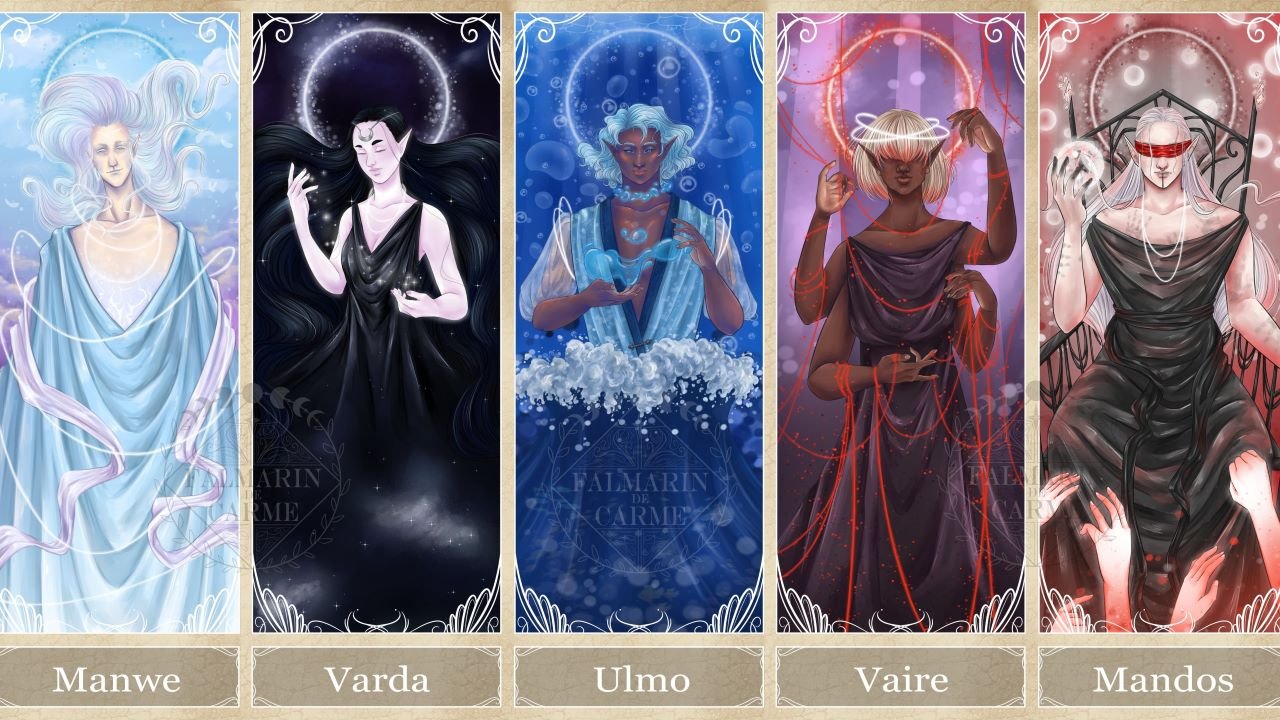
Tolkien is trying to establish an afterlife here, but how does he do that with eternal gods and Elves which don’t die? By creating the halls of Mandos where two Valar live, Vefántur and Fui. These two were the rulers of the afterlife.

Vefántur created an underground world for the Eldar, “Thither in after days fared Elves of all clans who were by illhap slain with weapons or did die of grief for those who were slain (pg 76).” This place was “lit only with a single vessel placed in the centre, wherein there lay some gleaming drops of the pale dew of Silpion (pg 76).”
It is immediately apparent to me that Tolkien chose to use the tree of Valinor, which represents the silver light, or the moon, indicating that this was the twilight for the Elves that had passed. This place was an afterlife for brave and true Elves who fought for the right causes. Because Elves can only die when slain, Vê became a literal heaven for these Elves.
But if we have a heaven, then we must have a Hell:
“Thither cam sons of Men to hear their doom, and thither are they brought by all the multitude of ills that Melko’s evil music set within the world. Slaughters and fires, hungers and mishaps, diseases and blows dealt in the dark, cruelty and bitter cold anguish and thier own folly bring them here; and Fui reads their hearts. Some then she keeps in Mandos beneath the mountains and some she drives forth beyon dthe hills and Melko seizes them and bears them to Angamandi, or the Hells of Iron, where they have evil days (pg 77).”
Fui created purgatory for those who had done wrong, but she could read their hearts and see if they were genuinely horrible or just made bad choices. Those who were truly bad, with malevolent spirits, were sent to spend eternity in Angband with Melkor. At this early stage, Angband had not become what it later was (Morgoth’s fortress). Here, in this early iteration, Melkor has become the devil again and keeps the souls of the maleficent banded in the Hells of Iron.
Join me next week as we review The Return of the King!
Blind Read Through: J.R.R. Tolkien; The Book of Lost Tales, Part 1, The Building of Valinor
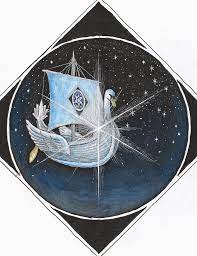
“There, said Aulë, would be a place well suited to great building and to a fashioning of realms of delight; wherefore the Valar and all their folk first gathered the most mighty rocks and stones from Arvalin and reared therewith huge mountains between it and that plain which now they name Valinor, or the land of the Gods (pg 70).”
Welcome back to another Blind Read! This week we continue our journey through the coming of the Valar as we delve into the Building of Valinor.
Last week we left off discovering who the Valar were, and this week we get into the details of the building of Valinor from the perspective of the Valar and Tolkien himself.
From our readings of The Valaquenta in The Silmarillion, we know that The Valar went to different parts of the world but wanted a place to call home. Valinor was that place. But even with the creation of Valinor, the Valar still had their various areas which they controlled. Ulmo ruled the deep seas, Manwë ruled the air and winds, etc. As these concepts formed in Tolkien’s mind (all early stages of developing the world), he envisioned this world as floating through the ethereal nature of space and time.

Remember that the original idea was that all of Middle-earth would eventually lead up to our historical timeline, acting as a sort of mythological foundation which he felt was lacking in the English tradition. He also based much of his work on Norse Mythological writings and practices, so what better format than having the entire Eä (read that as Earth) floating through the cosmic tapestry than on a Norse ship? Everything from Palisor to Valinor would live on this ship sailing through space.
Though he later dropped this idea for a globe world, it was evident that he loved the concept of the boat sailing through the cosmos and eventually re-used it. Enter Eärendil, arguably one of the essential characters in Middle-earth history. He and his wife Elwing stood up to Morgoth, and Eärendil sailed to Valinor with a Silmaril to protect it and make the Vala understand what they were up against. A mortal sailing to Valinor was prohibited, but instead of outright killing him (mainly because of his courage and selflessness in sailing there to save the world), they made him part of the cosmos, sailing his ship Vingilot “even to the starless voids.”
Tolkien never gave up on his ship idea, but he also never gave up on the concept of creating something from nothingness.
Moving back in time, as soon as the Vala created Valinor, it was still a dark place to be. “These were the days of Gloaming (Lomendánar), for light, there was, silver and golden, but it was not gathered together but flowed and quivered in uneven streams about the airs, or at times fell gently to earth in glittering rain and ran like water on the ground, and at that time Varda in her playing had set but a few stars within the sky (pg 69).”
The world was dark, and the only light came from the stars, yet the Vala wanted to build a complete world, so they came up with a rudimentary idea.
“Aulë suaded Melko to build two towers to the North and South, for he purposed to set upon them mighty lamps one upon each (pg 69).”
This passage differs from the Silmarillion because Melkor was a lousy actor. He created the world’s darkness and envied the other Valar and the Noldor, but more on that next week.
So they built these two lamps to light the world. “They sprang up through the lower air even to Ilwëand the stars, and Melko said they were of an imperishable substance of great strength that he devised; and he lied, for he knew that they were of ice (pg 69).”
Manwë and Varda gathered light from the stars and brought them down to fill these mighty lamps. Still, Melkor had tricked them because “it so happened that the blaze of those lights had melted the treacherous ice of the pillars of Melko, Ringil and Helkar, and great floods of water had poured from them into the Shadowy Seas (pgs 69-70).”
It is never outright stated why Melkor did this treacherous act. It is possible that Melkor was the Angel of Darkness, so he desired to keep the world in the Gloaming, but this is an early iteration of the mythos of Middle-earth, and Tolkien needed a Big Bad to push the story forward. So in the Book of Lost Tales, Melkor is just wrong from the start; there isn’t much in the text to brighten his character, much like Sauron.

But what Melkor didn’t realize is that Ilúvatar set the theme of the world’s construction, so when the globes holding the light of the stars fell to the Earth, they buried themselves. “Then came Palúrien, even Kémi the Earth-lady, wife of Aulë, mother of the lord of forests, and she wove spells about those two places, deep enchantments of life and growth and putting forth of leaf, blossoming and yeilding of fruit – but she mingled no word of fading in her song (pg 71).”
Trees began to grow from those lights buried in the Earth, one they named Laurelin and the other Silpion. These trees ended the Gloaming and produced light from their leaves and blossoms until the coming of the Sun and the Moon. Later Tolkien renamed the second tree, changing it from Silpion to Telperion, but this is the earlier iteration of the creation of the Trees of Valinor.
I prefer this iteration to the published version with Yavanna signing the Trees into existence because it ties much more to the legendarium. First, the trees came from the stars and set into the ship that sails the cosmos. Then later, once the first age was coming to a close, we have Eärendil voyaging through the cosmos for all eternity on his ship. There is something poetic about closing the loop to me, which is also what I appreciate about being able to read the earlier stages of Tolkien’s work.
Join me next week as we complete “The Coming of the Valar and the Building of Valinor!”
Blind Read Through: J.R.R. Tolkien; The Book of Lost Tales, Part 1, The Coming of the Valar

“In this dimness the Gods stalked North and South and could see little; indeed in the deepest of these regions they found great cold and solitude and the rule of Melko already fortified in strength; but Melko and his servants were delving in the North, fashioning the grim halls of Utumna, for he had no thought to dwell amongst the others, howso he might feign peace and friendship for the time (pg 69).”
Welcome back to another Blind Read! This week we move forward in the Book of Lost Tales and start on the third chapter, “The Coming of the Valar and the Building of Valinor.”
This chapter has three distinct cut points, so we’ll divide that up into three separate essays. The first will be about the entrance of the Valar into the tale and the theory behind Valinor, the second will be about the lamps of Valinor and the Vala dwellings, and the final will be about some new material we haven’t seen before.

We pick back up with Eriol, the human traveler, speaking with Rúmil, the storyteller of Tol Eressëa. Eriol asks Rúmil, “I would still hear many things of the earliest deeds within its borders (Valinor); of the labours of the Valar I would know, and the great beings of most ancient days (pg 64).”
Rúmil regales Eriol with the names, purpose, and works of the Valar throughout this chapter, and it’s not an easy read. However, the first few chapters of the Silmarillion and The Book of Lost Tales are about the beginning of time, and they frame everything that comes after.
This chapter is so tricky because Tolkien goes for pages upon pages and describes the various Valar. Still, once we begin to get into the stories of the Eldar, which comprise the majority of The Silmarillion, the Valar don’t play much of a part.
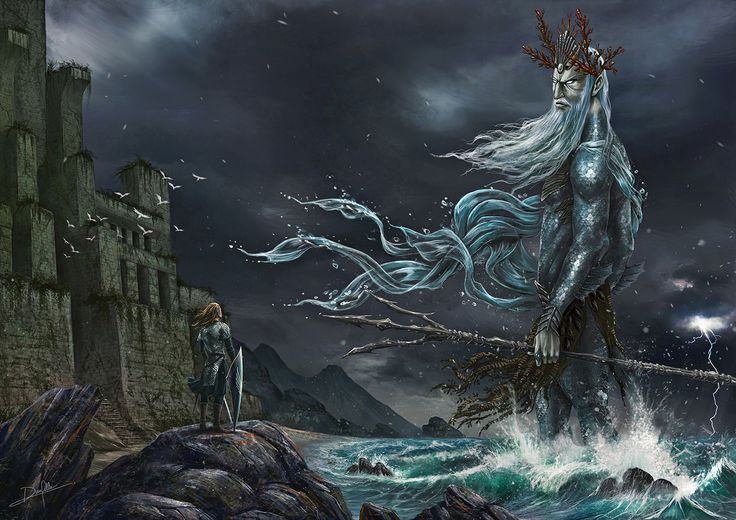
In the Book of Lost Tales, Tolkien spends more time describing the various Vala and their roles. Some of their names change slightly between when the writing of this book (remember that The Book of Lost Tales is an amalgamation of editions edited by Christopher. In the appendices for this chapter, Christopher even mentions that he collected and put together the best story he could from notebooks and even scraps of paper his father used for notes.), and the publication of The Silmarillion.
In later works, Tolkien had differing power levels for the Valar, almost like rankings. The Aratar (Exalted Ones) were the most powerful of the group in this iteration, who comprised most of the Valar, whom Tolkien calls gods during the Book of Lost Tales, but we’ll discuss this more in a moment. Many Valar had children considered lesser Vala, and Tolkien eventually formed the title Fëanturi for them. There was also a third ranking of these gods in Valinor, whom Tolkien later got rid of entirely, which were very similar in every aspect of the Eldar, except in conception:
“About them fared a great host who are sprites of trees and woods, of dale and forest and mountain-side, or those that sing amid the grass at morning and chant among the standing corn at eve. These are the Nermir and the Tavari, Nandini and Orossi, brownies, fays, pixies, leprawns, and what else are they not called, for thier number is very great: yet must they not be confused with the Eldar, for they were born before the world and are older than its oldest, and are not of it, but laugh at it much, for they not somewhat to do with its making, so that it is for the most part a play for them (pg 66).”
Tolkien later eliminated the fae and streamlined the Valar by re-facing lesser Vala (Lórien and Mandos) as the Fëanturi, Sindarin for “Masters of Spirits,” no longer children of the Aratar. He decided that the Valar would no longer be gods because Ilúvatar was the one God, and the Valar were his servants, who had free will to use their music to create and adjust life on Eä. The conception took the Valar from gods to angels, and the angels of the lesser degree were the Maiar, better known as the servants of the Valar. The best-known Maiar are Sauron, a servant of Melkor (also known as Morgoth), and the Istari, the wizards. You may know them as Gandalf, Radagast, and Saruman.
Tolkien’s primary objective was to create a fantasy world that would eventually become our world in later epochs. He studied mythology and fairy tales his entire life and felt as though England didn’t have appropriate myths. The most famous tale at the time as a mythology for England was The Faerie Queen, and obviously, this is where Tolkien started.

I believe that over time he wanted to distance himself from Edmund Spencer (also, from everything I’ve read, I don’t get the feeling he liked The Faerie Queen that much), so getting rid of the fae was always going to happen, but he didn’t get rid of them entirely. If we dig down into the quote above and remove specific verbiage: “for they were born before the world and are older than its oldest, and are not of it, but laugh at it much… (pg 66),” it brings to mind a specific character.
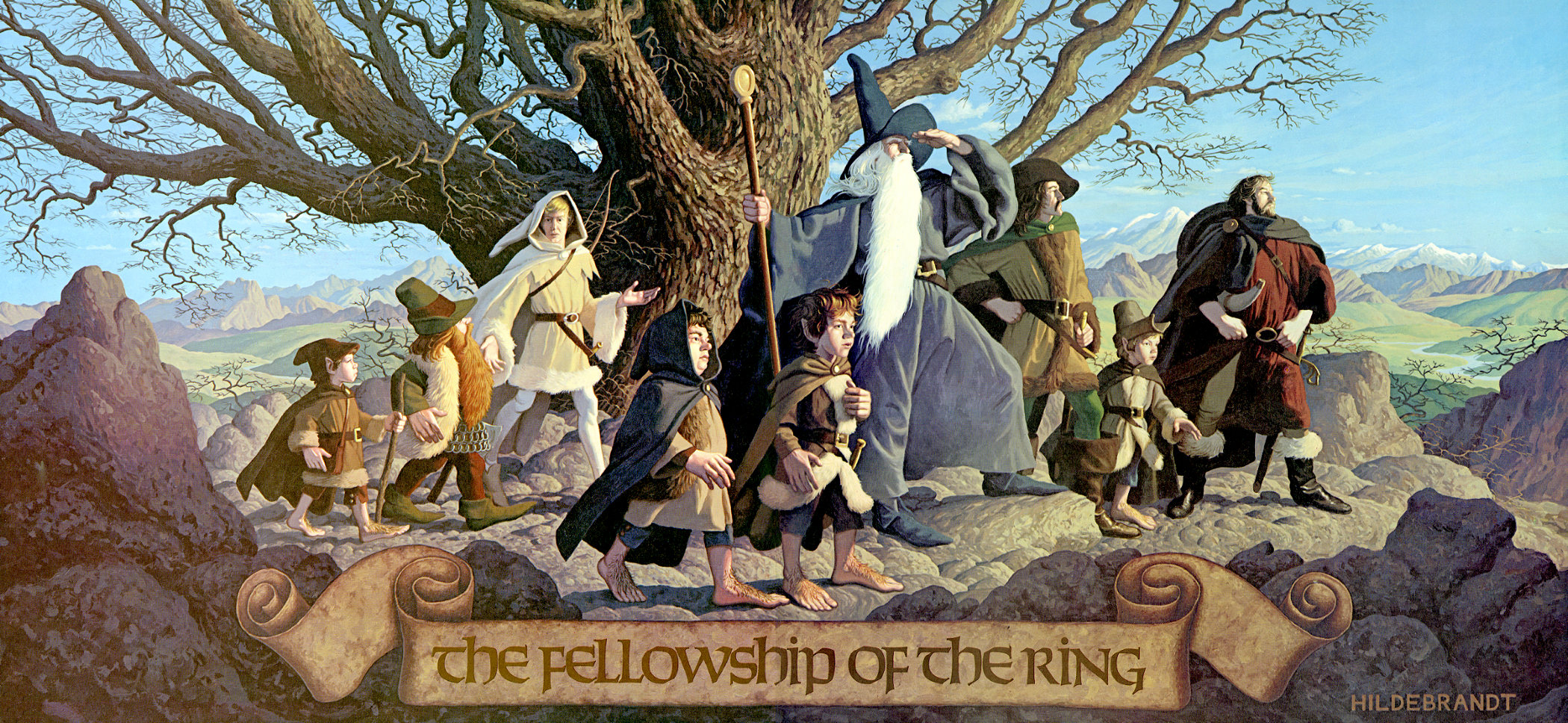
In The Fellowship of the Ring, we are introduced to Tom Bombadil, “the oldest being of Middle-earth, ” constantly laughing and merrymaking. The Council of Elrond even considers giving him the One Ring for safekeeping but decides against it because he is so old that the Ring’s power would be boring to him. Tolkien filtered down the fae creatures in The Book of Lost Tales to Tom Bombadil in later works. He wanted to keep the concept of a fae creature, but he also needed to distance himself from what came before so that he might have a complete mythology.
So now we have the fourteen Valar (eight in the Silmarillion), but we still don’t know anything about their home. So come back next week for the second section of “The Coming of the Valar and the Building of Valinor!”
Blind Read Through: J.R.R. Tolkien; The Two Towers, Re-read

“‘All right!’ he said, ‘Say no more! You have taken no harm, There is no lie in your eyes, as I had feared. But he did not speak long with you. A fool, but an honest fool, you remain, Peregrin Took. Wiser ones might have done worse in such a pass. But mark this! You have been saved, and all your friends too, mainly by good fortune, as it is called. You cannot count on it a second time. If he had questioned you, then and there, almost certainly you would have told all that you know, to the ruin of us all. But he was too eager. But come! I forgive you. Be comforted! Things have not turned out as evilly as they might.'”
Welcome back to another Blind Read! This week we’re back with a bit of a lie, this isn’t quite a Blind Read, but it’s been so long since I’ve read these books it might as well have been!
Before we discuss the books, I want to start by saying how amazed I am at how close the Movies were to the books. After reading them more critically, it is obvious how much the producers revered the core material. The ability to create a new medium that was inclusive of all who did not read the books but to be honest enough to the core material that hardcore fans love is a masterstroke in adaptation.
The only significant difference the movies had was in Fellowship because they took out the entire Tom Bombadil sequence (rightly so). Still, even then, I’ve seen deleted scenes where the hobbits get swallowed up by Old Willow. We’ll cover the differences in The Two Towers below, but we also dive more into the world’s lore.

The first thing I’d like to mention is Treebeard and the Ents. The movie played up his slowness and mistrust, and where many lines are taken directly from the text, Treebeard was not very slow to action speaking of page count. Yes, he does suspect Merry and Pippin of being Orcs at first, but he quickly decides they aren’t. He then calls the council of Ents, and within a few pages, they choose to mount an attack on Orthanc. Again, the movie drew it out for drama, but the book had these events happening quickly.
However, the biggest oddity I noticed in the book was a seeming discrepancy between The Silmarillion and The Two Towers. When speaking of his race, Treebeard (also known as Fangorn) says the Elves created Ents. However, later in the book Gandalf (also known as Mithrandir, but more on that later) tells the remaining Fellowship that Fangorn is the oldest living creature on Middle-earth (remember that Elves, Vala, Maiar, and even Dwarves were created on Valinor). Tom Bombadil verifies this statement in The Fellowship of the Ring. I stopped and thought about this before I could move on because I know that Tolkien re-wrote much of the history and was still in his re-writes while writing The Lord of the Rings, but was there a discrepancy this bold?
I decided to go back and do some digging to figure it out.
Returning to The Silmarillion, I verified that Yavanna (the Vala who was the “lover of all things that grew in the earth”) created Ents as part of her music theme. Part of her reason for doing so was because of other creations, such as the Dwarves (who were created but kept at rest for many years). Yavanna feared the trees themselves would not have a means of protecting themselves against the push of other creatures’ industrial nature (something that echoes Tolkien himself), so she made the Ents to be shepherds and protectors of the trees and forests. Tolkien even had an early iteration where he called them Tree Ents because the word Ent was derived from the Old English word Eoten, meaning Giant, so they were Tree Giants meant to protect. Tolkien seeds this in The Fellowship of the Ring when Samwise relays a story from his cousin Hal, who saw a “treelike giant” north of the shire. This anecdote was Tolkien’s way of seeding their entrance into the books.
So we know that Yavanna created the Ents – why then does Treebeard say that they were a creation of the Elves? Looking back at the text, one can see where I went wrong. The Ents and Entwives were creatures of the earth, and where they were sentient, they couldn’t communicate with other animals. They were meant solely to be of and for nature, so Treebeard says that the Elves taught them to speak Elvish and opened their minds to interact with other sentient creatures. The Elves brought the Ents to life; they didn’t create them.
I could go on and on about Ents and make it their own essay, but since this is about a re-read of The Two Towers, I want to dig into a few other short items.
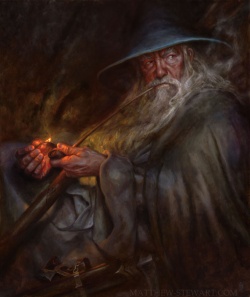
The first is Gandalf. In The Fellowship of the Ring, he is of the gray order of the Istari (Maiar wizards), but because of his fall against the Balrog in that first book, he came back as an Istari of the White order, which is one of the most powerful, second only to the Black Order. This book teaches that the Istari are immortal like their masters, the Valar. Gandalf returned as a white-order Istari because of the power vacuum of Saruman, who abandoned his order for power. Saurman did not specifically side with Sauron (which we learn in The Silmarillion). Still, the Palantir corrupted him enough that he thought he could become the most powerful being in Middle-earth.
It isn’t until Gandalf returns that the party nearly ceases calling him by his common “gray” name, Gandalf. Instead, once he takes up the white mantle, most characters call him Mithrandir for the remainder of the series.
Lastly, I would be remiss if I didn’t bring up what confused me the most when I read through the books before reading The Silmarillion—the Dúnedain and Aragorn’s lineage.
Throughout this book, there are constant references to Elendil and Eärendil, but I didn’t know who those people were other than they were Aragorn’s ancestors. Having that foreknowledge made the events and exposition of the story that much more lush and meaningful. It adds weight to Aragorn’s decisions and makes him a more dynamic character. Upon the first read, much of his character felt very one note and much more severe than was necessary. Still, after getting the history behind his lineage, one can genuinely feel the dynamics at play and the choices he must make as he forges his way to coming back to be King of the world of Men.
Come back next week as we continue “The Music of the Ainur” in the Book of Lost Tales!
Blind Read Through: J.R.R. Tolkien; The Book of Lost Tales, Part 1, The Music of the Ainur part 2
“Through him has pain and misery been made in the clash of overwhelming musics; and with confusion of sound and have cruelty, and ravening, and darkness, loathly mire and all putrescence of thought or thing, foul mists and violent flame, cold without mercy, been born, and death without hope. Yet is this through him and not by him; and he shall see, and ye all likewise, and even shall those beings, who must now dwell among his evil and endure through Melko misery and sorry, terror and wickedness, declare in the end that it redoundeth only to my great glory, and doth but make the theme more worth the hearing, Life more worth the living, and the World so much the more wonderful and marvellous, that of all the deeds of Ilùvatar it shall be called his mightiest and his loveliest (pg 55).”
Welcome back to another Blind Read! This week we delve into the philosophy of Tolkien as we review “The Music of the Ainur,” the second chapter of The Book of Lost Tales.
Tolkien himself was a deeply religious and highly intellectual man. He surrounded himself with others of all opinions (see his writing group The Inklings, which included C.S. Lewis), and at the forefront of his mind was an anthropologic focus on the world. This curiosity of how the world works is what created the fantasy world we all respect so much.
This chapter, in particular, is about how Ilùvatar (God in this iteration) created the world through his Angels, which he named Valar.
Rúmil tells the story to Eriol and begins his tale by saying, “Before all things he sang into being the Ainur first, the greatest is thier power and glory of all his creatures within the world and without (pg 52).”
This passage marks Ilúvatar as a great creator. There is nothing closer to authentic Christianity than this first chapter, as it shows Ilúvatar’s great power and ability of forethought and humility.

Rúmil goes on, “Upon a time Ilúvatar propounded a mighty design of his heart to the Ainur, unfolding a history whose vastness and majesty had never been equalled by aught that he had related before, and the glory of it’s beginning and the splendour of its end amazed the Ainur, so that they bowed before Ilúvatar and were speechless (pg 53).”
Thus enters the theme of Predestination. Ilúvatar creates a concept that has a beginning and an end. But for such a grand creator, that is not satisfactory because there is no surprise in the world, no joy in watching the events of his grand scheme unfold. To counter this problem, Ilúvatar tells his Angels (they are interchangeably called Ainur and Valar), “It is my desire now that ye make a great and glorious music and a signing of this theme; and (seeing that I have taught you much and set brightly the Secret Fire within you) that ye exercise your minds and powers in adorning the theme to your own thoughts and devising (pg 53).”
Ilúvatar allows the Vala to create the middle of his great tale with their own “secret fire.” We learned in The Silmarillion (and to a lesser extent here) that the Vala all have their own minds, and they all have their passions. This is what the secret fire is, a passion for seeing something created, which is mirrored in Tolkien himself as he created the world of Middle-earth. That is not to say that Tolkien thought himself a god, or even to the level of the Valar, but he saw it as his duty to show that there was great beauty in the world. He wanted to elicit this emotion from people because of his experiences in the Great War. Let me explain:
“Yet sat Ilúvatar and hearkened till the music reached a depth of gloom and ugliness unimaginable; then did he smile sadly and raised his left hand, and immediatly, thoguh none clearly knew how, a new theme began among the clash, like and yet unlike the first, and it gathered power and sweetness (pg 54).”
This passage shows both the power and the weakness of the Valar, which in turn displays just how human they were. Which makes sense because we, as people, are the antecedents of the Angels. Humans are called Ilúvatar’s second children (after the Elves). The Valar wanted to create something with the same power as Ilúvatar, but they became despondent when things turned dark, and their grand theme became black with peril.
Indeed it was Melkor, later called the Dark Lord and master of Sauron, who saw this darkness and believed it was the only way to the end of the story.

“Mighty are the Ainur, and glorious, and among them is Melko the most powerful in knowledge (pg 54).”
Tolkien believed there was a balance to the world, making Predestination possible. Each Valar had their power or strength; Ulmo had control over water, Manwë had power over the air (The great eagles which bore Gandalf away from Orthanc and Frodo and Sam away from Mount Doom were agents of Manwë), and Aulë had control of the earth. But it was Melkor who had the greatest knowledge, and what Tolkien learned in World War I was that one could have a perception of darkness or a general concept of pain, but until you have the experience, you never really have knowledge of it.
Knowledge equals pain, which is a prime theme in Tolkien’s work. That may seem particularly depressing, but you cannot appreciate the most glorious mornings until you see the darkest of nights (this echoes in Sam’s speech at the end of The Two Towers. “They were holding on to something…”). Ilúvatar created Melkor to have the knowledge and sing about that knowledge which fostered despair in the world, but he could do nothing to change it. He became the Dark Lord because once the Children of Ilúvatar were created, they received gifts to experience the world’s joys and perils, whereas Melkor could only see troubles and darkness.
The Eldar were given long life and foresight that they would live to see the end of all time, which made them happier than humans. But to humans, Ilúvatar gave the gift of death.
Doesn’t it seem like much of a gift? Well, it harkens back to the question of knowledge. If you knew your time was short, you would live a more extraordinary life, a life filled with great pain and great joy, rather than being stuck in the middle and being “emotionless” as the Elves were.
This ability to have great highs and lows was specifically why Ilúvatar sang Melkor (also known as Morgoth) into existence. He knew what the Valar would do, but also knew it was necessary for a full experience of the world.
Come back next week for a recap and reread of “The Two Towers!”
Blind Read Through: J.R.R. Tolkien; The Book of Lost Tales, Part 1, Chapter 2: The Music of the Ainur
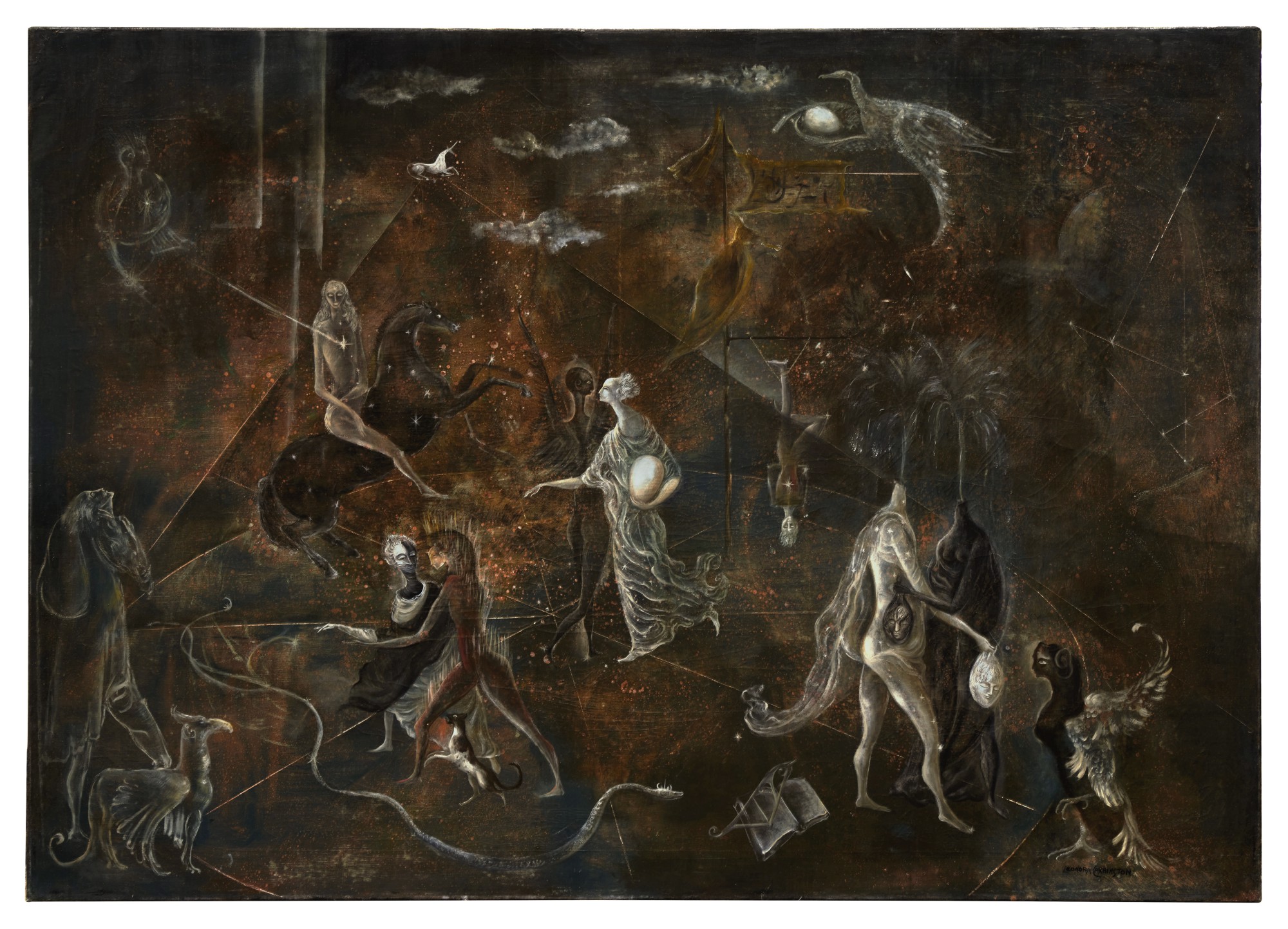
“Then slept Eriol, and through his dreams there came a music thinner and more pure than any he heard before, and it was full of longing. Indeed it was as if pipes of silver or flutes of shape most slender-delicate uttered crystal notes and threadlike harmonies beneath the upon upon the lawns; and Eriol longed in his sleep for he knew not what (pg 46).”
Welcome back to another Blind Read! This week we head back to The Book of Lost Tales and tackle Chapter Two’s opening, “The Music of the Ainur.” Christopher added something new to this chapter from the notes of this father and the result sheds light on the meaning of the chapter. When he began writing Eriol’s story, Tolkien created a transitional piece between the beginning of the story of the Ainur and The Cottage of Lost Play. We’ll be covering that transitional piece this week because there is so much in it that warrants discussion before we move on!
Before we get too far into it, I want to delve a little deeper into the difference between Gnomes and Elves, which has been a strange adjustment because I wasn’t sure if Tolkien was calling all Elves (otherwise known as Eldar) Gnomes or if it was only Noldor (also known as Noldori) Elves. Part of the confusion comes in because of all the different names involved.
Tolkien wanted the world to be lush and complete, but because of who he was and his background, Worldbuilding to Tolkien didn’t mean delving into culture, landscape, or image. Instead, to Tolkien, what made people unique was how they communicated, meaning language. Thus, the language and the beings who utilized this language changed through his world’s creation.
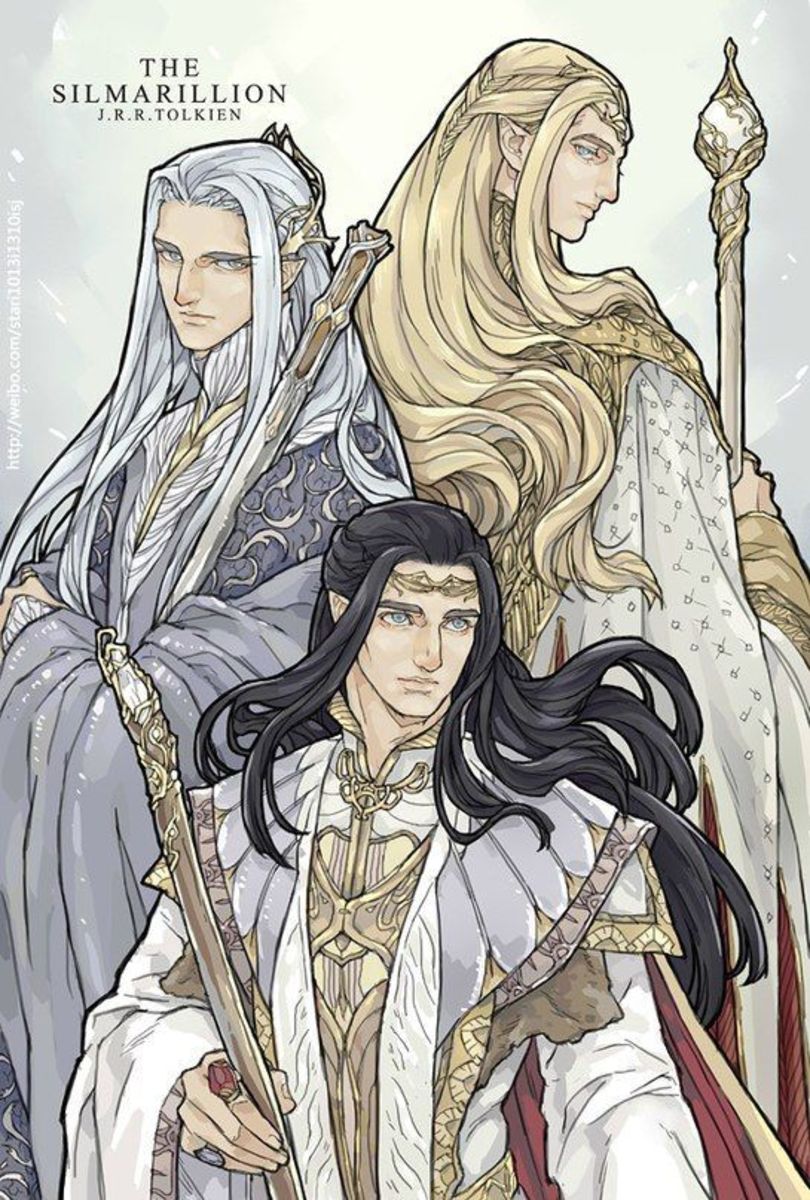
For example, the Teleri later become the Vanyar, The Noldoli (Gnomes) later become the Noldor, and the Solosimpi later become the Teleri. Why did he make all of these changes? Because of language.
The perfect example of this is what we began with: Gnomes. The word Gnomes brings to mind that small bearded garden variety with red pointy hats. I’m sure at some point in the writing of this epic; an editor approached Tolkien who mentioned that that word did not elicit that “They were a race high and beautiful… They were tall, fair of skin and grey-eyed, though their locks were dark, save in the golden house of Finrod (pg 44).” (just to be clear we are explicitly talking about the Gnomes or Noldor Elves. Christopher goes out of his way to make sure that is clear: “Thus these words describing characters of face and hair were written of the Noldor only, and not of all the Eldar… (Pg 44)“
So why did Tolkien call them Gnomes? Yep, you guessed it. Language! “I have sometimes used ‘Gnomes’ for Noldor and ‘Gnomish’ for Noldorin. This I did, for whatever Paracelsus may have thought (if indeed he invented the name) to some ‘Gnome’ will still suggest knowledge.”
In Greek, gnome meant thought or intelligence. Which then translated into words such as gnomic or gnostic. When Tolkien mentions Paracelsus, he refers to the 16th-century writer who used gnome as a synonym for pygmaeus, which means “earth-dweller.”
Tolkien was trying to establish that the Noldor were intelligent creatures who understood how the world worked. But he was also trying to create a distinction between the Noldor and the Valar. The two types of beings were almost interchangeable because they were both created by Ilúvatar.
At the beginning of this interlude, Eriol asks for clarification (Tolkien’s way of trying to clarify it himself): “Still there are many things that remain dark to me. Indeed I would fain to know who be these Valar; are they the Gods?” to which Lindo responds “So they be (pg 45).” And yet later, when describing gnomes, “nor might one say if he were fifty of ten thousand (pg 46).”

So he creates differences through the use of language. Both from the meaning of their names and the languages they speak. These themes also carry over into The Lord of the Rings because everyone has their distinct dialect, from Rohan to Gondor, from The High Elves of Rivendell to the woodland elves in Lothlórien. Here on Tol Eressëa, “there is that tongue to which the Noldoli cling yet – and aforetime the Teleri, the Solosimpi, and the Inwir had all their differences (pg 48).”
Language was a big theme in this introduction to make sure the reader understands what they are getting themselves into, but there are two other themes Tolkien stamps down, which carry over into all of his other writing; dreams and music.
All of these things are interconnected, and I chose the quote to open up this essay because it holds the essential themes Tolkien has brought into this tale.
If we remember from the first chapter (or go back and read it here), Eriol is a human of modern times. He travels and finds his way to Tol Eressëa, and he is a means to an end to tell the story of the beginning of time and the first age. What I find particularly interesting is that Tolkien intended there to be a “dream bridge” between Tol Eressëa and the rest of the world. So that outsiders could not find it while awake, and their knowledge of the isle would fade upon waking as dreams do; but dreams also leave us with subconscious memory, and feeling that stick with us, though we don’t remember details.
This intermittent chapter begins with Eriol heading to a room and falling asleep, and in that sleep, “came a music thinner and more pure than any he had heard before (pg 46).”
The Music of the Ainur, which we will get more into next week, is how the Valar (also known as Ainur) created the world. Their music brought into being plants, animals, and earth, as well as emotion and consciousness. This “pure music” is what Eriol hears in his mind as he sleeps. It is not the sound as it was when it created the world, but Tol Eressëa is so close to the center of everything that it echoes what came before. He hears the music of creation, and he doesn’t consciously recognize it, but he subconsciously melds into it.
I also find it interesting that he falls asleep and delves into dreams directly before being told the tale. Could it be that the entirety of The Book of Lost Tales is told through the Music of the Ainur while Eriol is sleeping?
Let’s see if we find out next week as we begin the Music of the Ainur!
Blind Read Through; The Fellowship of the Ring, revisited
“All that is gold does not glitter,
Not all those who wander are lost;
The old that is strong does not wither,
Deep roots are not reached by the frost.
From the ashes a fire shall be woken,
A light from the shadows shall spring;
Renewed shall be blade that was broken
The crownless again shall be king.”
Welcome back to another Blind Read! This week we take a nostalgic step backward and revisit an old classic, “The Fellowship of the Ring!” Though this is not quite a Blind Read, but it has been years since I’ve read these books. Years ago I remember reading them in preparation for watching the movies as they came out in the theater, so “some things that should not be forgotten, were lost” as it were.
I want to start this week by saying how much I missed when reading the books. They are jam-packed with history and I’m amazed at how well the novels were accepted at the time of publication because there is so much more you gain by reading the Silmarillion, which was published years after the original books were, and posthumously to boot. This time around the world seems so much more alive and complete than the first time because there is so much context present, just not explained. The world of Middle-earth is considerably more complex than the simple Hero’s Journey I had understood when I first read through it. But we’ll get into this in a minute.
In this essay, we’re only going to cover “The Fellowship of the Ring” as I’m going back through and re-reading the Lord of the Rings to gain a renewed experience after reading through the Silmarillion. Tolkien (according to his son and editor, Christopher) initially wanted to publish The Silmarillion in conjunction with The Lord of the Rings, and I can now understand why.
I remember reading the books some twenty years ago and being confused and turned off by the constant name-dropping and song, which didn’t make sense to me. I had no context to understand who Beren was, what Gondolin was, or why I should care about Eärendel. What I was missing was how full these details made the world of Middle-earth. There was a lush history beneath the surface, and I just hadn’t been privy to it to understand how that history created the world in which the characters lived. It truly makes all the difference.

The beginning of the novel has much the same charm as The Hobbit. It is evident that Tolkien had a much larger story in mind, but early on, the prose is more attuned to the “Children’s story” that was The Hobbit. It’s not until Tom Bombadil that that theme begins to change.
I remember hating Tom when I first read the books because, by his nature, he was always happy and highly overpowered. He and his wife dance around and make merry while some grave tidings are happening in the world, which is a significant call back to how Tolkien wrote The Hobbit. But the brilliance of this section of the book marks a change in the tone. Tom represents the last time in these books that the Hobbits needed rescuing when they don’t try to save themselves. In every other conflict in these books, after this point, the hobbits fight. Of course, they are outmatched at times as they need assistance, but against the Barrow Wight, they only wait for a savior instead of trying to do something about it.
Tom saves them and sends them on their way, and it’s at that point the merry-making and song end. Yes, there are many songs in the book beyond Tom’s section, but their tone is somber, and if you understand the history, they call back to the previous record and why the world has become what it has become. It even covers characters’ motivations, Like Aragorn, when he recites the Lay of Beren and Lúthien.
Later, when they get to the Council of Elrond, Tom Bombadil comes up again. They talk about potentially giving him the One Ring to protect it because he is so old and powerful. It seemed ridiculous when I originally read it, but after reading about the Valar and how they stayed out of the affairs of the Children (Men and Elves) it makes much more sense that they would try to get one of those powerful beings to protect it.
I was hoping to get more of a history of Bombadil in The Silmarillion, but how the Council spoke of him leads me to believe that he truly may be one of the Valar because of how he is described as too old and too powerful to care about the One Ring. If it was left in his care, he might forget about it or lose it. Gandalf, Saruman, and Sauron are all Maiar, so even beings of that power are indebted to, and scared of, the Ring’s strength. So Bombadil has to be one of the Valar who decided to stay on Middle-earth.

I look forward to reading his book (“The Adventures of Tom Bombadil”) when I get to it in the histories.
Bombadil doesn’t appear in the rest of the books, which leads me to believe that this was a transitional period in the novels. Tolkien wanted to keep his readership from the Hobbit, but he wanted to transition into something more meaningful and bold.
It isn’t until we reach Gandalf dying in Moria that the books finally feel much more realistic. The tone of the books shifts; the lays they recite are more lamentations than happy-go-lucky ditties that Tom Bombadil recites. The book shifts from a fun “children’s story” to a natural history of Middle-earth.
Elements of the Silmarillion are spread throughout the ending, but the stories they tell are direr and more immediate than what comes at the beginning. Tolkien does a masterful shift in the narrative from “Concerning Hobbits” to the “Breaking of the Fellowship,” We are left with desperation and an overwhelming desire to find out what happens to our friends in the next book.
As I mentioned above, when I read these books the first time I thought the whole point was to have a Hero’s journey, much like Joseph Cambell describes (though that is probably a whole series of essays to do at a later time). What we actually get is a wholly formed world. A World that is almost a character in and of itself. The characters are adding to that world and that history, but the book is not solely about them. It’s more about how their actions form the history of the world and not the other way around. I don’t think I’ve ever read a book that has such a deep and realized history before, and I have to say I’m enjoying Tolkien like I never had previously.
Join me next week as we jump back into the Book of Lost Tales, part 1, and review “The Music of the Ainur.”
Blind Read Through: J.R.R. Tolkien; The Book of Lost Tales Part 1, The Cottage of Lost Play Commentary

“I was from early days grieved by the poverty of my own beloved country: it had no stories of it’s own (bound up with its tongue and soil), not of the quality I sought, and found (as an ingredient) in legends of other lands. There was Greek, and Celtic, and Romance, Germanic, Scandinavian, and Finnish (which greatly affected me); but nothing English, save impoverished chap-book stuff (pg 22).“
Welcome back to another Blind Read! This week we delve into the commentary of Christopher and hear from Tolkien himself about the meaning behind the tale and why he told it.
Last week we touched on Tolkien’s feelings about the mythology of his native England. The quote above is from a letter he sent to his friend Milton Waldman, where he states he felt that there were no real fairy tales originating out of England. So “the primary intention of his work was to satisfy his desire for a specifically and recognizably English literature of ‘faerie’ (pg 22).”

The idea of an old world filled with creatures great and small that was a precursor to our modern world swirled in his mind. In the beginning, “The story of Eriol, the mariner, was central to my father’s (Tolkien) original conception of the mythology (pg 22).“
The concept was to have Eriol find his way to a land of Faerie and learn some lost or archaic knowledge, which he would then report to the reader. This form is still in this “Book of Lost Tales.”
Tolkien started his (metaphoric) journey into Middle-earth with the basis in one of the oldest stories ever told – Beowulf.
This may seem strange because Beowulf has more history related to the Danes, but the first known translation of Beowulf is in Old English. Tolkien came to love the story because he was a linguist and one of his projects was to translate the tale from Old English. He took particular notice of the character Hengest, a sailor, traveler, and hero to the Thanes. Though Hengest only had a small appearance in Beowulf, Tolkien took notice. Again it was the language that garnered his interest, and we know this because Hengest and his brother Horsa’s names roughly translate to Stallion and Horse, respectively.
When Tolkien began to write his tales, not just translate those of others, he created Eriol; however, his original name was Ottor, and he used an old English name that meant wanderer. His father was Eoh which meant horse (of which he took from Hengest), and he had a very Cain and Abel relationship with his brother, Beorn. That name may sound familiar to those who read The Hobbit, as Beorn was the shapechanger.

Tolkien uses some Germanic, Finnish, Danish, and Ole English names to evolve his language, which eventually became Elvish (though at the time of writing these “Lost Tales,” he called it Gnomish). The evolution of the tale coincided with the development of the language.
Christopher spells it out in the commentary, and it makes perfect sense. “But in the earliest conception he was not an Englishman of England: England in the sense of the land of the English did not yet exist; for the cardinal fact of this conception is that the Elvish isle to which Eriol came was England – that is to say, Tol Eressëa would become England, the land of the English, at the end of the story. Koromas or Kortirion, the town in the centre of Tol Eressëa to which Eriol comes in The Cottage of Lost Play, would become in after days Warwick [and in elements Kor- and War- were etymologically connected] (pg 24-25).“
So it could be possible that in Tolkien’s mind, Eriol was a Dane of the line of Hengest who went traveling for adventure and happened upon a strange land that would eventually be called England but was then called Tol Eressëa. He came upon it with surprise because it hadn’t been there previously, because Ulmo, the Valar who most loved Man (read that as humans), moved the island of Tol Eressëa from the bottom of the ocean. It’s possible Ulmo did this because of his love of Man, enabling Eriol to discover it so he could propagate the Lost Tales.
The difficulty with that is Tol Eressëa was an island just off the coast of Valinor, so how could Eriol travel to Tol Eressëa and not see or experience Valinor?
Because Tolkien created a unique device that has become a staple in most modern Fantasy, from Robert Jordan to Terry Goodkind. The Dream World.
Tolkien called it Olórë Mallë, otherwise known as the Path of Dreams. “After the description of the Hiding of Valinor, it is told that at the bidding of Manwë (who looked on the event in sorrow) the Valar Oromë and Lórien’s devising was Olórë Mallë, the Path of Dreams; by this road, when ‘Men were yet but new-wakened on the earth’, ‘the children of the fathers of the fathers of Men’ came to Valinor in their sleep (pg 27).”
Men could gain access to Valinor at the bidding of the Valar by dreaming, so why couldn’t Eriol get the stories from the Valar instead of The Cottage? I see two different reasons. One is the nature of dreams; when we dream, we tend to forget details when we wake, and the second is The Valar wanted to remain hidden. Also, if they could have everyone coming to Valinor through the dream journey, it would upset the balance of the Music of the Ainur.
It is the Children on Tol Eressëa who use Olórë Mallë the most often. When Eriol comes to the Cottage, they are all sleeping, and it takes a gong to wake them. I’d propose they are communing with the Valar and gaining power, morals, and purpose, which gets syamped into their being, though they forget about the communion upon waking.
Remember that Eriol’s father was one of these children at one point, so it would stand to reason why he felt called towards Tol Eressëa and the Cottage in the first place.
Though most of this is conjecture (much of which on my part), it makes sense, especially because “The ‘Eriol-story’ is among the knottiest and most obscure matters in the history of Middle-earth and Aman.“
Christopher goes on to say, “Those ideas can indeed be discerned from his notes; but the notes were for the most part pencilled at furious speed, the writing now rubbed and faint and in places after long study scarcely decipherable…(pg 23).”
Join me next week as well take a step back and review “The Fellowship of the Rings” and unveil and few surprises!
Blind Read Through: J.R.R. Tolkien; The Book of Lost Tales, Part 1, The Cottage of Lost Play

“Then said Lindo: ‘Of what shall the tales be tonight? Shall they be of the Great Lands, and of the dwellings of Men; of the Valar and Valinor; of the West and its mysteries, of the East and its glory, of the South and its untrodden wilds, of the North and its power and strength; or of this island and its folk; or of the old days of Kôr where our folk once dwelt? For that this night we entertain a guest, a man of great and excellent travel, a son meseems of Eärendel, shall it be of voyaging, of beating about in a boat, of winds and the sea (pg 18).”
Welcome back to another Blind Read! This week we begin The Book of Lost Tales, Part 1, with the first chapter, “The Cottage of Lost Play.”
This week we begin to see the history of Middle-earth through a story-telling lens. The book begins with a traveler, “a man of great curiosity, was by desire of strange lands and the ways and dwellings of unaccustomed folk brought in a ship as far west even as the Lonely Island, Tol Eressëa in the fairy speech, but in which the Gnomes call Dor Faidwen, the Land of Release, and a great tale hangs thereto (pg 13).“
This “man of great curiosity” is a man from England named Eriol, and he is the basis for all that comes after in this precursor to The Silmarillion.

Tolkien intended for the history of Middle-earth to intersect with our age, and this first section seems to be proof of that. Beyond the fact that the way Tolkien describes Eriol, it does seem as though he is representing himself. After all, Eriol learns the history of Middle-earth, and it would stand to reason that if Middle-earth was our world, Tolkien was only passing on the oral history of what he had “learned.”
That may not make sense right off the bat, so let’s break things down a little.
This chapter is about Eriol traveling from England to Tol Eressëa, an island off the coast of Valinor where the Teleri Elves lived. When Eriol gets to the island, he finds a small cottage in a field owned by a couple named Lindo and Vairë.
“Small is the dwelling, but smaller still are they that dwell here – for all who enter must be very small indeed, or of their own good wish to become as very little folk even as they stand upon the threshold (pg 14).“
Knowing that Eriol is an Englishman (despite that he seems to be from the Middle Ages), we see that Middle-earth is connected with our world, and the histories held within are our histories.
Indeed Tolkien even calls Eriol “a son of Eärendel (pg 13).” If you remember your Silmarillion history, Eärendil was the son of Tuor, a man and cousin of Turin Turambar and Idril of the Noldor of Gondolin. He eventually wed Elwing, who gave birth to Elros, who chose to be a man and became the ancestor of the Númenoreans. She also gave birth to Elrond, who we all know.
Tolkien isn’t calling Eriol Eärendel’s direct son but a descendant of him, proving that both our world and the world of Middle-earth are the same.
Lindo and Vairë, however, seem to be descendants of the shire folk, with their kindness and manners. They also are descendants of the Valar, as “He was of Aulë’s kindred (pg 16).“
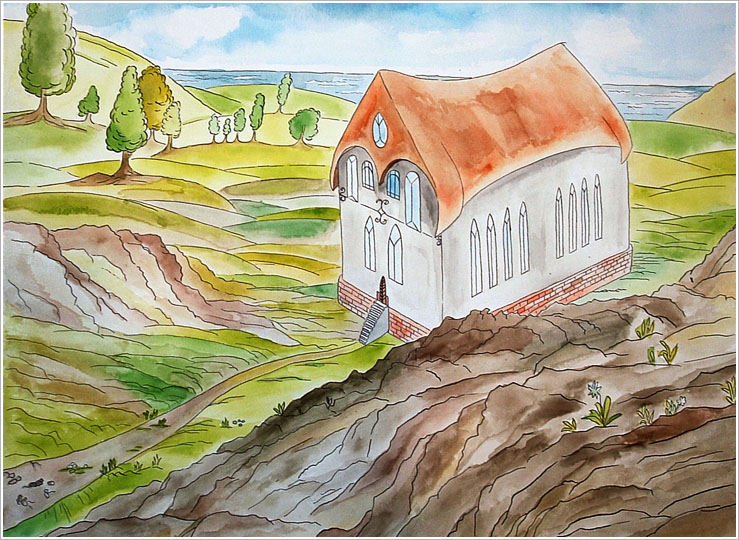
They invite Eriol into their house, and soon there is a sound of a gong; “That is the voice of Tombo, the Gong of the Children (pg 15.).” The Gong calls the Children in from playing to come and listen to “the telling of tales (pg 15).”
Soon the tiny Cottage was regaled with the tales, and this is how we learn the history of Middle-earth – as it’s portrayed to Eriol.
But why did Eriol happen upon this Cottage? It was not a mistake:
“It had long, said he, been a tradition in our kindred that one of our father’s fathers would speak of a fair house and magic gardens, of a wonderous town, and of a music full of all beauty and longing (pg 20).“
The children who sat around at night would listen to these tales and eventually leave the island and the Cottage. These were the children of the Noldori and the Teleri (at this point, Tolkien was calling Gnomes. I’m not sure when he switched to Elves.), but they were descendants of Eärendel, which is who spawned the human race as we know it now.
Tolkien was a historian and linguist who was fascinated with how different cultures had similar roots. The origin of this Book of lost Tales was to explore these roots. The Lord of the Rings hadn’t blossomed in his mind (made apparent by his usage of Gnomes in this early iteration), and he wrote this chapter to explain this origin.
The Children who gathered around to hear these tales at Tol Eressëa became the people who started the different cultures which would eventually become our world. Tolkien even stamps that theory in the second to last paragraph, spoken by Eriol:

“Now these are tidings sad and yet good to hear, and I remember me or certain words that my father spake in my early boyhood. It had long, said he, been a tradition in our kindred that one of our father’s fathers would speak of a fair house and magic gardens, or a wonderous town, and of a music full of all beauty and longing – and these things he said he had seen and heard as a child, though how and where was not told (pg 20).“
Eriol’s father had left the island of Tol Eressëa. He remembered the stories, customs, and language, but he could remember nothing of the island itself. The Valar had hidden the island, and all that left it were doomed to forget about it.
They created an oral tradition formed into the Germanic languages and tales of North Western Europe. This also explains how the majority of the Hobbit and the beginning of The Lord of the Rings had so many songs and poems. Tolkien was trying to show how real the world was by including an oral tradition in story.
Tolkien’s purpose for telling these tales, even The Hobbit and The Lord of the Rings, was to explain why these traditions existed. Not only the language, which everyone assumes is why he created the history, but of the practices and mythologies of the region.
Join me next week as we delve deeper into “The Cottage of Lost Play” with Christopher’s Commentary!
Blind Read Through: J.R.R. Tolkien; The Book of Lost Tales, Part 1, Introduction

“As has now been fully recorded, my father greatly desired to publish ‘The Silmarillion’ together with The Lord of the Rings. I say nothing of it’s practicability at the time, nor do I make any guesses at the subsequent fate of such a much longer combined work, quadrilogy or tetralogy, or at the different courses that my father might then have taken – for the further development of ‘The Silmarillion’ itself, the history of the Elder Days, would have been arrested (pg 5).“
Welcome back to another Blind Read! We shift gears a little this week now that the Silmarillion is finished and jump into The Book of Lost Tales.
This week I wanted to review the Introduction, but in doing so, I wanted to check Christopher Tolkien’s words (John’s son and the editor of all of Tolkien’s estate since the publication of The Lord of the Rings). So this week will be a combination of analysis and opinion, even more so than any previous essay I have posted.
I’m going to cover two distinct points Christopher covers in the Introduction (there is more there, but for the purposes and desires of this blog, this is the focus). First, the difficulty of ‘The Silmarillion’ and John’s earlier works, and the novelistic approach versus the historical method through the evolution of ‘The Silmarillion’ from its earlier iterations versus Christopher’s edited publication. This last point is the tread that will bring us through the rest of the book and beyond.
“The Silmarillion is commonly said to be a ‘difficult’ book, needing explaination and guidance on how to ‘approach’ it; and in this it is contrasted to The Lord of the Rings (pg 1).“

In this quote, Christopher is saying what everyone else is already thinking; this is why I chose to do a Blind Read with these books because they are notoriously tricky. The Silmarillion begins with a story similar to the Book of Genesis, which was difficult to swallow after concluding one of the most popular stories in generations. “This produced a sense of outrage – in one case formulated to me in the words ‘It’s like the Old Testament’ (pg 2)!”
Which this book is – at the beginning. Once Tolkien moves beyond the archaic origins of the beings and the world of Ëa, the language softens a bit because it becomes more attuned to exposition instead of an elegiac homily.
I contend that it’s Christopher who makes the language so difficult. He is the son of a language professor and is part of the English academic elite. His language is not the same as the language of the masses, which made the book (even when “stories are being told” like Beren and Luthien) considerably more difficult, as opposed to Tolkien’s The Hobbit or The Lord of the Rings.
That being said, we get an introduction to the original vision of the history of Middle-earth in “The Book of Lost Tales.”
“The letter of 1963 quoted above shows my father pondering the mode in which the legends of the Elder Days might be presented. The original mode, that of The Book of Lost Tales, in which a Man, Eriol, comes after a great voyage over the ocean to the island where the Elves dwell and learns their history from their own lips, had (by degrees) fallen away (pg 5).”
Tolkien wanted to tell his history, but he knew the difficulty of writing it as a historical book instead of a novelistic approach. But it was the novelistic approach with which he started. Tolkien began writing his histories before anything else (and the myth that the language developed and the book written to display that language is a misnomer. In the development of The Book of Lost Tales, we see the evolution of that language as he develops it over time.) in 1917. Tolkien wrote the history as if it were an oral tradition, which would alleviate some of the dry and dull exposition needed. It would stop the feeling of it reading “like the Old Testament (pg 2).“
So instead of a dry history, we get the Human, Eriol, traveling to the Cottage of Lost Play and meeting Elves (they were Gnomes in 1917, though still called Noldor) who gather around a fire, much like you would expect Hobbits to do and regale Eriol with their story.
That makes The Book of Lost Tales interesting, even though it is a rehashing of The Silmarillion. We get to see the evolution of the design and approach of the work and how Christopher decided to edit it and publish it after his father’s death.
Christopher mentions that his father wanted this story told. The fact that we have so much material that calls back to The Lord of the Rings proves that Tolkien wrote to make the world whole. To be more than what Christopher calls “the mise-en-scéne of the story (pg 7),” Tolkien wanted people to know that there was history and agency behind the action in the book. That history led the characters to where they are when we pick up the events in The Fellowship of the Ring.
But does Christopher take it too far? On the contrary, it looks to me as though he uses his father’s platform to carve out a space for himself: “There are explorations to be conducted in this world with perfect right quite irrespective of literary-critical considerations; and it is proper to attempt to comprehend its structure in its largest extent, from the myth of its Creation.“
I agree with what Christopher is saying here. If he didn’t take the mantle over, there wouldn’t be The Silmarillion, and the world of Middle-earth would have stopped at The Lord of the Rings. However, what he did by taking things over was indelibly stamp his prejudice on the material.
Would The Silmarillion have been better as a story as it is in The Book of Lost Tales? Would that have garnered a more significant audience if it were a more accessible tale?
These are all questions I hope to get a better answer for through the next couple of books. Both The Book of Lost Tales, part 1 and The Book of Lost Tales, part 2, are the earlier iterations of The Silmarillion through the storytelling perspective. So these Blind Reads will be much more analytical than previous Blogs as we follow the creative process of Tolkien as both he and Christopher work to uncover the definitive history of Middle Earth.
Blind Watch: The Rings of Power; Episode 8, Alloyed

“I leapt from that ship because I believed in my heart that I was not yet worthy of it. I knew that somehow, my task here was not yet complete. And when I surfaced all I could do was swim and pray I had chosen wisely. I did not cross that bitter Ocean, onyl to drown now. And nor will I let you.”
Welcome back to another Blind Watch! This week we conclude The Rings of Power and close up all the messy and misused storylines.
There will be heavy spoilers in this essay, so if you have not watched the episode or show yet, please stop now and head back to Amazon and watch it!
This episode finally reveals who Sauron is as well as one other major character in the mythology.

The show begins by having “the stranger” walking through the woods. He has been exiled from the wandering Hobbits (though they are not called that yet), and the mysterious and dangerous wanderers dressed in all white appear before him and all but tell him he is Sauron. Then, they use out-of-place magic to fool him, but the entire exchange doesn’t make sense.
First, let’s follow along with the show’s storyline and assume that this tall Stranger is, in fact, Sauron (he’s not, and we find out later who he is). It doesn’t make sense that Sauron wouldn’t know who he is at this point in history. He was already in Middle-earth from the end of the First age. The only time in Middle-earth’s history that it would make sense that Sauron might not know who he was (that never happened in any Tolkien I have read) was after the Drowning of Númenor, when he was cast down into the abyss, shed his mortal form and retreated to Barad-dûr. The fact that he shed his human form is the only factor in thinking he might not know who he was, so instantly, we see this Stranger is not Sauron.
What bothers me about this interaction is how lazy the writers were. Why would Sauron’s servants not know who he was? Especially servants who were this powerful in magic? Notwithstanding that there never were any magic users mentioned in Sauron’s entourage, these characters are just a means to an end to show the power of the Stranger and to show who he is, which is an Istari, otherwise known as a Wizard. Namely, this Stranger is who I thought he was all along: Gandalf the Gray.
It is Halbrand who turns out to be Sauron in disguise. I’m a little discouraged that I didn’t catch this sooner, but the writers changed the history so wholly to make it challenging to understand who he was, so I’ll give myself a little grace. Afterall, the whole point of this first season wasn’t to tell a wonderful story about Middle-earth, they wrote it to hide who Sauron was and to make a dramatic reveal.
To met he problem isn’t that Sauron turned out to be Halbrand. Sauron did, after all, disguise himself to influence the making of the Rings of Power. In the Silmarillion, he disguises himself as Annatar, the Lord of Gifts, to control the Noldor Elves and influence them create the rings in the first place.
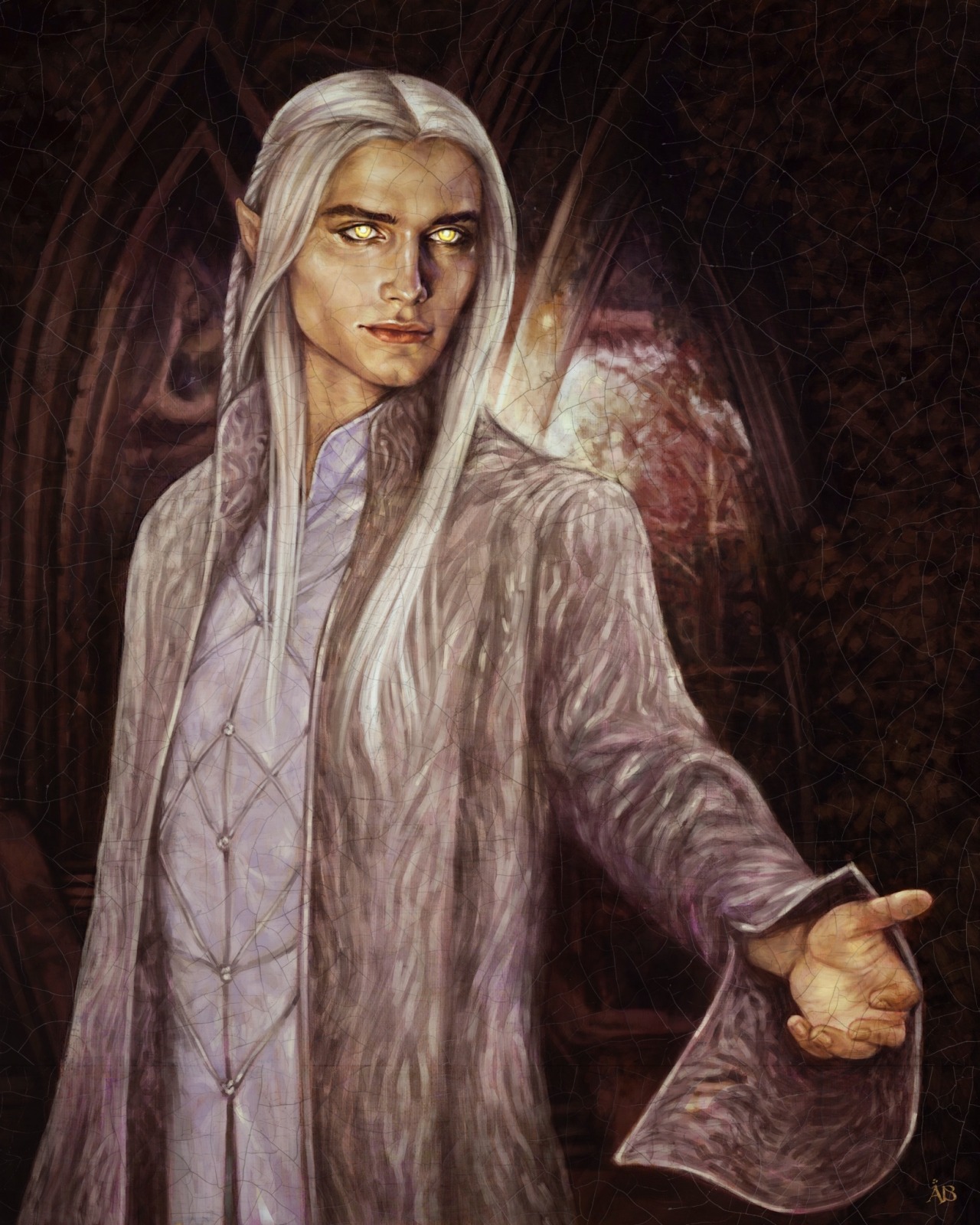
Elrond and Gil-Galad suspected Annatar was not who he said he was, so he left Lindon and went to Eregion, where they crafted the Rings. But, unfortunately, while they were making all the Rings of Power (not just the three for the Elves), Sauron retreated to Mount Doom and created the One Ring to rule them.
So the fact that the showrunners decided to change Sauron’s disguise from Annatar to Halbrand is acceptable. My problem comes in with how they introduced and framed him. Sauron is a master of deception, so much so, that he destroyed two different empires with influence alone (meaning that he didn’t raise an army against them).
But why was Sauron stranded on a raft? Do the showrunners want us to believe that he foresaw Galadriel jumping off her boat and swimming to a broken-down ship in the middle of the sea? And even if that was the case, there are far easier ways for him to ingratiate himself within the Elven culture.
Having Halbrand come up with such a soft cover as “King of the Southlands,” which was so easy to figure out “bloodline was broken,” is unlike Sauron. It makes him seem weak and lazy, which he is not.
Not to mention that there never was a human king in Middle-earth before Númenor. They were all traveling bands who were subjects of the Elven Kings.
The whole point of the entire show wasn’t to make an incredible Lord of the Rings show, but to hide the information about who Sauron was so they could have that reveal in the last episode. All the character’s motivations were to hide who he was, all the action was to hide who he was, and all the plot was to conceal Sauron’s true identity. I don’t mind that the showrunners wanted to change history, however, it doesn’t thrill me. The fact that they very obviously sat around a writing room and said they wanted the final reveal to be who Gandalf is and who Sauron is, then framed the rest of the show around that is just lazy.
This is why people don’t like the show. It’s not necessarily how they changed history because, without a doubt, this story is different from Tolkien’s. It’s not the show’s visuals because the special effects are spectacular. It’s how the writers decided that one event was enough to drive eight episodes. It’s how they took away the agency of every character to fit in with some big reveal (which was pretty lackluster).
I’m not sure if I’ll be watching the second season, if and when it comes out, but it’s no longer a Tolkien show, so there will not be another Blind Watch covering the events if there does turn out to be a second season.
Thank you all for reading, and join me next week as we complete The Silmarillion!
Blind Read Through: J.R.R. Tolkien; The Silmarillion, Of The Rings of Power and the Third Age, Part 3
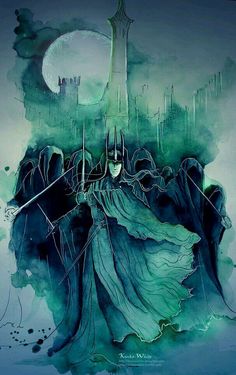
“Thus the Exiles of Númenor established their realms in Arnor and in Gondor; but ere many years had passed it became manifest that their enemy, Sauron, had also returned. He came in secret, as has been told, to his ancient kingdom of Mordor beyond Ephel Dúath, the Mountains of Shadow, and that country marched with Gondor upon the east. There above the valley of Gorgoroth was built his fortress vast and strong, Barad-dûr, the Dark Tower; and there was a fiery mountain in that land that the Elves named Orodruin. Indeed for that reason Sauron had not set there his dwelling long before, for he used the fire that welled there from the heart of the earth in his sorceries and in his forging; and in the midst of the Land of Mordor he had fashioned the Ruling Ring (pg 290-291).“
Welcome back to another Blind Read! This week we learn about the rise of Sauron and the beginnings of the downfall of the Númenórean lineage.
We left off last time learning how Isildur and Anárion built some of the most significant structures of Middle-earth, and we pick up this time realizing that “the malice of the Eye of Sauron few even of the great among Elves and Men could endure. (pg 291)“
We learn from the opening quote that Sauron took up residence in Mordor. He gathered great strength, recruited and bred servants, and expanded his empire beyond the firey mountain Orodruin; “and perceiving that Sauron had returned, the Númenóreans named that mountain anew Amon Amarth, which is Mount Doom. (pg 291)“

Sauron then used that great force to attack and sack Minas Ithil, “and he destroyed the White Tree of Isiluder that grew there (pg291).”
Isildur fled with a seedling of that great tree for a second time in his life and sought his father. Meanwhile, his brother held Osgiliath and drove Sauron back into the mountains, but “Anárion knew that unless help should come his kingdom would not long stand (pg 291).”
Elendil and Gil-Galad met with each other to come up with a strategy against this new Dark Lord. They decided that the only chance the people of Middle-earth had against his tyranny was to unite and make a stand. “Therefore they made that League which is called the Last Alliance (pg 292).“
Tolkien gives us two short paragraphs describing the events of this battle that rent the world. Every race had members on both sides, except the Elves, making it a struggle of kith and kin.
Gil-galad and Elendil fought valiantly and pushed Sauron back into Mordor, laying siege to his stronghold for seven long years. During these seven years in the fields of Gorgoroth, Anárion, Elendil’s son and Isildur’s brother died in battle. But it wasn’t until the last siege that Sauron himself came out to fight against his enemy, and “he wrestled with Gil-Galad and Elendil, and they both were slain, and the sword of Elendil broke under him as he fell. But Sauron also was thrown down, and with the hilt-shard of Narsil Isildur cut the Ruling Ring from the hand of Sauron and took it for his own (pg 292).“
Sauron, defeated, returned to shade form because he had put so much of his essence into the Ruling Ring. However, it was years before he took “visible shape (pg 292)” again. This victory marked the end of the Second Age of Middle Earth. The destruction of two great Kings and their powerful enemy ushered in a new age.

Isildur took the Ruling Ring for himself, and there was peace and prosperity for many years. Sauron’s minions were not wholly destroyed but reduced to a number Isildur was not worried about.
Isildur was not his father, though. “Never again was such a host assembled, nor was there any such league of Elves and Men; for after Elendil’s day the two kindreds became estranged (pg 293).“
Part of that estrangement came because Isildur refused to destroy the Ruling Ring, even upon the council of Elrond and Círdan. Instead, he took it as a token of success in dealing with the killing blow to Sauron and as recompense for the deaths of his father and brother.
Isildur went north to stake his claim to the throne in Eriador, his father’s seat, “and he forsook the South Kingdom (pg 293).” He set Meneldil, Anárion’s son, to rule Gondor in the south in his absence. To rule and to guard against the inevitable return of Sauron.
On Isildur’s trip north, he “was overwhelmed by a host of Orcs that lay in wait in the Misty Mountains (pg 293).” Unfortunately, Isildur was lazy because he deemed that he had won the war, so he didn’t set a guard when his caravan slept. As a result, the roving Orcs killed everyone except for three servants and Isildur, who escaped by slipping the ring on his finger and going invisible to his pursuers.
He jumped into the river, but “there the Ring betrayed him and avenged its maker, for it slipped from his finger as he swam, and it was lost in the water (pg 294).” With the ring off his finger, the Orcs could see him, and they filled him with arrows.

The surviving servants brought Narsil, Elendil’s broken sword, back to Imladris. But the sword was not reforged, “and Master Elrond foretold that this would not be done until the Ruling Ring should be found again and Sauron should return. pg 294)“
Over the beginning years of the Third Age, through war and isolationism, “the Men of Westernesse, the Dúnedain of the North, became divided into petty realms and lordships, and their foes devoured them one by one (pg 294).”
In the Southlands, the line of Númenor flourished for years under the leadership of Meneldil. They built immense structures and created the Gondor armor we are so used to seeing, but “the blood of the Númenóreans became much mingled with that of other men, and their power and wisdom was diminished, and their life-span was shortened, and the watch upon Mordor slumbered (pg 295).”
Eventually, a plague landed on them and killed the King’s lineage. They abandoned the border of Mordor and allowed evil to creep out of the boundaries. The evil took the shape of dark shadows. “It is said that these were indeed the Ulairi, whom Sauron called the Nazgûl, the Nine Ringwraiths that had long remained hidden, but returned now to prepare the ways of their Master, for he had begun to grow again (pg 295).”
They took Minas Ithil, Isildur’s former seat, and made it a place of dread and horror. “Thereafter it was called Minas Morgul, the Tower of Sorcery (pg 295).“
“But Minas Arnor endured, and it was named anew Minas Tirith, the Tower of Guard; for there the kings caused to be built in the citadel a white tower, very tall and fair, and it’s eye was upon many lands (pg 295).“
The stage is set, and the hallmarks of the Third Age are being revealed. Join us on the next Blind Read to see the resolution of “Of the Rings of Power and the Third Age.”
Blind Watch: The Rings of Power; Episode , The Eye
“We ask for something sacred in this mountain, and so we offer something sacred in return. In exchange for access to your Mithril mines, the Elves are prepared to furnish this city with gain, grain and timber from the elder forests of Eriador for the next five centuries.“
Welcome back to another Blind Watch! This episode and subsequent essay are strange because there is quite a bit of racism between the species, but not how you would necessarily expect it, and not how Tolkien wrote it.
Elrond speaks the opening quote of this essay to King Durin III towards the beginning of the episode. Unfortunately, the showrunners have changed the Elves’ history and relegated their fall to the Second Age of Middle-earth instead of the Third Age. In doing so, they have changed the relationships between the Elves and Dwarves of this age and made Mithril something it is not.
At this time in Middle-earth history, the Elves and Dwarves had a friendship, or if that’s too strong a word, they had peace and an understanding. For example, Celebrimbor and Durin worked together to create incredible weapons and armor using the Mithril. Likewise, Gil-Galad and Elrond had a deep friendship (which the show posits is only on Elrond’s side, Gil-Galad just uses him) with the Dwarves. Beyond the weapons and armor, they build fantastic structures for Elves and Dwarves alike, and Celebrimbor even used Mithril to infuse into the doors of Moria to block outsiders. I’ve mentioned this before, but Gandalf needs to speak the Elvish word for “Friend” to enter the mines in the movies. If their relations were so strained, why would you have to use an Elvish word to enter a Dwarven City?

At this point in Tolkien’s history, there was no rift between the Elves and the Dwarves. Instead, the showrunners rely on the play between Gimli and Legolas to inform the audience of interracial conflict rather than showing the history.
The show also has a scene where Prince Durin throws a piece of newly mined Mithril to the end of a table next to a wilted leaf. The Mithril seemed to bring the leaf back to life, which was supposed to indicate how the Mithril would bring back both life to the world and nature to the Elves, but this was not the case in the book.
Tolkien intended to be vague in his writing and wanted an eventual rift between these two races because that created more drama. But, unfortunately, the showrunners are taking it a step further and dramatizing things that were never written to get more dramatics out of the show itself.
Beyond that, Mithril is just a metal. It’s a precious and rare metal, but it doesn’t have the magical power the show pre-supposes. What it does have is the ability to be a magical conduit, which is why Celebrimbor used it in the magical lock of the doors to Moria.
So the argument that King Durin is proposing to his son seems like a dangerous and backward-thinking proposition, but it’s spot on (at least in the show’s reality).
He tells his son, “The Fate of the Elves was decided many ages ago. By minds much wiser, much farther seeing than our own. Defy their will, and this entire kingdom might fall. Perhaps the entire Middle-earth.”
He is alluding to the Valar and how the deeper the Dwarves delve, the more danger they can bring upon themselves. In fact, one of the most well-known Balrogs was named Durin’s Bane.

If you remember Peter Jackson’s movies, there is a scene right before the Balrog comes out, and Gandalf says that the Dwarves delve too deep, in their greed. This anticipation of the Balrog is what the showrunners are trying to set up.
There are two other plotlines the show covers, and neither has any basis in Tolkien’s works, just the vague understanding of what might be happening behind and between the pages, with some outright falsehoods along the way.
Let’s get the falsehoods out of the way first, shall we?
Galadriel and Theo are speaking one night on their trek to find survivors of the volcanic explosion. Galadriel tells Theo that she lost her brother Finrod and her husband Celeborn to Sauron. There is no truth in these statements; her story of how she met Celeborn is convoluted with the tale of Beren and Lúthien. That is the story of Lúthien dancing in a meadow and Beren coming upon her, not how Galadriel meets Celeborn. To top that off, Celeborn doesn’t die; we see him in Fellowship of the Rings, so I’m not sure what they are trying to prove here.
In addition, Finrod died in the battle against the Dark Lord, but not the Dark Lord you might think. Finrod had one of the most epic battles told in The Silmarillion when he fought Morgoth, the fallen Valar and Sauron’s master. Sauron had nothing to do with Finrod’s death, so it seems strange that they would purposefully change history instead of just skewing it in their favor.
We also follow along with the Southlanders as they all come together, and we learn of Isildur’s death…which never happens in the book. Isildur’s closest brush with death comes when he steals the fruit from Nimloth, the tree of the Valar, when he still lived on Númenor, and even then, he is never considered dead.
Beyond these blatant changes, however, they do show what happened in history. The Southlands became Mordor, just not in the way the showrunners are proposing. Sadly, we don’t get to see Isildur and his brother develop the great cities of Middle-earth and bypass everything to get some fake fan service, but these are differing mediums, so I guess beggars can’t be choosers. You either get screen time in the Second age or don’t.
The last portion I would like to mention is the powerful magical strangers who come across the halflings. There is much mention that this is Sauron, but I don’t think that’s the case. Instead, I think this may be a younger version of Saruman or one of the other Istari.
Sauron didn’t travel in a group. Indeed he was famously solitary and did not need to mess with halflings. But then again, they have changed many other things, so let’s see where the ride takes us.
Join me next week as we delve back into The Silmarillion for the Penultimate essay on Of The Rings of Power and the Third Age before coming back for the final episode of The Rings Of Power!
Blind Read Through: J.R.R. Tolkien; The Silmarillion, Of The Rings of Power and the Third Age
“It is said that the towers of Emyn Beraid were not built indeed by the Exiles of Númenor, but were raised by Gil-galad for Elendil, his friend; and the Seeing Stone of Emyn Beraid was set in Elostirion, the tallest of the towers. Thither Elendil would repair, and thence he would gaze out over the sundering seas, when the yearning of exile was upon him; and it is believed that thus he would at whiles see far away even the Tower of Avallónë upon Eressëa, where the Master-stone abode, and yet abides. These stones were gifts of the Eldar to Amandil, father of Elendil, for the comfort of the Faithful of Númenor in their dark days, when the Elves might come no longer to that land under the shadow of Sauron. They were called the Palantíri, those that watch from afar; but all those that were brought to Middle-earth long ago were lost. (pg 290)”
Welcome back to another Blind Read! Whew, that was a long introductory quote! This week we progress into the places, deeds, and constructs of the Third Age as we get closer to the events of The Lord of the Rings.
We pick up right where we left off last week, with the creation of the Nazgûl, because “Sauron’s lust and pride increased, until he knew no bounds, and he determined to make himself master of all things in Middle-earth. (pg 287)”

Sauron’s shadow began to spread across Middle-earth, and he ruled with an iron fist, crushing any small insurrections before they could start. He oversaw the Orcs, and they “multiplied like flies. (pg 288)”
However, this era was still prosperous for the people of Middle-earth, and Sauron would not cross Ered Luin. “Gil-Galad was aided by the Númenóreans. (pg 288)” and so Sauron knew, even with his mighty garrison of Orcs, that he could not withstand the two races who had aligned against him.
It was at this time in History that the Númenóreans challenged Sauron, and as we learned in Akallabêth, he “left Middle-earth for a while and went to Númenor as a hostage of Tar-Calion the King. (pg 288)”
After the Drowning of Númenor, Sauron fell into the Abyss, but his spirit flew back to Middle-earth where he found Gil-Galad had taken over and made a wonderful kingdom of much of Middle-earth. So Sauron “withdrew to his fortress in the Black Land and meditated war. (pg 288)” as the Third Age began.
During this time of the great Flood that destroyed Númenor, the Faithful, Númenóreans who still believed in the Valar and the Eldar, sailed to Middle-earth. “The chief among these were Elendil the Tall and his sons, Isildur and Anárion. (pg 288)”

It was in Middle-earth that Elendil befriended the Elven King Gil-Galad, and had the freedom to settle in Eriador and create new kingdoms and structures. They built great towers in Emyn Beraid, “and there remain many barrows and ruined works in those places. (pg 289)” Probably the most memorable for casual readers/viewers would be the tower on Amon Sûl, otherwise known as Weathertop.
Elendil’s sons went south, “and they established a realm in those lands that were after called Gondor. (pg 289)” Aragorn, considered the king of men because his bloodline comes directly from Elros (Elrond’s brother) half-blood, is the direct descendant of Isildur. So Elrond is Aragorn’s uncle; if you put about 89 greats in front of Uncle, that is.
The Númenóreans were still a sea-faring people, so they created the most significant city along a great river, a city they named Osgiliath, with a great bridge to allow their spectacular ships to sail beneath. This structure is the Bridge destroyed in “The Return of the King,” and Osgiliath is the city Faramir is trying to defend from the Orc scourge.
They also built two prominent towers: “Minas Ithil, the Tower of the Rising Moon, eastward upon a shoulder of the Mountains of Shadow as a threat to Mordor; and to the westward Minas Anor, the Tower of the Setting Sun. (pg 289)” Remember these names. These become very important in everything that comes afterward.
Isildur settled into Minas Ithil, where Anárion settled into Minas Arnor, “but they shared the realm between them, and their thrones were set side by side in the Great Hall of Osgiliath. (pg 289)” Their towers were also set to either side of the great city, setting up the major areas of early Gondor, but they were not the only dwellings.
The Númenóreans also built many other cities, including the circle of Angrenost, otherwise known as Isengard, and the tower they built there was known as Orthanc. This is the tower where the Istari (wizard Maiar) Saruman took up abode.
Beyond the buildings, “Many treasures and great heirlooms of virtue and wonder the Exiles had brought from Númenor; and the most renowned were the Seven Stones and the White Tree. (pg 290)” Otherwise known as the Palantíri (the seeing stones) and the seed of Nimloth, which Isildur nearly died obtaining.

The seeing stones “Three Elendil took, and his sons each two. (pg 290).” Elendil set his in the towers of Emyn Beraid, on Weathertop, and the city of Annúminas. Isildur placed his in Minas Ithil and at Orthanc, and Anárion put his at Minas Arnor and Osgiliath.
These seeing stones were intended to be a balm against the darkness Sauron held in the land, but at this time in History, he was still trying to build power, so the significant structures of the Númenóreans in Middle-earth didn’t feel his presence often. Only Elendil realized the turn of the tide and understood the power of the Palantíri. He knew that if Sauron got his hands on those, his presence could reach far more deeply than ever. He saw Pharazôn be corrupted by only words, creating the downfall of Númenor. What if Sauron could control the visions the Great Kings of the Third Age were seeing and make them think they were all real? This would be far more pervasive than just playing to one’s Hubris.
The sons, however, one more step removed from the purity of their bloodline, believed in using these seeing stones for their power and protection of their people. So the seeing stones stayed where they were set. Orthanc fell into Saruman’s hands, and the power corrupted him (amongst other things), and Osgiliath, we know, stood until the end of the Third Age. But what of the other two towers? We have not seen the names Minas Ithil and Minas Arnor yet. Where do those come in?
Join me next time to find out!
Next week we’ll cover the penultimate episode of The Rings of Power before diving back into “Of the Rings of Power and the Third Age.”
Blind Watch: The Rings of Power; Episode 6, Udûn

“My children, we have endured much. We cast off out shackles. Crossed mountain, field, frost, and fallow, till out feet bloodied the dirt. From Ered Mithrin to the Ephel Arnrn, we have endured. Yet tonight, one more trial awaits us. Our enemy may be weak, their numbers meager…yet before this night is through, some of us will fall. But for the first time, you do so not as unnamed slaves in far-away lands, but as brothers. As brothers and sisters in our home! This is the night we reach out the iron hand of the Uruk…and close our fist around these lands.“
Welcome back to another Blind Watch! This week we cover Episode six of The Rings of Power, Undûn. The episode is fast-paced and fun to watch, but there is very little content in this episode based on the core material.
This episode focused solely on the southland’s battle for survival against the orcish horde and showed the treachery of men wooed by Sauron’s power delicately and subtly. But it also shows how people can hold onto hope nearly as well as Peter Jackson did in “The Lord of the Rings.”
We start the episode with the Orcs storming the tower. The Southlanders have fled, and Arondir stays behind to lay traps for the scourge.
It’s here, Waldreg, the human who betrayed his kinsmen and ran off to join Adar shows his concern for the Orc Captain, but there is something strange about his motivations. He follows Adar fervently, but we don’t know why he does this. Earlier in the season, he shows the mark on his arm. He gained that mark from using the hilt which becomes a sword from his blood, but where did he get the hilt? Why did he lose it, and where did Theo get it? Was Waldreg previously a soldier in Sauron’s armies and used the blood sword? Has he been a spy all these years? Unfortunately, they haven’t given us enough to make a proper conclusion.
We then transition to Galadriel and the Númenóreans on the ship on their way to help the Southlands. They show a bit of interaction between Galadriel and Isildur, where Isildur says, “I was just trying to get away. As far as I could from that place.“
Isildur wanting to leave Númenor is actual history, but it takes place before the events in the show. Isildur was trying to get away from Númenor, but it wasn’t until after he was already a hero for taking the fruit of Nimloth and saving the tree’s offspring from the evil of Sauron and Pharazôn. Isildur was gravely injured because of his heroism and “went out by night and did a deed for which he was afterwards renowned.” The problem I have, is that he has already left Númenor, so if the showrunners decide this event is to be his redeeming deed, then they need to find some way to bring him back to Númenor before the great flood.
The remainder of the episode takes place in the Southlands. The Humans all retreat to the town and set up an ambush for the Orc army, who attacks them at night. They successfully attack and push back the Orcs but find that most of the beings they killed were, in fact, their fellow humans who left town to join Adar. These humans are just in disguise, made up to look like Orcs.

Once this realization happens, the actual garrison of Orcs attacks the humans, only to be pushed back again by the Númenóreans, who have the best possible timing.
If you weren’t paying attention, however, you might miss Adar saying, “Waldreg, I have a task for you.“
The Númenóreans go onto a glorious victory, at least it seems. We see Waldreg finds the broken hilt, and he places it in some lock which activates a flood.
The flood goes all the way through to what I can only imagine is Mount Doom, where Sauron forged the One Ring. Then, the water creates a chain reaction which causes a significant eruption.
You might wonder why the episode is called Udûn. It’s the Elvish word for Hell or Dark Pit. The tunnels that the Orcs had been tunneling weren’t just searching or trying to seek something. It was that because they wanted the hilt, but they were also making tunnels so the water released by the hilt key would create a chain reaction that would cause hell on earth for the humans. Fireballs and magma fill the ground, and it’s a more extensive form of destruction that hasn’t been seen since Ancalagon the Black crushed mountain tops underneath its claws (an enormous dragon ever to live in Middle-earth and servant to Morgoth). What is even more devious is that Udûn is Sindarin Elvish, which proves the point that these Orcs were indeed transitioned from Elves to these creates because of Sauron’s corruption. Udûn is also the name of the region just beyond the black gate of Mordor. Coincidence?
So there is just one question remaining. Arondir tries to destroy the hilt key earlier in the episode, but the hammer he uses breaks instead.
What can this blade be but Gurthang, the sword of Turin Turambar? Turin is a hero of legend in the first age, surrounded by bad luck. His sword was Gurthang, which he used to slay many powerful creatures, including Glaurung, Morgoth’s Dragon Captain. Unfortunately, Turin killed himself once he realized he was married to his sister (who killed herself just before he did the deed), and the blade broke asunder after that happened, which is the only way the sword could be broken. Gurthang was a sentient sword, and there is a prophecy (interesting prospect in a show heavily leading on the sign laden Palatirí) where Turin will use Gurthang in the Final Battle to kill Morgoth for infinity.
I could see the showrunners using Gurthang as a key to release Sauron from the trappings of his spirit form and return him to his mortal form.
This is the blade, after all, that feeds off blood and remembers its kills.
So despite the lack of history in the last few episodes, I am excited about where this is going because if I’m right about this sword being Gurthang, it opens up whole new worlds of history to be exposed. There will be considerably more people who have never read The Silmarillion exposed to its lush history.
So join me next week and experience some of that history as we continue with “Of the Rings of Power and the Third Age!”
Blind Read Through: J.R.R. Tolkien; The Silmarillion, Of The Rings of Power and the Third Age, part 1

“But Sauron gathered into his hands all the remaining Rings of Power; and he dealt them out to the other peoples of Middle-earth, hoping thus to bring under his sway all those that desired secret power beyond the measure of their kind. Seven rings he gave to the Dwarves; but to Men he gave nine, for Men proved in this matter as in others the readiest to his will.“
Welcome back to another Blind Read! This week we start the last chapter of The Silmarillion and learn how the events of The Lord of the Rings came to be.
Tolkien begins this chapter by describing Sauron himself. Sauron was a Maia, one of the servants of the Valar, and just a half step down in power from them. Melkor seduced Sauron with his power and led him to serve the Dark Lord, but when Melkor was defeated, he begged forgiveness. Then, when it was clear that no quarter would come, he “hid himself in Middle-earth; and he fell back into evil, for the bonds that Morgoth had laid upon him were very strong.”
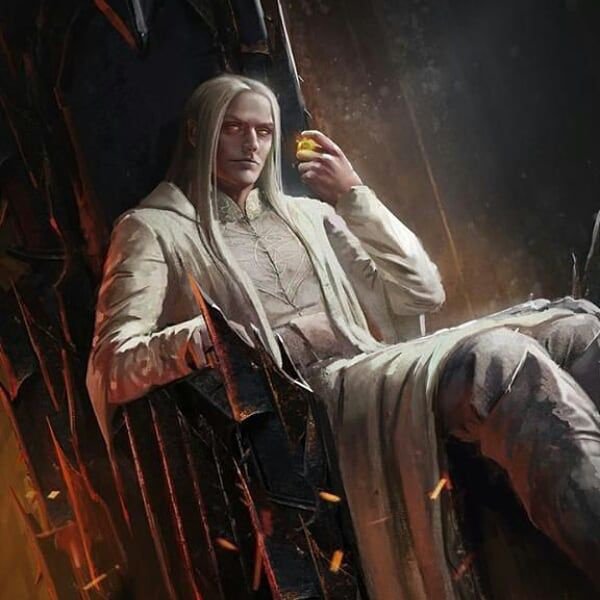
I contend that Sauron is much more evil than Morgoth (Melkor) because Melkor’s goal wasn’t ultimate power; instead, his story falls much more in line with Lucifer Lightbringer, who was an angel but pride made him feel slighted, which created his fall. Sauron chose evil from the beginning. There was never anything in him that tried to be or do good; his entire existence was about deception and power.
This whole chapter is basically about Sauron and his influence on how he corrupted the Rings of Power to gain control over the people of Middle-earth and what those people did to fight against him.
Tolkien tells us the land beneath Ossiriand on the eastern side of what was once Beleriand was re-formed by the surging of rivers and shifting of the ground. The region is now called Lindon, where many Elves settled to live.
Those that didn’t live there posted up in a region to the west of Khazad-dûm named Eregion. “In Eregion the craftsmen of the Gwaith-i-Mírdain, the People of the Jewel-smiths, surpassed in cunning all that have ever wrought, save only Fëanor himself; and indeed greatest in skill among them was Celebrimbor, son of Curufin, who was estranged from his father and remained in Nargothrond when Celegorm and Curufin were driven forth, as is told in the Quenta Silmarillion.“
Meanwhile, Sauron was growing in power and steering clear of Lindon. In fact, “elsewhere the Elves received him gladly, and few among them hearkened to the messengers from Lindon bidding them beware; for Sauron took himself a name of Annatar, the Lord of Gifts, and they had much profit from his friendship.”
Much like the Númenóreans, these Noldor of Eregion had their pride get in the way. They let Annatar give them advice on how to create, how to live, and how to rule. They even “refused to return into the West, and they desired to stay in Middle-earth.”
“In those days the smiths of Ost-in-Edhil surpassed all that they had contrived before; and they took thought, and they made Rings of Power.” Moreover, they did so under Sauron’s guidance, taking his advice in the Rings’ creation.

The Elves created many of these Rings, “but secretly Sauron made One Ring to rule all others, and their power was bound up with it, to be subject wholly to it and to last only so long as it too should last.” I think anyone who is reading this has heard of this Ring before. The One Ring allowed Sauron to rule and influence the decisions of those who wore the lesser rings.
But the Elves immediately understood their gaff: “As soon as Sauron set the One Ring upon his finger they were aware of him; and they knew him, and perceived that he would be master of them, and all they wrought.”
The Elves took off their rings and hid them away, but Sauron could feel them, and in his great wrath, he waged war against the Elves to take the rings back, “But the Elves fled from him; and three of their rings they saved, and bore them away, and hid them.“
They saved the rings of the greatest power, Narya, Nenya, and Vilya.
Narya was called the Ring of Fire and inlaid with a Ruby. Nenya was called the Ring of Water and inlaid with adamant, and Vilya was called the Ring of Air and inlaid with a sapphire.
The rings could “ward off the decays of time and postpone the weariness of the world.” But they were kept secret and not worn while Sauron wore the One Ring. “Therefore, the Three remained unsullied, for they were forged by Celebrimbor alone, and the hand of Sauron had never touched them.”
However, Sauron never gave up his quest for power over the rings and battled against the Noldor incessantly. During this time, “Eregion was laid to waste, and Celebrimbor slain, and the doors of Moria were shut. (Celebrimbor sealed the gates of Moria using Mithril and Elven magic. These are the gates we see the fellowship open in “The Fellowship of the Rings” by speaking the Elvish word for Friend).”
Because Sauron was raging so hard against the Elves, Elrond founded Rivendell as a sanctuary, as a way to rally against Sauron. It is here we get the opening quote to this essay.

The Rings given to the Dwarves were of Gold, matching their heart’s greed. These golden rings kindled the evil of profits in their hearts and they hoarded Gold, “but all these hoards long ago were plundered, and the Dragons devoured them.“
Men took nine of the rings, which gave them eternal life, “yet life became unendurable to them.” Then eventually, “they could see things in worlds invisible to mortal men; but too often they beheld only the phantoms and delusions of Sauron.“
The nine men who held the Rings fell into thralldom to Sauron, “And they became for ever invisible save to him that wore the Ruling Ring, and they entered into the realm of shadows. The Nazgûl were they, the Ringwraiths, the Enemy’s most terrible servants; darkness went with them, and they cried with the voices of death.“
Join me next week for a breakdown of Episode 6 of The Rings of Power before we jump back into the next section, “Of the Rings of Power and the Third Age!”
Blind Read Through: J.R.R. Tolkien; The Silmarillion, Akallabêth, Part 3
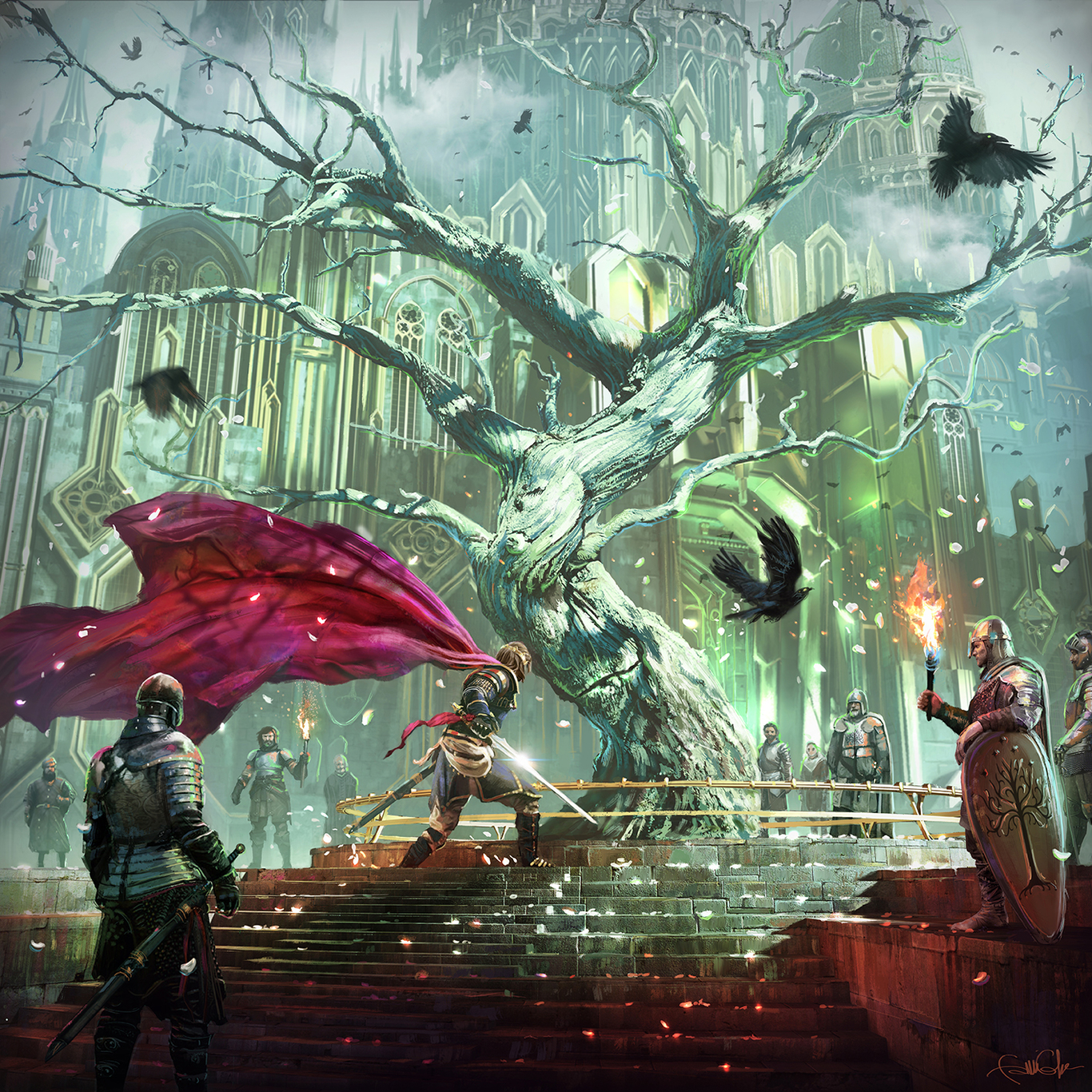
“Then behind locked doors Sauron spoke to the King, and he lied, saying: ‘It is he whose name is not now spoken; for the Valar have deceived you concerning him, putting forward the names of Eru, a phantom devised in the folly of their hearts, seeking to enchain Men in servitude to themselves. For they are the oracle of this Eru, which speaks only what they will. But he that is their master shall yet prevail, and he will deliver you from this phantom; and his name is Melkor, Lord of All, Giver of Freedom, and he shall make you stronger than they.’“
Welcome back to another Blind Read! This week we continue on our journey in Númenor and watch as the once-great empire begins to collapse.
We left off last time with the fact that the Valar were angered at Númenor and cut off ties with them. The lack of Valar support didn’t affect the mainland, but some were still faithful to the Valar and the Eldar, and they lived in a kingdom on the western shores in a city named Andúnië. The Men (read that as humans) who lived there “were of the line of Elros, being descended from Silmarien, daughter of Tar-Elendil, the fourth King of Númenor.” It was this line of Elros’ goal to unite the people of Middle-earth instead of trying to rule over them like the rest of the Númenóreans. In fact, Aragorn is a descendant of the Andúnië, and it’s his shame of what the Númenóreans eventually did that made him stay away from the crown for so long.
Years passed, and King begat King, until the beginning became the beginning of the end. Then, Tar-Palantir took the scepter and became King. He took an Elvish name (his Númenórean name was Inziladûn), and for the first time in years, a King of Númenor had used the dialect of a race the Númenóreans had begun to hate. He was a seer, so he took the name of the Palantirí, the seeing stones. One of his prophecies was that when the great “White Tree perished, then also would the line of the Kings come to its end.“
Tar-Palantir tried to bring back the old ways, but it was too little, too late. His daughter took to the throne after he died, “whom he named Míriel (whom you might know as the Queen Regent if you watch The Rings of Power on Amazon) in the Elven tongue.” But her first cousin Pharazôn was power hungry and hated the Valar for forsaking them, so he “took her to wife against her will, doing evil in this and evil also in that the laws of Númenor did not permit marriage, even in the royal house, of those more nearly akin than cousins in the second degree.”
Ar-Pharazôn became the most guilded of all kings to rule Númenor…and the proudest. His men told him that Sauron was building strength in the East, and in his hubris, he sent a contingent of men to capture Sauron. But the Dark Lord outwitted the Golden King and waved the white flag. So Ar-Pharazôn took him captive in Númenor, thinking he would keep the enemy close.
“Yet such was the cunning of his mind and mouth, and the strength of his hidden will, that ere three years had passed he head become closest to the secret councils of the King.“
The men of Númenor began to fall under Sauron’s sway, “save one alone, Amandil lord of Andúnië.” Of the Line of Aragorn. The men of this line remained faithful to the Valar and the Eldar, but the rest of Númenor “named them rebels.“
The quote which opens this essay is one of the examples of the cunning of Sauron. He twisted history and played upon the Númenórean beliefs, making them believe that Melkor was the true Lord and not Ilúvatar (also named Eru, as seen above). But, unfortunately, because of the pain of the Valar rejection and their own belief that they are better than any other race, the half-truths of Sauron rang true to them, and “Ar-Pharazôn the King turned back to the worship of the Dark, and of Melkor the Lord thereof, at first in secret, but ere long openly and in the face of his people; and they for the most part followed him.”

With this belief in the Dark Lord, Ar-Pharazôn threw Amandil, the Elf-friend of Andúnië and out of his council. But Amandil, along with his son Elendil, were the most significant ship captain of Númenor, so they were kept in Númenor, despite their outward rejection of the worship of Melkor.
While shunned, Amandil heard that Sauron had advised Pharazôn to cut down Nimloth, the white tree. Knowing of Tar-Palantir’s prophesy, he gathered his son Elendil and his grandchildren Isildur and Anárion. He told them the tale of the Trees of Valinor and the glory of the Valar.
“…Isildur said no word, but went out by night and did a deed for which he was afterwards renowned.”
Young Isildur went to Nimloth and stole its fruit. The guards gravely injured him, but he managed to escape and bring the fruit to his Grandfather, who planted it in secret. Upon its first bloom, Isildur was miraculously healed, showing the power of the Valar.
Soon after, the new tree bloomed just in time because “the King yielded to Sauron and felled the White Tree, and turned wholly away from the allegiance of his fathers.”
Ar-Pharazôn ordered that a gilded tower be turned into a fire altar and burned Nimloth so that “men marveled at the reek that went up from it, so that the land lay under a cloud for seven days, until slowly it passed into the west.“
“Thereafter the fire and smoke went up without ceasing; for the power of Sauron daily increased, and in that temple, with spilling of blood and torment and great wickedness, men made sacrifice to Melkor that he should release them from Death. And most often from among the Faithful they chose their victims.”
The Doom of Númenor has begun. Join me next week as we continue with Episode 4 of The Rings of Power and the week after when we return and complete Akallabêth!
Blind Watch: The Rings of Power; Episode 3, Adar
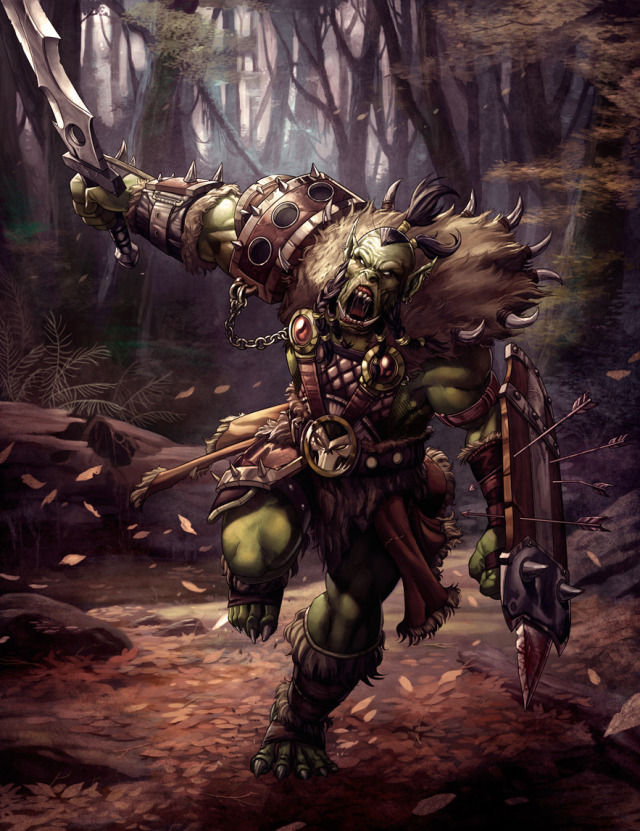
“If we didn’t do everything we weren’t supposed to do, we’d hardly do anything at all.“
Welcome back to another Blind Watch! This week we cover episode three of The Rings of Power, “Adar.”
Before we begin anything, I have to say how amazed I am at the show’s budget and their ability to capitalize on and make the show as beautiful as it is. Of course, there are problems with the narrative flow, as they are cherry-picking events from multiple different timelines, but they are keeping reasonably faithful to the character’s intent. That almost doesn’t matter when you get to see the beauty of Middle-earth and Númenor.
We are introduced to several characters you’ll know, even if you aren’t familiar with The Silmarillion or the Númenórean story. First, we meet Captain Elendil (which I’m pretty sure was never mentioned as a Captain in the book, but I’m still catching up) and his son Isildur, whom we all know from the Scene in The Return of the King where he cuts off Sauron’s finger and takes the One Ring from the Dark Lord.
It seems like the showrunners are forsaking that Andùnië (the city Elendil takes Galadriel to the library) was a major metropolis and a kingdom in its own right. Elendil was the ruler of that Kingdom on the western shores of Númenór.
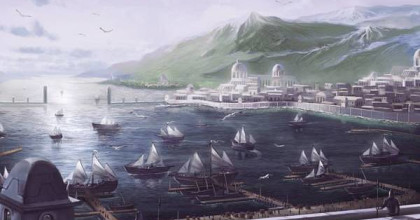
In the show, we see a mural of Elrond and Elros, brothers and sons of Elwing and Eärendil, in that library. If we remember from The Silmarillion, Eärendil and Elwing came to Valar and told of Morgoth’s reign, which caused the Valar to come to Beleriand and stop him. They broke the rules by going to Valar and are lauded as heroes for risking their lives to destroy Morgoth. As a reward, the boys had a choice of which line to follow because Elwing and Eärendil were descendants of both Elves and Men. Elros chose Men, and Elrond chose Elves.
There is an interesting scene where Elendil comes before the Queen Regent and states that his name means either Elf-friend or Star-lover. Eärendil becomes a star and rides a chariot across the sky as penance and reward for his transgressions, so Star-lover shows respect to Elendil’s ancestor. Because Elendil is a direct descendant of both Elwing and Eärendil, the Elf-friend translation of his name shows his willingness to bring both Elvenkind and Men together.
The Númenóreans seem like an evil group of people in the show, and they progressed that way because they believed they were better than anyone else. They had progressed to be more intelligent and advanced and yearned for long life. It seems like that would be at odds with The Lord of the Rings mythology, where they call Aragorn the last great Númenórean king. But in that case, it’s because Aragorn was a descendant of Elendil, the Elf-friend, and not of the Kings (or Tar’s), which took power and eventually caused the Drowning of Númenor.
And Speaking of the Drowning of Númenor, the show seems to be headed in that direction. The Queen Regent Míriel is indeed a true Queen of Númenor, daughter of Tar-Palantir, the seer. He is named after the Palantírí, the Seeing Stones which Fëanor created in Aman, and Elendil brought with him to Middle-earth when he fled from the Drowning of Númenor. Of course, everyone can remember Saruman with his twisted claw hovering over the stone, looking into the future tainted with Sauron’s corruption.
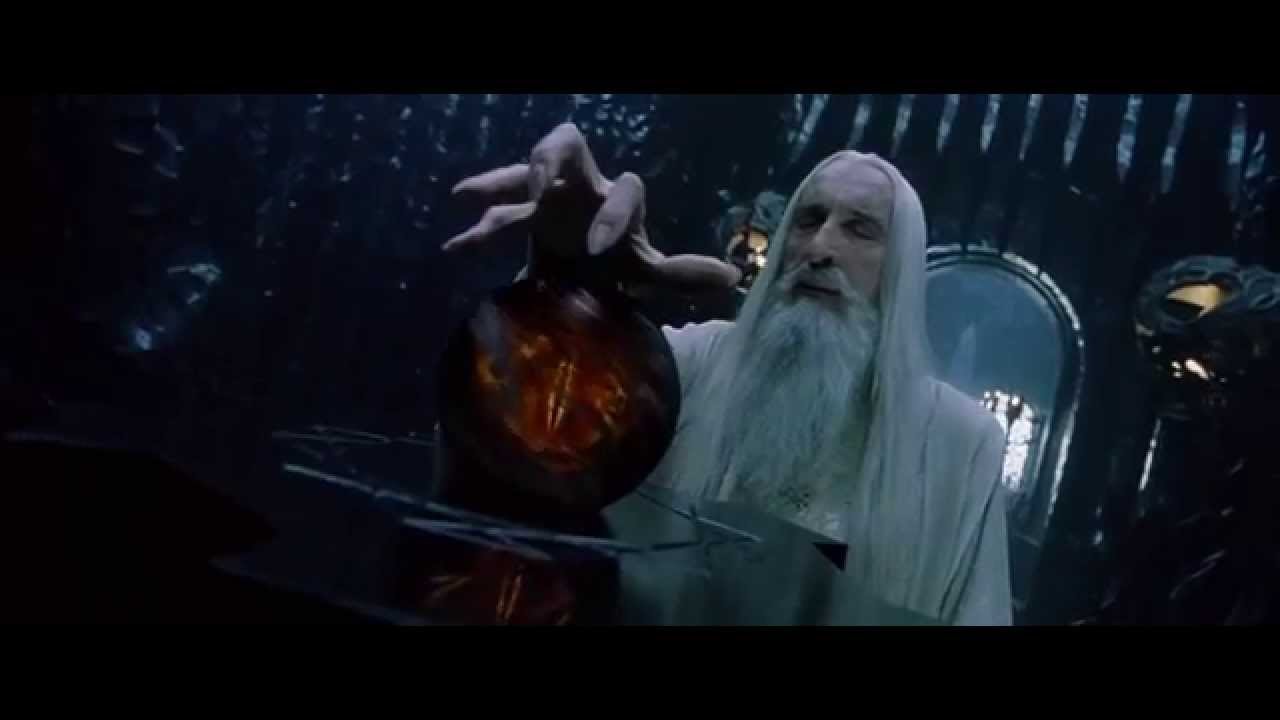
Back to Míriel. She was forced into marriage by Ar-Pharazôn, who was possibly the worst of the Kings of Númenor. I think this is where the show is headed, though I wonder if we will see Ar-Pharazôn as a character.
He sought to take over Middle-earth under the glorious banners of Númenor and force Sauron to bend his knee. However, it was Sauron who outwitted him. Sauron raised the white flag and surrendered without lifting a finger. Ar-Pharazôn took him into custody, thinking he had successfully created a kingdom of Eä (the world in which all the lands were in. Feel free to read that as Earth).
Over the years, Sauron corrupted Ar-Pharazôn to the point that he eventually became a council to the king. This led to the world’s downfall and caused the great wars of the Second Age.
Obviously, the show will speed this up, as they need to do so within the next six episodes. Still, I’ll be very interested in where they take this, as we’ve just touched upon the history of Númenor, which is the basis of the Current Blind read essays on one of the final chapters of The Silmarillion, “Akallabêth.”
We have two other storylines in this episode that don’t progress much, but one gives a deeper understanding of what is happening behind the scenes in the show. The other shows a broader sense of the progression of Middle-earth itself.
The first is Arondir’s storyline, which gives the episode its namesake. He awakens and finds that he’s a slave to the Orcs. They force a team of captives to dig tunnels when the prisoners realize that the Orcs are looking for something, not necessarily tunneling under the Earth. This hilt can only be what we saw the boy Theo hiding in the first and second episodes. The assumption is that they need the hilt to try and bring Sauron to power, but that all remains to be seen. We meet Adar at the very end as Arondir is concussed, and his vision is blurred. Adar comes in his point of view as a blurry Orc Captain.
The second storyline is Nori’s, and whom I can only guess are the originations of the shire folk, I.E., Hobbits. There is a mention in The Fellowship of the Rings that Hobbit’s used to be nomadic, but they settled down, and they are calm and gentle folk who don’t like adventures. Not only do their names (Brandyfoot and Proudfellow) match those of the Hobbits, but their demeanor does as well. After watching this episode, I’m doubling down on the “Stranger” that they found to be Gandalf. I’ve always wondered why Gandalf had a propensity for hobbits when danger was in the way and why he thought of them when he had a task. It may be that Nori is an ancestor of the Baggins clan, and Gandalf feels an affinity with her because she made sure he was safe.
The plot thickens, but it closely matches Akallabêth, so join me next week for a continuation of the Blind Read before we return for Episode 4 of the Rings of Power!
Blind Read Through: J.R.R. Tolkien; The Silmarillion, Akallabêth, part 2
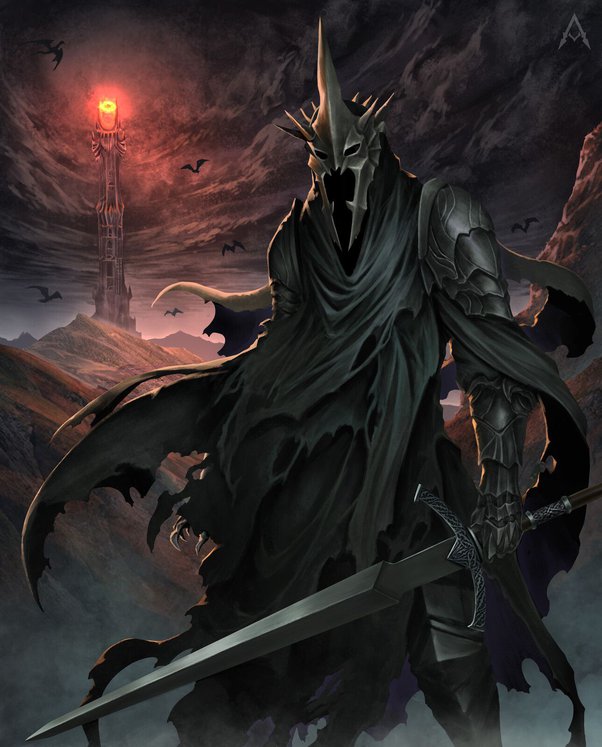
“In this Age, as is elsewhere told, Sauron arose again in Middle-earth, and grew, and turned back to the evil in which he was nurtured by Morgoth, becoming mighty in his service. Already in the days of Tar-Minastir, the eleventh King of Númenor, he had fortified the land of Mordor and had built there the Tower of Barad-Dûr, and thereafter he strove ever for dominion of Middle-earth, to become a king over all kings and as a god unto Men.“
Welcome back to another Blind Read! This week we continue the story of Númenór and watch as they create cancer within themselves, eventually leading to their demise.
We left off last time with the Númenóreans hitting landfall in Middle-earth, so they could hold to their word that they would not sail East towards Valinor.

The people of Middle-earth “sat under the Shadow were now grown weak and fearful,” but the Númenóreans taught them to farm and trained them “in the hewing of wood and the shaping of stone.“
This enabled the people of Middle-earth to forget their ancestor’s transgressions and shed Morgoth’s taint. They revered the Númenóreans because of this and took them as godlike kings.
This power went to their heads. “And they said among themselves: ‘Why do the Lords of the West sit there in peace unending, while we must die and go we know not whither, leaving our home and all that we have made? And the Eldar die not, even those that rebelled against the Lords. And since we have mastered all seas, and no water is so wild or wide that our ships cannot overcome it, why should we not go to Avallónë and greet our friends?‘”
The sentiment of Hubris is central to the Númenórean downfall and the wars which would follow in the Second and Third ages. The Dúnedain thought themselves so great and powerful that they allowed their demise. There is a very close parallel with the Romans in the Númenórean storyline, and I have to wonder if Tolkien didn’t model their rise and fall after that ancient empire. We’ll touch on that more later.

Some heavy theology follows the above quote, which spans pages. It is Tolkien’s search for meaning between the godlike and the mortal. There is quite a bit of documentation that Tolkien eventually meant for these histories to progress into later ages, which would become our history, almost like alternate history and mythology to the real Earth. Because of this, we see this Theology in the struggle of suffering. Why do Men have to suffer and die when the Elves and Valar live eternally? These are surrogate Angels of our world, with Ilúvatar being God.
They go back and forth, showing the youth and entitlement the Númenóreans felt. Why shouldn’t they get to see Valinor and become undying like the rest? But the Valar argued with them, telling them they were given their own gifts; they were not allowed to have the gifts of the Valar and the Eldar.
The Númenóreans all believed this, so it wasn’t until Tar-Atanamir (King of the Dúnedain) that their quest for eternal life saw its first downfalls (which they were blind to) because “Atanamir lived to a great age, clinging to his life beyond the end of all joy; and he was the first of the Númenóreans to do this, refusing to depart until he was witless and unmanned.”
The curse they would keep was this obtuseness of desire. Instead, they would cling to power and life to the detriment of all else.
It was during this age that they built significant structures on the mainland. Many of the Númenóreans reveled in the worship they received from the men of Middle-earth, “and the power and majesty of their kings were increased; and they drank, and they feasted, and they clad themselves in silver and gold.”
Reading this passage, I couldn’t help but think of Denethor and his disgusting eating habits while Merry sang his lamentations.
But the Númenóreans had more power and prestige than Denethor, and it enabled Sauron to gain his own power. So it’s here in the book that we get this essay’s opening quote.
There are some confusing and contradictory passages here which I probably need to read a few more times to understand completely. Still, it seems as though Sauron was around and in the land building power and creating Mordor, and during the Númenórean King Tar-Minastir’s reign, he created the One Ring. It was a partnership between Tar-Minastir and Gil-Galad, the Elven King, which stopped his ascension to power. I hope to see what that struggle looks like in the last chapter of The Silmarillion, “Of the Rings of Power and the Third Age.”
His fear and hatred of them grew through his exposure to the Númenóreans. “Yet Sauron was ever guileful, and it is said that among those whom he ensnared with the Nine Rings three were great lords of the Númenórean race. And when the Úlairi arose that were the Ring-wraiths, his servants, and the strength of his terror and mastery over Men had grown exceedingly great, he began to assail the strong places of the Númenóreans upon the shores of the sea.”

Because of this struggle against Sauron and their own Hubris, the Númenóreans continued their segregation from the Eldar and Valar. It was years and numerous Kings later when they stopped taking Elvish names and stopped tending the White Tree. They didn’t strike out against the Eldar but punished those of their ranks who sympathized with the Eldar. The Valar saw this, and they “gave them counsel and protection no more in their wroth.”
Tolkien does something exciting here. It’s the telling of the rise and fall of civilization over age, but he tells it so simply that it feels like one event after another leading to their eventual fall. But these events are slow-moving, and little things happen during the reign of each of the Númenórean great Kings. Of course, Sauron was around in Middle-earth during this time. Still, his influence was slight, mainly because of the impact of Gil-Galad, but also because he was interested in building up his great fortress, much like his Valar master, Morgoth.
There was no nail in the coffin for the Númenóreans, which makes this history so believable. Great empires can withstand a single significant event. What they cannot resist is years of degradation from the inside. The Númenórean pride and hatred lead them down a path of righteous death.
These people lived hundreds of years, and we’re up to the 24th King of Númenór, and we haven’t even gotten to the linchpin event, which caused the eventual downfall. Tolkien is taking his time, creating an environment within Númenór that will allow this linchpin event to happen.
So join me next time when we see what that event is as we continue on the story of Akallabêth!
Blind Watch: The Rings of Power; Episode 2, Adrift

“No! This is different. He could have landed anywhere and he landed here. I know it sounds strange but somehow I just know he’s important. It’s like there’s a reason this happened, like, I was supposed to find him. Me. I cant walk away from that, not, until I know he’s safe. Can you?“
Welcome to another Blind Watch! This week we delve back into Amazon’s realization of Middle-earth with the second episode of “The Rings of Power.” Be warned now! This blog is meant to be read after watching the episode. There are heavy spoilers and explanations of the episode, so please watch before reading!
This episode, “Adrift,” follows a stranded Galadriel in the middle of the sea. Arondir as he searches for the root of the plague. Nori Brandyfoot finds a mysterious giant and tries to befriend him. Then lastly, Elrond brings us to see the Dwarves of Khazad-Dûm.
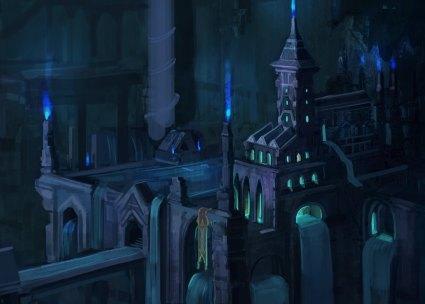
Though the title is a metaphor for all the characters and the uncertainty of what is to come, let’s begin with the most apparent message and cover Galadriel.
A group of shipwreck survivors finds her floating in the ocean. A creature they call the worm attacked them, which is some giant sea creature. It harasses them and breaks up their flotilla, leaving only one survivor after its destruction. However, Galadriel does see (with her elf eyes) some spear impaled into its tail fin. I’m sure there is a significance that I’m missing at the moment, but it’s something to remember moving into future episodes.
In the Silmarillion, many creatures remained undescribed and grew in the darkness of Middle-earth. They were creatures of Morgoth’s creation because he corrupted the land. I believe that this sea creature, this “worm,” is one of those creatures, and it’s fun to see what the imaginations of Amazon can come up with because they have such an open slate.
The last survivor, Halbrand, lets Galadriel know that Orcs destroyed his home, Orcs that were supposed to be gone from the region. Instead, we find that the Orcs come from the Southlands, which we already know from Arondir’s storyline. Eventually, they are seen by someone on a ship, who undoubtedly is a Númenórian.
Moving back to Arondir’s storyline, he heads to the Southlands and finds a city that has been destroyed from beneath. The scourge is Orc that has tunneled underneath the earth and popped up to sack the city. He and Bronwyn find enough evidence to realize that Bronwyn’s town is in danger. They head back to find that Orc’s have come from underneath, and there is a fun fight scene towards the end of the episode where they fight and kill one of the orcs.

The mystery here is Theo, who is Bronwyn’s son. He has a sword hilt with Sauron’s mark on it, and the question is, where did he get that hilt? Could Theo be Halbrand’s son? Could the mysterious broken sword have come from a previous battle where Sauron was defeated? We are led to believe that Sauron’s armies heeded the call of the sword hilt, so all those questions remain to be answered.
Elrond’s storyline is the least impressive of the episode and takes up most of the run time. However, the whole point of the storyline is a setup for the rings of power in general. Elrond meets up with Celebrimbor, the premier elvish smith who wants to create something spectacular. However, he somehow lacks the ability, so Elrond takes him to visit his “friend” (speak friend and enter) Prince Durin. The goal is to get Prince Durin and Celebrimbor together to create what can only be the Rings of Power. There is also a decent amount of back and forth about Dwarvish/Elvish relations, which will only enrich the later storylines.
The final storyline is, to me, the most interesting and is represented by the quote at the beginning of this essay. It follows Nori, who is a precursor to the Third Age Hobbits we know and love (based upon the name, I have to imagine she is a descendant of the Proudfoot and the Brandywine Hobbit lines).

Nori finds the mysterious giant who has some magical powers. I think the showrunners are taking a little more creative license here because I believe this being is a Maiar named Olórin, otherwise known in Middle-earth as Gandalf.
The Maiar are basically celestial beings, second only to the Valar, and indeed are servants of the Valar (Morgoth is and was Valar, and Sauron is his Maiar adjutant). The Istari were a sect of Maiar “wizards” sent to Middle-earth to assist the people against Sauron’s deception and armies. At the end of the first episode we see this giant being shot down to the earth like a meteor, and spends the majority fo the second episode trying to learn speech, and to understand his magic.
That follows with the general storyline of The Silmarillion, but the only issue is that the Istari were all sent in the Third Age, not the Second Age, so the showrunners are ignoring some history of Middle-earth here to work to make a better and more fluid show.
The whole of what I know about the Second Age comes from Akallabêth, which I’ve just finished, and we’ll get a Blind Read over the next few weeks to complete it. The issues I see here are that in the Second Age, Sauron worked his silver tongue to fool the great kingdoms of Middle-earth. He became a consultant of the Númenórians and created distrust from the inside rather than fighting them directly.
Sauron’s real story may still be the case in the show because we are just getting to Númenor in the next episode, but because there are already armies of Orcs fighting, and no one seems to know where Sauron is, I don’t think this is the direction they’re going.
It also is a complete divergence for Galadriel’s character because she was a fighter, but at this point in history, she was married to Celeborn and living peacefully, but there is no mention of him in the show. It was Morgoth who killed her brother, not Sauron, so her motivation has changed entirely.
Despite all that, it’s fun to be back in Middle-earth on screen, and I can’t wait to see their take on Númenor!
Join me next week as we continue with Akallabêth. We will switch back and forth between Blind Reads and Blind Watch every week for the next few weeks, as the last two chapters in the Silmarillion pertain to what is happening in “The Rings of Power.”
Blind Read Through: J.R.R. Tolkien; The Silmarillion, Akallabêth, part 1
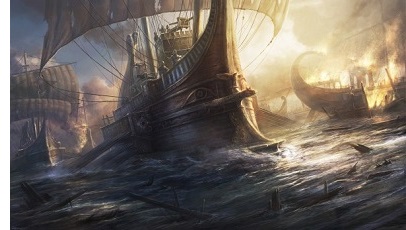
“And the Doom of Men, that they should depart, was at first a gift of Ilùvatar. It became a grief to them only because coming under the shadow of Morgoth it seemed to them that they were surrounded by a great darkness, of which they were afraid; and some grew wilful and proud and would not yield , until life was reft from them. We who beat the ever mounting burden of the years do not clearly understand this; but if that grief has returned to trouble you, as you say, then we fear that the Shadow arises once more and grows again in your hearts.“
Welcome back to another Blind Read! This week we delve into the Decendents of Elves and Men, otherwise known as the Númenorians or Dúnedain.
Tolkien begins the chapter by giving us an abridgment of the story of Men in The Silmarillion, but with a slight adjustment: “It is said by the Eldar that Men came into the world in the time of the Shadow of Morgoth, and they fell swiftly under his dominion; for he sent his emissaries among them, and they listened to his evil and cunning words, and they worshipped the Darkness and yet feared it.“
Interestingly, he begins this chapter from the perspective of the Eldar because the majority of the end of The Silmarillion has to do with how the “men” (meaning humans) helped with the ultimate defeat of Morgoth. Indeed without their influence, Morgoth would probably have taken over the land of Middle-earth.
What I find so fascinating about this passage is that Tolkien is saying that the majority of Men in the first age fell under Morgoth’s deception. However, just a select few, the Edain, who made their way West into Beleriand, were free of The Dark Lord’s corruption. Indeed, these Edain are whom we’ve read about thus far in the Quenta Silmarillion.
With Morgoth’s defeat, his thralls went back into the east, and the Edain faithful to the Valar were rewarded for their servitude. “Eönwë came among them and taught them; and they were given wisdom and power and life more enduring than any others of mortal race have possessed.”
They were also given land that was “neither part of Middle-earth nor of Valinor, for it was sundered from either by a wide sea.” The Valar raised the ground from the sea and enriched it with life, and the Star of Eärendil shone like a northern light to show the Edain how to reach that land. The land was called Andor, or “Númenóre in the High Eldarin tongue.“
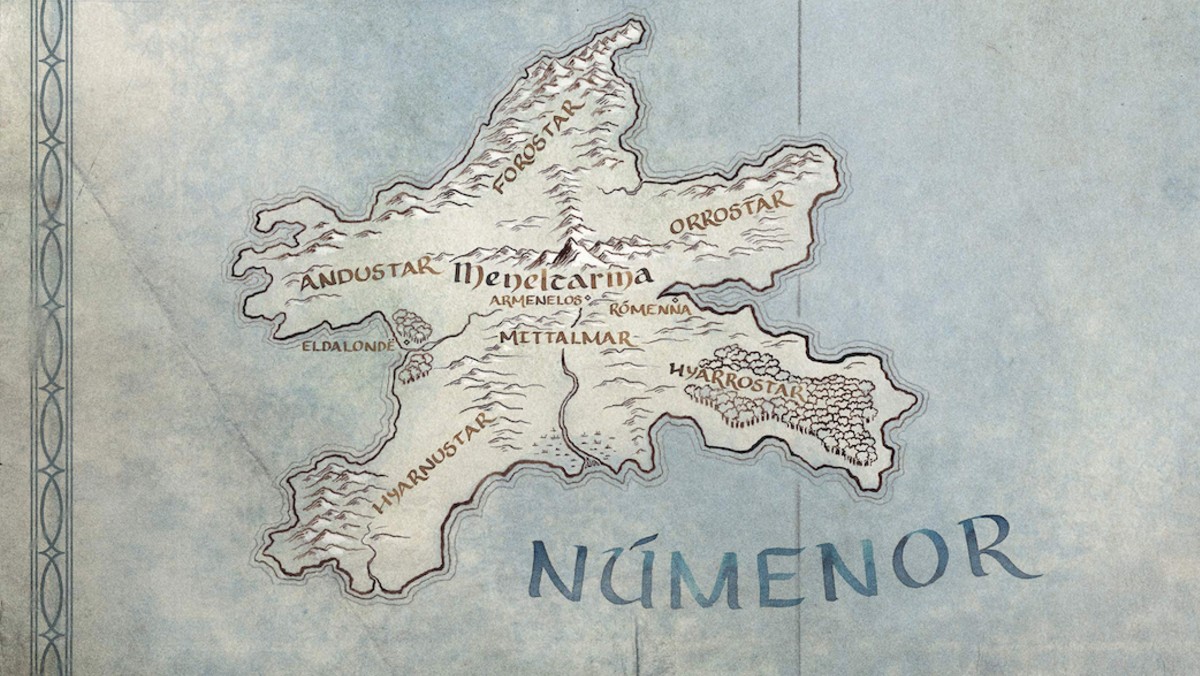
“This was the beginning of that people that in the Grey-elven speech are called the Dúnedain: the Númenóreans, Kings among Men.“
These “Kings among Men” were blessed with abnormally long lives to allow them to gain wisdom and help with the progression of Men in Arda, but the original gift of Ilùvatar was still intact. The gift of death.
Ilùvatar (you can read this as God) wanted Men of Middle-earth to have the ability to die, so he gave them short lifespans. The Valar are eternal, and the Eldar are immortal unless mortally injured. So men were given short lives to appreciate the splendor that Ilùvatar and the Valar had wrought. The drawback was that none of the great human kingdoms of the First Age could produce the marvels that the Elves or even Dwarves were able to create. Thus Númenor allowed them to grow “wise and glorious, and in all things more like the Firstborn than any other of the kindreds of Men; and they were tall, taller than the tallest sons of Middle-earth; and the light of their eyes was like the bright stars.“
It was here on Númenor, the island kingdom, that Elros, brother to Elrond and son of Eärendil and Elwing, became the first King of the Dúnedain in the great city of Armenelos.

Because of his parent’s sacrifice and their mixed blood, the Valar gave the brothers the choice of whom they would live their lives. Elrond chose Noldor blood and lived the rest of his life amongst the Elves. Elros, however, decided the blood of Man, and it’s from his shared blood that the Númenórian line descended.
Elros ruled in splendor for over four hundred years, growing Númenor into the legend it would become. “The Dúnedain dwelt under the protection of the Valar and in the friendship of the Eldar, and they increased in stature both of mind and body.”
They accepted a ban from the Valar that they were not to sail to the west and thus spent their time growing in knowledge and the arts. They became great shipbuilders, as you would expect of people living on an island. They accepted gifts from the Valar and planted seedlings of the great trees of Valinor, echoing Telperion. I have to wonder if this is the antecedent of the great white tree of Gondor we see in The Lord of the Rings. The men of Gondor were, in essence, descendants of the Dúnedain, so having the tree be the standard on their armor and flags makes sense, especially because Aragorn was a descendant of those great kings.
It was during this time that Middle-earth’s wisdom faded, all while the Númenórian knowledge increased. It was only a matter of time before the Dúnedain would make their way to the mainland. Over the years of building ships and gaining their knowledge, a natural curiosity about the surrounding world cropped up among the Dúnedain. They were denied the ability to sail west, so naturally, they sailed east to Middle-earth’s dark lands.
This was the beginning of the corruption of the Dúnedain. They came as seekers of knowledge but went to the land that had regressed. They came to a land of people who had become hunter-gatherers and lived tribally. They came as wanderers and became conquerors. They became, in their own eyes, Gods of Middle-earth.
Join me next week as we review the second episode of The Rings of Power before returning to the saga of the Dúnedain!
Blind Viewing: J.R.R. Tolkien; The Rings of Power, Episode 1

“We had no word for death, for we thought our joys would be unending. We thought our light would never dim. So when the great foe Morgoth, destroyed the very light of our home we resisted. An a legion of Eleves went to war. We left Valinor, our home, and journeyed to a distant realm. One filled with untold perils, and strange creatures beyond count. A place known as Middle-earth.”
Welcome back to another Blind Read! Or, in this case, let’s call it a blind watch! This week, we’re taking a step back from The Silmarillion and reviewing the first episode of “The Rings of Power” on Amazon.
The show is pretty much what I was expecting. It corrupts the lore of Tolkien, using some, changing most, and making much up on their own.

That may sound like a denigration of the show, but it is entertaining – Of which you can’t deny when you first look at Valinor and its two shining trees. People who have not read the Silmarillion will probably take great joy in the show because they get to return to Middle-earth and join along with a few characters they remember from the Movies. Namely Galadriel and Elrond.
So there is entertainment value in the show, and the special effects and visuals of the first episode are incredible. If nothing else, you can tell this was a labor of love for at least the special effects crew.
I have not finished the book (nor any of the other histories which expound upon the core that is The Silmarillion, but if you’ve been reading along with me, you know that), but just getting through the Quenta Silmarillion has given me a good enough knowledge to notice the inconsistencies in the show.
The first of which is in this introduction. We start by viewing Galadriel and Finrod Felagund speaking in Valinor, but the show ignores the entire Fëanor and Silmril plot, which was the fundamental basis of The Silmarillion. In the book the storyline was an effort to show a fall from grace and how people born with the best intentions were corrupted by greed, hubris, and familial bond. If you remember, Fëanor created the Silmarils, and Morgoth stole them with the help of the great and horrible Ungoliant, Shelob’s mother.

Morgoth was a Valar, a creation of Ilùvatar, the God of Arda (“God,” for lack of a better term). Ilùvatar created the Valar, who in turn created the world they created through their song from Valinor. Morgoth was a fallen angel who was jealous of the abilities of the Children of Ilùvatar (The Eldar, or Elves). So he stole the Silmaril’s, which held the light of Valinor, and went to Middle-earth. That is all true.
What the show doesn’t cover is that Fëanor and his sons and the rest of the Noldor (Galadriel included), Killed their kin because they were denied an exit from Valinor, and then they stole boats and sailed to find Morgoth and take the Silmarils back.
The showrunners did this because they wanted to keep the Elves the uncomplicated heroes of the show. They needed them to be beings that the viewers would root for, yet that depth of character, which they tried to infuse within Galadriel, is lost on the rest of the Elves.
So we see in the opening quote of this essay, which is part of the opening voiceover from Galadriel, that the Elves chased Morgoth to Middle-earth to battle the called angel. They include every grand battle and say that the war lasted for centuries, but they gloss over the other incredible stories of the age. But, of course, they didn’t have the rights to those stories, so we can’t blame them for it, and there is a possibility that they framed the show this way because they were not allowed to mention the I.P. of The Silmarillion, I.E., the Silmarils.
So all of that is just the setup for the show. The introduction has some spectacular visuals, and it was fascinating to see the aftermath of the Fifth Battle called Nirnaeth Arnoediad. For example, the pile of Elven helms (which probably should have been bodies, but it’s a show), which was called Haudh-en-Nirnaeth, or the Hill of Tears (The fifth battle was called Unnumbered Tears), which eventually grew over with grass. You’ll notice this heartbreaking scene immediately when you watch it.
The first considerable divergence the show takes, however, is that Galadriel’s Brother, Finrod Felagund. In the show he falls in battle with Sauron, which is factually incorrect. Instead, he falls in battle with Morgoth, so the back story of Galadriel in the show is false.

The second divergence is The High King Gil-Galad sends the warriors of the Elves back to Valinor, presumably to get them out of the way because Gil-Galad doesn’t believe that Sauron will come back in the next few centuries, if ever. The problem is that at this time, sending the elves to Valinor is not a decision that Gil-Galad can make. It has to be approved by the Valar, and if he had that palaver, there is no way the Valar would allow all of the warriors to return. Not to mention that Galadriel is the last of the Noldor who are accountable to the Curse of Mandos, so she would never be allowed to return to the undying lands.
The scene of the warriors entering Valinor is breathtaking, however, showing the showrunners’ love for the source material. I just wish they had not changed the motivation and basis of Galadriel herself.
I did enjoy the episode, however there are more things to say. First, there is quite a bit of back and forth about black elves. I have seen articles and posts on Social Media where people thought there were no black elves in Middle-earth. I’m here to say that if you hold this belief and you think all elves are described as golden haired, white, and thin, then you did not read the Silmarillion. The description of the Moriquendi, otherwise known as dark elves, had dark (sometimes grayish) skin and dark hair; not to mention the most famous of the Dark Elves, Eöl, the master of the forge and father of Maeglin.

The second is a specific point of interest. It is said in The Silmarillion that because Galadriel is the last of the Noldor who had seen Valinor’s light (yes, despite the actress’s age, she is the oldest of all the Elves in Middle-earth during the events of the show), the light of the trees are reflected in her eyes. The show does a great job at having that reflection of the light of the trees of Valinor in her eyes at all times.
I hope you all enjoy the show as well! Next week we’re returning to the book with The Akallabêth, which is (I think) the history of the Nùmenorians and the second age!
We have a lot to talk about, so join me every Thursday!
Blind Read Through: J.R.R. Tolkien; The Silmarillion, Of the Voyage of Eärendil and the War of Wrath
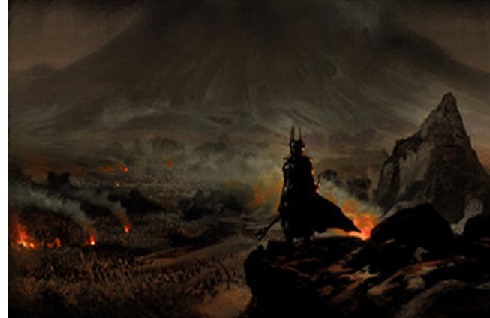
“The meeting of the hosts of the West and the North is named the Great Battle, and the War of Wrath. There was marshalled the whole power of the Throne of Morgoth, and it had become great beyond count, so that Anfauglith could not contain it; and the North was aflame with war.”
Welcome back to another Blind Read! This week we review The War of Wrath and the end of the Quenta Silmarillion.
Last week we learned of Eärendil and Elwing and their plea to the Valar to come and help the people of Beleriand. Through those two half-elves’ sacrifices, they gained Valinor’s assistance against Morgoth. “Yet it is said that Morgoth looked not for the assault that came upon him from the West; for so great was his pride become that he deemed that none would ever again come with open war against him.”
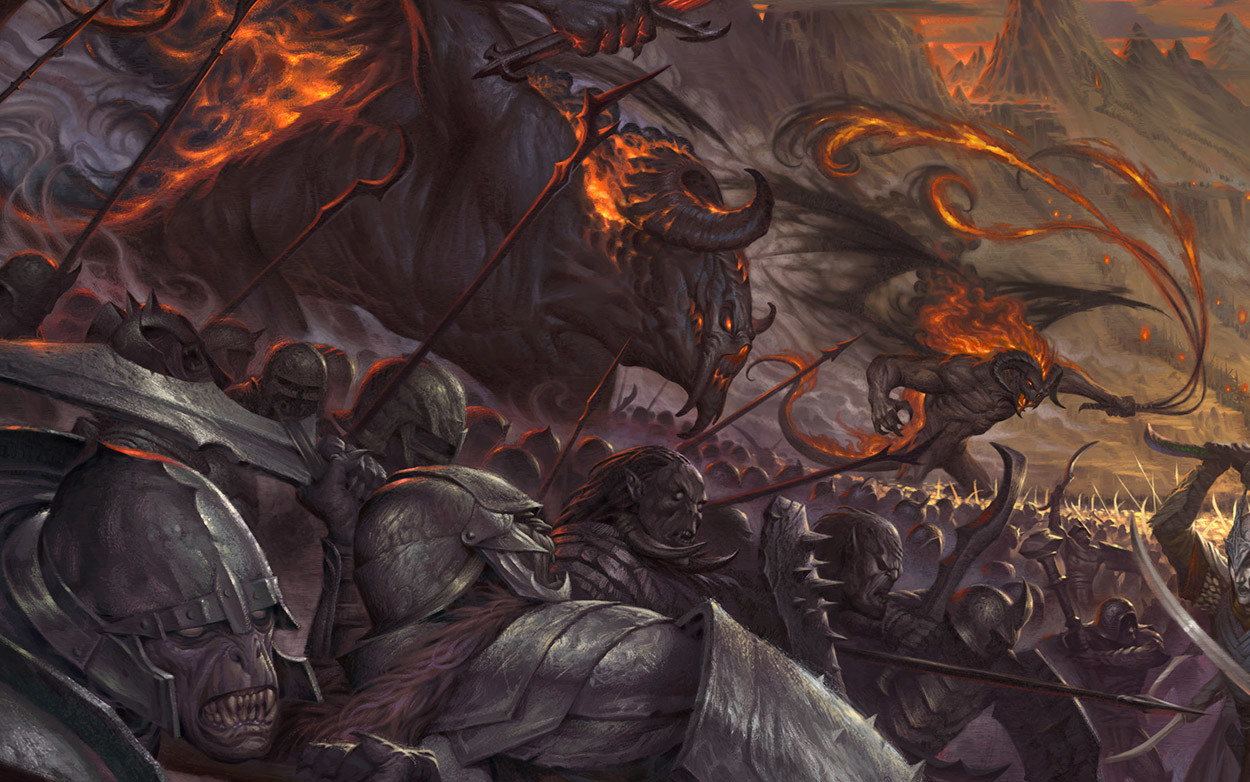
Yet come they did. The Valar came along with the Noldor, who never left Valinor and the Vanyar. Even a host of Teleri marched to battle despite their kin’s memory of the slaying at Swanhaven (Fëanor and his followers) because they “hearkened to Elwing.” Which leads directly into the opening quote of this essay.
The power of Morgoth’s armies was immense, but it could not stand up to the Valar. “The Balrogs were destroyed, save some few that fled and hid themselves in caverns inaccessible at the roots of the earth; and uncounted legions of the Orcs perished like straw in a great fire.”
Morgoth made one last ditch effort and sent out the horror of the fleet of dragons from the pits of Angband. “And so sudden and ruinous was the onset of that dreadful fleet that the host of the Valar was driven back, for the coming of the dragons was with great thunder, and lightning, and a tempest of fire.“
The power of the dragons was immense, but the King of the Eagles, Thorondor, came with his host along with Eärendil upon the flying Vingilot. They met the dragons in the sky and turned the tide. Eärendil even killed Ancalagon the Black, “the mightiest of the dragon-host,” who was so large that he could crush mountaintops under his claws. When Ancalagon fell from the sky, “he fell upon the towers of Thangorodrim, and they were broken in his ruin.“

Finally, the host of Valar was victorious. They descended into earth to gather Morgoth, but the dark king “fled into the deepest of his mines and sued for peace and pardon; but his feet were hewen from under him, and he was hurled upon his face. Then he was bound with the chain Angainor which he haed worn aforetime, and his iron crown they beat into a collar for his neck, and his head was bowed upon his knees. And the two Silmarils which remained to Morgoth were taken from his crown, and they shone unsullied beneath the sky; and Eönwë took them, and guarded them.“
The battle was so devastating that it ended the epoch. The world was physically changed from the drama of the fight. “and the sea roared in through many chasms, and there was confusion and great noise; and the rivers perished or found new paths, and the valleys were upheaved and the hills trod down; and Sirion was no more.“
Many landmarks are the same throughout the ages of Middle-earth (for example, Gondolin is undoubtedly Minas Tirith); however, the landscape is entirely different in the first age from what I know of the Third Age. This battle, “The War of Wrath,” was so devastating that the actual earth was rent and made new. There is a minimal description of the fight in the book; in fact, most of Tolkien’s descriptions are in this essay, but this devastation shows the outright power of the Valar. The book is long and challenging to read, so while reading through the mythos of the Elves as they came to Beleriand, I somewhat forgot that the Valar created the world with their music. A being who can make a world would have the power to destroy or remake that same world. The remaking of Beleriand was either a happy accident or the intent of the War of Wrath because the Valar wanted to eliminate the memory and the scar of Morgoth from the world.
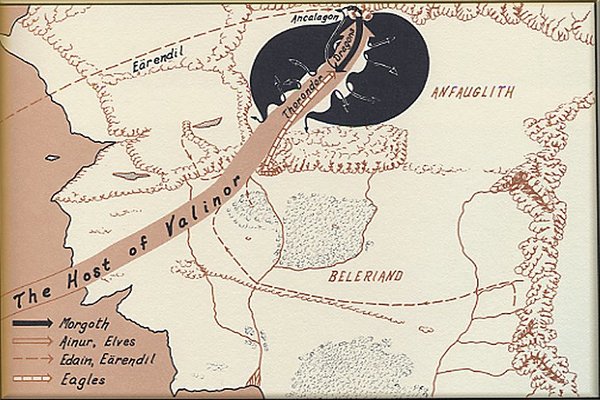
Thus ended the Silmarillion and the reign of Morgoth, but it would not be Tolkien if we didn’t have a little “there and back again.”
The surviving sons of Fëanor, Maedhros and Maglor, still had not held up their oath to their father. So after Eönwë called Elves back to Valinor in the West, they still schemed and wondered if it were worth a battle with the Valar to take the Silmarils back, knowing it would cost them their lives.
They decided to send a message to Eönwë and ask for the two remaining Silmarils, “But Eönwë answered that the right to the work of their father, which the sons of Fëanor formerly possessed, had now perished, because of their many merciless deeds, being blinded by thier oath, and most of all because of their slaying of Dior and the assualt upon the Havens.”
Maedhros and Maglor took council with each other, with Maglor wanting to submit and break their oath because “‘whether we keep our oath or break it; but less evil shall we do in breaking.” But Maedhros knowing the evil they had already committed, talked Maglor into trying to fulfill their oath.
The two Noldor broke into the camp of Eönwë, killed the guards, and took the Silmarils. But an alarm was raised, and the camp came against them. They were immediately caught, “but Eönwë would not permit the slaying of the sons of Fëanor,” and he allowed them to take the Silmarils. He could see the future because the Silmarils caused the remaining sons of Fëanor great pain. So much pain, Maedhros threw himself into a great chasm with the Silmaril so that it was “taken into the bosom of the Earth.“
Maglor threw the Silmaril into the sea because he could not bear the pain, but the pain did not abate once the Silmaril was gone because it was the knowledge of all the wrongs he perpetrated made manifest. So Maglor spent the rest of his days “singing in pain and regret by the waves.”
Most of the Eldalië went back west into the undying lands, but a few stayed, building upon the future of Middle-earth.
“Among those were Círdan the Shipwright, and Celeborn of Doriath, with Galadriel his wife, who alone remained of those who led the Noldor to exile in Beleriand. In Middle-earth dwelt also Gil-galad the High King, and with him was Elrond Half-elven, who chose, as was granted him, to be numbered among the Eldar; but Elros his brother chose to abide with Men. And from these bretheren alone has come among Men the blood of the Firstborn and a strain of the spirits divine that were before Arda; for they were the sons of Elwing, Dior’s daughter, Lúthien’s son, child of Thingol and Melian; and Eärendil their father was the son of Idril Celebrindal, Turgon’s daughter of Gondolin.“
I believe this is the foundation of the Nùmenorians from Elros’ line, and we all know what becomes of Elrond’s line. Not to mention Galadriel, prominently featured in the new Rings of Power Amazon original.
Thus the Silmarillion or the great long struggle of the First Age ends. Morgoth was “thrust through the Door of Night beyond the Walls of the World, into the Timeless Void.” And he is never to return.

Tolkien ties up all the loose knots but one, which I believe he did on purpose because it is the draw to bring the reader back to the next portion of the book: Akallabêth and Of the Rings of Power and the Third Age. The loose knot? What happened to Sauron? He was not mentioned during the War of Wrath, and one can only imagine he is hidden away in Taur-Nu-Fuin, which becomes Mordor in later Ages.
There is a very satisfying conclusion to the tale, and I can’t wait to get into Akallabêth because I believe it describes the events of the Second Age and what The Rings of Power show is partially based on.
Let’s find out next week as we start our journey with Akallabêth!
Blind Read Through: J.R.R. Tolkien; The Silmarillion, Of the Voyage of Eärendil and the War of Wrath, Part 1

“And the wise have said that it was by reason of the power of that holy jewel that they came in time to waters that no vessels save those of the Teleri had known; and they came to the Enchanted Isles and escaped their enchantment; and they came into the Shadowy Seas and passed thier shadows, and they looked upon Tol Eressëa the Lonely Isle, but tarried not; and at the last they cast anchor in the Bay of Eldamar, and the Teleri saw the coming of that ship out of the East and they were amazed, gazing from afar upon the light of the Silmaril, and it was very great.”
Welcome back to another Blind Read! This week we start the process of closing the Quenta Silmarillion as we review the fates and legacy of the two half-Elves looking to save the world from not only Morgoth but their own kind.

We pick up right where we left off in the last chapter, with Eärendil marrying Elwing and having two boys, Elros and Elrond. Yes, that Elrond. Eärendil was restless because of how he viewed the progression of the destruction of Beleriand, so he took to the sea. “Seeking after Tuor and Idril who returned not; and he thought to find perhaps the last shore, and bring ere he died the message of Elves and Men to the Valar in the West, that should move their hearts to pity for the sorrows of Middle-earth.“
Eärendil became friends with Círdan the Shipwright, who built him a fantastic ship named Vingilot, the Foam-flower. He left his family on the coast and sailed West to find answers, but something nagged at him. It was the fear of the remaining sons of Fëanor and what they would do to fulfill their oath. He was right to fear because when the tidings came to Maedros that Elwing lived and had the Silmaril, he gathered his brothers and they demanded the Silmaril, but Elwing refused to relinquish it. “And so there came to pass the last and cruelest of the slayings of Elf by Elf; and that was the third of the great wrongs achieved by the accursed oath.“
The Noldor won the day, but only Maedros and Maglor survived the battle. Elrond and Elros were taken captive, but Elwing, wearing Nauglamír, complete with the Silmaril, cast herself into the sea.
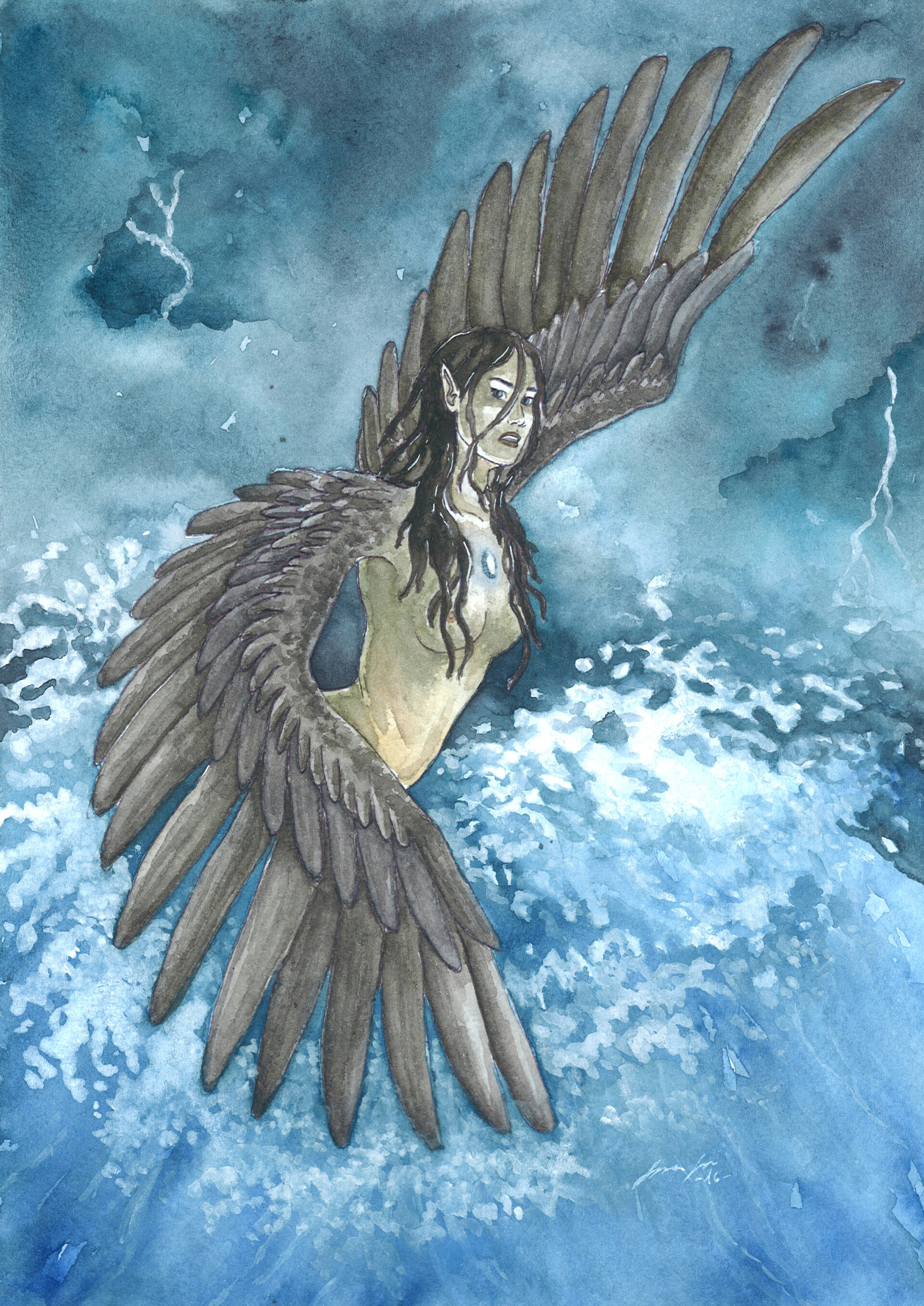
Ulmo came to her rescue and turned her into a “great white bird,” yet again calling reference to the swan boat referenced at the beginning of this book and Galadriel’s ship in The Lord of the Rings.
Elwing, as a bird, found Vingilot and landed on the ship, only then turning back into Elwing. She relayed the events of the last great slaying to her husband, and they feared the loss of their sons, so they did the only thing they could think of doing. They sailed for Valinor to try and gain assistance from the Valar. We get the opening quote of this essay here.
Elwing and Eärendil step to the shores of Valinor but ask the other sailers to stay on the boat because they think that by stepping back on the shored of the Valar, they will not return alive. Their only hope is to get the Valar to agree to help those still living under Morgoth’s wrath.
They come before the council of the Valar, where an excellent discussion about what to do with them takes place. Mandos, the Valar who proclaimed the great curse which eventually led to the Noldor’s destruction, volleyed to have them put to death, for they came to the undying lands unbidden. However, cooler heads prevailed, and Manwë forgave them, if only because they came to Valinor to save others. He gave them a choice, however; “to Eärendil and to Elwing, and to their sons, shall be given leave each to choose freely to which kindred their fates shall be joined, and under which kindred they shall be judged.“
Both Eärendil and Elwing chose to be judged “among the Firstborn Children of Ilùvatar,” thus adhering, at least in part, to the Curse of Mandos.
The Valar sent a significant wind which set the sailors on the boat back to Beleriand, “but they took Vingiot, and hallowed it, and bore it away through Valinor to the uttermost rim of the world; and there is passed through the Door of Night and was lifted even into the oceans of heaven.“
And that is the fate of Eärendil. He is to sail the stars for the remainder of eternity with the Silmaril on his brow, shining brighter than any star. In fact, “when this new star was seen at evening, Maedros spoke to Maglor, his brother, and he said: ‘surely that is a Silmaril that shines now in the West?’
“And Maglor answered: ‘If it be truly the Silmaril which was cast into the sea that rises again by the power of the Valar, then let us be glad; for it’s glory is seen now by many, and is yet secure from all evil.'”

This end brought the light of the Trees of Valinor to the world, without ever having a single being be in charge of keeping the Silmaril, and thus lightened a load of all living beings to just existing. The Power the Silmarils held was never meant to be in the lands beyond Valinor because the gems indicated that a mortal (or semi-mortal) being could be close to godliness. The Light of the Trees was a creation of the music of the Ainur, spurned on by Ilùvatar himself (itself?). Fëanor created them not out of reverence for his betters but out of a lust to be more like them. That is what the power of the Silmarils entails, and that is why no one can seem to give them up when they have one (with the significant exception of Lùthien). They are a piece of God-made tactile. People still fight over lands they deem holy because they believe God was born there. Can you imagine what they would do if they knew there was a physical talisman which embodied God in the world? This is what caused the strife of Beleriand. This is what caused the world’s wars. Because one Noldor deemed that it was his birthright to be more like a god, he ascended high enough to create an aspect of that light but not high enough to become part of it.
Meanwhile, Elwing stayed on Valinor in a large white tower built by the Valar. “And it is said that Elwing learned the tongues of birds, who herself had once worn their shape; and they taught her the craft of flight, and her wings were of white and silver-grey.“
In Tolkien, there is always a node of hope in the harshest stories. For example, Elwing and Eärendil sacrificed themselves to end the strife of Beleriand. They were ostracized and put to death, owning the curse of Mandos to end it. But hope comes because whenever Eärendil comes close to Beleriand, Elwing becomes a bird and flies to meet him and be with her husband again. This is somewhat reminiscent to another resurrection story where someone takes on the sins of others…
The scene of them riding through the sky, however, is reminiscent of many old Mythologies and adds to the magic and wonder of the world. More importantly, it shows that though they took the curse on their shoulders, they still can be together, fly over the world of Middle-earth, and view their children growing up and old while being close to the light of their God.
We are nearly there; just a few pages more! Join me next week as we conclude The Quenta Silmarillion!

 Sean McBride
You must be logged in to post a comment.