Blind Read Through: J.R.R. Tolkien; The Book of Lost Tales, part 2; Túrin’s last tragedy

“There did she stay her feet and standing spake as to herself: ‘O waters of the forest whither do ye go? Wilt thou take Nienóri, Nienóri daughter of Úrin, child of woe? O ye white foams, would that ye might lave me clean – but deep, deep must be the waters that would wash my memory of this nameless curse. O bear me hence, far far away, where are the waters of the unremembering sea. O waters of the forest wither do ye go?’ Then ceasing suddenly she cast herself over the fall’s brink, and perished where it foams about the rocks below; but at that moment the sun arose above the trees and light fell upon the waters, and the waters roared unheeding above the death of Nienóri (pg 109-110).”
Welcome back to another Blind Read! This week, we conclude the tale of Turambar and the Foalókë and experience the last tragedies of Turambar’s life.
We left off last week with Turambar and Níniel deciding to ride out against the Foalókë, Glorund, to kill the drake. They gathered with them a group of men desperate to rid their land of the terrible beast, but on the way to the drake, they slowly abandoned the mission, leaving only a handful of mercenaries left, and “Of these several were overcome by the noxious breath of the beast and after were slain (pg 104).”

Eventually, only Turambar and Níniel were left to face the beast. “Then in his wrath Turambar would have turned his sword against them, but they fled, and so was it that alone he scaled the wall until he came close beneath the dragon’s body, and he reeled by reason of the heat and of the stench and clung to a stout bush.
“Then abiding until a very vital and unfended spot was within stroke, he heaved up Gurtholfin his black sword and stabbed with all his strength above his head, and that magic blade of the Rodothlim went into the vitals of the dragon even to the hilt, and the yell of his death-pain rent the woods and all that heard it were aghast (pg 107).”
The death of Glorund would seem like a cause for celebration, but unfortunately, Turambar’s efforts to end the scourge of the great worm only ended up in more tragedy.
His death was foretold from his early mistakes, and if he had only taken a little more time and been less impetuous, his life wouldn’t have ended up the way it was. Turambar is an echo of Hotspur, the firey prince of Shakespeare’s histories, where he has everything going for him, but because of his temper and strong desires, his life is degraded.
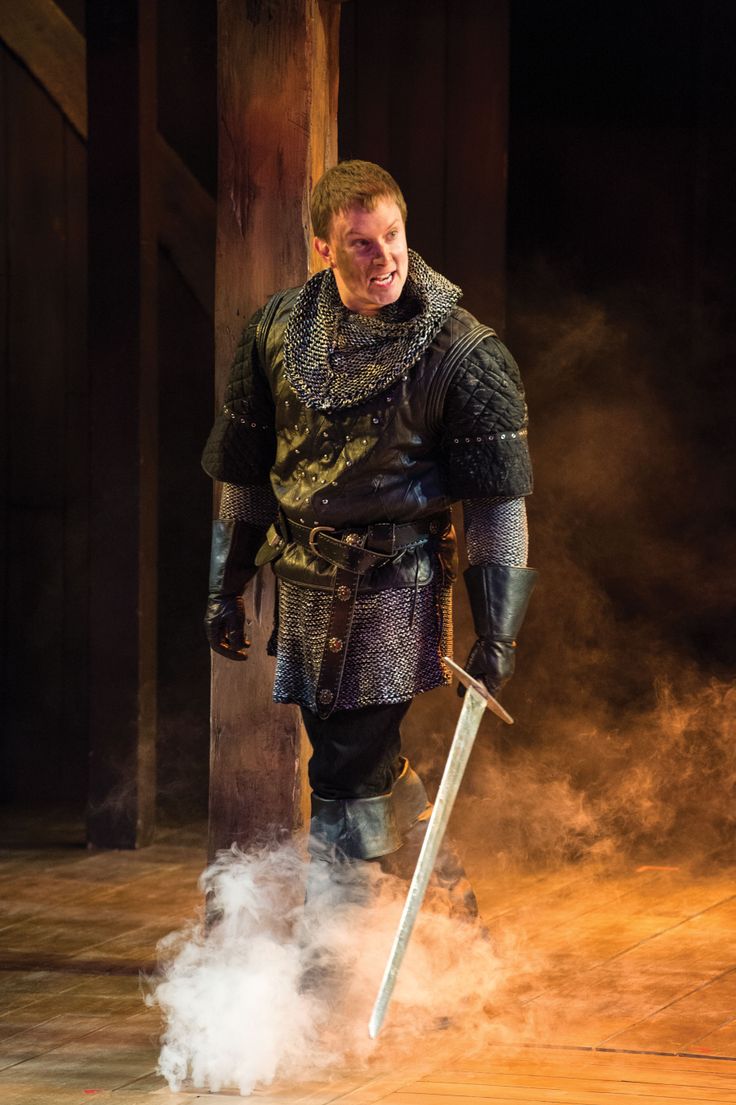
So how could Turambar’s life degrade from killing the drake, you might ask? Well, he passes out next to the Foalókë, and when Níniel comes to find him, she thinks he died along with the dragon in mortal combat. She weeps next to Turambar. She weeps for her husband. She cries for the man who killed the dragon and saved their people. But her weeping wakes Glorund for one last gasp.
“But lo! at those words the drake stirred his last, and turning his baleful eyes upon her ere he shut them for ever said: ‘O thou Nienóri daughter of Mavwin, I give thee joy that thou has found thy brother at last, for the search hath been weary – and now is he become a very mighty fellow and a stabber of his foes unseen (pg 109).”
Glorund died with these words, but what fell with the great beast was the glamor he held over Nienóri. She was suddenly aware of who she was and who Túrin was. Realization bombarded her that she had been married to her brother and had children with him. Aghast at the knowledge, she heads off to a waterfall called the Silver Bowl, contemplative. But instead of Nienóri coming to terms with the events of the last number of years, she is overwhelmed, and we get the quote that opens this essay.
Túrin wakes and quickly realizes that she is gone. He heads back to the village where the people already know the secret of their king and queen, and Túrin pulls it out of them. This being Túrin and his tragic story, he responds how you would expect him to:
“So did he leave the folk behind and drive heedless through the woods calling ever the name Níniel, till the woods rang most dismally with that word, and his going led him by circuitous ways ever to the glade of Silver Bowl, and none had dared to follow him (pg 111).”
Túrin turns to his sentient sword and begs for the only absolution his troubled life could understand.
“‘Hail Gurtholfin, wand of death, for thou art all men’s bane and all men’s lives fain wouldst thou drink, knowing no lord or faith save the hand that wields thee if it be strong. Thee I only have now – slay me therefore and be swift, for life is a curse, and all my days are creeping foul, and all my deeds are vile, and all I love is dead (pg 112).'”

“and Turambar cast himself upon the point of Gurtholfin, and the dark blade took his life (pg 112).”
The tale doesn’t end here, however; Tolkien switches us back to Mavwin and her search for her children. She wept and went into the woods, and the region of Silver Bowl became haunted by their past and presence.
Tolkien also lays on some of his Christianity, which is notably absent in the later editions:
“Yet it is said that when he was dead his shade fared into the woods seeking Mavwin, and long those twain haunted the woods about the fall of Silver Bowl bewailing their children. But the Elves of Kôr have told, and they know, that at last Úrin and Mavwin fared to Mandos, and Nienóri was not there nor Túrin thier son (pg 115).”
Both the children ended up as spirits because their transgressions forbade them from the afterlife.
Join me next week as we dive more into the religion of the story and break down just what Tolkien was going for with such a horrifically tragic story.
Blind Read Through: J.R.R. Tolkien; The Book of Lost Tales, Part 2, Turambar’s Fourth Tragedy

“Now as the days passed Turambar grew to love Níniel very greatly indeed, and all the folk beside loved her for her great loveliness and sweetness, yet was she ever half-sorrowful and often distraught of mind, as one that seeks for something mislaid that soon she must discover, so the folk said: ‘Would that the Valar would lift the spell that lies upon Níniel (Pg 101).'”
Welcome back to another Blind Read! This week, we continue with Túrin’s tale as it turns from dark to strange and learn how his bad decisions lead to his next tragedy.
This portion of the tale switches gears and focuses on Túrin’s mother, Mavwin, and his sister, Nienóri. We know already from the previous portions of the story that Mavwin and Nienóri left Hislómë and went down to try and find Túrin in Tinwelint’s hidden home, but when they got there, they found that Túrin had fled.
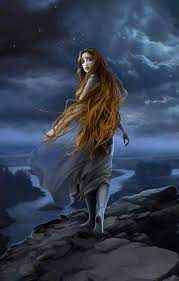
“Now the tale tells not the number of days that Turambar sojourned with the Rodothlim but these were many, and during that time Nienóri grew to the threshold of womanhood (pg92).”
Being a young lady, Nienóri would not accept being a ward of Brodda, so she convinced her mother that she would join Mavin on the sojourn to Tinwelint and to find her long-lost older brother.
They went through perils to get there, braving the creatures of the wilds, and then when they finally reached the Elven home, they found that Túrin was gone. They received conflicting reports that he was either dead or had been captured by Orcs and was made a thrall, like his father before him.
They soon find that the Foalókë (dragon) Glorund is in the area and might have Túrin in his grasp, so Mavwin and Nienóri steel themselves and head out to face the Foalókë and try to save him.
During this time, there were some exciting transitions that Tolkien was still working through (which is apparent in the notes). Túrin had changed his name to Turambar (or Mormakil) when he became an outlaw, which is at the same time Mavwin and Nienóri are looking for him. So when they questioned the people of the wood looking for Túrin, many of the Rodothlim they questioned didn’t know who Túrin was, because they only knew him as The Mormakil or Turambar. Without this comedy of errors, they wouldn’t have had to venture out and try to fight against Glorund because Turambar (as we’ll call him moving forward) had already escaped.

But alas, they sought the Foalókë and were caught in his glamor: “‘Seek not to cajole me, woman,’ sneered that evil one. ‘Liever would I keep they daughter and slay thee or send thee back to thy hovels, but I have need of neither of you.’ With those words, he opened full his evil eyes, and a light shone in them, and Mavwin and Nienóri quaked beneath them, and a swoon came upon their minds, and them seemed that they groped in endless tunnels of darkness, and there they found not one another ever again, and calling only vain echoes answered, and there was no glimmer of light (pg 99).”
Oof. This passage is probably as close to horror as anything in Tolkien. The dragon has put their minds in a cage, and mother and daughter never see each other again. They don’t recognize each other, and this transcends into the rest of the story. We follow Nienóri as she leaves and ends up living with wood rangers. In the woods, “she seemed to herself to awake from dreams of horror nor could she recall them, but their dread hung dark behind her mind, and her memory of all past things was dimmed (pg 99).”
For the rest of the tale, Tolkien writes Nienóri in this fashion. Confused and haunted, as if something is beyond her understanding or grasp, and this confusion leads to Turambar’s next tragedy.
Turmabar eventually gets to the hovel where the wood rangers live and he sees a beautiful young woman whom he calls Níniel because she cannot remember her name. He calls her this because she is distraught and crying when he finds her, and Níniel means little one of tears.

Nienóri was just a baby the last time Turambar saw her, so he doesn’t recognize her, and there are copious liner notes from Tolkien himself which indicate how careful he needs to be, not to mention the name Túrin and give away the surprise. Because Turambar does not recognize her and Níniel does not remember her past, the two begin to court, which leads to the quote that opens this essay and Túrin’s next tragedy.
It seemed as though there was peace in Hisilómë, as The Foalókë didn’t know where they were hiding. For a time, there was prosperity, and “Like a king and queen did Turambar and Níniel become, and there was song and mirth in those glades of their dwelling, and much happiness in their halls. And Níniel conceived (pg 103).”
There is Turmabar’s fourth tragedy. Unbeknownst to him, he met a familiar and beautiful face in his sister, wooed and married her, then had a child through incest.
They lived in happy ignorance until a traitor found their home in the forest. Mîm the dwarf, known as Mîm the petty dwarf in The Silmarillion, betrayed their whereabouts.
The Foalókë charged out through the woods and smote some of the woodsmen. Turambar, being their chief, decided that he needed to do something.
“Now when Turambar made ready to depart then Níniel begged to ride beside him, and he consented, for he loved her and it was his thought that if he fell and the drake lived then might none of the people be saved, and he would liever have Níniel by him, hoping perchance to snatch her at least from the clutches of the worm, by death at his own or one of his liege’s hands (pg 104).”
His decision seemed to be sound reasoning at the time, but they were against a terrible foe in Glorund, the Drake who glamorized his whole family, and his wife/sister was still under that glamor. If we know anything about Turambar’s life, we know what will come next.
Join me next week as we conclude Turambar’s tale!
Blind Read Through: The Book of Lost Tales, Part 2, Túrin’s Third Tragedy
“And thereupon Turambar leapt upon the high place and ere Brodda might foresee the act he drew Gurtholfin and seizing Brodda by the locks all but smote his head from his body, crying aloud: ‘So dieth the rich man who addeth the widow’s little to his much. Lo, men die not all in the wild woods, and am I not in truth the son of Úrin, who having sought back unto his folk findeth an empty hall despoiled (pg 90).'”
Welcome back to another Blind Read! This week, we delve back into Túrin’s story and reach a turning point in his life. In addition, we get to experience Túrin’s third tragedy.
We left off last week with Túrin leaning into the Outlaw mentality and choosing that lifestyle in the woods and wilds. As we’ve discussed, Túrin didn’t have the easiest childhood. His father was a thrall to Melko, as were many of his people, and his sister died young. Mavwin, Túrin’s mother, sent him to live with Tinwelint as a ward to that Elven King. He lived with this idea of being an orphan his entire life, even though his mother lived and gave birth to another sister.
In his head, Túrin always felt as though others were looking at him as an outsider, so when he killed Orgol (his first tragedy), he assumed that others were judging him based on his family. It isn’t until he kills Beleg (his second tragedy) that he begins to think less of himself and his contributions to society, so he begins to slide into being an outlaw.
Túrin does not account for the area’s history and how Melko had corrupted things. After we find out about his outlaw shift, there is a meeting with the Rodothlim. To rally them for battle, “for he lusted ever for war with the creatures of Melko (pg 83),” he called for them to: “Remember ye the Battle of Uncounted Tears and forget not your folk that there fell, nor seek ever to flee, but fight and stand (pg 83).”
Túrin needs to take a history lesson. The Battle of Unnumbered Tears (later called in The Silmarillion), also known as Nirnaeth Arnoediad, was so named because of the sheer amount of dead and the Doom of Mandos.
Mandos laid down that curse because the Noldori killed their kin to go after Melko and recover the Silmarils. In that titular curse, Mandos tells the Eldar, “Tears Unnumbered ye shall shed,” In this battle, also known as the Fifth battle in the wars of Beleriand, Morgoth gains ground and begins to take over the land.
So, while Túrin is internalizing the wrongs of his life and turning to violence to assuage his conscience, he forgets that everything that caused the issues was because of the Noldor, not because of him or his deeds, horrendous as they are.
So Túrin leaned into his anger and spoke to Orodreth, a smith, for a weapon because he could no longer touch the sword he killed Beleg with. This creation deviates from what the story later became because Orodreth and not Eöl fashioned Gurthang.

“Now then Orodreth let fashion for him a great sword, and it was made by magic to be utterly black save it’s edges, and those were shining bright and sharp as but Gnome steel may be. Heavy it was, and was sheathed in black, and it hung from a sable belt, and Túrin named it Gurtholfin the Wand of Death; and often that blade lept in his hand of its own lust, and it is said that at times it spake dark words to him (pg 83).”
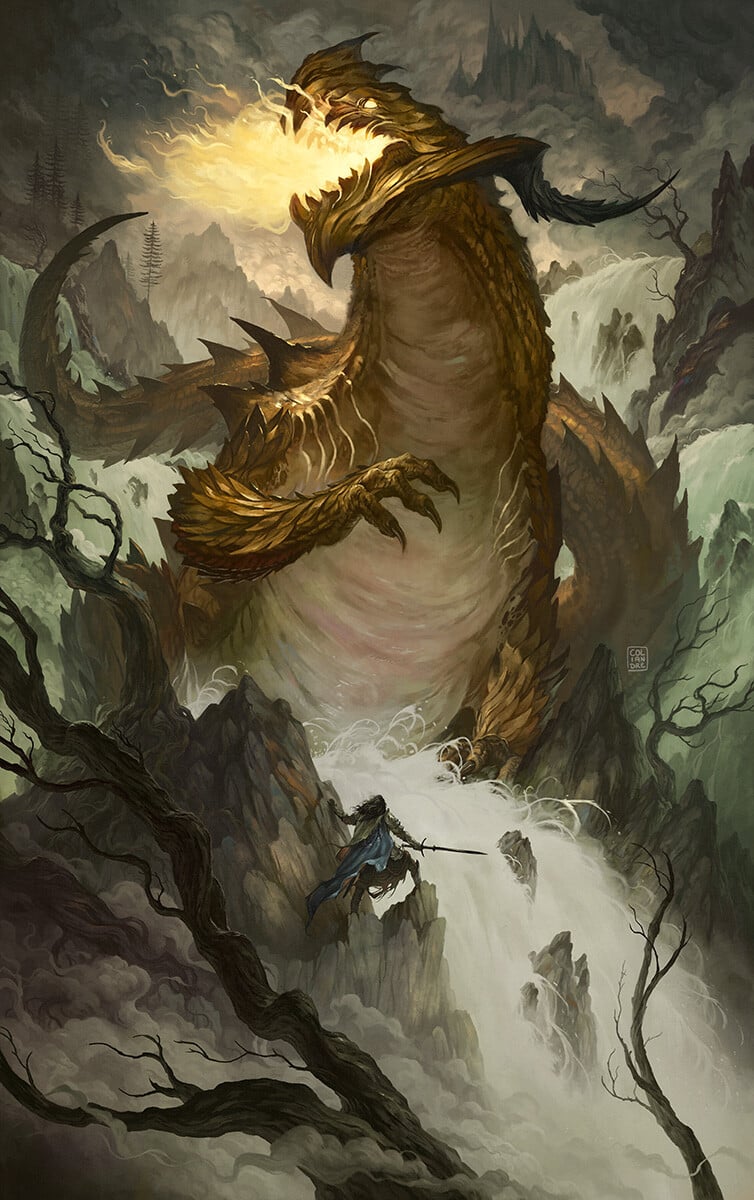
Orodreth tried to speak against fighting against Melko’s armies, regretting his creation of the Wand of Death, but Túrin was both craving war and trying to atone for his past indiscretions, so he went out and fought every agent of Melko he could find. He became infamous, and it did not go past Melko’s sight. Melko released a great army, “and a great worm was with them whose scales were polished bronze and whose breath was a mingled fire and smoke, and his name was Glorund (pg 84).”
Glorund killed Orodreth, who, even on his death bed, reproached Túrin, blaming him for the destruction his range had caused. Túrin tried to fight, but the dragon had powers Túrin didn’t understand, and the drake charmed Túrin, holding him in place, while Failivrin waws carried away, crying out, “O Túrin Mormakil, where is thy heart; O my beloved, wherefore dost thou forsake me (pg 86).”
She didn’t understand that he had been charmed and thought he was letting the creatures kidnap her.
Túrin was trapped there with the mind games of Glorund until finally, the dragon set him free, allowing him to go after Failivrin or seek out his mother and sister, whom he only knew as a newborn.
He decides to go after his mother, only to find she has fled Dor Lómin. In her place, she left a local high-class man named Brodda to watch over her estate, but Brodda, seeing the wealth to be had, rebranded all her cattle and property as his own.

Túrin had already killed, and now he had someone directly blame him for their misfortune (in Orodreth), and he chose the wrong path to find his mother, succumbing to Melko and Glorung’s deception.
It is at this point that Túrin forsakes morality. He is no longer trying to be an upstanding citizen. Even in his outlaw stage, his actions were to help and save others. It is here that we get the quote at the beginning of this essay, and it is here that we see Túrin’s next tragedy. He has given into his anger and hate, gone over to the dark side (forgive the crossover), and decided to go with full-fledged murder.
Moving forward in his story, he is still an outlaw, but he is no longer an outlaw for the good of the people. He is now an outlaw hell-bent on his emotional trajectory.
Join me next week as we continue on Túrin’s journey!
Blind Read Through: J.R.R. Tolkien; The Book of Lost Tales, part 2, Turambar

“Now coming before that king they were received well for the memory of Úrin the Steadfast, and when also the king heard of the bond tween Úrin and Beren the One-handed and the plight of that lady Mavwin his heart became softened and he granted her desire, nor would he send Túrin away, but rather said he: ‘Son of Úrin, thou shalt dwell sweetly in my woodland court, nor even so as a retainer, but behold as a second child of mine shalt thou be, and all the wisdoms of Gwendheling and of myself shalt thou be taught (Pg 73).'”
Welcome back to another Blind Read! This week, we introduce Túrin and his tragedy while getting some commentary about Tolkien’s decision to create a story throughline instead of the history that the tale became.
Christopher begins this chapter by speaking of the timeframe of the writing itself and how his father wrote Turambar in the time between the original script of Tinúviel and the edits of that tale:
“There is also the fact that the rewritten Tinúviel was followed, at the same time of composition, by the first form of the ‘interlude’ in which Gilfanon appears, whereas at the beginning of Turambar there is reference to Ailios (who was replaced by Gilfanon) concluding the previous tale (pg 69).”
I bring this to your attention because of the profound changes Tolkien was making at the time and the apparent fact that Christopher missed when he made the assertion of Beren always being intended to be Eldar.
Ailios or Gilfanon said, shortly after his introduction, “‘Now all folk gathered here know that this is the story of Turambar and the Foalókë, and it is,’ said he, ‘a favourite tale among Men, and tells of very ancient days of that folk before the Battle of Tasarinan when first Men entered the dark vales of Hisilómë (pg 70).'”
Tolkien establishes almost immediately that this is a story about Men, not Gnomes or Elves, and it is only a few pages later that we get this passage:
“…but the deeds of Beren of the One Hand in the halls of Tinwelint were remembered still in Dor Lómin, wherefore it came into the heart of Mavwin, for lack of other council, to send Túrin her son to the court of Tinwelint, begging him to foster this orphan for the memory of Úrin and of Beren son of Egnor (pg 72).”
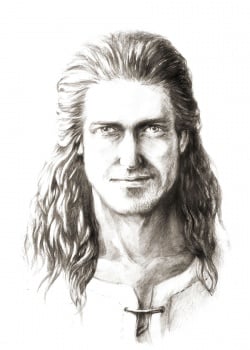
Here, we get a direct correlation between Beren and Úrin, one of which is a Man and the other is an Elf in the established setting. To go even further, in the opening quote of this essay, Tolkien states that Beren and Egnor were friends, and before this passage, in early Tolkien, there was no love lost between Elves and Men. This is the first instance of the earlier works where an Elf and a Man were friends.
I contend that this was an accident on Tolkien’s part because he was already beginning to think of Beren and Egnor as Men. After all, it fits the story so much better. There is even a passage where Egnor is “akin to Mavwin.” Egnor is Beren’s father, and Mavwin is Túrin’s mother, thereby stating that Egnor was, at the very minimum, a half-elf, but such things never existed in Tolkien. (You might remember Elros and Elrond, who were born half-elves; however, the Vala made them decide which side they were to fall on, and Elros became a man and founded the Númenóreans and Elrond became an Elf…and we know how that story ends)
Tolkien also brings back the Path of Dreams, or Olórë Mallë, to explain how Ailios (Gilfanon) knows these stories firsthand (there is a reference that he also knows the story of the fall of Gondolin: “and I knew it long ere I trod Olórë Mallë in the days before the fall of Gondolin (pg 70).” The more that I read of these Lost Tales, the more I understand why Tolkien took Gilfanon out of the story, and why he also took out the transitions.
Tolkien initially wanted these stories to flow into one another with a central story hub (think Ray Bradbury’s The Illustrated Man) because he was worried that people would not be interested in the dry history of a land that didn’t exist. To tell this tale in a “Hobbit” style might make it more accessible to the everyday reader. However, he ran into the problem of how to make it work. He knew who Eriol was, and there were plans for him (which I believe will come to light in the last chapter of The Book of Lost Tales, part 2), but how does he get the surrounding characters into the work? The people who tell the tale? Well, he created things like Olórë Mallë, a sleep bridge that can get men (and only men apparently, as no Elves needed it because of their immortality) to different areas of space and time. He also created spaceships (literally ships that could sail across the sky) but decided to limit that to elevate a single character, Eärendil, to a godlike being as he sails his ship Vingilot across the sky.
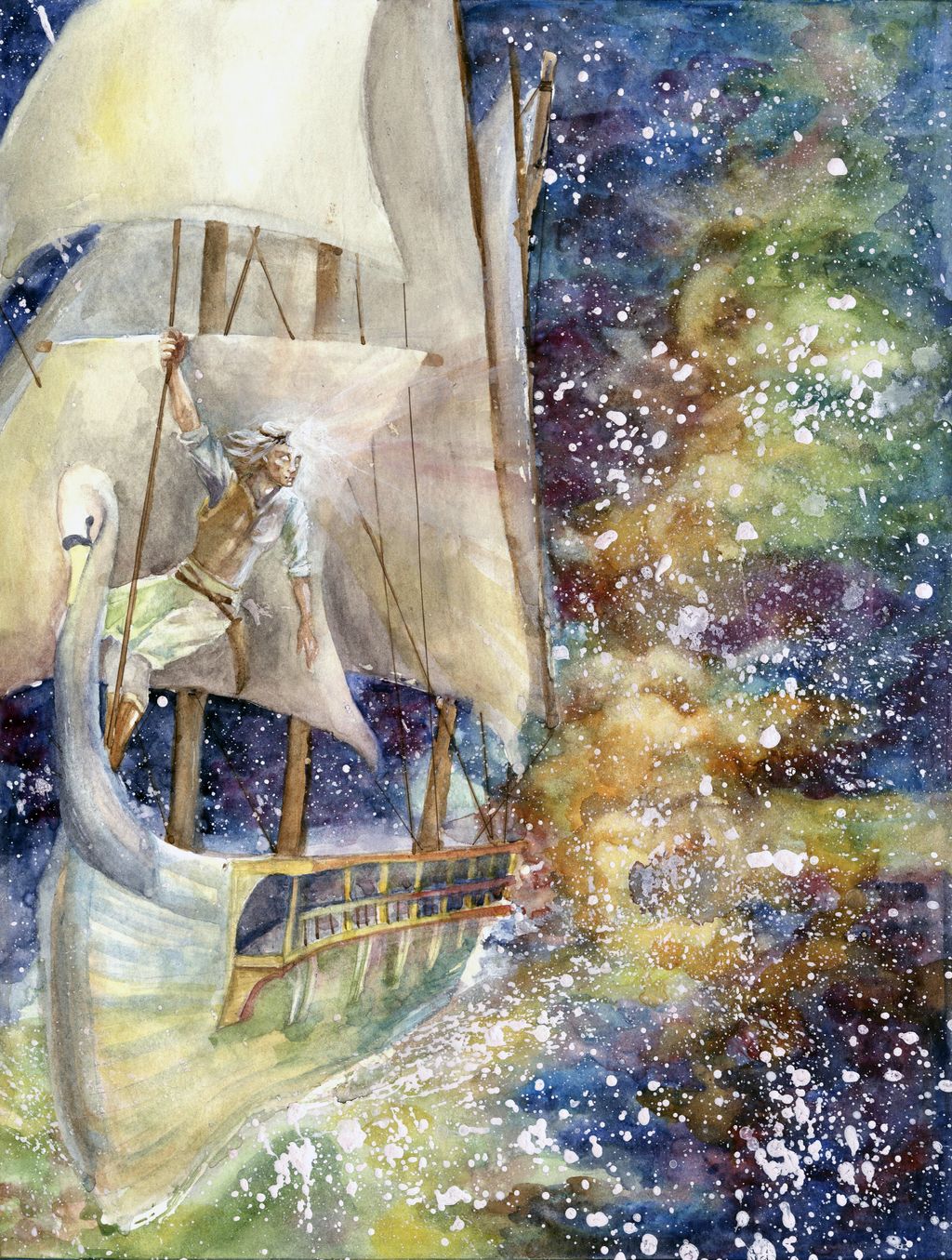
These ideas were a means to an end, and he only used them to tell the story. He eventually realized that these plot devices were only taking away from the story instead of enhancing it, but his quandary was that to take them away removes all credence of the story that was being told. For this reason, I believe Tolkien took out the transition pieces with Eriol learning the histories.
That leads us right into Turambar because, as Ailios describes Úrin and how he knew Beren and his travails. Mavwin, Túrin’s mother and Úrin’s wife, decided that Túrin would be safer staying with Tinwelint, than he would up north with the threat of Melko.
Thus, Túrin’s story begins.
“Very much joy had he in that sojourn, yet did the sorrow of his sundering from Mavwin fall never quite away from him; great waxed his strength of body and the stoutness of his feats got him praise wheresoever Tinwelint was held as lord, yet he was a silent boy and often gloomy, and he got not love easily and fortune did not follow him, for few things that he desired greatly came to him and many things at which he laboured went awry (pg 74).”
Join me next week as we continue the tragedy of Túrin Turambar!
Blind Read Through: J.R.R. Tolkien; The Book of Lost Tales, part 2, Tale of Tinúviel, commentary

“In the old story, Tinúviel had no meetings with Beren before the day when he boldly accosted her at last, and it was at that very time that she led him to Tinwelint’s cave; they were not lovers, Tinúviel knew nothing of Beren bu that he was enamoured of her dancing, and it seems that she brought him before her father as a matter of courtesy, the natural thing to do (pg 52).”
Welcome back to another Blind Read! This week, we’ll briefly cover Christopher’s commentary on The Tale Of Tinúviel and give some final thoughts on the story.
Much of what Christopher covers (Christopher is J.R.R. Tolkien’s son and editor. This book is posthumously published, and Christopher both compiled it and edited it) in his lengthy comments following the Tale of Tinúviel are the same or very similar to everything that I have covered in the previous Blind Reads, so we’ll speak about the most critical insights and give some context.
Before we jump into that, however, Christopher included a second draft (or at least pieces) of The Tale of Tinúviel just after the first edition and before his comments.
“This follows the manuscript version closely or very closely on the whole, and in no way alters the style or air of the former; it is, therefore, unnecessary to give this second version in extenso (pg 41).”
The most significant change that I noticed was the nomenclature. The forest’s name changed to Doriath, and the names Melian and Thingol are introduced here for the first time.
We also have the adjustment of Beren’s father from Egnor to Barahir and Angamandi to Angband. Most importantly, we first mention Melko as Morgoth (The Sindarin word for Melkor).
This last adjustment may seem like an alteration of monikers to streamline the narrative; however, knowing how The Silmarillion was published and the extensive lists of names, not to mention the number of names in each language many of the characters had, we know he did this intentionally.
Many people assume (and rightly so because the theory has become so ubiquitous) that Tolkien built a language (Elvish) and then developed a story and world based on that language. This theory makes a certain amount of sense because he was a linguist. Still, read these books (or, more importantly, Christopher’s annotation). You’ll understand that the world-building and the language came conjointly because of Tolkien’s desire to tell a fairy tale that would become England’s own. It was all supposed to start with this first story: The Tale of Tinúviel.

The names evolved because Tolkien was developing his language and the world the story took place in, and the names he originally used no longer made sense.
A prime example of this is in the second version of the story, “Beren addresses Melko as ‘most mighty Belcha Morgoth (pg 67).'” I’ll let Christopher explain:
“In the Gnomish dictionary Belcha is given as the Gnomish form corresponding to Melko, but Morgoth is not found in it: indeed this is the first and only appearance of the name in the Lost Tales. The element goth is given in the Gnomish dictionary with the meaning ‘war, strife’; but if Morgoth meant at this period ‘Black Strife’ it is perhaps strange that Beren should use it in flattering speech. A name-list made in the 1930s explains Morgoth as ‘formed from his Orc-name Goth ‘Lord of Master’ with mor ‘dark or black’ prefixed, but it seems very doubtful that this etymology is valid for the earlier period (pg 67).”
Tolkien was evolving and creating new languages for the Eldar and the Orcs, Dwarves, and Valar. Beyond that, he was developing dialects within these languages, so a Sindarin name would be different from a Noldoli name, which is where many people get confused about the number of names in The Silmarillion and how the rumor got started that Tolkien created the languages first and the world second. The above quote is the irrefutable proof (not to mention the extensive changes to The Lost Tales).
We can see the linguistic changes Tolkien is making, which in turn changes the story’s core, but there is some very interesting world-building that Tolkien has done in the augments between drafts.
The first example surrounds the Simarils; “The Silmarils are indeed famous, and they have a holy power, but the fate of the world is not bound up with them (pg 53).”
Tolkien understood the Maguffin (a plot device that sets the characters into motion and drives the story) early on. Still, his original intention was to tell the tale of two lovers, he and Edith, but in the names of Beren and Lúthien (Tinúviel). What he came to realize as he went through drafts and started to build the history of the world (this second version was also the first mention of Turgon the King of Gondolin because Tolkien had begun working on the story The Fall of Gondolin before he went back to the second draft of the Tale of Tinúviel), was that there needed to be a through line to bring the different tales together into one single history, rather than having a bunch of disparate short stories spattered throughout history. The Silmarils became that Maguffin. They grew in mystery and power in his mind. The tale of Valinor became the precursor and introduction to the power that the Silmarils contained so that they might tell a much larger story and have the whole of the world seeking the power they held (much like the One Ring in The Hobbit and The Lord of the Rings).
The Tale of Tinúviel is a fascinating addition to the Legendarium, but it does feel a little one-note beside its later counterpart, Of Beren and Lúthien. What is most interesting is the fairy tale manner in which Tolkien tells the tale. The first big bad we see is a cat who captures our hero and makes him hunt for them because they’re lazy cats. This anthropomorphized creature is a common theme in fairy tales, and Tevildo never truly poses a real threat, especially when Huan the Hound shows up. Then, when Tinwelint imprisons Tinúviel in a tall tower to keep her from going after her love, we get impressions of all the old Anderson Fairy Tales. In this early version, it is apparent that Tolkien was going for a fairy tale vibe (which in fact was his original intention before realizing that he wanted to make it more realistic, more gritty), but instead of eventually disneyfying it, he went deeper and darker and turned the tale into something bold and breathtaking, and seeing the transformation is something to behold.
We’ll take a week off before returning to the next story, “Turambar and the Foalókë.”
Blind Read Through: J.R.R. Tolkien; The Book of Lost Tales, part 2, The Tale of Tinúviel, conclusion
“Lo, the king had been distraught with grief and had relaxed his ancient wariness and cunning; indeed his warriors had been sent hither and thither deep into the unwholesome woods searching for that maiden, and many had been slain or lost for ever, and war there was with Melko’s servants about all their northern and eastern borders, so that the folk feared mightily lest that Ainu upraise his strength and come utterly to crush them and Gwendeling’s magic have not the strength to withold the numbers of the Orcs (pg 36).”
Welcome back to another Blind read! This week, we finish The Tale of Lúthien and reveal more differences between The Book of Lost Tales and The Silmarillion.
We left off last week with Lúthien and Huan saving Beren from Tevildo and the cats. After escaping, they retreated and recovered, but there was still that everlasting desire to go and get the Silmaril back, so they devised a plan.

“Now doth Tinúviel put forth her skill and fairy-magic, and she sews Beren into this fell and makes him to the likeness of a great cat, and teaches him how to sit and sprawl, to step and bound and trot in the semblance of a cat… (pg 31).”
They go to Angamandi and the court of Melko, where they come into contact with Karkaras (an early version of Carcharoth), who was suspicious of Lúthien, but her disguise on Beren held. Lúthien played her magic on the great wolf and put him to sleep “until he was fast in dreams of great chases in the woods of Hisilómë when he was but a whelp… (pg 31).”
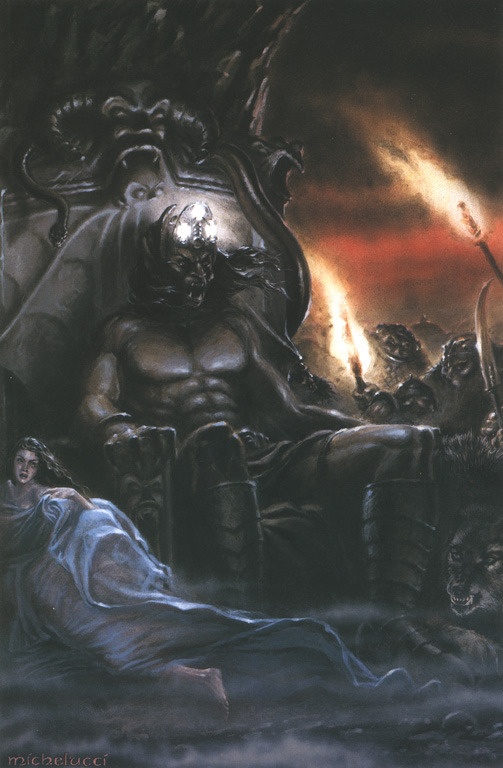
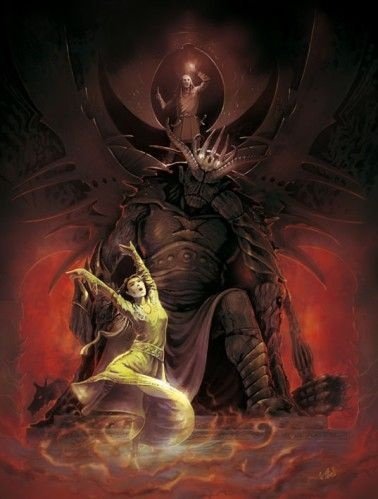
Both Lúthien and Beren make their way to Melko’s throne room, filled with cats and creatures, and Beren blended in with them, and took up a “sleeping” position underneath Melko’s throne. Lúthien on the other hand stood with pride before the Ainu, “Then did Tinúviel begin such a dance as neither she nor any other sprite or fay or elf danced ever before or has done since, and after a while even Melko’s gaze was held in wonder (pg 32).”
Everyone in the chamber, all the cats, thralls, Fay, and even Beren, fell asleep while listening to Tinúviel’s Nightingale voice. Her movements were just as hypnotizing, “and Ainu Melko for all his power and majesty succumbed to the magic of that Elf-maid, and indeed even the eyelids of Lórien had grown heavy had he been there to see (pg 33).”
Tinúviel woke Beren, careful to let everyone else continue to sleep. “Now does he draw that knife that he had from Tevildo’s kitchens and he seizes the mighty iron crown, but Tinúviel could not move it and scarcely might the thews of Beren avail to turn it (pg 33).”
They eventually pry one Silmaril off the crown, but Beren goes for a second one in his greed, only to break his blade and wake Melkor. Tinúviel and Beren fled Angamandi, pursued by Karkaras, the Great Wolf. They battled, and Karakaras bit off Beren’s hand bearing the Silmaril.
But, “being fashioned with spells of the Gods and Gnomes before evil came there; and it doth not tolerate the touch of evil flesh or of unholy hand (pg 34).” So Karkaras began to be burned alive from the inside out and screamed for all he had. The screams of the Great Wolf woke the castle, and Beren and Tinúviel fled for their lives.
They ran with an entire Orc army of Melko on their trail and had many encounters with them but eventually “stepped within the circle of Gwendeling’s magic that hid the paths from evil things and kept harm from the regions of the woodelves (pg 35).” Otherwise known as the Girdle of Melian.
They make their way to the king, and we get the quote that opens this essay, but Tinwelint saw no Silmaril, so they related the tale, and Beren stood before the king and said, “‘Nay, O King, I hold to my word and thine, and I will get thee that Silmaril or ever I dwell in peace in thy halls (pg 38).'”
So Beren went back out into the wilds to find the body of Karkaras and claim the Silmaril, but he didn’t go alone. “King Tinwelint himself led that chase, and Beren was beside him, and Mablung the heavy-handed, chief of the king’s thanes, leaped up and grasped a spear (pg 38).”
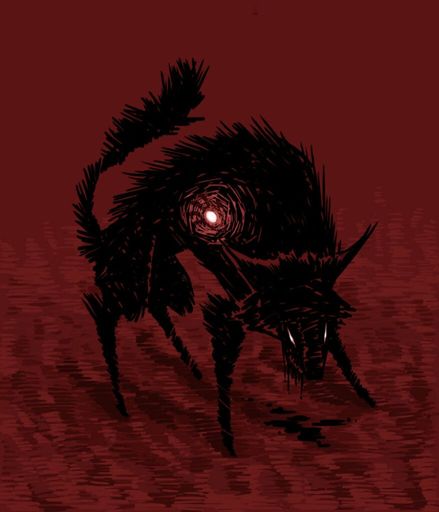
They eventually came upon a vast army of wolves, and among them was Karkaras, still alive but howling in agony. There was a great battle, “Then Beren thrust swiftly upward with a spear into his (Karkaras) throat, and Huan lept again and had him by a hind leg, and Karkaras fell as a stone, for at that same moment the king’s spear found his heart, and his evil spirit gushed forth and sped howling faintly as it fared over the dark hills to Mandos; but Beren lay under him crushed beneath his weight (pg 39).”
Beren was mortally wounded beneath Karkaras, and they tried to nurse him back to health. In the meantime, Tinwelint and Mablung found the Silmaril in Karkaras’ body. Tinwelint refused to take it unless Beren gave it to him to honor the fallen warrior, so Mablung grabbed the Silmaril and handed it to Beren, who, with his dying breath, said, “‘Behold, O King, I give thee the wondrous jewel thou didst desire, and it is but a little thing found by the wayside, for once methinks thou hadst one beyond thought more beautiful, and she is now mine (pg 40).'”
The tale ends with Beren dying, and we get a short interlude of Vëannë telling Eriol that there were many other tales of Beren coming back to life but that the only one she thought was true was the tale of the Nauglafring, otherwise known as the Necklace of the Dwarves.
The tale’s bones are the same all the way through, with some very significant character changes, like the addition of Celegorm and Curufin and the subtraction of Tevildo. Still, quite honestly, these things are entirely necessary because, on its own, this is just a tragic tale. When you add the other elements, the world expands, and the characters gain more agency. Suddenly, Beren’s quest affects far more than just the players in the story, and we get a much broader realization of what Beleriand is, was, and will become.
Join me next week for a short second edition of this tale, some commentary, and some final thoughts!
Blind Read Through: J.R.R. Tolkien; The Book of Lost Tales, part 2; The Tale of Tinúviel, cont.

“Now all this that Tinúviel spake was a great lie in whose devising Huan had guided her, and maidens of the Eldar are not wont to fashion lies; yet have I never heard that any of the Eldar blamed her therein nor beren afterward, and neither do I, for Tevildo was an evil cat and Melko the wickedest of all beings, and Tinúviel was in dire peril at their hands (pg 27).”
Welcome back to another Blind Read! We left off last week with Beren getting captured by Tevildo, Prince of Cats, and Lúthien escaping the tower her father imprisoned her in to go and find and free Beren from his thralldom.
Before the story, let’s review what happened in The Silmarillion.
Lúthien escaped from Doriath and chased after Beren, but where there are cats in The Book of Lost Tales, The Silmarillion had Wolves. Beren was captured by Sauron, the Master of Wolves (many of his minions in this story were werewolves, and he even commanded the Wolf King Carcharoth), and on her way to find him, Lúthien meets up with Huan, the Hound of Valinor.
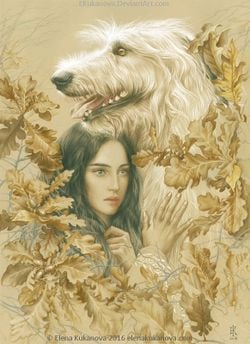
Huan takes Lúthien to his masters, Celegorm and Curufin, who were Fëanor’s sons (Eldar who swore to get the Silmarils back at the cost of all else). The Book of Lost Tales is a significant departure from the older story because these two brothers played a nefarious role in the remaining history of Beleriand. They caused strife and trouble for our heroes many times and generally stood in the way only because of their oath, and they never appear in the earlier version.
This deception is the first instance of their devious natures. They instructed Huan to bring Lúthien before them and once there, Celegorm devised a plan to marry her because of her beauty, but more importantly because of her lineage. Celegorm was seeking power, plain and simple. He tricks Lúthien, brings her to Nargothrond, and imprisons her until his plan can be complete.
Here, Huan felt pity for Lúthien, who only wanted to save her love, and felt disgust for his master. Huan frees Lúthien, leading her to Angband to confront Sauron and free Beren.
When they get there, Sauron sends his werewolves out to kill them, but Huan kills them one by one. Sauron then shapeshifts and changes himself into a werewolf (doubtless being one of those quintessential bad guys who say, “If you want something done right, you gotta do it yourself.”), and heads out to meet them. There is a pitched battle, with Sauron changing into different shapes and trying other tactics. Still, eventually, Huan defeats him, and Sauron flees in the form of a Vampire after leaving the keys to the prisons for Huan and Lúthien to take.
This fight shows the absolute power of Huan. Sauron gained strength and influence over the remaining years of his life, but the fact that Huan and Lúthien were able to best him in battle when, later on, it took armies to stand up to him is a testament to Huan’s strength and Lúthien’s ingenuity.

They freed Beren and fled Angband, only to come across our favorite dastardly Eldar, Celegorm, and Curufin. They battled, and Beren won, deepening their shame and anger. Not only were the great sons of Fëanor defeated, but a human bested them to boot!
Beren then snuck back to Angband after both Huan and Lúthien slept, determined to get the Simaril and prove his worthiness, but when they woke and found him gone, they disguised themselves as a vampire and werewolf and went after him. They got to Morgoth’s chambers, and Lúthien used her magic to put everyone to sleep and Beren cut a Silmaril from Morgoth’s crown before escaping from the stronghold.
As they exited, Carcharoth, the King of Wolves jumped out and attacked them, biting off Beren’s hand that held the Silmaril and thus halting their quest. Huan summoned The Eagles of Manwë (you might remember these majestic creatures from the end of The Return of the King when they rescued Frodo and Sam from Mount Doom), and they escaped from Angband.
In The Book of Lost Tales, Sauron is not present. Instead, it’s Tevildo who has Beren captured. Lúthien still meets up with Huan, but we have a sort of natural cat-and-dog relationship there:
“None however did Tevildo fear, for he was as strong as any among them, and more agile and more swift save only than Huan Captain of Dogs. So swift was Huan that on a time he had tasted the fur of Tevildo, and though Tevildo had paid him for that with a gash from his great claws, yet was the pride of the Price of Cats unappeased and he lusted to do a great harm to Huan of the Dogs (pg 21).”
Tinúviel travels with Huan to Angamandi (the early version of Angband) and finds a resting cat sentry just before its gates. Tinúviel asks to speak with Tevildo and plays to the guard’s pride to get her in to gain an audience.

When she is brought before Tevildo, she asks to speak with him privately, but he is not humored:
“‘Nay, get thee gone,’ said Tevildo, ‘thou smellest of dog, and what news of good came ever to a cat from a fairy that had dealings with dogs (pg 24)?”
Tinúviel sweet-talks her way in and spies Beren in the kitchen doing his thrall duties. She speaks loudly, letting Beren know that she’s there, and then we get the opening quote of this essay, where she divulges Huan’s plan: Huan is hurt and helpless just outside in the forest, the cats must kill him!
“Now the story of Huan and his helplessness so pleased him (Tevildo) that he was fain to believe it true, and determined at least to test it; yet at first he feigned indifference (pg 27).”
Tevildo and a small group of Cats went out to try and end Huan, only to fall into the trap. Huan killed all but Tevildo, who barely escaped and lost his golden collar before fleeing up a tree.
Tinúviel took the golden collar and brought it before Tevildo’s court and got all of his prisoners released, along with a curiously named Gnome.
“Lo, let all those of the folk of the Elves or of the children of Men that are bound within these halls be brought forth,’ and behold, Beren was brought forth, but of other thralls there were none, save only Gimli, an aged Gnome, bent in thraldom and grown blind, but whose hearing was the keenest that has been in the world, as all songs say (pg 29).”
This name was undoubtedly used again once the languages were fleshed out and Tolkien realized that Gimli was much more of a dwarven name than an Elvish name, but he doesn’t appear again in this story (that I’ve read so far), so I think it was just a name Tolkien loved.
Lúthien, Beren, and Huan escaped, and the cats were ashamed. Morgoth’s anger was so great that they lost face, and the power of the cats was never the same from then on.
We’re getting close to the end! Join me as we cover the first written ending to The Tale of Tinúviel next week!
Blind Read Through: J.R.R. Tolkien; The Book of Lost Tales, part 2; Beren and Lúthien

“One day he was driven by a great hunger to search amid a deserted camping of some Orcs for scraps of food, but some of these returned unawares and took him prisoner, and they tormented him but did not slay him, for thier captain seeing his strength, worn through he was with hardships, thought that Melko might perchance be pleasured if he was brought before him and might set him to some heavy thrall-work in his mines or in his smithies. So came it that Beren was dragged before Melko, and he bore a stout heart within him nonetheless, for it was belief among his father’s kindred that the power of Melko would not abide for ever, but the Valar would hearken at last to the tears of the Noldoli, and would arise and bind Melko and open Valinor once more to the weary Elves, and great joy should come back upon Earth (Pg 14-15).”
Welcome back to another Blind Read! This week we travail the beginning of the quest for a Silmaril and the humble beginnings of the story in The Book of Lost Tales.
We left off last week with Beren heading out to get the Silmaril from Melkor’s crown to curry favor of Tinwelint and acquire Tinúviel’s hand in marriage. Immediately Beren is in dangerous land:
“Many poisonous snakes were in those places and wolves roamed about, and more fearsome still were the wandering bands of the goblins and the Orcs – foul broodlings of Melko who fared abroad doing his evil work, snaring and capturing beasts, and Men, and Elves, and dragging them to their lord (pg 14).”

Beren was nearly captured by Orcs numerous times, battling all manner of creatures on his way to Angamandi (Melkor’s hold in the Iron Mountains). “Hunger and thirst too tortured him often, and often he would have turned back had not that been well neigh as perilous as going on (pg 14).”
These travels lead us right to the quote that opens this essay. Beren angered Melkor because he represented the kinship between Elves and Men “and said that evidently here was a plotter of deep treacheries against Melko’s lordship, and one worthy of the tortures of Balrogs (pg 15).”
Beren gave Melkor a speech that seemed inspired by the Valar and moved Melkor. Rather than killing him, Melkor decided that he should be sent to the kitchen and become a Thrall of Tevildo, Prince of Cats.
I want to step back here and review what changes Tolkien made to the tale over time.
The framework of the story is the same; however, In The Silmarillion, Beren left Neldoreth (The forests of Thingol and Melian) and made his way to Nargothrond to garner the help of Finrod Felagund, Elven King. He recalled Finrod’s vow to help Barahir’s (Beren’s father) kin, and Finrod agreed to help Beren in his quest for the Silmaril.
Finrod gathered a group and disguised them all as Orcs to get close to Angband, but Sauron, the future Dark Lord, became suspicious of the group and captured them. He sent them to a deep pit and sent werewolves to kill them, which Finrod killed with his bare hands. However, he was mortally wounded and thus ended one of the great Elven Kings of legend.

Tolkien’s process of bringing in Finrod fills out the whole Legendarium much more because The Book of Lost Tales is just that, tales; disparate and singular. These are a collection of stories rattling around in Tolkien’s head which built the history of a world, but he needed connective tissue (and a lot of editing) to bring everything together.
Finrod and Fëanor’s sons, Curufin and Celegorm, become the connective tissue, rather than Tevildo, the Lord of Cats, who doesn’t appear beyond The Book of Lost Tales.
So now that Beren is in captivity, Lúthien can feel that something has gone wrong, so she goes to her mother Gwendeling (Melian) and asks her to use her magic and see if Beren still lives:
“‘He lives indeed, but in an evil captivity, and hope is dead in his heart, for behold, he is but a slave in the power of Tevildo Prince of Cats (pg 17).'”
So she went to her Father, Tinwelint, who was angered that she would want to go after Beren. She also asked her brother Dairon, who scoffed at the idea of her heading off into the wilds, so he went to Tinwelint and tattled on his sister (Daeron in The Silmarillion was an unrequited lover instead of brother, and went to Thingol (Tinwelint) to stop her, and hopefully save her. Tinwelint, in his anger, put her as far away from danger as punishment as he could:
“Now Tinwelint let build high up in that strange tree, as high as men could fashion thier longest ladders to reach, a little house of wood, and it was above the first branches and was sweetly veiled in leaves (pg 18).”
Stuck in the tree, with servants bringing her food and water and then removing the ladders so she couldn’t follow, Tinúviel’s yearning for Beren grew. She stayed up there for a while until she got a vision from the Valar that Beren was still alive and held in captivity, a thrall to Tevildo tasked with hunting for the great cats. Horrified that he was there because of her, and more importantly, the love that kept growing because she could not stop thinking of him, she devised a plan.

“Now Tinúviel took the wine and water when she was alone, and singing a very magical song the while, she mingled them together, and as they lay in the bowl of gold she sang a song of growth, and as they lay in the bowl of silver she sang another song, and the names of all the tallest and longest things upon Earth were set in that song… and last and longest of all she spake of the hair of Uinen the lady of the sea that is spread through all the waters (pg 19-20).”
Remember that the whole point of writing these tales was to build a mythology for England. You can see from reading them that Tolkien was heavily influenced by other fairy tales he read, both in preparation and for study.
Tinúviel rubbed her head in the mixture, and her hair grew to great length, much like Rapunzel did to escape her tower.
Unlike Rapunzel, Tinúviel fashioned a rope out of her hair. She refused anyone from coming up to her little tree house until she finished. Then dressed in a black cloak, she escaped and headed north to go and rescue Beren.
This part of Lúthien’s story is the tale of Rapunzel, except that Tolkien flipped the script and created a strong woman to go and rescue her man.
Join me next week as we continue the story, find the differences with The Silmarillion, and generally have a great time!
Blind Read Through: J.R.R. Tolkien; The Book of Lost Tales, part 2, Beren’s Beginnings
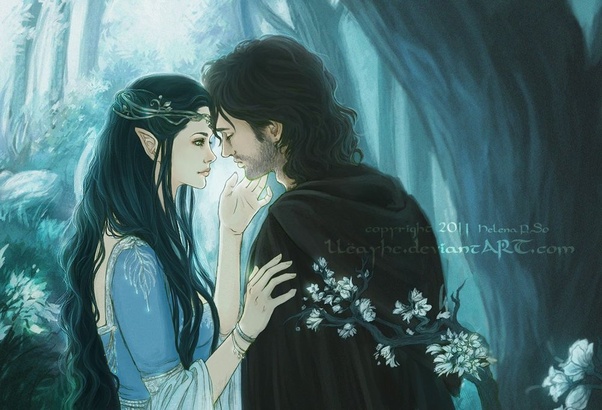
“‘Why! wed my Tinúviel fairest of the maidens of the world, and become a prince of the woodland Elves – ’tis but a little boon for a stranger to ask,’ quoth Tinwelint. ‘Haply I may with right ask somewhat in return. Nothing great shall it be, a token only of thy esteem. Bring me a Silmaril from the Crown of Melko, and that day Tinúviel weds thee, an she will (pg 13).'”
Welcome back to another Blind Read! This week we dive into the Tale of Tinúviel, discover the differences between The Book of Lost Tales and The Silmarillion, as we begin one of Tolkien’s greatest tales.
We left off last week setting the stage for how Tolkien adjusted over time to have the story fit into his Legendarium. This week, we’re going to learn a bit more about Beren and get started on the tale itself!
Tolkien begins the tale with the lineage of Tinúviel and Dairon, as discussed last week, and then transitions into the story itself. “On a time of June they were playing there, and the white umbrels of the hemlocks were like a cloud about the boles of the trees, and there Tinúviel danced until the evening faded late, and there were many white moths abroad (pg 10).”
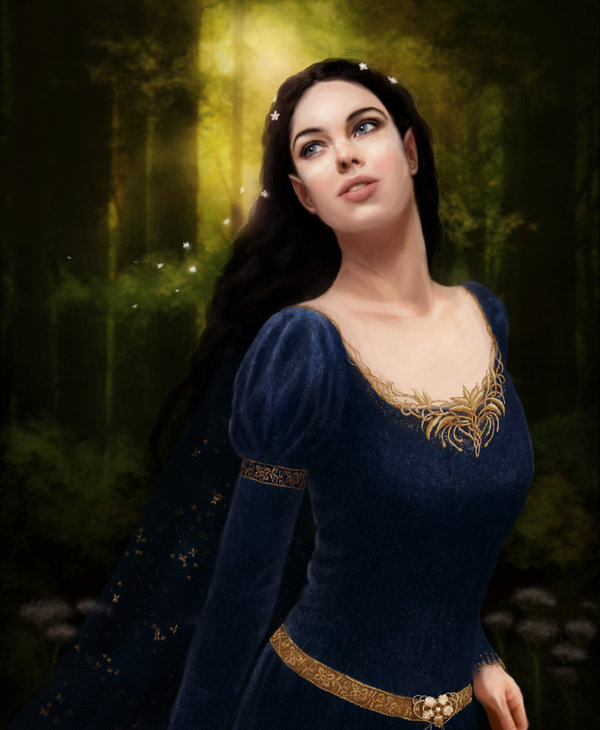
This play was a favorite pastime for both Tinúviel and Dairon. Dairon would play his music, and his sister would dance and sing like a nightingale in the forests of what would eventually be known as Doriath.
“Now Beren was a Gnome, son of Egnor the forester who hunter in the darker places in the north of Hisilómë. Dread and suspicion was between the Eldar and those of thier kindred that had tasted the slavery of Melko, and in this did the evil deeds of the Gnomes at the Haven of the Swans revenge itself (pg 11).”
Beren’s Genesis is an exciting story because while Tolkien was developing it early on, Beren was an elf (or, as Tolkien called them in The Book of Lost Tales, Gnomes).
The reason I chose the above quote was twofold. The first is the change of who Beren’s father was. In the Silmarillion, Beren is the son of Barahir and a descendant of Bëor, who was the leader of the first Men to come to Beleriand.
Barahir was a noble Man (When I capitalize “Man,” I’m using it in Tolkien’s manner, meaning human) who rescued Finrold Filagund from Dagor Bragollach (the Battle of Sudden Flame, otherwise known as the Fourth Battle of Beleriand), and received Finrold’s ring, which was later an heirloom of Isildur in Númenor.
In The Book of Lost Tales, Beren’s father is a Gnome named Egnor, who came to Beleriand early and became a thrall of Melkor. He eventually escaped and fathered Beren, but there was an intense distrust of any thrall of Melkor between the Gnomes.

So then Beren, when he comes across his Nightingale Tinúviel dancing in the forest, is the son of an outcast, which makes Tinwelint, Tinúviel’s father, very skeptical of him, because he is the son of someone who was a thrall of Melkor. Could that thralldom have been passed on? How could Tinwelint possibly trust him to be around his daughter?
Tolkien eventually wanted to change the storyline slightly, but the changes had the same effect. Beren became a Man instead of a Gnome, but Thingol was prejudiced against Men for two reasons. The first was because Men are attracted to power, and they woke after Melkor had done his earlier horrible deeds, so many Men latched onto his passion and became followers of Morgoth, the Dark Lord.
To the Elves, this was as bad or worse than thralldom. In the Silmarillion, it took many acts of Men to get Elves to trust them, and even then, they trusted the individual but still held a healthy distrust of the race.
The second reason Thingol didn’t like Beren and Lúthien’s connection was that Beren was a Man and thus mortal. If he let Lúthien fall in love with a mortal man, she would only have pain to look forward to because even though Men at this time in the Legendarium lived for over a hundred years, Elves were immortal. What was Lúthien to do when Beren died? We see this echo in The Lord of the Rings with Elrond as he speaks to Arwen about loving Aragorn.
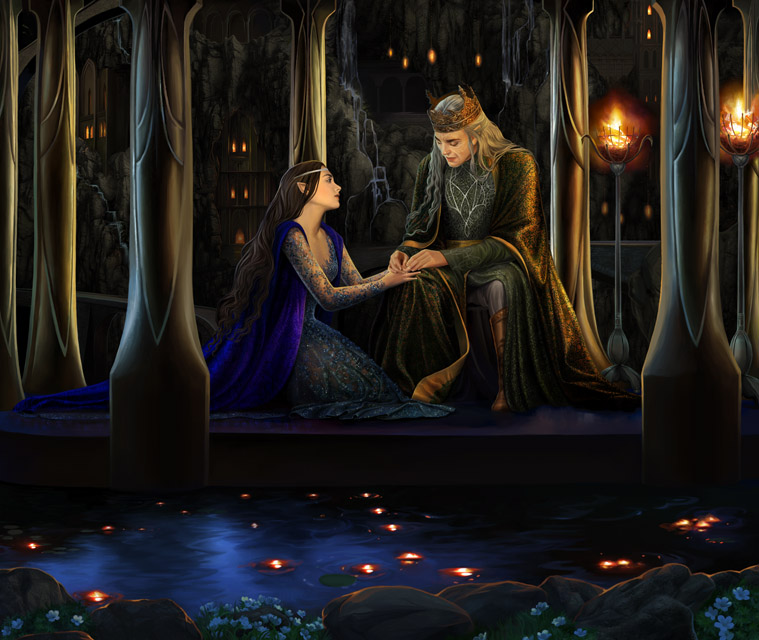
So in both books, Tinwelint/Thingol makes a deal with Beren.
“‘Why! wed my Tinúviel fairest of the maidens of the world, and become prince of the woodland Elves – ’tis but a little boon for a stranger to ask,’ quoth Tinwelint. ‘Haply I may with right ask somewhat in return. Nothing great shall it be, a token only of thy esteem. Bring me a Silmaril from the Crown of Melko, and that day Tinúviel weds thee, an she will (pg 13).'”
Tinwelint knows that he is sending Beren off to his death. In the Book of Lost Tales, not a single Elf had gone up against Melkor because they knew him to be too powerful. Knowing that Beren’s father was a Thrall of Melkor, Tinwelint was probably hoping that Beren would have some genetic predisposition to stay under Melkor’s arm.
Nonetheless, Beren accepted:
“This indeed did Beren know, and he guessed the meaning of their mocking smiles, and aflame with anger he cried: ‘Nay, but tis too small a gift to the father of so sweet a bride. Strange nonetheless seem to me the customs of the woodland Elves, like the rude laws of the folk of Men, that thou shouldest name the gift unoffered, yet lo! I Beren, a huntsman of the Noldoli, will fulfil thy small desire,’ and with that he burst from the hall while all stood astonished (pg 13-14).”
Beren was off to go and collect the Silmaril, even though he knew it was a setup, but Tinwelint didn’t realize that as soon as night would fall, Tinúviel would steal away in the night to follow her love.
Join me next week as we continue the Tale of Tinúviel!
Blind Read Through: J.R.R. Tolkien; The Book of Lost Tales, part 2, The Lineage of Tinúviel

“Lo now I will tell you the things that happened in the halls of Tinwelint after the arising of the Sun indeed but long ere the unforgotten Battle of Unnumbered Tears. And Melko had not completed his designs nor had he unveiled his full might and cruelty (pg 10).”
Welcome back to another Blind Read! This week we begin Tolkien’s premier work in earnest and dissect the differences between what is in The Book of Lost Tales and what would eventually come in The Silmarillion.
The opening quote of this essay introduces the story to the reader, setting the stage for the events to come, but then Tolkien takes a step back and talks of the Elves of Doriath (which were not called such in this early version).
“Two children had Tinwelint then, Dairon and Tinúviel, and Tinúviel was a maiden, and the most beautiful of all the maidens of the hidden Elves, and indeed few have been so fair, for her mother was a fay, a daughter of the Gods; but Dairon was then a boy strong and merry, and above all things he delighted to play upon a pipe of reeds or other woodland instruments, and he is named now among the three most magic players of the Elves… (pg 10).”
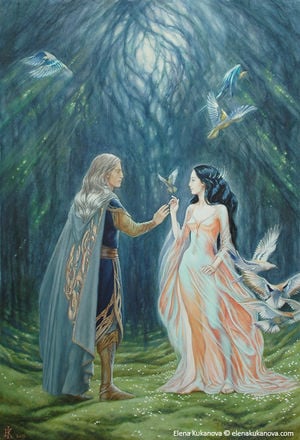
If you have read The Silmarillion, you will probably recognize Tinúviel, and also Dairon as close to a character who stuck around. Still, otherwise, the names of the rest of the characters are entirely different.
Starting with our Titular character, Tinúviel, we know she kept that name in The Silmarillion. It’s the name Beren gave her because it means Nightingale, and he called her that when he found her dancing and singing in the forest. Her name changed to Lúthien, but there is still enough of a thread that it’s easy to keep everything in order.
Next, we have Tinwelint, who gained many names in the future as Tolkien began to develop his languages. Tinwelint became Elwë Singollo, leader of the hosts of the Teleri Elves, along with his brother Olwë. When Elwë led his people from Cuiviénen to Beleriand (the Teleri were known as the Last-comers, or the Hindmost, because, well, they were the last to come to Beleriand of the Eldar), he settled in the forests of Doriath (Where Beren saw Lúthien dancing). He ruled there under his better-known name, Elu Thingol.
Gwendeling, his wife, was not mentioned in the above quote but was also known as Wendelin in the Book of Lost Tales. She is a fay who falls in love with Tinwelint, marries him, and has two children.

Gwendeling, in my opinion, is how Tolkien decided to make the shift for the Maiar because, through the development of the Lay of Lúthien, he understood that women should play a much more significant role than he had initially been written (probably because of the influence of Edith). Gwendeling needed to possess powers of influence, most notably creating the Girdle of Melian, a protective shield over Doriath.
Because of this more extensive influence, Tolkien changed her lineage, and she became a Maiar, along with all of the other “children of the Valar” or Fay who never had a specific history. Doing so enabled Tolkien to have the Maiar keep their power set while at the same time lessening the ability of the Valar to have children (because if they are immortal, what is to stop them from continuing to have children who could potentially mess with the timeline)?
So Gwendeling became Melian the Maiar but stayed wife to Eru Thingol. That enabled Tolkien to make Lúthien a more robust character because she is the daughter of a demi-god and an immortal, but it left him in a strange quandary. In the book of lost tales, Tinúviel had a brother Dairon, and if he were to remain, he would also have to be a little more potent than the other Eldar because of his mother’s blood.
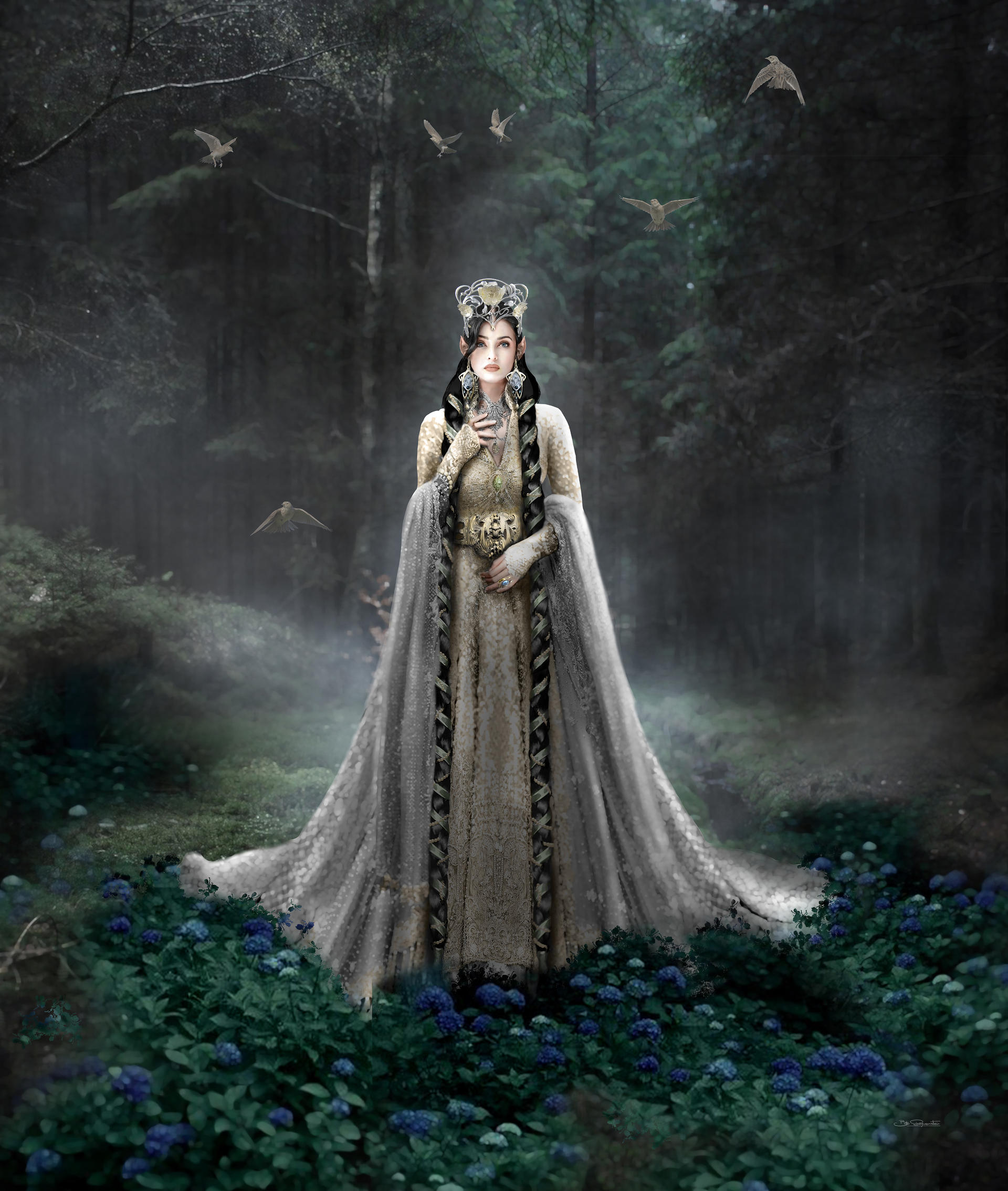
Dairon in the Book of Lost Tales is very talented, but one of those kids without any drive, as we see from the quote above. What he did possess, however, was an uncanny ability for music. He was considered the third-best “magic player” in the land, behind Tinfang Warble and Ivárë. You might remember Tinfang Warble from The Book of Lost Tales, part 1, because he was the half-fay flutist in the Cottage of Lost Play.
To adjust this inequity of power, Tolkien decided to slightly change Dairon’s name to Daeron, who then became one of the greatest minstrels of all time; in fact, the only being to come close to him was Maglor, Fëanor’s son (who is probably the later iteration of Ivárë). However, he became just a regular Eldar, no longer Thingol and Melian’s son, but rather a trusted loremaster of Thingol. More importantly, he was deeply in love with Lúthien.
This adjustment makes for a slightly better tale because rather than her brother betraying her excursion after Beren, it is an unrequited lover looking out for her best interest when he betrays her trust and tells Thingol that she went after Beren.
That takes care of the family, but what then of Beren? The most provocative change that Tolkien made here is that in the Book of Lost Tales, part two, is that Beren is an elf, not a man.
I believe he did this for several reasons, but two of them stand out to me the most:
- Men were not awake yet. At the end of the Book of Lost Tales, part 1, we see that they are children lounging by the Waters of Awakening. Tolkien didn’t spend time developing them like in The Silmarillion. Plus, The Silmarillion is considered the history of the Elves, even though much more happens there, so it makes sense that Beren would be an elf early on.
- Changing Beren to a Man adjusts the Legendarium in a fun and dynamic way. Now we have the dichotomy of the difference between Elves and Men and what that would mean for them to come together, fall in love, and potentially have children. The remainder of the time in Middle-earth stems from this relationship, so Tolkien needed to adjust it.
That was a lot to break down in just the opening pages! Join me next week as we dive into the story proper!
Blind Read Through: J.R. Tolkien; The Book of Lost Tales, part 2, The Link of Tinúviel

“Then there was eagerness alight, and Eriol told them of his wanderings about the western havens, of the comrades he made and the ports he knew, of how he was wrecked upon far western islands until at last upon one lonely one he came on an ancient sailor who gave him shelter, and over a fire within his lonely cabin told him strange tales of things beyond the Western Seas, of the Magic Isles and that most lonely one that lay beyond. Long ago had he once sighted it shining afar off, and after had he sought it many a day in vain (pg 5).“
Welcome back to another Blind Read! This week we begin The Book of Lost Tales, part 2, with the story of Middle-earth, which was closest to Tolkien’s heart.
This story is the earliest written tale in the Legendarium, even earlier than the tales of Ilúvatar and the Valar. Tolkien wrote the first manuscript in 1917 amid the Great War, and I have to imagine that he did so because he wanted a release from the horrors of the war happening around him.

Tolkien wrote the Tale of Tinúviel about his wife, Edith Tolkien, and it is both a beautiful homage and the seed from which all Middle-earth blossoms.
Those who know the story of Beren and Lúthien realize it is the tale of a man who falls in love with the most beautiful elven maid alive. Not only is she beautiful and sings like a nightingale, but she is a strong woman, a warrior, and a leader. Tolkien has been very forthright with the fact that Lúthien is, in fact, Edith, and the story of Beren seeing Lúthien singing and dancing in the forest was a call back to their walks in the dense woods of England when they first met.
This also means that the world of Middle-earth that Tolkien built would not be possible without Edith. Everything that happens in the Legendarium stems from this first origin (though doubtless there are poems written before this story, this was the first instance Tolkien wrote a new world through the lens of prose instead of poetry). Lord of the Rings even stems from this story. It echoes in Aragorn and Arwen, the Third Age’s version of Beren and Lúthien. There is even a passage in The Lord of the Rings compares Aragorn and Arwen to Beren and Lúthien.
This love story was at the core of everything that Tolkien wrote, and he built the greater Legendarium to support the story of his love for his wife. Though the tale grew beyond this conception, it remains the core of everything in Middle-earth.
Reviewing this tale will take multiple weeks, so to kick it off, I’d like to start with Eriol’s story and the link between where we left off in The Book of Lost Tales, part 1. Also with where this book begins with The Tale of Tinúviel.
The tome takes up days after the events of Book of Lost Tales, part 1, with Eriol wandering in Kortirion, learning Elvish language and lore. One day as he is talking with a young girl and in a role reversal, she asks him for a tale:
“‘What tale should I tell, O Vëanne?’ said he, and she, clambering upon his knee, said : ‘A tale of Men and of childrren in the Great Lands, or of thy home – and didst thou have a garden there such as we, where poppies grew and pansies like those that grow in my corner by the Arbour of the Thrushes?'”
It may seem strange to call out this quote, but I do so because the passage ends here. Tolkien must have had the idea that Eriol would tell the history of Men, whereas the people of the Cottage of Lost Play would tell the story of the early times and the Elves.
Christopher gives a few different iterations of this interaction. Still, in every one of them, the story gets taken out of Eriol’s mouth as Vëanne interrupts him and begins the Lay of Lúthien (I.E., The Tale of Tinúviel).
I wonder if the intent was for Eriol to have his section of the book (which never actually happened) because Tolkien spends time here to set it up:
“‘I lived there but a while, and not after I was grown to be a boy. My father came of a coastward folk, and the love of the sea that I had never seen was in my bones, and my father whetted my desire, for he told me tales that his father had told him before (pg 5.)'”
The opening quote in this section talks about his “wanderings.” Before we get into the Tale of Tinúviel proper, there is also Eriol’s unwitting interaction with a Vala:
“‘For knowest thou not, O Eriol, that that ancient mariner beside the lonely sea was none other than Ulmo’s self, who appeareth not seldom thus to those voyagers whom he loves – yet he who has spoken with Ulmo must have many a tale to tell that will not be stale in the ears even of those that dwell here in Kortirion (Pg 7).'”
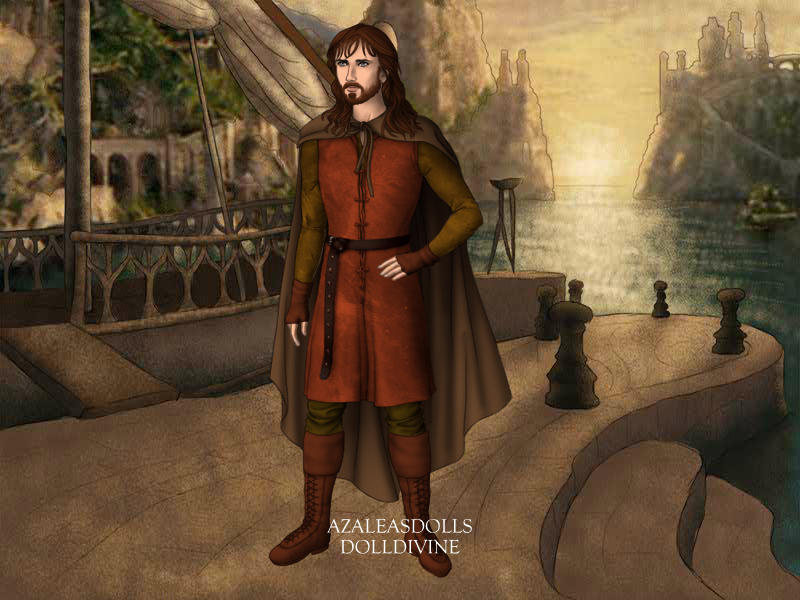
Eriol, to me, is a fascinating character because he has such a history, and he’s a mariner. If Tolkien created some stories from Eriol’s perspective, we might be able to see Middle-earth from a slightly different perspective, that of a sea-faring folk.
We know that all the history had come before this discussion. All of the first age (The Silmarillion) and the Second age (Akallabeth), and even the Third Age (The Lord of the Rings) came before Eriol’s time. So we can think of this soft opening in Kortirion as a Fourth Age, where Men (read Humans) run the world, the Elves have retreated to hidden Valinor, and much of the pain from the Dark Lord has disappeared, or at very least forgotten, from the world.
Join me next week as we start The Tale of Tinúviel!
Blind Read Through: J.R.R. Tolkien; The Book of Lost Tales, part 1, Final Thoughts

“Melko shalt see that no theme can be played save it come in the end of Ilúvatar’s self, nor can any alter the music in Ilúvatar’s despite. He that attempts this finds himself in the end but aiding me in devising a thing of still greater grandeur and more complex wonder:–for lo! through Melko have terror as fire, and sorrow like dark waters, wrath like thunder, and evil as far from the light as the depths of the uttermost of the dark places, come into the design that I laid before you. Through him has pain and misery been made in the clash of overwhelming musics; and with confusion of sound have cruelty, and ravening, and darkness, loathly mire and all putrescence of thought or thing, foul mists and violent flame, cold without mercy, been born, and Death without hope. Yet is this through him and not by him; and he shall see, and ye all likewise, and even shall those beings, who must now dwell among his evil and endure through Melko misery and sorrow, terror and wickedness, declare in the end that it redoundeth only to my great glory, and doth but make the theme more worth the hearing, life more worth the living, and the World so much the more wonderful and marvellous, that of all the deeds of Ilúvatar it shall be called his mightiest and his loveliest.”
Welcome back to another Blind Read! This week we recap The Book of Lost Tales, part 1, and in doing so, speak about the more fantastic aspect of Middle-earth and Tolkien’s intention.
The Book of Lost Tales is an amalgam of Tolkien’s work throughout his life. Christopher has included some of his father’s earliest poems, scraps of notes stuck into notebooks, various illustrations, and books and books of re-writes to show the thought and care Tolkien put into the work.
John wanted to tell a fantastic story that would give people meaning. He wanted a new fairy tale that would anchor into our world and give people wonder and hope (and perhaps even give reasoning for things like The Great War).

Many critics have said that The Lord of the Rings is an allegory to Tolkien’s time in the war, and if you only read the book itself, it is easy to understand why. Tolkien, however, hated allegory and had often stated that he pulled inspiration from his time in the war, but there was no allegory there. That can be hard to swallow, especially when his fellow Inkling (a society of writers who met to critique and edit each other’s work), C.S. Lewis, thought allegory one of the greatest literary techniques.
The story produced in The Lord of the Rings was a work of love developed over many decades, but to create a work so deep and well established Tolkien wanted a robust history of the world, that history is what eventually became The Silmarillion.
But Tolkien, like many authors, wanted the history of the world to be a story in and of itself, so in the earlier iterations, we get the tale of Eriol, who in turn is told the story behind The Silmarillion.
The problem Tolkien ran into, however, was that history is difficult to tell in a story format. There are fantasies, records, and fairy tales told in the Silmarillion, but they come late in the book and feel more like what he would eventually write in The Lord of the Rings. The Book of Lost Tales, part 1, is Eriol learning instead about the Valar and how the Eldar (Gnomes in this earlier version) came into being. However, even in these earlier versions, we still need to catch minor differences with how Tolkien later decided to frame everything.

Facts, like the Maiar being the children of the Valar, the Eldar being Gnomes, and the sparse inclusion of Fëanor are stark differences to how the story eventually played out, and what is great about reading through this book was being able to read Christopher’s analysis (Tolkien’s son and editor) of where Tolkien tried to take the story, and where he decided to end up. This process is the magic of reading The Book of Lost Tales, part 1. Part 2, I’m sure, will have just as many quirks, but part 2 is where the stories that built the history of Mankind came into being. Stories like the Lays of Lúthien, the Tale of Túrin Turambar, and the Fall of Gondolin all take place in the second half of these histories. These tales inform our characters in The Lord of the Rings and The Hobbit. Beyond The Silmarillion, there is minimal mention of the Valar or Ilúvatar.
In Christopher’s sentiment, the first book is less interesting because it’s about the development of the world itself and not necessarily about the people; thus, it’s harder to give stakes because we know what will eventually happen.
Knowing all this, Ilúvatar is the most provocative being or concept in Tolkien’s oeuvre. Ilúvatar is God for this World (even though the Valar intermittently are called gods, Tolkien later stripped them of that title for The Silmarillion).
The quote to start this essay is a perfect example of the fallibility of gods in general. Tolkien was deeply religious, and I’m sure he wrote Ilúvatar to be Middle-earth’s Yahweh and much of the struggle and philosophy in Middle-earth is how to accept or deal with the concept of Death. Death is a “gift” given to Man when they are born, so they might make life more meaningful. Death was not a concept until Morgoth sang its theme into existence.
This path makes Melkor the most tragic character in the pre-history of Middle-earth because, as we see from the opening quote, he has no choice. Ilúvatar, as the master creator, knew every theme he wanted to put into the world, and Death, hate, and suffering would be part of existence.

Iluvatar created each Vala to inform specific parts of his themes, but themes were all they were, meaning that the Valar had free will over what theme they were given. Iluvatar created Melkor to suffer. He created him to be a Dark Lord because he knew that without a Dark Lord making people work for their freedom, they would take their lives for granted.
Tolkien didn’t write Allegory; he wrote philosophy. Death is a gift because we cannot appreciate light without darkness. We cannot fully appreciate life without death.
Come join me next week as we begin our foray into “The Book of Lost Tales, part 2,” the second book of the Histories of Middle-earth!
Blind Read Through: J.R.R. Tolkien; The Book of Lost Tales, Part 1; Gilfanon’s Tale

“Suddenly afar off down the dark woods that lay above the valley’s bottom a nightingale sang, and others answered palely afar off, and Nuin well-neigh swooned at the loveliness of that dreaming place, and he knew that he had trespassed upon Murmenalda or the “Vale of Sleep”, where it is ever the time of first quiet dark beneath young stars, and no wind blows.
Now did Nuin descend deeper into the vale, treading softly by reason of some unknown wonder that possessed him, and lo, beneath the trees he saw the warm dusk full of sleeping forms, and some were twined each in the other’s arms, and some lay sleeping gently all alone, and Nuin stood and marvelled, scarce breathing (pg 232-233).”
Welcome back to another Blind Read! This week we conclude The Book of Lost Tales, part 1, discussing symbolism and creative editing.
This chapter is more of Christopher’s musings on how his father was positioning the editing of the book rather than the tale itself. Gilfanon only has a few pages, and the rest of his story remains unfinished. In a more accurate sense, this is an early iteration of the chapter in the Silmarillion “Of Men.”

The origin of Men for Tolkien was a difficult thing to tackle. Christopher tells us that there were four different iterations throughout the process of coming up with the concept. Tolkien ended up significantly cutting down the chapter to be what it eventually became, which was relatively uninspired and just about as long as Gilfanon’s tale. One has to wonder if the weight of the linchpin of his mythology was so great that the chapter says, “They wake,” and then moves on.
Gilfanon’s tale tells of one of the Dark Elves of Palisor, Nuin. Nuin is restless and curious about the world, so he ventures out to experience it and comes across a meadow that holds The Waters of Awakening and humans sleeping near it (described in the quote above).
Nuin then heads back home and tells a great wizard who ruled his people about the humans sleeping by the waters and “Then did Tû fall into fear of Manwë, nay even of Ilúvatar the Lord of All (pg 233).” because of this fear he turned to Morgoth, and learned deeper and darker magic from him.

From what Christopher tells us, each version of the story Tolkien worked on evolved, and eventually, Tû, the Wizard, was cut from the Silmarillion. Tolkien cut nearly all mention of the elves who went to Morgoth’s side from the main context. There are only a few mentions of thralls throughout the main storyline.
One has to wonder if this was Tolkien’s decision that the Elves themselves shouldn’t turn to the “dark side.” Even though the Noldor did some heinous things in Swan Haven, they ultimately did it out of a hatred that burned so deep for Morgoth’s blood that they wouldn’t let anyone stand in their way.
The inclusion of Tû, even if he is more of a fay creature than Elvish, creates issues with Tolkien’s history. So he took the name Tû out of the book to keep the Elvish lines as “pure” as possible, but the character of Tû is still in the book, AND I believe he plays a much larger part.
Remember that Tû is described as a fay wizard, and the only wizards in the history of Eä were the Istari (of which Saruman and Gandalf were a part). The Istari were Maiar, otherwise known as lesser Valar. In general, they were servants to the Valar (in The Book of Lost Tales, many of them were the children of the Valar) and aided in bringing the will of Ilúvatar into being.
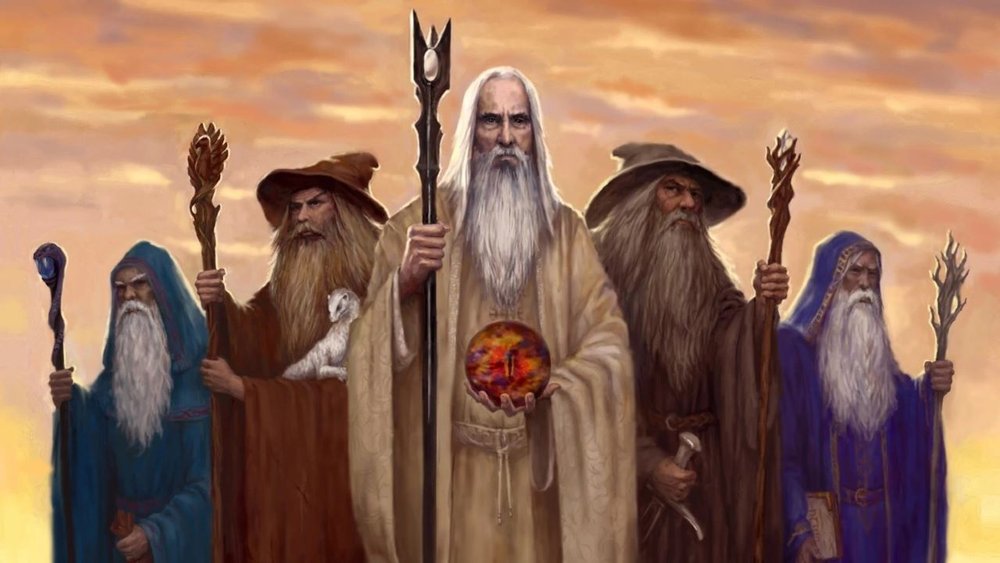
The Istari were sent to Middle-earth in the Second Age to assist the people of that land in their fight against Sauron. They could turn into a mist and travel vast distances to reach their destination – something Sauron did after the Drowning of Númenor.
So this early Wizard trained in the dark arts by Morgoth must be an earlier version of Sauron himself. Sauron, after all, assisted the Elves in the creation of the Rings of Power, was known to be a wizard himself, and eventually picked up Morgoth’s mantle when the Dark Lord was locked behind the Door of Night.
The other exciting portion of the quote I’d like to discuss before closing thoughts is the mention of Nightingales and the Coming of Man in the opening quote.
Nightingales generally have a long history of symbolism, more specifically revolving around creativity, nature’s purity, or a muse. All of these aspects center around virtue and goodness.
Tolkien is using the nightingale song to indicate a more artistic and virtuous age because when Nuin followed the song, he came across the sleeping children by the Waters of Awakening.
Tolkien’s tale is ultimately (as we’ve covered many, many times) about Man (read that as Humans), so everything we have read thus far has been pre-history, which is also why Christopher separated The Book of Lost Tales into a part 1 and a part 2. Part 1 is about how the world became what it was. Now that we have humans, Part 2 is about the rest of the first age and carries what Christopher calls “all the best stories.”

So the nightingale indicates to the fay and the Eldar (Gnomes in The Book of Lost Tales) that there will be a shift in the world, and they will no longer be the focal point. This also spooks Nuin because, at the moment, by the Waters, he sees that his time will come to a close eventually, even though he’s immortal. The world was not built for him but for the new creatures just now waking into the world.
Join me next week as we have some final thoughts on The Book of Lost Tales, part 1, before jumping into The Book of Lost Tales, part 2, the week after!
Blind Read Through: J.R.R. Tolkien; The Book of Lost Tales, Part 1, The Hiding of Valinor
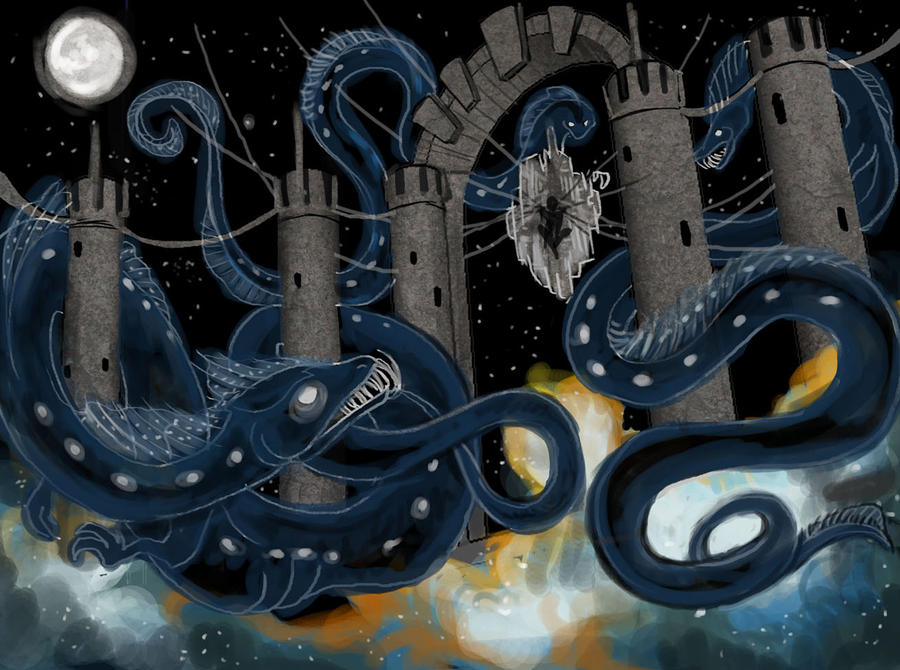
“‘Lo, all the world is grown clear as the courtyards of the Gods, straight to walk upon as are the avenues of Vansamírin or the terraces of Kôr; and Valinor no longer is safe, for Melko hates us without ceasing, and he holds the world without and many and wild are his allies there’ – and herein in their hearts they numbered even the Noldoli, and wronged them in their thought unwittingly, nor did they forget Men, against whom Melko had lied of old. Indeed in the joy of the last burgeoning of the Trees and the great and glad labour of that fashioning of ships the fear of Melko had been laid aside, and the bitterness of those last evil days and of the Gnome-folk’s flight was fallen into slumber – but now when Valinor had peace once more and its lands and gardens were mended of their hurts memory awoke their anger and their grief again (pg 207-208).”
Welcome back to another Blind Read! This week we reveal the cowardice of the Valar, the mystical side of Tolkien, and an overcorrection I’m sure everyone will be glad removed!
The tale of The Hiding of Valinor is connected intrinsically to the Tale of the Sun and the Moon, and, as it’s told in The Book of Lost Tales, seems to be an aside as the end of that chapter.
Vairë continues telling the tale of the history of the world to Eriol and quickly reveals that the Valar had become cowards in their efforts to protect their own little space of the world:
“The most of the Valar moreover were fain of their ancient ease and desired only peace, wishing neither rumour of Melko and his violence nor murmur of the restless Gnomes to come ever again among them to disturb their happiness; and for such reasons they also clamoured for the concealment of the land (pg 208).”
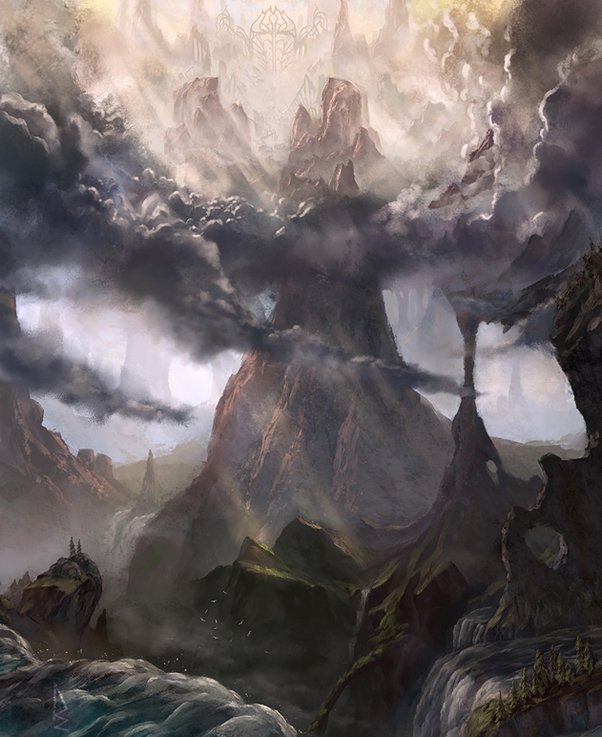
The Valar were tired of strife. They believed their creation was to create beauty and harmony; that is all they wanted to see.
Events like the Elves’ slaughter at the Haven of Swans and Melkor’s revolt against his kin caused the Valar to throw a temper tantrum and close their door against anything they felt uncouth. The sad aspect of this is that they created the world, so, in essence, the Valar are embarrassed that the things they made (except for Melkor) could be capable of such horrors that they want to cover their eyes on the issues.
Tolkien even calls them out in the voice of Vairë:
“Now Lórien and Vána led the Gods and Aulë lent his skill and Tulkas his strength, and the Valar went not at that time forth to conquer Melko, and the greatest ruth was that to them thereafter, and yet is; for the great glory of the Valar by reason of that error came not to its fullness in many ages of the Earth, and still doth the world await it (pg 209).”
It was cowardice and childishness that caused them to close off Valinor, nothing more. They wanted to believe their world was perfect and decided to disregard the rest of the world and let the Eldar (Gnomes in this [early] version) deal with a god themselves (Melkor).
This belief is the true folly of the Valar because they, with the help of the one creator Ilúvatar, were the only ones who could stop Melkor. And they did so in such a cosmically horrific way that Lovecraft would be proud.
At the beginning of this book, Tolkien mentions a bridge to the Dream World, built on rainbows (many of our beloved pets know about this rainbow bridge). This bridge, called Olórë Mallë (The Path of Dreams), was built at this point in Valinor’s history when the Valar were trying to hide the island, but they also understood that they might need to get in and out of the land. At this time, as they tried to build in their protections from all sides, they created The Door of Night, a decidedly Lovecraftian concept.
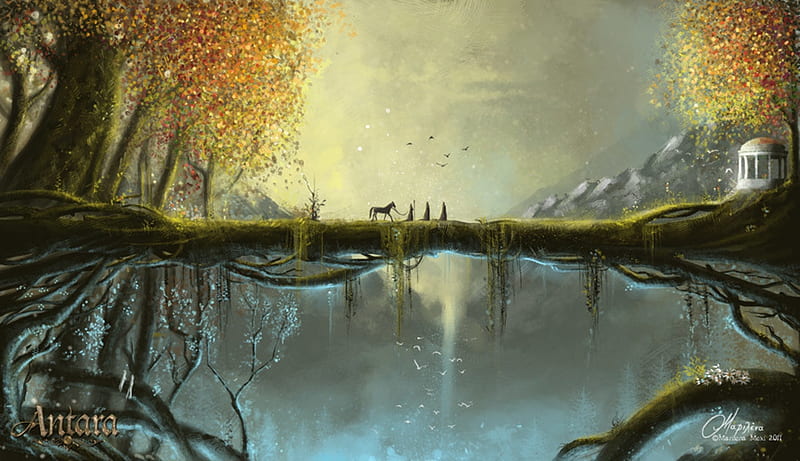
“they drew to the Wall of Things, and there they made the Door of Night (Moritarnon or Tarn Fui as the Eldar name it in thier tongues). There it still stands, utterly black and huge against the deep-blue walls. It’s pillard are of the mightiest basalt and its lintel likewise, but great dragons of black stone are carved thereon, and shadowy smoke pours slowly from their jaws. Gates it has unbreakable, and none know how they were made or set, for the last secret of the Gods; and not the onset of the world will force that door, which opens to a mystic world alone. That word Urwendi only knows and Manwë who spake it to her; for beyond the Door of Night is the outer dark, and he who passes therethrough may escape the world and death and hear things not yet for the ears of Earth-dwellers, and this may not be (pag 216).”
Ok, there is a lot to break down there. The world Tolkien built to this point (called Eä, otherwise known as Earth) was constructed on a vast ocean named Fui, which had outer and inner waters. The entirety of the world was built upon the internal waters, and the only Vala who even visited the extreme seas was Ulmo because he was the Valar in charge of water.
Even heaven and hell (called Vefántur and Fui, named after the Vala who created them) were contained within the inner waters. The outer waters were what was mentioned in the quote above (“for beyond the Door of Night is the outer dark, and he who passes therethrough may escape the world and death and hear things not yet for the ears of Earth-dwellers.”), which is a very Lovecraftian concept.
The concepts and creatures are so profound, beyond anything our minds can imagine, that no earthly being would be able to comprehend them. As far as I know, the only person who ever went beyond the Door of Night was when Ilúvatar and the Valar defeated Melkor, which ended the First Age, and imprisoned Melkor on the other side of the Door of Night, shunning him into the vacuum for eternity.
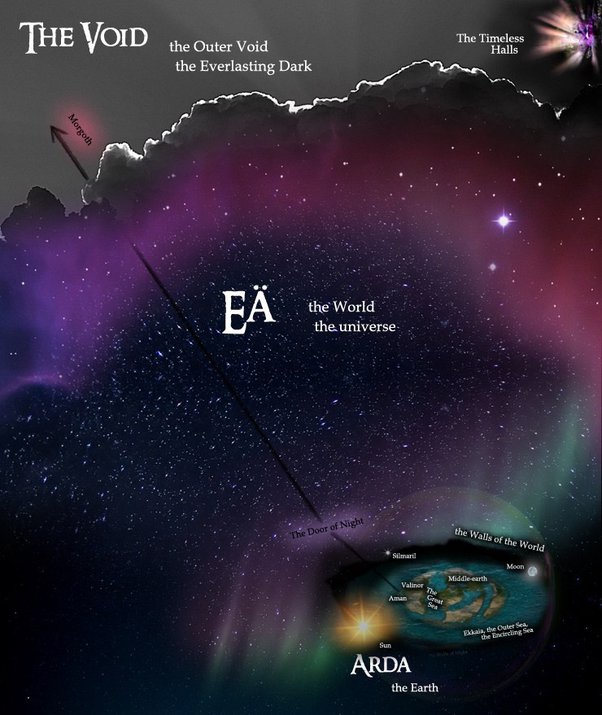
It seems like a fitting end for the Dark Lord of the first age, but Melkor was not as evil as even his apprentice, Sauron. What if Melkor ever got a chance to come back from the other side of the Door of Night, gaining all the terrible knowledge and madness in the outer dark? Then. Then he would genuinely be a Dark Lord to be reckoned with.
Join me next week for some closing thoughts on “The Hiding of Valinor!”
Blind Read Through: J.R.R. Tolkien; The Book of Lost Tales, part 1, The Tale of the Sun and the Moon

“Then there was silence that Manwë might speak, and he said: ‘Behold O my people, a time of darkness has come upon us, and yet I have it in mind that this is not without the desire of Ilúvatar. For the Gods had well-nigh forgot the world that lies without expectant of better days, and of Men, Ilúvatar’s younger sons that soon must come. Now therefore are teh Trees withered that so filled our land with loveliness and our hearts with mirth that wider desires came not into them, and so behold, we must turn now our thoughts to new devices whereby light may be shed upon both the world without and Valinor within (pg 181).'”
Welcome back to another Blind Read! This week we get back into Tolkien’s religious background as we cover the Tale of the Moon and the Sun.
We’ve come to a point in the story where Melkor has killed the Trees of Valinor, and the Noldor killed many of their kin to steal ships to chase Melkor to Middle Earth.
The Vala faced the difficulty of what they should do. Melkor had left Valinor in darkness, and the trees were dead. What should their first action be? To go after Melkor and imprison him again, or try to figure out how to bring light back to Valinor.
The Spoke to Sorontur (who later became Thorondor), the King of Manwë’s eagles, and asked him to spy on Morgoth.
“…he tells how Melko is now broken into the world and many evil spirits are gathered to him: ‘but,’ quoth he, ‘methinks never more will Utumna open unto him, and already is he busy making himself new dwellings in that region of the North where stand the Iron Mountains very high and terrible to see (pg 176).'”
So the Valar doesn’t have to worry about Melkor for the time being because he will be spending all his time trying to make a home for himself. After hearing the Eagle’s report, it’s their opinion that Melkor will not be returning to Valinor, so he is now the Noldor’s problem, which they deserve because of the transgressions they laid on their fellow kin.
So that brings them back to their other issue. How do they deal with the loss of the light of Valinor? They decide that they must build a great ship and use the remainder of the light of the Trees, and this new ship can be like the stars, but it will travel the sky and light Valinor once again.
The prospect of the ship is exciting because it calls to mind the Greek God Helios, who rode a great chariot across the sky, and that is how the sun was to rise and set. Remember that Tolkien’s ultimate work was to create new mythos and mythology for England because Spencer’s work was sub-par (to Tolkien). This ship across the sky, built by gods, was a way that he could make things unique enough to fit within his landscape of fantasy. He even had a reason for the ship to rise and set:

“Now Manwë designed the course of the ship of light to be between the East and West, for Melko held the North and Ungweliant the South, whereas in the West was Valinor and the blessed realms, and in the East great regions of dark lands that craved for light (pg 182).”
But while they built this idea, he collected mythology from other areas and brought it into his ethos. Eventually, the ship was a failure. The downfall shows that Tolkien believed he was writing the ultimate mythology because the portion he took from another culture ultimately failed.
The Vala went back to Yavanna, who had created the Trees in the first place, but she had run through the energy needed. She poured everything she had into the trees, but it was Vána (another Valar who only appears in these early iterations) who made the most significant difference:
“Now was the time of faintest hope and darkness most profound fallen on Valinor that was ever yet; and still did Vána weep, and she twined her golden hair about the bole of Laurelin and her tears dropped softly at its roots; and even where her first tears fell a shoot sprang from Laurelin, and it budded, and the buds were all of gold, and there came light therefrom like a ray of sunlight beneath a cloud (pg 184).”
The tears of love brought Laurelin back to life enough to get those sprouts. “One flower there was however greater than the others, more shining, and more richly golden, and it swayed to the winds but fell not; and it grew, and as it grew of it’s own radient warmth it fructified (pg 185).”

The fruit that grew from the tree of Laurelin grew from tears, death, and rebirth. This fruit was, for Tolkien, his introduction to the Christian ideal of the Fruit of Knowledge. Still, instead of one of the Valar eating it and causing sin, the sin has already been created. The knowledge of death, destruction, jealousy, and Hubris has already taken hold of the peoples of Middle-earth because of Tolkien’s fallen Angel Melkor.
“Even as they dropped to earth the fruit waxed wonderfully, for all the sap and radience of the dying Tree were in it, and the juices of that fruit were like quivering flames of amber and of red and its pips like shining gold, but it’s rind was of a perfect lucency smooth as a glass whose nature is transfused with gold and therethrough the moving of its juices could be seen within like throbbing furnace-fires (pg 185).”
The Valar had found the fruit of knowledge that could shine the light on the land and destroy the darkness. The fruit knew what came before, and its sole meaning was to shine the morning so that others didn’t have to carry the burden of its dark understanding.
Join me next week as we complete the Tale of the Sun and the Moon.
Blind Read Through: J.R.R. Tolkien; The Book of Lost Tales, part 1, The Darkening of Valinor

“Now Melko having despoiled the Noldoli and brought sorrow and confusion into the realm of Valinor through less of that hoard than aforetime, having now conceived a darker and deeper plan of aggrandisement; therefore seeing the lust of Ungwë’s eyes he offers her all that hoard, saving only the three Silmarils, if she will abet him in his new design (pg 152).”
Welcome back to another Blind Read! This week we’re going to dive into the philosophy of Tolkien’s world through the events of The Darkening of Valinor.
We’ve discussed it before, but Tolkien relied heavily on his Christian background while creating this mythology. He wanted something new and unique for England, and as we know, mythologies are all origin stories.
The people of Middle-earth (Elves, Men, Dwarves, etc.) are all iterations of our evolution, and it shows from the beginning of The Book of Lost Tales that Tolkien intended for Middle-earth to be a precursor to Earth (he even calls it Eä in the Silmarillion).
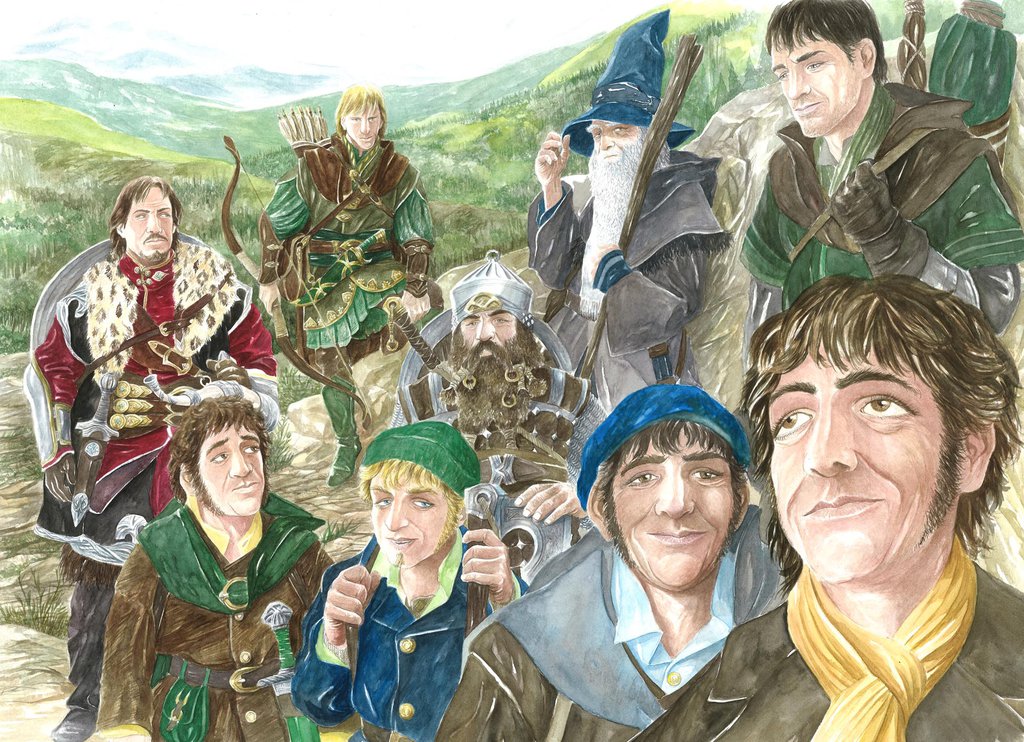
Because this is mythology, Tolkien brings his version of the afterlife and the angels he introduces to the world. Melkor, who is Tolkien’s version of Satan, is ostracized for stealing the Eldar gems and Silmarils. Cast out of Heaven as it were:
“Now these great advocates moved the council with their words, so that in the end it is Manwë’s doom that word he sent back to Melko rejecting him and his words and outlawing him and all his followers from Valinor for ever (pg 148).”
But it was still during this period that Melkor was mischievous, but he had not transitioned to evil yet, even after being cast out of Valinor. So instead, he spent his time trying to create chaos using his subversive words:
“In sooth it is a matter for great wonder, the subtle cunning of Melko – for in those wild words who shall say that there lurked not a sting of the minutest truth, nor fail to marvel seeing the very words of Melko pouring from Fëanor his foe, who knew not nor remembered whence was the fountain of these thoughts; yet perchance the [?outmost] origin of these sad things was before Melko himself, and such things must be – and the mystery of the jealousy of Elves and Men is an unsolved riddle, one of the sorrows at the world’s dim roots (pg 151).”
The great deceiver has been created out of jealousy and anger for these beings of Middle-earth, believing that they were given more than their fair share and his own acts were ruined from the beginning of the Music of the Ainur.
But what did the Elves do? Was there anything they received that made anything Melkor did excusable?
“And at the same hour riders were sent to Kôr and to Sirnúmen summoning the Elves, for it was guessed that this matter touched them near (pg 147).”
It was nothing that they did, but the fact that the Valar treated them as equals to the Valar and Melkor’s slights against them weren’t considered pranks he felt they were, so his anger grew.
They were also allowed to be near their loved ones even after death. Elves were given the gift of immortality but can still be killed by disease or blade. But where do their spirits go when they die? Remember that this is a Christian-centric mythology, so Tolkien built an afterlife.
Called Vê after the Valar who created it, the afterlife on Middle-earth is contained within and around Valinor. This early conception (nearly cut entirely from The Silmarillion and The Lord of the Rings) was that Vê was a separate area of Valinor, slightly above and below it but still present, almost like a spirit world that contained the consciousness of the dead.
This region was all about, and the Eldar cannot commune with their deceased, but they continue to live close to them, and their spirit remains in Valinor.
“Silpion is gleaming in that hour, and ere it wanes the first lament for the dead that was heard in Valinor rises from that rocky vale, for Fëanor laments the death of Bruithwir; and many Gnomes beside find that the spirits of their dead have winged their way to Vê (pg 146).”
Melkor is jealous that the Elves can be so close to their dead ancestors, but he also doesn’t fully comprehend what being dead means because he is a Valar and eternal. He sees these beings going off to a different portion of Valinor and is upset because he thought he found a way to create distress amongst them by killing one of them. He doesn’t realize that he made a fire in the Eldar that would never wane.
“‘Yea, but who shall give us back the joyous heart without which works of lovliness and magic cannot be? – and Bruithwir is dead, and my heart also (pg 149).'”
Melkor schemed and stewed in his frustration and anger, feeling that even with his theft and his killing of Fëanor’s father, the first death of an Eldar (whom Tolkien was still calling Gnomes in this early version), there was nothing he could do to prove his worth, so his worth turned to evil. His music was dissonant and didn’t follow the themes of the other Valar, and he was looked down upon for that and cast aside. He pulled pranks that caused the other Valar to imprison him. All the while, his anger, and distrust grew until he did the ultimate act, which caused his to turn to true evil: He partnered with Ungoliant (the giant spider queen and mother of Shelob) and killed Silpion and Laurelin, the Trees which gave light to Valinor.

“Thus was it that unmarked Melko and the Spider of Night reached the roots of Laurelin, and Melko summoning his godlike might thrust a sword into its beauteous stock, and the firey radiance that spouted forth assuredly had consumed him even as it did his sword, had not Gloomweaver (Ungoliant) cast herself down and lapped it thirstily, plying even her lips to the wound in the tree’s bark and sucking away it’s life and strength (pg 153).”
Melkor had finally become evil. He had turned against the Valar and what brought the world light and gave that power to evil creatures.
The Valar and Eldar cried out against Melkor for being cruel, but the tragedy of Melkor’s story was that he never had a choice.
Early in the mythology of this world, Tolkien tells us that Ilúvatar had a theme and a story for eternity, which the Valar were not privy to. Instead, they thought their music and their acts were meant to create only beauty and love.
Ilúvatar, however, knew that to have true meaning, there must be pain, conflict, and evil. Otherwise, all the world’s good would disappear and become mundane. So Ilúvatar created Melkor, knowing what he was going to become. He made Melkor evil in the world.
Melkor was born to suffer. Melkor was born never to know love. Melkor was created to become a creature that others could be tricked into feeling sorry for, and thus trade the light of the Valar for the Darkness of the Dark Lord.
Join me next week as we cover “The Flight off the Noldoli!”
Blind Read Through: J.R.R. Tolkien; The Book of Lost Tales, part 1, The Theft of Melko
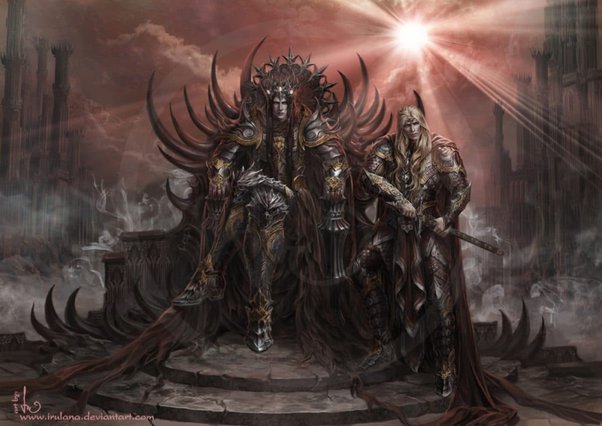
“Listen then, O Eriol, if thou wouldst [know] how it came that the loveliness of Valinor was abated, or the Elves might ever be constrained to leave the shores of Eldamar. It may well be that you know already that Melko dwelt in Valmar as a servant in the house of Tulkas in those days of the joy of the Eldalië; there did he nurse his hatred of the Gods, and his consuming jealousy of the Eldar, but it was his lust for the beauty of the gems for all his feigned indifference that in the end overbore his patience and caused him to design deep and evilly (pg 140).”
Welcome back to another Blind Read! This week we kick off the events which changed the face of Eä and how those events changed from the original writings to the publication of The Silmarillion.
This chapter, more than anything before, indeed shows how Tolkien’s ideas shifted over time. The designs of Melkor and Sauron are so interwoven in this early work that the distinction between them when he finally got to writing about the later ages must have been muddled.
There are many instances in this chapter where Melkor is subversive, getting the Elves to believe in him and forsake the Valar. Melkor did some of this later in The Silmarillion, but most of his actions were facilitated out of anger and jealousy. Melkor is Tolkien’s iteration of Lucifer, the fallen angel who once desired to do positive things, whereas Sauron is evil when his visage hits the page.

In the beginning, Melkor was one of the Valar. He was around before the world was created, and indeed, it was through the music of the Valar (called Ainur) that the world was created. Melkor was disparaged early on because his music was discordant and didn’t match up with the music of the other Valar. His anger grew like a young child playing off-key in a band. The other Valar were upset with him because their music had themes, and with Melkor creating the music the way he was, the themes had strange off notes, making unintended things.
You may have heard the phrase: “There are older and fouler things than Orcs in the deep places of the world.” These “fouler things” were created from this discordant music as the world was being made. Thus, they are deep within the world, almost Cthulhu-godlike creatures born into the depths of the world, undescribed but horrible to behold.
Because of this mistake, The Valar treated Melkor differently. Then when the Eldar awoke, he perceived them as being favored over himself, so he folded in on his own conscious and acted out of hate and jealousy.
Sauron, on the other hand, was Melkor’s servant (Maiar), and it is possible that Sauron saw what was happening to Melkor and decided to fight against the world because of the treatment his master and Dark Lord received. However, he wasn’t written that way. Instead, Sauron wanted to rule the world from the moment he was created and was very subversive in his tactics.
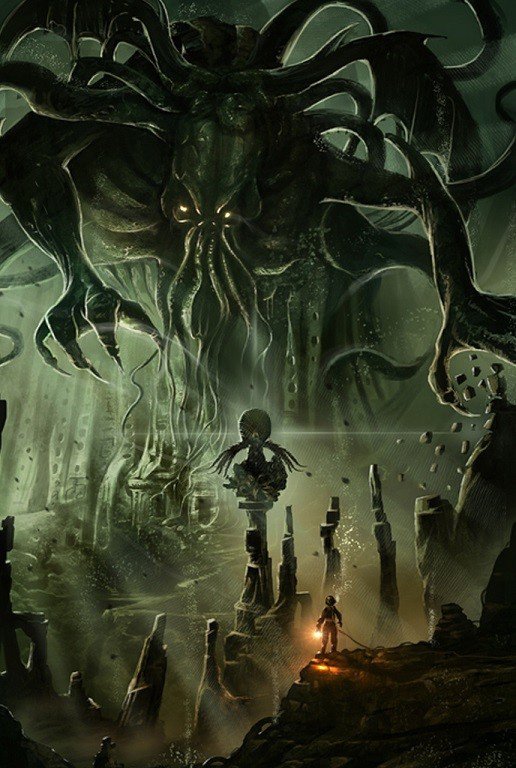
In this chapter, Tolkien blends the two different personalities. First, Melkor tries to get into Fëanor’s head and turn him against the Valar and the other Noldor; however, in The Silmarillion, Fëanor is too clever, and Melkor attempts to corrupt Fëanor causes the Eldar to hate The Dark Lord eternally. In The Book of Lost Tales, Melkor ends up with different motivations entirely:
“At length so great became his care that he took counsel with Fëanor, and even with Inwë and Ellu Melemno (who then led the Solosimpi), and took their rede that Manwë himself be told the dark ways of Melko (pg 141).”
Melkor assists Fëanor in creating the Silmarils, much like Sauron helped Celebrimbor create the Rings of Power.
Tolkien doesn’t specifically call this out as a motivation for stealing the gems back; in fact, they seem to be an afterthought:
“With his own hand indeed he slew Bruithwir father of Fëanor, and bursting into that rocky house that he defended laid hands upon those most glorious gems, even the Silmarils, shut in a casket of ivory (pg 145).”
Melkor was after the gems because he wanted to take the Eldar’s possessions and knew they considered their jewels highly valuable.
The Silmarils themselves were still of high quality because they came from the starlight of Aulë’s forge, but in the writing of this chapter, it feels as though they were an afterthought for Tolkien.
Christopher (Tolkien’s son and editor) contends that Melkor is only there to steal the gems, and it wasn’t until later iterations of the story that the Silmarils became more critical.
Thinking like a writer, Tolkien always intended to have the Silmarils be necessary, but not because an Elf made them (or Gnome in this early version). I think his intent in the Book of Lost Tales was to have the Silmarils be so crucial because of the influence of the Valar. Still, as he progressed in history, he realized that it was the Eldar’s story, not the Valar’s, so he adjusted it to have Fëanor be of an original heritage (he became Finwë’s son instead of the unknown Bruithwir) and make the world-breaking Silmarils.
Later, when he had beings of a short life (Men and Hobbits), and everyday events played a much more critical role in their life, he adjusted the story to have Sauron be involved in creating the Rings of Power. It is a different story, and there are other stakes, not to mention that Sauron is a Maiar, not a Valar; thus, his power level isn’t as complete. The gods might not come down from the heavens to take care of someone lesser than them, where Melkor was one of their own and thus their responsibility.
While reading this book, you must remember that it was never meant to be published. Christopher Tolkien compiled the Book of Lost Tales from notebooks and scraps of paper. It was the Silmarillion that Tolkien himself meant to publish. Christopher published The Book of Lost Tales for the same reason I’m writing a blog about it; people who love Lord of the Rings might want to know the evolution of the story to what it eventually became.
Join me next week as we take a break from the Book of Lost Tales! I will give an update on current and future projects and cover some very exciting things to come!
Blind Read Through: J.R.R. Tolkien; The Book of Lost Tales part 1, The Making of Kôr

“Now therefore do the God bid the Elves build a dwelling, and Aulëaided them in that, but Ulmo fares back to the Lonely Island, and lo! it stands now upon a pillar of rock upon the seas’ floor, and Ossë fares about it in a foam of business anchoring all the scattered islands of his domain fast to the ocean-bed (pg 121).”
Welcome back to another Blind Read! This week we get a more significant image of who the Elves, and each clan of Elves, were.
The first thing we have to cover is the making of Kôr:
“Behold there is a low place in that ring of mountains that guards Valinor, and there the shining of the Trees steals through from the plain beyond and guilds the dark waters of the bay of Arvalin, but a great beach of finest sand, golden in the blaze of Laurelin, white in the light of Silpion, runs inland there, where in the trouble of the ancient seas a shadowy arm of water had groped in toward Valinor, but now there is only a slender water fringed with white.At the head of this long creek there stands a lonely hill which gazes at the loftier mountains…Here was the place that those fair Elves bethought them to dwell, and the Gods named that hill Kôr by reason of its roundness and it’s smoothness (pg 122).”
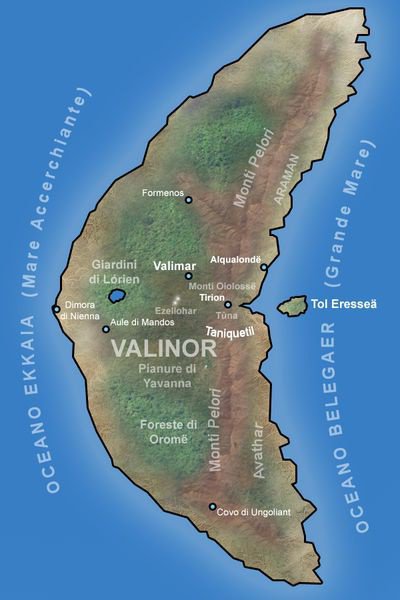
This soft hill became the home of the Noldori Elves and the Teleri Elves. But, unfortunately, the only group that wanted to live in a new space were the Solosimpi Elves, the favorite of Ulmo the sea Valar. So the Solosimpi stayed out on Tol Eressëa, a place that “is held neither of the Outer lands or of the Great Lands where Men after roamed (pg 125).”
The Solosimpi became the favorite of Ulmo because they decided to stay away from Valinor. He taught them music and sea lore and lived in general harmony. They lived in the caves by the sea in connection with all other living creatures of the land. Valinor, at the time, had very few creatures (primarily sprites and fae), so the Solosimpi were better equipped to deal with strife because they could see the circle of life in motion. They could see creatures being hunted and killed so that others could live. They had worldly wisdom.
They also came to love birds for their beauty, simplicity, and grace. Ossë (Ulmo’s fellow water Valar, who in The Silmarillion became a Maiar), wanted to stoke this love, but he also didn’t like the Solosimpi to be estranged from their kin; “For lo! there Teleri and Noldoli complain much to Manwë of the separation of the Solosimpi, and the Gods desire them to be drawn to Valinor; but Ulmo cannot yet think of any device save by help of Ossë and the Oarni, and will not be humbled to this (pg 124).”
Yet again, we see Ulmo’s jealousy. The reason for the change in character between this book and The Silmarillion must be the change from the lesser Valar being siblings and children of the Valar to becoming a Maiar. This Sea-change of the power dynamics was twofold; 1. to make it a more straightforward narrative and include fewer names (which anyone who read The Silmarillion would attest to), and 2. To make the motivations of the Valar more clear. Melkor is the one who is supposed to be jealous and to take out that jealousy on the Eldar, not the other Valar. If they held these same jealousies, then both the Valar would be diminished, and Melkor wouldn’t be as much of a “Dark Lord” because others with his power level feel the same way.
Still, it is interesting to see that the transition, and the reality, of the concept of anger and jealousy in The Book of Lost Tales is much more feasible than in The Silmarillion. Somehow the events in this book make the Valar, just that much more relatable.
Going back to the quote above, Ulmo was not to be outdone by any other Valar, so he facilitated “the first hewing of trees that was done in the world outside of Valinor (pg 124).”
He partnered with Aulë, and together they “sawn wood of pine and oak make great vessels like to the bodies of swans, and these he covers with the bark of silver birches, or…with gathered feathers of the oily plumage of Ossë’s birds. (pg 124)”
Remember that the Solosimpi were in the later versions of the Teleri Elves, so this is the first iteration of the Lothlórien “Swan Shaped Barge,” which we also briefly glimpse Galadriel on in The Lord of the Rings.

The Noldor seemed to be flourishing on their island, and with the assistance of the Valar, each tribe seemed to specialize in different practices. Unfortunately, this eventually ended the Golden Age of the Eldar in Tol Eressëa (Kôr).
“Then arose Fëanor of the Noldoli and fared to the Solosimpi and begged a great pearl, and he got moreover an urn full of the most luminous phosphor-light gathered of foam in dark places, and with these he came home, and he took all the other gems and did gather their glint by the light of white lamps and silver candles, and he took the sheen of pearls and the faint half-colours of opals, and he [bathed?] them in phosphorescence and the radient dew of Silpion, and but a single tiny drop of the light of Laurelin did he let fall therein, and giving all those magic lights a body to dwell in of such perfect glass as he alone could make nor even Aulë compass, so great was the slender dexterity of the fingers of Fëanor, he made a jewel… Then he made two more…he those jewels he called Silmarilli (pg 128).”
Fëanor, in this early iteration, is just an unnamed Noldor, not Finwë’s direct lineage, but he still creates the Silmarils, which starts all the events of the First Age in motion.
There is very little said about Fëanor in this version. In the Silmarillion, he is prideful and firey (in fact, that is what his name implies in the language of the Eldar). Still, here it is just one of a race who is excellent at crafting and can infuse the light of the Trees of Valinor (Think the first magic contained in the land. Early and Old magic, potentially stronger than anything that comes after) into these pearls.
Join me next week as we see if there are differences in how Morgoth tries to steal these Silmarils in “The Theft of Melko!”
Blind Read Through: J.R.R. Tolkien; The Book of Lost Tales, part 1, The Coming of the Elves
“There was a stir among the distant trees and words were spoken suddenly, and feet went to and fro. Then did I say what is this deed that Palúrien my mother has wrought in secret, and I sought her out and questioned her, and she answered: ‘This is no work of mine, but the hand of one far greater did this. Ilúvatar hath awakened his children at the last – ride home to Valinor and tell the Gods that the Eldar have come indeed (pg 114)!'”
Welcome back to another Blind Read! This week we mark the entrance of the Eldar into Beleriand and Valinor, which also signifies a dramatic shift in the lives of the Valar.
The introduction of the Elves in these early works is a bit of a departure from The Silmarillion. Tolkien wrote this chapter with Valar filled with enthusiasm with their newfound “children.” They ran about Valinor cheering and crying out in joy. Oromë even interrupts Varda creating the Seven Stars from Aulë”s forge as he “shouts aloud so that all the ears in Valmar may hear him: ‘Tulielto! Tulielto! They have come – they have come (pg 114)!'”
This sounding call is echoed by many of the other Valar until they work themselves into a frenzy and end up doing something foolish. “Great joy blindeth even the forewisdom of the Gods (pg 114).”
Tolkien is referring to Manwë releasing Melkor from Angaino “before the full time of his doom (pg 114),” though he still kept Tilkal (his fetters or manacles) on his wrists and ankles. In fact, in this telling, the Tilkal stayed on him forever as a reminder of the ages he spent in bondage because of the trickery of the Valar. Manwë releases him because it’s such and event, and such a celebration that even Melkor should be involved. If this seems impetuous and over the top, it absolutely is.
Tolkien understood this and downplayed this excitement in The Silmarillion, though part still exists. The strange twist is that the only Valar who is not excited about the Eldar’s arrival in The Book of Lost Tales is Ulmo. It took me a little introspection to see what Tolkien was trying to sublimate, and it goes back to one of the quotes above. The Valar were blinded by their excitement, making them ignore their “forewisdom” in more than one sense.
In The Silmarillion, Ulmo was the Valar who was said to love the Eldar more than any other, and it was strange to me that he went against the will of those Valar to have the Eldar come to Valinor.
But why were the Eldar so happy that the Eldar had come? “and it was not until that hour that the Gods knew that their joy had contained a flaw, or that they had waited in hunger for it’s completion, but now they knew that the world had been an empty place beset with loneliness having no children for her own (pg 114).”
It wasn’t until the world was populated that the Valar realized the point of their existence. It was about creating a world for these other beings to exist. But unfortunately, they were so hung up on how their projects were progressing and angered at Morgoth for (Melkor) interrupting or ruining those projects that they didn’t realize that the world they had created didn’t have a soul. The coming of the Eldar made that soul in the world.
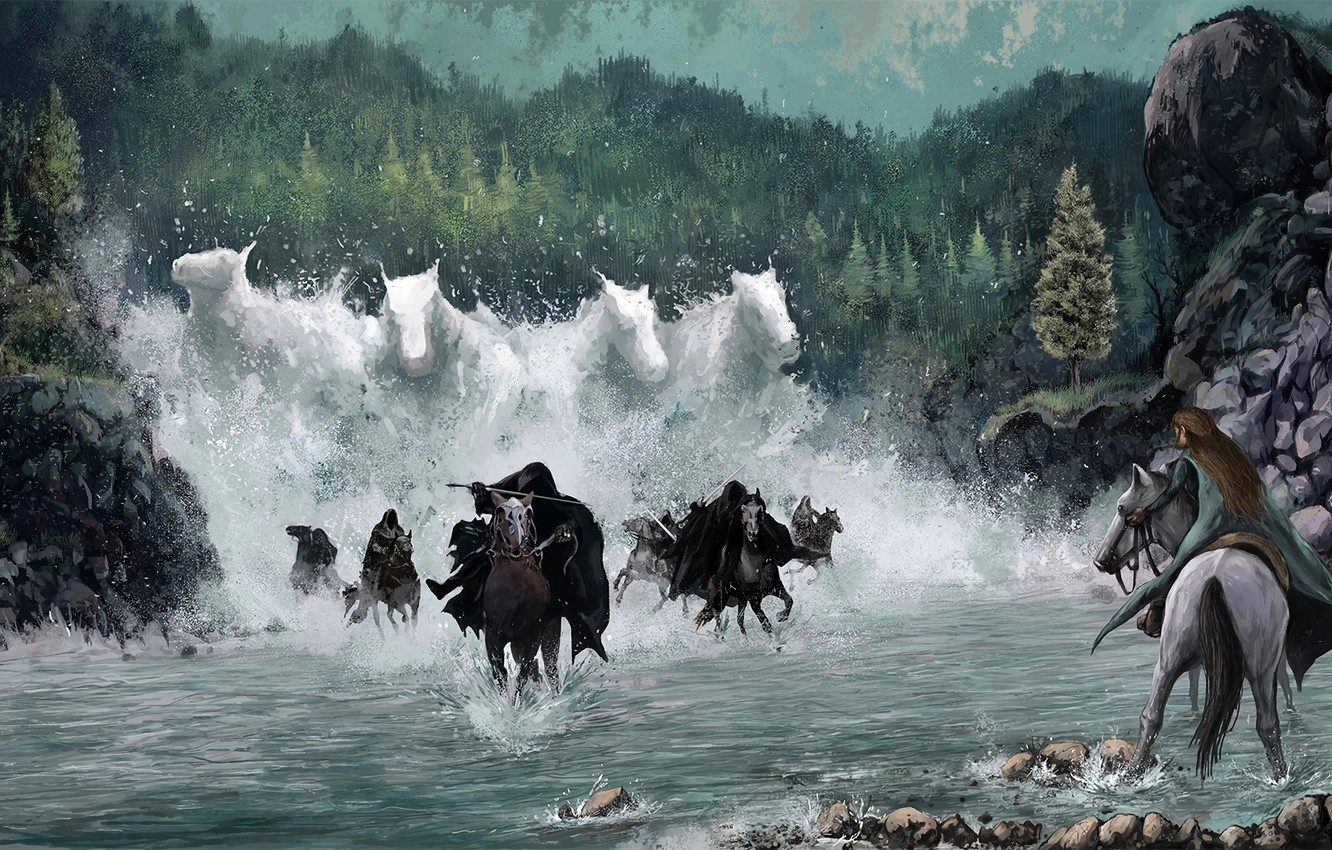
So why did Ulmo act against them? Because he understood this fundamental tenant because he helped create them. The Eldar were Ilúvatar’s children, but they were born next to “Koivië-néni or the Waters of Awakening (pg 115).” Remember that Ulmo is the Vala of the seas and water, and, in The Fellowship of the Ring, when the horses form in the river that wipe out the Dark Riders following the Hobbits and Aragorn, they were a creation of Ulmo and an indication of his interfering in the lives of the people of Middle-earth. Glorfindel says a prayer to Ulmo in that scene (which was changed to Arwen in the movie), and Ulmo helps them to Rivendell.
Ulmo immediately connects with the Eldar because of his association with them through the Koivië-néni (or Cuiviénen in The Silmarillion). Ulmo knows that exposing the Eldar directly to the immense knowledge of the Valar is a mistake that could, and does, end up having far-reaching issues later on in history. Ulmo believes the Eldar should live in the world and have their own life experiences rather than be involved with gods (or angels).
But Ulmo is outvoted, and three Eldar come in a procession to Valinor, one from each tribe, and we get this loaded paragraph:
“Great was the stir and wonder now about the waters of Koivië, and its end was that three of the Eldar came forward daraing to go with Nornorë, and these he bore now back to Valinor, and their names as the Elves of Kôr have handed them on were Isil Inwë, and Finwë Nólemë who was Turondo’s father, and Tinwë Lintö father of Tinúviel – but the Noldoli call them Inwithiel, Golfinweg, and Tinwelint. Afterward they became very great among the Eldar, and the Teleri were those who followed Isil, but his kindred and descendants are that royal folk of the Inwir of whose blood I am. Nolemë was lord of the Noldoli, and of his son Turondo (or Turgon as they called him) are great tales told, but Tinwë abode not long with his people, and yet ’tis said lives still lord of the scattered Elves of Hisilómë, dancing in its twilight places with Wendelin his spouse, a sprite come long long ago from the quiet gardens of Lórien; yet greatest of all the Elves did Isil Inwë become, and folk reverence his mighty name to this day (pgs 115-116).”
I’m sure you don’t recognize many of those names because Tolkien changed them around (and I suspect they changed which tribe would be which in their ultimate storyline). Isil Inwë later became Ingwë, the lord of the Vanyar, Finwë stayed Finwë lord of the Noldor, but Turgon moved from son to grandson (with the notorious Fëanor, creator of the Silmarils, in the middle). Tinwë Linto became Thingol, and Wendelin moved from a Sprite to the Maiar Melian.
The Eldar who went to Valinor were Ingwë, Finwë, and Elwë (Thingol), as spokespeople for the Eldar. They were met with great fanfare, but the omen of great strife began on that first visit to Valinor. Where Melkor “often did he lie to the Noldoli afterwards when he would stir their restlessness, adding beside all truth that he alone had withstood the general voice and spoken for the freedom of the Elves (pg 177).”
Join me next week as we see where the Elves go next with “The Making of Kôr.”
Blind Read Through: J.R.R. Tolkien; The Book of Lost Tales, Part 1, The Building of Valinor
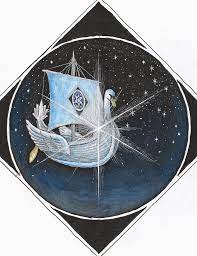
“There, said Aulë, would be a place well suited to great building and to a fashioning of realms of delight; wherefore the Valar and all their folk first gathered the most mighty rocks and stones from Arvalin and reared therewith huge mountains between it and that plain which now they name Valinor, or the land of the Gods (pg 70).”
Welcome back to another Blind Read! This week we continue our journey through the coming of the Valar as we delve into the Building of Valinor.
Last week we left off discovering who the Valar were, and this week we get into the details of the building of Valinor from the perspective of the Valar and Tolkien himself.
From our readings of The Valaquenta in The Silmarillion, we know that The Valar went to different parts of the world but wanted a place to call home. Valinor was that place. But even with the creation of Valinor, the Valar still had their various areas which they controlled. Ulmo ruled the deep seas, Manwë ruled the air and winds, etc. As these concepts formed in Tolkien’s mind (all early stages of developing the world), he envisioned this world as floating through the ethereal nature of space and time.

Remember that the original idea was that all of Middle-earth would eventually lead up to our historical timeline, acting as a sort of mythological foundation which he felt was lacking in the English tradition. He also based much of his work on Norse Mythological writings and practices, so what better format than having the entire Eä (read that as Earth) floating through the cosmic tapestry than on a Norse ship? Everything from Palisor to Valinor would live on this ship sailing through space.
Though he later dropped this idea for a globe world, it was evident that he loved the concept of the boat sailing through the cosmos and eventually re-used it. Enter Eärendil, arguably one of the essential characters in Middle-earth history. He and his wife Elwing stood up to Morgoth, and Eärendil sailed to Valinor with a Silmaril to protect it and make the Vala understand what they were up against. A mortal sailing to Valinor was prohibited, but instead of outright killing him (mainly because of his courage and selflessness in sailing there to save the world), they made him part of the cosmos, sailing his ship Vingilot “even to the starless voids.”
Tolkien never gave up on his ship idea, but he also never gave up on the concept of creating something from nothingness.
Moving back in time, as soon as the Vala created Valinor, it was still a dark place to be. “These were the days of Gloaming (Lomendánar), for light, there was, silver and golden, but it was not gathered together but flowed and quivered in uneven streams about the airs, or at times fell gently to earth in glittering rain and ran like water on the ground, and at that time Varda in her playing had set but a few stars within the sky (pg 69).”
The world was dark, and the only light came from the stars, yet the Vala wanted to build a complete world, so they came up with a rudimentary idea.
“Aulë suaded Melko to build two towers to the North and South, for he purposed to set upon them mighty lamps one upon each (pg 69).”
This passage differs from the Silmarillion because Melkor was a lousy actor. He created the world’s darkness and envied the other Valar and the Noldor, but more on that next week.
So they built these two lamps to light the world. “They sprang up through the lower air even to Ilwëand the stars, and Melko said they were of an imperishable substance of great strength that he devised; and he lied, for he knew that they were of ice (pg 69).”
Manwë and Varda gathered light from the stars and brought them down to fill these mighty lamps. Still, Melkor had tricked them because “it so happened that the blaze of those lights had melted the treacherous ice of the pillars of Melko, Ringil and Helkar, and great floods of water had poured from them into the Shadowy Seas (pgs 69-70).”
It is never outright stated why Melkor did this treacherous act. It is possible that Melkor was the Angel of Darkness, so he desired to keep the world in the Gloaming, but this is an early iteration of the mythos of Middle-earth, and Tolkien needed a Big Bad to push the story forward. So in the Book of Lost Tales, Melkor is just wrong from the start; there isn’t much in the text to brighten his character, much like Sauron.

But what Melkor didn’t realize is that Ilúvatar set the theme of the world’s construction, so when the globes holding the light of the stars fell to the Earth, they buried themselves. “Then came Palúrien, even Kémi the Earth-lady, wife of Aulë, mother of the lord of forests, and she wove spells about those two places, deep enchantments of life and growth and putting forth of leaf, blossoming and yeilding of fruit – but she mingled no word of fading in her song (pg 71).”
Trees began to grow from those lights buried in the Earth, one they named Laurelin and the other Silpion. These trees ended the Gloaming and produced light from their leaves and blossoms until the coming of the Sun and the Moon. Later Tolkien renamed the second tree, changing it from Silpion to Telperion, but this is the earlier iteration of the creation of the Trees of Valinor.
I prefer this iteration to the published version with Yavanna signing the Trees into existence because it ties much more to the legendarium. First, the trees came from the stars and set into the ship that sails the cosmos. Then later, once the first age was coming to a close, we have Eärendil voyaging through the cosmos for all eternity on his ship. There is something poetic about closing the loop to me, which is also what I appreciate about being able to read the earlier stages of Tolkien’s work.
Join me next week as we complete “The Coming of the Valar and the Building of Valinor!”
Blind Read Through: J.R.R. Tolkien; The Two Towers, Re-read

“‘All right!’ he said, ‘Say no more! You have taken no harm, There is no lie in your eyes, as I had feared. But he did not speak long with you. A fool, but an honest fool, you remain, Peregrin Took. Wiser ones might have done worse in such a pass. But mark this! You have been saved, and all your friends too, mainly by good fortune, as it is called. You cannot count on it a second time. If he had questioned you, then and there, almost certainly you would have told all that you know, to the ruin of us all. But he was too eager. But come! I forgive you. Be comforted! Things have not turned out as evilly as they might.'”
Welcome back to another Blind Read! This week we’re back with a bit of a lie, this isn’t quite a Blind Read, but it’s been so long since I’ve read these books it might as well have been!
Before we discuss the books, I want to start by saying how amazed I am at how close the Movies were to the books. After reading them more critically, it is obvious how much the producers revered the core material. The ability to create a new medium that was inclusive of all who did not read the books but to be honest enough to the core material that hardcore fans love is a masterstroke in adaptation.
The only significant difference the movies had was in Fellowship because they took out the entire Tom Bombadil sequence (rightly so). Still, even then, I’ve seen deleted scenes where the hobbits get swallowed up by Old Willow. We’ll cover the differences in The Two Towers below, but we also dive more into the world’s lore.

The first thing I’d like to mention is Treebeard and the Ents. The movie played up his slowness and mistrust, and where many lines are taken directly from the text, Treebeard was not very slow to action speaking of page count. Yes, he does suspect Merry and Pippin of being Orcs at first, but he quickly decides they aren’t. He then calls the council of Ents, and within a few pages, they choose to mount an attack on Orthanc. Again, the movie drew it out for drama, but the book had these events happening quickly.
However, the biggest oddity I noticed in the book was a seeming discrepancy between The Silmarillion and The Two Towers. When speaking of his race, Treebeard (also known as Fangorn) says the Elves created Ents. However, later in the book Gandalf (also known as Mithrandir, but more on that later) tells the remaining Fellowship that Fangorn is the oldest living creature on Middle-earth (remember that Elves, Vala, Maiar, and even Dwarves were created on Valinor). Tom Bombadil verifies this statement in The Fellowship of the Ring. I stopped and thought about this before I could move on because I know that Tolkien re-wrote much of the history and was still in his re-writes while writing The Lord of the Rings, but was there a discrepancy this bold?
I decided to go back and do some digging to figure it out.
Returning to The Silmarillion, I verified that Yavanna (the Vala who was the “lover of all things that grew in the earth”) created Ents as part of her music theme. Part of her reason for doing so was because of other creations, such as the Dwarves (who were created but kept at rest for many years). Yavanna feared the trees themselves would not have a means of protecting themselves against the push of other creatures’ industrial nature (something that echoes Tolkien himself), so she made the Ents to be shepherds and protectors of the trees and forests. Tolkien even had an early iteration where he called them Tree Ents because the word Ent was derived from the Old English word Eoten, meaning Giant, so they were Tree Giants meant to protect. Tolkien seeds this in The Fellowship of the Ring when Samwise relays a story from his cousin Hal, who saw a “treelike giant” north of the shire. This anecdote was Tolkien’s way of seeding their entrance into the books.
So we know that Yavanna created the Ents – why then does Treebeard say that they were a creation of the Elves? Looking back at the text, one can see where I went wrong. The Ents and Entwives were creatures of the earth, and where they were sentient, they couldn’t communicate with other animals. They were meant solely to be of and for nature, so Treebeard says that the Elves taught them to speak Elvish and opened their minds to interact with other sentient creatures. The Elves brought the Ents to life; they didn’t create them.
I could go on and on about Ents and make it their own essay, but since this is about a re-read of The Two Towers, I want to dig into a few other short items.
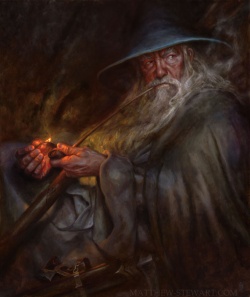
The first is Gandalf. In The Fellowship of the Ring, he is of the gray order of the Istari (Maiar wizards), but because of his fall against the Balrog in that first book, he came back as an Istari of the White order, which is one of the most powerful, second only to the Black Order. This book teaches that the Istari are immortal like their masters, the Valar. Gandalf returned as a white-order Istari because of the power vacuum of Saruman, who abandoned his order for power. Saurman did not specifically side with Sauron (which we learn in The Silmarillion). Still, the Palantir corrupted him enough that he thought he could become the most powerful being in Middle-earth.
It isn’t until Gandalf returns that the party nearly ceases calling him by his common “gray” name, Gandalf. Instead, once he takes up the white mantle, most characters call him Mithrandir for the remainder of the series.
Lastly, I would be remiss if I didn’t bring up what confused me the most when I read through the books before reading The Silmarillion—the Dúnedain and Aragorn’s lineage.
Throughout this book, there are constant references to Elendil and Eärendil, but I didn’t know who those people were other than they were Aragorn’s ancestors. Having that foreknowledge made the events and exposition of the story that much more lush and meaningful. It adds weight to Aragorn’s decisions and makes him a more dynamic character. Upon the first read, much of his character felt very one note and much more severe than was necessary. Still, after getting the history behind his lineage, one can genuinely feel the dynamics at play and the choices he must make as he forges his way to coming back to be King of the world of Men.
Come back next week as we continue “The Music of the Ainur” in the Book of Lost Tales!
Blind Read Through: J.R.R. Tolkien; The Book of Lost Tales, Part 1, The Music of the Ainur part 2
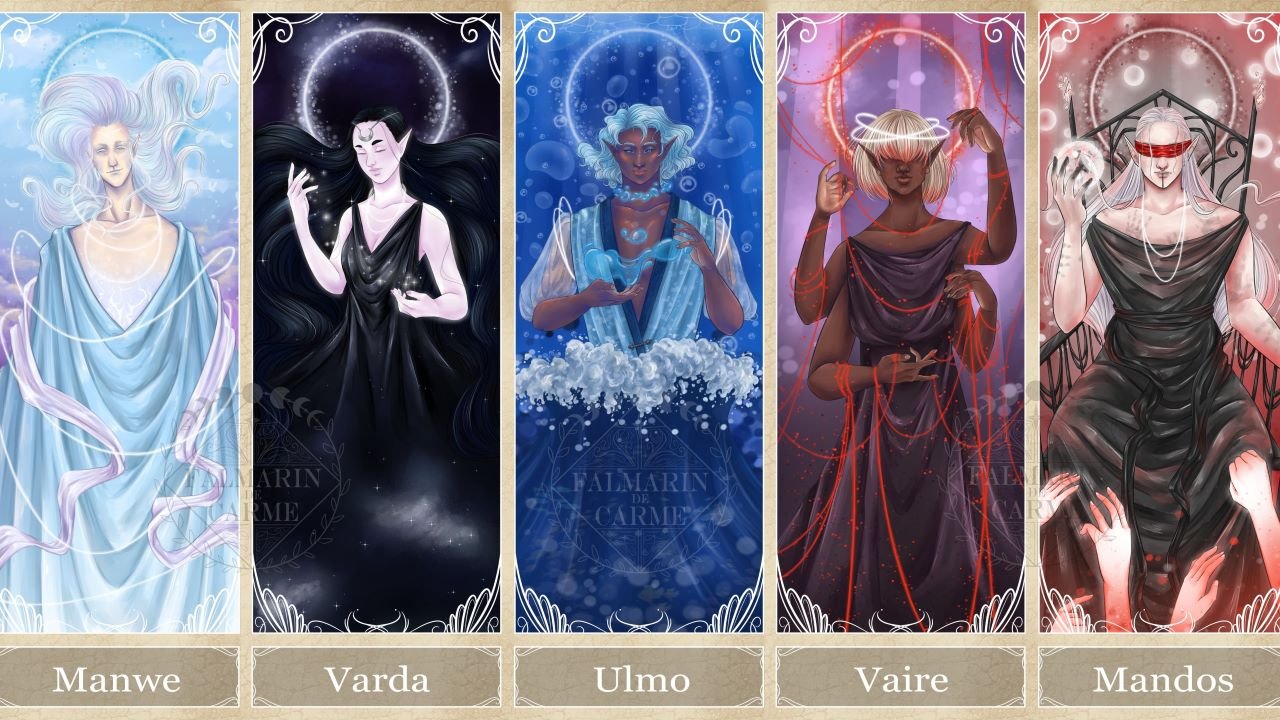
“Through him has pain and misery been made in the clash of overwhelming musics; and with confusion of sound and have cruelty, and ravening, and darkness, loathly mire and all putrescence of thought or thing, foul mists and violent flame, cold without mercy, been born, and death without hope. Yet is this through him and not by him; and he shall see, and ye all likewise, and even shall those beings, who must now dwell among his evil and endure through Melko misery and sorry, terror and wickedness, declare in the end that it redoundeth only to my great glory, and doth but make the theme more worth the hearing, Life more worth the living, and the World so much the more wonderful and marvellous, that of all the deeds of Ilùvatar it shall be called his mightiest and his loveliest (pg 55).”
Welcome back to another Blind Read! This week we delve into the philosophy of Tolkien as we review “The Music of the Ainur,” the second chapter of The Book of Lost Tales.
Tolkien himself was a deeply religious and highly intellectual man. He surrounded himself with others of all opinions (see his writing group The Inklings, which included C.S. Lewis), and at the forefront of his mind was an anthropologic focus on the world. This curiosity of how the world works is what created the fantasy world we all respect so much.
This chapter, in particular, is about how Ilùvatar (God in this iteration) created the world through his Angels, which he named Valar.
Rúmil tells the story to Eriol and begins his tale by saying, “Before all things he sang into being the Ainur first, the greatest is thier power and glory of all his creatures within the world and without (pg 52).”
This passage marks Ilúvatar as a great creator. There is nothing closer to authentic Christianity than this first chapter, as it shows Ilúvatar’s great power and ability of forethought and humility.

Rúmil goes on, “Upon a time Ilúvatar propounded a mighty design of his heart to the Ainur, unfolding a history whose vastness and majesty had never been equalled by aught that he had related before, and the glory of it’s beginning and the splendour of its end amazed the Ainur, so that they bowed before Ilúvatar and were speechless (pg 53).”
Thus enters the theme of Predestination. Ilúvatar creates a concept that has a beginning and an end. But for such a grand creator, that is not satisfactory because there is no surprise in the world, no joy in watching the events of his grand scheme unfold. To counter this problem, Ilúvatar tells his Angels (they are interchangeably called Ainur and Valar), “It is my desire now that ye make a great and glorious music and a signing of this theme; and (seeing that I have taught you much and set brightly the Secret Fire within you) that ye exercise your minds and powers in adorning the theme to your own thoughts and devising (pg 53).”
Ilúvatar allows the Vala to create the middle of his great tale with their own “secret fire.” We learned in The Silmarillion (and to a lesser extent here) that the Vala all have their own minds, and they all have their passions. This is what the secret fire is, a passion for seeing something created, which is mirrored in Tolkien himself as he created the world of Middle-earth. That is not to say that Tolkien thought himself a god, or even to the level of the Valar, but he saw it as his duty to show that there was great beauty in the world. He wanted to elicit this emotion from people because of his experiences in the Great War. Let me explain:
“Yet sat Ilúvatar and hearkened till the music reached a depth of gloom and ugliness unimaginable; then did he smile sadly and raised his left hand, and immediatly, thoguh none clearly knew how, a new theme began among the clash, like and yet unlike the first, and it gathered power and sweetness (pg 54).”
This passage shows both the power and the weakness of the Valar, which in turn displays just how human they were. Which makes sense because we, as people, are the antecedents of the Angels. Humans are called Ilúvatar’s second children (after the Elves). The Valar wanted to create something with the same power as Ilúvatar, but they became despondent when things turned dark, and their grand theme became black with peril.
Indeed it was Melkor, later called the Dark Lord and master of Sauron, who saw this darkness and believed it was the only way to the end of the story.

“Mighty are the Ainur, and glorious, and among them is Melko the most powerful in knowledge (pg 54).”
Tolkien believed there was a balance to the world, making Predestination possible. Each Valar had their power or strength; Ulmo had control over water, Manwë had power over the air (The great eagles which bore Gandalf away from Orthanc and Frodo and Sam away from Mount Doom were agents of Manwë), and Aulë had control of the earth. But it was Melkor who had the greatest knowledge, and what Tolkien learned in World War I was that one could have a perception of darkness or a general concept of pain, but until you have the experience, you never really have knowledge of it.
Knowledge equals pain, which is a prime theme in Tolkien’s work. That may seem particularly depressing, but you cannot appreciate the most glorious mornings until you see the darkest of nights (this echoes in Sam’s speech at the end of The Two Towers. “They were holding on to something…”). Ilúvatar created Melkor to have the knowledge and sing about that knowledge which fostered despair in the world, but he could do nothing to change it. He became the Dark Lord because once the Children of Ilúvatar were created, they received gifts to experience the world’s joys and perils, whereas Melkor could only see troubles and darkness.
The Eldar were given long life and foresight that they would live to see the end of all time, which made them happier than humans. But to humans, Ilúvatar gave the gift of death.
Doesn’t it seem like much of a gift? Well, it harkens back to the question of knowledge. If you knew your time was short, you would live a more extraordinary life, a life filled with great pain and great joy, rather than being stuck in the middle and being “emotionless” as the Elves were.
This ability to have great highs and lows was specifically why Ilúvatar sang Melkor (also known as Morgoth) into existence. He knew what the Valar would do, but also knew it was necessary for a full experience of the world.
Come back next week for a recap and reread of “The Two Towers!”
Blind Read Through: J.R.R. Tolkien; The Book of Lost Tales, Part 1, Chapter 2: The Music of the Ainur
“Then slept Eriol, and through his dreams there came a music thinner and more pure than any he heard before, and it was full of longing. Indeed it was as if pipes of silver or flutes of shape most slender-delicate uttered crystal notes and threadlike harmonies beneath the upon upon the lawns; and Eriol longed in his sleep for he knew not what (pg 46).”
Welcome back to another Blind Read! This week we head back to The Book of Lost Tales and tackle Chapter Two’s opening, “The Music of the Ainur.” Christopher added something new to this chapter from the notes of this father and the result sheds light on the meaning of the chapter. When he began writing Eriol’s story, Tolkien created a transitional piece between the beginning of the story of the Ainur and The Cottage of Lost Play. We’ll be covering that transitional piece this week because there is so much in it that warrants discussion before we move on!
Before we get too far into it, I want to delve a little deeper into the difference between Gnomes and Elves, which has been a strange adjustment because I wasn’t sure if Tolkien was calling all Elves (otherwise known as Eldar) Gnomes or if it was only Noldor (also known as Noldori) Elves. Part of the confusion comes in because of all the different names involved.
Tolkien wanted the world to be lush and complete, but because of who he was and his background, Worldbuilding to Tolkien didn’t mean delving into culture, landscape, or image. Instead, to Tolkien, what made people unique was how they communicated, meaning language. Thus, the language and the beings who utilized this language changed through his world’s creation.
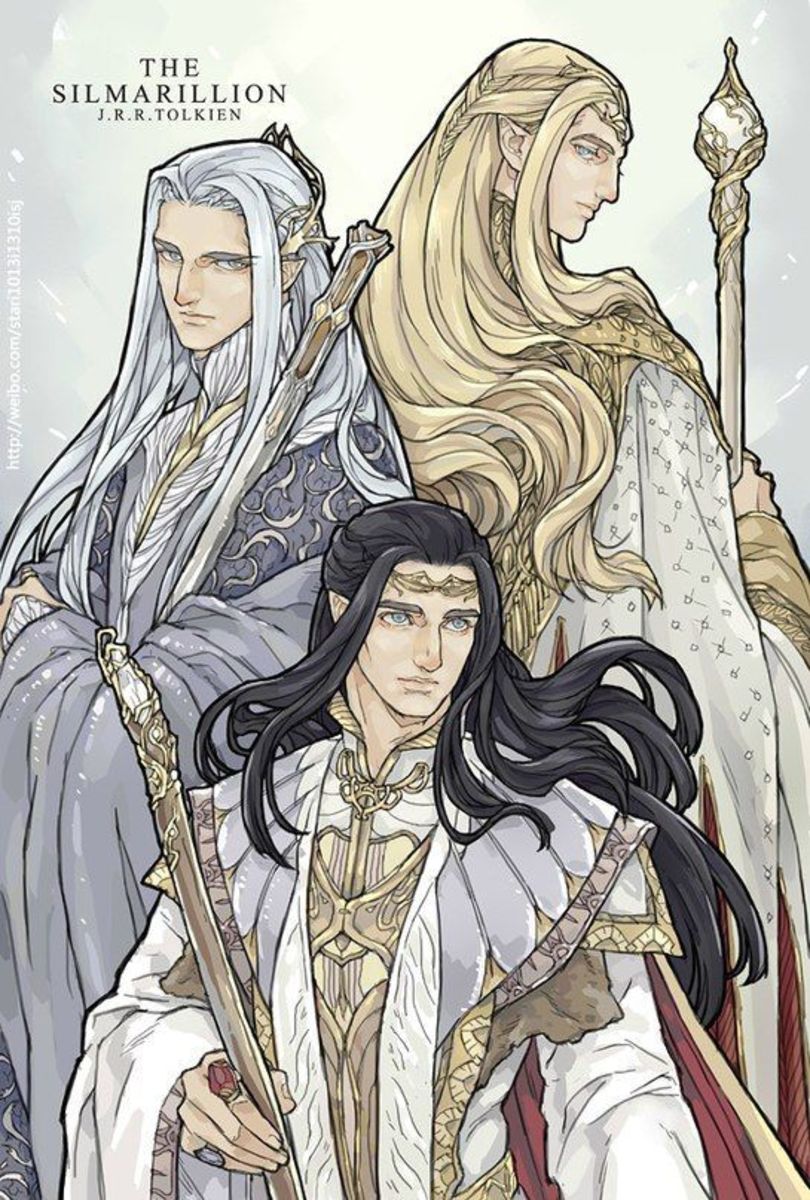
For example, the Teleri later become the Vanyar, The Noldoli (Gnomes) later become the Noldor, and the Solosimpi later become the Teleri. Why did he make all of these changes? Because of language.
The perfect example of this is what we began with: Gnomes. The word Gnomes brings to mind that small bearded garden variety with red pointy hats. I’m sure at some point in the writing of this epic; an editor approached Tolkien who mentioned that that word did not elicit that “They were a race high and beautiful… They were tall, fair of skin and grey-eyed, though their locks were dark, save in the golden house of Finrod (pg 44).” (just to be clear we are explicitly talking about the Gnomes or Noldor Elves. Christopher goes out of his way to make sure that is clear: “Thus these words describing characters of face and hair were written of the Noldor only, and not of all the Eldar… (Pg 44)“
So why did Tolkien call them Gnomes? Yep, you guessed it. Language! “I have sometimes used ‘Gnomes’ for Noldor and ‘Gnomish’ for Noldorin. This I did, for whatever Paracelsus may have thought (if indeed he invented the name) to some ‘Gnome’ will still suggest knowledge.”
In Greek, gnome meant thought or intelligence. Which then translated into words such as gnomic or gnostic. When Tolkien mentions Paracelsus, he refers to the 16th-century writer who used gnome as a synonym for pygmaeus, which means “earth-dweller.”
Tolkien was trying to establish that the Noldor were intelligent creatures who understood how the world worked. But he was also trying to create a distinction between the Noldor and the Valar. The two types of beings were almost interchangeable because they were both created by Ilúvatar.
At the beginning of this interlude, Eriol asks for clarification (Tolkien’s way of trying to clarify it himself): “Still there are many things that remain dark to me. Indeed I would fain to know who be these Valar; are they the Gods?” to which Lindo responds “So they be (pg 45).” And yet later, when describing gnomes, “nor might one say if he were fifty of ten thousand (pg 46).”

So he creates differences through the use of language. Both from the meaning of their names and the languages they speak. These themes also carry over into The Lord of the Rings because everyone has their distinct dialect, from Rohan to Gondor, from The High Elves of Rivendell to the woodland elves in Lothlórien. Here on Tol Eressëa, “there is that tongue to which the Noldoli cling yet – and aforetime the Teleri, the Solosimpi, and the Inwir had all their differences (pg 48).”
Language was a big theme in this introduction to make sure the reader understands what they are getting themselves into, but there are two other themes Tolkien stamps down, which carry over into all of his other writing; dreams and music.
All of these things are interconnected, and I chose the quote to open up this essay because it holds the essential themes Tolkien has brought into this tale.
If we remember from the first chapter (or go back and read it here), Eriol is a human of modern times. He travels and finds his way to Tol Eressëa, and he is a means to an end to tell the story of the beginning of time and the first age. What I find particularly interesting is that Tolkien intended there to be a “dream bridge” between Tol Eressëa and the rest of the world. So that outsiders could not find it while awake, and their knowledge of the isle would fade upon waking as dreams do; but dreams also leave us with subconscious memory, and feeling that stick with us, though we don’t remember details.
This intermittent chapter begins with Eriol heading to a room and falling asleep, and in that sleep, “came a music thinner and more pure than any he had heard before (pg 46).”
The Music of the Ainur, which we will get more into next week, is how the Valar (also known as Ainur) created the world. Their music brought into being plants, animals, and earth, as well as emotion and consciousness. This “pure music” is what Eriol hears in his mind as he sleeps. It is not the sound as it was when it created the world, but Tol Eressëa is so close to the center of everything that it echoes what came before. He hears the music of creation, and he doesn’t consciously recognize it, but he subconsciously melds into it.
I also find it interesting that he falls asleep and delves into dreams directly before being told the tale. Could it be that the entirety of The Book of Lost Tales is told through the Music of the Ainur while Eriol is sleeping?
Let’s see if we find out next week as we begin the Music of the Ainur!
Blind Read Through; The Fellowship of the Ring, revisited
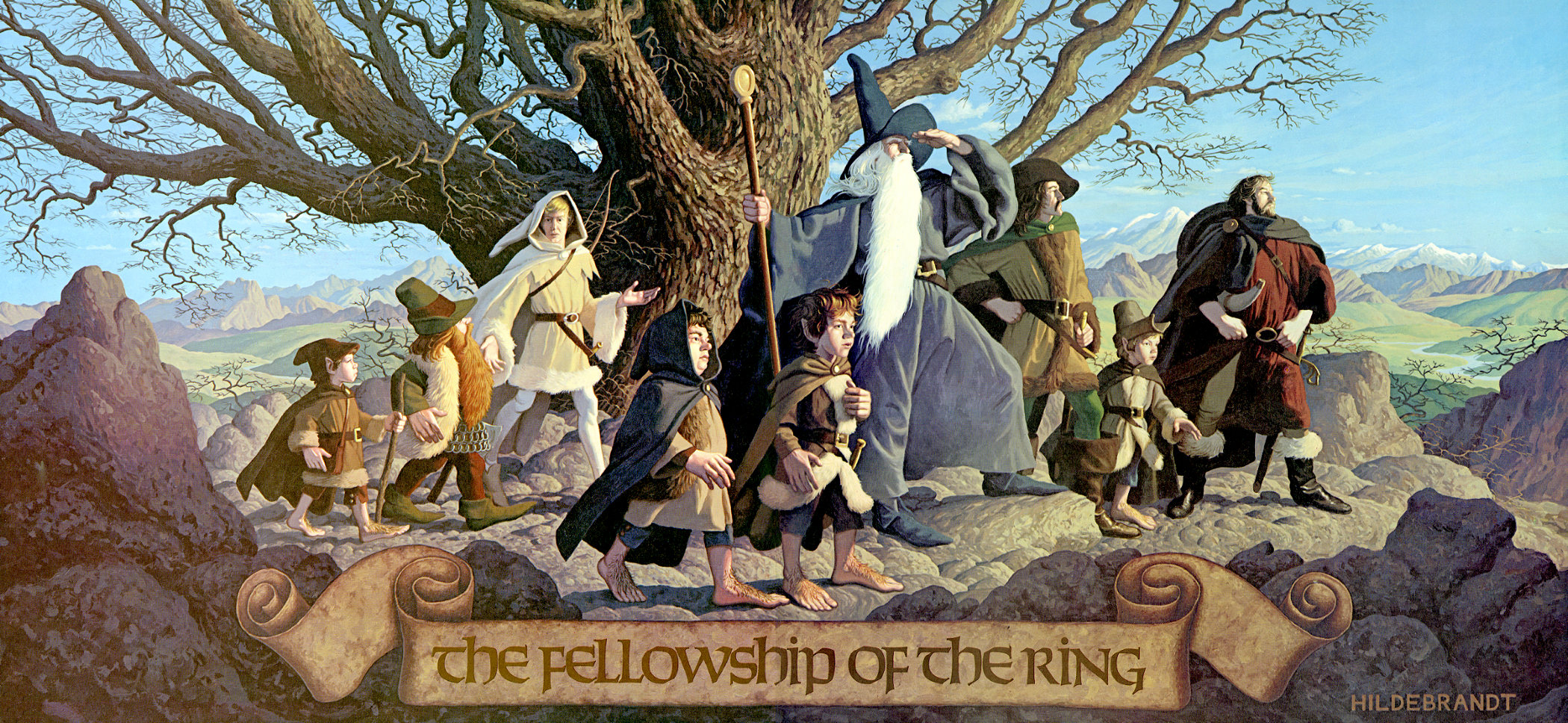
“All that is gold does not glitter,
Not all those who wander are lost;
The old that is strong does not wither,
Deep roots are not reached by the frost.
From the ashes a fire shall be woken,
A light from the shadows shall spring;
Renewed shall be blade that was broken
The crownless again shall be king.”
Welcome back to another Blind Read! This week we take a nostalgic step backward and revisit an old classic, “The Fellowship of the Ring!” Though this is not quite a Blind Read, but it has been years since I’ve read these books. Years ago I remember reading them in preparation for watching the movies as they came out in the theater, so “some things that should not be forgotten, were lost” as it were.
I want to start this week by saying how much I missed when reading the books. They are jam-packed with history and I’m amazed at how well the novels were accepted at the time of publication because there is so much more you gain by reading the Silmarillion, which was published years after the original books were, and posthumously to boot. This time around the world seems so much more alive and complete than the first time because there is so much context present, just not explained. The world of Middle-earth is considerably more complex than the simple Hero’s Journey I had understood when I first read through it. But we’ll get into this in a minute.
In this essay, we’re only going to cover “The Fellowship of the Ring” as I’m going back through and re-reading the Lord of the Rings to gain a renewed experience after reading through the Silmarillion. Tolkien (according to his son and editor, Christopher) initially wanted to publish The Silmarillion in conjunction with The Lord of the Rings, and I can now understand why.
I remember reading the books some twenty years ago and being confused and turned off by the constant name-dropping and song, which didn’t make sense to me. I had no context to understand who Beren was, what Gondolin was, or why I should care about Eärendel. What I was missing was how full these details made the world of Middle-earth. There was a lush history beneath the surface, and I just hadn’t been privy to it to understand how that history created the world in which the characters lived. It truly makes all the difference.

The beginning of the novel has much the same charm as The Hobbit. It is evident that Tolkien had a much larger story in mind, but early on, the prose is more attuned to the “Children’s story” that was The Hobbit. It’s not until Tom Bombadil that that theme begins to change.
I remember hating Tom when I first read the books because, by his nature, he was always happy and highly overpowered. He and his wife dance around and make merry while some grave tidings are happening in the world, which is a significant call back to how Tolkien wrote The Hobbit. But the brilliance of this section of the book marks a change in the tone. Tom represents the last time in these books that the Hobbits needed rescuing when they don’t try to save themselves. In every other conflict in these books, after this point, the hobbits fight. Of course, they are outmatched at times as they need assistance, but against the Barrow Wight, they only wait for a savior instead of trying to do something about it.
Tom saves them and sends them on their way, and it’s at that point the merry-making and song end. Yes, there are many songs in the book beyond Tom’s section, but their tone is somber, and if you understand the history, they call back to the previous record and why the world has become what it has become. It even covers characters’ motivations, Like Aragorn, when he recites the Lay of Beren and Lúthien.
Later, when they get to the Council of Elrond, Tom Bombadil comes up again. They talk about potentially giving him the One Ring to protect it because he is so old and powerful. It seemed ridiculous when I originally read it, but after reading about the Valar and how they stayed out of the affairs of the Children (Men and Elves) it makes much more sense that they would try to get one of those powerful beings to protect it.
I was hoping to get more of a history of Bombadil in The Silmarillion, but how the Council spoke of him leads me to believe that he truly may be one of the Valar because of how he is described as too old and too powerful to care about the One Ring. If it was left in his care, he might forget about it or lose it. Gandalf, Saruman, and Sauron are all Maiar, so even beings of that power are indebted to, and scared of, the Ring’s strength. So Bombadil has to be one of the Valar who decided to stay on Middle-earth.

I look forward to reading his book (“The Adventures of Tom Bombadil”) when I get to it in the histories.
Bombadil doesn’t appear in the rest of the books, which leads me to believe that this was a transitional period in the novels. Tolkien wanted to keep his readership from the Hobbit, but he wanted to transition into something more meaningful and bold.
It isn’t until we reach Gandalf dying in Moria that the books finally feel much more realistic. The tone of the books shifts; the lays they recite are more lamentations than happy-go-lucky ditties that Tom Bombadil recites. The book shifts from a fun “children’s story” to a natural history of Middle-earth.
Elements of the Silmarillion are spread throughout the ending, but the stories they tell are direr and more immediate than what comes at the beginning. Tolkien does a masterful shift in the narrative from “Concerning Hobbits” to the “Breaking of the Fellowship,” We are left with desperation and an overwhelming desire to find out what happens to our friends in the next book.
As I mentioned above, when I read these books the first time I thought the whole point was to have a Hero’s journey, much like Joseph Cambell describes (though that is probably a whole series of essays to do at a later time). What we actually get is a wholly formed world. A World that is almost a character in and of itself. The characters are adding to that world and that history, but the book is not solely about them. It’s more about how their actions form the history of the world and not the other way around. I don’t think I’ve ever read a book that has such a deep and realized history before, and I have to say I’m enjoying Tolkien like I never had previously.
Join me next week as we jump back into the Book of Lost Tales, part 1, and review “The Music of the Ainur.”



 Sean McBride
You must be logged in to post a comment.