Blind Read Through: H.P. Lovecraft; The Transition of Juan Romero

“Upon investigation it was seen that a new abyss yawned indefinitely below the seat of the blast; an abyss so monstrous that no handy line might fathom it, nor any lamp illuminate it.”
Welcome back to another Blind Read! This week we delve into the last of the juvenilia from the Del Rey book “The Tomb and Other Tales.” If you want to follow along, we’ll be covering the last three fragments at the end of that book in the next three weeks!
This story has a bunch of interesting lore involved, and where it isn’t specifically Yog-Sothothery, it’s a good basis for his cannon.
The story starts with Lovecraft’s classic unreliable narrator. He is unwilling to give much background but we know that he fought in the Anglo-Indian wars, as he “…was much more at home amongst white-bearded native teachers than amongst (his) brother officers.” Which to me indicates maybe he was of mixed race, Indian/English who never felt at home. He was an outcast in his homeland and I get the feeling that he chose to go to India to fight, not our of civic duty, but of a desire to prove he belonged.
He leaves India, but instead of going home, he heads to the American West and takes on a new name: “…a life wherin I found it well to accept a name – my present one – which is very common and carries no meaning.” indicating that his name had meaning before he started his new life in America. He is an outsider that somehow holds some sort of unforeseen talent or power and just hasn’t realized it yet.
His new life consists of being a miner at the Norton Mine, looking for gold along with his fellow miner, Juan Romero. During the dig, they do some blasting and they blow out a huge abyss with no end (see opening quote).
That night there are strange sounds; drumming from the deep (which is almost the exact same line from Tolkien. I half wonder if Tolkien stole it for the Mines of Moria), some wolves howl, and Juan Romero freaks out. He goes to the edge of the abyss: “and with a wild outcry he forged ahead unguided into the cavern’s gloom.”
Romero yells “Huitzilopotchli,” which is the Aztec god of war, the sun, and human sacrifice, before heading into the maw. I first thought this an odd inclusion the tale, because why would the deity which watches over Tenochtitlan be buried in a huge abyss underneath the American West? The more I thought about it however, I realized that this was probably just a manifestation of what Romero thought might be down there. There is another possibility which I’ll cover later, but I prefer this one, so we’ll leave that here.
There are some strange lights, “at first I beheld nothing but a seething blur of luminosity;” then he sees Romero through the diverging forms in that light. Romero has changed! We don’t know into what; in fact Lovecraft has his popular non-descriptors which made his horror so palpable. He doesn’t describe it, which makes the idea that much more terrifying: “but God! I dare not tell you what I saw!” He allows the reader to formulate in their own mind what this terror could possibly mean. The brilliance of this is that each reader will come up with their own interpretation of what the horror is which hits the hardest for them.
Some kind of deific power comes down and collapses the cavern, filling in the abyss to the point that the drillers are never able to find it again. Our narrator is not sure how he got away, but he”…noticed the unaccountable absence of my Hindoo ring from my finger,” which he doesn’t believe is a coincidence: “Somehow I doubt if it was stolen by mortal hands, for many strange things were taught to me in India.”
So what does this all mean? Did Lovecraft get confused and believe that the Indian sub-continent had the same deities as the South American? How could these two different deities interact? Juan Romero sees an Aztec god, however the narrator’s Hindu ring (Shiva?) was gone after the event. How could an Aztec God possibly be effected by a talisman from a Hindu God? What was Lovecraft getting at?
I believe Lovecraft knew what he was doing. Lovecraft himself seemed too versed in religions and he tended to research and ask questions, so I very highly doubt he confused the deities of two very separate religions. What I think is more likely is that Lovecraft is taking a more unifying approach.
Lovecraft was not religious; in fact he seemed to despise religion. So why would there be two religions in one story? There wasn’t. The characters believed they were two different beings, but we are one people, and there’s a reason so many of our religions are so similar. Think about all the cultures which have a flood myth. Lovecraft is saying that we are of one culture and the true deity which was nearly released was a cthonic god. A God which was the basis of all world religions. Their moniker is only what a culture called them based upon their experience. That’s why the Hindu ring worked on an Aztec god. They were one and the same, buried under our earth much like Cthulhu is in his lost city of R’lyeh.
What do you think?
Blind Read Through: H.P. Lovecraft; The Street
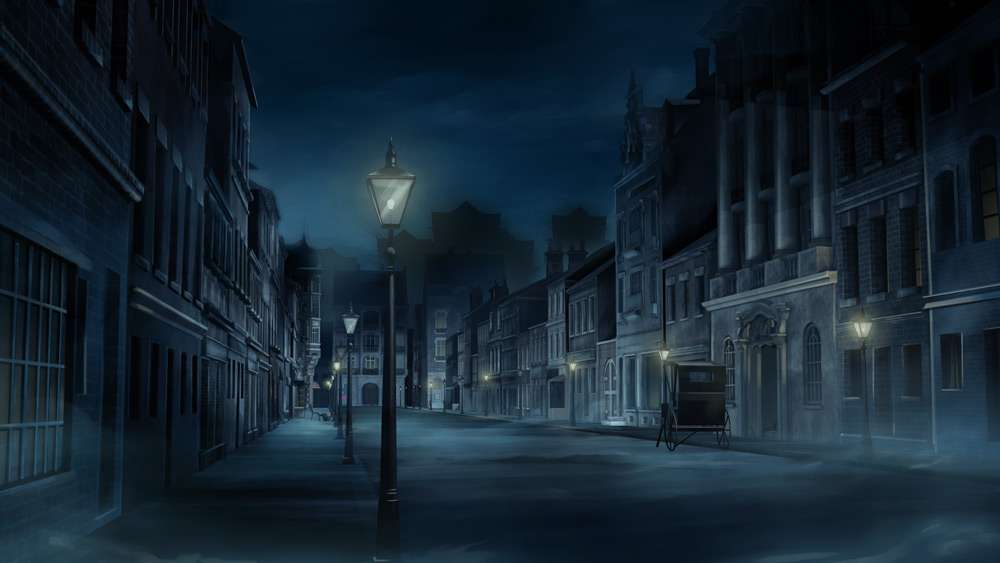
“There be those who say that things and places have souls, and there be those who say they have not; I dare not say, myself, but I will tell of the Street.”
This is the best opening line I’ve seen from Lovecraft in all that I’ve read of him (Despite the weird piratey feel), and this even comes from one of his Juvenilia!
I wasn’t really sure where Lovecraft was headed with this one. This short story felt like a bit of a ramble; as if he had a basic idea of what he wanted to accomplish, but he wasn’t sure how he wanted to get there. The writing is much more sophomoric than much of his other writings, but the story itself is far more controlled and succinct than The Poetry of the Gods was (which I’ve since been told the majority of which not actually written by Lovecraft).
In this story we follow the history of a street from the dawn of time when magic ruled, to the present day. The “soul” that Lovecraft is talking about is the Street’s history; the mystery and magic that’s inherent to an individual location. This is such a through line with all of Lovecraft’s writings, but I don’t think I’ve seen it so blatant in any other story than it is here.
The Street has a soul. Through time events happen. People coalesce around the Street and form it into a community. They build it into a town. The nation forms around the Street. There are wars to defend locations and ideals, including skirmishes with “natives” and battles with soldiers wandering the streets. There is even mention of the Declaration of Independence as the world changes around the Street.
The Street, however, never loses its core. It never loses it’s spirit. Things around it can change, “the air was not quite so pure as before, but the spirit of the place had not changed.”
Lovecraft believed that the way the world was headed was a detriment to the human mind. I think that’s why he ultimately wrote about what he wrote about. It was his goal to keep things unchanged and his Yog-Sothothery was that old magic that was too powerful (both in good and evil and ambivalence) to change. Many of the people in his stories are trying to bring back those old gods…trying to bring back that old magic…to a time before humans gradually destroyed the world. That’s why he loved New England, because it held onto the traditions of old, unlike places like New York which thrived on change (See the stories HE and The Horror at Red Hook).
Overall there isn’t much to this story but that theme. That theme is such a powerful one in his writings, however, that this is an incredible addition to his works because we can gain a greater understanding of his oeuvre as a whole.
One last thing before I let you go. I noticed something strange in this story, and where it is a blind read (meaning that it’s the first time I’ve read it, so I could have easily missed some context), I think that there may be more to his legacy than I previously thought.
I’ve always heard that Lovecraft was a notorious racist. Now, because of the day and age that he lived in, I’m sure that this was true (not to mention some of the wording he uses to describe minorities, also not using this as an excuse to forgive racism), but reading his works in such a bulk and analyzing them like I have, I think that he’s a bit more of a Xenophobe and an Agorophobe. I think he equally was scared of and disliked any people who were different, or had differing cultures than he did. It actually makes me pity him more than vilify him because fears drove him as we see in his literature. (Qualifier: I am not giving him a pass. I am not saying racism in any form is ok, in fact I think treating anyone different because of melanin or cultural differences is pretty abhorrent. I’m not saying that we should look past it. It’s just an observation that it seems like he fears everyone outside of his comfort zone, not just minorities. In fact in The Horror at Red Hook the evil person is dutch. He does have terrible language which is detrimental to the world as a whole.)
Lines like; “But it felt a stir of pride one day when again marched forth young men, some of whom never came back. These young men were clad in blue.”
It seems as though he’s talking about the Civil War here. If he is, then he was firmly in the Union side (which makes sense because he lived in Providence). I want to hope that he was pro Union because of the slavery issue, that he was still a humanist, but it could be that I love his writing and I’m looking for an excuse.
I guess I’d have to read his letters to get a better understanding of the man himself.
What do you think?
Blind Read Through: H.P. Lovecraft; Poetry and the Gods
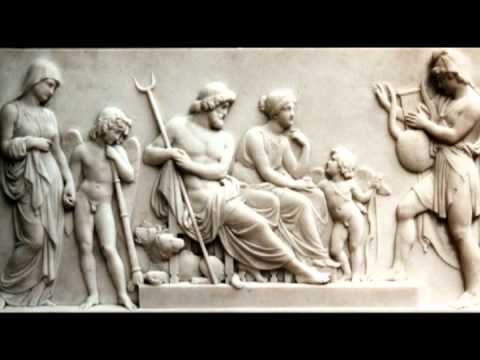
“It was only a bit of vers libre, that pitiful compromise of the poet who overleaps prose yet falls short of the divine melody of numbers; but it had in it all the unstudied music of a bard who lives and feels, who gropes ecstatically for unveiled beauty.”
Welcome back for another Blind Read! This time we’re diving into a co-op between Lovecraft and Anna Helen Crofts. This story is a divergence from what we have seen so far in Lovecraft’s fiction so if you’re looking for a horror story, look elsewhere. What we do get to see here is an interesting genesis of Lovecraft as an author and potentially his position, much like Marcia in the story, as a herald to the gods.
The story follows the aforementioned Marcia, who lives in an austere mansion and suffers from general malaise because of, “…some greater and less explicable misplacement in time and space, whereby she had been born too late, too early, or too far away from the haunts of her spirit ever to harmonize with the unbeautiful things of contemporary reality…” This quote strikes me. It feels almost as if Lovecraft is using Marcia to be a stand in for himself (or potentially Ms. Crofts).
He was not born at the right time.
Lovecraft craved mystery, and the strange, and mysticism. Contemporary culture of the time just didn’t fit with these amorphous constructs. We see this time and again (especially in the stories such as HE or Shadow over Innsmouth) Lovecraft wanted magic in the world of technology.
We go along with Marcia as she’s approached by Hermes and brought before Zeus. Zeus is looking for a mortal to herald the coming of the gods and brings Marcia there to do so.
The text itself is interesting because the exposition is cut up by poetry, as if to expose how brilliant Marcia is, but it also displays how bad poetry can halt magic from happening.
This is pretty much everything you get out of the story. It’s disjointed and strange, but it tries to hover between the mega weird of Lovecraft and softer, more realistic fiction. It doesn’t hit the nail on the head. It leaves you with the feeling that either one, or both of the authors were trying to show off how important and how amazing they were, but the self aggrandizement comes off as cheap and smarmy. It makes the story feel useless.
Where my interest in this story lies is how similar the Greek gods of the story were with Lovecraft’s original cannon. I’ve mentioned before that Greek gods and culture were a heavy influence on Lovecraft in general, and this story solidifies this.
There is a bit of the Dream-Quest as Marcia is brought to Olympus and sits before Zeus, as he tells her, “..the time approaches when our voices shall not be silent. It is a time of awakening and change.”
There is even evidence of the Pnakotic Manuscripts or the Necronomicon with “…reading from a manuscript words which none has ever heard before, but which when heard will bring to men the dreams and fancies they lost so many centuries ago, when Pan lay down to doze in Arcady, and the great Gods withdrew to sleep in lotos-gardens beyond the lands of the Hesperides.”
So much correlation that it’s hard not to read into it. From stories such as The Tree, The Tomb and What the Moon Brings, we catch such a huge influence from Greek culture that I now truly believe that his Yog-Sothothery is based upon these gods. He just puts a slightly more nefarious tint to them.
What do you think??
Blind Read Through: H.P. Lovecraft; The Alchemist
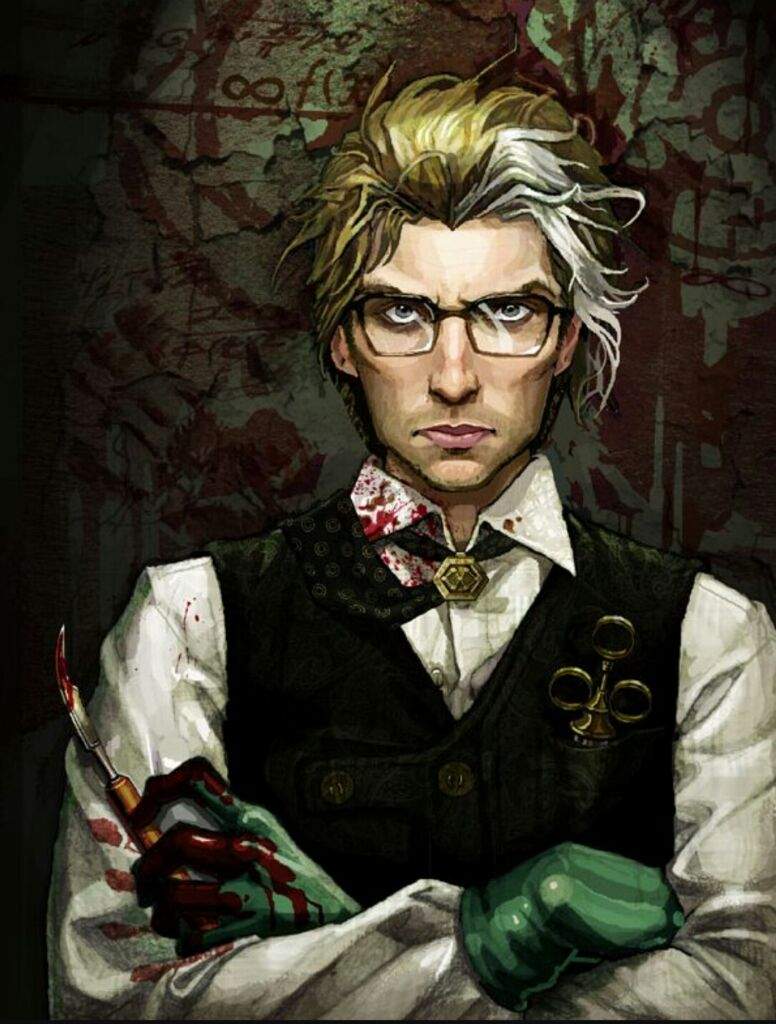
“At this time, my belief in the supernatural was firm and deep-seated, else I should have dismissed with scorn the incredible narrative unfolded before my eyes.”
Welcome back to another Blind Read! We’re diving back into another one of H.P. Lovecraft’s Juvenilia… The Alchemist. This was the first story I’ve read from Lovecraft that I truly feel that he had not gained his writing chops before starting. The narrative is obviously unpracticed and the plot is loose, with a number of issues.
The major thing that jumps out at me is that, unlike his other stories where he relies on inference for horror and terror, in this one he goes right to it and calls a spade a spade. The antagonists are father and son and they are evil. Flat out. Lovecraft even goes so far as to state that the father “…burnt his wife alive as a sacrifice to the Devil, and the unaccountable disappearance of many small peasant children were laid at the dreaded door of these two.” OK. That’s bad enough. We can probably leave it there. We know that these two are corrupt and irredeemable. We know they are the antagonists, but Lovecraft takes it a step further.
“…the evil old man loved his offspring with fierce intensity, whilst the youth had for his parent a more than filial affection.”
OK eww.
I hope I misunderstand this quote, and I hope it means something other than physical love, though I don’t know what else would be more than filial. Even more bothersome, Lovecraft states “…through the dark natures of father and son ran one redeeming ray of humanity,” meaning that their “more than filial love” is seen as a redeeming quality. Hmm. Mayhaps we’ve seen a little into why Lovecraft became such a recluse.
But let’s dig into the story, shall we?
A young man is locked away in a tower because the “…restriction was imposed upon me because my noble birth placed me above association with such plebeian company.” (though really it was because of the curse, but more on that later) Because of this isolation our narrator spends the majority of his time reading over old archaic tomes, but “Those studies and pursuits which partake of the dark and occult in nature most strongly claimed my attention.”
Through these tomes he reads of a man by the name of Michel Mauvais and his son Charles, also known as Le Sorcier. Mauvais, an evil sorcerer who strove for “such things as the Philosopher’s Stone or the Elixir of Eternal Life.” Meanwhile the Count, our narrator’s ancestor, finds one day that his son is missing and immediately goes to Michel Mauvais’ house and kills him for the murder Godfrey, his son. It is later found that Godfrey had just wandered off and eventually came back, though too late to save Mauvais. Le Sorcier curses the count and his ancestors, stating that every man in his lineage will die at the age of 32.
The tome tells how each ancestor of our narrator dies at that age. Eventually on the narrator’s 32nd birthday, Le Sorcier appears and says that it was actually he that had lived these past 600 years and had killed every one of the Narrators kin on their 32nd birthday to ensure the curse continues. He takes the Elixir of Life to help him in this capacity. Here the tale concludes.
We know the narrator wins the inferred scuffle, because he lives to tell the tale. We also know he steals the Elixir of Eternal Life from Charles Le Sorcier because the narrator tells us that the events he described were 90 years prior.
There are two possible outcomes here. The first is how the narrator tells it: he kills Le Sorcier, takes the drought, and lives forever in his tower. The second is that the narrator is none other than Le Sorcier himself, and the earlier story of being holed up was a hoax. Neither one of these are well thought out conclusions however. Either one of these outcomes leave a large number of plot holes, even in this seven page story. Unfortunately I felt this was Lovecraft’s weakest story of which I’ve read so far.
What do you think?
Blind Read Through: H.P. Lovecraft; The Beast in the Cave

“Cautiously advancing, we gave vent to a simultaneous ejaculation of wonderment, for of all the unnatural monsters either of us had in our lifetimes beheld, this was in surpassing degree the strangest.”
Welcome back to another Blind Read! This week, we’ll be diving into some of Lovecraft’s “juvenilia,” as it’s called. This is one of the last stories he wrote as a young man (The Alchemist being the last), before taking a break from writing these types of fictions. He returned to fiction years later and wrote the rest of his better known bibliography
This is a good story with echoes of future works tucked inside of it. Now, where there isn’t much in terms of cosmic horror or a Mythos connection, there is a slight thread (though far fetched) that we’ll be examining in a bit.
The story is a simple one and very straight forward. Lovecraft doesn’t leave much to the imagination, but he does create a great little horror story. The story begins with our narrator taking a tour through some strange caverns. He gets separated from his group and ends up fighting (really just throwing rocks at) some kind of creature that rose up from the depths of the cavern system.
He thinks he kills the creature with the rocks and tries to inspect it. He finds that it’s a white haired ape like creature, but it’s too hard to see because his torch extinguished in the time he wandered, lost. When the tour guide eventually finds him, flashlight en tow, they see that the creature was actually a man, assumed to be down here so long that he has mutated (I wonder if Gollum comes from this story).
It’s fun and short, and what you’d expect from a young man’s fiction. But what if this were the seed for so much more?
So the obvious connection is The Facts Concerning the Late Arthur Jermyn and his Family, because that is a story of a man intermarrying a Portuguese woman, who eventually turned out to be a Congan Ape Goddess. Arthur Jermyn and his family all had apish aspect because they were offspring of the Ape Goddess. Maybe the beast in the cave was actually a Jermyn?
But then we can go deeper. There are a few mentions of the people of Congo praying to this Ape Goddess “Under the Congan moon”, and inference that potentially the moon could have been where the Ape creatures came from (see What the Moon Brings and The Dream Quest of Unknown Kadath). Could this be the mythos connection? Could these creatures have been somehow been connected with the moon-beasts?
Even in stories such as The Doom that Came to Sarnath have this moon connection, where it seems as though something has come down from the moon and taken over, or corrupted life on our planet. This could be the cosmic connection we’re looking for, because the vast majority of Lovecraft’s mythos come from the stars.
Of course, this is a tenuous connection to say the least, but I like to think that Lovecraft’s beginnings could have had this kind of influence, at least subconsciously, over his later work. His vague mythos (which from what I understand, he didn’t want to have much connectivity), may have actually been more connected than we really thought of previously.
What do you think?
Blind Read Through: H.P. Lovecraft; The Strange High House in the Mist

Welcome back to another Blind Read! By the looks of things, I will have made it through all of Lovecraft by the end of the year. SO…If you have an author that you’d like to discuss, or have trouble reading let me know! Maybe they can be the next author covered in this series.
“At length, being avid for new strange things and held back by neither the Kingsporter’s fear nor the summer boarder’s usual indolence, Olney made a very terrible resolve.”
This story is a connector of the Dreamlands stories. In it we have a house perched on top of a tall cliff, with the only doorway leading out to the abyss of the cliff. Inside the house we have a protector. Someone who spends eternity guarding the world from the other gods and the incursion of the Dreamlands into our reality. We are enabled to see this house because our intrepid adventurer, whom out of curiosity and a lust for life, finds a way up to “The Causeway” and meets this caretaker.
We start the story describing the harbor town of Kingsport. Right from the very first paragraph we are given knowledge that the people of Kingsport know there are strange dealings around them. The feel of the town is one of mysticism. The fantastic nostalgia for a simpler time. A time when older gods ruled the world and people only wanted for basic survival. There was no rat race, but a desire for simplicity and knowledge. This is the core of Lovecraft, both person and writings. He believed in simplicity, and loathed materialism. You can see this starkly in his portrayals of cities like New York, as he yearns to stay in his protected, almost mythical, section of New England.
Thomas Olney, our main character, is new to Kingsport and he hears stories about the house from sailors and an old bearded man in town. He can occasionally catch glimpses of it as well through the thick mists that circle the craggy cliff it sits upon. His curiosity overwhelms him and he decides that the’s going to take the trip up to it. It is a dangerous and arduous journey, but eventually he gets there and finds that the only ingress to the house are the closed windows, and a door that opens out over the cliff. He hears someone approach and hears the door creak open, so he hides beneath the sill of a window, only to be pulled into the house. The man who pulled him into the house is young and bearded and he is reminiscent of the grouchy old man in the village who seems to know about this house.
The bearded man tells stories to Olney; “…and heard how the kings of Atlantis fought with slippery blasphemies that wriggled out of rifts in the oceans floor, and how the pillared and weedy temple of Poseidonis is still glimpsed at midnight by lost ships…”
This is both a reference to R’lyeh, the city where Cthulhu is buried in slumber, and Dagon, one of the pantheon of lesser gods and linked with Poseidon. In other stories there is mention that the god like men of Atlantis fought off the Elder Gods, Cthulhu being one of them. Where they couldn’t defeat them, they buried R’lyeh, the lost city, and trapped Cthulhu within the earth. Dagon is the fish god, and still calls creatures from the sea in a slow effort to gain back control. See The Shadow over Innsmouth.
Olney is also told of older things: “Years of the Titans were recalled, but the host grew timid when he spoke of the dim first age of chaos before the gods or even the Elder Ones were born, and when the other gods came to dance on the peak of Hatheg-Kla in the stony desert near Ulthar, beyond the River Skai.”
There is a lot to unpack there, but basically we have the establishment of what Lovecraft himself called “Yog-Sothothery”, later to be coined “The Cthulhu Mythos” by August Derleth, one of Lovecraft’s closest friends and writing partners. The other gods were first; terrible creatures and malevolent in nature. The Elder Ones came later. Creatures like Azathoth. Then later, came the deep ones like Cthulhu. The River Skai also has importance in the Dreamcycle as we see in the Dream Quest of Unknown Kadath and other stories.
Shortly after describing this, something comes to the door of the house. The bearded man hurries and locks the door, then goes around the house and shutters all the windows. It’s a suspenseful scene as he tells Olney to get low and be quiet. “And the bearded man made enigmatical gestures of prayer…“. The bearded man is setting wards against shadows that are gathering in the room, “For there are strange objects in the great abyss, and the seeker of dreams must take care not to stir up or meet the wrong ones.”
All of this information, plus numerous mentions of dreams and dream seekers, leads me to believe that this house is a way point. This house, in between Kingsport and Arkham, is an thin place that connects the dream world to the real world. The keeper, the bearded man, must be careful not to let these ancient horrors through the world. He gives the information to Olney, just like he gave it to The Terrible Old Man (Lovecraft even capitalized this honorarium in the story) so many years before. They get just enough information to be afraid of the house, and potentially keep others away. Olney never goes back, and in fact he loses some of his natural curiosity because of the shock of the experience, and eventually moves away. But still that Strange High House in the Mist stays and guards against the others from transcending into our world.
What do you think?
Blind Read Through: H.P. Lovecraft; The Horror at Red Hook
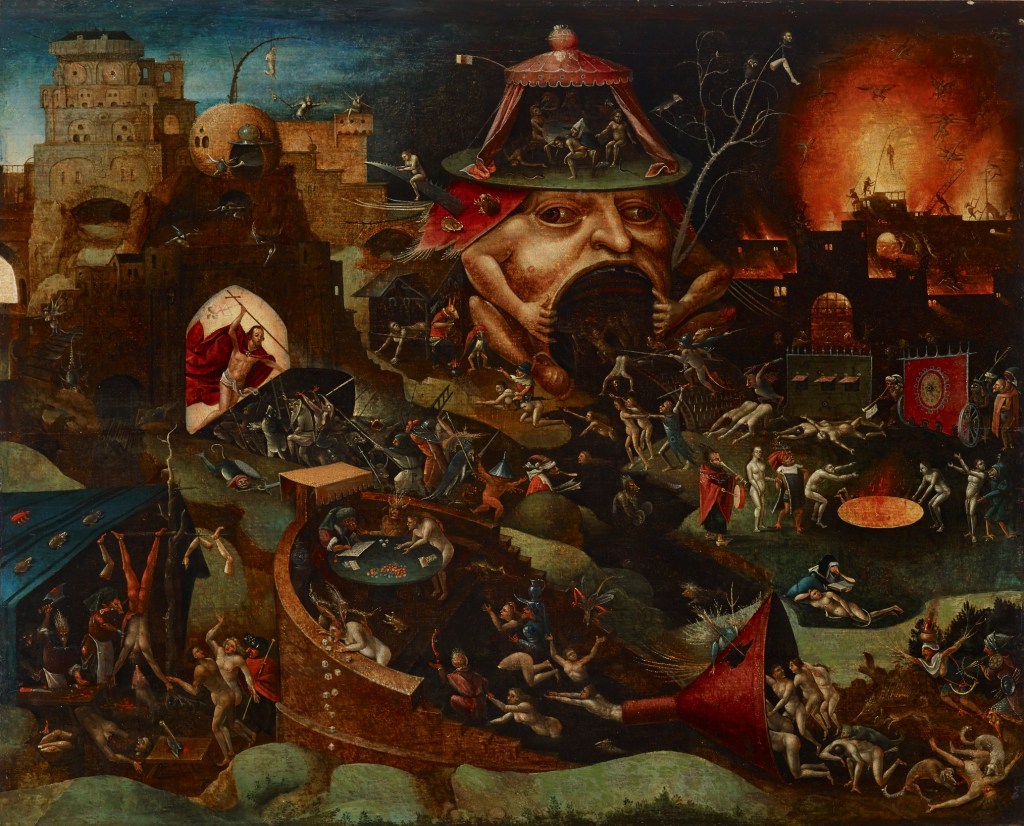
“But at this time it was all horribly real, and nothing can ever efface the memory of those nighted crypts, those titan arcades, and those half-formed shapes of hell that strode gigantically in silence holding half-eaten things whose still surviving portions screamed for mercy or laughed with madness.”
Wow, what a wild ride this story was. This was probably the scariest and most classic horror of any H.P. Lovecraft that I’ve read up to date.
As the story begins we are introduced to detective Thomas F. Malone who is on extended medical leave for trauma. The first portion of the story describes how he’s living and dealing with this trauma, of which we are still ignorant.
The second portion of the story covers Red Hook. We get a call back to HE, as there is a similar tenement structure our narrator experienced there. This story also takes place in New York, which is absolutely unique for Lovecraft. It does not hold the same atmosphere as much of his work, but from the start of this story the tone has a much darker and sinister feel. The basis in New York gives Lovecraft the ability to explore different themes than the usual fantasy/cosmic horror that he frames in New England.
The third portion of the story is the introduction to Malone’s quarry, Robert Suydam. “Suydam was a lettered recluse of an ancient Dutch family,” and he purchased a space in the run down, twisting alleyways of Red Hook. After a strange trip to Europe, Suydam began to deteriorate. His personal hygiene took a hit, he lost friends, and “When he spoke it was to babble of unlimited powers almost within his grasp, and to repeat with knowing leers such mystical words or names as ‘Sephiroth’, ‘Ashmodai’ and Samael’.” And there it is. We have three demons from the Kabbalah and Christian religions. The text has gone beyond the normal Lovecraft, no longer in the world of the cosmic horror. We are no longer in the dreamlands (though there is a little bit of dream stuff to come), we have now crossed over into religious horror. To me this raised my hackles. I find this subject matter far more terrifying that anything I have yet come by within Lovecraft’s oeuvre.
The fourth section of the story delves into the police work. Trying to uncover just what strange dealings that Suydam has been up to. They raid his home, which is empty, and they come across blasphemous art work and things that Malone simply “did not like”. They also found an inscription:
O friend and companion of night, thou who rejoices in the baying of dogs and spilt blood, who wanderest in the midst of shades among the tombs, who longest for blood and bringest terror to mortals, Gorgo, Mormo, thousand-faced moon, look favourably on our sacrifices!
I had no idea what this meant. Though obviously a atmospheric quote, I believed it had deeper meaning. Lovecraft infuses lots of Greek mythology and heritage within his work. There is a certain amount of admiration he obviously felt for the culture and the artwork. He loves the idea of marble structures and busts and even includes some of that iconography in this story as well. So when I came across this quote, it was no surprise to me that it was about Hecate, the Greek Goddess of the underworld, ghosts, and magic. This story was not going to deal with cosmic horror, it was going to deal with something closer to home. It was about Hell.
The next short section of the story tells of a journey Suydam takes across the sea, where he dies. He instructs that his body be conveyed to the bearer of the note provided.
Then we move into the Horror. Malone goes to Red Hook and investigates, noticing a melee. He goes to allay the fight and finds strange sounds and smells while all the participants of the battle flee. Malone suspects something nefarious behind a large door, so he takes a stool and breaks the door open, “whence poured a howling tumult of ice-cold wind with all the stenches of the bottomless pit, and whence reached a sucking force not of earth or heaven, which, coiling sentiently about the paralysed detective, dragged him through the aperture and down unmeasured spaces filled with whispers and wails, and gusts of mocking laughter.“
Malone is sucked into Hell. He experiences some truly horrific scenes, perfect for any fan of this type of fiction, and much more evocative than anything I’ve experienced from Lovecraft. We see Suydam giving himself over to a demon, finally getting what he was after, and becoming one with hell.
The final section explains how the mysterious group brought Suydam’s body back to that experience and how Malone could hear that same refrain from some “hag” speaking to young children about Hecate. The knowledge of the fate of Suydam and that whatever devious magic caused it is still alive and well in Red Hook is what truly throws Malone over the edge.
When I think of Lovecraft I don’t generally think “disturbing”, but I have to say that this one was up there. That penultimate chapter covering Malone’s experiences in Hell were truly unsettling.
What do you think?
Blind Read through, H.P. Lovecraft; Beyond the Wall of Sleep
I’m going to start this one with a little rant. This is a blurb about this story from the back of the book: A crazed murderer blames his crime on beings from another dimension. Wild ravings from an insane man turn to prophecy when the Truth is revealed.
This is the problem with most writing. It isn’t the writing itself, but it’s marketing. The only thing about the above sentence that is true is the fact that the man (Joe Slater) is a murderer. Nothing else is true, and it begs the question if the person who wrote the blurb actually read the story. If they had, then it is a much greater crime to purposefully mislead the reader to try and get more sales, by outright fabricating the plot.
Slater never blames his crimes on beings of another dimension (in fact there are never beings, in plural, but ever only one being who “did him great wrong”). Then the author of the blurb deigns to use the buzz word “prophesy”. There is no prophesy. The ravings of the mad Joe Slater are heard by the narrator and the narrator has an interest in dreams, so to see what Joe is seeing, he hooks them both up with a skullcap to see what he is seeing. Which he does. That’s it.
Ok sorry. Now to the nitty gritty of the story.
This is one of Lovecraft’s earliest stories and supposedly has no correlation to the later works. I see quite a bit here that would lead to that however. Again we have these strange green northern lights. Again we have madness derived from exposure to a cosmic deity. Again we have the unreliable narrator. Again we have the remote local. And to top it all off we have Lovecraft’s trademark superiority complex (He names the madman’s neighbor Peter Slader, where the madman’s name is Joe Slater. He mentions many times that they are all backwoods yokels who have no knowledge and intimates that they inbreed. Only to verify that claim by naming the characters of the mountains with such close names as to subliminally castigate them).
Where this shows as an early work is that he actually shows his god. The narrator goes “Beyond the walls of sleep”, and into the cosmic realm that drove the simple Slater mad. the Narrator himself (though it is never discussed what he actually does, or how he acts) is offered a leave of absence, because he is “working too hard” after the experience he gained from Slater’s mind.
But perhaps the most provocative aspect of the story, is why the cosmic deity would come down and inhabit a backwards “white trash” (Yes. Lovecraft actually wrote the words “White Trash” in 1919) yokel, who doesn’t have any brains. Maybe because the idea was to make a transformation?
“His gross body could not undergo the needed adjustments between ethereal life and planet life.”
Meaning he was not intelligent enough to understand how to make the transition. But the narrator can ascend and we are left feeling slightly off kilter, as if this were not a choice, but now that the cosmic deity has found an appropriate zygote he will being his proliferation.
Blind Read Through; H.P. Lovecraft, The Tomb
This is supposedly the first story written by Lovecraft, and it flows perfectly into his predilection for madness. The story follows Jervas Dudley, the quintessential unreliable narrator, in his descent into madness.
Jervas states at the beginning of the story that he loves reading ancient tomes; books that no one else ever reads, who’s subject matter is strange and malignant. He has no social life and he derives much of what he understands about life from these convoluted books.
Then one day he happens upon a tomb. It is in the location of his neighbor’s (The Hydes) burned down house. He begins spending much of his time there, hiding out and sleeping in front of the partially ajar, padlocked tomb.
One day a voice from the tomb tells him to go to his attic, where he finds a key to the padlock and enters the tomb. He spends much of his time there, but at the same time, his father becomes concerned for his mental well being, so he sends a “spy” to watch over him. Listening in on the conversation, Jervas is confused to hear the spy tell his father that he spends all his time sleeping outside of the tomb, not inside as he knows to be true. He also develops a fear of lightning and storms, which is what destroyed the Hyde’s mansion in the first place.
Then while in the tomb he attends a party held by the Hyde’s and everyone seems so realistic and the mansion is back to its former glory, that is until Jervas’ Father and the spy grab him. In the struggle lightning started to flash and it exposed a box on the ground with the initials J.H. and inside was a statue of a young man with an uncanny resemblance to Jervas.
The story ends with one of the servants, supposedly going into the tomb and finding a coffin with the name Jervas on it.
This can be read in two different ways. The first is that the narrator, who is confined to a madhouse, has pushed his brain into thinking about the strange dealings of the netherworld by reading all those tomes instead of interacting with others. Then his half sleep for weeks on end in front of the tomb, his mind played games with him and he imagined everything.
It is easy to correlate that the Hyde’s were his ancestors, and once the mansion was destroyed the family built a new one close by. It stands to reason that during that time there was a young man by the name of Jervas Hyde (J.H.) who’s coffin the servant found at the end of the story. Because of this Jervas Dudley thinks everything is about him, because he has no other basis in reality.
The other way to read it (and the one I quite prefer) is that Jervas found something in the attic, that began to possess him. It made him desire to be with his ancestors, and the spirit of Jervas Hyde had somehow begun to merge with Jervas Dudley. They began to see and experience the same things. One could even conjecture that Jervas’ father knew this was happening, and that is why he was relegated to the asylum.
In either case, it was a fun read, though much shallower than the other Lovecraft I’ve read to date. This was supposedly in his straight horror days, which people say is uninspired, but it has a beautiful reminiscence to Poe and tales like “The Fall of the House of Usher”.



 Sean McBride
You must be logged in to post a comment.