A Thursday Treat

Happy Thursday! So, I have fallen behind a bit in my Tolkien reading, and with Thanksgiving right around the corner, I’m going to take this week and next week off of the Blind Read blog. I can’t leave well enough alone however, so I’m going to give you all a little treat this week with a sneak preview of my New Novel “The Monster in the Woods.” It’s a fantasy/heist story with a mystery at it’s core, that follows a group of teens trying to figure out if the Monster threatening the town they live in is real or not. Told in a revolving POV, it’s a death defying adventure in the classic vein of The Goonies. Hope you enjoy and let me know what you think!
Chapter 1
Lishtest
There was a soft click and suddenly haunting beautiful music echoed across the camp, lending a surreal tint to the night. Fog had rolled through, which led to a particularly claustrophobic aura over the two guards. Jack sat cross legged with his back to the town wall, facing the fire and beyond into the woods. Taun sat to Jack’s left but parallel to the wall still facing the fire. Lishtest sat opposite Taun, studying the fog, polishing her pauldrons. Lish was their Captain and always believed in a clean, well oiled uniform. Tidiness meant order and order meant discipline, and Discipline meant she could keep people alive.
“Turn that thing off, man,” Taun complained. “It’s creepy enough out here without you giving it a soundtrack.”
“Come on! My son gave this to me,” Jack whined. “Behbet said my youngest walked into a store and listened to it for a minute. She said his eyes got this glazed over look to them, and then she said he turned to her and looked her in the eye and with a super serious expression said to her, ‘Dad should have this.’ It just hit me when she told me that. He’s my son, you know? But when she told me that, it was like, he thinks of me like I think of him. And I’m out here and he’s in there. I want to hear it to remind me of him, but I want him to know I have it, because it was so important to him. Even though it’s creepy as hell.”
“Damn man, I didn’t know,” Taun said. Lish looked up at Taun and she was surprised to see that he actually looked like he could be experiencing some kind of emotion.
“Naw, I gotta stop it,” Taun said and swiped the box from him. Lish smiled. Now he was acting like the Taun she expected.
It was their Tenth day and Eleventh night out beyond the walls of the town. They got very little sleep out here, despite the fact that the Ferrians probably would not be attacking any time soon. Their army was too green, too weak to take on Teriistown. It’s walls were too high and reinforced, their army was too powerful. They raised warriors afterall, drafted as children and taught to be soldiers all their lives. No matter how angry the Ferrians were at Duke Siiran for the new policy he had instilled on them she didn’t think they would come and revolt.
It was getting monotonous. Everyday, she would send out some mix of the three of them out to range and survey the forest, while the third stayed back at camp for hours on end with nothing to do but collect firewood and boil rations. They had just begun their fourth rotation, and discipline in camp was already deteriorating to the point where Taun felt he could take Jack’s music box, no matter how annoying the thing was. She was going to have to put her foot down.
“Give me the box,” Lish said, almost under her breath.
“Awe, Cap, we were just messing around,” Taun began, but she wouldn’t let him finish.
“Captain,” she said it a bit too harshly and internally winced, but there was no going back now.
“Sorry. Captain,” Taun said and handed the music box to her. “Just having a bit of fun.”
Lish took the music box, nodded slightly to Taun and took it to her tent. She opened her chest and buried it underneath her clothes, before coming back out and sitting by the fire. Good. Taun took it seriously. He still had respect for the uniform. As a captain, out here, beyond the wall, there was nothing more important that your soldier’s respect.
“Wait sir, so I cant have it back?” Jack said. “I didn’t do anything wrong!”
Damn, Lish thought. She leaned forward and looked directly into Jack’s eyes. The fire reflected in his eyes the anger back at her.
“Lieutenant. There are three of us out here. Are we friendly, yes. Is there a chain of command, yes. You both need to know that if one of you gets in trouble, you both get in trouble. Has it been that long since Basic Training?”
“My son gave me that music box.”
“And you can have it back in the morning,” Lish said, then leaned back on the stump.
“I’m not a child, and that box is important to me.”
“You are not a child, lieutenant. But Ferrians aren’t all that we are out here to watch out for, and there’s no reason to call more attention to ourselves than is particularly necessary. Playing it during the day when we can see into the woods is one thing, but playing it at dusk, while we have a fire to make the darkness darker, and there is a fog giving more cover, you’re really going to play music to mask the sound of something approaching?”
“Something approaching. Ferrian’s aren’t all? You really believe there’s some kind of monster in these woods?”
“I mean, did you see the Carpenter? Dude was shredded. I’m not even sure if they know if it’s really the Carpenter, he’s so messed up.” Taun responded.
Lish gave Taun a look. “No, I do not believe there is a monster in these woods, lieutenant. I do think there are some large animals, and maybe one that has grown a little too big and someone thought it was a monster. It doesn’t change the fact that something can still sneak up on us in this kind of environment, natural or not, if we’re making a whole bunch of noise. This conversation is not helping. Do I make myself clear?”
Before Jack could respond, Taun interrupted. “Did you hear that?”
“Oh shove it Taun,” Jack said.
“I’m being serious! That way,” Taun pointed off slightly north-east.
“Grab your weapons,” Lish said as she stood and glared out into the fog filled woods. She was looking for movement, but the firelight danced through the fog and her mind made her see figures dancing in the darkness.
She noted the action on Jack and Taun’s rifles and knew they were following her lead. Nothing like a threat to snap someone to attention. She worked with them enough to know that Taun was flanking out to the right, and Jack was moving the other direction. Lish would take the middle as the ranking officer.
She began to move toward the forest slowly. Her rifle held up, she strafed the forest edge. She took a moment to steady her breathing and felt adrenaline give her senses a lift. The forest was dark and thick with brambles, but came into focus as she moved away from the fire. She saw it. It was big, bigger than a bear. It’s hide was glinting from the fire which meant it had some kind of Chitin or armor, but she wasn’t sure if it had thick long hair, or tentacles. It’s eyes glowed green as it locked with hers.
She took another steadying breath while she raised her hand and pointed at it. “There,” She said in an octave lower than her normal voice.
The thing seemed to snuffle in anger, like her dog did as a kid if it didn’t get what it wanted. It seemed to blink in and out of existence for a moment. She couldn’t be certain how it moved, but all the sudden it was five foot to the left of where it was. Everything in her wanted to pull the trigger, but she didn’t know anything about it and she needed Taun and Jack to give her the signal that they were in place before she acted.
It blinked again and it was closer. It’s eyes never left hers, but there was something in them, something unnatural. Just two glowing orbs, no iris, no cornea. It really was a monster.
“Hup,” Jack called out. He was in place.
She rested her finger on the trigger and gently began to squeeze.
It looked at her again and somehow those orbs conveyed curiosity.
“Hup,” Taun called out.
Her finger squeezed and a moment later she heard the discharge of both their rifles.
The creature blinked again, and it was on Taun. He screamed. It was a sound Lish never thought a human could create. She slid another bullet into the chamber and slid the bolt handle shut in one fluid motion and fired again. Taun was using his rifle as a baton swinging it against the thing, as he tried to maneuver away, but it stayed on him.
She fired again and again and she heard the report of Jack firing as well, but the thing didn’t seem to even feel it. She couldn’t see it attacking Taun either, but his skin kept rending in places, spilling bright red against the foggy gray night.
Taun continued to battle and dance away from the creature, but she could see his movements were slowing.
“Jack, Fire!” She ordered. She grabbed a log she could swing and stuck it in the camp fire. The log took forever to light and Jack appeared next to her continually firing and reloading his rifle. Taun screamed one more gargling scream and then abruptly stopped.
Once the log was lit, she ran at the creature and it blinked again. It was suddenly right in front of her and that Green Orb was the size of her head. She shoved the log into the eye, fire first. The creature squealed and a moment later she felt herself flying through the air back towards the campfire.
She heard Jack’s battle cry, but it turned to a drowning gargle before she blacked out.
Blind Read Through: J.R.R. Tolkien; The Book of Lost Tales, Part 2, Túrin Turambar Final Thoughts

“Turambar indeed had followed Nienóri along the black pathways to the doors of Fui, but Fui would not open to them, neither would Vefántur. Yet now the prayers of Úrin and Mavwin came even to Manwë, and the Gods had mercy on their unhappy fate, so that those twain Túrin and Nienóri entered into Fôs’Almir, the bath of flame, even as Urwendi and her maidens had done in ages past before the first rising of the Sun, and so were all their sorrows and stains washed away, and they dwelt as shining Valar among the blessed ones, and now the love of that brother and sister is very fair; but Turambar indeed shall stand beside Fionwë in the Great Wrack, and Melko and his drakes shall curse the sword of Mormakil (pgs 115-116).”
Welcome back to another Blind Read! This week, we’ll give some final thoughts on Turambar and the Foalókë, including some semantics and religion, to better understand what Tolkien was trying to do in this history of Middle-earth.
I chose the opening quote of this essay because I think that religion is at the cornerstone of everything that Tolkien was doing at this point in his career.
This story iteration was a mixture of the third and fourth drafts Tolkien’s son, Christopher, edited together. That quote that starts this essay has so much to unpack, and it’s all about meaning, life, and the afterlife.
A few sentences above that quote, we find that Úrin and Mavwin go to Mandos after dying, heaven in this world. Úrin spent his life struggling against Melko as a thrall and a man who tried to better those around him. Mavwin tried to do her best for all of her children and for the town she lived in. So, it makes sense that these two would be gifted an afterlife.
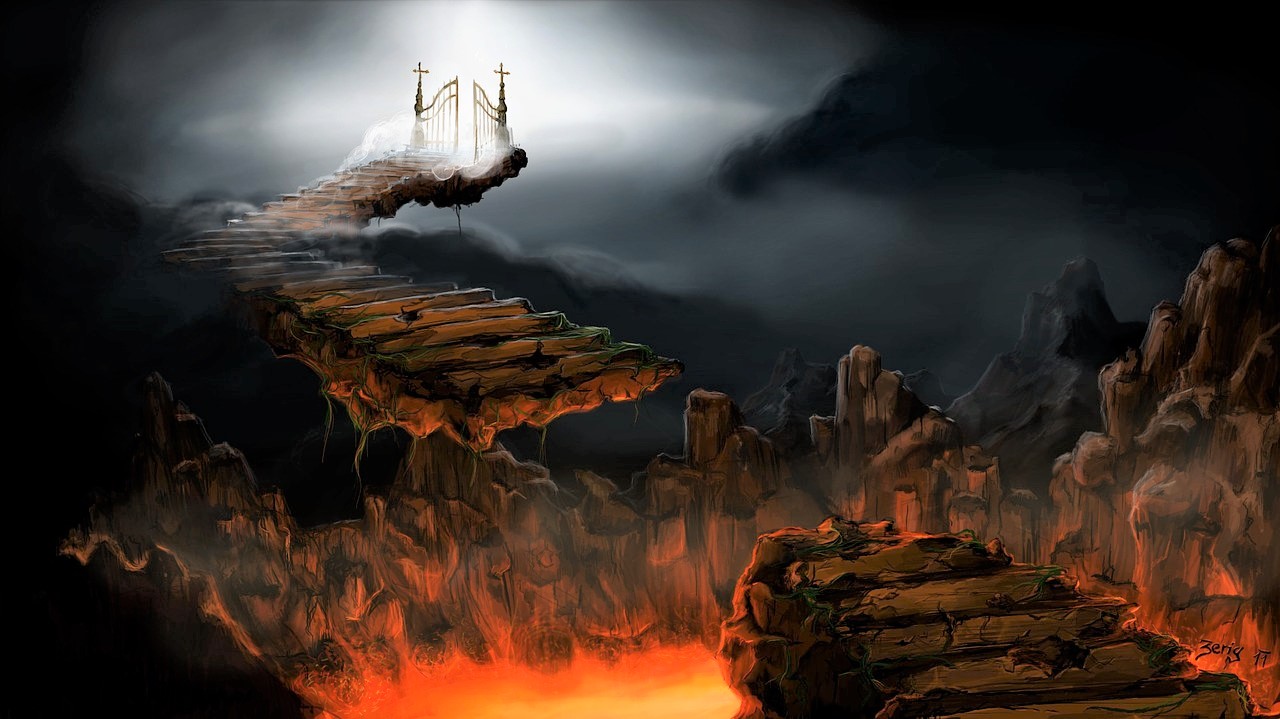
Túrin and Nienóri were denied entrance to Mandos, so they went to Fui and Ve, which are Purgatory and Hell, respectively. Strangely enough, they are also denied entrance to these places of the afterlife. So what does that leave them?
This might be the first time in the history of Middle-earth that the possibility of a spirit (or spirits) wandering the lands comes into play. The Valar looks at these two humans and decides they are not worthy of any afterlife because of their actions. Túrin with the deaths he caused, and Nienóri because she had a child with her brother and killed herself.
Judgement rains down on the two despoiled people from every direction. They hold themselves accountable and let depression and hatred of their actions lead them to suicide. At the same time, they feel the disgust of those around them, and even the Gods (in the form of Valar) tell them that they are not worthy of the afterlife because of their actions.
You must remember that Humans at this time were the only conscious beings living on Middle-earth who actively died (Elves could die from martial means, but otherwise, they are immortal, and the Valar are eternal gods), so damning a human to eternal torment of staying in the place of their transgressions and forever having those reminders was a cruel punishment.
This brings me to my next point: Tolkien wrote this as a tragedy of the tallest order, much more so than the story of Beren and Lúthien. To illustrate this, here is the literary definition of tragedy from Encyclopedia Britannica (forgive the pedantry).
“Although the word tragedy is often used loosely to describe any sort of disaster or misfortune, it more precisely refers to a work of art that probes with high seriousness questions concerning man’s role in the universe.”
Tolkien saw some horrible things during his lifetime. He spent years of his youth in the trenches of World War I and saw what bullets, mortars, and Mustard Gas did to people—this time had an indelible mark on his life and his writing. Many people think that his battle scenes are where his time at the Front comes into play, but to be quite honest, that could be imagination (I have written battle scenes, as have many authors who have never seen war).
I contend that what Tolkien took from World War I was instead a deeper perspective on humanity and tragedy.

The humans in Middle-earth had to come to grips with a shorter life span and thus had to work through their emotions of the knowledge of death faster than the Elves or the Valar.
That understanding echoes the real-life experiences in war and better explains the impetuousness of Túrin.
The Elves and Valar had the time to contemplate their actions and trajectories, but humans were born knowing they would die. That knowledge, living with beings that knew they couldn’t die, affected humans strangely. They strove to make a name for themselves; they aimed for meaning and legacy. Once someone gets a taste of notoriety, pride enters, and there is no more tremendous anger than damaged pride.
This is the start of Túrin’s fall and the beginning of his tragedy. He murders Orgof for being bullied, and though he is forgiven for this transgression, he is never able to forgive himself. His actions had to be more severe as he aged because a more significant action was the only way to make up for his earlier actions.
That is the true tragedy. Túrin, as all the people around him would probably attest, only ever wanted to help his fellow man and make the world better, but because of his past and his drive, it leads to wrong decision after bad decision, which creates murder and destruction in its wake.
Bringing this back to the definition of tragedy, this tale is only “high seriousness” and shows how mortality can change how people see the trajectory of their lives. Man’s mortality becomes the defining characteristic of their early existence on Middle-earth, and it takes them generations to come to grips with that mortality (which they never indeed do).
Then we layer on that Tolkien meant for these tales to be a mythology for England, kind of a pre-history of our current lives, and it shows how our ancestors dealt with fame, love, and mortality, which informs us as a culture and species moving forward.
Blind Read Through: J.R.R. Tolkien; The Book of Lost Tales, Part 2, Turambar’s Fourth Tragedy

“Now as the days passed Turambar grew to love Níniel very greatly indeed, and all the folk beside loved her for her great loveliness and sweetness, yet was she ever half-sorrowful and often distraught of mind, as one that seeks for something mislaid that soon she must discover, so the folk said: ‘Would that the Valar would lift the spell that lies upon Níniel (Pg 101).'”
Welcome back to another Blind Read! This week, we continue with Túrin’s tale as it turns from dark to strange and learn how his bad decisions lead to his next tragedy.
This portion of the tale switches gears and focuses on Túrin’s mother, Mavwin, and his sister, Nienóri. We know already from the previous portions of the story that Mavwin and Nienóri left Hislómë and went down to try and find Túrin in Tinwelint’s hidden home, but when they got there, they found that Túrin had fled.

“Now the tale tells not the number of days that Turambar sojourned with the Rodothlim but these were many, and during that time Nienóri grew to the threshold of womanhood (pg92).”
Being a young lady, Nienóri would not accept being a ward of Brodda, so she convinced her mother that she would join Mavin on the sojourn to Tinwelint and to find her long-lost older brother.
They went through perils to get there, braving the creatures of the wilds, and then when they finally reached the Elven home, they found that Túrin was gone. They received conflicting reports that he was either dead or had been captured by Orcs and was made a thrall, like his father before him.
They soon find that the Foalókë (dragon) Glorund is in the area and might have Túrin in his grasp, so Mavwin and Nienóri steel themselves and head out to face the Foalókë and try to save him.
During this time, there were some exciting transitions that Tolkien was still working through (which is apparent in the notes). Túrin had changed his name to Turambar (or Mormakil) when he became an outlaw, which is at the same time Mavwin and Nienóri are looking for him. So when they questioned the people of the wood looking for Túrin, many of the Rodothlim they questioned didn’t know who Túrin was, because they only knew him as The Mormakil or Turambar. Without this comedy of errors, they wouldn’t have had to venture out and try to fight against Glorund because Turambar (as we’ll call him moving forward) had already escaped.

But alas, they sought the Foalókë and were caught in his glamor: “‘Seek not to cajole me, woman,’ sneered that evil one. ‘Liever would I keep they daughter and slay thee or send thee back to thy hovels, but I have need of neither of you.’ With those words, he opened full his evil eyes, and a light shone in them, and Mavwin and Nienóri quaked beneath them, and a swoon came upon their minds, and them seemed that they groped in endless tunnels of darkness, and there they found not one another ever again, and calling only vain echoes answered, and there was no glimmer of light (pg 99).”
Oof. This passage is probably as close to horror as anything in Tolkien. The dragon has put their minds in a cage, and mother and daughter never see each other again. They don’t recognize each other, and this transcends into the rest of the story. We follow Nienóri as she leaves and ends up living with wood rangers. In the woods, “she seemed to herself to awake from dreams of horror nor could she recall them, but their dread hung dark behind her mind, and her memory of all past things was dimmed (pg 99).”
For the rest of the tale, Tolkien writes Nienóri in this fashion. Confused and haunted, as if something is beyond her understanding or grasp, and this confusion leads to Turambar’s next tragedy.
Turmabar eventually gets to the hovel where the wood rangers live and he sees a beautiful young woman whom he calls Níniel because she cannot remember her name. He calls her this because she is distraught and crying when he finds her, and Níniel means little one of tears.

Nienóri was just a baby the last time Turambar saw her, so he doesn’t recognize her, and there are copious liner notes from Tolkien himself which indicate how careful he needs to be, not to mention the name Túrin and give away the surprise. Because Turambar does not recognize her and Níniel does not remember her past, the two begin to court, which leads to the quote that opens this essay and Túrin’s next tragedy.
It seemed as though there was peace in Hisilómë, as The Foalókë didn’t know where they were hiding. For a time, there was prosperity, and “Like a king and queen did Turambar and Níniel become, and there was song and mirth in those glades of their dwelling, and much happiness in their halls. And Níniel conceived (pg 103).”
There is Turmabar’s fourth tragedy. Unbeknownst to him, he met a familiar and beautiful face in his sister, wooed and married her, then had a child through incest.
They lived in happy ignorance until a traitor found their home in the forest. Mîm the dwarf, known as Mîm the petty dwarf in The Silmarillion, betrayed their whereabouts.
The Foalókë charged out through the woods and smote some of the woodsmen. Turambar, being their chief, decided that he needed to do something.
“Now when Turambar made ready to depart then Níniel begged to ride beside him, and he consented, for he loved her and it was his thought that if he fell and the drake lived then might none of the people be saved, and he would liever have Níniel by him, hoping perchance to snatch her at least from the clutches of the worm, by death at his own or one of his liege’s hands (pg 104).”
His decision seemed to be sound reasoning at the time, but they were against a terrible foe in Glorund, the Drake who glamorized his whole family, and his wife/sister was still under that glamor. If we know anything about Turambar’s life, we know what will come next.
Join me next week as we conclude Turambar’s tale!
Blind Read Through: The Book of Lost Tales, Part 2, Túrin’s Third Tragedy
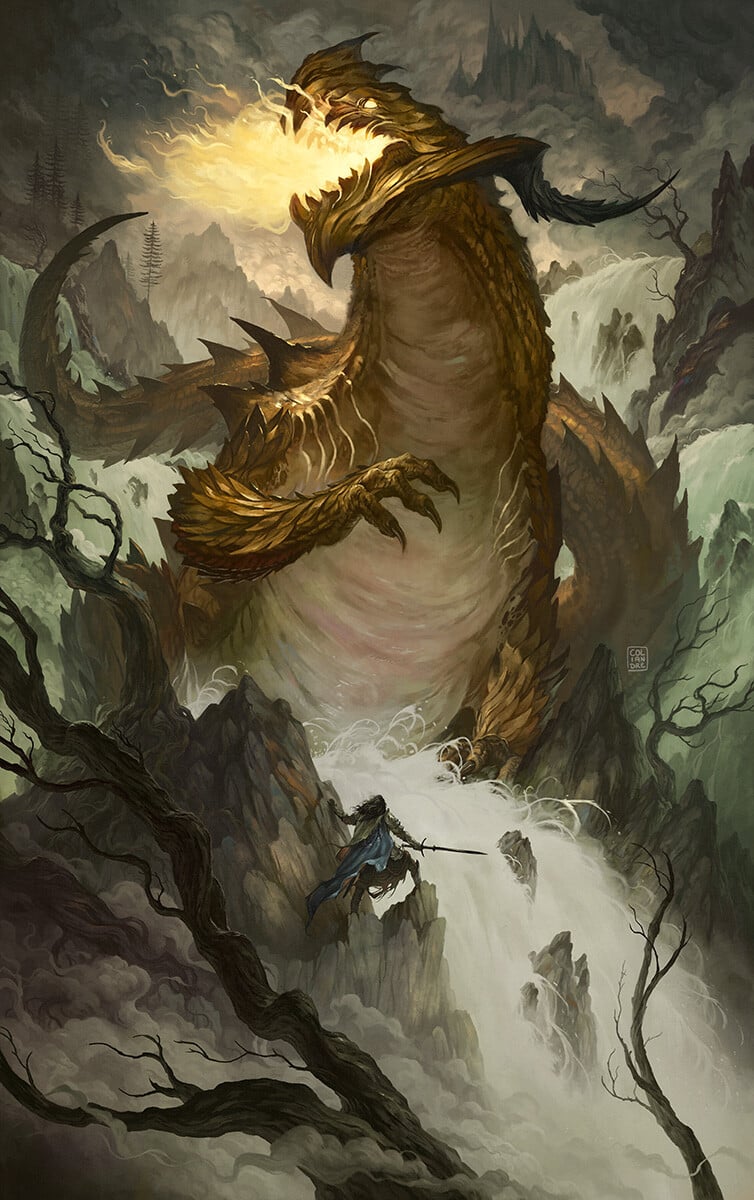
“And thereupon Turambar leapt upon the high place and ere Brodda might foresee the act he drew Gurtholfin and seizing Brodda by the locks all but smote his head from his body, crying aloud: ‘So dieth the rich man who addeth the widow’s little to his much. Lo, men die not all in the wild woods, and am I not in truth the son of Úrin, who having sought back unto his folk findeth an empty hall despoiled (pg 90).'”
Welcome back to another Blind Read! This week, we delve back into Túrin’s story and reach a turning point in his life. In addition, we get to experience Túrin’s third tragedy.
We left off last week with Túrin leaning into the Outlaw mentality and choosing that lifestyle in the woods and wilds. As we’ve discussed, Túrin didn’t have the easiest childhood. His father was a thrall to Melko, as were many of his people, and his sister died young. Mavwin, Túrin’s mother, sent him to live with Tinwelint as a ward to that Elven King. He lived with this idea of being an orphan his entire life, even though his mother lived and gave birth to another sister.
In his head, Túrin always felt as though others were looking at him as an outsider, so when he killed Orgol (his first tragedy), he assumed that others were judging him based on his family. It isn’t until he kills Beleg (his second tragedy) that he begins to think less of himself and his contributions to society, so he begins to slide into being an outlaw.
Túrin does not account for the area’s history and how Melko had corrupted things. After we find out about his outlaw shift, there is a meeting with the Rodothlim. To rally them for battle, “for he lusted ever for war with the creatures of Melko (pg 83),” he called for them to: “Remember ye the Battle of Uncounted Tears and forget not your folk that there fell, nor seek ever to flee, but fight and stand (pg 83).”
Túrin needs to take a history lesson. The Battle of Unnumbered Tears (later called in The Silmarillion), also known as Nirnaeth Arnoediad, was so named because of the sheer amount of dead and the Doom of Mandos.
Mandos laid down that curse because the Noldori killed their kin to go after Melko and recover the Silmarils. In that titular curse, Mandos tells the Eldar, “Tears Unnumbered ye shall shed,” In this battle, also known as the Fifth battle in the wars of Beleriand, Morgoth gains ground and begins to take over the land.
So, while Túrin is internalizing the wrongs of his life and turning to violence to assuage his conscience, he forgets that everything that caused the issues was because of the Noldor, not because of him or his deeds, horrendous as they are.
So Túrin leaned into his anger and spoke to Orodreth, a smith, for a weapon because he could no longer touch the sword he killed Beleg with. This creation deviates from what the story later became because Orodreth and not Eöl fashioned Gurthang.

“Now then Orodreth let fashion for him a great sword, and it was made by magic to be utterly black save it’s edges, and those were shining bright and sharp as but Gnome steel may be. Heavy it was, and was sheathed in black, and it hung from a sable belt, and Túrin named it Gurtholfin the Wand of Death; and often that blade lept in his hand of its own lust, and it is said that at times it spake dark words to him (pg 83).”
Orodreth tried to speak against fighting against Melko’s armies, regretting his creation of the Wand of Death, but Túrin was both craving war and trying to atone for his past indiscretions, so he went out and fought every agent of Melko he could find. He became infamous, and it did not go past Melko’s sight. Melko released a great army, “and a great worm was with them whose scales were polished bronze and whose breath was a mingled fire and smoke, and his name was Glorund (pg 84).”
Glorund killed Orodreth, who, even on his death bed, reproached Túrin, blaming him for the destruction his range had caused. Túrin tried to fight, but the dragon had powers Túrin didn’t understand, and the drake charmed Túrin, holding him in place, while Failivrin waws carried away, crying out, “O Túrin Mormakil, where is thy heart; O my beloved, wherefore dost thou forsake me (pg 86).”
She didn’t understand that he had been charmed and thought he was letting the creatures kidnap her.
Túrin was trapped there with the mind games of Glorund until finally, the dragon set him free, allowing him to go after Failivrin or seek out his mother and sister, whom he only knew as a newborn.
He decides to go after his mother, only to find she has fled Dor Lómin. In her place, she left a local high-class man named Brodda to watch over her estate, but Brodda, seeing the wealth to be had, rebranded all her cattle and property as his own.

Túrin had already killed, and now he had someone directly blame him for their misfortune (in Orodreth), and he chose the wrong path to find his mother, succumbing to Melko and Glorung’s deception.
It is at this point that Túrin forsakes morality. He is no longer trying to be an upstanding citizen. Even in his outlaw stage, his actions were to help and save others. It is here that we get the quote at the beginning of this essay, and it is here that we see Túrin’s next tragedy. He has given into his anger and hate, gone over to the dark side (forgive the crossover), and decided to go with full-fledged murder.
Moving forward in his story, he is still an outlaw, but he is no longer an outlaw for the good of the people. He is now an outlaw hell-bent on his emotional trajectory.
Join me next week as we continue on Túrin’s journey!
Blind Read Through: J.R.R. Tolkien; The Book of Lost Tales, part 2, Túrin’s first tragedy
“To ease his sorrow and the rage of his heart, that remembered always how Úrin and his folk had gone down in battle against Melko, Túrin was for ever ranging with the mosst warlike of the folk of Tinwelint far abroad, and long ere he was grown to first manhood he slew and took hurts in frays with the Orcs that prowled unceasingly upon the confines of the realm and were a menace to the Elves (pg 74).”
Welcome back to another Blind Read! This week, we begin to learn a bit about Túrin and experience his first tragedy of character while trying to understand Tolkien’s purpose in the themes of this tale.
Tolkien spends much of his time in this early version of Turmabar, striving to show the differences between Men and Elves (the more Tolkien created, the less he described Elves as Gnomes. It seems like he started to think of Gnomes as anything fay-like, as the moniker became a catch-all). Men tended to be less unkempt, more creatures of passion, whereas Elves were much better groomed and stoic.
Through this time, Tolkien was still developing his story, language, world, and its peoples, and these lost tales were written as an exploratory first draft to get the world out of his head and onto paper, but, as evidenced by The Silmarillion, Tolkien was not happy with these early drafts. They lacked cohesion and a thematic goal.

An example of this is as follows: “Now Túrin lying continually in the woods and travailing in far and lonely places grew to be uncouth of raiment and wild of locks, and Orgol made jest of him whensoever the twain sat at the king’s board; but Túrin said never a word to his foolish jesting, and indeed at no time did he give much heed to words that were spoken to him, and the eyes beneath his shaggy brows oftentimes looked as to a great distance (pg75).”
Túrin is a Man (as in every other Blind Read; read this as Human whenever capitalized), and Men are described as much more feral creatures. This classification was the original intent of Men, specifically because of Tolkien’s experiences in The Great War, he distrusted human instinct and saw humans as impetuous and violent creatures. Violent and feral is a very apt description of how Túrin (and almost every other Human in this story thus far) is described. He is animalistic; he “seemed to see far things and to listen to sounds of the woodland that others heard not (pg 75).” “He was moody (pg 75).”
One function of this could be because the majority of Men in these early stories that came from Hithlum were captured by Melko and held as thralls and slaves for many years, and Túrin (in The Book of Lost Tales, not The Silmarillion) is no exception, but more realistically Tolkien initially created Men this way because they were not born of the gods the way the Eldar were. Their lives are short; thus, they are much more emotional and prone to reaction because they need to feel the depths of emotion and experience much quicker than their immortal brethren.
This version of Turambar is much less tragic and much more vicious. Orgof, the Eldar we saw above who was a playground bully of Túrin, takes the place of Saeros. In the later Silmarillion version, Saeros is still a bully, but when Túrin finds him in the wilds, he turns the tide and strips Saeros naked, intending to embarrass the bully. Saeros, terrified, tries to jump a Fjord and falls to his death. This accidental death is the first event that makes Túrin an outlaw, but in this version, nearly everyone in Doriath sympathizes with Túrin and tries to get him to come back, but his conscience is what pushes him further into exile.

This earlier version is entirely different:
“Then a fierce anger born of his sore heart, and these words concerning the lady Mavwin blazed suddenly in Túrin’s breast so that he seized a heavy drinking vessel of gold that lay by his right hand and, unmindful of his strength, he cast it with great force in Orgof’s teeth, saying: ‘Stop thy mouth therewith, fool, and prate no more.’ But Orgof’s face was broken and he fell back with great weight, striking his head upon the stone of the floor and dragging upon him the table and all it’s vessels, and he spake nor prated again, for he was dead (pg 75).”
Túrin’s actions were murder in this earlier version. It was an act of a feral and impetuous being, as we should expect from any Human in these early tales of Tolkien.
To take that a step further and show the difference between Elves and Men, Tinwelint and his court show incredible understanding. “Yet they did not seek his harm, although he knew it not, for Tinwelint despite his grief and the ill deed pardoned him, and the most of his folk were with him in that, for Túrin had long held his peace or returned courtesy to the folly of Orgof (pg 76).”
Meanwhile, Túrin runs away and joins a group of people in the woods described as “wild spirits (pg76).” Again, Túrin is a Human and feeds into his animalistic tendencies. His emotions are so high that he cannot understand that there could be clemency for him in Doriath because he does not hold any for himself. His emotions again overpower him, and he runs off to the only place where he feels at home, in the forest with ruffians.
This kind of childish behavior is endemic to Men in early Tolkien, and it isn’t until the later versions (I believe The Silmarillion is either the Third or Fourth draft) that they begin to get more depth and character. The whole point of these stories evolved from being a general history of our world to actual ages of time, and this time was the Age of the Eldar. Tolkien’s main goal, however, was leading his fairy tale, through Eriol and The Cottage of Lost Play, to the fourth Age. The Age of Men.
Join me next week as we introduce one of The Silmarillion’s best characters, Beleg, and discover Túrin’s second tragic act.
Blind Read Through: J.R.R. Tolkien; The Book of Lost Tales, part 2, Turambar

“Now coming before that king they were received well for the memory of Úrin the Steadfast, and when also the king heard of the bond tween Úrin and Beren the One-handed and the plight of that lady Mavwin his heart became softened and he granted her desire, nor would he send Túrin away, but rather said he: ‘Son of Úrin, thou shalt dwell sweetly in my woodland court, nor even so as a retainer, but behold as a second child of mine shalt thou be, and all the wisdoms of Gwendheling and of myself shalt thou be taught (Pg 73).'”
Welcome back to another Blind Read! This week, we introduce Túrin and his tragedy while getting some commentary about Tolkien’s decision to create a story throughline instead of the history that the tale became.
Christopher begins this chapter by speaking of the timeframe of the writing itself and how his father wrote Turambar in the time between the original script of Tinúviel and the edits of that tale:
“There is also the fact that the rewritten Tinúviel was followed, at the same time of composition, by the first form of the ‘interlude’ in which Gilfanon appears, whereas at the beginning of Turambar there is reference to Ailios (who was replaced by Gilfanon) concluding the previous tale (pg 69).”
I bring this to your attention because of the profound changes Tolkien was making at the time and the apparent fact that Christopher missed when he made the assertion of Beren always being intended to be Eldar.
Ailios or Gilfanon said, shortly after his introduction, “‘Now all folk gathered here know that this is the story of Turambar and the Foalókë, and it is,’ said he, ‘a favourite tale among Men, and tells of very ancient days of that folk before the Battle of Tasarinan when first Men entered the dark vales of Hisilómë (pg 70).'”
Tolkien establishes almost immediately that this is a story about Men, not Gnomes or Elves, and it is only a few pages later that we get this passage:
“…but the deeds of Beren of the One Hand in the halls of Tinwelint were remembered still in Dor Lómin, wherefore it came into the heart of Mavwin, for lack of other council, to send Túrin her son to the court of Tinwelint, begging him to foster this orphan for the memory of Úrin and of Beren son of Egnor (pg 72).”
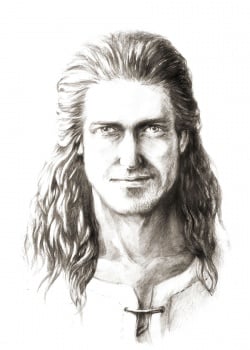
Here, we get a direct correlation between Beren and Úrin, one of which is a Man and the other is an Elf in the established setting. To go even further, in the opening quote of this essay, Tolkien states that Beren and Egnor were friends, and before this passage, in early Tolkien, there was no love lost between Elves and Men. This is the first instance of the earlier works where an Elf and a Man were friends.
I contend that this was an accident on Tolkien’s part because he was already beginning to think of Beren and Egnor as Men. After all, it fits the story so much better. There is even a passage where Egnor is “akin to Mavwin.” Egnor is Beren’s father, and Mavwin is Túrin’s mother, thereby stating that Egnor was, at the very minimum, a half-elf, but such things never existed in Tolkien. (You might remember Elros and Elrond, who were born half-elves; however, the Vala made them decide which side they were to fall on, and Elros became a man and founded the Númenóreans and Elrond became an Elf…and we know how that story ends)
Tolkien also brings back the Path of Dreams, or Olórë Mallë, to explain how Ailios (Gilfanon) knows these stories firsthand (there is a reference that he also knows the story of the fall of Gondolin: “and I knew it long ere I trod Olórë Mallë in the days before the fall of Gondolin (pg 70).” The more that I read of these Lost Tales, the more I understand why Tolkien took Gilfanon out of the story, and why he also took out the transitions.
Tolkien initially wanted these stories to flow into one another with a central story hub (think Ray Bradbury’s The Illustrated Man) because he was worried that people would not be interested in the dry history of a land that didn’t exist. To tell this tale in a “Hobbit” style might make it more accessible to the everyday reader. However, he ran into the problem of how to make it work. He knew who Eriol was, and there were plans for him (which I believe will come to light in the last chapter of The Book of Lost Tales, part 2), but how does he get the surrounding characters into the work? The people who tell the tale? Well, he created things like Olórë Mallë, a sleep bridge that can get men (and only men apparently, as no Elves needed it because of their immortality) to different areas of space and time. He also created spaceships (literally ships that could sail across the sky) but decided to limit that to elevate a single character, Eärendil, to a godlike being as he sails his ship Vingilot across the sky.
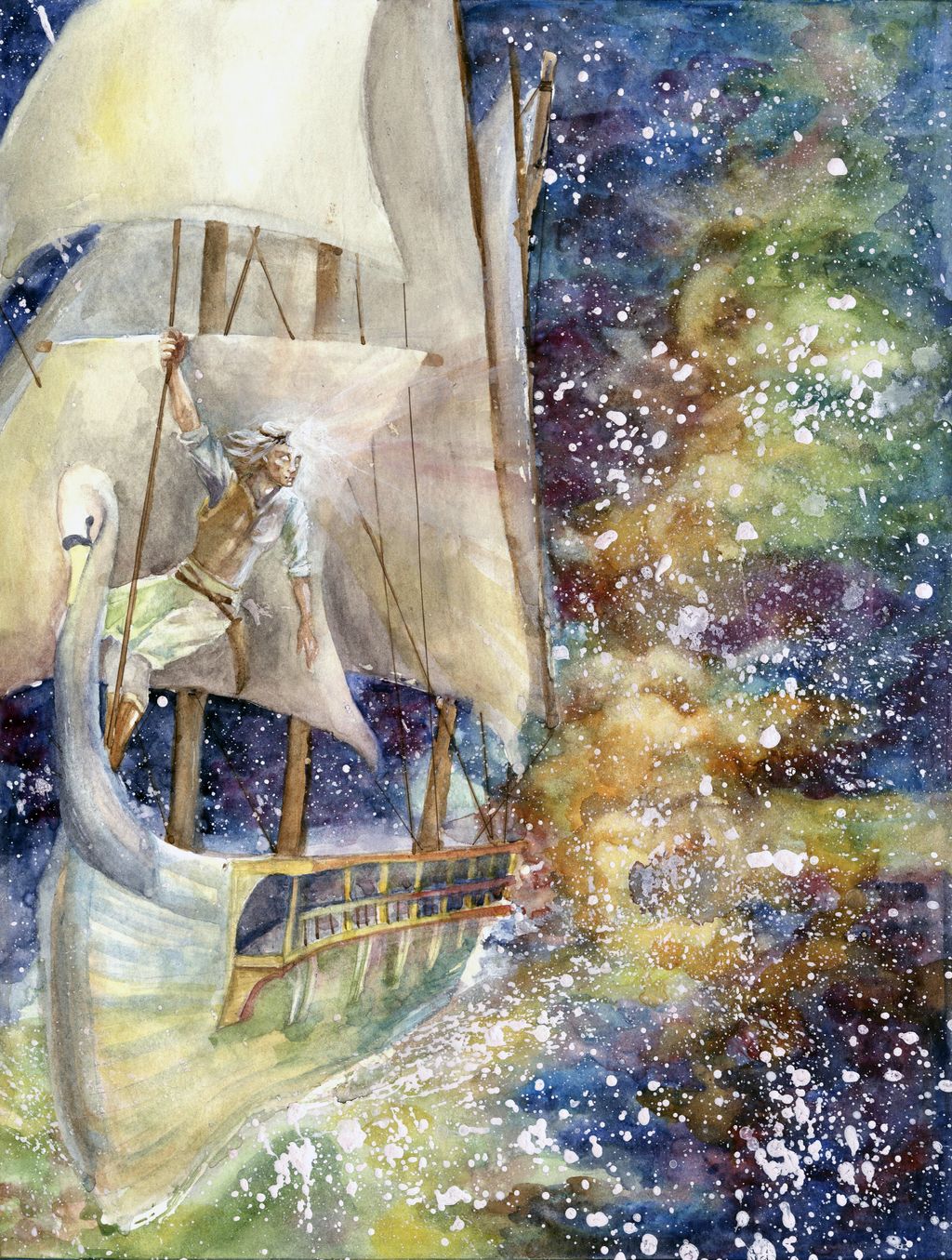
These ideas were a means to an end, and he only used them to tell the story. He eventually realized that these plot devices were only taking away from the story instead of enhancing it, but his quandary was that to take them away removes all credence of the story that was being told. For this reason, I believe Tolkien took out the transition pieces with Eriol learning the histories.
That leads us right into Turambar because, as Ailios describes Úrin and how he knew Beren and his travails. Mavwin, Túrin’s mother and Úrin’s wife, decided that Túrin would be safer staying with Tinwelint, than he would up north with the threat of Melko.
Thus, Túrin’s story begins.
“Very much joy had he in that sojourn, yet did the sorrow of his sundering from Mavwin fall never quite away from him; great waxed his strength of body and the stoutness of his feats got him praise wheresoever Tinwelint was held as lord, yet he was a silent boy and often gloomy, and he got not love easily and fortune did not follow him, for few things that he desired greatly came to him and many things at which he laboured went awry (pg 74).”
Join me next week as we continue the tragedy of Túrin Turambar!
Somebody’s Watching Me

“And I don’t feel safe anymore,” Andy said. “And I have no privacy.”
“Dude, you gotta get over that shit!” Randy responded. “No one’s after you. You’re the most boring person in the damn world, man!”
“Seriously, dude, you gotta knock off the weed. That shit’s making you paranoid,” Chet added.
They sat around a roaring fire while they waited for the girls to freshen up in the cabin. Randy had already broken into the bottle of whipped cream Vodka and passed it to Chet.
“I’m not kidding, guys! I came home the other day with scratches on my front door. Like deep fucking grooves, man.” Andy shook his head. He didn’t tell his friends that the word “Queer” was carved into his front door. That wasn’t something you said to the captain of the wrestling team and the most popular kid in high school.
“Naw man, someone’s just playing a prank on you,” Randy said. “I mean, you hang with us. Who’s gunna fuck with you?”
“That’s what I’m talking about!” Chet laughed, smacking the bottle from his lips and slapping Randy’s palm.
“Are you boys done feeling each other up? It’s bad enough you roll around with each other while you wear tights,” it was Dolly Pemberton. She was the quintessential high school prom queen, with her perfect form and blonde hair.
She was flanked by Danielle Harris and Raquel Thorne, both probably more attractive than their more popular counterpart but less confident and thus beholden to their jerky friend who would be willing to throw either of them under the bus at the first possibility.
“Just get over here and take a swig,” Randy said, holding the bottle to Dolly. When she reached out for it, he held true to his name and pulled her to him, grabbed her ass, and gave her a horribly messy kiss, which she leaned into.
“Ugh, you guys,” Raquel sneered, pointing at Randy and Dolly. “are gross. Chet, babe, lets get outta here.”
“You ain’t gotta tell me twice,” Chet said, getting up and grabbing a six-pack. “You boys,” He said and winced at the sucking noises from Randy and Dolly. “Ok, you,” he turned and pointed at Andy, “have a good night and forget about that shit man. We’re out in the middle of nowhere. Ain’t no one coming out here. Let’s go baby.”
Chet and Raquel walked off arm in arm, leaving Danielle alone beside Andy.
“Hey Andy,” Danielle said, tucking her hair behind her right ear.
“Hey Danielle. Hey do you ever feel like someone is watching you?” Andy said.
“I wish,” She whispered to her intertwined hands in her lap.
“Say what?” Andy said, oblivious and confused.
“Nothing,” Danielle started, then looked him in the eyes. “You know what? Fuck it. I don’t feel that way and I want to. Let’s go.”
Danielle stood up and mocked throwing up at the sucking and smacking sounds of Randy and Dolly, and grabbed Andy’s hand.
“Oh, ok, where we going?” Andy asked.
“Well, they’re by the fire,” Danielle pointed at the two grossly inexperienced teens sucking faces near the fire. “and the other two went to the cabin, so there’s nowhere to go but the van.”
“You got it,” Andy said, too flabbergasted and embarrassed to deny her.
“Did you hear that?” Holly said, pulling away from Randy. It took an effort to separate, and she had to hit him a little to make him stop.
“Babe, you’re killing the mood,” Randy whined.
“I heard something. Like a growl. Besides, Tom Bunyan couldn’t bring down that wood,” Holly gestured to Randy’s crotch and pushed away from him.
“The growl was me,” Randy said and playfully snapped his teeth.
“No, you idiot, it came from the woods. Like, over there somewhere,” Dolly said, extricating herself from Randy’s claws.
“Fuck babe, come on, just give me at least a handy and we’ll go look together. Probably some rabbit or something,” Randy whined.
“I didn’t bring my tweezers, you dick,” Dolly said, squinting into the forest.
“At least I have one,” Randy retorted, then scrunched his face, realizing what he said.
“There’s something out there,” Dolly said. She took a few steps away from the fire. “Don’t you see that? It looks like a person wearing an apron.”
“Naw, babe, nothing th…” Randy was interrupted by another growl. This time, it was much louder and much closer.
“For sure there is something out there,” Dolly said, moving out into the woods.
“Babe, uh, don’t go out there,” Randy said. He put a hand over his erection like it needed protection more than he did.
“Hey! You in the apron! What are you doing out here?” Dolly said. Randy looked at what she was walking towards and saw it clear as day. It looked like someone wearing a stained apron standing about 200 yards away.
“Fuck, babe, get back here, you don’t know what the fuck they want,” Randy said.
“What the fuck do you want?” Dolly said, breaking into a run towards the apron.
“Babe, fucking stop!” Randy cried, standing next to the fire.
Dolly made her way out to the figure and stopped. Her laughter echoed in the forest. She turned back to Randy.
“It’s just an apron on a bush! It’s not a person!” Dolly said, then lifted her hand and pointed at Randy. “HOLY SHIT!”
“What?” Randy said, then heard a snap of a twig behind him. He turned in just enough time to see a horribly disfigured face moan and a machete swing down. He saw the treetops and the sky, then he saw the ground. It spun like that a few times until the oxygen ran out in his brain, and his eyes stopped working.
Dolly screamed louder than she ever had as the figure kicked Randy’s severed head into the fire and walked steadily towards her.
“What was that?” Raquel gasped, coming up for air from Chet’s mouth.
“Come on, babe, I didn’t hear anything,” Chet said, reaching around her back to unhook her bra. This was the fourth time he tried.
“No, seriously, Chet,” She slapped at his hands and sat up in bed. Moonlight streamed in through the warped glass of the cabin window and created strange shadows she hadn’t seen before.
“Babe, what the fuck? Just come back to bed, I got a hard-on, and it’s not going away on its own. Don’t tease me like that,” Chet whined, sitting on the bed.
“I think that was Dolly,” Raquel stood up, walked over to the window, and looked into the moonlit forest. “It’s so shadowy out there. I could have sworn she screamed.”
“Ugh! This ain’t cool, Raquel,” Chet stood up and took a few steps toward her but stopped beside the closet.
“I don’t care Chet. I have to go help my friend,” Raquel said and turned around. Chet was standing there with a surprised look on his face. His mouth was slightly ajar, and his eyes were unfocused, but he just stood there with his hands at his sides.
Shadows played across the room, and the closet door opened slightly more than it already had. But that’s strange, she thought. The closet door was closed just a minute ago.
Blood began to run out of the corner of Chet’s mouth as his eyes rolled back in his head.
“Chet?” Raquel took a step toward him.
His neck bulged strangely until something shiny poked its way through. Raquel couldn’t process what she saw until Chet fell forward, and a black-clad figure stood behind him, holding a large knife covered in dark blood.
Raquel screamed and fell to her knees. Pooled blood ran over her brown skin.
The hooded figure stepped forward, grabbed her hair, and pulled her neck back, exposing dark wine colored hickeys.
“You? Why?” Raquel cried.
The only response she got was a gravelly laugh before the knife tip entered her ear canal.
“Andy? Did you hear that?” Danielle turned in her seat to look out through the forest. They were sitting next to each other in the van’s back seat.
“Yeah, I did,” Andy said, looking scared and fiddling with his hands in his lap. “Danielle,” he began, “Do you ever feel like someone is watching you?”
“What? Hey Andy, I think we should probably go check on everyone else. That sounded like a scream.”
“Yeah, you’re right,” Andy said and sighed. “I just feel like there is someone always watching me. Like following me. I can’t even take a shower, because I feel like when I open my eyes someone will be standing there.”
“Andy, that sounds pretty fucking deep, but if Randy is raping someone out there…” Danielle began.
“He’s not, you don’t have to worry about that,” Andy said, putting his hand over hers as she tried to open the door to the van.
“What do you mean?” Danielle asked, looking back at Andy with concern in her eyes.
“I just don’t think Randy is in any kind of shape to rape anyone,” Andy said and sighed again.
“Andy…” Danielle began, putting her hand on his prying at his grip.
“People are watching everything I do. They scratched Queer into my front door. I mean, I know Randy is an asshole, but how the hell did he even know?”
“Andy, come on! No on thinks you’re gay,” Danielle said, the first look of concern for Andy crossed her face.
“That’s just it, Danielle,” Andy said, leaning in and grabbing her shoulders. Behind her in the forest, a hooded figure approached the van. “People have been watching me and they know about things that I’ve done and the people I’ve done it with.”
“Andy, what the fuck are you talking about?” Danielle cried. The figure stood right behind her outside of the van window.
“Danielle,” Andy said, grabbing her head and tilting his forehead to touch hers while looking into her eyes. “Don’t fuck with me, I know Randy told you all.”
“Fuck, no one cares Andy! So you messed around with another guy! No one cares!” Danielle squeaked as tears rolled from her eyes.
“I care,” Andy said, throwing her against the window just as the glass burst open and a knife slid across her throat.
“We can be together forever now, love,” Jason said as he removed the bloodstained hood. He leaned over and kissed Andy.
“No one can know,” Andy said.
“Babe? What do you…” Jason began as the echo of a pistol echoed in the forest night air. Jason’s head snapped backward, and his hands flew into the air as he fell back to the ground, the butcher knife in his hand.
Andy looked at him briefly, tilted his head, and then smiled. He took a deep breath and pulled a cell phone out of his pocket. He began to sob hysterically, then typed 911.
“Please help me! Someone has been watching me, following me. They killed all my friends. I shot him, oh my god I shot him…”
Andy hung up and immediately stopped sobbing. He smiled down at the two corpses by his feet he felt himself growing with arousal, but then turned and looked out into the forest with gritted teeth. He had a sneaking suspicion that someone was watching him.
Blind Read Through: J.R.R. Tolkien; The Book of Lost Tales, part 2; The Tale of Tinúviel, cont.

“Now all this that Tinúviel spake was a great lie in whose devising Huan had guided her, and maidens of the Eldar are not wont to fashion lies; yet have I never heard that any of the Eldar blamed her therein nor beren afterward, and neither do I, for Tevildo was an evil cat and Melko the wickedest of all beings, and Tinúviel was in dire peril at their hands (pg 27).”
Welcome back to another Blind Read! We left off last week with Beren getting captured by Tevildo, Prince of Cats, and Lúthien escaping the tower her father imprisoned her in to go and find and free Beren from his thralldom.
Before the story, let’s review what happened in The Silmarillion.
Lúthien escaped from Doriath and chased after Beren, but where there are cats in The Book of Lost Tales, The Silmarillion had Wolves. Beren was captured by Sauron, the Master of Wolves (many of his minions in this story were werewolves, and he even commanded the Wolf King Carcharoth), and on her way to find him, Lúthien meets up with Huan, the Hound of Valinor.
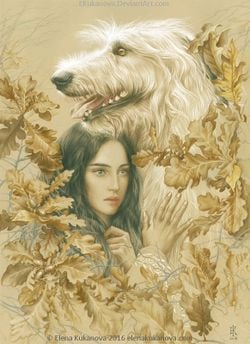
Huan takes Lúthien to his masters, Celegorm and Curufin, who were Fëanor’s sons (Eldar who swore to get the Silmarils back at the cost of all else). The Book of Lost Tales is a significant departure from the older story because these two brothers played a nefarious role in the remaining history of Beleriand. They caused strife and trouble for our heroes many times and generally stood in the way only because of their oath, and they never appear in the earlier version.
This deception is the first instance of their devious natures. They instructed Huan to bring Lúthien before them and once there, Celegorm devised a plan to marry her because of her beauty, but more importantly because of her lineage. Celegorm was seeking power, plain and simple. He tricks Lúthien, brings her to Nargothrond, and imprisons her until his plan can be complete.
Here, Huan felt pity for Lúthien, who only wanted to save her love, and felt disgust for his master. Huan frees Lúthien, leading her to Angband to confront Sauron and free Beren.
When they get there, Sauron sends his werewolves out to kill them, but Huan kills them one by one. Sauron then shapeshifts and changes himself into a werewolf (doubtless being one of those quintessential bad guys who say, “If you want something done right, you gotta do it yourself.”), and heads out to meet them. There is a pitched battle, with Sauron changing into different shapes and trying other tactics. Still, eventually, Huan defeats him, and Sauron flees in the form of a Vampire after leaving the keys to the prisons for Huan and Lúthien to take.
This fight shows the absolute power of Huan. Sauron gained strength and influence over the remaining years of his life, but the fact that Huan and Lúthien were able to best him in battle when, later on, it took armies to stand up to him is a testament to Huan’s strength and Lúthien’s ingenuity.

They freed Beren and fled Angband, only to come across our favorite dastardly Eldar, Celegorm, and Curufin. They battled, and Beren won, deepening their shame and anger. Not only were the great sons of Fëanor defeated, but a human bested them to boot!
Beren then snuck back to Angband after both Huan and Lúthien slept, determined to get the Simaril and prove his worthiness, but when they woke and found him gone, they disguised themselves as a vampire and werewolf and went after him. They got to Morgoth’s chambers, and Lúthien used her magic to put everyone to sleep and Beren cut a Silmaril from Morgoth’s crown before escaping from the stronghold.
As they exited, Carcharoth, the King of Wolves jumped out and attacked them, biting off Beren’s hand that held the Silmaril and thus halting their quest. Huan summoned The Eagles of Manwë (you might remember these majestic creatures from the end of The Return of the King when they rescued Frodo and Sam from Mount Doom), and they escaped from Angband.
In The Book of Lost Tales, Sauron is not present. Instead, it’s Tevildo who has Beren captured. Lúthien still meets up with Huan, but we have a sort of natural cat-and-dog relationship there:
“None however did Tevildo fear, for he was as strong as any among them, and more agile and more swift save only than Huan Captain of Dogs. So swift was Huan that on a time he had tasted the fur of Tevildo, and though Tevildo had paid him for that with a gash from his great claws, yet was the pride of the Price of Cats unappeased and he lusted to do a great harm to Huan of the Dogs (pg 21).”
Tinúviel travels with Huan to Angamandi (the early version of Angband) and finds a resting cat sentry just before its gates. Tinúviel asks to speak with Tevildo and plays to the guard’s pride to get her in to gain an audience.

When she is brought before Tevildo, she asks to speak with him privately, but he is not humored:
“‘Nay, get thee gone,’ said Tevildo, ‘thou smellest of dog, and what news of good came ever to a cat from a fairy that had dealings with dogs (pg 24)?”
Tinúviel sweet-talks her way in and spies Beren in the kitchen doing his thrall duties. She speaks loudly, letting Beren know that she’s there, and then we get the opening quote of this essay, where she divulges Huan’s plan: Huan is hurt and helpless just outside in the forest, the cats must kill him!
“Now the story of Huan and his helplessness so pleased him (Tevildo) that he was fain to believe it true, and determined at least to test it; yet at first he feigned indifference (pg 27).”
Tevildo and a small group of Cats went out to try and end Huan, only to fall into the trap. Huan killed all but Tevildo, who barely escaped and lost his golden collar before fleeing up a tree.
Tinúviel took the golden collar and brought it before Tevildo’s court and got all of his prisoners released, along with a curiously named Gnome.
“Lo, let all those of the folk of the Elves or of the children of Men that are bound within these halls be brought forth,’ and behold, Beren was brought forth, but of other thralls there were none, save only Gimli, an aged Gnome, bent in thraldom and grown blind, but whose hearing was the keenest that has been in the world, as all songs say (pg 29).”
This name was undoubtedly used again once the languages were fleshed out and Tolkien realized that Gimli was much more of a dwarven name than an Elvish name, but he doesn’t appear again in this story (that I’ve read so far), so I think it was just a name Tolkien loved.
Lúthien, Beren, and Huan escaped, and the cats were ashamed. Morgoth’s anger was so great that they lost face, and the power of the cats was never the same from then on.
We’re getting close to the end! Join me as we cover the first written ending to The Tale of Tinúviel next week!
Blind Read Through: J.R.R. Tolkien; The Book of Lost Tales, part 1, Final Thoughts

“Melko shalt see that no theme can be played save it come in the end of Ilúvatar’s self, nor can any alter the music in Ilúvatar’s despite. He that attempts this finds himself in the end but aiding me in devising a thing of still greater grandeur and more complex wonder:–for lo! through Melko have terror as fire, and sorrow like dark waters, wrath like thunder, and evil as far from the light as the depths of the uttermost of the dark places, come into the design that I laid before you. Through him has pain and misery been made in the clash of overwhelming musics; and with confusion of sound have cruelty, and ravening, and darkness, loathly mire and all putrescence of thought or thing, foul mists and violent flame, cold without mercy, been born, and Death without hope. Yet is this through him and not by him; and he shall see, and ye all likewise, and even shall those beings, who must now dwell among his evil and endure through Melko misery and sorrow, terror and wickedness, declare in the end that it redoundeth only to my great glory, and doth but make the theme more worth the hearing, life more worth the living, and the World so much the more wonderful and marvellous, that of all the deeds of Ilúvatar it shall be called his mightiest and his loveliest.”
Welcome back to another Blind Read! This week we recap The Book of Lost Tales, part 1, and in doing so, speak about the more fantastic aspect of Middle-earth and Tolkien’s intention.
The Book of Lost Tales is an amalgam of Tolkien’s work throughout his life. Christopher has included some of his father’s earliest poems, scraps of notes stuck into notebooks, various illustrations, and books and books of re-writes to show the thought and care Tolkien put into the work.
John wanted to tell a fantastic story that would give people meaning. He wanted a new fairy tale that would anchor into our world and give people wonder and hope (and perhaps even give reasoning for things like The Great War).

Many critics have said that The Lord of the Rings is an allegory to Tolkien’s time in the war, and if you only read the book itself, it is easy to understand why. Tolkien, however, hated allegory and had often stated that he pulled inspiration from his time in the war, but there was no allegory there. That can be hard to swallow, especially when his fellow Inkling (a society of writers who met to critique and edit each other’s work), C.S. Lewis, thought allegory one of the greatest literary techniques.
The story produced in The Lord of the Rings was a work of love developed over many decades, but to create a work so deep and well established Tolkien wanted a robust history of the world, that history is what eventually became The Silmarillion.
But Tolkien, like many authors, wanted the history of the world to be a story in and of itself, so in the earlier iterations, we get the tale of Eriol, who in turn is told the story behind The Silmarillion.
The problem Tolkien ran into, however, was that history is difficult to tell in a story format. There are fantasies, records, and fairy tales told in the Silmarillion, but they come late in the book and feel more like what he would eventually write in The Lord of the Rings. The Book of Lost Tales, part 1, is Eriol learning instead about the Valar and how the Eldar (Gnomes in this earlier version) came into being. However, even in these earlier versions, we still need to catch minor differences with how Tolkien later decided to frame everything.

Facts, like the Maiar being the children of the Valar, the Eldar being Gnomes, and the sparse inclusion of Fëanor are stark differences to how the story eventually played out, and what is great about reading through this book was being able to read Christopher’s analysis (Tolkien’s son and editor) of where Tolkien tried to take the story, and where he decided to end up. This process is the magic of reading The Book of Lost Tales, part 1. Part 2, I’m sure, will have just as many quirks, but part 2 is where the stories that built the history of Mankind came into being. Stories like the Lays of Lúthien, the Tale of Túrin Turambar, and the Fall of Gondolin all take place in the second half of these histories. These tales inform our characters in The Lord of the Rings and The Hobbit. Beyond The Silmarillion, there is minimal mention of the Valar or Ilúvatar.
In Christopher’s sentiment, the first book is less interesting because it’s about the development of the world itself and not necessarily about the people; thus, it’s harder to give stakes because we know what will eventually happen.
Knowing all this, Ilúvatar is the most provocative being or concept in Tolkien’s oeuvre. Ilúvatar is God for this World (even though the Valar intermittently are called gods, Tolkien later stripped them of that title for The Silmarillion).
The quote to start this essay is a perfect example of the fallibility of gods in general. Tolkien was deeply religious, and I’m sure he wrote Ilúvatar to be Middle-earth’s Yahweh and much of the struggle and philosophy in Middle-earth is how to accept or deal with the concept of Death. Death is a “gift” given to Man when they are born, so they might make life more meaningful. Death was not a concept until Morgoth sang its theme into existence.
This path makes Melkor the most tragic character in the pre-history of Middle-earth because, as we see from the opening quote, he has no choice. Ilúvatar, as the master creator, knew every theme he wanted to put into the world, and Death, hate, and suffering would be part of existence.

Iluvatar created each Vala to inform specific parts of his themes, but themes were all they were, meaning that the Valar had free will over what theme they were given. Iluvatar created Melkor to suffer. He created him to be a Dark Lord because he knew that without a Dark Lord making people work for their freedom, they would take their lives for granted.
Tolkien didn’t write Allegory; he wrote philosophy. Death is a gift because we cannot appreciate light without darkness. We cannot fully appreciate life without death.
Come join me next week as we begin our foray into “The Book of Lost Tales, part 2,” the second book of the Histories of Middle-earth!
Blind Read Through: J.R.R. Tolkien; The Book of Lost Tales, Part 1; Gilfanon’s Tale

“Suddenly afar off down the dark woods that lay above the valley’s bottom a nightingale sang, and others answered palely afar off, and Nuin well-neigh swooned at the loveliness of that dreaming place, and he knew that he had trespassed upon Murmenalda or the “Vale of Sleep”, where it is ever the time of first quiet dark beneath young stars, and no wind blows.
Now did Nuin descend deeper into the vale, treading softly by reason of some unknown wonder that possessed him, and lo, beneath the trees he saw the warm dusk full of sleeping forms, and some were twined each in the other’s arms, and some lay sleeping gently all alone, and Nuin stood and marvelled, scarce breathing (pg 232-233).”
Welcome back to another Blind Read! This week we conclude The Book of Lost Tales, part 1, discussing symbolism and creative editing.
This chapter is more of Christopher’s musings on how his father was positioning the editing of the book rather than the tale itself. Gilfanon only has a few pages, and the rest of his story remains unfinished. In a more accurate sense, this is an early iteration of the chapter in the Silmarillion “Of Men.”

The origin of Men for Tolkien was a difficult thing to tackle. Christopher tells us that there were four different iterations throughout the process of coming up with the concept. Tolkien ended up significantly cutting down the chapter to be what it eventually became, which was relatively uninspired and just about as long as Gilfanon’s tale. One has to wonder if the weight of the linchpin of his mythology was so great that the chapter says, “They wake,” and then moves on.
Gilfanon’s tale tells of one of the Dark Elves of Palisor, Nuin. Nuin is restless and curious about the world, so he ventures out to experience it and comes across a meadow that holds The Waters of Awakening and humans sleeping near it (described in the quote above).
Nuin then heads back home and tells a great wizard who ruled his people about the humans sleeping by the waters and “Then did Tû fall into fear of Manwë, nay even of Ilúvatar the Lord of All (pg 233).” because of this fear he turned to Morgoth, and learned deeper and darker magic from him.

From what Christopher tells us, each version of the story Tolkien worked on evolved, and eventually, Tû, the Wizard, was cut from the Silmarillion. Tolkien cut nearly all mention of the elves who went to Morgoth’s side from the main context. There are only a few mentions of thralls throughout the main storyline.
One has to wonder if this was Tolkien’s decision that the Elves themselves shouldn’t turn to the “dark side.” Even though the Noldor did some heinous things in Swan Haven, they ultimately did it out of a hatred that burned so deep for Morgoth’s blood that they wouldn’t let anyone stand in their way.
The inclusion of Tû, even if he is more of a fay creature than Elvish, creates issues with Tolkien’s history. So he took the name Tû out of the book to keep the Elvish lines as “pure” as possible, but the character of Tû is still in the book, AND I believe he plays a much larger part.
Remember that Tû is described as a fay wizard, and the only wizards in the history of Eä were the Istari (of which Saruman and Gandalf were a part). The Istari were Maiar, otherwise known as lesser Valar. In general, they were servants to the Valar (in The Book of Lost Tales, many of them were the children of the Valar) and aided in bringing the will of Ilúvatar into being.
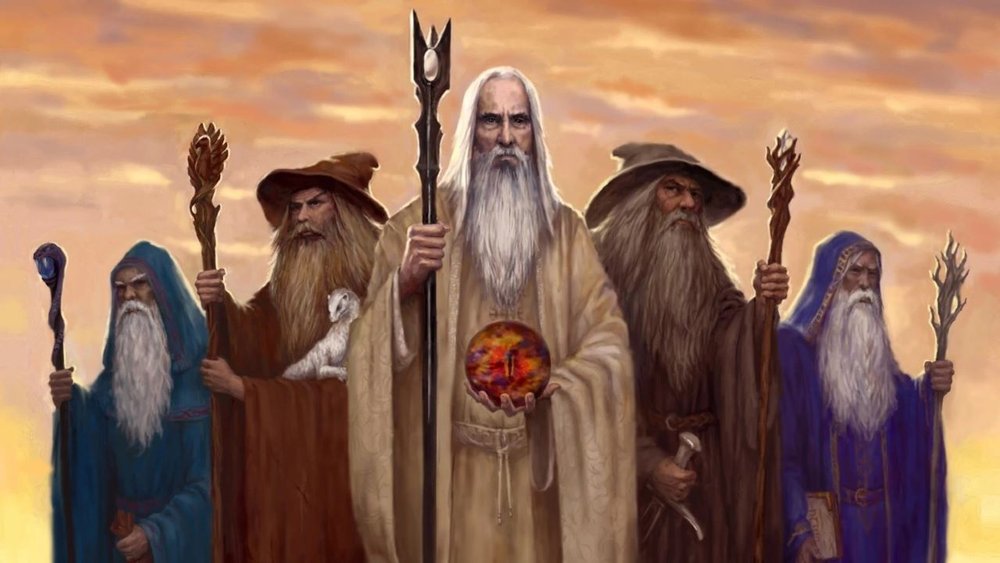
The Istari were sent to Middle-earth in the Second Age to assist the people of that land in their fight against Sauron. They could turn into a mist and travel vast distances to reach their destination – something Sauron did after the Drowning of Númenor.
So this early Wizard trained in the dark arts by Morgoth must be an earlier version of Sauron himself. Sauron, after all, assisted the Elves in the creation of the Rings of Power, was known to be a wizard himself, and eventually picked up Morgoth’s mantle when the Dark Lord was locked behind the Door of Night.
The other exciting portion of the quote I’d like to discuss before closing thoughts is the mention of Nightingales and the Coming of Man in the opening quote.
Nightingales generally have a long history of symbolism, more specifically revolving around creativity, nature’s purity, or a muse. All of these aspects center around virtue and goodness.
Tolkien is using the nightingale song to indicate a more artistic and virtuous age because when Nuin followed the song, he came across the sleeping children by the Waters of Awakening.
Tolkien’s tale is ultimately (as we’ve covered many, many times) about Man (read that as Humans), so everything we have read thus far has been pre-history, which is also why Christopher separated The Book of Lost Tales into a part 1 and a part 2. Part 1 is about how the world became what it was. Now that we have humans, Part 2 is about the rest of the first age and carries what Christopher calls “all the best stories.”

So the nightingale indicates to the fay and the Eldar (Gnomes in The Book of Lost Tales) that there will be a shift in the world, and they will no longer be the focal point. This also spooks Nuin because, at the moment, by the Waters, he sees that his time will come to a close eventually, even though he’s immortal. The world was not built for him but for the new creatures just now waking into the world.
Join me next week as we have some final thoughts on The Book of Lost Tales, part 1, before jumping into The Book of Lost Tales, part 2, the week after!
Elsie Jones and the AI debate!

Hey everyone! There is some new and mixed information about the publication of the first book and series. The first three books are written and nearly done being edited (in fact the first twelve books are written), and I’ve been playing around with artwork for a while now.
Because these first three books are going to be different than the originals (the first book will have a completely different plot, the second book will have minor changes, and the third book will be completely re-edited for content and be much longer), I originally wanted to get some new artwork for them so everyone would be able to tell the two different editions apart.

I reached out to a few people, but the price was either going to be too high, or the job was going to be too encompassing. Kind of like signing on to a Marvel character knowing that you have to be involved for the next ten years of your life, the series is 15 books long and each book will require three to four pictures plus a color cover which is quite a bit of work. I can understand where someone would look at that and turn it down.
I then reached out to a friend of mine who is a little more techy than I am, and we decided to work together to try and get some AI artwork together to make the books come to life. I was never really thrilled about this prospect (the discussion of AI art is for a different blog, and is a much longer conversation), because I loved the funky feel of my original artist Jesse Velasquez’s drawings, and how they brought Elsie to life.

The concession I made was that each of the books has a different theme and each one of the books takes place in a different time period and space, so I thought it might be kind of interesting to have each book change slightly in it’s artwork; for example “Elsie Jones and the Captain’s Guard” takes place in “The Three Musketeers” so having a Baroque style art for that book, but when she travels to “The Casebook of Sherlock Holmes” the artwork would be Victorian in style.

Ultimately I wasn’t super happy with the results that we were getting because Elsie Jones is a character in my head and the AI generators that we were working with made the character look a little too much like a public figure, or she looked different in every picture (All the examples are spread throughout this post).

I got very close to including these pictures, but ultimately I just couldn’t do it, but that put me at a loss. All of a sudden, I was back to no artwork, but a bunch of incredible books, so I made a decision. I reached out to Jesse (the original artist) and asked him if he would mind me using the original art again for the new books. It wasn’t something I wanted, because the books are new and they deserve something new.
Luckily Jesse agreed and said he would get the art over to me so we could move forward and hit that August 1st publication date.

The wrinkle came this past week as we were talking and he asked me if I had any interest in getting new artwork for the books since they were going to be different. We talked back and forth about it, and came to the conclusion that we were going to do it. We were going to change the art and make this the new project that it deserves to be, and completely different from the original publications, August first publication date be damned (I mean, I’m self publishing them, so it’s a self-imposed date, but still).
So that’s both the bad news and the good news. We’re going to have to wait a little longer to get the books, but they are going to have some incredible new art work, from an incredible artist. I CAN NOT State how absolutely happy I am that Jesse is willing to stay on board, because the world needs to both read these books and see an incredible artist and not some computer generated pictures.
Blind Read Through: J.R.R. Tolkien; The Book of Lost Tales, part 1, The Darkening of Valinor

“Now Melko having despoiled the Noldoli and brought sorrow and confusion into the realm of Valinor through less of that hoard than aforetime, having now conceived a darker and deeper plan of aggrandisement; therefore seeing the lust of Ungwë’s eyes he offers her all that hoard, saving only the three Silmarils, if she will abet him in his new design (pg 152).”
Welcome back to another Blind Read! This week we’re going to dive into the philosophy of Tolkien’s world through the events of The Darkening of Valinor.
We’ve discussed it before, but Tolkien relied heavily on his Christian background while creating this mythology. He wanted something new and unique for England, and as we know, mythologies are all origin stories.
The people of Middle-earth (Elves, Men, Dwarves, etc.) are all iterations of our evolution, and it shows from the beginning of The Book of Lost Tales that Tolkien intended for Middle-earth to be a precursor to Earth (he even calls it Eä in the Silmarillion).
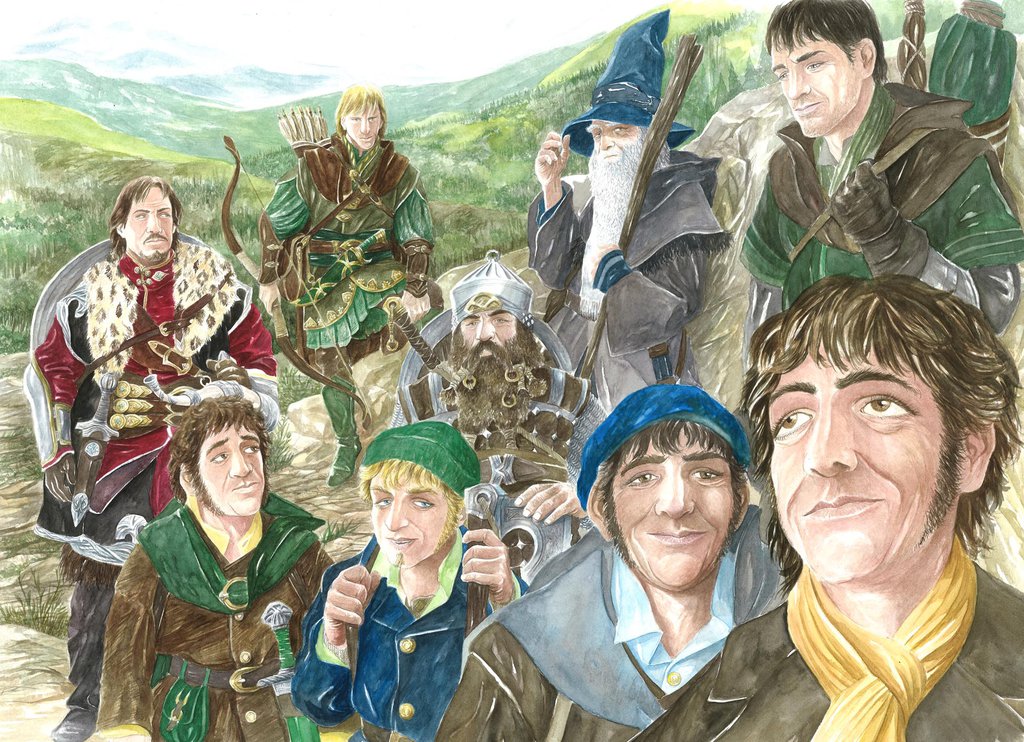
Because this is mythology, Tolkien brings his version of the afterlife and the angels he introduces to the world. Melkor, who is Tolkien’s version of Satan, is ostracized for stealing the Eldar gems and Silmarils. Cast out of Heaven as it were:
“Now these great advocates moved the council with their words, so that in the end it is Manwë’s doom that word he sent back to Melko rejecting him and his words and outlawing him and all his followers from Valinor for ever (pg 148).”
But it was still during this period that Melkor was mischievous, but he had not transitioned to evil yet, even after being cast out of Valinor. So instead, he spent his time trying to create chaos using his subversive words:
“In sooth it is a matter for great wonder, the subtle cunning of Melko – for in those wild words who shall say that there lurked not a sting of the minutest truth, nor fail to marvel seeing the very words of Melko pouring from Fëanor his foe, who knew not nor remembered whence was the fountain of these thoughts; yet perchance the [?outmost] origin of these sad things was before Melko himself, and such things must be – and the mystery of the jealousy of Elves and Men is an unsolved riddle, one of the sorrows at the world’s dim roots (pg 151).”
The great deceiver has been created out of jealousy and anger for these beings of Middle-earth, believing that they were given more than their fair share and his own acts were ruined from the beginning of the Music of the Ainur.
But what did the Elves do? Was there anything they received that made anything Melkor did excusable?
“And at the same hour riders were sent to Kôr and to Sirnúmen summoning the Elves, for it was guessed that this matter touched them near (pg 147).”
It was nothing that they did, but the fact that the Valar treated them as equals to the Valar and Melkor’s slights against them weren’t considered pranks he felt they were, so his anger grew.
They were also allowed to be near their loved ones even after death. Elves were given the gift of immortality but can still be killed by disease or blade. But where do their spirits go when they die? Remember that this is a Christian-centric mythology, so Tolkien built an afterlife.
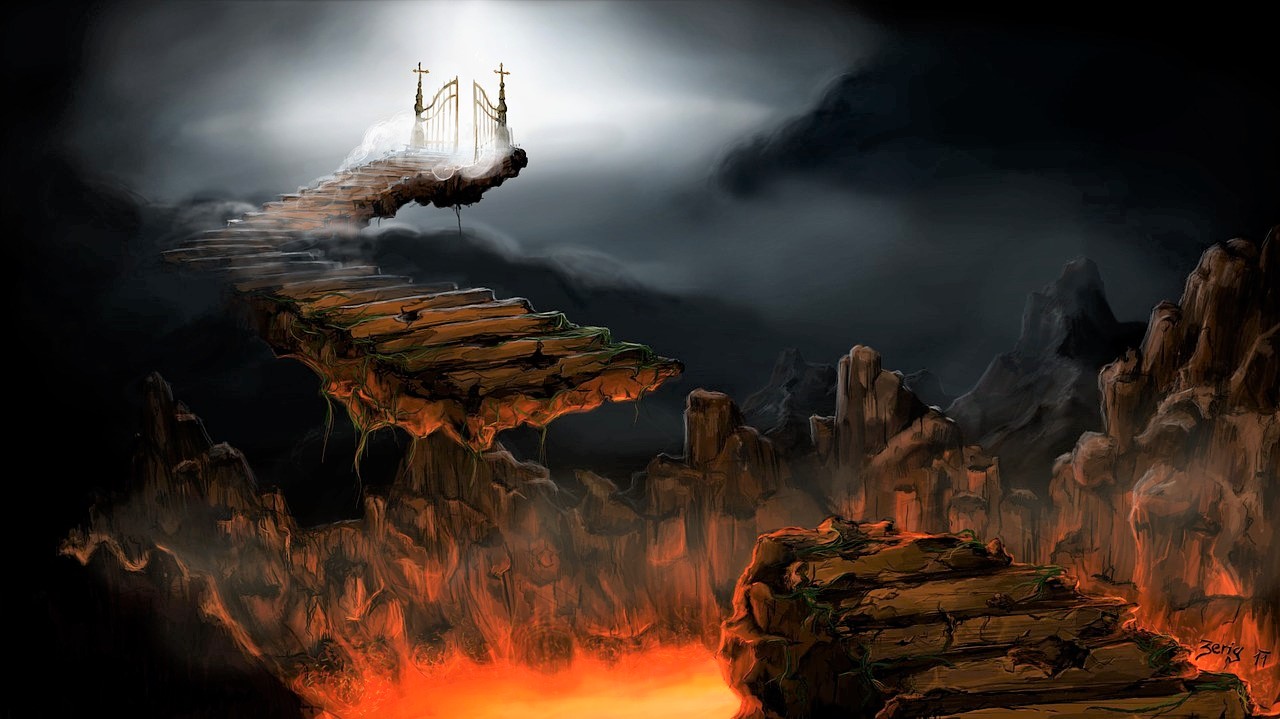
Called Vê after the Valar who created it, the afterlife on Middle-earth is contained within and around Valinor. This early conception (nearly cut entirely from The Silmarillion and The Lord of the Rings) was that Vê was a separate area of Valinor, slightly above and below it but still present, almost like a spirit world that contained the consciousness of the dead.
This region was all about, and the Eldar cannot commune with their deceased, but they continue to live close to them, and their spirit remains in Valinor.
“Silpion is gleaming in that hour, and ere it wanes the first lament for the dead that was heard in Valinor rises from that rocky vale, for Fëanor laments the death of Bruithwir; and many Gnomes beside find that the spirits of their dead have winged their way to Vê (pg 146).”
Melkor is jealous that the Elves can be so close to their dead ancestors, but he also doesn’t fully comprehend what being dead means because he is a Valar and eternal. He sees these beings going off to a different portion of Valinor and is upset because he thought he found a way to create distress amongst them by killing one of them. He doesn’t realize that he made a fire in the Eldar that would never wane.
“‘Yea, but who shall give us back the joyous heart without which works of lovliness and magic cannot be? – and Bruithwir is dead, and my heart also (pg 149).'”
Melkor schemed and stewed in his frustration and anger, feeling that even with his theft and his killing of Fëanor’s father, the first death of an Eldar (whom Tolkien was still calling Gnomes in this early version), there was nothing he could do to prove his worth, so his worth turned to evil. His music was dissonant and didn’t follow the themes of the other Valar, and he was looked down upon for that and cast aside. He pulled pranks that caused the other Valar to imprison him. All the while, his anger, and distrust grew until he did the ultimate act, which caused his to turn to true evil: He partnered with Ungoliant (the giant spider queen and mother of Shelob) and killed Silpion and Laurelin, the Trees which gave light to Valinor.

“Thus was it that unmarked Melko and the Spider of Night reached the roots of Laurelin, and Melko summoning his godlike might thrust a sword into its beauteous stock, and the firey radiance that spouted forth assuredly had consumed him even as it did his sword, had not Gloomweaver (Ungoliant) cast herself down and lapped it thirstily, plying even her lips to the wound in the tree’s bark and sucking away it’s life and strength (pg 153).”
Melkor had finally become evil. He had turned against the Valar and what brought the world light and gave that power to evil creatures.
The Valar and Eldar cried out against Melkor for being cruel, but the tragedy of Melkor’s story was that he never had a choice.
Early in the mythology of this world, Tolkien tells us that Ilúvatar had a theme and a story for eternity, which the Valar were not privy to. Instead, they thought their music and their acts were meant to create only beauty and love.
Ilúvatar, however, knew that to have true meaning, there must be pain, conflict, and evil. Otherwise, all the world’s good would disappear and become mundane. So Ilúvatar created Melkor, knowing what he was going to become. He made Melkor evil in the world.
Melkor was born to suffer. Melkor was born never to know love. Melkor was created to become a creature that others could be tricked into feeling sorry for, and thus trade the light of the Valar for the Darkness of the Dark Lord.
Join me next week as we cover “The Flight off the Noldoli!”
Updates 05.08.23
Hello everyone! I wanted to take a moment to quickly update what I have going on this year! The Blind Read Blog will continue, but as I optimize the website, there may be changes to the nomenclature and how the blog is presented. However, the content will remain the same, so you can continue to enjoy the current weekly essay on Tolkien’s work. This update is about all other works in progress (some very soon!) and all the worlds I plan to unfold upon the world!
Elsie Jones Adventures
This children’s chapter book series is filled with action and adventure for ages 6-12. The series follows Elsie Jones as she finds a strange passageway in her local library that leads to a room with fifteen books. When she reads the books, she is literally pulled into them and goes on adventures with the characters. Each book is a literary classic that exposes and expands literacy while having a fun adventure.
I am re-releasing “Author editions” of the first three books and will continue with the remaining twelve, but in the meantime, if you want the originals, check down at the bottom of this page (or here) to purchase them!
Elsie Jones and the Book Pirates
The first book in the series! This book introduces Elsie, and she enters “Treasure Island” by Robert Louis Stevenson and has a swashbuckling adventure. Elsie finds a strange door in her local library she’s never seen before. When she enters it, she finds a secret room with fifteen numbered books on marble pedestals that look extremely old. The moment she begins to read one, she is sucked into its world. The tentative release date is 08/01/2023!
Elsie Jones and the Revolutionary Rebels
The Second book in the series! In this continuation of Elsie’s adventures, she enters the book “Common Sense” by Thomas Paine, heads back to Revolutionary Boston, and joins up with figures of the American Revolution while they are on the brink of war. Lurking just at the edges of things, however, are the mysterious Dark Hats.
Elsie Jones and the Captain’s Guard

The Third book in the series! Elsie enters the world of “The Three Musketeers” by Alexandre Dumas and has an adventure in France filled with sword fighting and daring prison escapes. As always, the insidious Dark Hats are lingering just behind the scenes.
Elsie Jones and the Westward Adventurers
The Fourth book in the series! Elsie enters the world of “The Pathfinder” by James Fenimore Cooper and travels through the American West with the Louis and Clark Expedition. The Dark Hats have been growing stronger, and it isn’t until now that their motivations begin to become apparent.
Elsie Jones and the Transylvanian Twist
The Fifth book in the series! Elsie enters the world of “Dracula” by Bram Stoker and goes on a spooky adventure in Transylvania. She learns that Friendship is more than meets the eye and finds more going on in her literary worlds than she first anticipated.
Elsie Jones and the London Fog
The Sixth book in the series! Elsie enters the world of “The Casebook of Sherlock Holmes” by Sir Arthur Conan Doyle. She helps the famous detective solve a mystery and discovers who is behind the Dark Hats’ plots.
I’m keeping the next nine books under wraps so far, but there are plenty of easter eggs in the books themselves if you are interested in figuring out the larger mystery of the series plot or if you just want to know which book comes next!
The plan is to release a book every three to six months to keep things fresh.
The Legacy
This book is an action/adventure novel in the vein of Indiana Jones. Centered in the mystery of Oak Island, Drake Teller, and his fellow archaeologists discover a secret hidden for centuries. The more they dig, the more they find that they are not the only ones searching, and even deeper forces might be working to protect… or destroy the secrets they’ve uncovered.
This book has two drafts and is currently being edited and shopped to agents.
Elsinore
Currently being developed as a comic book, Frank and Christy Harvey find themselves in a strange town in Western Texas after a car crash. The town of Elsinore is filled with strange characters with equally strange backgrounds, but it’s not the people of Elsinore that are the problem. The town seems to be a hatch to the gateway of Hell, and Frank and Christy find themselves in a battle between two factions in town. One trying to keep the seal intact and one hell-bent on merging the underworld with our own world. The problem is, which group is which? Who can they trust?
The Monster Inside
A book of Horror short stories, many of which can be found on this website. There are monsters all through the world, the question is, are the ones we harbor inside any better? This book will contain dozens of short stories, from the series of stories inspired by the Universal Monsters to the 80’s retro horror story collection and several originals. From adventurous, to fun, to downright scary, don’t miss this collection!
The Revolution Cycle
This is a ten-book series that follows a group of teenagers embroiled in the midst of a Revolution. I’ve been working on this series for the last twenty years and finally have the books in the shape where I want them.
The Monster in the Woods
The first book in the series, this book introduces the world and the characters. A young group of outcasts finds a strange message and map in one of their quirky Uncle’s attic after he mysteriously goes missing. It leads them into an adventure to find the truth about the world they were born into and the horrible monster that prowls the fences at the edge of town at dusk.
The book is framed as a Goonies-style adventure, so expect lots of action, mystery, and fun in this coming-of-age story.
I have a few other projects going on right now as well, but they are still too early to talk about. You may see some roots of these in previous Updates, but There is quite a bit going on right now, so they are taking a back seat.
In the meantime, check out my book:
A View of the Edge of the World
This is a short story collection inspired by the Twilight Zone. Filled with strange stories, from Science Fiction to Literature, to Horror, they all have that familiar Twilight Zone spin.

A View of the Edge of the World
We live in reality-in the moments and interactions of the day-to-day. We have faith in reality, because without it, there is no meaning and no truth. What is reality, though? Is it defined by the senses-taste, touch, smell, sight-or is it a state of mind? Does it only exist within the human brain, and if so, can one person’s reality be in direct opposition to that of another? A View of the Edge of the World is a collection of stories that escapes the realm of our known reality and delves into the extraordinary. An obese child struggles to find meaning with the help of a supernatural stranger. A disillusioned soldier on the verge of insanity wrestles against time to save his mind, while strangers trapped in an all-night diner fight to solve a murder and save their lives. Each story takes a trip to the edge of the world, whether that edge is physical, psychological, or spiritual. Each story questions the truth of our reality. From the depths of space to the horrors created by one man’s imagination, ask yourself: do you have the strength to step to the edge and look over? Or will the view leave you questioning your own sense of reality-and possibly your sanity?
$16.95

Elsie Jones and the Book Pirates
Adventuress Extraordinaire Meet Elsie Jones, a young girl who loves to read. On one of her trips to the library, she discovers something unexpected. A book whose words and images twist on the page, a portal to another world. Elsie finds herself sailing through the pages aboard the Adventure Galley with her crew of pirates. All seems well until she learns of a dangerous threat… The Dark Hats. Can a rag-tag group of pirates and a reader keep the Dark hats from their dastardly goal?
$6.99
Elsie Jones and the Revolutionary Rebels
In her most historic adventure yet, Elsie rides with Paul Revere and the Patriots of the American Revolution. Not only does she have the British to worry about, but the Dark Hats are determined to ransack the Library at the Old Manse. Come along, as she gallops to the rescue!
$6.99

Elsie Jones and the Captains Guard
The third installment in the enchanting series of a young girl who loves books. Using them as portals to past decades, she teams up with prominent historical figures. In this exciting tale, she joins the Three Musketeers as they embark on a mission to rescue King Phillipe from the Bastille. His twin brother has claimed the throne and sided with Dark Cloak. Taking up arms, Elsie helps fight off the evil entities threatening Paris, making new friends along the way.
$6.99
Blind Read Through: J.R.R. Tolkien; The Book of Lost Tales, Part 1, Introduction

“As has now been fully recorded, my father greatly desired to publish ‘The Silmarillion’ together with The Lord of the Rings. I say nothing of it’s practicability at the time, nor do I make any guesses at the subsequent fate of such a much longer combined work, quadrilogy or tetralogy, or at the different courses that my father might then have taken – for the further development of ‘The Silmarillion’ itself, the history of the Elder Days, would have been arrested (pg 5).“
Welcome back to another Blind Read! We shift gears a little this week now that the Silmarillion is finished and jump into The Book of Lost Tales.
This week I wanted to review the Introduction, but in doing so, I wanted to check Christopher Tolkien’s words (John’s son and the editor of all of Tolkien’s estate since the publication of The Lord of the Rings). So this week will be a combination of analysis and opinion, even more so than any previous essay I have posted.
I’m going to cover two distinct points Christopher covers in the Introduction (there is more there, but for the purposes and desires of this blog, this is the focus). First, the difficulty of ‘The Silmarillion’ and John’s earlier works, and the novelistic approach versus the historical method through the evolution of ‘The Silmarillion’ from its earlier iterations versus Christopher’s edited publication. This last point is the tread that will bring us through the rest of the book and beyond.
“The Silmarillion is commonly said to be a ‘difficult’ book, needing explaination and guidance on how to ‘approach’ it; and in this it is contrasted to The Lord of the Rings (pg 1).“

In this quote, Christopher is saying what everyone else is already thinking; this is why I chose to do a Blind Read with these books because they are notoriously tricky. The Silmarillion begins with a story similar to the Book of Genesis, which was difficult to swallow after concluding one of the most popular stories in generations. “This produced a sense of outrage – in one case formulated to me in the words ‘It’s like the Old Testament’ (pg 2)!”
Which this book is – at the beginning. Once Tolkien moves beyond the archaic origins of the beings and the world of Ëa, the language softens a bit because it becomes more attuned to exposition instead of an elegiac homily.
I contend that it’s Christopher who makes the language so difficult. He is the son of a language professor and is part of the English academic elite. His language is not the same as the language of the masses, which made the book (even when “stories are being told” like Beren and Luthien) considerably more difficult, as opposed to Tolkien’s The Hobbit or The Lord of the Rings.
That being said, we get an introduction to the original vision of the history of Middle-earth in “The Book of Lost Tales.”
“The letter of 1963 quoted above shows my father pondering the mode in which the legends of the Elder Days might be presented. The original mode, that of The Book of Lost Tales, in which a Man, Eriol, comes after a great voyage over the ocean to the island where the Elves dwell and learns their history from their own lips, had (by degrees) fallen away (pg 5).”
Tolkien wanted to tell his history, but he knew the difficulty of writing it as a historical book instead of a novelistic approach. But it was the novelistic approach with which he started. Tolkien began writing his histories before anything else (and the myth that the language developed and the book written to display that language is a misnomer. In the development of The Book of Lost Tales, we see the evolution of that language as he develops it over time.) in 1917. Tolkien wrote the history as if it were an oral tradition, which would alleviate some of the dry and dull exposition needed. It would stop the feeling of it reading “like the Old Testament (pg 2).“
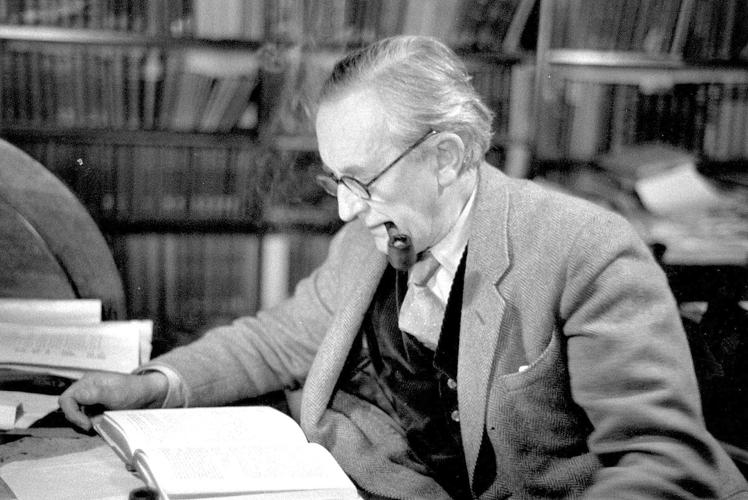
So instead of a dry history, we get the Human, Eriol, traveling to the Cottage of Lost Play and meeting Elves (they were Gnomes in 1917, though still called Noldor) who gather around a fire, much like you would expect Hobbits to do and regale Eriol with their story.
That makes The Book of Lost Tales interesting, even though it is a rehashing of The Silmarillion. We get to see the evolution of the design and approach of the work and how Christopher decided to edit it and publish it after his father’s death.
Christopher mentions that his father wanted this story told. The fact that we have so much material that calls back to The Lord of the Rings proves that Tolkien wrote to make the world whole. To be more than what Christopher calls “the mise-en-scéne of the story (pg 7),” Tolkien wanted people to know that there was history and agency behind the action in the book. That history led the characters to where they are when we pick up the events in The Fellowship of the Ring.
But does Christopher take it too far? On the contrary, it looks to me as though he uses his father’s platform to carve out a space for himself: “There are explorations to be conducted in this world with perfect right quite irrespective of literary-critical considerations; and it is proper to attempt to comprehend its structure in its largest extent, from the myth of its Creation.“
I agree with what Christopher is saying here. If he didn’t take the mantle over, there wouldn’t be The Silmarillion, and the world of Middle-earth would have stopped at The Lord of the Rings. However, what he did by taking things over was indelibly stamp his prejudice on the material.
Would The Silmarillion have been better as a story as it is in The Book of Lost Tales? Would that have garnered a more significant audience if it were a more accessible tale?
These are all questions I hope to get a better answer for through the next couple of books. Both The Book of Lost Tales, part 1 and The Book of Lost Tales, part 2, are the earlier iterations of The Silmarillion through the storytelling perspective. So these Blind Reads will be much more analytical than previous Blogs as we follow the creative process of Tolkien as both he and Christopher work to uncover the definitive history of Middle Earth.
Blind Read Through: H.P. Lovecraft/August Derleth; The Gable Window
“Though the majority of these alterations had apparently been made to contribute to Wilbur’s comfort, there was one change which had baffled me at the time that Wilbur had made it, and for which he never offered any explanation; this was the installation in the south wall of his gable room of a great round window of a most curious clouded glass, of which he said only that it was a work of great antiquity, which he had discovered and acquired in the course of his travels in Asia. He referred to it as one time as “the glass from Leng” and at another as “possibly Hyadean in origin,” neither of which enlightened me in the slightest…“
Welcome back to another Blind Read! This week we delve into Derleth’s most cosmic story yet, while at the same time lamenting his tone and applauding his action.
From the very start “The Gable Window” feels like Derleth stretched to make it much more of a Lovecraft story than it is. His Christianity is just so profound that it pervades the writing in such a way that you instantly know it isn’t Howard Phillips, but at the same time, the text is good enough to make you want to keep reading.
The story starts off with two slaps in the face which are meant to be fan service. About half way down the first paragraph we get this:

“It (the house of the narrator’s cousin, Wilber Akeley) had fallen into disuse after the grandson of the farmer who had built it had left the soil for the seaside city of Kingston, and my cousin bought the estate of that heir disgruntled with the meager living to be made on that sadly depleted land. It was not a calculated move, for the Akeleys did nothing by sudden impulse.”
Instantly I’m annoyed. As we’ve seen from previous stories, Derleth has no qualms with using names and locations of Lovecraft’s to disuse. Akeley is the name of the farmer whom communes with, and takes rides from, strange advanced aliens in “The Whisperer in Darkness,” but this turns out to be ok, because Wilber (later in the story) is a relative of Henry, which instantly ties this story into Lovecraft country. Why then, did Derleth decide to call the seaside town Kingston instead of Kingsport? It cheapens the story, making it seem as though Derleth either tried to make the story his own, or even worse, that he accidentally called the city by the incorrect name. These kind of iniquities keep popping up throughout Derleth’s stories, and it’s no wonder there’s disdain for him using Lovecraft’s name. It’s not the stories themselves, which are entertaining, but that he lends fan service while at the same time not actually continuing the traditions. Kind of like why Fans of Star Wars are so upset with the most recent trilogy of movies.

Getting back to the story, the narrator renovates the house, much like the narrator did in “The Peabody Heritage,” but as we see in the introductory quote to this essay, he doesn’t remove or remodel the glass in the gable window. The Plateau of Leng is popular in Lovecraft literature as both an alien landscape and a space in Antarctica where reality is thin and the ability to dimension hop is strong (foreshadowing alert), seen in such stories as “At The Mountains of Madness” and “The Dream-Quest of Unknown Kadath” and where it seems a strange and dangerous place, it isn’t nefarious at all.
The room is obviously the most used, but “I found myself from the beginning curiously repelled by the gable room, in part certainly because it reminded me so strongly of the living presence of my dead cousin who could never again occupy his favorite corner of the house, in part also because the room was to me unnaturally alien and seemed cold to me, holding me off as by some physical force I could not understand…“
The room is filled with Wilbur’s manuscripts and various books from the nearby Miskatonic University in Arkham, which we know from Lovecraft is one of the few locations which house the fabled Necronomicon.

The narrator hears various noises. “These were of no consequence at first: they began as tiny, almost unnoticed things.” Like what sounded like a cat scratch at the window, or some kind of slapping/slithering sound coming from the window. It didn’t unnerve the narrator until he realized there was no possible was for a cat to touch the window and there was no tree nearby.
Unnerved but nonplussed, the narrator continues his renovations and eventually gets a letter from the executor of the estate stating that all Wilbur’s papers on his research are to be destroyed, the books on certain shelves are to be turned into Miskatonic University, and the glass in the gable window broken.
Interested, the narrator goes to these shelves and finds strange and old books; “The more recent ones among them – and none of these dated beyond 1850 – had been assembled from various places; some had belonged to our fathers’ cousin, Henry Akeley, of Vermont, who had sent them down to Wilbur; some bore the ownership stamps of the Biblotheque Nationale of Paris…”
Here is where I get touchy. There are things like this throughout Derleth and despite the fact that he lauds himself as an incredible writer (without a doubt these stories are fun), he make a plethora of mistakes. This whole story Wilber is our narrator’s cousin. This quote all of the sudden makes him the narrators brother? “…some had belonged to our fathers’ cousin…” The narrator and the cousin couldn’t have the same father or they wouldn’t be cousins. These are the little missteps which happen again and again that directly contradict other details in Derleth’s stories. This is also why I believe that he didn’t mean to misquote Kingsport as Kingston, he just didn’t care to go back through and verify the details. It’s just sloppy writing, and NOT something which Lovecraft would have permitted considering his perfidy.
Moving beyond the irritation, the Biblotheque Nationale of Paris is the second known location of the Necronomicon, and in the very next paragraph we get a small list of books contained within this auspicious home library:
“…they bore such titles as Pnakotic Manuscripts, the R’lyeh Text, the Unaussprechlichen Kulten of von Junzt, the Book of Eibon, the Dhol Chants, the Seven Cryptical Books of Hsan, Ludvig Prinn’s De Vermis Mysteriis, the Celaeno Fragments, the Cultes De Goules of the Comte d’Erlette, the Book of Dzyan, a photostat copy of the Necronomicon…“
This is all very exciting because here Derleth infuses some of his own ideas seamlessly into Lovecraft (meaning some of these books are of Derleth’s creation), but then unfortunately in the next sentence he ruins the progress he makes:
“Did it matter whether you call it God and the Devil, or the Elder Gods and the Ancient Ones, Good and Evil or such names as the Nodens, Lord of the Great Abyss, the only named Elder God, or these of the Great Old Ones…“
Derleth then goes on to name the Lovecraftian Pantheon which is his strength. He is the one who really clarified the mythos and created it as we know it today, but yes August, it really does matter if you call it God and the Devil.
Lovecraft created a world which was amoral and apathetic. The Ancient Ones and the Elder Gods had their own agendas and humans just tend to get in the way at times, as we strive for more power. In the Lovecraft world the only good and evil was man…and nearly always it was man who was evil. In our apparent struggle for power we are the ones who create menace; these Elder Gods are merely like a giant rock in the road. If we just pass them by we might not even know they’re there, but if we get curious and want to know what they are and accidentally kick them, we break our toe.
Derleth frames his religion overtop of this uncaring world gives good and evil attributes to them. All the sudden these creatures who were never malevolent, just massive (think of yourself walking down the street and accidentally stepping on a bug), are all the sudden a hidden threat bent on killing off or enslaving mankind. The issue is, that kind of creature belies the genius of Lovecraft. If the Elder Gods are evil, then humankind should have been wiped out all together because these Elder Gods are just too powerful. In Derleth’s world, these Elder Gods once ran the universe but are now waiting for some fool to blunder into setting them free, or some cult to summon them back to their glory. In Lovecraft these creatures were unknowable which made the merest glance of them drive a man insane. In Derleth’s stories they become a land dwelling octopus.
There are very few tentacles in Lovecraft. There are many tentacles in Derleth.
And we see them as the narrator goes into the room with the gable window. For the first time he notices there’s a pentagram drawn on the ground. Curious he decides to read off some text:
“Ph’nglui mglw’nafh Cthulhu R’lyeh wgahnagl fhtagn.”
and suddenly the glass becomes a portal and he seems strange baked landscape with odd people he remembers his cousin calling Sand People. Then from a cave:
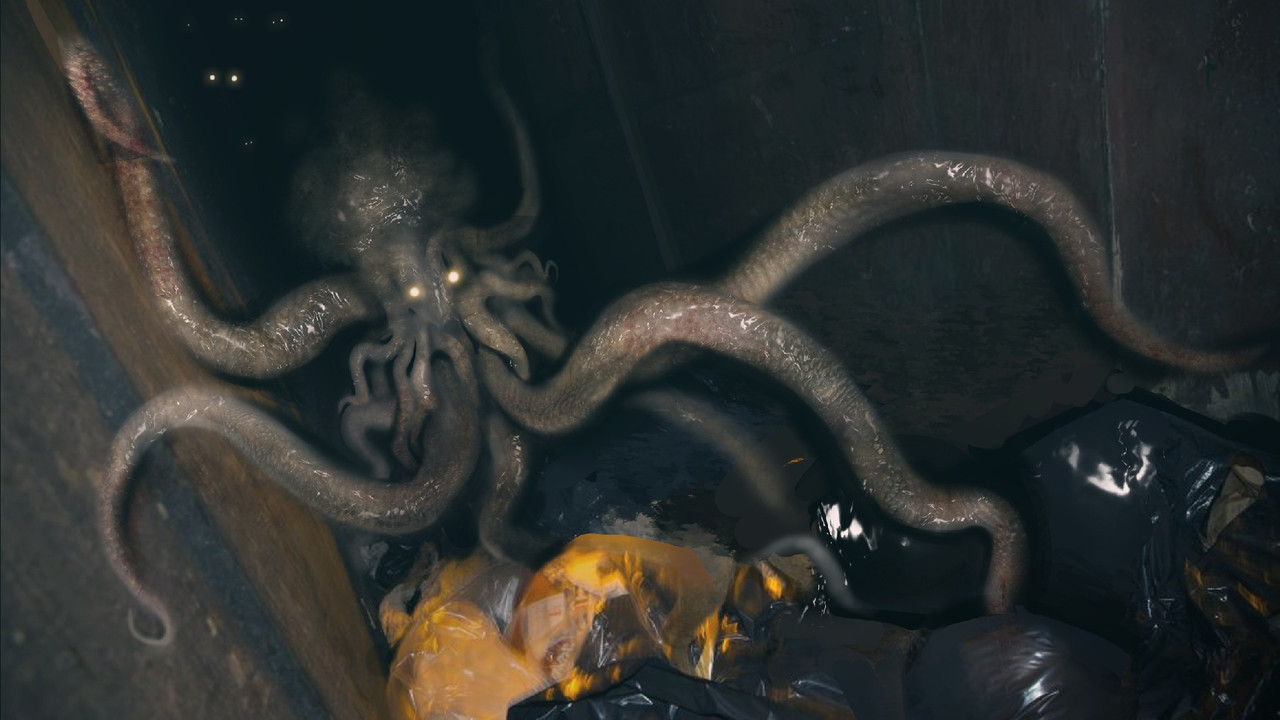
“…little by little, an incredible monster made it’s appearance – at first a probing tentacle, then another, and presently half a dozen cautiously exploring the caves mouth. And then, from out the darkness of the cavern’s well, an eldritch head shown dimly.”
The creature moves forward to the glass…eventually through the glass and the narrator is terrorized. Yet unlike in Lovecraft where the narrator would lose consciousness only to then delve into a downward spiral of madness, this narrator comes to his senses and wipes the side of the chalked Pentagram, instantly closing the portal. How do we know it worked?
“…I know beyond doubt that what I saw was not the product of my feverish fancy, because nothing could demolish that final damning proof which I found near the shattered glass on the floor of the gable room – the cut tentacle, ten feet in length, which had been caught between dimensions when the door had been shut against that monstrous body to which it belonged, the tentacle no living savant could identify as belonging to any known creature, living or dead, on the face or in the subterrene depths of the earth!“
Despite all the issues I’ve laid out, it’s a very satisfying tale. I point these things out so that the casual reader will know the difference between what the experience is between reading Lovecraft and Derleth. Will these disparities continue?
Let’s find out next week as we read “The Ancestor.”
Blind Read Through: H.P. Lovecraft; In the Vault

“As his hammer blows began to fall, the horse outside whinnied in a tone which may have been encouraging and may have been mocking. In either case it would have been appropriate; for the unexpected tenacity of the easy-looking brickwork was surely a sardonic commentary on the vanity of mortal hopes, and the use of a task whose performance deserved every possible stimulus.”
Welcome back to another Blind Read! This week we’re covering a story with all the mental veracity of Ambrose Bierce coupled with the Gothic beauty of Edgar Allan Poe. We have a very supernatural tale (a slight divergence from Lovecraft’s norm) which is perfect for this post because of the overtones matching Charles Dickens’ A Christmas Carol (well, that is as perfect as any Lovecraft tale could be for Christmas!), because of it’s themes of repentance, and the almost anthropomorphizing of the horse in the story.
Well…It’s Christmas! Let’s get started!
Lovecraft let’s you know the tone right from the get go: “Mention a bucolic Yankee setting, a bungling and thick-fibred village undertaker, and a careless mishap in a tomb, and no average reader can be brought to expect more than a hearty albeit grotesque phase of comedy.”
We follow George Birch, the aforementioned undertaker in this tale, but Lovecraft does something unique right from the get go. He describes what happens in the story, holding back only the denouement, letting the reader’s mind run wild.
“It was generally stated that the affliction and shock were results of an unlucky slip whereby Birch had locked himself for nine hours in the receiving tomb of Peck Valley Cemetery, escaping only by crude and disasterous mechanical means; but while this much was undoubtably true, there were other and blacker things which the man used to whisper to me in his drunken delirium toward the last.”
So Birch, get’s locked in a tomb by accident and something happens to him there. Sure. My mind immedaitly turns to tales much like “The Tomb” where we get some of the strange Lovecraftian otherworldliness and I began trying to figure out what type of story I was getting my self into…was it a dreamlands? No, the tone was too straightforward. lovecraft has a tendency to give a slightly whimsical, or mystical cadence to his Dream Lands stories… so this must be a Mythos story… right?
Well the tone of this story is different from even those stories. Much like we saw last week, Lovecraft tends to spend quite a bit of time on setting the scene, because the power in much of the magic in “his world” comes from words and smells and architecture. This story spends pages talking about Birch himself. , “I suppose one should start in the cold December of 1880, when the ground froze and the cemetery delvers found they could dig no more graves till spring… The undertaker grew doubly lethargic in the bitter weather, and seemed to outdo even himself in carelessness.”
So Birch is a poor Scrooge, or Grinch like character. He is “bucolic” and a grouch, but what’s more he’s lazy. “Birch decided that he would begin the next day with little old Matthew Fenner, whose grave was also nearby; but actually postponed the matter for three days…” and adding to his procrastination: “He had, indeed, made that coffin for Matthew Fenner; but had cast it aside at last as too awkward and flimsy, in a fit of curious sentimentality aroused by recalling how kindly and generous the little old man had been to him during his bankruptcy five years before.” so the diminutive Fenner got one of the better coffins, while Asaph Sawyer who was not “a loveable man” got the terrible cast off coffin that Fenner was supposed to have received …all because Birch was just too lazy to build the correct sized coffin for Sawyer.
Fast forward to Birch inside the tomb, we get another indication of his laziness: “For the long-neglected latch was obviously broken, leaving the careless undertaker trapped in the vault, a victim of his own oversight.”
Birch, through his own laziness has become a victim of his own negligence. Here is the first indication of the Scrooge theme, Birch is sowing his own oats. He created a situation where he has now trapped himself because he couldn’t bother with doing a little work. The “Ghosts” of his past are coming back to haunt him here, but this is just the beginning.
He cant get the door opened, so he decides to take the morbid child approach and stack all the caskets in the tomb up like some sort of macabre ladder: And so the prisoner toiled in the twilight, heaving the unresponsive remnants of mortality with little ceremony as his miniature Tower of Babel rose course by course.”
We get the quote which opens the essay where Birch decides that he wants to chizel his way out of an aperture at the apex of his corpse stair, but …”As he remounted the splitting coffins he felt his weight very poignantly; especially when, upon reaching the topmost one, he heard that aggravated crackle which bespeaks the wholesale rending of wood.”

Because of his carelessness in constructing the coffins, he was now standing upon a tower of breaking timber and corpses, until “...no sooner was his full bulk again upon it than the rotting lid gave way, jouncing him two feet down on a surface which even he did not care to imagine.” That line right there gave publishers a pause. Lovecraft very rarely goes for the gross out, focusing instead on much higher end psychological scare tactics. Here he went full “Johnny Got his Gun” (there is a terrible scene where the main character gets caught in barbed wire and falls on and through a rotten and fetid corpse…this scene and story pales in comparison to the horror that Dalton Trumbo creates in that novel) as Birch’s feet go into the corpse of Asaph Sawyer.
This being a Lovecraft tale you would expect something strange to happen, something unexpected, something otherworldly, but this story is the exception to the rule. This story is a straight supernatural tale, and because of it’s difference it comes off all the stronger because of it. The corpse grabs his leg.
“In another moment he knew fear for the first time that night; for struggle as he would, he could not shake clear of the unknown grasp which held his feet in relentless captivity. Horrible pains, as of savage wounds, shot through his calves; and in his mind was a vortex of fright mixed with an unquenchable materialism that suggested splinters, loose nails, or some other attribute of a breaking wooden box.”
I felt the same way. I didn’t believe that Lovecraft would take a flat out supernatural approach, but I am kept on my toes. Birch gets free and runs away, liping along until he gets to ghis doctor. Once inspected and unloads his story off his conscience, Dr. Davis is horrified because he comes to understand exactly what happened.
Birch gave Sawyer Matthew Fenner’s coffin because Fenner’s coffin was poorly made and Sawyer’s coffin was well constructed. Dr. Davis comes to the realization that Fenner is extremely short, whereas Sawyer is extremely tall. Dr. Davis goes to the tomb and finds the corpse and finds the ultimate betrayal of the undertaker…
“The skull turned my stomach, but the other was worse – those ankles cut neraly off to fit Matt Fenner’s cast-aside coffin!”
The final nail in the coffin!
Birch actually cut off Sawyer’s feet to make sure he fit in the coffin and Davis verified that the teeth markes on Birch’s ankle were indeed from the rotten teeth of Sawyer.
To me this is the ghost coming down to show Scrooge the right path. This was the wake up call to stop being lazy and to start doing right by people. Whether you believe that Birch’s foot just happened to land on the corpse’s mouth, or that the corpse animated itself out of anger at it’s slight beyond the grave, this was Birch’s call, much like Scrooge being showed his possible future.
To me the story is perfect for the season (at least as perfect a story as Lovecraft can get), and I hope you all had a blast reading it!
Join me next week as we evaluate “Cold Air”
Post Script:
To me these Post Scripts have started to become a little bit of an inside joke, but truly they are all here just to get one last point across which doesn’t quite fit into the narrative of the essay. Here I would love to talk a little about the anthropomorphosizing of Birch’s horse.
The entire story the horse felt like something Walt Disney would create. The horse was tryign to tell Birch what he was doing was a mistake. You could almost feel the horse rolling it’s eyes at the laxy way Birch held the reigns. To me the horse was the true indicator that we were in a Lovecraft story. Doesn’t make sense does it? Let me explain.
Normally we would have an unreliable narrator teloing us a story. At some point in the story we get information that doesn’t quite add up right, but Lovecraft forcuses so much on subtlety that we wil never get an outright statement from the narrator saying something was off. We just need to infer based upon the surroundings.
In this story everything is fairly normal, except for the horse (a kind of macabre parrallel to The Grinch’s dog Max). The horse gives indication at every stage that Birch isn’t doing the right things with it’s outragous personality.
When Birch finally gets to teh tomb the horse neighs and stamps and paws, and soon leaves Birch to his fate as the man ventures in. It isn’t until this point that the narrator can take leave of reality. It isn’t until the horse leaves that we start to get something far beyond normal, and the horse doesn’t leave until the very end of the story.

In every tale Lovecraft tells he has a gatekeeper or a key-master. If they cause a rift they are a key-master, if they stop a rift from happening they are a gatekeeper. It is these characters, human or not, that keep things normal. In this story we dont know for sure if what happened to Birch was supernatural or not, but what leaves that open for question is that the gatekeeper is gone. It’s once this horse leaves that the crazy happens, and if you’ll notice…all of Lovecraft happens in the shadows when you’ve turned to look at something in the light.
The Expedition
“It’s a beautiful place,” I said, looking out over the bow of the ship at the Amazonian jungle as it passed us by. I wasn’t lying. Such an untouched place brought a warmth to my heart, more so than any city ever could.
“It’s a dangerous place, Kay,” My boyfriend David said, “full of deadly creatures, deadly flora, and superstitious and territorial natives.”
“Which is why you brought me along,” Mark said, cocking his rifle and kicking a box of C4 housed under the windows of the boat. “Now hold on, while I dock this thing.”
We were headed to a sacred pool down in the Amazon jungle, following a lead to the find of the century. The missing link. For years my research kept hearing rumors of a fish man in the depths of the jungle, but it wasn’t until Mark and I found the skeletal hand with webbing on a tributary of the Amazon that brought some credence to those rumors.
“Did anyone else find it strange that those natives told us exactly where to look?” Edwin asked. He was our Anthropologist.
“Enough Edwin! We gave them more supplies than they could use in a year! Of course they were going to tell us where to go!” Mark said.
“I’m just saying. Native Amazonian’s historically aren’t too happy to work so well with others,” Edwin concluded.
“The natives are the last thing we have to worry about, Edwin. Let’s get camp set up, it’s starting to get dark. We don’t want to be caught outside with these deadly mosquitoes!” David laughed.
It didn’t take long to build camp, but David was right. The Mosquitoes were horrible. It was so nice to get inside the tent and block out the bugs.
“You hear that Kay? Sounds like laughter,” David said after we had settled down to sleep.
“David, get away from the side,” I cried.
“But I really think I heard laughter. It was strange, kind of gurgling. I’m gonna to take a look,” He said and left the tent. I sat there with my sleeping bag pulled tight under my chin, I mean I know that’s a stupid childish protective safety thing, but I really couldn’t help myself.
I was right to be worried, because after a few minutes I heard him scream.
“David!” I cried and unzipped my tent. I saw a shadow of someone walking by and my skin went cold. There was a strange earthy, wet smell in the air. It was like ozone blended with moss.
“What’s going on?” Mark called. I let out a little yip, embarrassed at my reaction, because he must’ve been the figure I saw.
“David heard laughter and went out to check it out. I heard him scream,” I said.
“Stay with me,” Mark said. He lifted his rifle. “We’ll move to the edge of the water. That way we can’t get surrounded by anything in the woods.”
“What’s going on guys?” Edwin ran up to join us.
“Stay close,” Mark responded. I couldn’t open my mouth. David had better be kidding, but you’d better believe I was going to kill him whether he was or not.
“Woah!” Edwin cried. “Look at this!”
He was bent over something stuck in the muck at the forest edge. Stuck in the ground was an old wooden pendant, petrified by time. It portrayed some strange bipedal fish creature. I turned it in the moonlight when something out of the corner of my eye made me look up.
Mark was standing on the edge of the water line looking past us into the jungle. The something that caught my eye was walking out of the water towards him. The water was black reflecting moonlight making the water look like oil. I thought the figure was David at first, but it was just my mind wishing for something that wasn’t true. The figure opened its arms. It had a huge arm span and its hands were webbed, its skin was scaly, and its neck had gills.
“Look out!” I cried. I was too late. The creature’s arms wrapped around Mark and its nails dug into him. He screamed as the creature bit into his neck from behind. I could see blood as black as the oily Amazon roll down Mark’s body as the creature ripped a piece of his neck free. He collapsed into the water.
“Run!” I cried.
We ran back to the metal safety of the ship. My heart was pounding and I was having trouble getting breath. Did I really just see that? I had to have imagined it, right? But, God the metallic stink of blood surrounded me, I couldn’t focus, I just wanted to be with David. I wanted him to hold me.
When Edwin and I approached the ship, I saw David on the other side of some bushes. My heart soared!
“David!” I cried. “David, get on the ship!”
We turned the corner and my knees gave out beneath me. It wasn’t David. Or rather, it was only part of him. His head was stuck down on a pole that was thrust into the ground. His eyes bugged out of his head, and his tongue lolled. Bugs crawled in and out of his grotesque mouth. I saw a mosquito feeding on one of his bulging eye balls.
I think I cried out. I think I sobbed, but the next thing I knew, Edwin and I were inside the metal boat. Edwin must have put a mop across the handle of the door, blocking us in. Didn’t he see David outside? How did he think a mere mop would stop that thing? Especially with exposed windows?
“Let’s get out of here. We got what we came for,” Edwin said, he was sobbing. Tears and snot running down his face.
“What? What do you mean we got what we came for?” I cried. We didn’t got anything but death!
Edwin held up the idol he found on the beach.
“Get rid of that fucking thing!” I yelled.
“No!” Edwin wailed. “It’s what we were paid for!”
The mop handle cracked as the creature slammed on the other side of the door.
“It’s coming for the idol! Get rid of it!”
Edwin took a few steps back, nearing one of the many windows in the cabin.
“No! Let’s just get the boat moving… ” Edwin said.
The creature’s hands broke through the window and grasped Edwin’s head. Its claws dug into his cheeks and he was momentarily lifted before his skin gave way and the claws tore up and back, ripping skin from his face, piercing his eyes and spraying blood across the room.
I grabbed the idol from Edwin’s dead hands and threw it out the window. I grabbed the broken mop handle in a futile attempt to defend myself.
Then the creature stepped into the room. It smelled of earth and blood and swamp water. It looked like a piranha, if a piranha was six foot tall. Its teeth were razor sharp and its claws were long and dripping with blood. Its green skin shone in the moonlight and it cocked its head to the side like a dog when it saw me.
“I’m leaving. You can go now. I…I won’t cause you any problems,” I called. I took a step back and my foot hit a box. I glanced down. It was the explosives. I knelt down and grabbed a packet of explosives and the detonator. The creature didn’t like that.
It screeched and opened its arms wide. Blood dripped from its hands and its mouth.
My heart was pounding so hard I thought it was going to leap from my chest. The creature took a step toward me and I threw the explosives at it. Its reflexes were incredible. It caught the C4 in the air and immediately turned to look at it.
“Fuck you,” I said, and depressed the button a split second before diving behind a table.
The echo of the explosion resonated in my ears, but somehow I got up and got to the wheel. I thrust the throttle all the way to the maximum. Fuck this place. I was getting out of here.
I managed a glance at the body of the thing. Its arm was completely gone. Disintegrated. Its head was half gone, the rest a toasted black. I had to get the thing off the boat. There was no way I was going to keep going with its corpse there, but I couldn’t think of that right now. I was shaking too bad, I just had to focus on getting out of the jungle.
I heard distant chanting. It got louder and louder and I felt bile rise in my throat. I peered out the window and I saw Amazonians at the shore line. They were dancing and shaking something in the air. The chant was a dissonant sound that made my skin crawl. I squinted at what they held. It was the same as we saw on the beach. The fish idol.
I went back to the wheel when I heard clicking behind me. Nails on metal.
Blind Read Through: H.P. Lovecraft; The Case of Charles Dexter Ward, pt. 4
“Important sections of Charles Ward’s store of mental images, mainly those touching modern times and his own personal life, had been unaccountably expunged; whilst all the massed antiquarianism of his youth had welled up from some profound consciousness to engulf the contemporary and the individual.”
Welcome back to another Blind Read! This week we delve even deeper into the mystery of Charles Dexter Ward as we take a look at chapter four, “A Mutation and a Madness.”
This penultimate chapter gives us some much needed information, and sets us up for the final chapter “A Nightmare and a Cataclysm.” I have a feeling because of the direction the text is taking, and the title of the last chapter we are going to get a much more intimate view of what that attack on Curwen’s farm house looked like; with Ward taking place of the antagonist, but that’s for next week.
This week we continue to follow Ward down the rabbit hole. What Lovecraft does so well in this novel is heighten the mystery and suspense by not fully showing us what’s actually happening. He’s brought in all these other horror tropes (as mentioned last week), so the reader is left wondering what’s going on. Is this magic? Are Curwen and his fellows actually witches? Are they vampires? Did they tap into some eldritch energy? Based upon my reading so far in Lovecraft’s oeuvre it could be any of these options. We don’t get a specific answer in this chapter, but things are certainly clarifying, so lets dig into it as much as we can!
We start, right off the bat, with Ward acting subdued after the event on Good Friday where his mother collapsed. Ward seemed to regress back to the antiquarian activities of his youth. He was subdued for months. What was he doing during this time? We know he was dabbling in Curwen’s personal documents, so was Curwen biding his time before coming into being? Or was Ward trying to fight him off?
Those few months go by and it seems as though we have the answer: “The youth was arguing or remonstrating hotly with himself, for there suddenly burst forth a perfectly distinguishable series of clashing shouts in differentiated tones like alternate demands and denials…” then a curious statement was overheard from Mrs. Ward: “…must have it red for three months…”
Curwen had been biding his time. There was something they were working on which took time, some incantation, and Ward was either an unwilling or reluctant participant in it. We know this because Ward’s mother listened all night and “...as long as she had remained awake she had heard faint sounds from the laboratory above, sounds as if of sobbing and pacing, and of a sighing which told only of despair’s profoundest depths.”
Ward was being compelled and I think that something happened during the “Good Friday” kerfluffle that ended the last chapter which took hold of Ward. It’s almost as if a part of Curwen had been injected into Ward’s subconsciousness and they were two beings fighting for one body. That would certainly explain “clashing shouts in differentiated tones.”
The next day we find there had been more body snatching from the cemetery the night before Ward’s lamentations. The body of Ezra Weeden, the young man who courted Eliza Tillinghast who became Curwen’s wife and then led the charge on the farm house, was exhumed and then shortly there after there were “…shrieks of a man in mortal terror and agony.” followed by, “strange and unpleasant odours…”
This entire novel there has been grave robbing. In previous chapters, I assumed it was because Curwen was trying to gain access to the knowledge of his ancestors. What I now am coming to realize is the reason Curwen (and by extension Ward) needs the “Saltes” of the past, is not to resurrect them (although I do believe that they do resurrect the bodies, which makes the hypothesis all the more gruesome), but to feed on them. Curwen and his coven have abnormally long life and to do that you must have a source to fuel you.
This makes exhuming Weeden seem cruel and vicious, as though Curwen is exacting revenge on the man for storming his farmhouse all those years ago, but maybe there is something deeper going on here. If they in fact do gain the knowledge from these poor souls they bring back, maybe Curwen is trying to figure out how Weeden succeeded in convincing the townsfolk to attack. Maybe Curwen is trying to stop that from happening again, against Ward.
This still doesn’t change that they seem to not only be feeding on the dead but also the living, because vampirism begins taking place concurrently, and we already know that Hutchinson has survived thus far as a “Transylvanian Count” who lives off blood. Around this time there is also stories of people being attacked by …”a lean, lithe, leaping monster with burning eyes which fastened its teeth in the throat or upper arm and feasted ravenously.”
Enter Dr. Allen, a mysterious man who suddenly appears and has become Ward’s companion. This companion, along with a man servant, move into a new house…the center of the vampiristic attacks…and they become reclusive with each other.
Ward “grew steadily paler and more emaciated even than before, and lacked some of his former assurance when repeating to Dr. Willett his old, old story of vital research and future revelations.”
Could it be that Dr. Allen is the vampire and he is actually feeding on Ward? Or is it Curwen, through Ward’s body that is effecting the exsanguinating attacks?
The answer is unclear, but at this time Ward makes a deal with a local abattoir and has abnormal amounts of blood and meat sent to him. There is concurrently a caravan headed to Ward’s abode that is hijacked by thieves. Thieves who promptly drop the cache in horror as they realize it’s grisly (dead bodies) contents.
The small coven of three is slowly building power. Power in blood and power in knowledge. The three men move into the old Farm House complete with it’s hidden catacombs of Curwen’s making. It does not seem strange to me that they had to find a “man servant” to join Dr. Allen and Ward, because years before Curwen had to be joined with Orne and Hutchinson to be a coven of three. What did Allen and Ward promise this young man to join them?
Once at the farmhouse Ward realizes that he’s in over his head and decides to take a last stand. He sends a letter to his Alienist (Psychiatrist) Dr. Willett which states, “Instead of triumph I have found terror, and my talk with you will not be a boast of victory but a plea for help and advice in saving both myself and the world from a horror beyond all human conception or calculation.” Yikes. It’s here that Lovecraft begins to transcend the run of the mill horror. He has conceded that things like zombies, witches, and vampires exist in the world, but they are a means to an end for a deeper and more horrible truth to come. They are mosquito’s pecking at someones skin, when the whole time there is something deeper, insidious, and ruthless, like a virus which will do much more damage, just waiting to be let free.
As if to emphasize this, the post script is a desperate attempt at redemption, “Shoot Dr. Allen on sight and dissolve his body in acid. Don’t burn it.”
What a strange and horrifying thought. Ward is so scared of Dr. Allen coming back from the grave, that he knows you must absolutely destroy the body; that way the “Saltes” cannot be restored. This also makes sense because in previous letters, Orne told Curwen not to bring up what you cant put down, which coincides with Curwen’s collecting acids. He must have used those acids to “put down” whatever horrible thing he “brought up.”
Soon after this letter, Charles Dexter Ward goes absent. His nefarious companions state that he is just out and about and must not be disturbed. They say he is OK and just doing very important research. Charles’ dad calls, inquiring after his son and hears Dr. Allen for the first time and “…it seemed to excite some vague and elusive memory which could not be actually placed…” It stands to reason that the voice was one he heard Ward utter in a different tone while he argued with himself on that infamous Good Friday. Then we get into the last and probably most important question of this chapter.
Who is Curwen and how is Dr. Allen involved?
Dr. Willett and Ward’s father visit and Ward himself tells them, “I am grown phthisical,” (I had to look it up too) which means that he’s become consumptive, that his speech is hoarse and gravelly. Ward has become a shell of who he formerly was.
We call back to the beginning of the chapter and remember that Ward had stopped being his normal self. His memory was wiped and any knowledge of anything current was cleared for items of antiquity. His speech had even changed cadence to represent a previous dialectical time. He even makes statements like this one:
There is no evil to any in what I do, so long as I do it rightly.
I believe Curwen has taken over Ward. The text leads to some question of that, in fact the last few paragraphs actually seem to state that Dr. Allen was Curwen. What if that was true? What if Allen was Curwen? Allen disappears about the time Ward makes this transition, so it may well be that Allen was Curwen (they even slant rhyme) in Ezra Weeden’s expired body. When the body began to give out (because it required too much blood for upkeep) Curwen began the transition into Ward’s body. That was why Ward was absent for those few days, because it took that much time to make the transition.
The conflict will come because Willett and the elder Ward believe that Allen is Curwen, so we’ll have to to just wait for the final chapter to see how it all pans out!
Will Ward make it through? Will Curwen summon something he can’t put down? Will Hutchinson and Orne re-appear?
Join me next week for the finale of The Case of Charles Dexter Ward!
Blind Read Through: H.P. Lovecraft; The Case of Charles Dexter Ward, pt.3
“There were chanting’s and repetitions, and thunderous declamations in uncanny rhythms; and although these sounds were always in Ward’s own voice, there was something in the quality of that voice, and in the accents of the formulae it pronounced, which could not but chill the blood of every hearer.”
Welcome back to another Blind Read! This time we’re jumping into chapter 3 “A Search and an Evocation.” There are some very interesting concepts in this chapter and I’ve begun to wonder if Lovecraft is using this novel to incorporate all horror within his mythos, as there are many horror tropes in this chapter. It feels as though he is trying to say that these tropes were actually created from his own “Yog-Sothothery.” We’ll get a little more into this later, but this chapter jumps forward and we are reunited with our titular character as we follow him in his descent into madness.
The majority of this chapter is the “Search” of the title. Ward is fascinated with his ancestor and researches to find more information about him. At the start of the chapter he is open about his curiosity and what information he discovers. His family is slightly disturbed by his findings, but they generally don’t seem to care that much.
Ward asks consistently to travel abroad to dig deeper, but his parents reject that idea, telling him instead to stay state-side. He decides the best thing for him to do is research Salem.
He finds “Curwen’s only close friends had been one Edward Hutchinson of Salem-Village and one Simon Orne of Salem.” We already know from the previous chapters that Simon has practiced some kind of spell craft or alchemy which had given him such prolonged life that he had to take another name and act as though he was his own son, Jedediah. So we understand that they have some connection with the occult.
Ward continues to research and finds a curious letter which speaks of strange things: “And of ye Seede of Olde shal One be borne who shal looke Backe, tho’ know’g not what he seeke“
Obviously this pertains to Ward. It’s curious that this passage tells us that Ward is compelled to research despite not knowing why he has the urge, nor knowing what he’s looking for, and it is this passage which tells him that he doesn’t have a choice. This is a staple of Lovecraft and horror in general. There’s a reason why people run back into houses whilst being chased by monsters and murderers. There’s a reason people don’t move out of haunted houses. It can sometimes be jarring when you watch or read a character do something like this, but there’s a reason it’s one of the oldest horror tropes. People feel compelled to understand. Think about magic tricks. How many people will watch someone do a magic trick and then immediately ask how the magician did it? It’s that unknown that drives their worst fears and if we can just comprehend what’s going on, we can correlate it to something tangible and make it less scary. That’s the brilliance of Lovecraft. He uses creatures and themes that are so beyond the realm of our ken that it is not possible to correlate them.
This is why the people of Salem and Providence were so scared of Curwen and his coven of three. Because they were doing things; chants that weren’t in a known language, smells that were beyond comprehension, and anti-aging, that the people instantly feared them because these actions were outside of the norm.
This brings me to the second classic horror trope, the Witch. We’ve been playing at the witch for this entire book so far, with references to Salem and casting spells, but this is the first time we get a small, secluded house, hidden in the woods where a coven of three practice their incantations. To Lovecraft these incantations are not witchcraft as we know it, but direct conversation with the Great Old Ones. That’s truly where magic comes from, not from the earth, or Satan, or anything else. Witchcraft is Yog-Sothothery.
But back to the story. After spending time in Salem, Ward comes home excited about his found evidence of Curwen. During this time he also figured out where Curwen’s house on Olney Court was, so the next portion is his investigation goes there.
We get the feeling that Ward took on some aspect of Curwen as he was travelling in Salem, because when he sees the house on Olney Court and the changes made to it, he feels a pang of fear and regret. Almost as if that portion of Curwen’s history was dissolved.
He digs into the house and scours it for information finding three interesting items. The first was a portrait of Curwen which was hidden behind the wall. Ward contracts some workers and an artist to take the painting out and restore it, then he puts it up in his attic study to ostensibly overlook his work. He also finds two documents: a lost journal by Curwen with a strange inscription: “To Him Who Shal Come After, & How He May Gett Beyonde Time & ye Spheres…” and a cipher which he hopes will translate a note he found from Hutchinson with a similar language.
Ward takes these documents and heads back to his room. He begins to pull back from his parents, (“At night he kept the papers under lock and key in an antique cabinet of his, where he also placed them whenever he left the room.”) and spends his time under the gaze of Curwen’s portrait. “…he inaugurated a dual policy of chemical research and record-scanning; fitting up for one laboratory in the unused attic of the house.” Remember how Curwen would get the “Saltes” of his ancestors to bring them back and ask for information? Well during this time Ward’s research is about where Curwen is buried. There is evidence that he may have found the grave, and possibly more evidence that Curwen’s body was not in it. But more on that later.
He continues to ask his parents to travel abroad, and where they resist for a while, they finally agree to let him. He wanders through Eastern Europe and at first, sends frequent letters. Soon however the letters slacken and then nearly stop by the time he gets to Transylvania. He visits with Baron Ferenczy, and “…the situation of Baron Ferenczy’s castle did not favor visits. It was on a crag in the dark wooded mountains, and the region was so shunned by the country folk that normal people could not help feeling ill at ease.”
What a strange description. To me this is a perfect depiction of Dracula’s castle, yet another reference to a classic trope that Lovecraft is incorporating in this novel. To top that off, the experience of Ward is similar to that of Jonathan Harker as well. He goes to the castle, then becomes so consumed (see what I did there?) with work, that he doesn’t readily respond to correspondence. Could this possibly be Lovecraft trying to subsume these tropes? Was Dracula meant to be part of the mythos? Think about all those coffins that Curwen “imported” in the last chapter. Could it be that some of those creatures weren’t actually vampires, but vampiric constructs that Curwen, using Yog-Sothothery, resurrected? Or is this just a nod to Stoker?
It may in fact be a nod because the next few paragraphs, those of Ward returning to Providence from his time abroad, are wonderful homages to Poe. The language suddenly shifts, and the focus on atmosphere takes center stage;
“When the coach crossed the Pawcatuck and entered Rhode Island amidst the faery goldeness of a late spring afternoon his heart beat with a quickened force, and the entry to Providence along Reservoir and Elmwood avenues was a breathless and wonderful thing despite the depths of forbidden lore to which he had delved.”
Ward gets home and is noticeably changed. He has prematurely aged and has become far more withdrawn. In fact, “…Dr. Lyman’s assign to Ward’s European trip the beginning of his true madness.” The most disturbing aspect of this is the next trope that we come across. Thirty years before this book was written, Oscar Wilde published “The Picture of Dorian Gray”. Here Lovecraft throws another bone out to the horror community. Ward’s visage begins to take on the physiognomy of the portrait of Curwen. Ward has been striving to find his ancestor, but maybe there is something more going on here. Could he have been possessed by Curwen in Transylvania? or is it the magic, the Yog-Sothothery, bringing them together? The fact that the concept and usage of the portrait is so similar to Wilde’s tale I’d intimate the latter.
Ward retreats to his attic lab and we see the opening quote of this essay, where he delves into his experiments. Strange noises and smells emanate from the lab (remember how Curwen’s farm house had strange smells that latched onto it’s attackers?), and his parents take note. His mother tries to spy on him and notices four men bringing a coffin like box into the lab. This coffin could be the body of Curwen, or even more likely Curwen’s “Saltes”, because what comes after is startling.
Ward begins a strange chant in an even stranger dialect and the weather goes south. The strange smell (possibly Brimstone?) wafts throughout the house as Ward’s experiment proceeds and it gets to the point that his mother faints. Once the ceremony concludes, Ward promises his father that he will discontinue that type of experiment in the attic and move on, but right at the end of the chapter we find that “the portrait of Joseph Curwen had resigned forever its staring surveillance of the youth it so strangely resembled, and now lay scattered on the floor as a thin coating of fine bluish-grey dust.”
The transformation was complete, or rather the “evocation” was complete. I wonder if Curwen didn’t actually die in the raid on his farmhouse, but instead transposed himself, or at least his soul, into the painting. When the four men brought the coffin with the mortal and tactile “Saltes” (remains) of Curwen, all that was left was the ritual to bring him back. The essence of the portrait seeped into Ward, and he took on the aspect of Curwen.
That’s how the chapter ends, but before I let you go I’d remiss if I didn’t mention that is some beautiful language in this chapter, far better than I’ve seen in the previous ones. My favorite line pertains to Ward’s mother when asked what she saw to make her faint:
“Memory sometimes makes merciful deletions.”
Yikes. This just adds to the mystique and horror of the tale, especially with only two more chapters. We know something is going to begin to come together and I think some major knowledge is going to be dropped in the next chapter.
I wonder if we’ll continue to receive those classic tropes. Keep an eye on them if you’re reading along because I wonder if there may be some underlying meaning behind this novel. So far we’ve come across Witches, Zombies, Vampires, Dorian Gray, and a little bit of Poe stuck in there. What might we find next?
Let’s find out next week for an analysis of Chapter 4 “A Mutation and a Madness.”
Blind Read Through: H.P. Lovecraft; The Case of Charles Dexter Ward, Pt. 2
“All that can be told of their discoveries is what Eleazar Smith jotted down in a none to coherent diary, and what other diarists and letter-writers have timidly repeated from the statements which they finally made – and according to which the farm was only the outer shell of some vast and revolting menace, of a scope and depth too profound and intangible for more than shadowy comprehension.”
Welcome back for another Blind Read! This week we tackle chapter two “An Antecedent and a Horror,” of The Case of Charles Dexter Ward (apparently I’ve read too much Robert Louis Stevenson because I consistently want to call this “The Strange Case of Charles Dexter Ward,” in reference to “The Strange Case of Dr. Jekyll and Mr. Hyde.”).
We take a bit of a hard right turn in this chapter after learning about Ward in the previous one; it makes sense however because of the title of the chapter. We know that we’re learning of Joseph Curwen, the antecedent (and ancestor) of Charles Dexter Ward in this long chapter from the first line: “Joseph Curwen, as revealed by the rambling legends embodied in what Ward heard and unearthed, was a very astonishing, enigmatic, and obscurely horrid individual.”
There is evidence to suggest that Curwen practiced witchcraft in Salem at the height of that age and fled directly before the hunt began to weed out the witches. This flight led him directly to Providence, “-that universal haven of the odd, the free, and the dissenting-“. I kind of love that Lovecraft has a statement about Providence in here because the narrative is decidedly opposite; the people of Providence revolt against the odd and the dissenting. It is, however, obvious how much Lovecraft adored Providence , and this statement is more from his perspective, the author, rather than the narrators perspective. This is why his writing and his livelihood flourished here… because he felt accepted.
Anyway, back to the text. Curwen moves to Providence and we already know something is odd about him. He’s an antiquarian, just like Ward, but he also dabbles in drugs and acids and strange metals, and he is preternaturally old, but doesn’t look it: “At length, over fifty years had passed since the strangers advent, and without producing more than five years’ apparent change in his face and physique.”
This makes the people of Providence weary of him, but to make matters worse, he contacts a local apothecary and also a local literary and scientific fanatic hermit, John Merritt, to bring him books from all over the world. Lovecraft spends nearly a page of text naming the works, from historical to literary to religious, until “upon taking down a fine volume conspicuously labelled as the Qanoon-e-Islam, he found it was in truth the forbidden Necronomicon of the mad Arad Abdul Alhazred…”
Merritt sees a passage which sheds a little light on some of the things that the Necronomicon can actually do: “The essential Saltes of Animals may be so prepared and preserved, that an ingenious Man may have the whole Ark of Noah in his own Studie, and raise the fine Shape of an Animal out of it’s Ashes at his Pleasure; and by the lyke Mothod from the essential Saltes of humane Dust, a Philosopher may, without any criminal Necromancy, call up the Shape of any dead Ancestour from the Dust whereinto his Bodie has been incinerated.”
So here we find what Curwen is striving for (though the motive is still absent). He is just trying to understand life and gain what knowledge his ancestors had. He is a pre-eminant scholar, but even though he’s dabbling in these strange and forbidden arts, there is zero evidence that he’s done any harm to any living being (other than livestock and being a slave owner. The slave owner thing is completely unforgivable, but in terms of the time period this story is taking place in, it was a commonplace practice, so he’d be no different from the townsfolk in terms of morality).
Despite the knowledge of his “dark arts” he joins the church and tries to become a contributing member of society. He might be trying to get people to relax about his strange dealings, or he could be trying to ingratiate himself to certain members of society to gain favor…
A few years later we find Curwen looking to marry. He finds his ideal wife… the daughter of a ship-Captain, Dutee Tillinghast. The text itself shows no real nefariousness, but Lovecraft does spend a bit of time describing how old Curwen is and how submerged into witchcraft he is, before suddenly switching the narrative and talking about how he got Tillinghast to agree to marry off his daughter, Eliza (Not Peggy). This sudden switch from his witchcraft to his courting is curious. Is it to indicate that Curwen magically charms Tillinghast to give away his daughter? Or does Curwen just pay enough of a bride price to satisfy Captain Tillinghast? In either case this infuriates Eliza’s young gentleman sailor caller, Ezra Weeden, because he wanted to marry Eliza. Little does Curwen know it, but his choice of bride becomes his undoing.
Ezra, angry at being shunned, “…began a systemic study of the man and his doings…” certain that the old wizard was up to something. Certain that his lovely Eliza could not choose Curwen under her own volition, despite the fact that Curwen set Eliza up at a separate house and gave her everything she wanted or needed and didn’t spend too much time with her, or intrude upon her. Truly we don’t know, because there is nothing in the narrative to tell differently, but Eliza never seemed unhappy or in danger at any time from Curwen. Still, there is no storm worse than a lover scorned.
Ezra continues to watch and notices strange cargo going to Curwen’s farmhouse. “The cargo consisted almost wholly of boxes and cases, of which a large proportion were oblong and heavy and disturbingly suggestive of coffins.” Of course we infer what they are and so does Ezra. The issue is he’s a sailor and he’s often gone with his ship, so he hires Eleazar Smith to watch while he’s gone (The young man from the opening quote).
Eleazar finds prisoners in an extensive tunnel system under Curwen’s farmhouse. These prisoners are of a horrid physiognomy, and we can only infer that they are the resurrected ancestors that Curwen has been importing in those strange coffins. We know from Merritt and his glace at the notated portion of the Necronomicon that Curwen is bringing these ancestors back to life “from their Salte” to grill them for information:
“Once, for example, an alternately raging and sullen figure was questioned in French about the Black Prince’s massacre at Limoges in 1370…”
Weeden and Smith gather many important town figures. They want to get the law involved. Once they do, the group decides to confiscate some of Curwen’s mail. They find all sorts of crazy evidence, but one line stands out as important and foreshadowing: “doe not call up Any that you can not put downe…”
This is all the evidence the group needs. They form a mob to raze the farm house and all that dwell within it. Bringing a Frankensteinian vibe, they storm the farmhouse. There is an incredible battle where many of the men are killed or maimed and Curwen eventually dies. During the middle of the fight there was a blast in the farmhouse. “This blast had been followed by a repetition of the great shaft of light from the stone building,” namely Curwen summoning creatures to aid in the fight. The narrator doesn’t go into detail, but talks of fire creatures and strange smells that stick on the men in the raid.
Right at the end of the chapter there is a passage that leads me to believe that Curwen was actually killed by creatures he called up rather than the attackers:
“I say to you againe, doe not call up any that you can not put downe; by the Which I meane, Any that can in Turne call up somewhat against you, whereby your Powerfullest Devices may not be of use. Ask the Lesser, lest the Greater shall not wish to Answer, and shall commande more than you.”
Curwen called up a power that was just a little to strong for himself and in turn it killed him. I do, however, wonder what the scent is and why it’s mentioned. I wonder what the firey creatures are. I wonder how this correlates to Ward’s transition. Again, there isn’t any indication in the text… yet, but I’m sure we’ll soon find out!
What really intrigues me about this chapter has to do with fear and anger. The whole downfall of Curwen was spawned by a young man’s jealousy, because Ezra went a little far in trying to prove Curwen was evil. Without a doubt Curwen was doing some terrible things, however he was not doing them to the living, so there is a bit of a moral question here. Does that merit death?
The through line is that Curwen came from Salem. The witch trials were all about fear. Innocent people died because people were so afraid of what they didn’t understand that they committed atrocious acts against others. The same here. The mob was formed because they stole Curwen’s mail and didn’t understand what they were reading. Rather than just reaching out to Curwen, or even arresting him, they decided that because they didn’t understand what was going on, they were just going to eliminate him. We come to realize that though Curwen is monstrous, the real monsters were the people of Providence, feeding off that fear. All because a young man felt cheated.
One last note for this chapter which I absolutely loved, and I believe it’s more a reflection on the novel as a whole, is that Lovecraft is writing it as though we ourselves are antiquarians looking back at Ward. Throughout the book thus far, we have been given snippets of text from books, articles, and letters that the characters are looking at. Thus it’s as though we as readers are doing the research to understand what happened to Ward. This is a wonderful Juxtaposition of Ward looking back on Curwen, and in turn Curwen looking back at his ancestors. It is a brilliant structural organization because it brings the reader more into the story. It makes the reader empathize with both Ward and Curwen as we delve deeper and unfold more layers of the mystery. We ourselves have become the antiquarians…
Join me next week for chapter 3, “A Search and an Evocation”!
Postscript:
I would feel remiss if I didn’t add in this portion about racism. I have argued with people over the past year and a half as I’ve read through Lovecraft’s works, saying that he was merely xenophobic and agoraphobic and not just outright racist. This story has unequivocally proven me wrong.
In previous stories he rails against the culture of others. I have seen that nearly across the board, and where it’s jarring, it’s also fleeting so I’m able to gloss over it. There is a passage in this chapter (I will not repeat it. Look it up yourself if you’re curious) that is abhorrent. It speaks about appearance, not culture. I can no longer in any way defend what I’m reading. I almost stopped the project all together when I came across that passage. I still may, but I do believe that there is enough time and understanding that has passed since the authorship of these works that I can be impartial. What I mean by this is that with recent art like “Lovecraft Country” coming to HBO (and the book, though I haven’t read it), Lovecraft’s legacy can be about his creation, not the hatred he himself had. I feel it’s OK to continue on because others of races and creeds are benefiting from his creations. That being said the passage rocked me a bit, and left a bad taste in my mouth. I’m hoping the rest of this novel will be free of such prejudice.
Blind Read Through: H.P. Lovecraft; The Case of Charles Dexter Ward pt 1.
“He bore the name Charles Dexter Ward, and was placed under restraint most reluctantly by the grieving father who had watched his aberration grow from a mere eccentricity to a dark mania involving both a possibility of murderous tendencies and a profound and peculiar change in apparent contents of his mind.”
Welcome back to another blind read! It feels like it’s been a long drought since the last time we covered one of Lovecraft’s more popular pieces, and I gotta tell you, I was very excited to jump into this one.
Right from the start we enter into familiar territory. The POV is much more omniscient than much of Lovecraft (the majority of his stories seem to be told from a much more limited 3rd person, and much of that is from the perspective of an unreliable narrator), however the omniscient narrator spends this chapter describing the character of Ward, whom is a young man who has gone down a path that has led him to the strange.
We find that Ward is an inquisitive youth. He’s described as “a scholar and antiquarian”, but at some point (specifically at his last year of Moses Brown School, the feeder school to Brown University) “he suddenly turned from the study of the past to the study of the occult.”
Ward, while doing research into his past, found that one of his ancestors had some connection to the occult. One Joseph Curwen, “who had come from Salem in March of 1692, and about whom a whispered series of highly peculiar and disquieting stories clustered.” It was in this research of his ancestor that Ward began to go down the rabbit hole of the occult.
Whatever he did had strange consequences. It changed, not only his mind and the psychology behind it, but his actual physiology. There is a really fascinating section early on in the story where Lovecraft describes Ward’s “Organic processes”. The entire point of this is to show that Ward had tapped into something that changed him, but the brilliance of this section is that it encompasses the horror of Lovecraft perfectly:
“Respiration and heart action had a baffling lack of symmetry; the voice was lost, so that no sounds above a whisper were possible; digestion was incredibly prolonged and minimised, and neural reactions to standard stimuli bore no relation at all to anything heretofore recorded, either normal or pathological. The skin had a morbid chill and dryness, and the cellular structure of the tissue seemed exaggeratedly coarse and loosely knit.”
This was the most fascinating section to me because when you read the passage, something about what he’s describing feels off. You know that Ward has been effected by something, but as a reader, you are uncertain what it is. You know he’s still human, but you know that whatever he got himself into has done something to him, and it’s that word… something… that creates real fear. This ambiguous description is the cornerstone of Lovecraft’s genius of horror. He pontificates, but doesn’t out and out recount what is truly going on.
It wasn’t that Ward had become some creature (although he could… this is only the first chapter), just that there was something wrong with him. I see this all the time in bad horror, where the author tries too hard for the scare, and in doing so, usually describes the creature or describes in lurid detail what is happening to the character. When we actually get to see something our brain is able to put it in a box, and where that box may not be pleasant, it’s the first step in understanding. Lovecraft’s point is that we can never understand these types of horrors. He lets the reader’s mind do the work for them.
Even the titles elicit this with stories like “The Thing in the Moonlight” or “The Unnamable” prove that he understood what’s truly scary to people is what they don’t know, not what they do know. He describes things that are a little strange to unsettle the reader, but not to outright terrify. Lovecraft wants to do what his creations do, he wants to be that insidious pulling at the back of your unconscious that tells you something isn’t right, even though you don’t understand what that is.
The brilliance of this story is he places Ward into such a realistic place. He goes into great detail describing Providence, RI. So much in fact that there is criticism (actually from Lovecraft himself) that the novel is a “cumbrous, creaking bit of self-conscious antiquarianism” because of the detail he uses in describing Providence. Now, where he sees this as self aggrandizing, I find it a wonderful juxtaposition to the oddity that is Ward. The realism of his illustration of Providence grounds us, which makes the possibility of the unseen horrors corrupting that reality all the more… well… horrible.
Come back next week and read along as we cover chapter 2 “An Antecedent and a Horror” in The Case of Charles Dexter Ward!
Blind Read Through: H.P. Lovecraft; The Thing in the Moonlight

“Presently I heard a swishing in the sparse grass toward the left, and saw the dark forms of two men looming up in the moonlight.”
Welcome back to a very strange blind read!
This wasn’t really a story and in fact when I researched Lovecraft’s bibliography it isn’t represented at anywhere. As it turns out, this is actually a letter that Lovecraft once sent about a dream he had to a colleague. The letter was then taken and a beginning and end was tacked onto it. It’s curious why someone would do this, because the text doesn’t make sense and doesn’t sound ANYTHING like Lovecraft. Let’s break it down a little. Here’s the opening, obviously not written by Lovecraft:
“Morgan is not a literary man; in fact he cannot speak English with any degree of coherency. That is what makes me wonder about the words he wrote, though others have laughed.
“He was alone the evening it happened. Suddenly an unconquerable urge to write came over him, and taking pen in hand he wrote the following:”
So, so many things wrong here. First of all why name him Morgan? Without any characterization this is just a failed attempt to change something that doesn’t need to be changed. The very next line starts “My name is Howard Phillips.” so there is no reason to adjust it, other than either an attempt to make it their own (which I don’t believe because it’s published in a Lovecraft book), or they wanted it to seem more like a story rather than a letter. It’s an uninspired and useless tactic.
Next “he cannot speak English with any degree of coherency.” What? If you read the following letter, the man writing it obviously has an expert’s grasp of the language; as it’s written far better than this opening salvo. I mean, the writer (I refuse to say author here for this anonymous hack job) tacks on a fragment to end the sentence that makes zero sense in the context!
Then we get into Lovecraft’s actual (letter) writing. This letter is brilliant and terrifying (it might be some of the scariest he’s written), and packs so much into just two pages that I would consider it a must read for any fan (just ignore the two opening paragraphs and the closing paragraph).
The narrator describes finding a strange aged trolley car on a plateau. The narrator goes inside and sees two figures approaching. One screeches and the other goes to all fours and runs around wolf-like. The description of the screamer is terrifying, and now I understand why people say “Silent Hill” is Lovecraftian: “…but because the face of the motorman was a mere white cone tapered to one blood-red-tentacle…”
The scene repeats itself with a feeling of foreboding and anxiety that the dreamer will eventually be caught by this mysterious motorman. The story ends with the ominous, “God! When will I awaken?”
This letter was written in the last few years of Lovecraft’s life, and I wonder if this was almost a cry for help. He created this verdant field of wonder and fear, and one has to wonder if drugs (laudinam or opium) caused some of this nightmare fuel to seep into his head.
Then again what if this was a metaphor? The bestial nature had left him (the conductor was the one who went wolf-like and ran around; ostensibly away. Cone-head was the real nemesis) as the conductor ran off, and he was left being haunted by the strange and otherworldly motorman. I find it interesting that the conductor, the one who was meant to drive the vehicle (or in this case drive the consciousness?) went feral and directionless, whereas the motorman – the one who powers and builds the craft – became the staying force. The motorman whom changed and became something otherworldly. It almost feels like this is Lovecraft’s ID and this letter is the realization that maybe there is something off about him internally. Something otherworldly?
Much like many of his narrators he sees this truism and is terrified by it, and we as readers have to wonder… How much time did Lovecraft spend dreaming, and in the end did he succumb and transcend into his own dreamlands?
Join me and read along next week where we’ll cover the first chapter of “The Case of Charles Dexter Ward!”
Blind Read Through: H.P. Lovecraft; The Book

“It was a key – a guide – to certain gateways and transitions of which mystics have dreamed and whispered since the race was young, and which lead to freedoms and discoveries beyond three dimensions and realms of life and matter that we know.”
Welcome back to another blind read! I was excited to read this one because I thought it might have to do with the Necronomicon, but soon found out that the eponymous book was yet another tome of outlandish sorcery – but more on that later.
This fragment starts out with the old Lovecraft standby – the unreliable narrator. This one doesn’t mince words though, our narrator comes right out and says, “wow this is crazy, I don’t even know where I am, or even who I am half the time!”
Think I’m exaggerating? Here’s the beginning: “My memories are confused…I am not even certain how I am communicating this message…My identity, too, is bewilderingly cloudy.”
I’ve been debating on where to put this critique, but every other story is pretty jam packed with content, whereas this is a shorter fragment, so I think I’ll talk about this here…
I’m not thrilled about this unreliable narrator that Lovecraft loves to use. It’s fine every once and a while, but when you consistently re-use the same themes, it feels more like bad writing than a trend. I understand it for sure. Lovecraft is trying to set the stage and each unreliable narrator tends to have a different reason for their unreliableness (totally a word). This narrator is confused because of “… that worm riddled book…” he discovered. He delved so deep into it’s mysteries that it has altered his reality so that he’s not sure as to which reality he’s actually in.
The issue this creates is that the story is now forever stuck in the fantasy realm. The wonderful nature of Lovecraft is the creepy realism he develops with his mythology. He takes us to real places with dirty people (literally and figuratively) who are just trying to make a living, and these extraordinary things happen to them. By telling the story by an unreliable narrator it takes away some of the stakes. Could all of this insanity all be in their head? Could they just be lying? Are they under the influence of something like Opium of Peyote? All of these choices are fine for a story or two, but when we start out nearly every story with the narrator saying something along the lines of “I don’t even know where I am right now!” It becomes more about fantasy than horror and the stakes are lowered for the reader. Lovecraft dances this line superbly in most of his works, but it would be a better choice had the narrator understood what was happening, rather than telling us at the beginning of each story that it might not be true.
Just had to get that off my chest, but back to the story…
The narrator finds the old “wormy” book in some old book store and the shop keep is grateful to be rid of it (or is this some ploy? Could the shop keep with his “curious sign with his hand” be in on it?). When the narrator reads it he finds that, as the starting quote says, it is a key; a gateway to other worlds. I thought for sure this was the classic Grimoire I mentioned earlier but, “… the hand of some half-crazed monk, had traced these ominous Latin phrases in unicals of awesome antiquity.” So we know it’s not the Necronomicon because that tome was written by the Mad Arab Alhazred and he’d be writing it in either Arabic or Aramaic, so it must be something else. The first few pages are burned away, so no one really knows what the book is, however there are references to many other things within: “But still I read more – in hidden, forgotten books and scrolls to which my new vision led me…” So we know there is more to Lovecraft’s old forgotten mystery tomes than the Necronomicon and the Pnakotic Manuscripts.
This fragment was written just a few years before Lovecraft died, so who knows what he would have created as he expanded his universe (I’m sure other authors, like Clark Ashton Smith and August Derleth did, along with a multitude of others who followed, but I’m not there yet).
We even get a glimpse of some strange square building which terrifies the narrator into giving up his research and becoming a hermit. There’s mention that he has gone back in time, could this strange square building have been a Cthulhu temple in R’lyeh? The narrator doesn’t know, so we wont either.
But that’s all. This one is a fairly contained story, but there isn’t a whole lot to it. It feels like this is actually a character sketch for a future story, or that he was trying to work out what another old tome could be. Who knows? Maybe I’ll read another story during this blind read and come across a book which is a “key” somewhere else! Anyone out there, know which book this story is referencing?
I’ve purposely kept some of the better known Lovecraft stories for last. I wanted to try to get as much experience within the framework of his oeuvre before jumping into larger and more popular stories. To that end, I have just one more fragment to get to, “The Thing in the Moonlight” which will be next week (reading from the beautifully Michael Whelan illustrated Del Rey books), before heading into “The Case of Charles Dexter Ward.”
Come join me! Lets read along!
Blind Read Through: H.P. Lovecraft; The Descendant
“There rose within him the tantalizing faith that somewhere an easy gate existed, which if one found would admit him freely to those outer deeps whose echoes rattled so dimly at the back of his memory.”
Welcome back to another Blind Read! I’ve finally finished with the Juvenilina and I can’t say how happy I am to be back with the fragments. These are some of his later story ideas and, well, fragments of stories that Lovecraft never got to finish and oh my lord what a wealth they are.
These fragments contain more Yog-Sothothery than any of the individual short stories that I’ve read so far and I wonder if these works were his way of organizing his thoughts. He packs so much information into these few pages, while the rest of his short stories are vague and only hold a little indication of where he wanted his mythos to progress. I wonder if this is how all of his stories started and then he pared back on the lore, so that he might be able to focus more on the. After all, to me, the greatest strength of Lovecraft is how he lets the reader develop the horror in their own minds.
Anyway, back to the story. This story starts out like many of his other stories where the narrator tells us of a man (here in London instead of New England) who walls himself off from friends and family. He has been traumatized by something in his past and we get a page or two glimpse of how he lives his current life, then we peel back the onion to stare directly into the trauma.
The man strives to stay away from anything that makes him think. In fact the only books he has are brain candy: “His room is filled with books of the tamest and most puerile kind, and hour after hour he tries to lose himself in their feeble pages.” No! Lovecraft wasn’t elitist, I swear! (as a side note, I’m really curious to see who he thought was “puerile.” That would be an interesting post in and of itself!)
The point is, something happened to the man and he wants to make sure his brain doesn’t delve deeper into whatever past experiences he had. That’s either a coping mechanism not to relive the trauma, or it’s because he has something hidden in his brain that he’s scared to bring back out.
Eventually a young man named Williams enters his life. This young man is a scholar and has a feeling that the old man knows something more than he tells. He picks and prods and eventually gets a bit of information out of the old man about his past.
Seemingly unprompted, though one might believe that he inferred about the terrible book from the conversations he had with the old man, Williams brings home the Necronomicon. “…the infamous Necronomicon of the mad Arab Abdul Alhazred.” which he sought out from a local rare bookseller.
The old man sees the book and, “…one glimpse he had had of the title was enough to send him into transports, and some of the diagrams set in the vague Latin text excited the tensest and most disquieting recollections in his brain.”
We learn that the old man is Lord Northam, whose lineage goes back to Roman times. In fact, one of his Roman ancestors actually found evidence of the Old Ones; “Gabinius had, the rumour ran, come upon the cliffside cavern where strange folk met together and made the Elder Sign in the dark…”
During the Hellenistic period and slightly before there were cave dwelling hierophants who practiced something called the Eleusinian Mysteries, which were basically rituals to Hades and Demeter. We already know that Lovecraft gets much of his inspiration from Greek and Roman culture and it seems as though he is adopting these Hierophants as his own to represent his Cthulhu cult (I.E. praying over the ocean). He also infers R’lyeh, “a great land in the west that had sunken, leaving only the islands with the roths and circles and shrines of which Stonehenge was the greatest.”
The story abruptly ends while telling about Lord Northam’s childhood, and one gets the feeling that if Lovecraft was able to actually finish it, this story would be one of the most complete and comprehensive histories of his Mythology.
We get so much of the origins of the cult that surrounds the mythos, including a great understanding of where in our world much of these places are and the events that happened within them. Lovecraft was absolutely anglified, making the majority of his major events happen in England, New England, and in the sea between, but he also holds a special place in his heart for the mysteries of Greece and Arabia. There is much that he didn’t understand about those worlds and I think he was drawn to culture mainly because of the desert. It was something that he couldn’t have imagined being in, or being around (whether that be because the of the temperature, the vast miles of nothingness, or the emptiness of humanity) and thus it grew in mystery within his brain. I believe that’s why he posed the people of the mysteries as cultists and why artifacts of the Old Ones power (The infamous Mad Arab, and even the narrator from The Transition of Juan Romero) seem to come from there. Because the culture was so vastly different, that in a way he vilified it.
Once again we are shown brightly Lovecraft’s xenophobia, as he subsumes it within the mythos he created. Transposing real world people and events into horrors which we don’t understand and cannot contemplate.
Come back next week for another Blind Read! We’ll be covering the fragment, “The Book.”
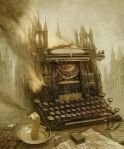



 Sean McBride
You must be logged in to post a comment.