Blind Read Through: J.R.R. Tolkien; The Silmarillion, Of Beleriand and its Realms, pt. 1

“Thus the realm of Finrod was the greatest by far, though he was the youngest of the great lords of the Noldor, Fingolfin, Fingon, and Maedhros, and Finrod Felagund. But Fingolfin was held overlord of all the Noldor, and Fingon after him, though their own realm was but the northern land of Hithlum; yet their people were the most hardy and valiant, most feared be the Orcs and most hated by Morgoth.”
Welcome back to another Blind Read! This week we delve into the realm of Beleriand and gain a greater understanding of where each faction of the Eldar takes as their home.
The book has gone beyond being very dry to transitioning to some fascinating tales. So, unfortunately, this chapter takes a step backward, but for an important reason:
“This is the fashion of the lands into which the Noldor came, in the north of the western regions of Middle-earth, in the ancient days; and here also is told of the manner in which the chieftains of the Eldar held their lands and the leaguer upon Morgoth after the Dagor Aglared, the third battle in the Wars of Beleriand.”
We finally get some reference to the locations and people described.
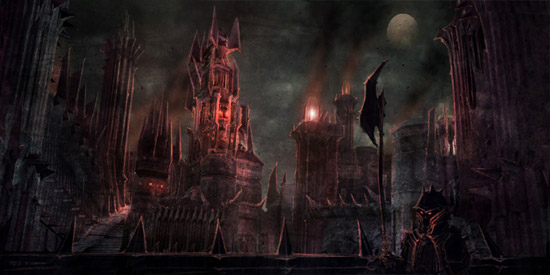
Tolkien was known to love nature and hate what industry did to the purity of the world. We can see this in The Lord of the Rings movies on full display with the destruction of Fangorn Forest through the industry of Isengard. Here, in the First Age, Morgoth does much the same. First, he makes his fortress in the wastes of the north and calls it Angband, otherwise known as “The Hells of Iron.” He then built a great tunnel leading out of Ered Elgin (Ered is the Elvish name for Mountain. Thus, Ered Elgin is called the Iron Mountains) for his minions to spread throughout Beleriand. At the end of this tunnel, he built a mighty gate, “But above this gate, and behind it even to the mountains, he piled the thunderous towers of Thangorodrim, that were made of the ash and slag of his subterranean furnaces, and the vast refuse of his tunnelings.”
This passage shows the Evil (with a capital E) in Tolkien’s eyes. The destruction of the world in the (false) name of progress.
But since this chapter glosses over events, for want of explaining locals, we switch to the other residents of Beleriand who managed to live with and in the world, just as Yavanna’s song of creation would have them.
“To the West of Thangorodrim lay Hísilómë, the Land of Mist…Hithlum it became in the tongue of the Sindar who dwelt in those regions.“

From my meager knowledge, I believe that the lands of Beleriand make up much of what we know of the landscape of Middle-earth in the Third Age, and based upon the name of the region, could this be what will become the Misty Mountains? There is no direct correlation except through the wording. However, Tolkien was always so specific with his world and language that I will go out on a limb and say it’s so.
Then we come across another little gem hidden in the text. Within Hithlum to the south is a region known as Dor-Lómin:
“But their cheif fortress was at Eithel Sirion in the east of Ered Wethrin, whence they kept watch upon Ard-galen; and their cavalry rode upon that plain even to the shadow of Thangorodrim, for from few their horses had increased swiftly…Of those horses many of the sires came from Valinor,”
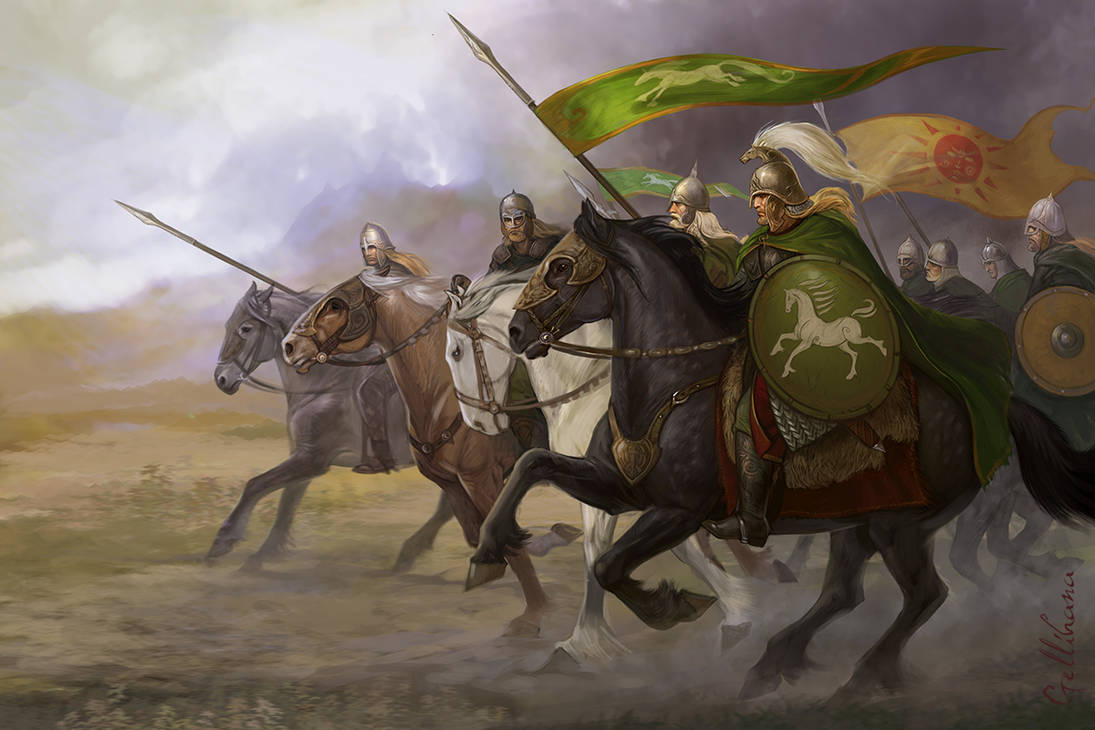
I have to wonder if these are the glorious beginnings of the wonderous horses of the Rohirrim, which we see in “The Two Towers” as the riders of Rohan, whose duty it was to guard the fields of that land. Again there is no definitive statement, but it makes quite a bit of sense.
Moving west still, we go to Nevrast, where “for many years was the realm of Turgon the wise, son of Fingolfin.” Nevrast was a marshy land settled between the sea and the mountains where most of the Grey-elves lived.
Directly east of Dor-Lómin, across Ered Wethrin and Tol (Elvish for River) Sirion, lay Dorthonion where “Angrond and Agnor, sons of Finarfin, looked out over the fields of Ard-galen.” and in the west of Dorthonion was the Tol Sirion, where Finrod ruled. It was there, “in the midst of the river he built a mighty watch-tower, Minas Tirith; but after Nargothrond was made he committed that fortress mostly to the keeping of Orodreth, his brother.“
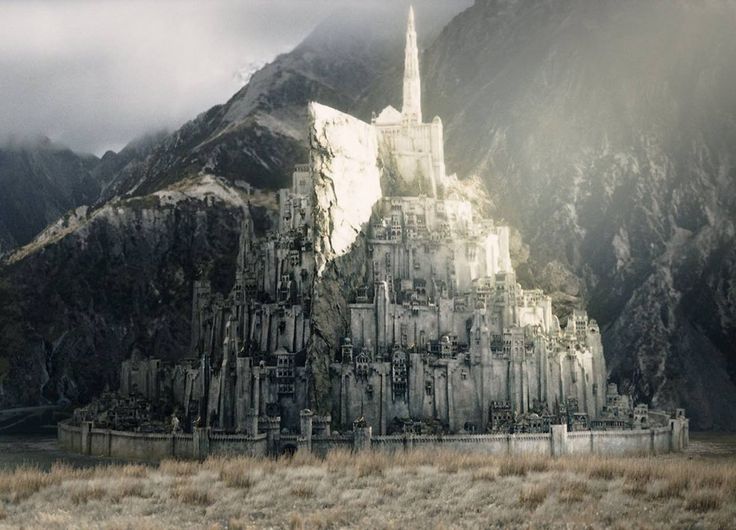
Minas Tirith! I had no idea Minas Tirith was built in the first age! No wonder it is so massive and beautiful! It was created in the “Pass of Sirion,” the largest and most prominent passage to Beleriand from Ard-galen and where Morgoth would most likely take a straight shot to attack that land. Minas Tirith, and Gondolin, which were built on the opposite side of the river, are the two most significant guardians of the land created by the Eldar.
The last region we’ll talk about this week is the March of Maedhros, which was east of Dorthonian. It was here “dwelt the sons of Fëanor with many people, and their riders often passed over the vast northern plain, Lothlann the wide and empty, east of Ard-galen, lest Morgoth should attempt any sortie against East Beleriand.”
This region was known as Himring, the Ever-cold, “and that was wide-shouldered, bare of trees, and flat upon its summit, surrounded by many lesser hills.” I thought about this area quite a bit, and I wonder if this might be Weathertop, where Frodo took the poison of the blade of the nine. The description of the geography seems appropriate, but I’m unsure of the region.
What is so fascinating is that the Gray Elves, or Sindar, had never gone to Valinor. Instead, Thingol married a Maiar named Melian, and they took up residence in Beleriand (look back at the Girdle of Melian here). Still, it was Fëanor and Fingolfin who came after during the departure of the Noldor from Valinor. These two relations took a protective stance against the rest of the realm.
All locations described in this part of the chapter are lookouts or guards surrounding Ard-Galen so that they might protect against Morgoth and his minions. The opening quote of this essay describes their purpose nicely because it’s curious that Thingol, the Elf who had been there the longest, with a Wife who is more powerful than any Eldar, would hide within their girdle. At the same time, the Noldor would be the protectors. But it is because of that hatred Fëanor had for Morgoth that this came to being.
When he died, his sons took up his mantle, and where they didn’t have the fire, he had to go after Morgoth actively; they took it as their duty to guard the land and stop The fallen Valar from further destruction.
Join me next week as we cover the remainder of Beleriand and complete this chapter!
Blind Read Through: J.R.R. Tolkien; The Silmarillion, Of the Return of the Noldor, Conclusion
“In many parts of the land the Noldor and the Sindar became welded into one people, and spoke the same tongue; though this difference remained between them, that the Noldor had the greater power of mind and body, and were mightier warriors and sages, and they built with stone, and loved the hill-slopes and open lands.”
Welcome back to another Blind Read! This week we conclude “Of the Return of the Noldor.” and have a deeper discussion about how the world progresses.
We completed the last chapter with Fëanor dying, Maedhros (Fëanor’s son) kidnapped by Morgoth, and Fingon, son of the rival clan of Fingolfin, saving him.
This second portion of the chapter is about the Eldar taking a stake in the land. In contrast, the first half of the chapter was about the fury of Fëanor and the repercussions of that drive to destroy Morgoth (which ultimately failed. Morgoth is still in power at Angband in the north, and he still has the Silmarils). Finally, after “twenty years of the Sun had passed,” this chapter takes place when Fingolfin held a great feast known as the “Feast of Reuniting.”
This gathering brought together Eldar of all kinds together in the woods of Beleriand. They began to learn each other’s languages and healing began to happen, but still, Morgoth brooded in the north.
Tolkien then takes us another thirty years further into the future, past the time of ease and Elves coming together. During this time, Finrod took precedence ahead of all other Elves. Ulmo, the Valar of the Seas, gives both Finrod and Fingolfin a vision that shows trouble caused by Morgoth streaming out from Angband. Both relatives internalize this message and design not to address it with each other, thus preparing for the coming war separately instead of on a conjoined front.

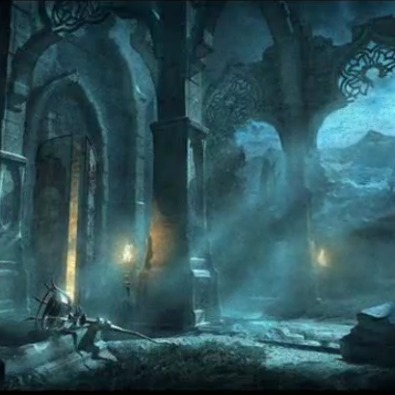
Finrod then brings his sister Galadriel to Doriath, the region which houses Menegroth, the underground mansion of Thingol. “Then Finrod was filled with wonder at the strength and majesty of Menegroth, its treasures and armouries and its many-pillared halls of stone; and it came into his heart that he would build wide halls behind ever-guarded gates in some deep and secret place in the hills.” This “secret place in the hills” soon became known as Nargothrond, which was based on Menegroth and aided in construction by the Dwarves of the Blue Mountains. This secret mansion was the beginning of Finrod’s plans to protect his people against the might of Morgoth when he decided to attack.
But what of Galadriel? She “went with him not to Nargothrand, for in Doriath dwelt Celeborn, kinsman of Thingol, and there was great love between them. Therefore she remained in the Hidden Kingdom, and abode with Melian, and of her learned great lore and wisdom concerning Middle-earth.“
Celeborn is still with her in the Third Age when the Fellowship goes to greet them. He is King to her Queen and stands beside her when they meet the nine wanderers. Here, she came to great power because she learned from Melian, a Maiar, second in power only to the Valar themselves (Gandalf himself is Maiar), which is why I believe she knows so much is so powerful by the time the Third Age comes around.
Concurrently, while Finrod is building his home, while Thingol is hiding in his girdle, while Fingolfin is making his lands in Mithrim, Morgoth stirred. “Believing the report of his spies that the lords of the Noldor were wandering abroad with little thought of war,” he decided to make his move. So his army of Orcs poured south through the fields of Ard-galen, “But Fingolfin and Maedhros were not sleeping,” and they led a host of warriors and utterly wiped out Morgoth’s brood.

“That was the third great battle of the Wars of Beleriand, and it was named Dagor Aglareb, the Glorious Battle.”
The Noldor pushed Morgoth back to Angband and laid siege to the fortress, “Yet the Noldor could not capture Angband, nor could they regain the Silmarils; and war never wholly ceased in all that time of the Siege, for Morgoth devised new evils, and ever and anon he would make trial of his enemies.”
Through hundreds of years following this, there were many skirmishes where Orcs would make their way out of Angband but got consistently pushed back. Even Morgoth’s “new evils” such as “Glaurung, the first of the Urulóki, the Fire Drakes,” could not forge a wedge into the foothold the Noldor had in Beleriand. In fact, after Glaurung’s defeat and retreat to Angband, “…there was the Long Peace of well-nigh two hundred years” where the Noldor and the Sindar built lives and homes in Beleriand.
We are beginning to see how its residents separate Beleriand. The Dwarves are in the Mountains of the East, concerned only with mining and producing their minerals. Many mention their isolationist stance. They don’t care what’s going on above ground in Beleriand and only work with the Noldor and Sindar because they trade.
The Sindar take up residence right smack dab in the middle of the land. Still, the Noldor take the western coast and the northwest with Mithrim (which I also find interesting because of the notorious mineral the Dwarves make into some of the most fantastic armor in the world – Mithril is very close in name to this Noldor held land).
Then there is Morgoth, who is held in his citadel in Angband in the north, too far north, in fact, for any map I’ve seen to show where Angband is.
So what happens next? Do we get any more information about the land and its peoples? Next week, let us find out in “Of Beleriand and it’s Realms.”
Blind Read Through: J.R.R. Tolkien; The Silmarillion, Of the Return of the Noldor pt. 1
“The hearts of the Noldor were high and full of hope, and to many among them it seemed that the words of Fëanor had been justified, bidding them seek freedom and fair kingdoms in Middle-earth; and indeed there followed after long years of peace, while their swords fenced Beleriand from the ruin of Morgoth, and his power was shut behind his gates. In those days there was joy beneath the new Sun and Moon, and all the land was glad; but still the Shadow brooded in the north.”
Welcome back to another Blind Read! This week we delve into the lore of the Noldor Elves and begin to see that despite the chapter name’s promise, Valinor is now beyond the reach of our supposed protagonists.
I began this chapter assuming that the title “Of the Return of the Noldor” would have to do with them returning to Valinor; however, as the chapter progressed, I realized that the name intended to show that the name’s meaning was the Noldor had returned to Beleriand to stay.
This chapter shows many great struggles over the land of Beleriand between the Eldar (the elves) and Morgoth, including two different “wars for Beleriand.“
We begin by rehashing previous chapters, the landing of Fëanor and his sons “on the outer shores of the Firth of Dengrist.” They “made their encampment” in Mithrim, in the northwest of Beleriand. Morgoth, seeing the flames of the ships they burned to stop Fingolfin from following them, anticipated their arrival and brought a host of foes to attack them. The skirmish is “the Second battle in the Wars of Beleriand,” and in Elvish, Dagor-nuin-Giliath, or “The Battle Under the Stars.”

We have jumped around in time in telling these histories because this battle took place before the creation of the Sun and Moon that we saw a few chapters ago. The altercation is known as “The Battle Under the Stars” because neither the Sun nor Moon had risen. Any light in Beleriand came from the stars of Valinor.
But Morgoth made an error in judgment because he didn’t truly comprehend the fury of Fëanor and his vast hatred for Morgoth:
“The Noldor, outnumbered and taken unawares, were yet swiftly victorious, for the light of Aman was not yet dimmed in their eyes.”
The starlight is the same light you see in Galadriel’s eyes in the movie, as she is the last of the Noldor who had lived to see the stars of Valinor.
Fëanor pushed Morgoth’s forces back to Ard-galen (above the mountains at the very north of Beleriand) and his stronghold at Angband. The Noldor had won, but Morgoth struck a victory because “Fëanor, in his wrath against the Enemy, would not halt, but pressed on behind the remnant of the Orcs, thinking so to come at Morgoth himself.“
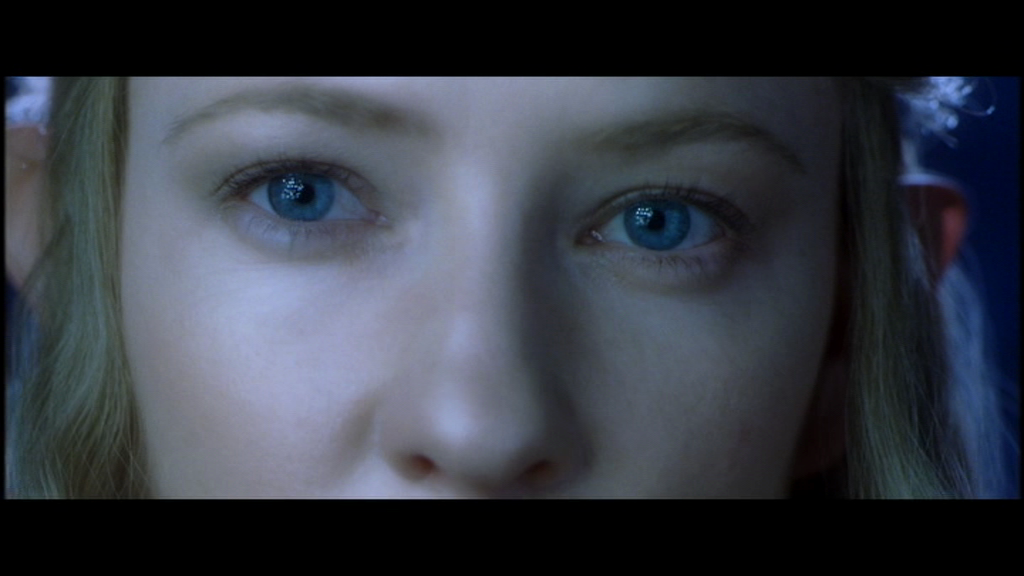
Fëanor became surrounded by Balrogs, and “at the last he was smitten to the ground by Gothmog, Lord of the Balrogs.“
Fëanor’s sons rescued him from Gothmog and the Balrogs, but the blow was fatal and knew, just before “his body fell to ash, and was borne away like smoke” that “no power of the Noldor would ever overthrow” Angband.

Maedhros, Fëanor’s eldest son, took control of the Noldor and accepted terms from Morgoth, “acknowledgeing defeat, and offering terms, even the surrender of a Silmaril.” Still, it was a trap, and Maedhros was captured, his host slaughtered.
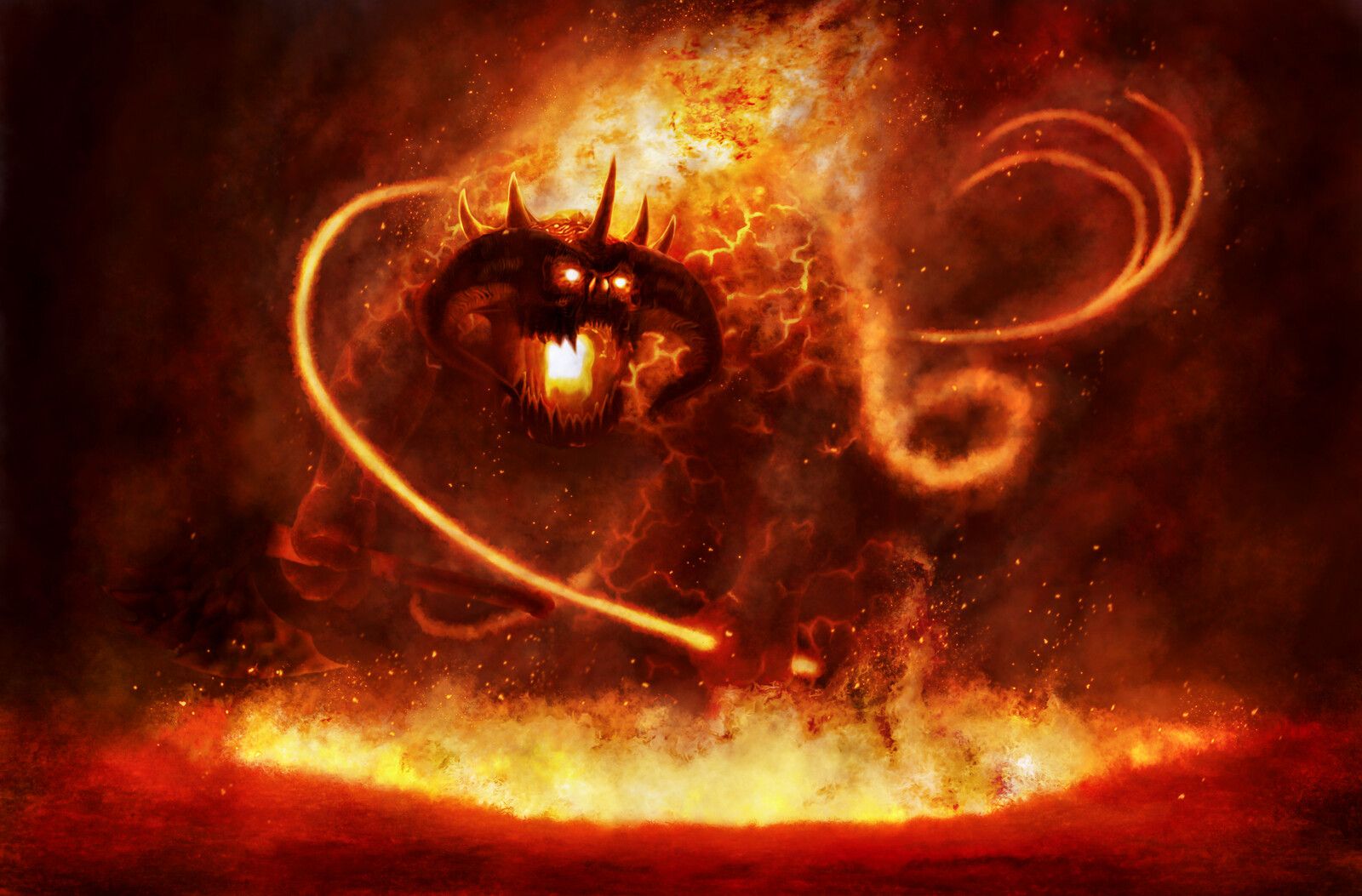
Maedhros’ brother’s retreated to regroup, and at this time, Fingolfin made his way across the icy torrential pass between Valinor and Beleriand. At this time, the Sun rose in the sky, and the dark loving host of Morgoth retreated to the darkness of Angband and its surrounding mountains.
Fingon, the son of Fingolfin, saw more similarities between the Eldar than differences and made a daring plan to save Maedhros and try to bring the Elves together. First, he went to Angband. “Then in defiance of the Orcs, who cowered still in the dark vaults beneath the earth, he took his harp and sang a song of Valinor that the Noldor made of old, before strife was born among the sons of Finwë; and his voice rang in the mournful hollows that had never heard before aught save cries of fear and woe.“
Maedhros hears this song and cries out for him to end him and his torment, but Manwë (the Valar) also hears this song of hope and sends help. “There flew down from the high airs Thorondor, King of Eagles, mightiest of all birds that have ever been, whose outstretched wings spanned thirty fathoms; and stayed Fingon’s hand he took him up, and bore him to the face of the rock where Maedhros hung.“

Strife and distrust continued for many years, but there was gradual acceptance between the different tribes of Elves in Beleriand. The Dwarves, also distrusting, agreed to assist in light of the terror of Morgoth’s influence over the land.
The one hold out was King Thingol, who was safely interred in his “girdle of enchantment.” However, Thingol gave leave for the Noldor and the Naugrim (Dwarves) to stay in the surrounding lands:
“In Hithlum the Noldor have leave to dwell, and in the highlands of Dorthonion, and in the lands east of Doriath that are empty and wild; but elsewhere there are many of my people, and I would not have them restrained of their freedom, still less ousted from thier homes.“
I get the feeling that Thingol will play a much more significant role in things to come, but thus far, he has decided to hole up and take an isolationist stance against Morgoth. We see this echoed in The Lord of the Rings, as initially, the elves want nothing to do with the war against Sauron. Will Thingol change his mind?
Next week, let’s find out as we cover the second half of the chapter “Of the Return of the Noldor.”
Blind Read Through: J.R.R. Tolkien; The Silmarillion, Of Men

“To Hildórien there came no Vala to guide Men, or to summon them to dwell in Valinor; and Men have feared the Valar, rather than loved them, and have not understood the purposes of the Powers, being at variance with them, and at strife with the world.“
Welcome back to another Blind Read! This week we learn of a new species born into Beleriand, Men, and how they came to inherit the world.
This chapter is unique because it gives us a basic overview of how Men (Tolkien uses Men as a stand-in to mean Human-kind) came into being, but Tolkien does not expound upon the History of Middle-earth. Instead, this feels more like his effort to understand the motivations (and potential weaknesses) of Men as unknowing Children of Ilùvatar.
Tolkien tells us: “At the first rising of the Sun the Younger Children of Ilùvatar awoke in the land of Hildóren in the eastward regions of Middle-earth; but the first Sun arose in the West, and the opening eyes of Men were turned towards it, and their feet as they wandered over the Earth for the most part strayed that way.”
Men were called Hildor, otherwise known as the followers, not because they were sheep, but because they were born after Elves and Dwarves. They also had many other names, “the Usurpers, the Strangers, and the Inscrutable, the Self-cursed, the Heavy-handed, the Night-fearers, the Children of the Sun.“
Men were born after the glory of Valinor, and they knew only the cold, complex beauty of Beleriand. They awoke without the knowledge of the Valar or Ilùvatar, which was the Quendi birthright. They were born without knowledge of the light of the Trees of Valinor. All they had was the Sun.
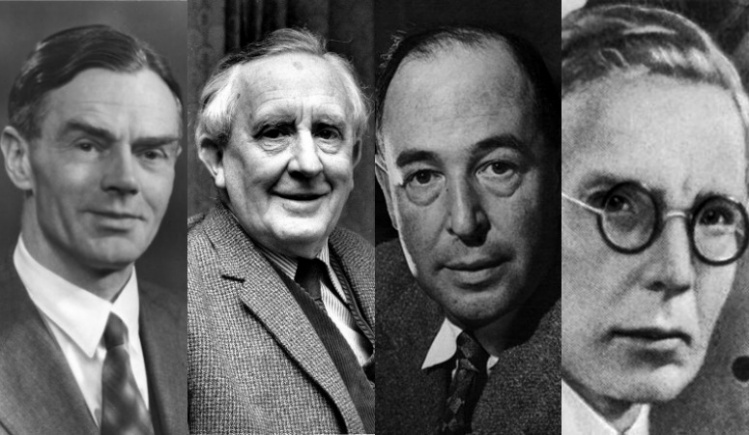
Tolkien fought in World War I, and where he contends that he doesn’t use or like allegory, much of his work is informed by the experiences of his life. In addition, he was a religious man, even co-sponsoring a writing group called the Inklings with C.S. Lewis. The concept of religion and God in The Great War led to his description of Men in The Silmarillion. A few chapters ago, I mentioned that Tolkien’s primary idea with these histories was to eventually tie it back to our Earth (which we caught glimpses of in the chapter last week (Of the Sun and the Moon and the Hiding Valinor). In this chapter, Tolkien tells us how humans were born into a world of ignorance and darkness, yet they strove for the light. As we saw in the quote earlier, Men went west following the Sun, despite their ignorance of its origin.
On top of that, Ulmo tried to get them messages without actually coming back to Middle-earth to inform Men: “and his messages came often to them by stream and flood. But they have not skill in such matters, and still less had they in those days before they had mingled with the Elves. Therefore they loved the waters, and their hearts were stirred, but they understood not the messages.“

I have never met a person who could stand before the Ocean and turn away. The waters bring life to us, and they stir our souls to peace. This connection to the water is what Tolkien was looking for to glue our world with Aman.
Beyond that, Tolkien tells us, “Men were more frail (than the Eldar), more easily slain by weapons or mischance, and less easily healed; subject to sickness and many ills; and they grew old and died.“
We also catch a glimpse of a story yet told; “None have ever come back from the mansions of the dead, save only Beren son of Barahir, whose hand had touched a Silmaril; but he never spoke afterward to mortal Men. The fate of Men after death, maybe is not in the hands of the Valar.”
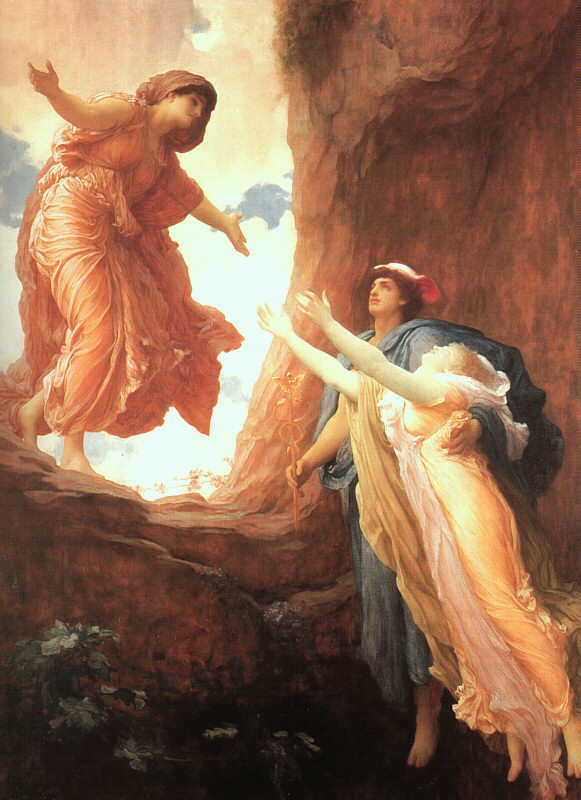
This paragraph shows Tolkien’s framing of an afterlife, with a Persephone-like callback. Beren dies and then comes back because he has more profound knowledge of the world because of his connection with the Silmaril, which garners its power from The light of the Trees of Valinor. Beren is brought back from the dead through the power of Heaven.
We end the chapter by Tolkien telling us, “those of the Elven-race that lived still in Middle-earth waned and faded, and Men usurped the sunlight.“
Men, the ignorant, had now taken over the world. The magic of the world (the Music of Ainur) began to fade, and a feeling of hard-and-fast reality began to occur.
This chapter is fascinating and tragically beautiful. It is very short (which is why I wanted to discuss various theories rattling around in my brain), but there is perhaps more weight in this chapter than in any previous one.
And where do we go from here? Join us next week as we progress in the story in the next chapter: “Of the Return of the Noldor.”
Blind Read Through: J.R.R. Tolkien; The Silmarillion, Of the Sun and Moon and the Hiding of Valinor

“Isil the Sheen the Vanyar of Old named the Moon, flower of Telperion in Valinor; and Anar the Fire-golden, fruit of Laurelin, they named the Sun. But the Noldor named them also Rána, the Wayward, and Vása, the Heart of Fire, that awakens and consumes; for the Sun was set as a sign for the awakening of Men and the waning of the Elves, but the Moon cherishes their memory.”
Welcome back to another Blind Read! Instead of continuing on the tale of the Wars of Beleriand, Tolkien takes a step back this week and gives us some worldbuilding. We are prepping for the coming of Man, and this chapter paves the way for that to happen.
The chapter opens by returning us to Valinor and the council of Valar as they try to discern a course of action in the wake of the death of Telperion and Laurelin (the Trees of Valinor).

Yavanna goes to the trees, mourning their passing until she realizes that “Telperion bore at last upon a leafless bough one great flower of silver, and Laurelin a single fruit of gold.“
Manwë then hallowed them, and Aulë made a vessel to hold and protect them and their light. These vessels were to “become lamps of heaven,” so the Valar “gave them power to traverse the lower regions of Ilmen.” Ilmen is their word for the sky or the heavens (specifically, Tolkien called it “The region above the air where the stars are” in the name index).
The Valar did so to bring light back to Middle-earth, but also because “Manwë knew also that the hour of the coming of Men was neigh.” Since the Valar went to war with Melkor over the Quendi, they decided that they must then do something for the subsequent children of Ilùvatar. Men were to be mortal, whereas the Elves were not, so as a gift to them, these “lamps of heaven” were to become the Sun and the Moon, which we see in the opening quote of this essay.
We get two understandings from creating these two celestial bodies—the knowledge of mortality and the future sign of the Elves.
We know that Men are mortal, though, in Middle-earth, they had very long lives. But why would men be mortal when all other creatures are immortal (in Aman, beings can be killed at any time, Men are the only ones who have a definitive end to their life span)?
It’s the coming of time.

Before creating the Sun and the Moon, there was no absolute distinction of the passing of time. These started a day and an evening before Men even existed, thus establishing time benchmarks.
Men came into being knowing that there were absolutes, and where Tolkien doesn’t come out and say so (at least not yet), there is little coincidence here because Tolkien chose his wording very carefully.
It is also the first time we see “Earth” in the text instead of using Aman or Eà. I had heard somewhere that Tolkien’s main goal was to tie the history of Middle-earth into our own, so it would make sense that this is an origin story of mythological levels.
The second understanding we get here is the sign of the Elves. The Leaf of Telperion becomes the sign for the Moon or of Twilight. The Elves in Middle-earth prefer to live in Twilight, and we even see this in “The Lord of the Rings” with Arwen, also called Arwen Evenstar. Remember that Tolkien was a linguist, so knowing how we think about language, the phrase “Evening Star” could become the contraction of Evenstar.
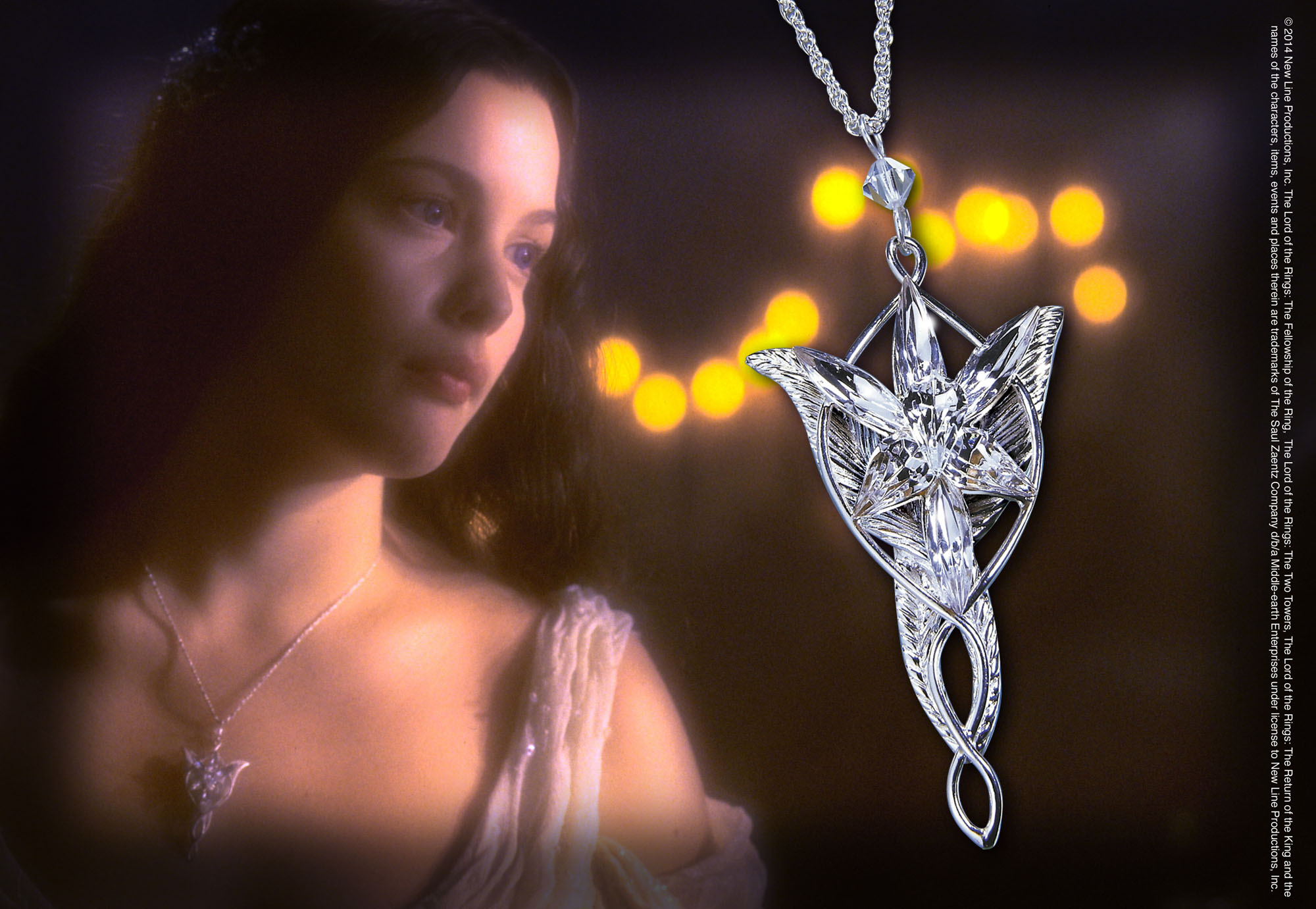
The Evenstar is quintessentially recognizable because it’s the trinket that holds her essence, which she gives to Aragorn.
Peter Jackson took some liberties with the movie because here in the text of The Silmarillion; it’s told that the Evenstar, the sign of the Elves, is a “Flower of Silver.“
There is a certain melancholy associated with the Elves because “Evening, the time of the descent and resting of the Sun, was the hour of greatest light and joy in Aman.”
The Elves didn’t like the light; they preferred the Twilight, which could be why they called the land in Valinor “The Grey Havens.” It was not to indicate depression, but of a final blessing, the last light to be with the Valar in Valinor where they are meant to be. The Grey Havens are almost a moniker for Heaven. The phrasing is so close that it’s hard to refute.

But it was also during this time that Heaven became challenging to attain. The Valar became concerned for Valinor because of Morgoth’s wrath. He settled into his rage, and the Valar finally came to realize that Morgoth was intractable; thus, they created a barrier around Aman:
“But in the Calacirya they set strong towers and many sentinels, and at its issue upon the plains of Valmar a host was encamped, so that neither bird nor beast nor elf nor man, nor any creature beside that dwelt in Middle-earth, could pass that leaguer.“
Thus the creed of Mandos we saw two chapters ago became true:
“Thus it was that as Mandos foretold to them in Araman the Blessed Realm was shut against the Noldor; and many messengers that in after days sailed into the West none came ever to Valinor – save one only: the mightiest mariner of song.“
So how does Fëanor take this? Does he get along with the new children of Ilùvatar, Men?
Find out next week in “Of Men.”
Blind Read Through: J.R.R. Tolkien; The Silmarillion, Of the Sindar

“And when the building of Menegroth was achieved, and there was peace in the realm of Thingol and Melian, the Naugrim yet came ever and anon over the mountains and went in traffic about the lands; but they went seldom to the Falas, for they hated the sound of the sea and feared to look upon it. To Beleriand there came no other rumour or tidings of the world without.”
Welcome back to another Blind Read! This week we take a step back from the Noldor and look at their Kin, the Sindar, who remained in Beleriand and forsook the light of Valinor. We also get a look at a brand new race, only glanced over in previous chapters.
This chapter looks to fill in the blanks from what transpired on Beleriand during the ages of Melkor on Valinor. In the first few sentences, Tolkien informs us of another famous legend of Middle-earth; a child of Eldar and Maiar. Next, we find that “at the end of the first age of Melkor… there came into the world Lùthien, the only child of Thingol and Melian.”
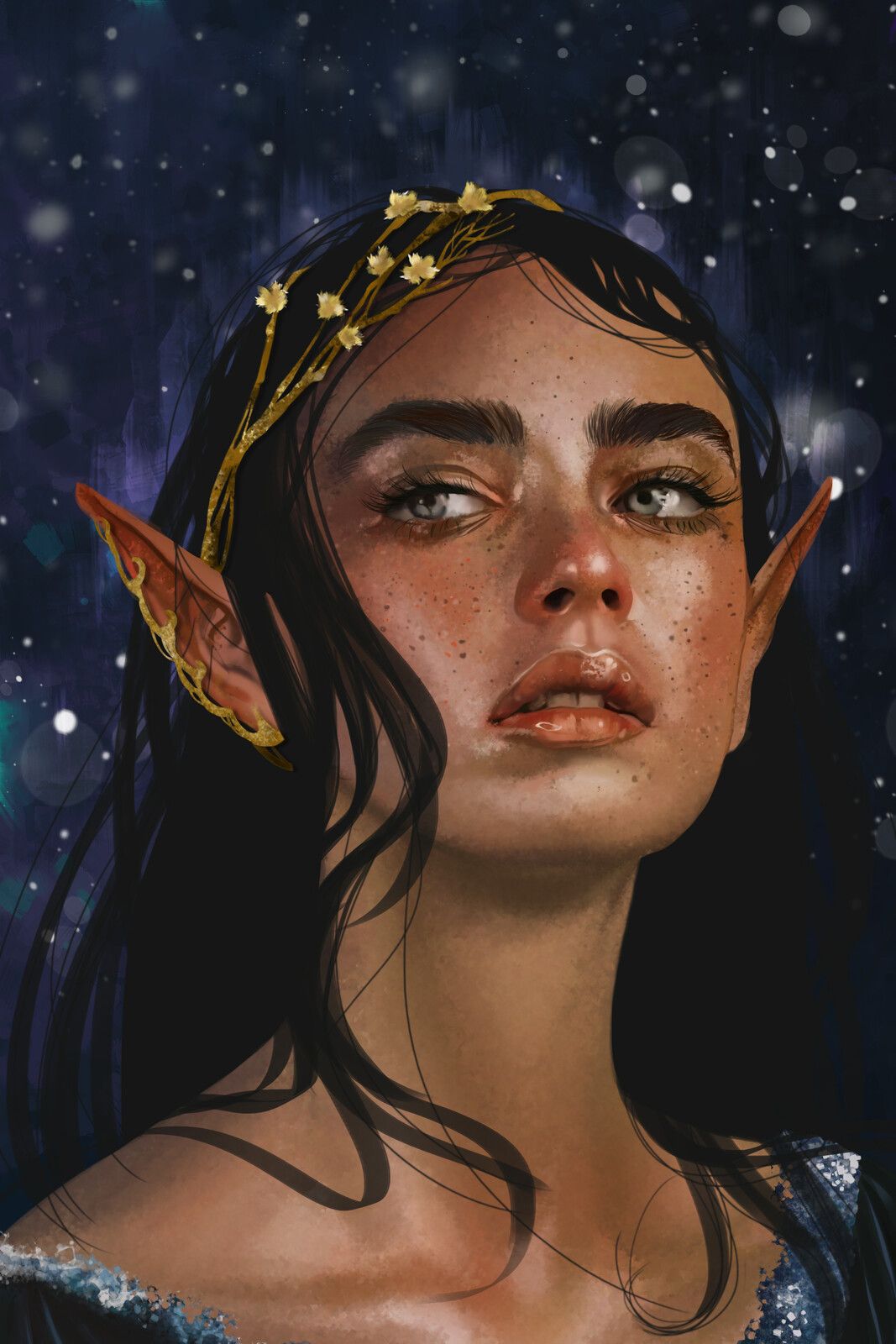
I don’t know much about Lùthien, but I know that she loved Beren and had such a well-known story; it’s even told during “The Lord of the Rings.” The good news is we won’t have to wait long because their tale is Chapter 19 in The Silmarillion.
This chapter goes back to the more complex language, as it’s more exposition than storytelling; however, I find it fascinating how many little details Tolkien inserts throughout the text. They are barely mentioned, but they give flavor to the world and take higher importance in “The Lord of the Rings.” For example:
“and there in the forest of Neldoreth Lùthien was born, and the white flowers of niphredil came forth to greet her as stars from the earth.”
The niphredil is a white flower that bloomed only in the moonlight with Lùthien’s birth, but they were also in Lothlorien during “The Fellowship of the Ring.”

These are the connections I was hoping to find in this project. They may be small and seemingly insignificant, but they bring together the world in such a way that makes it a cohesive history rather than just a series of tales. I’ll continue to point these little nuggets out as best as I can from my current understanding of the history of Middle-earth and its environs.
Back to the story:
“It came to pass during the second age of the captivity of Melkor that Dwarves came over the Blue Mountains of Ered Luin into Beleriand. Themselves they named Khazâd, but the Sindar called them Naugrim, the Stunted People, and Gonnhirrim, Masters of Stone.”
The Dwarves earned that name because they delved into the mountains, more specifically Ered Luin on the eastern side of Beleriand. There they built (or instead dug) their massive cities, Gabilgathol and Tumnunzahar, but the “Greatest of all the mansions of the Dwarves was Khazad-dûm, the Darrowdelf, Hadhodrond in the Elvish tongue, that was afterwards in the days of its darkness called Moria.”
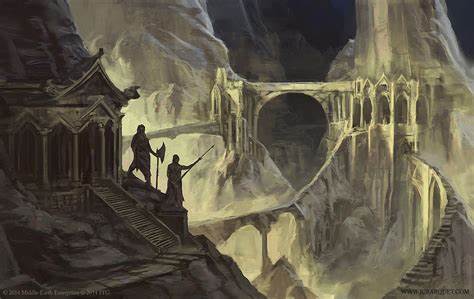
If you are reading this essay, you know what Moria is and will be, as it’s central to The Fellowship of the Ring, but what’s noticeably absent is the animosity the Dwarves and Elves feel for each other. There is even a passage where Tolkien tells us: “but at that time those griefs that lay between them had not yet come to pass…”
The Dwarves were eager to learn the Elvish tongue, and even though the Naugrim (Dwarven) tongue was “cumbrous and unlovely.” the Elves learned it back as well.
They trafficked goods with each other and praised one another. Then, after years of this communion, Melian “councelled Thingol that the Peace of Arda would not last for ever.”
So Thingol sought council with the Dwarves, and they agreed to dig him out of a dwelling for protection against a possible incursion from Morgoth and his minions. They called this underground mansion Menegroth or the Thousand Caves.
They did it at the right time because “…ere long the evil creatures came even to Beleriand, over passes in the mountains, or up from the south through the dark forests.”
Of course, there are Orcs, but we also see new creatures, Wolves and Werewolves. Seeing these new and horrid creatures, the Dwarves made for the Elves armor, which”surpassed the craftsmen of Nogrod, of whom Telchar the smith was greatest in renown.”
The Sindar drove off the creatures of darkness with the help of the “war-like” Dwarves. For a time, there was peace. Then, Denethor gathered the Elves who did not make the journey into Beleriand (no, not that Denethor. This is an Elf, Son of Lenwë, and a chieftain of nomadic/hunter-gather elves.) and brought to Menegroth.
During this gathering and goodwill, Morgoth and Ungoliant were busy fleeting Valinor and soon headed east to clash with King Thingol and the Thousand Caves. Orcs descended upon Menegroth in ferocity, and there was “fought the first battle in the Wars of Beleriand.“
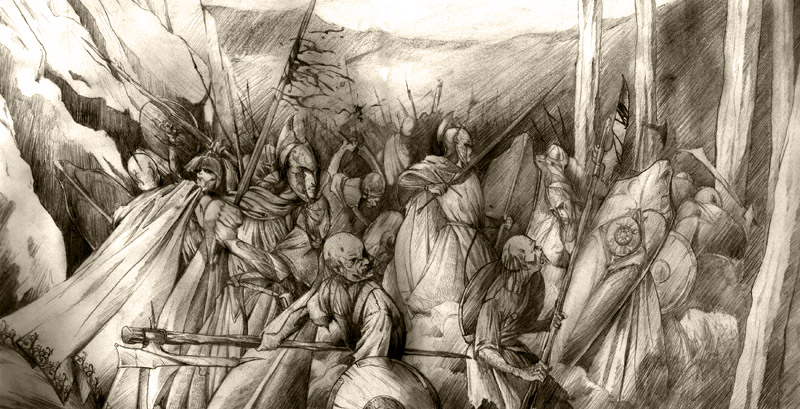
The Elves were victorious, but so brutal and quickly spawning the Orcs were, that Melian had to use some of her Maiar powers and formed “the Girdle of Melian, that none thereafter could pass against her will or the will of King Thingol.” They were thus protected, but unfortunately, outside of the field, the creatures of Morgoth roamed free.
But across the seas, things were stirring. It was just after the Girdle of Melian was created that Fëanor and his host made their way to Beleriand.
Now we have three forces coming together, and thinking back on the “Questionable decisions” Fëanor made that forced his wife from him, I have to wonder if this firey elf caused the Wars of Beleriand. Could he be the reason the Dwarves and Elves dislike each other? Could he be the cause of the Wars of Beleriand altogether?
Next week, let’s find out in “Of the Sun and Moon and the Hiding of Valinor.”
Post Script:
I had some difficulty with this chapter because my time frame kept getting confused. That’s because Tolkien uses “ages” as a time sobriquet. This chapter had the “first age of Melkor’s chaining.” which is different from the “first age of the Valar” and even more different from “the first age of man” or the “First age of Èa.”
It takes a minute to dig down into what’s happening, but this is Tolkien’s definition of time. The way he wrote these histories they were short stories he framed (or rather his son, Christopher, did) into a larger spectrum. So for his brain to formulate the times, they were ages, and the events could happen within those ages. We haven’t gotten to the language or time of Tolkien, but both of those will need individual essays.
Blind Read Through: J.R.R. Tolkien, The Silmarillion; Of the Flight of the Noldor
“Fëanor was a master of words, and his tongue had great power over hearts when he would use it; and that night he made a speech before the Noldor which they ever remembered. Fierce and fell were his words, and filled with anger and price; and hearing them the Noldor were stirred to madness. His wrath and his hate were given most to Morgoth, and yet well nigh all that he said came from the very lies of Morgoth himself; but he was distraught with grief for the slaying of his father, and with anguish for the rape of the Silmarils.”
Welcome back to another Blind Read! This week we delve into the mindset of the Noldor as they divest themselves from the rest of the Eldar. We’ll also catch a glimpse of a very well-known Noldor, and we’ll get a greater understanding of Fëanor’s motivations.
We begin this chapter right where the last one left off. Melkor and Ungoliant killed the Trees of Valinor and fled Aman. Yavanna, the Valar who created the Trees, mourns them but comes to realize, “The Light of the Trees has passed away and lives now only in the Silmarils of Fëanor. Foresighted was he!”
Yavanna asks him to give up his Silmarils because “had I but a little of that light I could recall life to the Trees.”
He was excited at this prospect, but many Valar pressured Fëanor to relinquish his prized creations. Still, Fëanor ponders this option until the deception of Melkor, which we learned of in chapter 7, comes back into Fëanor’s mind; it was all a trick. Wasn’t Melkor, now Morgoth, Valar as well? Was this just an elaborate scheme to get Fëanor to give up his creation?
But it was not a trick, and in the darkness, Morgoth returned and “slew Finwë King of the Noldor before his doors, and spilled the first blood in the Blessed Realm.” This single act solidified Morgoth’s transition to evil as he broke into the stronghold of Formenos and stole the Silmarils.
He then fled with Ungoliant across the frozen strait of Helcaraxë, which separated Aman (Valinor) from Middle-earth. Ungoliant demanded that Morgoth feed her the gems he stole, but he held back the Silmarils, and as punishment to him, “she enmeshed him in a web of clinging thongs to strangle him.” He was stuck there in a land which would be called Lammoth, “for the echoes of his voice dwelt there ever after, so that any who cried aloud in that land awoke them, and all the waste between the hills and the sea was filled with a clamour as voices in anguish.”

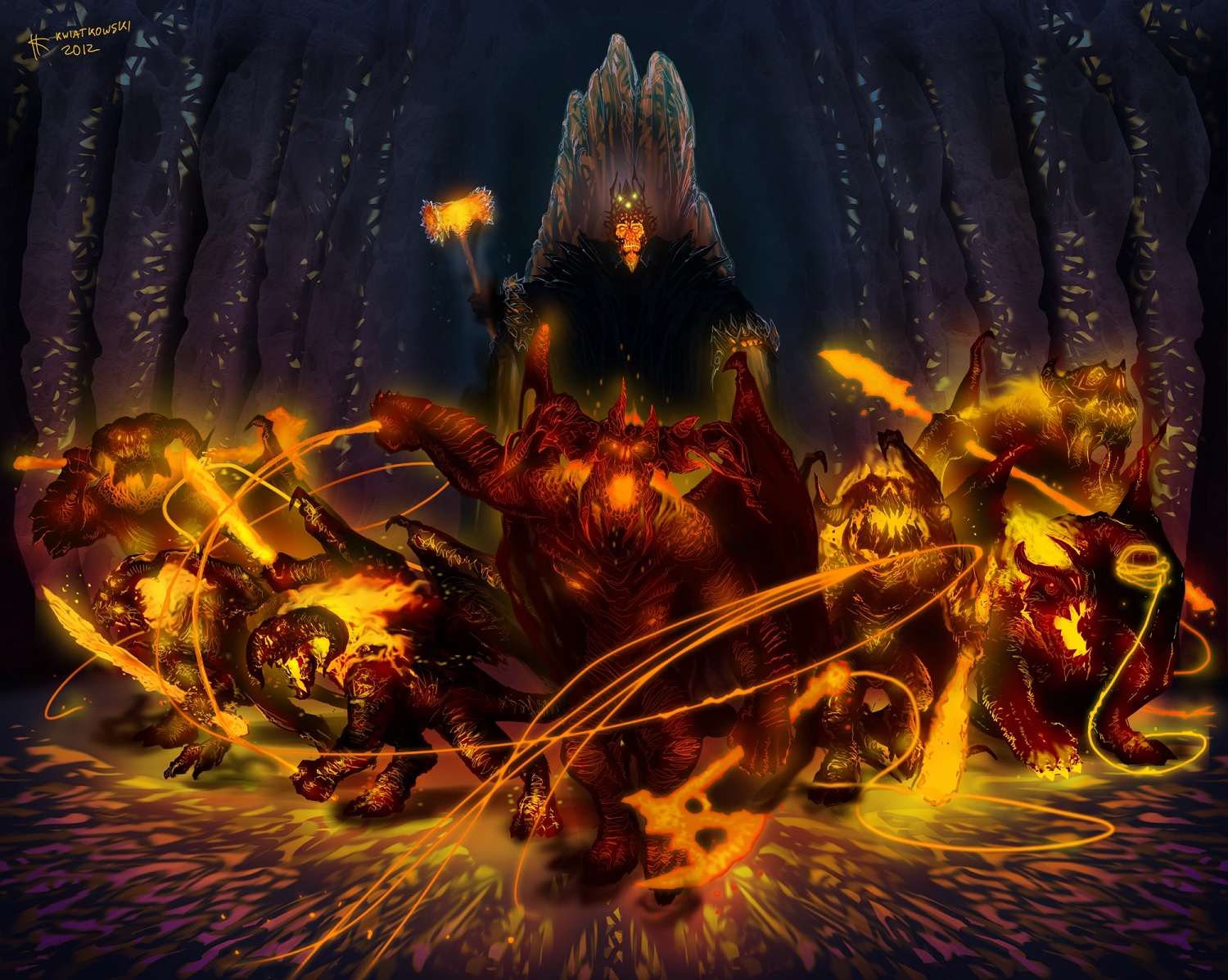
These cries woke the Balrogs who rested beneath Angband (Morgoth’s domain) and came with their flame whips to “smote the webs of Ungoliant asunder” and frightening her enough to flee.
She took shelter in Nan Dungortheb in the north of Middle-earth (then Beleriand) and mated with the giant spider creatures which lived there. After that, it is unknown what happened to Ungoliant, though “some have said that she ended long ago, when in her uttermost famine she devoured herself at last.“
On the other hand, Morgoth fled to Angband and grew his army of Orcs (made from corrupting Elves) and demons and beasts and made himself a crown of iron which he inlaid the Silmarils.

“His hands were burned black by the touch of those hallowed jewels, and black they remained ever after; nor was he ever free from the pain of the burning, and the anger of the pain.“
This pain fueled his hatred and made him an even more significant threat to the tenants of Ea.
Here we catch a page break and switch gears. Here, the quote that begins this essay appears, and we spend the rest of the chapter discovering why the Noldor left Valinor and the strife that arose amongst them.
What is interesting about this chapter is that Fëanor, who hates Morgoth more than anything else in the world, falls right into his trappings. All the lies Morgoth whispered to the Noldor somehow seep into his mind, and he stands before his kin and starts a revolution. He does from anger because of the loss of his father and the loss of his creations, the Silmarils. Remember in the chapter that describes the design of the Silmarils. These gems have much the same hold over people as the One Ring does in the Third Age. We have not yet seen the power that they can produce, but could it be that the loss of these gems has clouded Fëanor’s mind? Could this be their power represented without Tolkien coming right out and telling us?
In any case, Fëanor rallies his kin to take “…an oath which none shall break, and none shall take, by the name even of Ilùvatar, calling the Everlasting Dark upon them if they kept it not; and Manwë they named witness, and Varda, and the hallowed mountain of Taniquetil, vowing to pursue with vengeance and hatred to the ends of the World Vala, Demon Elf or Man as yet unborn, or any creature, great or small, good or evil, that time should bring forth unto the end of days, whoso should hold or take or keep a Silmaril from their possession.”
But there was friction amongst their ranks. The sons of Fëanor were staunchly in his corner. Still, Fëanor’s brothers, Finarfin and Fingolfin, disagreed with his harsh sentiments, but they stayed true to their course since they had already joined him in their departure. So they left Valinor, but they and their host left the company of Fëanor and his followers.
This chapter is much more accessible than previous chapters because the dialogue reveals Noldor’s desires. First, they bicker and argue about the best way to do things, and eventually, they split; though the endgame of their intentions is to destroy Morgoth, they go about it differently.
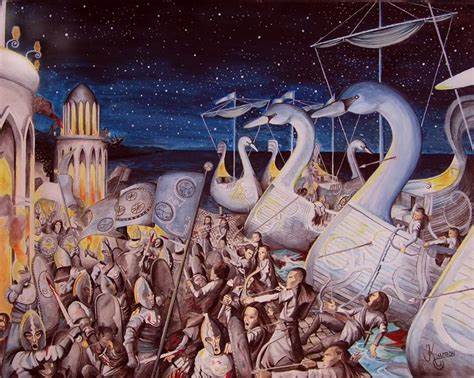
Fëanor uses some of his firey drive and uses the questionable decisions his wife left him for and stole the only ships which can make their way to Beleriand. In the process, they murder some of the Teleri who created the ships, only to flee the land.
His kin is left with no other option but to take the same path as Morgoth and Ungoliant and travel across the frozen pass, Helcaraxë. Unfortunately, many of them die from the passage through the icy straits, which deepened their disdain for Fëanor.
The Noldor became outcasts because of this sundering. They left the land they struggled so hard to get to because of misunderstanding, fear, and desire, and we are left wondering what is to come of the Noldor afterward because of a passage delivered by Mandos, a herald of Manwë:
“Tears unnumbered ye shall shed; and the Valar will fence Valinor against you, and shut you out, so that not even the echo of your lamentation shall pass over the mountains. On the house of Fëanor the wrath of the Valar lieth from the West unto the uttermost East, and upon all that will follow them it shall be laid also. Their Oath shall drive them, and yet betray them, and ever snatch away the very treasures that they have sworn to pursue. To evil end shall all things turn that they begin well; and by treason of kin unto kin, and the fear of treason, shall this come to pass. The Dispossessed shall they be forever.”
Some tales delve deeper into every transgression the Noldor did during this time. They are collected in a “lament which is named Noldolantë, the Fall of the Noldor.” Still, I’m beginning to wonder if these little offshoots are actually written down in other books like “The Book of Lost Tales” or if this is just a little flavor of history that Tolkien wanted to tell but never got around to completing. In any case, I’m very excited to see where the story goes next because we’ve transcended the Biblical style voice the beginning of this book held and have transitioned into a more storyteller fashion.
Will we finally get to see the fate of Fëanor and the Noldor next week? Join me as we review “Of the Sindar.”
PostScript.
I promised that we’d see a familiar face, and I was shocked at the character-building Tolkien was able to instill in a single paragraph:

“Galadriel, the only woman of the Noldor to stand that day tall and valiant among the contending princes, was eager to be gone. No oaths she swore, but the words of Fëanor concerning Middle-earth had kindled in her heart, for she yearned to see the wide unguarded lands and to rule there a realm at her own will.“
Galadriel held a wonder of the wider world to see, experience, and travel. Her curiosity about what life truly means drives her to leave Valinor to go to Beleriand.
It’s more than that, however. Galadriel wanted to be a queen in her own right. She had grown up and seen how the Noldor clung to history and tradition, even to their detriment. This was Galadriel’s time to make a mark. Unfortunately, I’ve not seen her past outside of the books and movies, and it’s been so long since I’ve read the books that I’m sure I’m missing something there, but even so, I hope she is a feature in the remaining story.
Blind Read Through: J.R.R. Tolkien, The Silmarillion; Of The Silmarils and the Unrest of the Noldor
“Thus with lies and evil whisperings and false council Melkor kindled the hearts of the Noldor to strife; and of their quarrels came at length the end of the high days of Valinor and the evening of its ancient glory. For Fëanor now began openly to speak words of rebellion against the Valar, crying aloud that he would depart from Valinor back to the world without, and would deliver the Noldor from thraldom, if they would follow him.”
Welcome back to another Blind Read! This week we inch forward through the history of the elves and get a deeper glimpse into the transgressions of Fëanor.
Last week we learned a bit about the Fëanor’s lineage and how much he progressed beyond his fellow elves. We dig down deeper into Fëanor this week and understand why his wife, Nerdanel, finally ended their relationship.
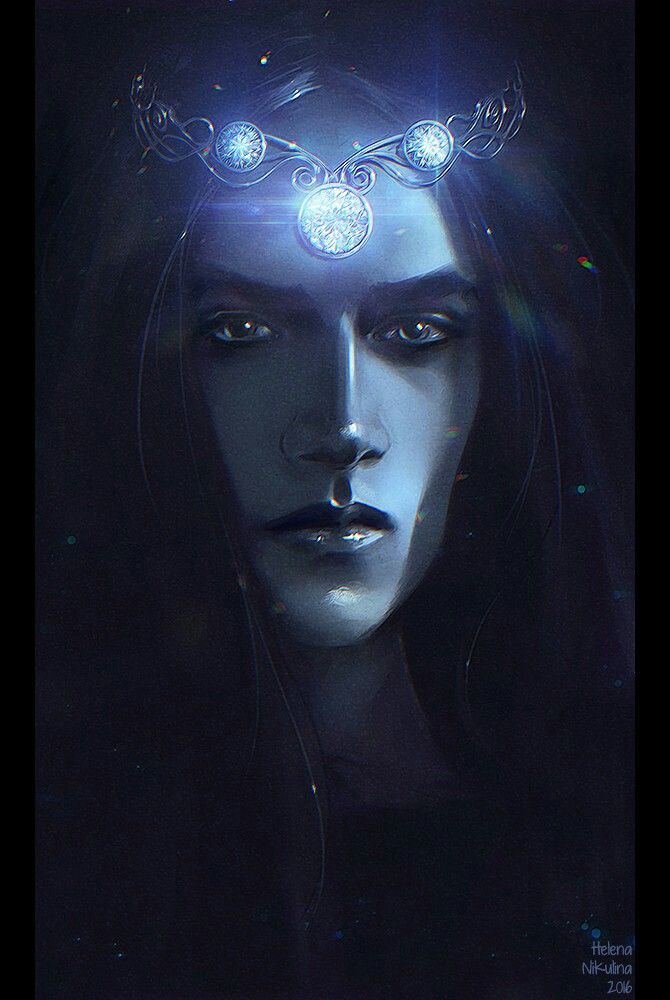
It’s important to know that Fëanor, the “heart of fire,” emerged as one of the most brilliant of the Noldor, not only in intelligence but in construction, learning much and creating even more. It’s at the beginning of this chapter that we discover a new and exciting revelation:
“In that time were made those things that afterwards were most renowned of all the works of the Elves. For Fëanor, being come to his full might, was filled with a new thought, or it may be that some shadow of foreknowledge came to him of the doom that drew near; and he pondered how the light of the Trees, the glory of the Blessed Realm, might be preserved imperishable. Then he began a long and secret labor, and he summoned all his lore, and his power, and his subtle skill; and at the end of all, he made the Silmarils.”

Ah, here it is! I’ve been waiting to see what the Silmarils are and what they have to do. But unfortunately, we don’t get much information, even in this chapter of their creation. Still, it’s good to know that Fëanor created them, using all the guile he developed from the Valar, and harnessing the light of the two trees of Valinor:
“And the inner fire of the Silmarils Fëanor made of the blended light of the Trees of Valinor, which lives in them yet, though the Trees have long withered and shine no more.”
The Valar were so taken with the “wonder and delight at the work of Fëanor” that “Varda hallowed the Silmarils, so that thereafter no mortal flesh, nor hands of unclean, nor anything of evil will might touch them” and also that “the fates of Arda, earth, sea, and air, lay locked within them.“

So we know immediately that something of that magnitude must have others who crave its power. “Then Melkor lusted for the Silmarils, and that very memory of their radiance was a gnawing fire in his heart.”
Melkor had been released on “good behavior” from his imprisonment but still held that anger in his heart (which we saw last week), but he doesn’t come right out and wage war to get the stones. Instead, he uses a much more subsumed tactic and begins spreading rumors amongst the Noldor:
“Visions he would conjure in their hearts of the mighty realms that they could have ruled at their own will, in power and freedom in the East.“
These visions were the first wedge in the rift between the Eldar and the Valar. Rumors abounded that the Valar were jealous of the Eldar ruling themselves, and that’s why they were brought to Valinor so that they might be subjects instead of free people.
In addition to that, the Eldar (elves) didn’t know about the coming of Men, so Melkor used this lack of knowledge and put thoughts within the Eldar’s heads that the Valar would call Men to the world to supplant them.
This Melkor did to the Elves in general because of his hatred for them, but Fëanor was the focus of his ardor because of the Silmarils, which Fëanor would flaunt and wear; he kept them to himself. In fact, “Fëanor began to love the Silmarils with a greedy love and grudged the sight of them to all save to his father and his seven sons; he seldom remembered now that the light within them was not his own.“
This passage reminds me of something else we’ll see later in the Second and Third Ages. The One Ring. Something with such power and wonder makes people subject to its will.
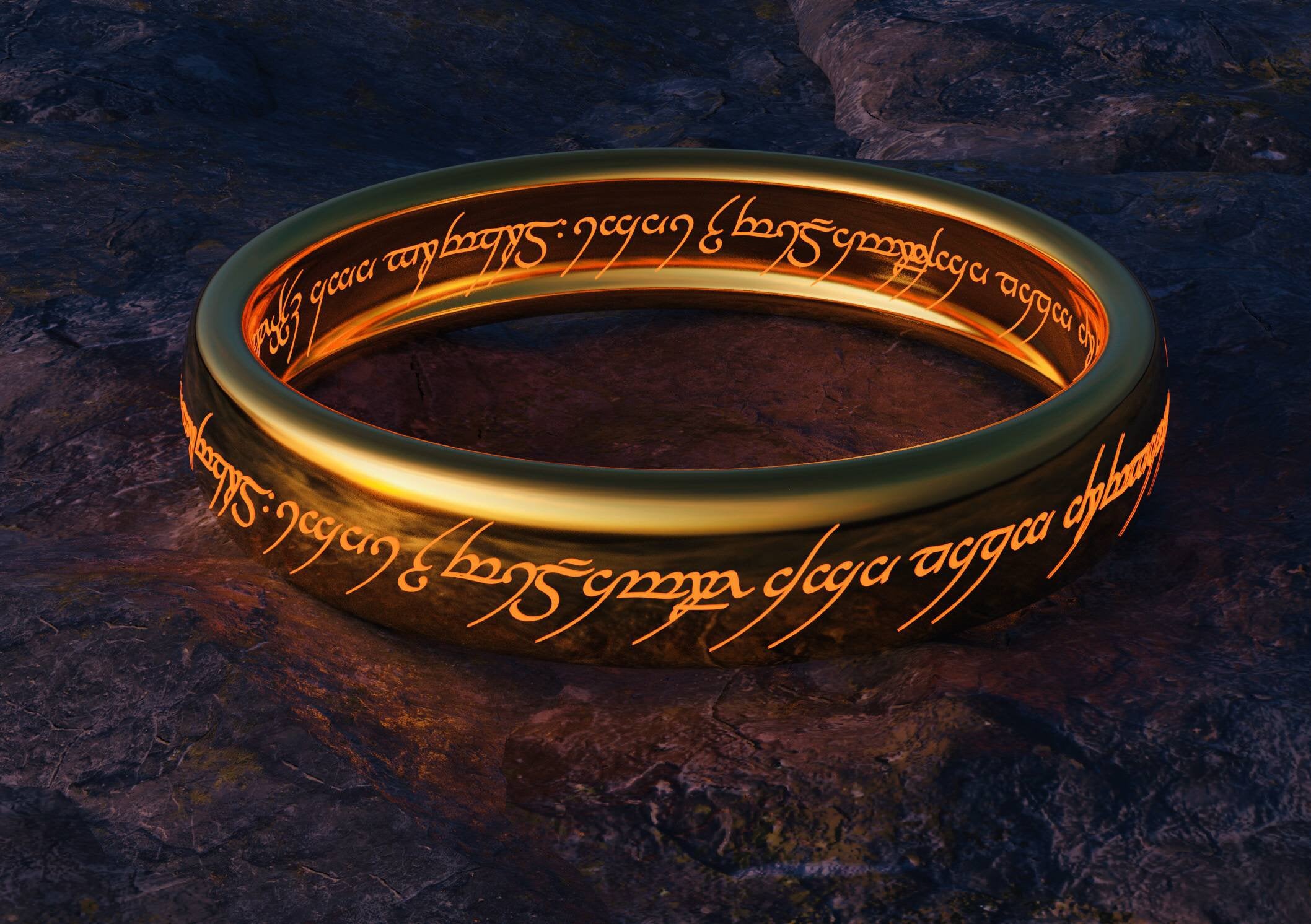
The influence of the Simarils and the whisperings of Melkor caused the quote at the beginning of this essay. Fëanor created incredible weapons and armor at his secret forge and spoke out against his half-brother Filgolfin and drove him from the house.
Strife billowed out from the house of Finwë (Fëanor’s father), and finally, the Valar understood the unrest brewing within the Noldor. The problem was “since Fëanor first spoke openly against them, they judged that he was the mover of discontent.“
They held a council and found that Melkor was indeed who began the conflict. However, Fëanor still had to answer for the strife he caused, so he was moved to the north of Valinor into the mountains where he had a vault any Dwarf would be proud of, complete with an iron vault that held the Silmarils. This incident was the beginning of the rift between the sons of Fingolfin (Elrond’s ancestor) and Fëanor, which lasted for generations.

Melkor, trying to extend his deception and get a hold of the Silmarils, went to Fëanor and tried to continue his illusion. Still, if you remember from the last chapter, Fëanor held only hatred for shifty Valar, and he banished Melkor (whom Fëanor named Morgoth) from his home. Not having much choice, Melkor fled Valinor back to Araman, giving false hope to all those who dwelt in Valinor, for the shadow moved beyond their vision and grew. To what end?
Next week, let’s find out while we review the chapter “Of the Darkening of Valinor.”
Blind Read Through: J.R.R. Tolkien, The Silmarillion; Of Fëanor and the Unchaining of Melkor

“Then he looked upon their glory and their bliss, and envy was in his heart; he looked upon the Children of Ilùvatar that sat at the feet of the Mighty, and hatred filled him; he looked upon the wealth of bright gems, and he lusted for them; but he hid his thoughts, and postponed his vengeance.“
Welcome back to another Blind Read! This week we focus on an individual and witness the beginning of the rift, which brought the first age to a close.
The chapter begins right where the previous one left off. The Elves were all brought together in Valinor, seemingly happy and together for the first time since the sundering. “This was the Noontide of the Blessed Realm, the fullness of its glory and its bliss, long in tale of years, but in memory too brief.”
This quote seems very appropriate for Elvenkind because they live forever (unless killed), but time does the same thing to everyone. Life passes by quickly, unbeknownst until the time is already gone. I wonder if there is a bit of autobiography here with Tolkien and if his feelings about life and time commingle with the complexity of Middle-earth and Elves.
We soon dive into the reasoning behind this feeling of how long and beautiful and how fleeting life can be.

“In that time was born in Eldamar, in the house of the King in Tirion upon the crown of Tùna, the eldest of the sons of Finwë, and the most beloved. Curufinwë was his name, but by his mother he was called Fëanor, Spirit of Fire; and thus he is remembered in all the tales of the Noldor.”
Thus began days of bliss, but “bearing of her son Míriel was consumed in spirit and body,” and she soon realized that, “Never again shall I bear child; for strength that would have nourished the life of many has gone forth into Fëanor.” She left for the gardens of Lórien to rest but instead passed from the world of Aman.
There is considerable foreshadowing in this sequence. The first is Finwë’s name, Fëanor, because it means Spirit of Fire. The other being that we know of so far in the whole book who has a connection with fire is Melkor; and even created servants for himself through the Maiar made from the deepest of flames – the Balrog.

We also have a trope that Tolkien is introducing. Fëanor has lost his mother and has to deal with the knowledge that his birth pulled the life force from his mother. His internal guilt fuels that Spirit of Fire within him, but beyond that, Finwë then finds another wife not of the Noldor but the Vanyar. Fëanor then has two siblings from a different sect of elves and has a new stepmother.
Finwë did try hard; in fact, we are told, “All his love he gave thereafter to his son.” Fëanor soon “became of all the Noldor, then or after, the most subtle in mind and the most skilled in hand.” Fëanor even “discovered how gems greater and brighter than those of the Earth might be made with skill.”
This essay is a Blind Read, so the only knowledge I have of the world is from the public ethos and reading The Lord of the Rings (which I read before the movies came out). Nevertheless, I remember hearing that the Silmarils (which is what this book is based upon…The Silmaril-lion) were gems the Elves held dear. Could this be the first time we see them?

There is also a connection with the avian creatures which pop up. However, again, “The first gems that Fëanor made were white and colourless, but being set under starlight they would blaze with blue and silver fires brighter than Helium; and other crystals he made also, wherein things far away could be seen small but clear, as with the eyes of the eagles of Manwë.” So there must be some connection between the sentience of the eagles and the gems produced by the Noldor.
Getting back to the story, Fëanor eventually marries Nerdanel, “daughter of the great smith named Mahtan.” “Nerdanel also was firm of will…and at first she restrained him when the fire of his heart grew too hot; but later his deeds grieved her, and they became estranged.” Fëanor and Nerdanel had seven children together, but even that connection was not enough for Fëanor, and his temperament burned too intensely.
Fëanor hotly disliked his two new siblings, Fingolfin and Finarfin, who sired Elrond and Galadriel, as we saw last week. As we move deeper in the story, we can assume this might be where the rifts came from between Fëanor and Nardanel and Fëanor and the rest of the Noldor.
We soon came to the end of the Noontide of Valinor, as Melkor came up for parole (or rather, the Valar gave him a definite “term for his bondage“). However, still, “hatred filled him” and “envy was in his heart.”
How could the Valar possibly do such a thing, you might ask? Nevertheless, Manwë was the one who gave Melkor his release because he believed “that the evil of Melkor was cured.“
How could he possibly believe that imprisonment had cured Melkor? “For Manwë was free from evil and could not comprehend it, and he knew that in the beginning, in the thought of Ilúvatar, Melkor had been even as he; and he saw not the depths of Melkor’s heart and did not perceive that all love had departed from him forever.”
So now Melkor was free. He knew that some of the Valar, like Ulmo, did not believe his repentance, but he hid his vengeance well. He hated the Eldar with everything he had, so he started corrupting them. The Vanyar, however, “held him in suspicion,” but the “Noldor took delight in the hidden knowledge that he could reveal to them; and some hearkened the words that it would have been better for them never to have heard.”
Uh oh. Now we have Melkor released and Fëanor with his soul filled with fire. Would these two spar together and become a new power rising? No.
“Melkor indeed declared afterwards that Fëanor had learned much art from him in secret, and had been instructed by him in the greatest of all his works; but he lied in his lust and his envy, for none of the Eldalië ever hated Melkor more than Fëanor son of Finwë, who first named him Morgoth.“
Apparently, “Fëanor was driven by the fire of his own heart only, working ever swiftly and alone.”
This is where the chapter ends, but we have the beginnings of a wonderfully epic confrontation between the Noldor and Morgoth. From what I understand, Morgoth was the antagonist of the First Age, and it seems as though I may have been wrong. Maybe the power of the fire of Fëanor’s soul is the only thing that saved the Eldar from the matching fire of Morgoth.
Next week, let us find out how the fight began in “Of the Silmarils and the Unrest of the Noldor.”
New Year New Post!

Happy New Year everyone! Ok, so It’s been a minute since the new year happened and it’s been even longer since I’ve posted. I usually take a bit of a hiatus during the holidays because I work in retail and I tend to work more than do anything else. Some years I can garner the brainpower to write and some years I cannot. Unfortunately, this year was one of the off years! Then, shortly there afterward I caught COVID and it brought me down. Luckily I’m on the mend and I’m finally ready to get back to the keyboard! To honor this I wanted to release a post of my top five favorite books I read this past year, then next Thursday we’ll get back to the Blind Read series where we’ll cover the next chapter in “The Silmarillion,” Of Eldamar and the Princes of the Eldalië.
Here are the top five from this year!
Honorable Mention: Will Haunt You by Brian Kirk

What a strange and wacky rollercoaster this book was. If you’ve ever wanted to read anything that felt like a fever dream this would be it. The basic premise is much like “The Ring.” The narrator reads a strange book which then triggers the ever-increasing oddity that is the novel. I wanted to put it down so many times because I was disgusted and terrified and horrified, but I simply couldn’t. I had to find out what the meaning was. It’s a shortish book, but it sets out to do what it says it’s going to…I’m haunted by it.
5. Endgame: The Calling by James Frey
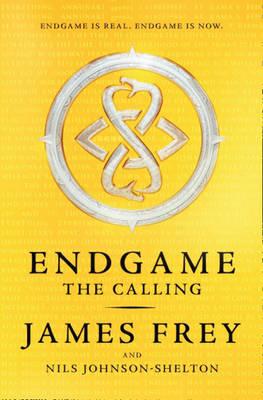
Yes, it’s that James Frey, of “Million Little Pieces” fame; the supposed fictionalized biography. The Calling was a surprising and extremely entertaining read, however. The characters are vivid. The prose is unique and refreshing. The setting is grounded in reality. This book tells the tale of ancestors of ancient tribes of Earth (of the Aztecs, Mu, etc.) who come together to do battle for the ascension of mankind. It falls very much into the dystopian category with other Teen books such as “Divergent” and “The Hunger Games,” but is far more intelligent and considerably better written. This is part of a trilogy and I’m happy to say that I recently purchased the next two, so I’ll be getting to them shortly. The beginning prose is a bit strange, but once you get used to it, you realize that it’s the perfect way to be written.
4. Nightbooks by J.A. White

There’s a theme in my top five for this year. I gave myself a pretty aggressive reading goal (for me 70 books in a year is hefty, especially with an extensive work schedule), so to supplement and make sure I made it, I made the “concession” that I’d read some YA books to speed my progress. This turned out to be the greatest thing I could have ever done. Some of these YA books are more meaningful and deeper than most “adult” books I’ve read. This book is no exception. The premise is that our protagonist is captured by a Witch and he needs to get find a way to escape. He becomes Sheherezade in the meantime to keep the witch from killing him. That description is the most dumbed-down way to describe this as I can muster because, in reality, it’s the most heartfelt, beautiful, Halloween-type book I’ve ever read. The atmosphere is incredible, the twist is meticulously delivered at the perfect time, and the characters have a depth to them that’s hard to match. This was a great reading year, because this gem and the next few books are probably in my top 25 books of all time. I really can’t recommend them enough!
3. Binti by Nnedi Okorafor

My reading is eclectic, I get it, but dang was this a great little book. Science Fiction at its best. There are some wonderfully deep characters and an overall theme of the outcast overcoming was a perfect overlay to the sci/fi background. This is one of those stories which you can read on the surface level, or you can dig down deeper and take it to the next level of meaning. You’ll finish it before you know it and it will leave you wanting more. I’m glad there are more in the series.
2. The Invisible Life of Addie LaRue by V.E. Schwab
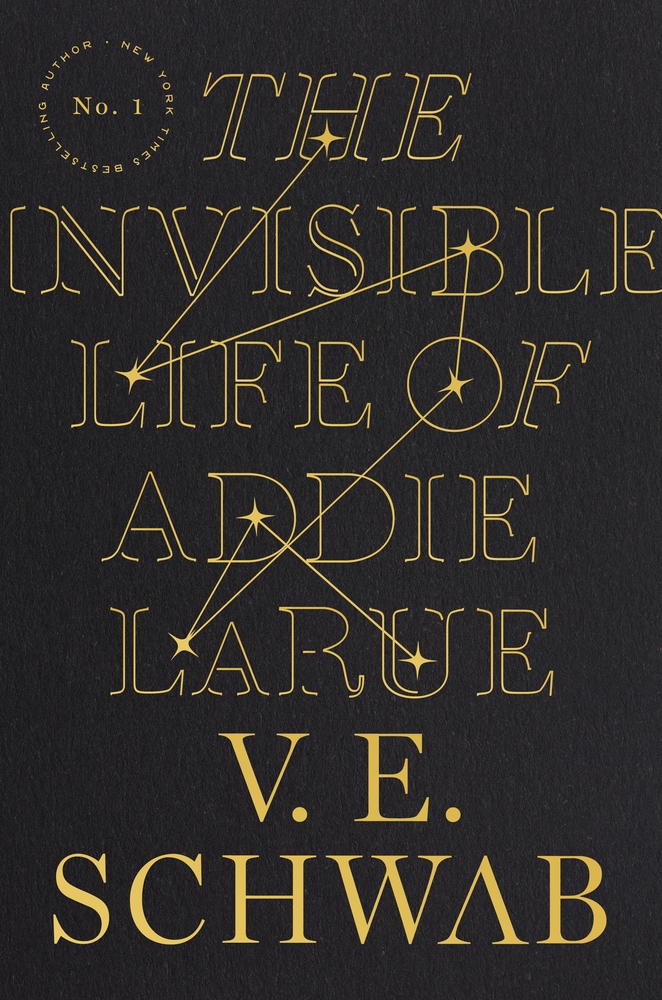
This book is probably in my top five books of all time, and that’s saying something at #2 on the list for 2021 alone. I’ve never read a book that reached out and spoke to me quite like this one. This is a romance without being melodramatic. It’s a fantasy without being ridiculous. It’s fiction at its best. The premise is a girl sells her soul to the devil which gives her eternal life…at a price. Schwab turned up her writing chops with this one as the prose gorgeously bleeds off the page and there is such care taken for the protagonists that they feel like people you’d meet on the street. I say again, I have NEVER read a character that speaks to my soul so proficiently as is done in this book. The only word that comes to mind when thinking about this book is “beautiful” because that’s what it is. It is just plain beautiful.
- The Button War by Avi
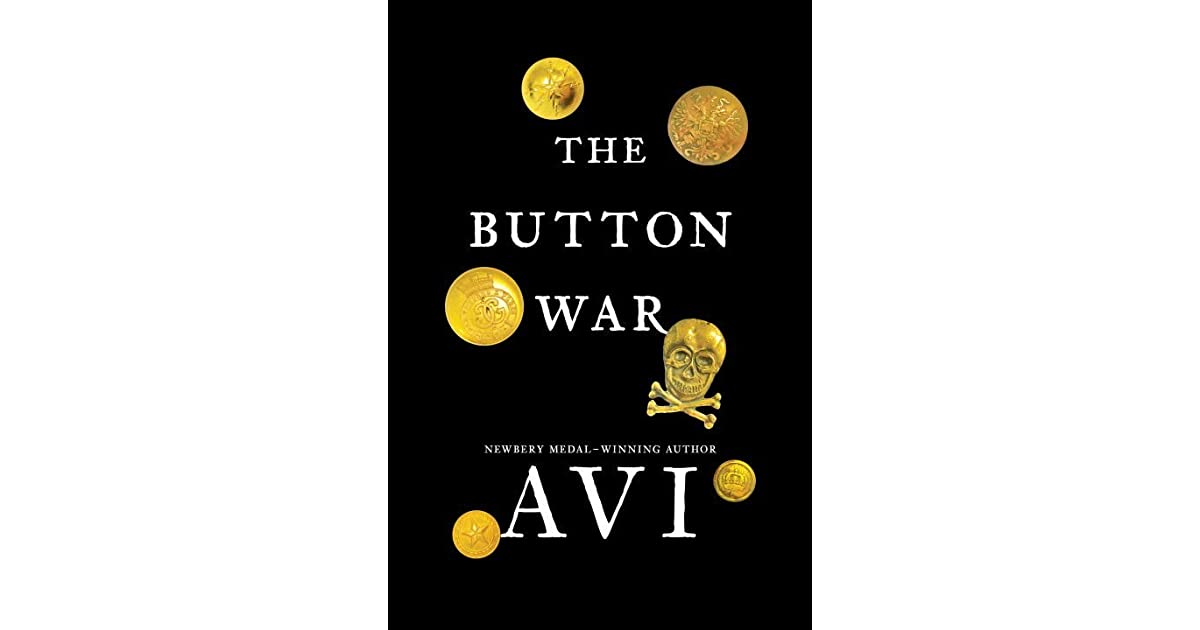
If Addie was beautiful, this book is its antithesis. If you can believe it, this book is a YA classic. It takes place in a Polish Village during WWI and is the most riveting book I’ve ever read. If you’ve read a book and ever said I can’t put it down, then you might know a tenth of what this book does to its reader. It’s at once, “The Lord of the Flies,” “Johnny Got His Gun,” and “Stand By Me” (Otherwise known as “The Body”) all rolled into one. Powerful just isn’t a strong enough word for this masterpiece. I finished it and immediately purchased 4 four more of Avi’s books, though I don’t see any book being as good as this one.
That’s all for the top five! I hope you’ve all had a great year and an even better beginning to 2022! See you next week in the Blind Read Series as we get our Tolkien Fix!
Blind Read Through: J.R.R. Tolkien; The Silmarillion, Of Thingol and Melian

“In after days, he became a king renowned, and his people were all the Eldar of Beleriand; the Sindar they were named, the Grey-elves, the Elves of Twilight, and King Greymantle was he, Elu Thingol in the tongue of that land.”
Welcome back to another Blind Read! This week we have a concise chapter, so I thought it would be the perfect time to review and dig into theories about what we’ve read so far in The Silmarillion.
This chapter follows Melian, a Maiar (the servants of the Valar), and Elwë, the Lord of the Teleri, whom we saw in the last chapter.
Melian “dwelt in the gardens of Lórien, and among all his people there were none more beautiful than Melian, nor wiser, nor more skilled in songs of enchantment.” She came to middle-earth at the same time as Yavanna, “and there she filled the silence of Middle-earth before the dawn with her voice and the voices of her birds.”
The Teleri who “tarried on the road.” across Middle-earth to Valinor were led by Elwë and Olwë, two brothers. Elwë Singollo, which surname we found in the previous chapter signifies Greymantle, heard the song of the lómelindi (the Nightingales), and in that song he heard the beautiful voice of Melian.
He set out to follow that song, and in doing so, “He forgot then utterly all his people and all the purposes of his mind,” and he was lost in the forest. He met Melian there, lost under the twilight stars, “and straightaway, a spell was laid on him.” He had fallen deeply in love with her and stayed with her in eastern Beleriand, starting their own faction of Eldar, which is what we see in the opening quote of this essay. He became Elu Thingol, King Greymantle of the Sindar, where Olwë, his brother, assumed kingship of the Teleri in his absence and took them to Valinor.

“And of the love of Thingol and Melian there came into the world the fairest of all the Children of Ilùvatar that was or shall ever be.” Namely the Sindar, or Grey-elves.
That is the chapter; not a lot to it, but there are some key points here to latch onto and I’d be remiss if I didn’t touch on them. First, we are currently discovering the creation of the peoples of Middle-earth at this point known as Beleriand (from my basic knowledge, Beleriand was sundered in the wars of the first age, which I’m sure will be covered in the remaining text of the Silmarillion.)
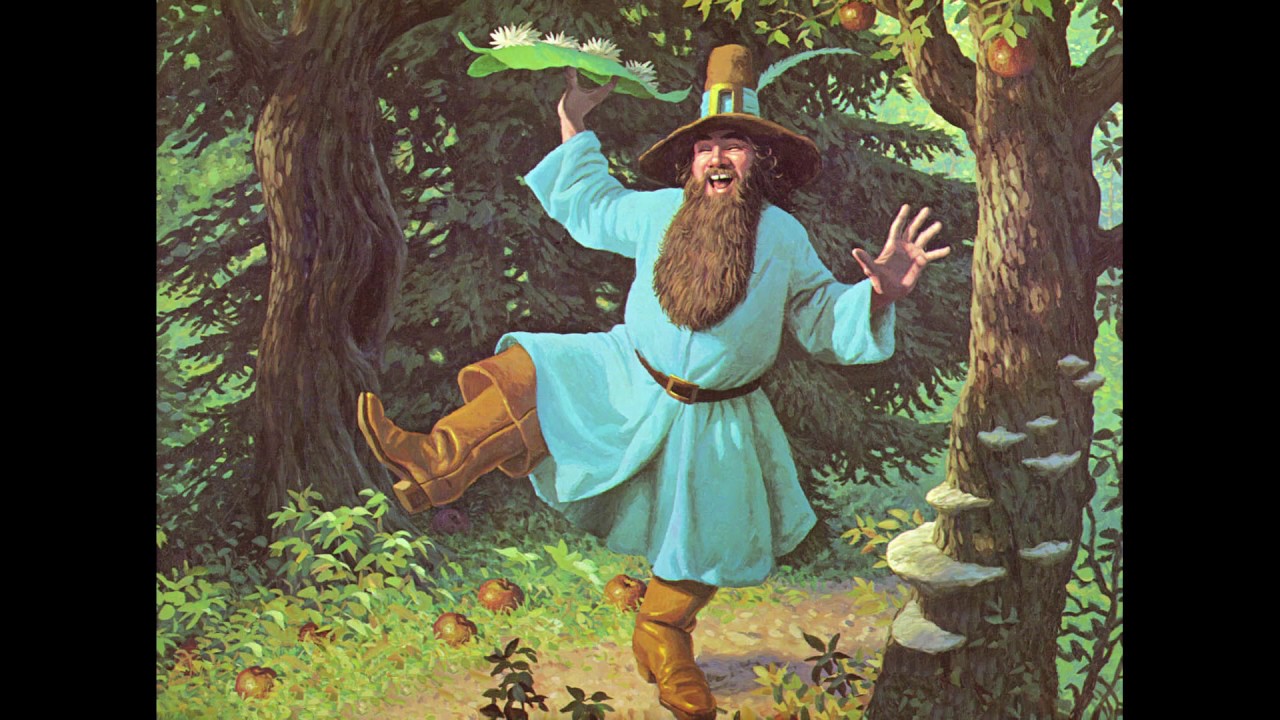
The first point I’d like to discuss is song. There was much made of music and song in Peter Jackson’s seminal trilogy and even more in the text of the books. There were characters like Tom Bombadil who basically spoke in music (and I’m inquisitive to see if we get a glimpse of where he came from), poems, and songs sung throughout the books, culminating in Pippin’s song near the end of Return fo the King.
Song and music are rampant throughout Tolkien’s world, and it wasn’t until I began this journey into The Silmarillion that I began to notice that there is a reason behind this. Music is the cornerstone of life; it’s what brings the people of Middle-earth life and happiness and sorrow. Indeed the entire world was built by song…The song of the Valar and Ilùvatar. The music that we’ve all experienced while traversing this incredible creation is an offspring of this idea. The old themes are sung to elicit feeling and emotion and give a glimpse of the past and the future. There is a theory that all music is derivative; all music comes from just a few early and core songs. This shows more gloriously here than anything else because all music portrayed echoes past, an echo of the songs sung by the Valar as the world was being created. One must assume that they all have their own tone and theme incorporated into their song, as varied as a love of nature to the agony of war. The pieces of this music are what create the world and the destination of those within it. I’m so excited to see what other music or song is incorporated moving forward.
The second point I wanted to touch on was language. Tolkien famously created this world based on language, and everything else came from that. This is what makes The Silmarillion so hard to read because there are multiple names for each character and sobriquets based upon whom they interact with. However, the more I dig into the history, the more I’m beginning to understand the language (with the help of the index, of course). Once you come across a name (like Beleriand, the land beyond the bay of Balar), if you’ve paid attention to the core of the word, there’s a good chance you’ll understand where the story is going to go surrounding that character.
The best example of this I can imagine is the introduction of Elwë Singollo. Immediately we are told that Singollo indicates the Greymantle, then everything that follows points towards the creation of the Grey Elves. The Nightingales sing at Twilight, the grey mist when Thingol and Melian meet, right down to their children and followers tribe name…Sindar, which is a derivative of Singollo. They are the Grey Elves, not because of their skin color, but because they were not of the light, meaning that they never went to Valinor, nor are the Sindar from the Dark; they are Elves of Twilight, both of time and location. It is these nuggets I’ll work to uncover as we continue on throughout this blind read.
What will we uncover next?
Join me next week as we move into “Of Eldamar and the Princes of the Eldalië!”
Blind Read Through: J.R.R. Tolkien; The Silmarillion, Of the Coming of the Elves and the Captivity of Melkor

“Yet be sure of this: the hour approaches, and within this age our hope shall be revealed, and the Children shall awake. Shall we then leave the lands of their dwelling desolate and full of evil? Shall they walk in darkness while we have light? Shall they call Melkor lord while Manwë sits upon Taniquetil?“
Welcome back to another Blind Read! This week the First of Ilùvatar’s Children (Elves) awaken, Melkor is thwarted, and we get some in-depth understanding of the creation of Middle-Earth, its peoples, and its antagonists.
We begin this chapter of the history of Middle-earth by finding that the Valar grew comfortable with their creations. Melkor was defeated, and they put him out of their minds, staying away from his lands and “the evil things that he had perverted.” Melkor created a stronghold, commanded by his lieutenant, Sauron (sound familiar?), named Angband. It was here we find the perverted things including the Maiar who followed him: “those spirits who first adhered to him in the days of his splendour, and became most like him in his corruption: their hearts were of fire, but they were cloaked in darkness, and terror went before them; they had whips of flame. Balrogs they were named in Middle-earth in later days.”
This is where we get the opening quote of this essay. The Valar, on their seats in Valinor, had a great debate on what to do with Middle-earth and the impending Awakening of the first Children of Ilùvatar, the Elves.

Varda, Manwë’s spouse, decided that the Elves should not be born into the darkness that blanketed Middle-earth, so she created the stars (which is why the Elves then called her Elentári in their tongue means ‘Queen of Stars’). I’ll leave the passage for this in the postscript because several names aren’t pertinent to this portion, but I have a sneaking suspicion they will be later!
Anyway, the Elves woke next to Cuiviénen (a lake in Middle-earth, otherwise known as “The Water of Awakening“), and the first thing they saw were the beautiful stars and “Long they dwelt in their first home by the water under the stars...” They even developed their own speech, then naming themselves the Quendi, “signifying those that speak with voices” as the Valar had no need for voice.
These Children of Ilùvatar were “stronger and greater than they have since become;” and the Valar decided that they needed to get these children to join them in Valinor, so Oromë had them follow him back, and those that did he named the Eldar, or the people of the stars.
But why didn’t they all follow Oromë, you ask? Melkor put stories into their heads to scare them off from the great hunter. Reports of “a dark Rider upon his wild horse that pursued those that wandered to take and devour them.” Melkor was able to ensnare some of these unfortunate Elves by this deception, and “those of the Quendi who came into the hands of Melkor, ere Utumno was broken, were put there in prison, and by slow arts of cruelty were corrupted and enslaved; and thus Melkor breed the hideous race of the Orcs in envy and mockery of the Elves, of whom they were afterwards the bitterest foes.“
So Melkor created Orcs from the Elves, but not just from the Elves… from the Quendi, who were stronger and greater than what the Elves later became. So it makes sense why the Orcs are thought of as so terrifying.

Understanding that Melkor was gaining in power the Valar decided that they must do something about it, so they decided to ride out against Melkor and capture him; to save the Quendi from the spread of his darkness. Apparently little is known of this battle because it didn’t take place in the view of the Quendi, except that “the Earth shook and groaned beneath them, and the water moved, and in the north there were lights as of mighty fires.”
The battle was so savage that the shape of the land itself was altered permanently, but eventually Melkor “was bound with the chain Angainor that Aulë had wrought, and led captive; and the world had peace for a long age.” The Valar discovered and defeated many of the ranks of Melkor, but they never did find his lieutenant, Sauron.
The world was at peace, and after long years of discussion, the Valar decided that the Quendi should join the Valar in Valinor far to the west. They sent for Ingwë, Finwë, and Elwë, who were ambassadors of the Elves and later became their kings, but free will got in the way.
“Then befell the first sundering of the Elves.”
The kindreds of these ambassadors followed Oromë to the west and became known as the Eldar. The ones who stayed behind loved their home of Middle-earth, the seas, the trees, and the stars and they refused the summons. These Elves became known as the Avari, or the Unwilling.
But beyond this first sundering, even the Eldar split as well. The three different ambassadors had their own followers, each with their own predilections. The followers of Ingwë were known as the Vanyar, or the Fair Elves, who are closest to the Valar and few men have ever seen.

Then there are the Noldor, the people of Finwë, otherwise known as the Deep Elves, who were known as great fighters and laborers.
Lastly there were the followers of Elwë Singollo (Singollo signifies Greymantle. I have a feeling we’ll find more out about that next week!), who were named the Teleri, who “tarried” on the roads and were the last to appear in Valinor. They are known as the Sea Elves, or Falmari, because of their love for the sea and making music beside the breaking waves.
These three kindreds of Elves who made it to Valinor are called the Calaquendi, or Elves of the Light (or a very literal translation, “Those who speak of the light“)
These Elves do not take much part in the story of the Silmarillion, but rather those they left behind, those that the “Calaquendi call the Umanyar, since they came never to the land of Aman and the Blessed Realm.” These Umanyar and the Moriquendi (or the Elves of Darkness who came later and “never beheld the Light that was before the Sun and Moon.” are who the remaining history of Middle-earth pertains to.
The Nandor, who were led by Lenwë and “forsook the westward march, and led away numerous people, southwards down the great river, and they passed out of the knowledge of their kin for long years were past.” until years later Denethor (not to be confused with Denethor II the steward of Gondor from the Third Age. Aka, father to Boromir and Faramir), son of Lenwë, decided to lead his people west over the mountains and into Beleriand (the westernmost land of Middle-earth).
We have finally gotten past the rich history of gods and angels and are getting into the creation of Middle-earth as we know it. I’m most curious to see where the coming of men, the second of the Children of Ilùvatar, come into play as the Elves begin to build their roots in the land. Do you have an idea of where we’re headed?
Let’s find out next week as we discover “Of Thingol and Melian.“
Post Script:
As promised, here is your passage…
“Then Varda went forth from the council, and she looked out from the height of Taniquetil, and beheld the darkness of Middle-earth beneath the innumerable stars, faint and far. Then she began a great labor, greatest of all the works of the Valar since their coming into Arda. She took the silver dews from the vats of Telperion, and there-with she made new stars and brighter against the coming of the First-born; wherefore she whose name out of the Deeps of Time and the labours of Eä was Tintallë, the Kindler, was called after by the Elves Elentári, Queen of the Stars. Carnil and Luinil, Nénar and Lumbar, Alcarinquë and Elemmírë she wrought in that time, and many other of the ancient stars she gathered together and set as signs in the heavens of Arda: Wilwarin, Telumendil, Soronúmë, and Anarríma; and Menelmacar with his shining belt, that forbodes the Last Battle that shall be at the end of days. And high in the North as a challenge to Melkor she set the crown of seven mighty stars to swing, Valacirca, the Sickle of the Valar and sign of doom.”
Blind Read Through: J.R.R. Tolkien; The Silmarillion, Of Aulë and Yavanna
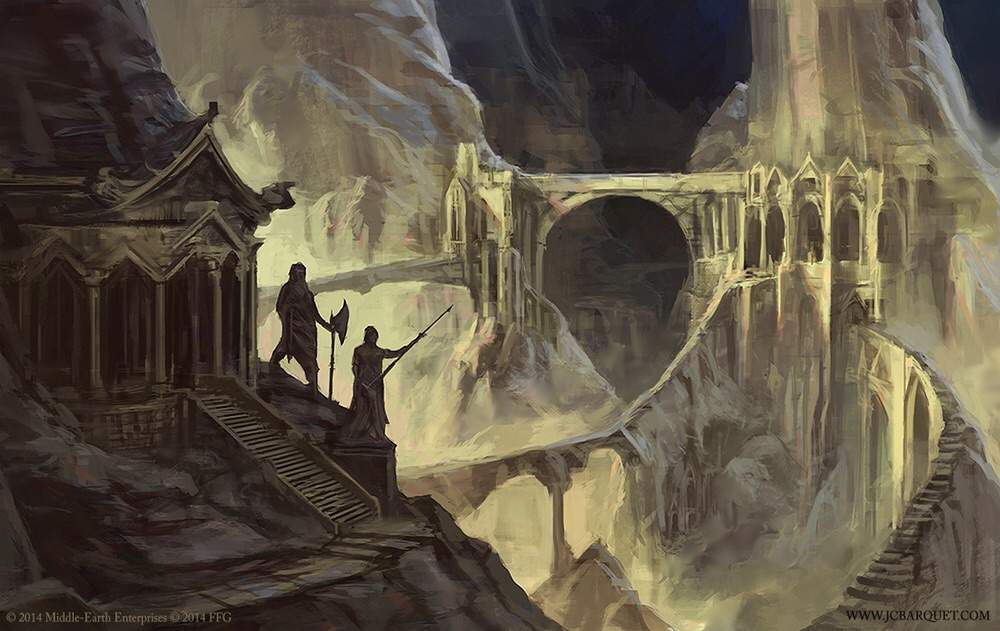
“But I will not suffer this: that these should come before the Firstborn of my design, nor that thy impatience should be rewarded. They shall sleep now in the darkness under stone, and shall not come forth until the Firstborn have awakened upon Earth; and until that time thou and they shall wait, though long it seem. But when the time comes I will awaken them, and they shall be to thee as children; and often strife shall arise between thine and mine, the children of my adoption and the children of my choice.”
Welcome back to another Blind Read! This week we continue on the journey through the Quenta Silmarillion, learn about a few new races of beings, and discover the evolution of life in Middle-earth!
This second chapter is short and answers a question I’d been wondering since we started the journey through this history: Where did Dwarves come from?

Through the first few chapters as we got to know the beginning of Middle-earth we came to understand that Ilùvatar created his own children, the Elves and Men. There were so many other races not represented here which had me questioning their origins, none more than Dwarves. The Dwarves of Middle-earth are a prideful and powerful bunch and knowing just a bit about their history with Elves, I wondered where and how they came into the story.
Well this chapter starts us off in the first sentence: “It is told that in their beginning the Dwarves were made by Aulë in the darkness of Middle-earth; for so greatly did Aulë desire the coming of the Children, to have learners to whom he could teach his lore and his crafts, that he was unwilling to await the fulfillment of the designs of Ilùvatar.“
So Aulë created the dwarves at the same time Elves and Man were being created, and “because the power of Melkor was yet upon the Earth” he made the Dwarves “stone-hard, stubborn, fast in friendship and in enmity.” He also made their lives long, longer than Men, but not eternal like the Elves.
When he created them (in the true fashion of Prometheus disobeying Zeus and giving humans fire), Ilùvatar was angered, because he had yet to finish creating his own children; but when Aulë showed that he was willing to smite them with his hammer, Ilùvatar took pity on them and we get the opening quote of this essay.

Aulë had promised the Dwarves they would sit at the End of the World with the Children of Ilùvatar, led by the Seven Father’s of Dwarves, “of whom Durin was the most renowned in after ages, father of that kindred most friendly to the Elves, whose mansions were at Khazad-dûm.” In case you don’t recognize this name from either the books or the movies, the better known name for Khazad-dûm is The Mines of Moria.
So now we know the Dwarves were created by Aulë as the “Second Born.” and were sequestered in Moria to await the coming of the First Born, aka the Children of Ilùvatar, aka Elves and Men.
But what of Yavanna? We’ve only spoken of Aulë and the chapter head has both of their names! Well, because Aulë kept his creations a secret even from Yavanna, the Dwarves ended up not caring much about her creations, instead, “they will love first the things made by their own hands, as doth their father. They will delve in the earth, and the things that grow and live upon the earth they will not heed.“
Yavanna was afraid for her great creation…nature. The bountiful trees and the beautiful forests were potentially in danger, because of the nature of Aulë, the smith, he instilled in his children that they should be desirous of making their own creations through industry. If Melkor got his desires into these industrial Dwarves, what was to stop them from cutting down Yavanna’s beautiful forests to use in their production?
Yavanna went to Manwë, the Valar of Wind and Sky and spoke her fears:
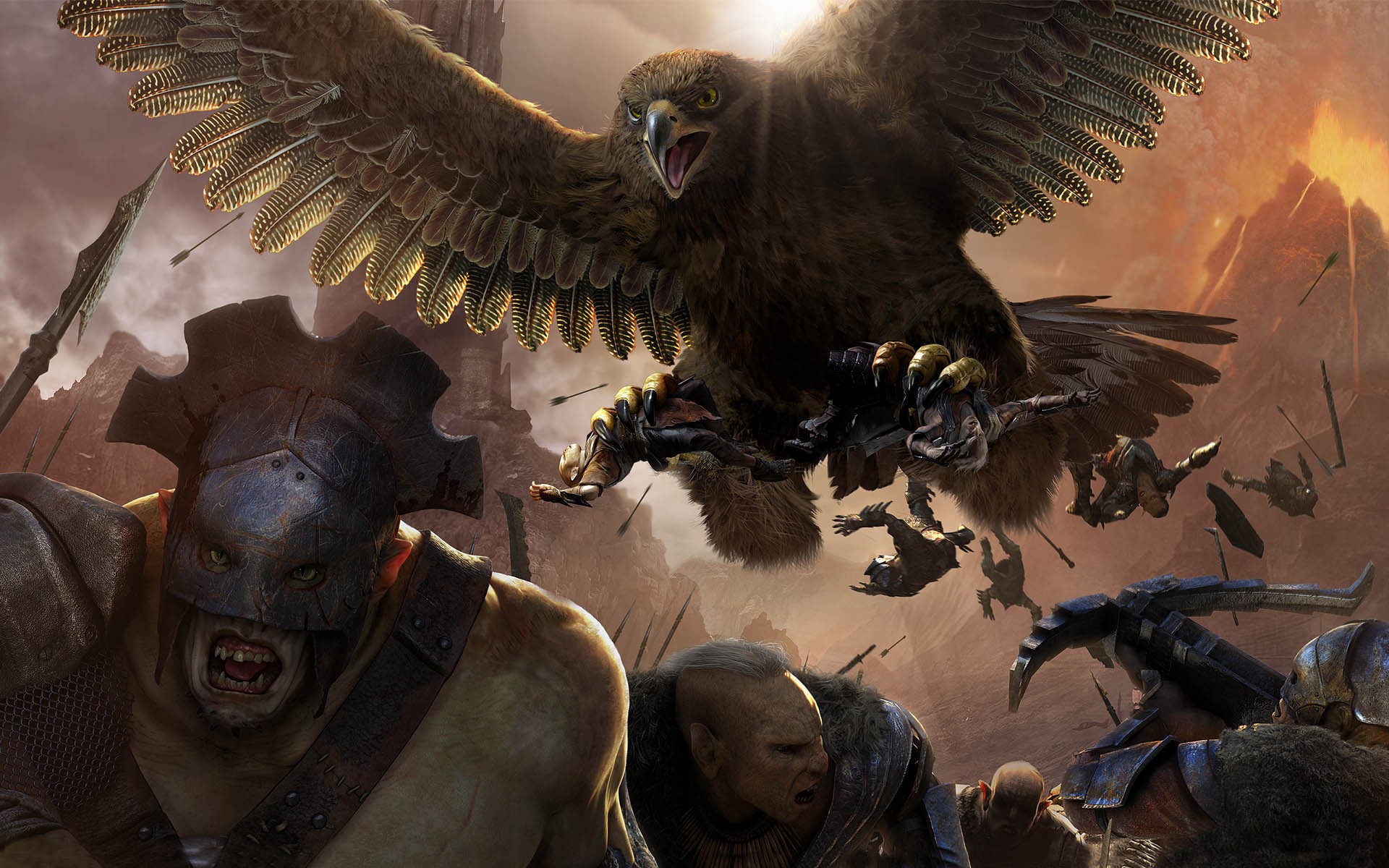
“Because my heart in anxious, thinking of the days to come. All my works are dear to me. Is it not enough that Melkor should have marred so many? Shall nothing that I have devised be free from the dominion of others?” They discussed it for a while until Manwë finally responded, “When the Children awake (the Dwarves), then the thought of Yavanna will awake also, and it will summon spirits from afar, and they will go among the kelvar (the fauna of Middle-earth) and the olvar (the flora of Middle-earth), and some will dwell therein, and be held in reverence, and their just anger shall be feared.”
This breath of spirits and life created two powerful and fascinating beings, The Great Eagles and the Ents. Yavanna was able to work with Manwë to build a defense system into her creations, thus bringing sentience to the Great Eagles (which you’ll remember from the end of The Lord of the Rings, when Gandalf speaks with them and gets them to assist in gathering up the Hobbits) and the Ents (Yay Treebeard!) as guardians, so that even if Melkor’s influence encroaches upon the Children (both first-born, Elves and Man, and Second Born, Dwarves) and they foster a desire to mar the land further than even Melkor was able to, these sentient beings would be there for protection.
We are finally getting a broader understanding of how the world came into being, but what transpired to bring the Children to wake into the world? Let’s find out next week as we unfurl “Of the Coming of the Elves and the Captivity of Melkor.”
Blind Read Through: J.R.R. Tolkien; The Silmarillion, Of The Beginning of Days
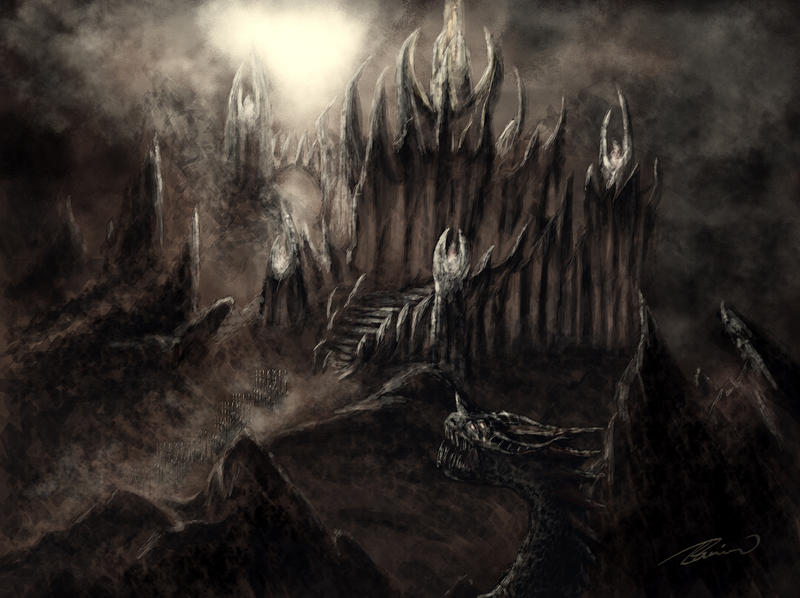
“Behind the walls of the Pelóri the Valar established their domain in that region which is called Valinor; and there were their houses, their gardens, and their towers. In that guarded land the Valar gathered great store of light and all the fairest things that were saved from the ruin; and many others yet fairer they made anew, and Valinor became more beautiful even than Middle-earth in the Spring of Arda; and it was blessed, for the Deathless dwelt there, and there naught faded nor withered, neither was there any stain upon flower or leaf in that land, nor any corruption or sickness in anything that lived; for the very stones and waters were hallowed.“
Welcome back to another Blind Read! This week we begin our pathway into the Quenta Silmarillion and learn of the beginning of the First Age, while getting some very useful backstory into the elves and man.
In the past few weeks we were introduced to the Valar and their predilections and abilities, which is imperative back story as we jump into the Silmarillion.
The story starts with mention of the First War, and if you remember, we don’t really know anything about it, because we’re getting everything from the Eldar, and the First War was before they came into their own in Arda. What we do know is that Melkor fought the Valar for control of the land, until Tulkas the Strong came down and “Melkor fled before his wrath and his laughter.“

With Melkor gone, at least temporarily, the Valar began to build Arda bringing “order to the seas and the lands and the mountains.” Once Yavanna planted seeds, the Valar realized they needed light to help life flourish, so Aulë “wrought two mighty lamps for the lighting of Middle-earth… One lamp they raised near the north of Middle-earth, and it was named Illuin; and the other was raised in the south, and it was named Ormal.”
The land flourished with the Valar and the light of the lamps, but Melkor had spies among the Maiar, “and because of the light of Illuin they did not perceive the shadow in the north that was cast from afar by Melkor.”
Because they didn’t notice Melkor, he came south and “began the delving and building of a vast fortress, deep under the Earth, beneath dark mountains… That stronghold was named Utumno.” His corruption spread from Utumno “and the Spring of Arda was marred.”
Another war broke out and Melkor “assailed the lights of Illuin and Ormal, and cast down their pillars and broke their lamps.” causing “destroying flame (which was) poured out over Earth,” scarring the land. The Valar were able to stop Melkor after this, but it was too late and “Thus ended the Spring of Arda.“
The Valar decided that there was no appropriate place to live, “Therefore they departed from Middle-earth and went to the land of Aman,” and to protect this land “they raised the Pelóri, the Mountains of Aman, highest upon Earth.” Upon the highest mountain Manwë (the Lord of Air and Winds) build his throne. “Taniquetil the Elves name that holy mountain.” Then we get the quote which opens this essay, and we understand that this land of Aman, had now become Valinor.
It was then, once they made their home in Valinor that Yavanna helped grow (through her song) the “Two Trees of Valinor;” Telperion and Laurelin. Telperion bloomed for six hours then stopped, then Laurelin bloomed for another six hours: “And each day of the Valar in Aman contained twelve hours, and ended with the second mingling of the lights, in which Laurelin was waning and Telperion was waxing.” It was a time of great joy for the Valar, to be free of Melkor and to continue to develop Valninor:
“Thus began the Days of the Bliss of Valinor; and thus began also the count of time.”
What significant about this is the aspect of time. The age of the Children of Ilùvatar was coming and the instance of time was it’s catalyst. The Elves are immortal, they “die not till the world dies, unless they are slain or waste in grief.” But men are mortal and they need to have a concept of time to understand what their life capability is. We’ll see more of this later in the essay.

But in this coming of the Children of Ilùvatar, Melkor still dwelt in Middle-earth, which is where the Children took up their home.
The Valar rarely came across Pelóri, but when they did they taught the Elves “the lore of all craftsmen: the weaver, the shaper of wood, and the worker in metals; and the tiller and husbandman also.” But it was the Noldor, the “most skilled of the Elves” whom were “the first to achieve the making of gems; and the fairest of all gems were the Silmarils, and they are lost.” I’m trying to take this one step at a time, but seeing as this history is called “The Silmarillion,” I’m sure they will come into play soon.
The Vanyar Elves were gifted the art of “song and poetry” by Manwë whom was named the “vicegerent of Ilùvatar, King of the world of Valar and Elves and Men, and the chief defense against the evil of Melkor.” he even wields a “scepter of sapphire, which the Noldor wrought for him.”
Then there was also Ulmo of the Oceans and seas. I’m going to give you a long passage and break it down, because to me, this is the most important passage in this chapter:
“In the deep places he gives thought to music great and terrible; and the echo of that music runs through all the veins of the world in sorrow and in joy; for if joyful is the fountain that rises in the sun, its springs are in the wells of sorrow unfathomed at the foundations of the Earth… And thus it was by the power of Ulmo that even under the darkness of Melkor life coursed still through many secret lodes, and the Earth did not die; and to all who were lost in that darkness or wandered far from the light of the Valar the ear of Ulmo was ever open; nor has he forsaken Middle-earth, and whatsoever may since have befallen of ruin or of change he has not ceased to take thought for it, and will not until the end of days.”
Not only is this passage poetic and beautiful, but it also gives form to the philosophy of Middle-earth as the personalities of the Valar form the very fabric of reality. There is and always will be a subset of people whom believe that the ideal of The Lord of the Rings is a power struggle between good and evil. Between happiness and sorrow. Between love and loss.
The end of the books and movies (as Frodo heads to Valinor) there is a certain forlorn sorrow, but infused within that thread is hope, and that’s what strikes me the most in this passage above. There is joyfulness, but that joyfulness is countered by “sorrow unfathomed.” The point is if there were only goodness, there would be no joyfulness. Men and Elves are the Children of Ilùvatar and thus are more open to emotion and feeling. The Valar only have a little bit. So if everything were always joyful, the point of joyfulness disappears because there is no counterpoint. It is only upon feeling sorrow that we understand what Joy truly is.
This sorrow does not mean the terror that Melkor had wrought, or even Sauron in The Lord of the Rings. This is speaking of the normal every day sorrow, and that comes along with the concept of time which the Valar created with the two great trees of Valinor. To burrow this down to brass tacks, it is the sorrow that Men have a finite time on Middle-earth that creates the joyfulness that they flourish off of. What Ulmo does is put the sorrow in “the foundations of earth” meaning both that it was around at earth’s inception, but it’s also deep in a well; deep in the earth; physically and metaphorically tying the song of the sorrow to Middle-earth as a place. Michael Ende used this concept to full effect in his Swamps of Sorrow of The Neverending Story.
But what is the point of having Men and Elves live on Middle-earth? The Elves “shall be fairest of all earthly creatures, and they shall have and shall conceive and bring forth more beauty that all my Children.” So the Elves are there to make Middle-earth a wonderous and beautiful place. But what of Men?
“Therefore he willed the hearts of Men should seek beyond the world and should find no rest therein; but they should have a virtue to shape their life, amid the powers and chances of the world, beyond the Music of the Ainur, which is as fate to all things else; and of their operation everything should be, in form and deed, completed, and the world fulfilled unto the last and smallest.“
For this the Elves fear Men, “for it seems to the Elves that Men resemble Melkor most of all the Ainur, although he has ever feared and hated them, even those that serve him.” The Elves are there for much the same reason the Valar were… to continue to make the world beautiful. Man was there to give direction and purpose. This is a powerful responsibility and it’s why many are corrupted during their journey, but it also gives rise to the joyful sorrow that one feels as they look out across the crashing waves and into the depths of the beautiful Ocean and it’s terrible wine dark composure.
Join me next week as we move onto chapter two and learn more of the Valar Aulë and Yavanna!
Blind Read Through: J.R.R. Tolkien; Valaquenta
“Among those of his servants that have names the greatest was that spirit whom the Eldar called Sauron, or Gothaur the Cruel. In his beginning he was of the Maiar of Aulë, and he remained mighty in the lore of that people. In all the deeds of Melkor the Morgoth upon Arda, in his vast works and in the deceits of his cunning, Sauron had a part, and was only less evil than his master in that for long he served another and not himself. But in after years he rose like a shadow of Morgoth and a ghost of his malice, and walked behind him on the same ruinous path down into the Void.”
Welcome back to another Blind Read! This week we dive deeper into the world of the Valar to get a better understanding of who those angels are, all the while understanding more and more about Tolkien’s process.
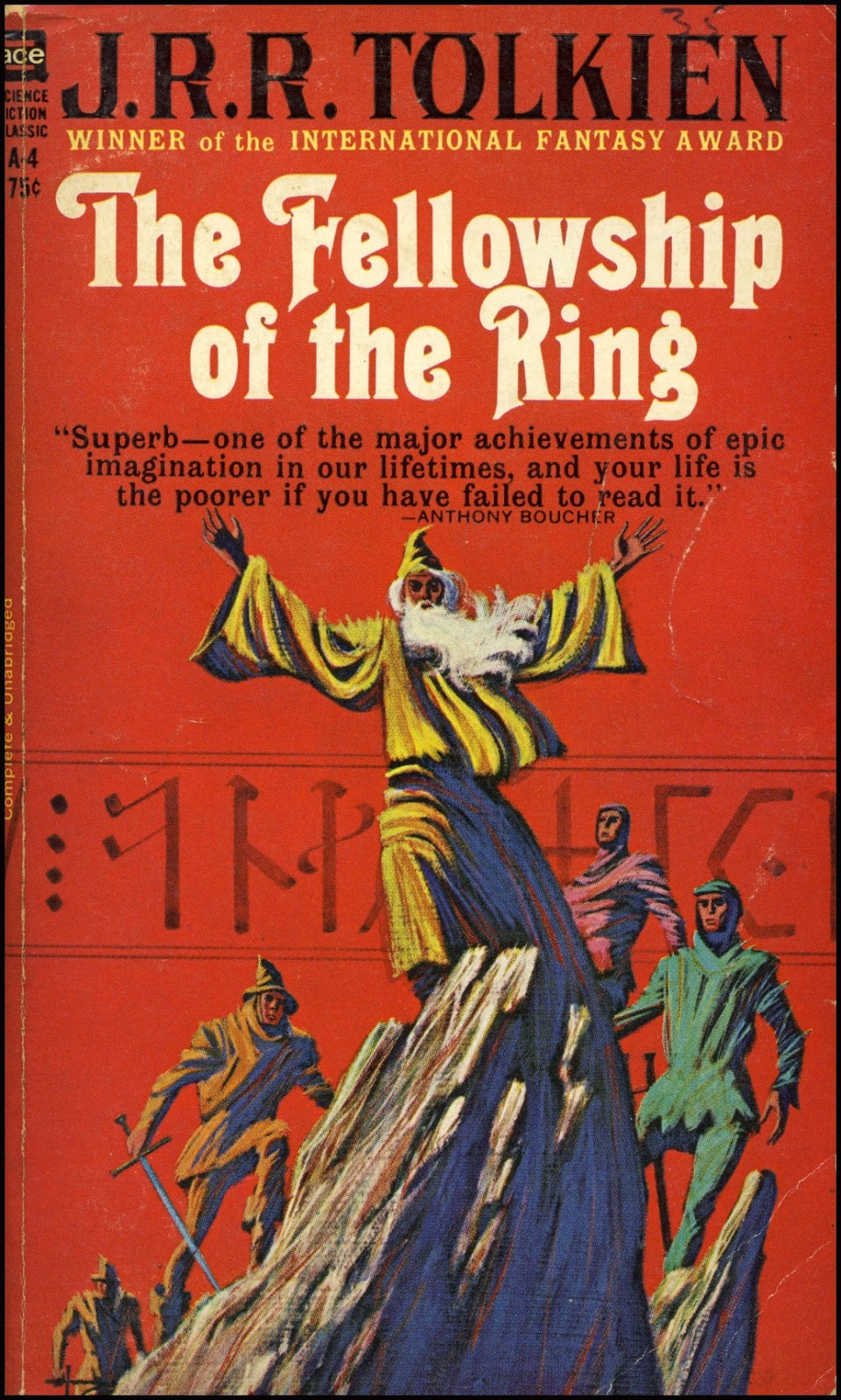
We jump right into the thick of things. Tolkien as I’m sure anyone who is reading this right now knows, was first and foremost a linguist, and famously created the Elvish language on it’s own. Once he had it he wanted to use it so he created a story around it, and thus arose The Lord of the Rings. Knowing this I figured that The Valaquenta was the story of the Valar, because quenta seems to be Tolkien’s etymology for story or history, and so to tell the story of the Valar would be the Valaquenta. Much like the first history in the book The Silmarillion, Ainulindalë, is about the land (dalë) that the Ainur created.
There is quite a bit of re-hashing of Ainulindalë in the Valaquenta as the Ainulindalë was almost a biblical genesis story, the Valaquenta is the story of the Valar; the Ainur who went down to Ëa (the Earth) and lived invisibly amongst the Children of Ilùvatar (namely the Elves and Men). This is much more of a introduction to these Valar whom I’m sure will be more important later. In fact this history even begins with the title “Account of the Valar and Maiar according to the lore of the Eldar.”
The first two paragraphs paraphrase the events in Ainulindalë, but then we get into more of a diversity of the Valar and who they are. We find that “The Lords of the Valar are seven; and the Valier, the Queens of the Valar, are seven also.” We also find that “Melkor is counted no longer among the Valar, and his name is not spoken upon Earth,” despite the fact that Melkor was the strongest of the Ainur. His fall from grace has surrendered his name from the ranks of the Valar. Because of this, Manwë is the next in line.

“Manwë is the dearest to Ilùvatar and understands most clearly his purposes. He was appointed to be, in the fullness of time, the first of all Kings; and with Manwë (The Lord of the Breath of Arda) dwells Varda, Lady of the Stars.” The two of them reside in Valinor (the great resting place of the elves, and in general the home of the immortal Valar. Also known as Aman). “Of all the Great Ones who dwell in this world the Elves hold Varda most in reverence and love.”
Next we are introduced to Ulmo who we already know is the Lord of the Seas, but what we find is that “He is alone.” There is no Valier which resides with him, and though “the arising of the King of the sea was terrible,” “Ulmo loves both Elves and Men, and never abandoned them.“
Then there is Aulë who has “lordship… over all the substances of which Arda is made.” Aulë is “a smith and a master of all crafts.” The elves (The Noldor, the second clan of Elves) “learned most of him” which created a larger rift with Melkor, because Aulë was a friend of the Children of Ilùvatar and Melkor wasn’t. Aulë’s spouse is Yavanna who is also known as the Queen of the Earth, or Kementári in the Eldarin tongue.
There is Námo and Irmo, who are bretheren, and known as the masters of spirits; whom are better known by the names of their homes, which are Mandos and Lórien. The two brothers are known as the Fëanturi, which on a quick glace looks to me a lot like Fae, or the magical creatures from a different realm. Kind of makes sense, especially when we get more information about them. Mandos is “the keeper of the Houses of the Dead, and the summoner of the spirits of the slain.” while Lórien is “the master of visions and dreams.” This falls right in line with the style of magic the classic Fae utilize.

Both brothers have spouses who are also involved in these Fae type works. Vairë is Mandos’ wife who “weaves all things that have ever been in Time into her storied webs.” Estë is Lórien’s wife and she is the “healer of hurts and weariness.” But beyond these two, in Lórien there is a mightier Valier than Estë… Nienna. “She is acquainted with grief, and mourns for every wound that Arda has suffered in the marring of Melkor. So great was her sorrow, as the music unfolded, that her song turned to lamentation long before its end, and the sound of mourning was woven into the themes of the world before it began.” I can almost hear “shadows of the past” conducted by Howard Shore as I contemplate what this means. Melkor not only caused strife, but on top of that, grief and sorrow were not known emotions in the Children of Ilùvatar until Nienna felt them and sang them into existence. All because of Melkor’s revolts.

Next we have the great hunter Oromë, who is “a hunter of monsters and fell beasts, and he delights in horses and hounds; and all trees he loves, for which reason he is called Aldaron, and by the Sindar Tauron, the Lord of Forests.” And of course a great hunter must have a great horn, which he calls The Valaróma. Vána, “The Ever-young” is his spouse, and is the Lady of spring.
Then the last of the Valar is Tulkas, the “Greatest in strength and deeds of prowess.” He came to Arda to aid in the battles against Melkor and his spouse is Nessa; fleet of foot and lover of dance.
Next we spend some time covering the the Maiar, whom came with the Valar to Arda, and were servants to the Valar. They were: Ilmarë a handmaiden of Varda, Eönwë whom is the banner-bearer of Manwë, Ossë whom is a vassel of Ulmo and protected the Númenóreans, Uinen who has a delight in violence, Melian who served Vána and Estë, and finally Olórin who learned pity and patience.

But there were other Maiar. Maiar who were drawn to the horrible splendour that was Melkor, and they were corrupted “to his service with lies and treacherous gifts.” These were known as the Valaraukar (a verbal amalgam of Melkor and Valar), “the scourges of fire that in Middle-earth were called Balrogs, demons of terror.”
The last among these Maiar, is obviously the most infamous and we see that in the opening quote of this essay: Sauron, or Gorthaur the Cruel. The Maiar that would later become the scourge of the Third Age and little Hobbits everywhere.
These two histories were obviously notes of a larger narrative in which Tolkien was building. They overlap and expound upon the previous one to show more and more of what the world of Arda really is, but they don’t have a through line or story to grab a hold of. I do, however, get the feeling that all of these names and places are going to be extremely important moving forward as we delve deeper into the lost tales.
So join me next week as we begin our journey into the Quenta Silmarillion!
Blind Read Through: J.R.R. Tolkien; Ainulindalë
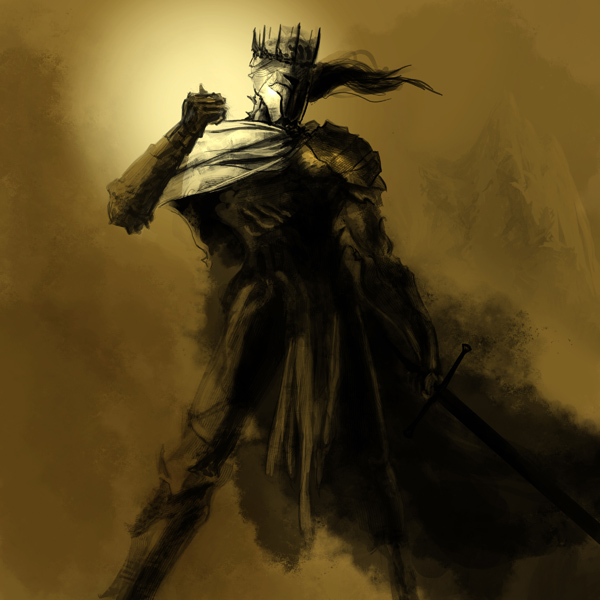
“For the Children of Ilúvatar were conceived by him alone; and they came with the third theme, and were not in the theme which Ilúvatar propounded at the beginning, and none of the Ainur had part in their making. Therefore when they beheld them, the more did they love him, being things other than themselves, strange and free, wherein they saw the mind of Ilúvatar reflected anew, and learned yet a little more of his wisdom, which otherwise had been hidden even from the Ainur.”
Welcome back to another Blind read! It’s been a while, but we’ve now completed all of H.P. Lovecraft and here is the first J.R.R. Tolkien! This week we dive into the origins of Middle-Earth as we begin our journey through “The Silmarillion.”
What I didn’t realize getting into this was that “The Silmarillion” is actually only a portion of the whole book. Theres’ this entrance, Ainulindalë, then the Valaquenta, and then it gets into the Quenta Silmarillion which is the bulk of the book. All told this story is, “an account of the Elder Days, or the First Age of the World.” Where The Lord of the Rings takes place at the end of the Third Age, this is the genesis story of how that land came to be.

We begin with “Eru, the One, who in Arda is called Ilùvatar.” I’m sure more will come clear as we move forward, but Arda is what the Elves call Earth, not Middle-Earth, so at some point in the future there must have been a rift which caused a separate world or just continent to come about. That may be because of the first Dark Lord, Melkor, who’s introduced in this history.
So Ilùvatar created the first beings to inhabit the world and the stars, and these beings were called Ainur, The Holy Ones. They “were the offspring of his thought, and they were with him before aught else was made.”

Ilùvatar “spoke to them, propounding to them themes of music; and they sang before him, and he was glad.” If that sounds like a bible verse, it’s intentional. Ilùvatar teaches them three themes of music. Bear in mind that he doesn’t teach them songs, but themes. The important distinction is that Ilùvatar is looking to create more than just the Ainur, he wants to see life expand, so the Ainur in turn use these themes to create Arda. The three themes, sung into verse, created different aspects of the world, and began to shape the history of what was to come. The Ainur were content to build this world, and revel in is splendor… except for one exception… Melkor.
“But as the theme progressed, it came into the heart of Melkor to interweave matters of his own imagining that were not in accord with the theme of Ilùvatar; for he sought therin to increase the power and glory of the part assigned to himself.”
To do so, Melkor “Had gone often alone into the void places seeking the Imperishable Flame; for desire grew hot within him to bring into Being things of his own.”
Melkor began to sing discordantly and outside of the themes Ilùvatar laid our for the Ainur, “until many of the Ainur were dismayed and sang no longer.” Ilùvatar then rose, “and he lifted up his right hand, and behold! a third theme grew amid the confusion, and it was unlike the others.” This third theme was the creation of Ilùvatar’s children… The Elves and the Men.
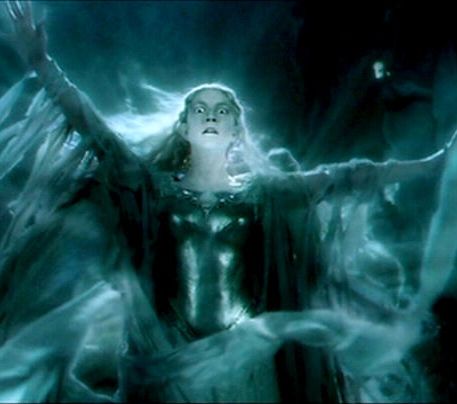
The music was discordant, with many battling melodies led from Melkor’s tones, until Ilùvatar stood, “and his face was terrible to behold.” This nearly reminds me of the influence of the one ring on Galadriel, to the point that I had to put the book down and contemplate where the power of that One Ring came from… could Ilùvatar be the source?
Ilùvatar shuts the Ainur down and shames Melkor: “And thou, Melkor, shall see that no theme may be played that hath not its uttermost source in me, nor can any alter the music in my despite.”
This is a very Old Testament thing to do. Ilùvatar created the Ainur from his thought and then gave them the themes to create the world. In text this seems to indicate that Ilùvatar wanted them to run with the themes and create the world (Arda) with the essence of the themes, but to create through their own lens. Melkor takes this a step too far, but Ilùvatar seems surprised that Melkor “The mightiest among them (Ainur)” might be able to actually take that step further. Then Ilùvatar tells them that they need to calm down; that they have no free will, because anything that they create with their music, was already foreseen by him. That everything they create is of him. That they cant in fact create anything that isn’t of his mind.
This seems to me the first big lie of Arda. If, indeed, Ilùvatar felt that this was true (the Ainur only being able to create what he could conceive) then why did he stop them? Why did his anger grow so much that he was “terrible to behold?” It’s because he had a specific vision and Melkor was leading a charge to alter that vision.
This strange reaction embarrasses Melkor and shames him, which only builds to bring out the darker side of desire.
Once Ilùvatar creates his Children (the elves and men), he decides he needs a place to house them, so “he chose a place for their habitation in the Depths of Time and in the midst of innumerable stars.” Which he names Ëa and it houses Arda.
The Ainur, once seeing the creation of Ëa, “…bent all their thought and their desire towards that place.” and this is where Melkor really begins his Satanesque fall. The Ainur are basically Angels (we’ll get into that a bit more in a minute) of which Melkor is one, but because of Hubris and desire, he creates a rift in the Ainur. He, much like many of the other Aniur who went to Ëa to assist in creation of that world, went “to go thither and order all things for the good of the Children of Ilùvatar…” but soon realizes that his jealousy and desire for power brought him there instead to “subdue to his will both Elves and Men,” because of “envying the gifts with which Ilùvatar promised to endow them.” A story which echoes the fall of the Lightbringer very closly.

The other Ainur who went to Ëa, were soon to become known as the Valar. There was Ulmo whom turned his thought to water and who “of all most deeply was he instructed by Ilùvatar in music.” It is because of this teaching that “it is said by the Eldar that in the water there lives yet the echo of the music of the Ainur more than in any substance else that is in this Earth.” (also another interesting aside. This is the only time in this history that Tolkien calls Ëa “this” Earth. Meaning that this was meant to be a history of our own world, which could also account for the very Christian backstory). There is Manwë, “the noblest of the Ainur” who was of the airs and the winds. Aulë who “Ilùvatar had given skill and knowledge scarce less than Melkor” took to the “fabric of Earth.”
These Valar were named “The powers of the world” and shaped Ëa in Ilùvatar’s ultimate vision, “but Melkor too was there from the first.”
Melkor finally had his fall. He claimed Ëa for his own, “This shall be my own kingdom; and I name it unto myself!” but again he was foiled because Manwë “called unto himself many spirits both greater and less, and they came down into the fields of Arda and aided Manwë.” to drive Melkor away.
There was peace for a time and the Valar, whom were imperceptible to the Eldar (the first of Ilùvatar’s children, the Elves) decided they wanted to walk among them, so they clothed themselves to look like Men and Women, but when Melkor perceived this and “His envy grew then the greater within him; and he also took visible form, but because of his mood and the malice that burned in him that form was dark and terrible.“
Again this follows the idea that these Valar are angels and Melkor is the fallen. They are invisible, except for when they wish to walk amongst the mortals and they can clothe themselves in our skin. They are beholden to Ilùvatar (God) and follow his instructions on creating a world for the Children of God, who are given more than they. But it is the Jealousy of Melkor which is the primary forge to create what the world could be. What’s fascinating in this respect is that Ilùvatar gave Melkor more intelligence and ability than any of the other Ainur, but if what he says is true and nothing can be created without his influence, then Melkor’s fall was known and, “Thus began the first battle of the Valar with Melkor for the dominion of Arda.” Of this battle little is known because the Valar struggled to keep the machinations of the Ainur from the Eldar, but Melkor fought against the Valar, and extended the creation of the world.
The only reason we know the outcome of that battle is because we know the world was created so we know Melkor failed in taking over the land, though the next history in the book is the Valaquenta, which is the account of the Valar from the perception of the Eldar, so I anticipate finding more out about these godlike beings and what they have done on Ëa!
Join me next week as we dive deeper into the history of Middle-Earth as we read through Valaquenta!
H.P. Lovecraft Final Thoughts
“It is absolutely necessary, for the peace and safety of mankind, that some of earth’s dark, dead corners and unplumbed depths be let alone; lest sleeping abnormalities wake to resurgent life, and blasphemously surviving nightmares squirm and splash out of their black lairs to newer and wider conquests.” – H.P. Lovecraft
Welcome back to another Blind Read! Well we’ve officially done it. We’ve read through every H.P. Lovecraft story I could find as well as all the August Derleth stories attributed to Lovecraft. I’ve already covered my final thoughts on August Derleth (which you can find here), so I wont be mentioning his work here, but I intend on covering Lovecraft’s writing style, touching on some of the work and making recommendations.

First and foremost, Lovecraft is a hard nut to crack. If you’re a casual reader his catalogue can be quite daunting. His language is archaic and complex, and his exposition is dense and verbose. I had no idea where to start when I began reading Lovecraft, and I dont think I started in the right place, but I intend on shining a light here in the dark places of Howard Phillips’ mind for the neophyte.
To me, the absolute best place to start to get into Lovecraft is the story “The Festival.” “Some fear had been gathering in me, perhaps because of the strangeness of my heritage, and the bleakness of the evening, and the queerness of the silence in that aged town of curious customs.”
The Festival holds all the elements you want in an introduction to Lovecraft. Ancestral ties, intense and submersed atmosphere, A classic Lovecraftian township, witchcraft, cosmic horror… you name it and this story has it. It follows our classic unreliable narrator as he heads to Kingsport for Yuletide whose, “fathers had called me to the old town...” There he finds himself involved in a nefarious ritual which includes the Necronomicon.
This wasn’t the first story I read of Lovecraft, but it was the turning point for me. Before reading this story I was on the fence, I really wasn’t sure if I liked the writing or not. I was upset because I thought there was going to be far more monsters and aliens and things like that interspersed within the text. What this story made me realize is that Lovecraft is all about the feel. His text is sneaky because as you read it it kind of just glazes over you, but the longer you read, and the longer you sit with the text, the more it sinks in and that familiar anxiety attributed to good horror is subsumed in your conscious. Lovecraft is at his best when he delivers atmosphere, and this story is dripping with it. Not only that, but this is also the most accessible story in terms of readability, which makes it one of the best jumping off points for all things Lovecraft.
If you’re not into the short stories and are looking for a novel, jump right into “The Case of Charles Dexter Ward.” “He bore the name of Charles Dexter Ward, and was placed under restraint most reluctantly by the grieving father who had watched his aberration grow from a mere eccentricity to a dark mania involving both a possibility of murderous tendencies and a profound and peculiar change in the apparent contents of his mind.” Not only is this novel cleaner and an easier plot line to follow, but it has some spectacular imagery and characterization… something which Lovecraft wasn’t known for.
Told in altering perspective form, this novel gets to the core of Lovecraftian horror without being overt, nor necessarily Cosmic, but with a grand backstory which brings historical witchcraft from Salem into Lovecraft’s own mythology. In case you hadn’t realized, witchcraft is at the core of Lovecraft’s fiction. Derleth made his fiction famous for the mythos, but even with those Cosmic deities, witchcraft was the unifying base. Characters over and over again utilize witchcraft as a means to an end, which more often than not ends up reversing course on them, just like you saw in the quote above. Many of these characters, including the titular Ward, use witchcraft in the guise of what they like to call “antiquarianism” where they study old books and genealogies, but it all comes down to a few books which ends up overpowering the narrator.
“The Case of Charles Dexter Ward” follows in this tradition, but there are enough pages for Lovecraft to build some really incredible atmosphere. We go through two chapters of introductions and then Lovecraft takes his time building tension and dread until we get to the ultimate conclusion. It’s a wonderful novel and a very good introduction to longform Lovecraft.

Don’t expect campfire tales when you read these stories. Don’t expect to be scared out of your gourd. There’s not much in these tales that will scare you while you’re reading them. Lovecraft’s genius is his precision. Every word chosen means something. Every reference is purposeful. Even the length of a story has meaning. These are the types of stories which dig into your subconscious and stick with you far longer than you’d anticipate. These are the types of stories which so surreptitiously describe a surface that all the sudden I developed trypophobia. These are the types of stories that make you second guess the glance that stranger gave you. They aren’t going to jump off the page and yelp with fright, but like all great horror does, they settle down into your mind like a parasite and feed on deep rooted fears you didn’t even know you had…but somehow Howard Phillips Lovecraft did.
There are many other tales I cut from this list, but some amazing notables are, “Dreams in the Witch House,” “The Dunwich Horror,” “The Music of Erich Zann,” “Pickman’s Model,” and the ultimate horror short story which delivers the most visceral and terrifying text… “The Rats in the Walls.”
Pick up these stories and take them slow. Analyze the text and let the master take you for a ride!
Join me next week as we take a brand new journey, and begin with The Silmarillion by J.R.R. Tolkien!
Post Script:
I would like to thank everyone who has joined the conversation and read along with me over these past few years. I used this convention as an excuse to read through H.P. Lovecraft’s tales, and as most times you take on a long project, it changes you through the process. This series of essays has made me a better writer and reader (you can tell by reading the first few of this series), but it has also tempered my angst over other’s opinions. I never experienced any kind of negativity I would expect through a Social Media (though there were absolutely differing opinions!) endeavor like this. That’s the main reason I want to keep going and move onto another Author whom people have trouble getting into past a few of his stories. Let’s continue the conversation and continue the positivity, and continue the opposing views.
Blind Read Through: H.P. Lovecraft / August Derleth; The Lurker at the Threshold, Conclusion

“After a long enough time to allow for the assimilating of this rapidly narrated series of curious facts, I asked, ‘Conceding that the data in these rare books does offer the solution of the events which have taken place in this corner of the State during the past two hundred years and more, what then, in your opinion, is it – which particular manifestation, that is – that lurks at the threshold, which is presumably the opening in the roof of that stone tower?”
Welcome back to another Blind Read! This week we not only conclude this novel, but bring our August Derleth journey to an end as well. Derleth has brought clarity to the mystery of Lovecraft, but whether that’s a good thing or not I’ll leave that up to you to decide!
We jump into the final section of the novel leaving the mystery open as to what happened to Stephen Bates. Instead there is a jump in narrative to the perspective of Winfield Phillips who was the understudy of Dr. Seneca Lapham of Miskatonic University. We find that at the urging of Dr. Harper, apparently “late of the library staff,” Stephen Bates delivered a manuscript to Dr. Lapham and “urged Dr. Lapham to read it at once.”
The stupidity which runs rampant in this story apparently effected the previously forward thinking Bates as well, because in an effort to ameliorate his cousin he decides to perform a task asked of him by Dewart and the ersatz companion Misquamicus. They ask him to move the strange stone with the strange markings, of which Dewart previously removed from the peak of the tower, only because “…it seemed that neither he nor the Indian nor the two of them together could manage that marked stone which my cousin had dislodged from the roof of the tower.” So, naturally, Stephen does it and removes the very last vestige of protection from the area by removing the Elder Sign.
They speak for a while, and Dr. Lapham shows him a Bas-relief with a cephalopod looking creature with long tentacles, to which Bates replies “‘It looks like the things that flew about near the tower – that might have made the clawprints – but it’s also like the thing to which my cousin was talking.“
Dr. Lapham nods and shakes his hand and Bates takes his leave. The majority of the remainder of the book is a rumination on the mythos and clarification of what the mythos is. It seems obvious to me at this point (without reading the correspondence between Lovecraft and Derleth) that this novel has a direct point, beyond just being a fun horror story. This last chapter, alongside events which happened earlier in the tale, feel like Derleth sat around and decided that Lovecraft’s Yog-Sothothery was just too complicated. It was too vague for the modern reader. Derleth took it upon himself to clarify the mythos and put the various gods into specific categories because, in general, that’s how humans work…we need to put things in buckets. Lovecraft’s insidious horror was so pervasive because of how vague it was. Lovecraft relied on the brief description and let your mind do the rest of the work. This tactic ends up making for more difficult reading, but then your mind takes over and rather than letting the imagery go, it builds upon it and seethes into your unconscious. It’s like watching the original “The Haunting” movie from the sixties and then watching the 1999 remake. It’s what you don’t see that scares you. The moment you put a face to something you are suddenly able to identify it and the point of Lovecraftian horror is removed. Derleth, in trying to make the mythos more accessible, has ostensibly removed the fear from the god like characters and made them anthropomorphic. They are no longer apathetic, but now nefarious.

What Derleth does in this last portion which I did find fascinating was tying together our history through anthropology with these Elder Gods. He speaks of mysterious things like “The strange sculptures and carvings of Easter Island and Peru.” and mythological creatures such as Wendigo. We even get one of the first “almost” scientific references to ghost hunting…a precursor to books and movies such as “Hell House;” “I…will propound a theory of psychic residue, but I think it is far more than that – far, far more…” except Lapham is saying that this residue is from the outsiders, not ghosts.
To work out what their next steps are the two men then spend pages and pages of text clarifying and demystifying the mythology. We find that the Great Old Ones, “had some correspondence to the elements – as of earth, water, air, fire-” and had followers who effected certain ‘openings’ through which the Great Old Ones and their extra-terrestrial minions might enter.” who are these Great Old Ones? To Derleth, they are:

“The first among them is Cthulhu, who lies supposedly “dead but dreaming” in the unknown sunken city of R’lyeh, which some writers have thought to be in Atlantis, some in Mu, and some few in the sea not far off the coast of Massachusetts. Second among them is Hastur, sometimes called Him Who Is Not To Be Named and Hastur the Unspeakable, who supposedly resides in Hali in the Hyades. Third is Shub-Niggurath, a horrible travesty on a god or goddess of fertility. Next comes one who is described as the ‘Messenger of the Gods”-Nyarlathotep – and particularly of the most powerful extension of the Great Old Ones, the noxious Yog-Sothoth, who shares the dominion of Azathoth, the blind and idiot chaos at the centre of infinity.”
The two men then tell us, “...that without Alijah Billington was engaged in some kind of nefarious practice which may or may not have been akin to sorcery.” as they correlate what the Necronomicon says and tie it together with the history. So apparently I was wrong about Alijah not being involved, but what’s interesting is that he was the one who sealed everything up. One has to wonder if this were not just another case of an ancestor possessing his offspring for a longer life, like we’ve seen so many times before in both Lovecraft and Derleth, and when Alijah realized what was happening, he sealed off the tower with the help of the Elder sign and fled the country.
Winfield and Lapham speak of the “rules” and how they’ve all been broken.
- “The water ceased to flow of itself“
- “Dewart molested this (the stone block with the elder sign) in precisely the way Alijah hoped it would not be disturbed.
- “Finally, the entreaty to which reference is made in order to effect the primary stage of contact with the forces beyond the threshold.”
Each and every one, with the help of Stephen Bates being stupid, has been effected and Richard, in the body of Dewart, is ready to bring forth his outsider.
In an effort to tie everything together they speak about the window: “I suggest the window is not a window at all, but a lens or prism or mirror reflecting vision from another dimension or dimensions – in short, from time or space.” and it was only when looking through this window and getting a strange vision that Dewart “felt the compulsion to dislodge the block set into the roof.”
They even get into what these outsiders are. If I’m being honest this was the story I was looking for the entire time I read Lovecraft and I’m only getting it now, here at the end of all things. We get the history of the war between the Elder Gods and the Great Old Ones and the distinction between them (I’ll put this passage in the post script), but now that I’m reading it in this context I’m a little let down, which I find curious.
I love playing board and role playing games, and have played Call of Cthulhu many times. Every time there’s a scene almost exactly like this last chapter, where the atmosphere is stuffy but cozy, as your characters uncover eldritch truths in hidden rooms or libraries. Obviously Chaosium, the company who created the games, took quite a bit of narrative out of Derleth. But there’s something missing. The depth and visceral emotional realness that is Lovecraft is missing, and that makes this feel like watching “The Librarian” instead of watching “Indiana Jones,” both you have to suspend disbelief, but somehow through character and setting and plot, Indiana just feels that much more realistic and relatable. But I digress…
Dr. Lapham tells us the way the Elder Gods were able to defeat and lock away the Great Old Ones was by the use of the Elder Sign (See? Elder Gods used their sign, which was powerful enough to lock up these alien Titans) which turns out to be “‘Armor against witches and daemons, against the Deep Ones, the Dholes, the Voormis, the Tcho-Tcho, the Abominable Mi-Go, the Shoggoths, the Ghasts, the Valusians and all such peoples and beings who serve the Great Old Ones and their spawn…carven out of grey stone from ancient Mnar…‘”
Armed with this knowledge they decide to go out and confront Richard Billington and his assistant Quamicus. They get out to the stone tower and find Billington in Dewarts body up on the tower doing the incantation to bring forth the Lurker at the Threshold:
“Iä! Iä!N’ghaa, n’n’ghai-ghai! Iä! Iä! N’ghai, n-yah, n-yah, shoggog, phthaghn! Iä! Iä! N’ghai, y-nyah, y-nyah! N’ghaa, n’n’ghai, waf’l pthaghn – Yog-Sothoth! Yog-Sothoth...”
Finally we have our Big Bad! Yog-Sothoth! The creature so pervasive on our world in Lovecraft’s opinion that he called his mythos Yog -Sothothery! This is a pretty brilliant move by Derleth to have the Lurker at the Threshold be Yog-Sothoth because that’s the diety who is closest to our world. Not floating through the ether like Azathoth, not dead and dreaming under the sea like Cthulhu, or Dagon. Not lost to space and time like Nyarlathotep (though I really want to see something with him in it! I have “Khai of Khem” by Brian Lumley another Lovecraftian antecedent, in hopes that it’s about Nyarlathotep!). This whole novel, less so the short stories I read first, seem to be a nod towards Lovecraft and a hope to bring his strange and wonderful mind to the masses, and he proves it here by bringing forward Yog-Sothoth. Or does he?

Dewart trails off at the end of the incantation because Dr. Lapham brings out a firearm, and in the most anti-climactic ending, merely shoots the man. But then! Quamicus gets up onto the tower and continues the spell! We might finally see a Great Old One…nope Lapham shoots Quamicus too, and thus ends our tale.
At least that’s how I thought it was going to end. Derleth slaps on one final paragraph right there at the end…it’s a vision of what Winfield, our narrator, thinks he sees:
“great globes of light massing towards the opening, and not alone among these, but the breaking apart of the nearest globes, and the protoplasmic flesh that flowed blackly outward to join together and form that eldritch, hideous horror from outer space, that spawn of the blankness of primal time, that tentacled amorphous monster which was the lurker at the threshold, whose mask was a congeries of iridescent globes, the noxious Yog-Sothoth, who froths as primal slime in nuclear chaos forever beyond the nethermost outposts of space and time!“
So we may not have gotten a good look at any of the Great old Ones, but we got some great insight into what they and who they are. The story itself as a total for the novel isn’t very complete, but it was interesting to see things from different characters perspectives.
The novel itself is a bit bland, and difficult to get through, not for the same reasons that Lovecraft is hard to get through, but because Derleth has a penchant for meandering. It does feel like this was the appropriate send off to this/these author/authors, because, like I said earlier, we finally got what we were initially intending on getting when I started this project those four plus years ago. A understanding about the difference between The Great Old Ones and the Elder Gods.
Is this something that’s interested you? Do you want to read Lovecraft, but are daunted by his complexity? Join me next week as we review favorite stories and final thoughts on H.P. Lovecraft!
Post Script:
As promised, here is the passage about the conflict between the Elder Gods and the Great Old Ones…
“Ubbo-Sathla is that unforgotten source whence came those daring to oppose the Elder Gods who ruled from Betelgueze; the Great Old Ones who fought against the Elder Gods; and these Old Ones were instructed by Azathoth, who is the blind, idiot god, and by Yog-Sothoth, who is the All-in-One and One-in-All, and upon whom are no strictures of time and space, and whose aspects on earth are ‘Umr At-Tawil and the Ancient Ones. The Great Old Ones dream forever of that coming time when they shall once more rule Earth and all the Universe of which it is part…Great Cthulhu shall rise from R’lyeh; Hastur, who is Him Who Is Not To Be Named, shall come again from the dark star near Aldebaran in the Hyades; Nyarlathotep shall howl forever in darkness where he abideth; Shub-Niggurath, who is the Black Goat With a Thousand Young, shall spawn and spawn again, and shall have dominion over all wood nymphs, satyrs, leprechauns, and the Little People; Lloigor, Zhar, and Ithaqua shall ride the spaces among the stars and shall ennoble those who are their followers, who are the Tcho-Tcho; Cthugha shall encompass his dominion from Fomalhaut; Tsathoggua shall come from N’kai…They wait forever at the Gates, for the time draws near, the hour is soon at hand, while the Elder Gods sleep, dreaming, unknowing there are those who know the spells put upon the Great Old Ones by the Elder Gods, and shall learn how to break them, as already they can command the followers waiting beyond the doors from Outside.”
Updates 08/26/21

Hello everyone!
I anticipated releasing the conclusion of Lurker at the Threshold today, but due to a WordPress blip, half of the essay was gone when I logged on this morning. So that essay will be coming to you next week while I re-write it, followed by an essay on some final thoughts of H.P. Lovecraft. What I want to spend the rest of this update doing is letting you know what’s coming after that!
Blind Read Series:

I’m going to transition directly from H.P. Lovecraft to J.R.R. Tolkien (I didn’t think there were enough initials in my titles!). I read The Hobbit as a child and loved it, but when I started to read The Lord of the Rings, I was stuck at Tom Bombadil. I eventually read that massive tome in three sections, but I’ve always been interested in Tolkien’s lost tales and histories. I know many people are, but the text itself is daunting, so I intent on continuing the Blind Read series and reading, analyzing, demystifying, and connecting all of Tolkien’s side tales and histories of Middle Earth. In three weeks from today I’ll release the first section of the Silmarillion!
Short Stories:
The weather is cooling and the spooky season is coming. I intend to write a number of short shorts (somewhere in the ballpark of 1000 words) to release periodically in the fall months. These are going to be similar to the Universal Monster shorts I did last year, but Halloween will be the connecting factor this year. This is a call back to all those terribly awesome 80’s horror/schlock films such as The Monster Squad, Fright Night, and Hocus Pocus (I know, I know, that one is the 90’s). So come join me for some kinda, maybe not so scary fun!
Elsie Jones Adventures:
Get ready for a new look of Elsie Jones! I’ve been passively looking for a new Illustrator to take over the series, but this fall I’ll continue in earnest. Get ready for a new authors edition of Elsie Jones and the Book Pirates, and a cleaner Elsie Jones and the Captain’s Guard. Twelve of the 15 books are written, so I anticipate a good release schedule! If you’re curious you can purchase any of the first three books here!

The Legacy:
Currently in it’s fourth edit. This is my adventure novel I finished last October. Think if Dan Brown partnered with Indiana Jones this is what you’d get! I’ve always loved the intrigue and the adventure of following the clues to discover and uncover a mystery! Inspired by the incredible Oak Island (research it if you don’t know about it). I’m hoping to have this published in some fashion in 2022.
The Monster in the Woods:
This is the first book in my Revolution Cycle. I’ve been stewing on this series for 20 years or so, and I’m finally getting it to where I want it. I’ve already written two novels that’s I’ve been unhappy with and consider exploratory novels into the world, but I’ve been spending quite a bit of time outlining everything that will go into this 10 book series. The first book is very heavily inspired by The Goonies (I’m catching a 80’s inspiration thread here), but the larger story is told with the backdrop of impending war, and how the group from the first book will deal with it. The Monster in the Woods is a Heist/Gooniesesque adventure, with a few twists along the way.
That’s all for now, with much more on the way!
August Derleth, Final thoughts
“There was something about him where he stood all by himself under the trees and the stars, on the edge of the streetlight’s glow in the darkness, that was symbolic of many men and women, not alone in this Sac Prairie, but in all the Sac Prairies of the world, something which spoke, out of that pathetic, ludicrous figure, of the spiritual isolation of so many people, something which made the thoughtful onlooker to wonder what thin line divided him from that other, knowing perhaps that the distance of chance or Providence was less great than the few steps separating one from the other in that darkness.”
Welcome back to another Blind Read! This week we’re switching gears with only one more week left in the Lovecraft series, I reflect back on the time we’ve spent talking about and analyzing August Derleth, the self imposed protégé of Howard Phillips Lovecraft.
To be brutally honest, I’ve not been a huge fan of August Derleth’s work. On the surface it seems like he hits all the bullet points, however his writing style is not conducive to the style of horror in which Lovecraft wrote. I’d actually be much more interested in reading some of his other works…in fact the quote from the introduction to this essay comes from a different story he wrote entitled, “Walden West.”

Derleth is one of the earlier instances of what I would consider calling the “story smith,” or campfire story teller. What I mean by that, is a few things… the text is very general and basic. The plot is straightforward and direct. The story is a direct line. Think about authors such as Robert Bloch, Richard Matheson, and Stephen King. These are not authors who spend time worrying about their word selection. These are not authors you would consider to be necessarily literary. This is not a bad thing, it’s just a different style of writing.
Lovecraft was something all together different. He was incredibly perfidious, and every word was placed in just the right place. Looking back on his stories they were difficult and complicated and, sometimes, hard to process. But that’s what made him so perfect for this kind of horror. Lovecraft’s description is written in a such a way that at first glace (or first read as it were) it doesn’t seem particularly scary, but the more it sits with you, those little turns of phrase bloom like fungus in your brain and you begin to think about the stories when you least expect them.
Derleth isn’t like that. He tries to alter his writing style to match Lovecraft’s, but instead of being insidious, it just becomes more drawn out. He uses run-on sentences and labyrinthine verbiage, but instead of feeling more like Lovecraft he ends up just sounding pretentious.

It’s a bit unfortunate that Derleth decided to publish these stories as H.P. Lovecraft instead of himself, because, quite frankly, the stories would have been far greater had he just not tried to copy Howard’s style. A very specific story I can reference is “Witches Hollow” which was an utterly unique tale; told in an entirely different voice from the rest of his Lovecraft knock offs. In my opinion this was his best story because it wasn’t trying to clarify what Lovecraft had done before. It wasn’t trying to prove that it was a part of the Lovecraft ethos, it was just a great story that used elements created by Howard Phillips and moved out onto it’s own. This is what Lovecraft wanted his created world to be anyway. Other authors like Clark Ashton Smith and Robert Bloch, and later like Brian Lumley and Thomas Ligotti utilized the mythos as a unique genre rather than an homage to Lovecraft himself. Stories like this always turn out better because you can be yourself without being beholden to what the previous author wanted.
The other downfall with Derleth is his preference for quantity. He was known to have said that he could sit down and write a “quality story” every day. The issue is that he never checked his facts, nor did he care overly much about grammar and spelling errors (this is an assumption on my part because of all the syntax, grammar, and Lovecraft facts which were incorrect. He may be very happy with the outcomes here). You could say the same about Carroll and Graf (the publisher of the books I read by Derleth…which I probably wouldn’t recommend if you could find another version), and it’s possible that it’s their oversight here and not his. But the larger issue is Derleth changing facts of Lovecraft to fit his story.

Let me clarify here. If Derleth were writing these stories as he should have been, using his own name, then I’d have zero problem with him changing facts or bending the narrative, but the moment he uses the name Lovecraft and doesn’t use his own name, that sullys the name of Lovecraft. You’ll see people online saying they hate Derleth for what he did. They hate him for using Lovecraft’s name and producing the stories he did, and there is some validity to thier argument.
I’m a little torn, because I truly believe that Lovecraft would not be in the public consciousness like he is now had it not been for Derleth creating Arkham House Publishing and continuing to produce stories in Lovecraft’s name all the way into the 70’s. Even companies such as Chaosium who produced multiple board games and the role playing game Call of Cthulhu, utilized more elements of gameplay from Derleth (The Investigator trope, and the Elder Sign) than they did from Lovecraft. Derleth is forever entrenched into this sub-culture, whether you like it or not.
Which proves that his stories had something to show off. Derleth is basically Lovecraft lite. I’d highly recommend starting with Derleth if you’ve been having difficulty breaking through the language barrier Lovecraft presents. Derleth’s stories are simpler and considerably less nuanced, which makes them easier to digest. One can get a feel for the world Lovecraft created without taking a deep dive – then once you feel the hook, you can jump into Lovecraft proper and get the real experience.

We’ve come a long way in the past four years. I started out not really knowing where to go with this project and it’s been so rewarding and fun to get the full experience of two different authors in one. I’ve also come to a brand new group of people and have met some great folks discussing the nuances of these authors. I really wasn’t sure if I was going to keep going, but the experience has been so great that I’m going to move onto a new author whom I’ve always wanted to dig deeper into but have been too scared to.
When I was a kid I read “The Hobbit” and I loved it. I tried to read “The Lord of the Rings,” but I had difficulty getting past the language. It wasn’t until about 10 years ago that I finally read those stories, but there were so many loose threads in that book that left me wanting more. There’s an entire history beyond the novels of those worlds and that’s what I intend on jumping into next. We have the last installment of “The Lurker at the Threshold” next week, then one final “last thoughts” on Lovecraft himself, before we switch genres and head straight into “The Silmarillion” by J.R.R. Tolkien. Join me and let me know your thoughts!
Blind Read Through: H.P. Lovecraft / August Derleth; The Lurker at the Threshold, pt. 4

“I saw my cousin far more clearly, as I later realized, than I should have seen him by all the laws of perspective and sight applied to the distance, the time, and the setting, but at the moment this did not occur to me as forcefully as it might otherwise have done for a very vivid reason – because I saw far more than these fundamentals of the setting, which seemed, as it were, little more than a frame for the utterly horrible and frightful visions which presented themselves to my view from the study window.
“For my cousin Ambrose was not alone.”
Welcome back to another Blind Read! This week we progress into a crescendo of information, solidify Derleth’s legacy in Cosmic horror, and bring Stephen Bates’ manuscript to a close.
We start this section with Stephen and Ambrose returning “‘home,’ where he (Ambrose) ‘belonged.‘” But we find that while the two men were in Boston there were two mysterious deaths which sound remarkable familiar. The “bodies of two victims…both appeared to have been dropped from a height, varying between them, both were badly mangled and torn, however recognizable...”
This strikes me as reminiscent to either “The Haunter in the Dark” or the flying Mi-Go from far reaching space (These may actually be the same creatures. The descriptions for both are vague enough that I truly think one of the Mi-Go was called out and was the titular Haunter.), called out of space and time by Ambrose’s calls and killed the two people as sacrifices necessary to complete the ritual and bring forth, whichever deity Ambrose (or Richard Billington taking over his body) is working to summon.
As soon as they get there, Ambrose “began to act in a manner completely antipodal to his conduct as my (Stephen’s) winter-guest in the city.” But one other thing went terribly wrong as soon as they arrived.
“The frogs – do you hear them? Listen to them sing!” Ambrose cries out to Stephen. It’s remarkable that Stephen doesn’t get it even after reading all the documents of correspondence, because the batrachian crying is the last line of defense…and we find out a few pages later, the Whippoorwills are crying out in song.
Derleth works on building the tension by reiterating the rules and even going so far as recalling a portion from the Necronomicon: “…that writer described only as the ‘mad Arab,’ because the amphibia were of the same primal relationship as the sect of followers of the Sea-Being known as the ‘Deep-Ones.'”
Derleth describes the noises for a few pages, ramping the unease, until he steps up his game by stating that “there was an old woman in Dunwich who had several times been awakened in the night by the voice of Jason Osborn…and decided finally that it came from somewhere ‘beside her, or out of the space or the sky overhead.“
Don’t know who Jason Osborn is? He’s one of those victims who “appeared to ‘have been dropped from a height.'”
Stephen thinks about this for a while and decides that he needs to go speak with Mrs. Bishop based upon the notes from his cousin.
Immediately she invites him inside because of his car. “‘Tis the same car the Master come in – yew come from the master!” It’s an odd reply because she thinks of Ambrose as her “Master” or rather she knows that Richard has taken back over Ambrose’s body, specifically because of the music of the frogs, “I been a-hearin’ ’em a-callin’ steady, an’ I know they’re a-callin’ fer Them from Outside.”
Stephen asks her what actually happened before. Why did Alijah leave? What is actually going down here?
“It never got Alijah. Alijah shut It up an’ got away. Alijah shut It up – an’ he shut up the Master, too, out there, Outside, when the Master was ready tew come back again after thet long a time. Ain’t many as knows it, but Misquamicus fer one.” But who is the Master? “He wore a Whateley face an’ he wore a Doten face an’ he wore a Giles face an’ he wore a Corey face...”
She never gives a clear understanding of who the Master really is, although obviously he’s either a priest of one of the Great Old Ones, or he’s one of the Great Race of Yith (In Lovecraft they were observers, in Derleth they are interferers with a nefarious bent). The Master is not one of these individual humans she speaks about, but rather some sort of Outsider who has the ability to jump into others bodies and control them. So when she calls Ambrose “Master” she ain’t speaking about Ambrose, she’s speaking about this Outsider who has invaded and taken over his personality and body.
As Mrs. Bishop and Stephen are speaking, he remembers the correspondence between Alijah and someone named Jonathan Bishop, who in those letters speaks of Alijah as Master as well. We find out that he was Mrs. Bishop’s grandfather who “come on tew some uv the secrets an’ he thought he knew it all.” He brought his own unfortunate end by trying to call “It” down.

She tells Stephen he should have a “sign uv perteckshun” which will stop them from being able to hear what’s happening on this side of the multiverse. We also know from previous Derleth that this sign of protection, otherwise known as the Elder Sign, can also be used to imprison outsiders. In fact that’s what Ambrose carved out of the stone tower at the beginning of this novel which was holding a Outer God in prison, but it’s also what keep Cthulhu imprisoned and sleeping in R’lyeh.
Mrs. Bishop continues to speak of the sign and how it will protect him and what the outsiders can do, using Jason Osborn as an example, and ends with this: “An’ the wust uv it is, yew doan’t see Them a-tall – but yew can tell when They’re near by the smell, the wust smell ever – like suthin’ straight aout uv Hell!”
I bring this up, not only because it’s notable that you can tell the Outsiders by their smell, but also because of what the smell means for each author. In Lovecraft the smell was a fruiting fungous smell. Earthy and putrid and nauseating. It was supposed to indicate something odd, something not of this world all the while eliciting disgust about what the fungus of space would do. Fugus it self can grow on anything, and generally overruns it’s host body which is the feeling Lovecraft wanted his readers to feel as they read his works. That slow insidious crawl.

Derleth took all that Lovecraft did and layered on his religious tendency over top of it. Thus the smell was out of Hell, it became a sulfurous smell rather than a fungoid smell, still eliciting innate fears, but, to me, Lovecraft’s is far more powerful, because a sulfur smell just brings about images of demons, which are in the image of man, whereas the outsiders are something we cant even fathom. Something that can break your mind just by looking at them. Something beyond comprehension.
Eventually Stephen goes back to the house and he finds that he’s alone. He passes the strange leaden window and decides to take a look through it, only to find that it’s become a sort of magnifying glass which shows the tower and circle of stones in perfect clarity. We get the opening quote of this essay, and find out whom is with Ambrose:
“On the roof, as it were one on each side of him, were two toad-like creatures which seemed constantly to be changing shape and appearance…And in the air about him were great viperine creatures, which had curiously distorted heads, and grotesquely great clawed appendages, supporting themselves with ease by the aid of black rubbery wings of singularly monsterous dimensions…the things I saw had an existence quite apart from my imagination.”
The space around Ambrose becomes “In Flux” popping into existence and vanishing, as if another dimension were trying to enter into our world and something even more insane happens:
“…the Thing, which first appeared before me as an angular extension into space, with its focal point before my cousin Ambrose at the tower, became in succession a great amorphous mass of changing flesh, squamous as certain snakes, and putting forth and drawing back constantly and without cessation innumerable tentacular appendages of all lengths and shapes; a horrible, blackly furred thing with great red eyes that opened from all portions of its body; a hellish monstrosity which was octopoid in seeming to have become a small, shrivelled mass of torso with tentacles hundreds of times its size and weight which whipped backward in a fanning motion into space, and the ends of which were literally sloughed or melted away into distance, while the empurpled body opened a great eye to look upon my cousin, and disclosed beneath it a great pit of mouth from which issued a terrible, if muted, screaming...”
This visage only lasts a few moments before suddenly Ambrose is alone on the tower, but it’s a significant moment in literature. This is truly the first time one of the Great Old Ones is described in such detail. This is undoubtedly Yog-Sothoth, whom I believe Derleth has decided to make his big bad for this novel (Poor Nyarlathotep…maybe next time). Lovecraft has previously given short descriptions, but nothing definitive, this is the first time we get such detail and it’s this description, I believe, which fuels the fire for all the future art to come out which visualize the Great Old Ones.
Stephen says he doesn’t sleep that night, but promises himself the next morning he’ll leave. So when he wakes he sees Ambrose who “seemed very cheerful” and he mentions that he has acquired help. “In fact, he is an Indian…his name is Quamis.”
I think I was previously incorrect about who and what Quamis really was. If you remember in part 2, I spoke of him being innocent and fighting against the evils. I think that maybe our shaman just might have something to do with the whole craziness to begin with!
What do you think? Let’s find out next week in the conclusion as we begin the last chapter entitled “Narrative of Winfield Phillips.”
Blind Read Through: H.P. Lovecraft / August Derleth; The Lurker at the Threshold, pt. 2
“The Fourth letter was in some was the most frightening. A kind of pall of astonished horror had been laid upon Dewart by the first three letters; but in the fourth there lay an incredible suggestion of shuddersome terror, though this was not so much evident in the words as in the implications.“
Welcome back to another blind read! This week we slide into foreshadow with the potential for much more nefarious events on the horizon as we delve deeper into what or who the Lurker is.
This conclusion of part 1, “Billington’s Wood” set’s up a very exciting story – probably the most exciting of any I’ve seen in Derleth. Last week we established that Dewart, our main protagonist, inherited a house in the back woods of Massachusetts outside of a little town called Dunwich. He finds a strange colored glass window with strange designs, lots of books and history of his ancestors, and an odd tower surrounded by stone rings. When he heads to the tower he carves out a stone with an Elder Sign on it to get a view of the area.
There was much talk of naming conventions, as Derleth tried his best to fool us as to which character he was introducing (I’m still hoping the main antagonist is Nyarlathotep!), but this week we join our protagonist Dewart with a quest for more information.
He heads out into Dunwich in an effort to discover the truth of Misquamacus, a native mystic and Laban Billington’s companion, but “when he arrived at the cluster of houses which was Dunwich, though no sign survived to identify it, most of the dwellings being deserted and in various stages of ruin.”
He looks around until he finds a “mercantile establishment” with “Two shabby old men (who) leaned up against the building, and, taking in their appearance of mental and physical degeneracy and inbreeding, Dewart addressed himself to them.”

This passage is so endemic in Lovecraft and Derleth, that I’ve been ruminating over it for quite some time. So much of horror is the fear of the unknown, and none do that theme better than Lovecraft. The general population at the time of this novel’s publication however (and quite honestly still to this day) fear what would make a person live out off the grid and only with a few kin. That fear that they would have to live in squalor and the only possibility of affection or twisted love would be inbreeding translates into monstrous intent. If they’re willing to do that to themselves just imagine what they would do to a normal person! This is echoed in movies like “The Hills Have Eyes” and James Dickey’s haunting novel (and the movie they made of it) “Deliverance.”
Both Lovecraft and Derleth use this internal fear to set up the unease of their plots. In this story Dewart feels at home and does stupid things (like carving out an Elder Sign) because of his comfort, but the tone changes when he heads out into these remote locals. There is tension in the interactions and the writing. Dewart still hasn’t chosen to believe in the magic or the otherworldly nastiness that he could potentially unleash. At this point in the story he’s only worried about the human horror which could blossom in these back country yokels if they get their ire up.
The two “shabby old men” are just as weary of outsiders as Dewart is of the down home Dunwich folks, and when he asks if either of them know of any Indians around he merely gets, “‘Hain’t no Injuns left.'” but the other companion notices something peculiar about Dewart’s look and asks him straight out if he’s a Billington. Dewart, feeling emboldened relays his bloodline… that he’s the great-great-grandson of Alijah.
“He had no sooner identified himself than both the old men underwent a complete change in manner; from simply curious individuals, they became almost fawning and subservient.” They tell him to go see Mrs. Bishop for more information, but why would they become fawning and subservient? Historically in Lovecraft (and pretty much every Derleth story) it’s because of a tainted bloodline, and the down home folk have been through so much horror already that they’re weary of people from these bloodlines…but why subservient? Could Derleth be implying that the whole town has become complicit in the outsider cult? Let’s find out…
Dewart heads off to meet her Mrs. Bishop. You might remember that the Bishops are very closely connected with the Marshes of Innsmouth fame that there is a good chance Dewart is about to go out and meet with a descendant of a Deep One, but an old woman answers the door with “rather a conviction of hidden knowledge, and in addition, a most disturbing sense of secret, almost contemptuous superiority…”
She asks him right out of he’s looking for Quamis, and lets him know that Quamis “ain’t never coming back.” She gives him all kinds of information about Alijah, telling him “‘ye’ll not do like Alijah did, an’ mind – yew leave the stone an’ keep the door sealed an’ locked so thet them from Outside can’t git back.‘” Oops.

But she tells him that the information he’s looking for is in Alijah’s old books. He gets ready to leave and the old woman mumbles to herself in some strange language, which Dewart tries to decipher: “N’gai, n’ga’ghaa, shoggog, y’hah, Nyarla-to, Nyarla-totep, Yog-Sotot, n-yah, n-yah.” He thinks it’s strange, but nothing else. He then goes off to meet a Mrs. Giles in hopes to find a picture and discovers that she and her son are scared of Dewart from his ancestral appearance, holding a Kewpie Doll as if it were a talisman to ward off evil. He leaves mourning these people because their poverty and depravity was “infinitely more terrible because it carried with it implication of self-choice” showing off his hubris and ignorance before heading home.
But there is something strange going on here. It could just be Derleth trying to throw us off the track again, but why in the world would the two old men be subservient, Mrs. Bishop be so willing to help, and Mrs. Giles so scared of what’s going on? and what’s up with Mrs. Bishop intoning the Great Old Ones under her breath? We’ll have to wait because we never find out in the first section of the book.
Getting back to the story, the next day Dewart’s cousin Stephen Bates (whom the next section of the book is named after) “summons” Dewart to Boston to collect some documents. In said documents are Alijah Billington’s rules for taking over the Dunwich property:
“He is not to cause the water to cease flowing about the island of the tower, nor to molest the tower in any way, nor to entreat the stones.” Oops agian.
“He is not to open the door which leads to strange time and place, nor invite Him Who lurks at the threshold, nor to call out to the hills.” Could that be Nyarlathotep? Yog-Sothoth?
“He is not to disturb the frogs, particularly the bullfrogs of the marshland between the tower and the house, nor the fire-flies, nor the birds known as whippoor-wills, lest he abandon his locks and his guards.” Well at least he’s been good on that front…so far at least!
“He is not to touch upon the window, seeking to change it in any way.” We’ve had notice of the window, but we don’t truly know what it is yet, nor have we seen it close up.
Otherwise the last rule is just keep the land or destroy it, don’t sell it.
Dewart hems and haws over these rules, trying to figure out what the big deal is, then he decides to go get a closer look at the window. This is the first point in the story where things start to get a bit…otherworldly.
“By some trick or arrangement of moonlight on the leaded panes, the window gave the unmistakable appearance of a grotesquely malformed head…with a vast dome-like forehead…and the nebulous outline trailed off in a hideous representation of what seemed to be tentacles.”
He moves a chair over to get a closer look, “when the entire window seemed to become animated, as if the moonlight had turned to witchfire, as if the outline, spectral as it was, had come to malign life.” But then suddenly it stopped and became just a window again, a window which aimed his view out to the mysterious tower and circle of stones, where he saw “something flaffing darkly around the tower.“
He’s upset about what he experienced, but decides to go for a walk because, surely, all of those things were put into his mind because of the message from his great-great-grandfather. It’s dusk, but he saw a strange glow and heard voices raised in fright coming from Dunwich. Weirded out, he went back to the house and decides to give it a rest for the night.
The next day he wakes and listens to the radio to hear of a corpse found, “but the body is so mangled and torn t would seem as if the waves had beaten it up along the rocks for a long time.”
Derleth briefly misdirects us as Dewart worries that there may be a Massachusetts version of Jack the Ripper or a copy cat of the Troppmann murders, although one really has to wonder why he even discusses this up seeing as a body “beaten against rocks” is a far cry from being dissected like those two murderers… but this is what Derelth does. He works his misdirections in, to both build suspense (now he has you thinking about serial killers in conjunction with the cosmic horror), and to try and keep you guessing about what’s going to happen. In fact the next few pages in the book are Dewart ruminating on what Alijah’s “rules” are all about and giving reasons for what they could possibly mean, obviously with his conjectures all being false or just half truths, until he comes across a few letters between Alijah and some correspondent named Jonathan B.
These letters have all mention of cosmic entities. Jonathan B. mentions on many occasions that he is a faithful servant to Alijah, and despite the normal ancestral degradation you would expect from Lovecraft or Derleth, these letters seem to exonerate Alijah. It seems as though Alijah was a fighter against “servts. of N. or of Yog-Sothothe” and is indeed the one who sealed the Lurker with the Elder Sign.

There is also mention of another “Him who is not to be named.” No this is not Voldemort, but very potentially a precursor to him. This, I believe, is the nefarious King in Yellow, better known as the Unspeakable…better known as Hastur. But how does he fit in the Cthulhu Mythos?
Remember that it wasn’t until Derleth that the Cthulhu Mythos were called the Cthulhu Mythos…Lovecraft actually described them as Yog-Sothothery, based around his favorite of his otherworldy gods. This novel was published in 1945 which was significantly earlier than nearly all of Derleth’s stories, and thus far, with the exception of “Witches’ Hollow,” this has been the best. Derleth seems to be at the top of his game here, where later in his career he seemed to phone it in, relying on the same old story line again and again. This very well may have been the first time he created this often repeated ancestral story line, and if it was published in ’45 you have to imagine that he was writing it in either the late 30’s or the early 40’s where the influence of Lovecraft’s correspondence was the most fresh.
In these four letters from Alijah Derleth begins to tighten his storyline a bit, by bringing in the Native American mythology and tying it to the mythos, while also giving us the back story of why the tower was built…to seal away the Lurker at the Threshold. The seal which Dewart has already broken. There are only a few more guards which he hasn’t messed with, and he’s already begun to play with the window, so he’s going to be reliant on the birds and the frogs to stop Nyarlathotep or Yog-Sothoth, and potentially Hastur, and their minions from entreating upon our world.
But there are other forces moving against him. He has a dream that night where he heads to the tower, beneath “great birds that fought and tore, birds with horribly distorted human aspects” and because it’s a dream, he just keeps going to the tower. He looks up through the hole he made when he carved out the Elder Sign stone, and, in a “hideous distortion of the Latin tongue…He recited a formula thrice and made designs in the sand.”
He “dreamed” of a hideous aspect apparating, “squid-like or octopoid, passing among the trees as air…”
As it floated away he headed back to his room and got back to bed..in his dream. But when he woke the next morning he found sandy foot prints in the room and his clothes disheveled.
He decides he’s been too wound up, and he needs help with everything going on, so he makes a decision:
“It took great physical and mental effort for him to drive into Arkham and deposit the letter to Stephen Bates beyond recall in the post-office of that city, whose ancient gambrel roofs and shuttered windows seemed to crouch and leer at him with ghastly camaraderie as he went by.”
It’s here that Dewart leaves us in anticipation of Part 2 of the novel “Manuscript by Stephen Bates.” Derleth may just be using the epistolary style which Lovecraft had perfected to cover some back story, to fill out this novel. Lovecraft did that so well in “The Case of Charles Dexter Ward” as he focused each section of that novel on different people to give different perspectives as to what was actually going on in the tale.
Join me next week as we dive into the Manuscript and see where Derleth is taking us!
Blind Read Through: H.P. Lovecraft / August Derleth; The Lurker at the Threshold pt. 1

“So, then, Old Billington was ‘feared’ or disliked and everyone connected with him in any way likewise. This additional discovery put Dewart almost into a fever of anticipation; his quest was so different from the usual genealogical adventure that it delighted him; here was mystery, here was something deep, unfathomable, something out of the routine ken; and, fed by this taste of the mystery, Dewart was stirred and stimulated with the excitement of the chase.“
Welcome back to another Blind Read! This week we begin down the journey of Derleth’s longest Lovecraftian story along tried and true lines, while delving into what differentiates the two authors.
Once again we begin with a man going back to his ancestral home to restore it. Nearly every single Derleth story has this opening salvo and it just really shows the difference in imaginative capabilities between the two men. We’ll get into writing ability and imagination a bit more later, but to do so I need to introduce you to the story.

Our “Protagonist” is Ambrose Dewart. He’s a British gentleman who has come to the back water of Massachusetts “...towards the strange, lonely Dunwich country beyond Dean’s Corners” to a strange and forbidden place called Billington’s Wood, “and all that property around, including the great house which could not be seen but was none the less there, deep in that wood, on a pleasant knoll, it was said ‘near the tower and the circle of stones.’“
Again, much like in other stories the house was upkept by “a firm of solicitors” because the last of the Billingtons, Alijah and his son Laban, fled the area. No information is given as to why they fled other than the notorious sounds coming from the woods such as “a piping and croaking of frogs” and a “chorus of whippoorwills” but we know from previous stories that the batrachian croaking indicates that Deep Ones are near and the whippoorwill is an indication to deep and dark foreshadowing and warning, and yet as soon as the Billingtons left, the noises stopped.
Ambrose finally gets to the house and notices that it’s devoid of all modernity, “such as electricity…” which might indicate a foreshadowing for something to come ahead, but I believe it’s just Derleth’s effort to show the atmosphere of the place. Another one of those red herrings he’s so apt to do.
It’s mentioned numerous times in the first few pages that this area is full into the “portion of Dunwich country where the Whateleys and the Bishops...” lived which tells us immediately that something is going to happen surrounding Cthulhu, Dagon, or the Deep Ones (Derleth pretty much ignored the Shoggoth which is unfortunate because they are some of the most intense and fearful creatures), because, well, all Derleth has something to do with Cthulhu, Dagon, or the Deep Ones.
But then there’s a very interesting bit of information which arises when Ambrose is searching through the house and finds Laban’s journal. “The child, Laban, who was, Dewert determined, his own grandfather…” Laban is motherless and has a Narragansett Indian named Quamus (or Quamis) as a companion (no doubt a slave or indentured servant, but such is never mentioned). Until one day when Alijah gets angry with them and “has forbidden us to go, on the banks of the stream across from that place where the tower rises. He (Quamus) was on his hands and knees and had his arms raised up, and he was saying in a loud voice words in his own language which I could not understand…but had the sound of Narlato, or Narlatep.”
Ok two things. This book thus far (I’m only covering the first 40 pages of it so we may get to some surprises later!) has a penchant for giving things numerous names and Derleth uses it as a crutch to try and give the reader an inkling of what’s going to happen instead of really delving into the scene and layering in the details for us to find later. This is the first difference between the two authors… Derleth hits you over the head with a hammer, where Lovecraft would sew unease beneath your skin. The second thing is… Oh my god is Derleth separating himself from his safety net!!?? Is Nyarlathotep going to make an appearance in the story!? Or is this just another red herring Derleth is so quick to throw out to distract fans of Lovecraft. There’s no further mention other than the almost throw away of this line with the two misspellings, but I’m am extremely excited if this were to be the case.
Eventually in Laban’s journal there are “great noises” coming from the hills and suddenly Quamus is missing. There isn’t anything of else in the journal, so in an effort to broaden his knowledge, Dewart searches around the house and eventually finds a book called “Of Evill Sorceries done in New-England of Daemons in no Humane Shape.” The Book basically tells us of a Wampanaug Shaman named Misquamacus (does that name seem familiar? It should, it’s Derleth playing again…could it be Laban’s friend and confidant Quamus?) who summoned some kind of “Evill” and “there was no Way to send it back that Thing he summon’d, so ye Wampanaug wise Man had caught and prison’d it where the Ring of Stones had been.”
So obviously what he’s referring to here is the tower on the property and the ring of stones “reminiscent to Stonehenge.” How does one trap an outsider per Derleth’s rules? By placing a flat stone “with ye Elder Sign” on it.

Dewart is interested so he goes to the library and goes through several months of newspapers of both the “Arkham Advertiser” and the “Arkham Gazette.” We get story after story of which we’ve heard over and over again and which don’t particularly add to this tale, but instead are Derleth’s efforts at showing how scary the place is. This is a perfect time to hit on one more facet of the differences between these two writers.
Lovecraft spent much of his pages describing the scenery and atmosphere of the space. This is what conversely makes him a brilliant but difficult author. He’s very dense because he didn’t really care about character development, so each paragraph can span for pages as we get the feel for what’s going on in his story. They are also filled with psychological and philosophical diatribes meant to be the point of the story, but also illicit thought behind the horrors he’d placed in front of us. I’ve recently found something going around social media rounds which (paraphrasing) was that the person who read Lovecraft in their youth would read story after story back to back. They didn’t find each individual story very scary, but they were intrigued by his themes and atmosphere. It’s only a day or so later that those dark corners of your house start to seem menacing as the stories start to get under your skin. Because that’s what Lovecraft does and does so well. He focuses so much on atmosphere and philosophy that he surreptitiously digs down into our subconscious and broadens our way of looking at things.
Derleth, conversely, focuses more on the people and the shock factor. In fact, to prove that point, the vast majority of the stories I started out with Derleth finished the last few paragraphs in italics… because for some reason he thought that would drive home the shock ending that we’d seen coming all along. There is no philosophy in Derleth and there is no real atmosphere (except in The Watcher Out of Time. I really wish he’d gotten a chance to finish that before his death and redeem himself). Derleth instead spends his time giving us back story and red herrings in the shape of Lovecraftian fan offerings. The worst part about this fan service is that they very rarely pan out. I’m excited for the prospect of Nyarlathotep being in this book, but I’m not holding my breath, because that’s what Derleth does. He says hey look at this! You know what it is and I’m going to make you think this story is going to be about something else, but I’m only putting that in the story to distract you from the Deep Ones that will yet again be my antagonists.

This type of background is what we get for page after page. We hear about the Billingtons, about John Druven, a man who jibbed the Billingtons because he saw evidence of evil deeds…and ended up dead for it. There’s even mention of Reverend Ward Phillips (who is the character in the meta-fictional story “The Lamp of Alhazred“) and a letter he received talking about magic happening to both wipe memory and to create a cosmic stir at the “circle of stones.“
After all this information Dewart decides he’s going to go out the tower and the circle of stones and investigate it. He enters the tower and finds a spiral staircase up with a “decoration in the nature of a bas-relief, which he soon saw was a single design repeated as a chain for the entire length of the stair.” This Bas-relief also “appeared on the platform, and he bend to scrutinize it more closely, thus discovering it to be an intricate pattern of concentric circles and radiating lines, which, the more attentively it was gazed at, offered a perplexing maze to the eye in that it seemed at one moment to be of such an appearance, and in the next appeared to change inexplicably.”
He eventually got to the top platform which was hedged in with a large limestone rock, which “It’s decoration, however, did not follow the motif of the bas-relief figures, but was, rather, in the rough shape of a star, in the centre of which there appeared to be a caricature of a single giant eye.“
Oof. Here’s that Elder Sign! Is this where Misquamicus trapped the outsider? Right here in this tower? Man after all of that Dewart must be starting to kind of freak out. All that text which led him here to find that there is a bit of truth to it all. What does he do?

He carves the rock with the Elder Sign out so he can see the land from the top of the tower.
Ok it’s now time to talk about how absolutely and outright STUPID Derleth’s protagonists are.
The worst part is it’s not just stupidity. Carving out the Elder Sign was something Derleth thought had to happen for the storyline to progress (well he did just let out some kind of outsider which I’m really hoping is Nyarlathotep), but there’s no motivation to do so. This happens again and again in Derleth, where the plot drives the characters motives rather than the characters motives driving plot. In past stories like “The Shadow in the Attic” I’d roll my eyes when the main character would stay in a place obviously corrupted for no particular reason, but when Dewart carves out his only protection I actually said out loud, “You Dumbass!” I’m not sure if I was talking about Dewart or Derleth, but with Derleth’s propensity for giving alternatives for names, maybe Dewart is Derleth. Maybe he’s writing about himself!
And that’s where we call it after the first 5th of this novel! Join me next week as we find out what other secrets Billington’s Woods hold, which outsider is released into said woods, and what other stupid things Dewart is going to do while battling that outsider!
Blind Read Through: H.P. Lovecraft / August Derleth; The Watchers out of Time
“At the same time, his thoughts took an amazing turn; he was less concerned with the glass and its properties, and more with an ambiguous, ill-defined concept of vast dimensions and spaces beyond the terrestrial scenes familiar to him; and he felt himself being drawn into some vortex of dream and speculation that profoundly disturbed him. It was as if he were falling into a bottomless pit.”
Welcome back to another Blind Read! This week we cover Derleth’s most promising, though incomplete, tale and take some time to analyze and speculate on the man’s intentions.

This weeks story is a strange one, but not in a Lovecraftian…or dare I say it, Derlethian way. It’s the longest story in the collection I have (The Watchers out of Time, Carroll & Graf 1991), but it’s also incomplete, and not even in a first draft kind of way. There are grammatical errors in it sure (of which I believe the publisher decided to keep in for purity reasons), but after about 30 pages the story just stops. It apparently was never finished and included in this collection posthumously.
This fact actually makes this a perfect transition because were going to finish up this series by deconstructing “The Lurker at the Threshold” which is one of Derelth’s novels (which he published under Lovecraft’s name), and this story feels more like a novella, or the beginning of a novel, than a short story. Derleth isn’t known for his atmosphere as Lovecraft was, but this novel gives you a great feel for the Dunwich environs in a way that not even Lovecraft established. He takes his time to give the reader a visual of what the country actually looks like. The reader can also tell that this was a story to make an effort to collect all the disparate strands of lineage and place and mythos and tie them all together. I truly get the feeling that this story was supposed to be his Magnum Opus…it’s really a shame he never got a chance to complete it.
Alright, enough waxing…lets get into the story!
The story begins as so many of Derleth’s stories have. Nick Walters is a man living in Surrey, England who received a letter, “couched in rather old-fashioned legal terminology” informing him that he is the recipient of an “Ancestral Property” in Massachusetts backwaters.
We also get a brief description of Walters physiognomy, he has a “wide mouth…curious lobeless ears, or the large pale blue slightly bulging eyes.” This is a dead giveaway that Walters is on the branch of the Marshes and the Whateleys, so when we find out later that the house he inherited is actually the old house of Cyrus Whateley, it’s no surprise.
We’re introduced to the place by Boyle, Walter’s lawyer, who speaks about “Whateley Country” which includes Dunwich. Make no mistake there’s nothing but ridicule and derision as he speaks about the place: “It’ll be like turning into the American past...”
That statement is the transition to a great chapter of Derleth describing place. This is something Lovecraft did so well, and something Derleth just hasn’t spent the time to do thus far in any of his stories. That makes me believe that his novels must be so much better than any of his shorter work, because he slows down and spends the time to bring the reader viscerally into the story.
As Walters drives into the region “many brier-bordered stone walls made their appearance, pressing upon the road; most of these were broken down in places, with field stones scattered along the foot of the walls. The road wound into hills past great old trees, bramble-covered fences, and barren fields and pastures in country that was only sparsely settled.”
I could go on and on with quotes of the section. There’s even a passage where Derleth points out what’s really happening. “He drove slowly.” It’s actually a double entendre because Derleth is talking about Walters driving, but he’s also talking about himself writing. His tales are generally breakneck speed compared to Lovecraft, and this chapter describing place and atmosphere is something so heartachingly absent from his other stories. This meta-fictional phrase feels as though he’s telling us and himself to slow down, so we can get a visual of what this place actually looks and feels like. The payoff is huge. It really does feel like “turning into the American past.”
There are even call backs to his previous stories like “The Horror from the Middle Span” with passages such as: “A quaint covered bridge crossed the river, a relic of that distant past to which the settlement itself obviously belonged.”
This is important because, as I mentioned earlier, it really feels as though Derleth is trying to bring his corner of Lovecraft (namely Dunwich and Innsmouth) together into a cohesive narrative. There are pages and pages with Walters at the library going over genealogy and history of the Whateleys and their cousins. We even get introduced to our favorite grumpy old shop keep, Tobias Whateley, who has shown up in multiple Derleth tales. Always warning foolish “cousins” away from their ancestral estates tended to by the “eddicated” Whateleys (we’ll talk about this more later).
When Walters finally gets to the house there are fun little Easter eggs like, ” Nothing more recent than Dickens stood among the leather-bound tomes, and many of them were in Latin and other languages.” There is even a telescope. But my favorite aspect, and one which you might remember from “Through the Gates of the Silver Key” is the infamous grandfather clock:

“…a curious, obviously hand-carved clock standing almost three feet tall, its face covered with strange designs – of serpentine coils and primitive creatures belonging clearly to some pre-human era, he thought, utterly alien.” which was “intended to tell more than time.“
Walters goes back to get supplies and speak to Tobias who mentioned Increase Brown, who apparently kept up the house, but because the story was never finished, and he isn’t really spoken of again.
We transition to night and get the most supernatural chapter right before the story ends. The night air is filled with strange sounds which seem to come from either “avian or batrachian throats.” but then he noticed that there was something more than that. Out up on a hill (it could it be Sentinel hill where witchcraft was once done?) “He heard voices, which were surely of men crying out…and on the crest of round hill behind Dunwich there was a glow in the now dark heavens, as of a bonfire burning there.”

He decides to ignore this strange fact and goes on studying. He finds a photograph, and within that photo is a carving in the wall with a glass eye which was “strangely clouded.” As he looked closer, “the clouding he had seen was the unmistakable outline of two human faces – the one, of an old man, bearded, looked directly out of the glass; the other, a lean hawklike face, with the skin drawn tight over its bones, looked out from behind the first, his face slightly tilted as if he were deferring to the older man…“
This is obviously supposed to indicate Cyrus and Aberath Whateley. But undeterred by the oddity he decides to research further and heads to the study, where a curious light is glowing. He opens the doors and “he was further surprised to see light flickering in the room as if he had left a lamp burning there...” but in fact “The source of the glow he had seen was the glass eye in the carved triangle above the fireplace.”
He climbs closer and finds some strange Eye of Sauron info…”The carving which framed it was fully as baffling. The eye appeared in what was almost its optical center. The outer frame was a triangular pediment. At first glance, the carving appeared to be classically conventional design. But now, in the light of the lamp Walters held, it bore a disquieting resemblance to a huge octopus-like being, yet unearthly to look upon; in the convex circle of glass lay a huge, central eye, opaque to sight now, but still cloudy with pale light that shifted oddly even now.“
Well hello Cthulhu. It’s like an eye to watch over the place, and to gather any souls necessary for it’s nefarious nature. As he looks into the eye he gets the feeling which is the opening quote of this essay, and the reason I call it the eye of Sauron. It seems to give him a strange compulsion on just the single look. The light goes out and he stands there like Ray from Ghostbusters II looking at Vigo, but eventually he breaks the connection and leaves the room.
He decides he’s going to go back to Springfield in the morning and do more research at the library, but he can’t get over the feeling that the house is somehow occupied with a presence… other than himself.
The final chapter has Walters going to the library and researching more about genealogy. There’s a fascinating section where he finds that a preacher named Hoag talked out against the Whateleys only to go missing, as well as a Reverend Hoadley who did the same thing with the same outcome, yet somehow both of those men had some kind of connection with the Whateleys. He mentions all the last names of the characters he’s used in connection to the area and even goes over Dr. Armitage’s dealings from the original Lovecraft tale “The Dunwich Horror.”
Then right before the end of the story he finds a letter addressed “For Him Who Will Come,”
“Read, that you may know, that you may prepare to wait for Those Who Watch, and fulfill that which is meant to be.”
He’s waiting for those who watch, namely the Ancient Ones. Cthulhu is sleeping and dreaming from his prison in R’lyeh, watching through the golden eye in that carving…and it obviously isn’t the only one. He entraps souls, hence the two previous Whateley’s trapped within the eye… which coincidentally glowed when there was some kind of ritual happening on Sentinel Hill…when the last time we saw that happen Lavinia was pregnant from some Outsider, and a Shoggoth rampaged over the town.
Obviously, since this was published posthumously and not even finished, this was supposed to be Derleth consolidating the pantheon of whom he considered the most important of the Ancient Ones and solidifying his presence in the mythos. Of all the tales, I’ve been the most interested in this one. It’s the most readable (even with it’s grammatical mistakes) and the closest to a Lovecraft tale in feel than anything else he’s written.

It is possible that this closeness is because this tale was meant to be a novel or at least a novella, so maybe his Lovecraftian novel will hold up to the same standards?
Lets find out next week as we begin “The Lurker at the Threshold!”



 Sean McBride
You must be logged in to post a comment.