Thankful for Fantasy

“Fantasy is a necessary ingredient in living, it’s a way of looking at life through the wrong end of a telescope, and that enables you to laugh at life’s realities.” – Dr. Seuss.
“Fantasy, abandoned by reason, produces impossible monsters, united with it, she is the mother of the arts and the origin of marvels.” Francisco Goya.
“Fantasy is hardly an escape from reality. It’s a way of understanding it.” Lloyd Alexander
I’ve spent the more significant part of the last seven years writing a weekly blog that covers famous fantasy authors, and believe it or not, I’ve only gotten through two different authors. H.P. Lovecraft and, currently, J.R.R. Tolkien.
Meanwhile, during that time, media like Critical Role and Stranger Things have increased the popularity and accessibility of Dungeons and Dragons (and general role-playing games).
“Fantasy is a necessary ingredient in living, it’s a way of looking at life through the wrong end of a telescope, and that enables you to laugh at life’s realities.” – Dr. Seuss.
“Fantasy, abandoned by reason, produces impossible monsters, united with it, she is the mother of the arts and the origin of marvels.” Francisco Goya.
“Fantasy is hardly an escape from reality. It’s a way of understanding it.” Lloyd Alexander
I’ve spent the more significant part of the last seven years writing a weekly blog that covers famous fantasy authors, and believe it or not, I’ve only gotten through two different authors. H.P. Lovecraft and, currently, J.R.R. Tolkien.
Meanwhile, during that time, media like Critical Role and Stranger Things have increased the popularity and accessibility of Dungeons and Dragons (and general role-playing games).
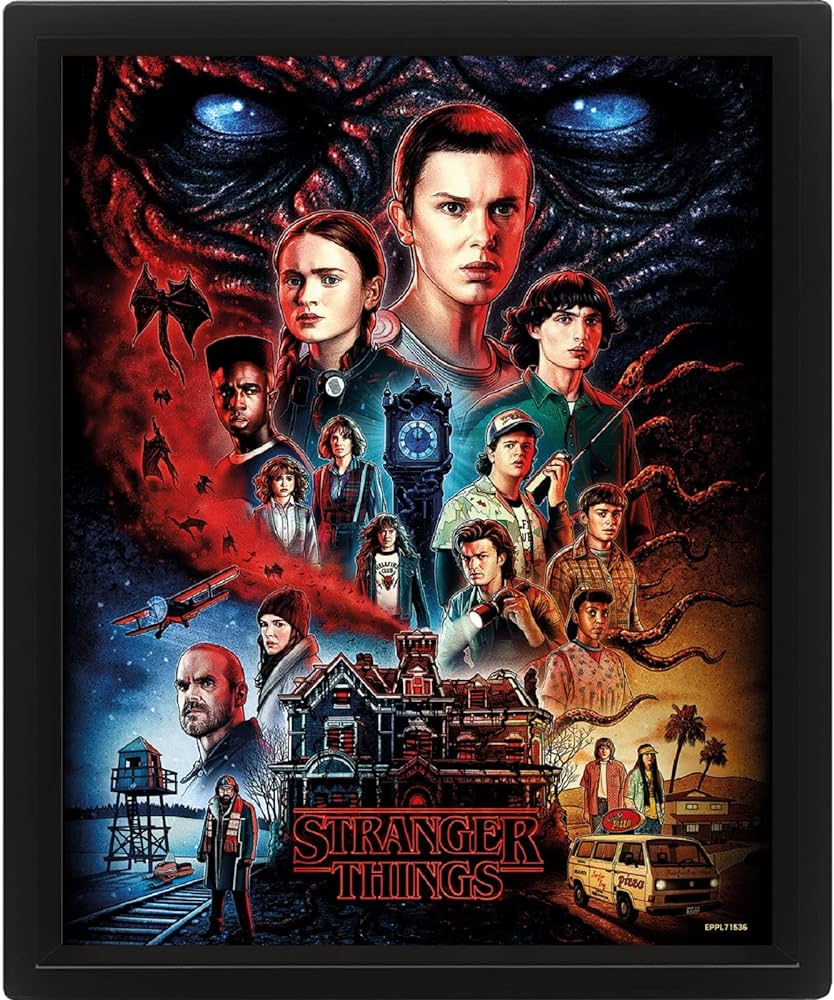
I’m happy about this resurgence. I’ve played role-playing games and read fantasy books my entire life, but it’s hard to explain what it does to someone who doesn’t appreciate it.
I will tie Horror with Fantasy here (just like Lovecraft was also part of my blog) because they are the same.
Horror, just like anything else, has levels. There is Horror that is just there for the scared or the gross-out, but excellent Horror is there to explore grief, courage, and the human condition. The use of subtext is paramount because the antagonists in good Horror are almost always the characters themselves. It is something internal they must work through, some wound that they never dealt with that manifests into some epic evil.
Likewise, in Fantasy, you might have a simple story of a group on some adventure, but excellent Fantasy incorporates themes of PTSD, hope, and friendship. In good Fantasy, characters go through outrageous ordeals and must live with their decisions. In most Fantasy, the odds are overwhelming, and the protagonists must gather their courage and face stronger foes that outnumber them.
So what does that do for the person consuming that media? Why is Fantasy an essential part of our collective consciousness, even when describing things that don’t occur in this world?
It’s because of what Fantasy does; it deals with deeper issues and it’s escapism. When you are dealing with something as serious as PTSD, facing that condition straight on with a realistic dramatic story that shows a character going through what you had gone through actually might not help that much. Sure, you can have the experience of seeing someone go through whatever you went through. Still, a dramatic, visceral take might trigger you more (I hate to use the word trigger because it’s overused in our modern parlance and diminishes people who genuinely have to deal with such things, but it’s the most appropriate word in this instance).

Take a book like “The Stormlight Archive” by Brandon Sanderson. It’s a High Fantasy series where each character has to deal with something horrendous. Whether it’s war, abuse, or death and grief, each character must navigate and work through these problems subtly while at the same time dealing with the fantasy world they live in.
The fantasy aspect takes away some of the real-world stings of events and enables us as readers to process some of the trauma realistically, much more than being faced with Horror and made to deal with it head-on.
This idea is precisely the point of the Lloyd Alexander (novelist, most well known for his fantasy books for young readers) quote above. Fantasy allows you to have an extremely complex reality and break it down in a way conducive to healing, enabling understanding.

Likewise, Dr. Seuss’s quote might seem a little out of place, but what he’s saying is that Fantasy allows us to take something from our lives and then take it to its extreme, which turns something potentially harmful into something absurd. It will enable you to release some of the gravity of reality because you can suddenly see that those things weighing on you may not be as bad as they seem if you have to sit in their emotion.
Nostalgia and levity, perspective, and release are what these two quotes are all about. We read these types of Fantasy when we see something like Tolkien. Lloyd Alexander (If you have not read or seen the Disney version of The Black Cauldron, stop what you’re doing and do so). But there is another type of Fantasy. A much darker aspect, and that is what Goya speaks of in his above quote.
Goya is talking about Exorsizing our Demons, and it’s why people love the darker turn of Fantasy and all of Horror. Everyone has fears and demons that they harbor inside, and everyone has to deal with them to a certain degree.
One of the steps of recovery from trauma (and of psychological trials like anxiety) is verbalizing or visualizing the actual trauma. It becomes much easier to deal with if you can manifest your fear and see it for what it is. A famous psychological test is the “Then what” test. You state your fear (I’m going to fail a test); once externalized, you ask, “Then what?” (My grade will go down). “Then what?” (I’ll have to study harder. My parents will be mad at me.) “Then what?”
Eventually, you get to a point where there is nothing in the well to worry about, and looking back, the fear is diminished because the result is very rarely the worst-case scenario in the first place.
Goya is manifesting the worst-case scenario and bringing it to the forefront, except what happens in Fantasy? Very rarely, the worst-case scenario. The giant monster emerges (the worst fear), and the protagonist prevails (even if they don’t eliminate the big bad).

Fantasy is a way to face your fears and prevail over them. Fantasy is a way to show that it’s possible.
So, on this Thanksgiving Day, I’m thankful for Fantasy. I am no longer hiding the fact that I love the genre and that it can be less than Literature because what good Fantasy does is heal our souls, and everyone needs a little healing sometimes.
A Thursday Treat

Happy Thursday! So, I have fallen behind a bit in my Tolkien reading, and with Thanksgiving right around the corner, I’m going to take this week and next week off of the Blind Read blog. I can’t leave well enough alone however, so I’m going to give you all a little treat this week with a sneak preview of my New Novel “The Monster in the Woods.” It’s a fantasy/heist story with a mystery at it’s core, that follows a group of teens trying to figure out if the Monster threatening the town they live in is real or not. Told in a revolving POV, it’s a death defying adventure in the classic vein of The Goonies. Hope you enjoy and let me know what you think!
Chapter 1
Lishtest
There was a soft click and suddenly haunting beautiful music echoed across the camp, lending a surreal tint to the night. Fog had rolled through, which led to a particularly claustrophobic aura over the two guards. Jack sat cross legged with his back to the town wall, facing the fire and beyond into the woods. Taun sat to Jack’s left but parallel to the wall still facing the fire. Lishtest sat opposite Taun, studying the fog, polishing her pauldrons. Lish was their Captain and always believed in a clean, well oiled uniform. Tidiness meant order and order meant discipline, and Discipline meant she could keep people alive.
“Turn that thing off, man,” Taun complained. “It’s creepy enough out here without you giving it a soundtrack.”
“Come on! My son gave this to me,” Jack whined. “Behbet said my youngest walked into a store and listened to it for a minute. She said his eyes got this glazed over look to them, and then she said he turned to her and looked her in the eye and with a super serious expression said to her, ‘Dad should have this.’ It just hit me when she told me that. He’s my son, you know? But when she told me that, it was like, he thinks of me like I think of him. And I’m out here and he’s in there. I want to hear it to remind me of him, but I want him to know I have it, because it was so important to him. Even though it’s creepy as hell.”
“Damn man, I didn’t know,” Taun said. Lish looked up at Taun and she was surprised to see that he actually looked like he could be experiencing some kind of emotion.
“Naw, I gotta stop it,” Taun said and swiped the box from him. Lish smiled. Now he was acting like the Taun she expected.
It was their Tenth day and Eleventh night out beyond the walls of the town. They got very little sleep out here, despite the fact that the Ferrians probably would not be attacking any time soon. Their army was too green, too weak to take on Teriistown. It’s walls were too high and reinforced, their army was too powerful. They raised warriors afterall, drafted as children and taught to be soldiers all their lives. No matter how angry the Ferrians were at Duke Siiran for the new policy he had instilled on them she didn’t think they would come and revolt.
It was getting monotonous. Everyday, she would send out some mix of the three of them out to range and survey the forest, while the third stayed back at camp for hours on end with nothing to do but collect firewood and boil rations. They had just begun their fourth rotation, and discipline in camp was already deteriorating to the point where Taun felt he could take Jack’s music box, no matter how annoying the thing was. She was going to have to put her foot down.
“Give me the box,” Lish said, almost under her breath.
“Awe, Cap, we were just messing around,” Taun began, but she wouldn’t let him finish.
“Captain,” she said it a bit too harshly and internally winced, but there was no going back now.
“Sorry. Captain,” Taun said and handed the music box to her. “Just having a bit of fun.”
Lish took the music box, nodded slightly to Taun and took it to her tent. She opened her chest and buried it underneath her clothes, before coming back out and sitting by the fire. Good. Taun took it seriously. He still had respect for the uniform. As a captain, out here, beyond the wall, there was nothing more important that your soldier’s respect.
“Wait sir, so I cant have it back?” Jack said. “I didn’t do anything wrong!”
Damn, Lish thought. She leaned forward and looked directly into Jack’s eyes. The fire reflected in his eyes the anger back at her.
“Lieutenant. There are three of us out here. Are we friendly, yes. Is there a chain of command, yes. You both need to know that if one of you gets in trouble, you both get in trouble. Has it been that long since Basic Training?”
“My son gave me that music box.”
“And you can have it back in the morning,” Lish said, then leaned back on the stump.
“I’m not a child, and that box is important to me.”
“You are not a child, lieutenant. But Ferrians aren’t all that we are out here to watch out for, and there’s no reason to call more attention to ourselves than is particularly necessary. Playing it during the day when we can see into the woods is one thing, but playing it at dusk, while we have a fire to make the darkness darker, and there is a fog giving more cover, you’re really going to play music to mask the sound of something approaching?”
“Something approaching. Ferrian’s aren’t all? You really believe there’s some kind of monster in these woods?”
“I mean, did you see the Carpenter? Dude was shredded. I’m not even sure if they know if it’s really the Carpenter, he’s so messed up.” Taun responded.
Lish gave Taun a look. “No, I do not believe there is a monster in these woods, lieutenant. I do think there are some large animals, and maybe one that has grown a little too big and someone thought it was a monster. It doesn’t change the fact that something can still sneak up on us in this kind of environment, natural or not, if we’re making a whole bunch of noise. This conversation is not helping. Do I make myself clear?”
Before Jack could respond, Taun interrupted. “Did you hear that?”
“Oh shove it Taun,” Jack said.
“I’m being serious! That way,” Taun pointed off slightly north-east.
“Grab your weapons,” Lish said as she stood and glared out into the fog filled woods. She was looking for movement, but the firelight danced through the fog and her mind made her see figures dancing in the darkness.
She noted the action on Jack and Taun’s rifles and knew they were following her lead. Nothing like a threat to snap someone to attention. She worked with them enough to know that Taun was flanking out to the right, and Jack was moving the other direction. Lish would take the middle as the ranking officer.
She began to move toward the forest slowly. Her rifle held up, she strafed the forest edge. She took a moment to steady her breathing and felt adrenaline give her senses a lift. The forest was dark and thick with brambles, but came into focus as she moved away from the fire. She saw it. It was big, bigger than a bear. It’s hide was glinting from the fire which meant it had some kind of Chitin or armor, but she wasn’t sure if it had thick long hair, or tentacles. It’s eyes glowed green as it locked with hers.
She took another steadying breath while she raised her hand and pointed at it. “There,” She said in an octave lower than her normal voice.
The thing seemed to snuffle in anger, like her dog did as a kid if it didn’t get what it wanted. It seemed to blink in and out of existence for a moment. She couldn’t be certain how it moved, but all the sudden it was five foot to the left of where it was. Everything in her wanted to pull the trigger, but she didn’t know anything about it and she needed Taun and Jack to give her the signal that they were in place before she acted.
It blinked again and it was closer. It’s eyes never left hers, but there was something in them, something unnatural. Just two glowing orbs, no iris, no cornea. It really was a monster.
“Hup,” Jack called out. He was in place.
She rested her finger on the trigger and gently began to squeeze.
It looked at her again and somehow those orbs conveyed curiosity.
“Hup,” Taun called out.
Her finger squeezed and a moment later she heard the discharge of both their rifles.
The creature blinked again, and it was on Taun. He screamed. It was a sound Lish never thought a human could create. She slid another bullet into the chamber and slid the bolt handle shut in one fluid motion and fired again. Taun was using his rifle as a baton swinging it against the thing, as he tried to maneuver away, but it stayed on him.
She fired again and again and she heard the report of Jack firing as well, but the thing didn’t seem to even feel it. She couldn’t see it attacking Taun either, but his skin kept rending in places, spilling bright red against the foggy gray night.
Taun continued to battle and dance away from the creature, but she could see his movements were slowing.
“Jack, Fire!” She ordered. She grabbed a log she could swing and stuck it in the camp fire. The log took forever to light and Jack appeared next to her continually firing and reloading his rifle. Taun screamed one more gargling scream and then abruptly stopped.
Once the log was lit, she ran at the creature and it blinked again. It was suddenly right in front of her and that Green Orb was the size of her head. She shoved the log into the eye, fire first. The creature squealed and a moment later she felt herself flying through the air back towards the campfire.
She heard Jack’s battle cry, but it turned to a drowning gargle before she blacked out.
Blind Read Through: J.R.R. Tolkien; The Book of Lost Tales, Part 2, Túrin Turambar Final Thoughts

“Turambar indeed had followed Nienóri along the black pathways to the doors of Fui, but Fui would not open to them, neither would Vefántur. Yet now the prayers of Úrin and Mavwin came even to Manwë, and the Gods had mercy on their unhappy fate, so that those twain Túrin and Nienóri entered into Fôs’Almir, the bath of flame, even as Urwendi and her maidens had done in ages past before the first rising of the Sun, and so were all their sorrows and stains washed away, and they dwelt as shining Valar among the blessed ones, and now the love of that brother and sister is very fair; but Turambar indeed shall stand beside Fionwë in the Great Wrack, and Melko and his drakes shall curse the sword of Mormakil (pgs 115-116).”
Welcome back to another Blind Read! This week, we’ll give some final thoughts on Turambar and the Foalókë, including some semantics and religion, to better understand what Tolkien was trying to do in this history of Middle-earth.
I chose the opening quote of this essay because I think that religion is at the cornerstone of everything that Tolkien was doing at this point in his career.
This story iteration was a mixture of the third and fourth drafts Tolkien’s son, Christopher, edited together. That quote that starts this essay has so much to unpack, and it’s all about meaning, life, and the afterlife.
A few sentences above that quote, we find that Úrin and Mavwin go to Mandos after dying, heaven in this world. Úrin spent his life struggling against Melko as a thrall and a man who tried to better those around him. Mavwin tried to do her best for all of her children and for the town she lived in. So, it makes sense that these two would be gifted an afterlife.
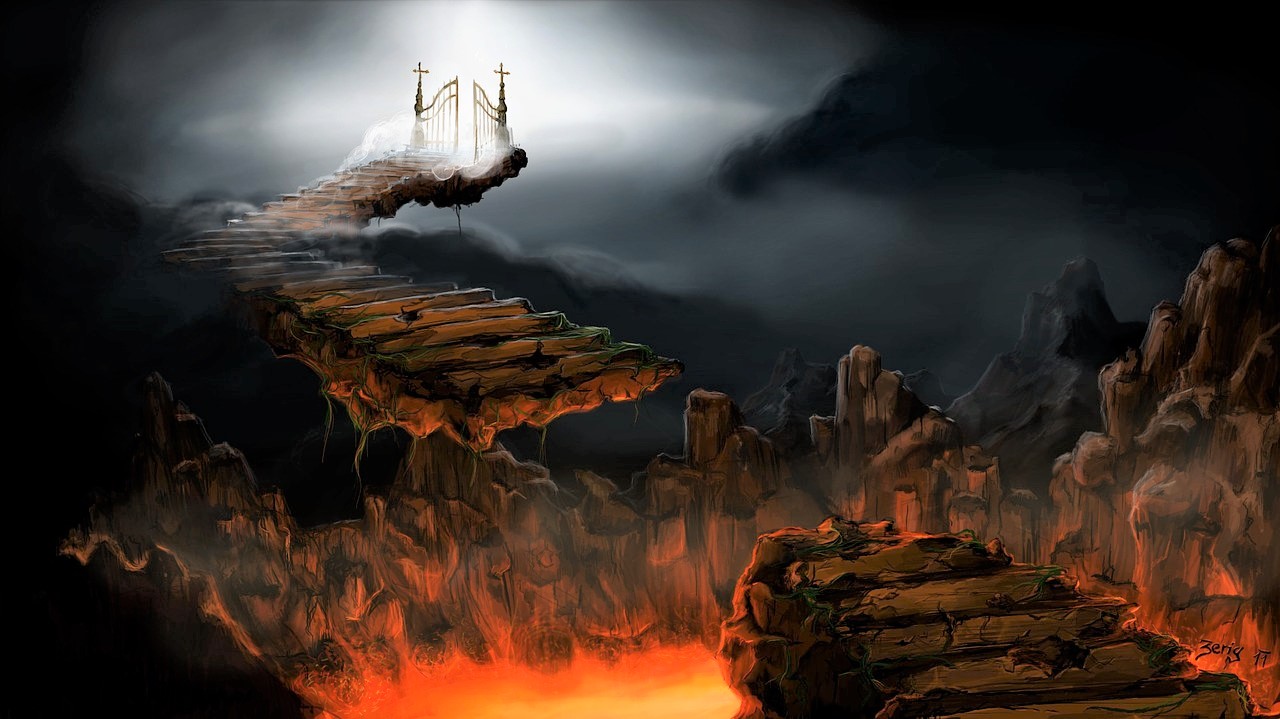
Túrin and Nienóri were denied entrance to Mandos, so they went to Fui and Ve, which are Purgatory and Hell, respectively. Strangely enough, they are also denied entrance to these places of the afterlife. So what does that leave them?
This might be the first time in the history of Middle-earth that the possibility of a spirit (or spirits) wandering the lands comes into play. The Valar looks at these two humans and decides they are not worthy of any afterlife because of their actions. Túrin with the deaths he caused, and Nienóri because she had a child with her brother and killed herself.
Judgement rains down on the two despoiled people from every direction. They hold themselves accountable and let depression and hatred of their actions lead them to suicide. At the same time, they feel the disgust of those around them, and even the Gods (in the form of Valar) tell them that they are not worthy of the afterlife because of their actions.
You must remember that Humans at this time were the only conscious beings living on Middle-earth who actively died (Elves could die from martial means, but otherwise, they are immortal, and the Valar are eternal gods), so damning a human to eternal torment of staying in the place of their transgressions and forever having those reminders was a cruel punishment.
This brings me to my next point: Tolkien wrote this as a tragedy of the tallest order, much more so than the story of Beren and Lúthien. To illustrate this, here is the literary definition of tragedy from Encyclopedia Britannica (forgive the pedantry).
“Although the word tragedy is often used loosely to describe any sort of disaster or misfortune, it more precisely refers to a work of art that probes with high seriousness questions concerning man’s role in the universe.”
Tolkien saw some horrible things during his lifetime. He spent years of his youth in the trenches of World War I and saw what bullets, mortars, and Mustard Gas did to people—this time had an indelible mark on his life and his writing. Many people think that his battle scenes are where his time at the Front comes into play, but to be quite honest, that could be imagination (I have written battle scenes, as have many authors who have never seen war).
I contend that what Tolkien took from World War I was instead a deeper perspective on humanity and tragedy.

The humans in Middle-earth had to come to grips with a shorter life span and thus had to work through their emotions of the knowledge of death faster than the Elves or the Valar.
That understanding echoes the real-life experiences in war and better explains the impetuousness of Túrin.
The Elves and Valar had the time to contemplate their actions and trajectories, but humans were born knowing they would die. That knowledge, living with beings that knew they couldn’t die, affected humans strangely. They strove to make a name for themselves; they aimed for meaning and legacy. Once someone gets a taste of notoriety, pride enters, and there is no more tremendous anger than damaged pride.
This is the start of Túrin’s fall and the beginning of his tragedy. He murders Orgof for being bullied, and though he is forgiven for this transgression, he is never able to forgive himself. His actions had to be more severe as he aged because a more significant action was the only way to make up for his earlier actions.
That is the true tragedy. Túrin, as all the people around him would probably attest, only ever wanted to help his fellow man and make the world better, but because of his past and his drive, it leads to wrong decision after bad decision, which creates murder and destruction in its wake.
Bringing this back to the definition of tragedy, this tale is only “high seriousness” and shows how mortality can change how people see the trajectory of their lives. Man’s mortality becomes the defining characteristic of their early existence on Middle-earth, and it takes them generations to come to grips with that mortality (which they never indeed do).
Then we layer on that Tolkien meant for these tales to be a mythology for England, kind of a pre-history of our current lives, and it shows how our ancestors dealt with fame, love, and mortality, which informs us as a culture and species moving forward.
Blind Read Through: J.R.R. Tolkien; The Book of Lost Tales, part 2; Túrin’s last tragedy

“There did she stay her feet and standing spake as to herself: ‘O waters of the forest whither do ye go? Wilt thou take Nienóri, Nienóri daughter of Úrin, child of woe? O ye white foams, would that ye might lave me clean – but deep, deep must be the waters that would wash my memory of this nameless curse. O bear me hence, far far away, where are the waters of the unremembering sea. O waters of the forest wither do ye go?’ Then ceasing suddenly she cast herself over the fall’s brink, and perished where it foams about the rocks below; but at that moment the sun arose above the trees and light fell upon the waters, and the waters roared unheeding above the death of Nienóri (pg 109-110).”
Welcome back to another Blind Read! This week, we conclude the tale of Turambar and the Foalókë and experience the last tragedies of Turambar’s life.
We left off last week with Turambar and Níniel deciding to ride out against the Foalókë, Glorund, to kill the drake. They gathered with them a group of men desperate to rid their land of the terrible beast, but on the way to the drake, they slowly abandoned the mission, leaving only a handful of mercenaries left, and “Of these several were overcome by the noxious breath of the beast and after were slain (pg 104).”

Eventually, only Turambar and Níniel were left to face the beast. “Then in his wrath Turambar would have turned his sword against them, but they fled, and so was it that alone he scaled the wall until he came close beneath the dragon’s body, and he reeled by reason of the heat and of the stench and clung to a stout bush.
“Then abiding until a very vital and unfended spot was within stroke, he heaved up Gurtholfin his black sword and stabbed with all his strength above his head, and that magic blade of the Rodothlim went into the vitals of the dragon even to the hilt, and the yell of his death-pain rent the woods and all that heard it were aghast (pg 107).”
The death of Glorund would seem like a cause for celebration, but unfortunately, Turambar’s efforts to end the scourge of the great worm only ended up in more tragedy.
His death was foretold from his early mistakes, and if he had only taken a little more time and been less impetuous, his life wouldn’t have ended up the way it was. Turambar is an echo of Hotspur, the firey prince of Shakespeare’s histories, where he has everything going for him, but because of his temper and strong desires, his life is degraded.
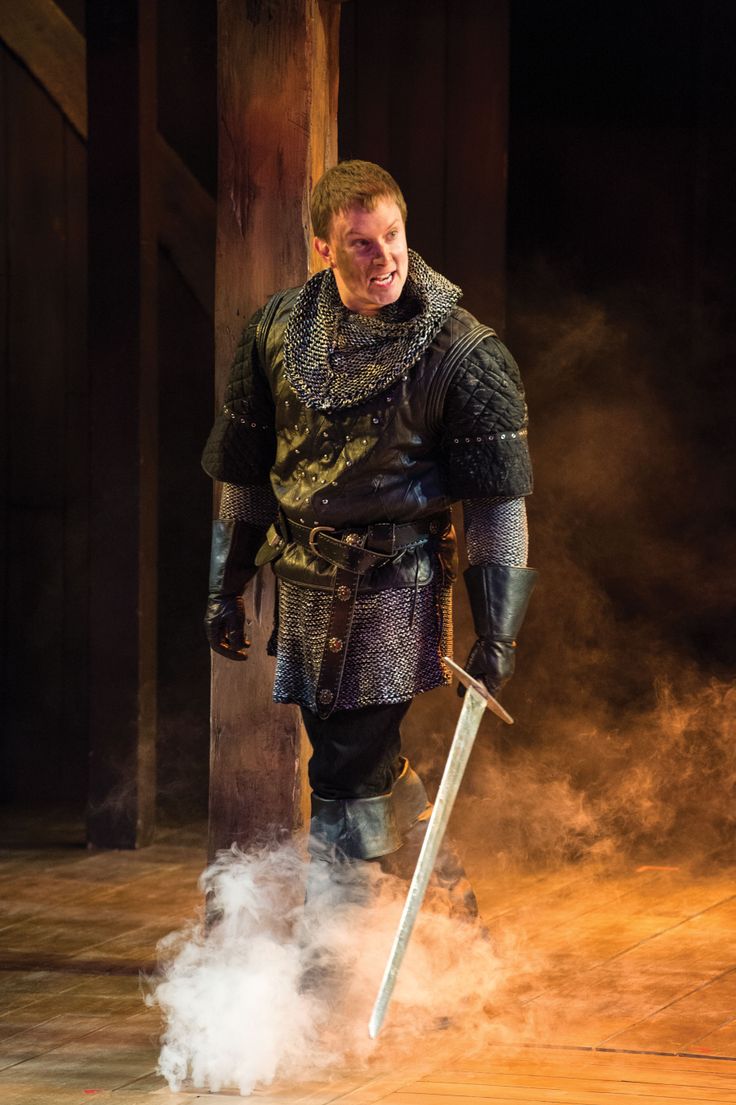
So how could Turambar’s life degrade from killing the drake, you might ask? Well, he passes out next to the Foalókë, and when Níniel comes to find him, she thinks he died along with the dragon in mortal combat. She weeps next to Turambar. She weeps for her husband. She cries for the man who killed the dragon and saved their people. But her weeping wakes Glorund for one last gasp.
“But lo! at those words the drake stirred his last, and turning his baleful eyes upon her ere he shut them for ever said: ‘O thou Nienóri daughter of Mavwin, I give thee joy that thou has found thy brother at last, for the search hath been weary – and now is he become a very mighty fellow and a stabber of his foes unseen (pg 109).”
Glorund died with these words, but what fell with the great beast was the glamor he held over Nienóri. She was suddenly aware of who she was and who Túrin was. Realization bombarded her that she had been married to her brother and had children with him. Aghast at the knowledge, she heads off to a waterfall called the Silver Bowl, contemplative. But instead of Nienóri coming to terms with the events of the last number of years, she is overwhelmed, and we get the quote that opens this essay.
Túrin wakes and quickly realizes that she is gone. He heads back to the village where the people already know the secret of their king and queen, and Túrin pulls it out of them. This being Túrin and his tragic story, he responds how you would expect him to:
“So did he leave the folk behind and drive heedless through the woods calling ever the name Níniel, till the woods rang most dismally with that word, and his going led him by circuitous ways ever to the glade of Silver Bowl, and none had dared to follow him (pg 111).”
Túrin turns to his sentient sword and begs for the only absolution his troubled life could understand.
“‘Hail Gurtholfin, wand of death, for thou art all men’s bane and all men’s lives fain wouldst thou drink, knowing no lord or faith save the hand that wields thee if it be strong. Thee I only have now – slay me therefore and be swift, for life is a curse, and all my days are creeping foul, and all my deeds are vile, and all I love is dead (pg 112).'”

“and Turambar cast himself upon the point of Gurtholfin, and the dark blade took his life (pg 112).”
The tale doesn’t end here, however; Tolkien switches us back to Mavwin and her search for her children. She wept and went into the woods, and the region of Silver Bowl became haunted by their past and presence.
Tolkien also lays on some of his Christianity, which is notably absent in the later editions:
“Yet it is said that when he was dead his shade fared into the woods seeking Mavwin, and long those twain haunted the woods about the fall of Silver Bowl bewailing their children. But the Elves of Kôr have told, and they know, that at last Úrin and Mavwin fared to Mandos, and Nienóri was not there nor Túrin thier son (pg 115).”
Both the children ended up as spirits because their transgressions forbade them from the afterlife.
Join me next week as we dive more into the religion of the story and break down just what Tolkien was going for with such a horrifically tragic story.


 Sean McBride
You must be logged in to post a comment.