Blind Read Through: J.R.R. Tolkien; The Book of Lost Tales, Part 1, Religion of Valinor
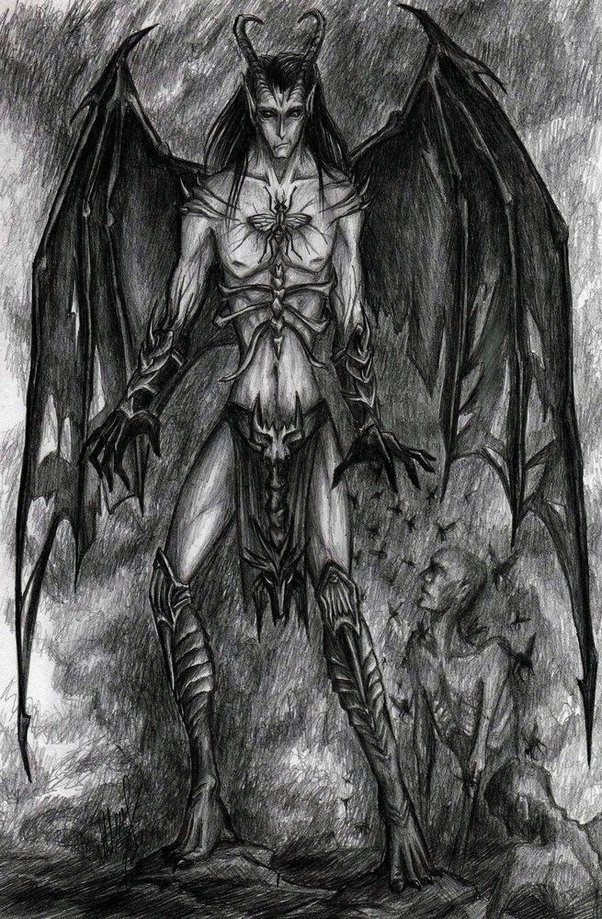
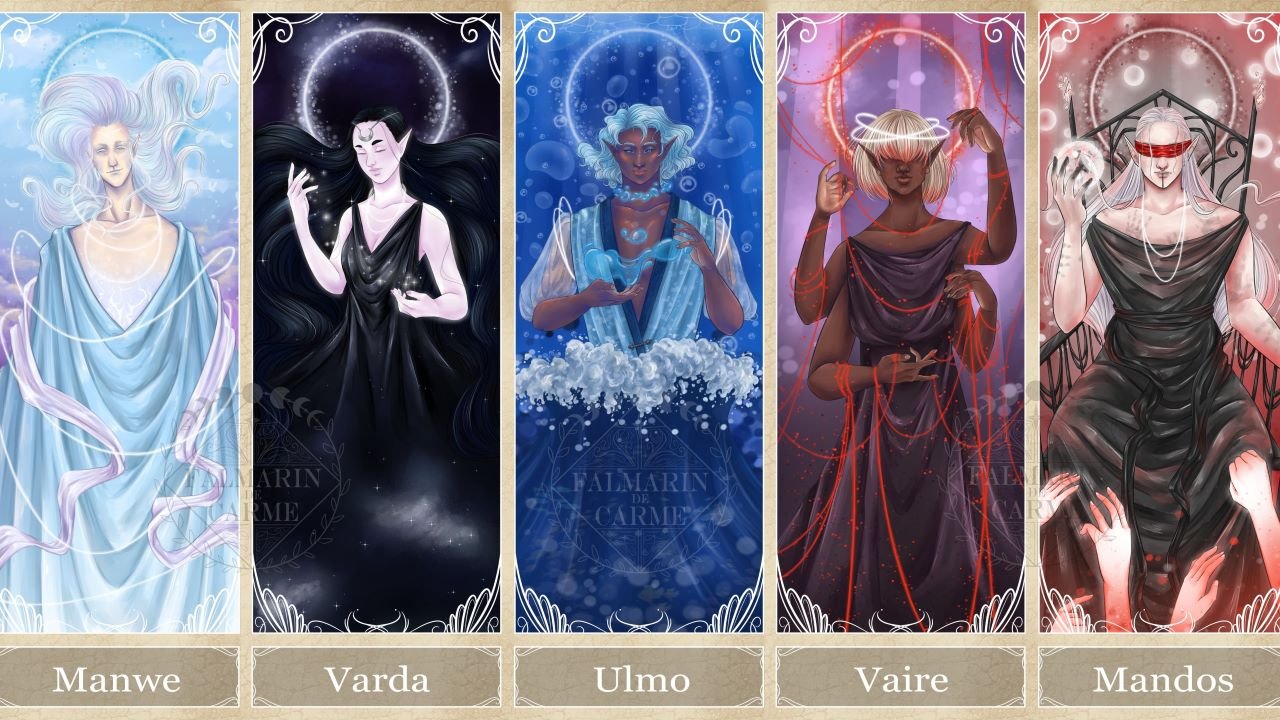
“So fair were these abodes and so great the brilliance of the trees of Valinor that Vefántur and Fui his wife of tears might not endure to stay there long, but fared away for to the northward of those regions, where beneath the roots of the most cold and northerly of the Mountains of Valinor, that rise here again almost to their height nigh Arvalin, they begged Aulë to delve them a hall. Wherefore, that all the Gods might be housed to thier liking, he did so, and they and all their shadowy folk aided him. Very vast were those caravans that they made stretching even down under the Shadowy Seas, and they are full of gloom and filled with echoes, and all that deep abode is known to Gods and Elves as Mandos.”
Welcome back to another Blind Read! This week we conclude the chapter “The Coming of the Valar and the Building of Valinor” with a philosophical conclusion.
I’ve been trying not to spend too much time reviewing the events of the chapter as I go through because that would make these essays neverending and redundant, so the point is to show a much deeper and more analytic approach to Tolkien’s work.
That being said, what I love about this chapter, more so than anything in The Valaquenta (The Second Chapter of the Silmarillion covering these events) is that Tolkien was leaning into his religion. Because these stories are supposed to be a founding mythology for our world, Tolkien created a semi-Christian theology in these early chapters.

The first clue was that he calls the Valar gods (small g) throughout this book; however, he conspicuously dropped that moniker in the Silmarillion, choosing to have them be “beings of great power.”
The adjustment of the Valar might seem like a slight change, but it shows how Tolkien wanted to shape the world’s religions, just like he shaped the landscape and the language.
The Valar take a step down from being gods and become something more akin to Angels. They know what is happening in Middle-earth, and in fact, they foretell it through their music, but rarely do they interject with their power, preferring the people of Middle-earth to deal with their troubles on their own. Ulmo was the only Valar who interposed himself, and that’s because he was the Vala of water, so he was always in some way amongst the residents of that land.
There is also Melkor, who plays a much more sinister role in The Book of Lost Tales. Melkor in The Silmarillion (the later version of history) begins as an almost sympathetic character. He is one of the Valar who feels slighted by what he was given, as opposed to what the other Vala were given. Then when Ilùvatar’s children come around (Eldar and Men), he becomes jealous, which leads to his downfall. Yes, there are times early in the book when Melkor does mischievous deeds, but that’s just what they are. It isn’t until much later, once he joins forces with Ungoliant, the giant spider queen (and mother of Shelob), kills the Trees of Valinor, and steals the Silmarils, that he genuinely becomes evil.
But why does he become evil? Because he stays in his fortress in Angband and stews on his perceived (or real) slights against him. Those years upon years of hate compounding on each other until he can see the truth.
Melkor is Lucifer, which is why Tolkien wanted to change the Valar completely from gods to Angels. He tried to adjust his Christian theological worldview and overlay it with Middle-earth. That is not to say the goal was to make Middle-earth Christian, far from it, but his impetus for writing this Legendarium was that (in his opinion) no fantastic fairy tales came from England. On the other hand, England was a Christian country at the time of his writing, so it made sense that if he wanted to transition Middle-earth into our earth at a later age, he would have some similarities with the prevailing theology of the land at the time.
The concept of religion is even more profound when you read the quote which starts this essay.
Tolkien is trying to establish an afterlife here, but how does he do that with eternal gods and Elves which don’t die? By creating the halls of Mandos where two Valar live, Vefántur and Fui. These two were the rulers of the afterlife.

Vefántur created an underground world for the Eldar, “Thither in after days fared Elves of all clans who were by illhap slain with weapons or did die of grief for those who were slain (pg 76).” This place was “lit only with a single vessel placed in the centre, wherein there lay some gleaming drops of the pale dew of Silpion (pg 76).”
It is immediately apparent to me that Tolkien chose to use the tree of Valinor, which represents the silver light, or the moon, indicating that this was the twilight for the Elves that had passed. This place was an afterlife for brave and true Elves who fought for the right causes. Because Elves can only die when slain, Vê became a literal heaven for these Elves.
But if we have a heaven, then we must have a Hell:
“Thither cam sons of Men to hear their doom, and thither are they brought by all the multitude of ills that Melko’s evil music set within the world. Slaughters and fires, hungers and mishaps, diseases and blows dealt in the dark, cruelty and bitter cold anguish and thier own folly bring them here; and Fui reads their hearts. Some then she keeps in Mandos beneath the mountains and some she drives forth beyon dthe hills and Melko seizes them and bears them to Angamandi, or the Hells of Iron, where they have evil days (pg 77).”
Fui created purgatory for those who had done wrong, but she could read their hearts and see if they were genuinely horrible or just made bad choices. Those who were truly bad, with malevolent spirits, were sent to spend eternity in Angband with Melkor. At this early stage, Angband had not become what it later was (Morgoth’s fortress). Here, in this early iteration, Melkor has become the devil again and keeps the souls of the maleficent banded in the Hells of Iron.
Join me next week as we review The Return of the King!
Blind Read Through: J.R.R. Tolkien; The Book of Lost Tales, Part 1, The Building of Valinor
“There, said Aulë, would be a place well suited to great building and to a fashioning of realms of delight; wherefore the Valar and all their folk first gathered the most mighty rocks and stones from Arvalin and reared therewith huge mountains between it and that plain which now they name Valinor, or the land of the Gods (pg 70).”
Welcome back to another Blind Read! This week we continue our journey through the coming of the Valar as we delve into the Building of Valinor.
Last week we left off discovering who the Valar were, and this week we get into the details of the building of Valinor from the perspective of the Valar and Tolkien himself.
From our readings of The Valaquenta in The Silmarillion, we know that The Valar went to different parts of the world but wanted a place to call home. Valinor was that place. But even with the creation of Valinor, the Valar still had their various areas which they controlled. Ulmo ruled the deep seas, Manwë ruled the air and winds, etc. As these concepts formed in Tolkien’s mind (all early stages of developing the world), he envisioned this world as floating through the ethereal nature of space and time.

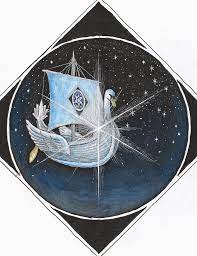
Remember that the original idea was that all of Middle-earth would eventually lead up to our historical timeline, acting as a sort of mythological foundation which he felt was lacking in the English tradition. He also based much of his work on Norse Mythological writings and practices, so what better format than having the entire Eä (read that as Earth) floating through the cosmic tapestry than on a Norse ship? Everything from Palisor to Valinor would live on this ship sailing through space.
Though he later dropped this idea for a globe world, it was evident that he loved the concept of the boat sailing through the cosmos and eventually re-used it. Enter Eärendil, arguably one of the essential characters in Middle-earth history. He and his wife Elwing stood up to Morgoth, and Eärendil sailed to Valinor with a Silmaril to protect it and make the Vala understand what they were up against. A mortal sailing to Valinor was prohibited, but instead of outright killing him (mainly because of his courage and selflessness in sailing there to save the world), they made him part of the cosmos, sailing his ship Vingilot “even to the starless voids.”
Tolkien never gave up on his ship idea, but he also never gave up on the concept of creating something from nothingness.
Moving back in time, as soon as the Vala created Valinor, it was still a dark place to be. “These were the days of Gloaming (Lomendánar), for light, there was, silver and golden, but it was not gathered together but flowed and quivered in uneven streams about the airs, or at times fell gently to earth in glittering rain and ran like water on the ground, and at that time Varda in her playing had set but a few stars within the sky (pg 69).”
The world was dark, and the only light came from the stars, yet the Vala wanted to build a complete world, so they came up with a rudimentary idea.
“Aulë suaded Melko to build two towers to the North and South, for he purposed to set upon them mighty lamps one upon each (pg 69).”
This passage differs from the Silmarillion because Melkor was a lousy actor. He created the world’s darkness and envied the other Valar and the Noldor, but more on that next week.
So they built these two lamps to light the world. “They sprang up through the lower air even to Ilwëand the stars, and Melko said they were of an imperishable substance of great strength that he devised; and he lied, for he knew that they were of ice (pg 69).”
Manwë and Varda gathered light from the stars and brought them down to fill these mighty lamps. Still, Melkor had tricked them because “it so happened that the blaze of those lights had melted the treacherous ice of the pillars of Melko, Ringil and Helkar, and great floods of water had poured from them into the Shadowy Seas (pgs 69-70).”
It is never outright stated why Melkor did this treacherous act. It is possible that Melkor was the Angel of Darkness, so he desired to keep the world in the Gloaming, but this is an early iteration of the mythos of Middle-earth, and Tolkien needed a Big Bad to push the story forward. So in the Book of Lost Tales, Melkor is just wrong from the start; there isn’t much in the text to brighten his character, much like Sauron.

But what Melkor didn’t realize is that Ilúvatar set the theme of the world’s construction, so when the globes holding the light of the stars fell to the Earth, they buried themselves. “Then came Palúrien, even Kémi the Earth-lady, wife of Aulë, mother of the lord of forests, and she wove spells about those two places, deep enchantments of life and growth and putting forth of leaf, blossoming and yeilding of fruit – but she mingled no word of fading in her song (pg 71).”
Trees began to grow from those lights buried in the Earth, one they named Laurelin and the other Silpion. These trees ended the Gloaming and produced light from their leaves and blossoms until the coming of the Sun and the Moon. Later Tolkien renamed the second tree, changing it from Silpion to Telperion, but this is the earlier iteration of the creation of the Trees of Valinor.
I prefer this iteration to the published version with Yavanna signing the Trees into existence because it ties much more to the legendarium. First, the trees came from the stars and set into the ship that sails the cosmos. Then later, once the first age was coming to a close, we have Eärendil voyaging through the cosmos for all eternity on his ship. There is something poetic about closing the loop to me, which is also what I appreciate about being able to read the earlier stages of Tolkien’s work.
Join me next week as we complete “The Coming of the Valar and the Building of Valinor!”
Blind Read Through: J.R.R. Tolkien; The Book of Lost Tales, Part 1, The Coming of the Valar

“In this dimness the Gods stalked North and South and could see little; indeed in the deepest of these regions they found great cold and solitude and the rule of Melko already fortified in strength; but Melko and his servants were delving in the North, fashioning the grim halls of Utumna, for he had no thought to dwell amongst the others, howso he might feign peace and friendship for the time (pg 69).”
Welcome back to another Blind Read! This week we move forward in the Book of Lost Tales and start on the third chapter, “The Coming of the Valar and the Building of Valinor.”
This chapter has three distinct cut points, so we’ll divide that up into three separate essays. The first will be about the entrance of the Valar into the tale and the theory behind Valinor, the second will be about the lamps of Valinor and the Vala dwellings, and the final will be about some new material we haven’t seen before.

We pick back up with Eriol, the human traveler, speaking with Rúmil, the storyteller of Tol Eressëa. Eriol asks Rúmil, “I would still hear many things of the earliest deeds within its borders (Valinor); of the labours of the Valar I would know, and the great beings of most ancient days (pg 64).”
Rúmil regales Eriol with the names, purpose, and works of the Valar throughout this chapter, and it’s not an easy read. However, the first few chapters of the Silmarillion and The Book of Lost Tales are about the beginning of time, and they frame everything that comes after.
This chapter is so tricky because Tolkien goes for pages upon pages and describes the various Valar. Still, once we begin to get into the stories of the Eldar, which comprise the majority of The Silmarillion, the Valar don’t play much of a part.
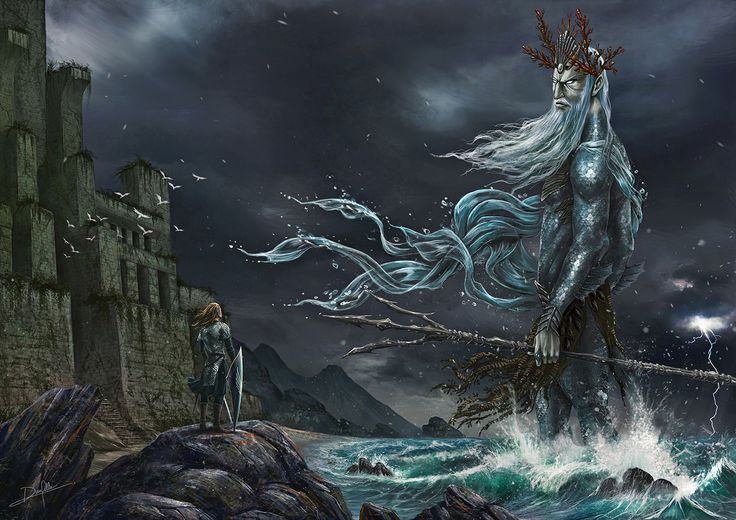
In the Book of Lost Tales, Tolkien spends more time describing the various Vala and their roles. Some of their names change slightly between when the writing of this book (remember that The Book of Lost Tales is an amalgamation of editions edited by Christopher. In the appendices for this chapter, Christopher even mentions that he collected and put together the best story he could from notebooks and even scraps of paper his father used for notes.), and the publication of The Silmarillion.
In later works, Tolkien had differing power levels for the Valar, almost like rankings. The Aratar (Exalted Ones) were the most powerful of the group in this iteration, who comprised most of the Valar, whom Tolkien calls gods during the Book of Lost Tales, but we’ll discuss this more in a moment. Many Valar had children considered lesser Vala, and Tolkien eventually formed the title Fëanturi for them. There was also a third ranking of these gods in Valinor, whom Tolkien later got rid of entirely, which were very similar in every aspect of the Eldar, except in conception:
“About them fared a great host who are sprites of trees and woods, of dale and forest and mountain-side, or those that sing amid the grass at morning and chant among the standing corn at eve. These are the Nermir and the Tavari, Nandini and Orossi, brownies, fays, pixies, leprawns, and what else are they not called, for thier number is very great: yet must they not be confused with the Eldar, for they were born before the world and are older than its oldest, and are not of it, but laugh at it much, for they not somewhat to do with its making, so that it is for the most part a play for them (pg 66).”
Tolkien later eliminated the fae and streamlined the Valar by re-facing lesser Vala (Lórien and Mandos) as the Fëanturi, Sindarin for “Masters of Spirits,” no longer children of the Aratar. He decided that the Valar would no longer be gods because Ilúvatar was the one God, and the Valar were his servants, who had free will to use their music to create and adjust life on Eä. The conception took the Valar from gods to angels, and the angels of the lesser degree were the Maiar, better known as the servants of the Valar. The best-known Maiar are Sauron, a servant of Melkor (also known as Morgoth), and the Istari, the wizards. You may know them as Gandalf, Radagast, and Saruman.
Tolkien’s primary objective was to create a fantasy world that would eventually become our world in later epochs. He studied mythology and fairy tales his entire life and felt as though England didn’t have appropriate myths. The most famous tale at the time as a mythology for England was The Faerie Queen, and obviously, this is where Tolkien started.

I believe that over time he wanted to distance himself from Edmund Spencer (also, from everything I’ve read, I don’t get the feeling he liked The Faerie Queen that much), so getting rid of the fae was always going to happen, but he didn’t get rid of them entirely. If we dig down into the quote above and remove specific verbiage: “for they were born before the world and are older than its oldest, and are not of it, but laugh at it much… (pg 66),” it brings to mind a specific character.
In The Fellowship of the Ring, we are introduced to Tom Bombadil, “the oldest being of Middle-earth, ” constantly laughing and merrymaking. The Council of Elrond even considers giving him the One Ring for safekeeping but decides against it because he is so old that the Ring’s power would be boring to him. Tolkien filtered down the fae creatures in The Book of Lost Tales to Tom Bombadil in later works. He wanted to keep the concept of a fae creature, but he also needed to distance himself from what came before so that he might have a complete mythology.
So now we have the fourteen Valar (eight in the Silmarillion), but we still don’t know anything about their home. So come back next week for the second section of “The Coming of the Valar and the Building of Valinor!”
Blind Read Through: J.R.R. Tolkien; The Two Towers, Re-read

“‘All right!’ he said, ‘Say no more! You have taken no harm, There is no lie in your eyes, as I had feared. But he did not speak long with you. A fool, but an honest fool, you remain, Peregrin Took. Wiser ones might have done worse in such a pass. But mark this! You have been saved, and all your friends too, mainly by good fortune, as it is called. You cannot count on it a second time. If he had questioned you, then and there, almost certainly you would have told all that you know, to the ruin of us all. But he was too eager. But come! I forgive you. Be comforted! Things have not turned out as evilly as they might.'”
Welcome back to another Blind Read! This week we’re back with a bit of a lie, this isn’t quite a Blind Read, but it’s been so long since I’ve read these books it might as well have been!
Before we discuss the books, I want to start by saying how amazed I am at how close the Movies were to the books. After reading them more critically, it is obvious how much the producers revered the core material. The ability to create a new medium that was inclusive of all who did not read the books but to be honest enough to the core material that hardcore fans love is a masterstroke in adaptation.
The only significant difference the movies had was in Fellowship because they took out the entire Tom Bombadil sequence (rightly so). Still, even then, I’ve seen deleted scenes where the hobbits get swallowed up by Old Willow. We’ll cover the differences in The Two Towers below, but we also dive more into the world’s lore.

The first thing I’d like to mention is Treebeard and the Ents. The movie played up his slowness and mistrust, and where many lines are taken directly from the text, Treebeard was not very slow to action speaking of page count. Yes, he does suspect Merry and Pippin of being Orcs at first, but he quickly decides they aren’t. He then calls the council of Ents, and within a few pages, they choose to mount an attack on Orthanc. Again, the movie drew it out for drama, but the book had these events happening quickly.
However, the biggest oddity I noticed in the book was a seeming discrepancy between The Silmarillion and The Two Towers. When speaking of his race, Treebeard (also known as Fangorn) says the Elves created Ents. However, later in the book Gandalf (also known as Mithrandir, but more on that later) tells the remaining Fellowship that Fangorn is the oldest living creature on Middle-earth (remember that Elves, Vala, Maiar, and even Dwarves were created on Valinor). Tom Bombadil verifies this statement in The Fellowship of the Ring. I stopped and thought about this before I could move on because I know that Tolkien re-wrote much of the history and was still in his re-writes while writing The Lord of the Rings, but was there a discrepancy this bold?
I decided to go back and do some digging to figure it out.
Returning to The Silmarillion, I verified that Yavanna (the Vala who was the “lover of all things that grew in the earth”) created Ents as part of her music theme. Part of her reason for doing so was because of other creations, such as the Dwarves (who were created but kept at rest for many years). Yavanna feared the trees themselves would not have a means of protecting themselves against the push of other creatures’ industrial nature (something that echoes Tolkien himself), so she made the Ents to be shepherds and protectors of the trees and forests. Tolkien even had an early iteration where he called them Tree Ents because the word Ent was derived from the Old English word Eoten, meaning Giant, so they were Tree Giants meant to protect. Tolkien seeds this in The Fellowship of the Ring when Samwise relays a story from his cousin Hal, who saw a “treelike giant” north of the shire. This anecdote was Tolkien’s way of seeding their entrance into the books.
So we know that Yavanna created the Ents – why then does Treebeard say that they were a creation of the Elves? Looking back at the text, one can see where I went wrong. The Ents and Entwives were creatures of the earth, and where they were sentient, they couldn’t communicate with other animals. They were meant solely to be of and for nature, so Treebeard says that the Elves taught them to speak Elvish and opened their minds to interact with other sentient creatures. The Elves brought the Ents to life; they didn’t create them.
I could go on and on about Ents and make it their own essay, but since this is about a re-read of The Two Towers, I want to dig into a few other short items.
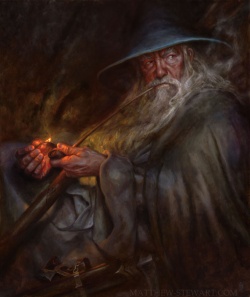
The first is Gandalf. In The Fellowship of the Ring, he is of the gray order of the Istari (Maiar wizards), but because of his fall against the Balrog in that first book, he came back as an Istari of the White order, which is one of the most powerful, second only to the Black Order. This book teaches that the Istari are immortal like their masters, the Valar. Gandalf returned as a white-order Istari because of the power vacuum of Saruman, who abandoned his order for power. Saurman did not specifically side with Sauron (which we learn in The Silmarillion). Still, the Palantir corrupted him enough that he thought he could become the most powerful being in Middle-earth.
It isn’t until Gandalf returns that the party nearly ceases calling him by his common “gray” name, Gandalf. Instead, once he takes up the white mantle, most characters call him Mithrandir for the remainder of the series.
Lastly, I would be remiss if I didn’t bring up what confused me the most when I read through the books before reading The Silmarillion—the Dúnedain and Aragorn’s lineage.
Throughout this book, there are constant references to Elendil and Eärendil, but I didn’t know who those people were other than they were Aragorn’s ancestors. Having that foreknowledge made the events and exposition of the story that much more lush and meaningful. It adds weight to Aragorn’s decisions and makes him a more dynamic character. Upon the first read, much of his character felt very one note and much more severe than was necessary. Still, after getting the history behind his lineage, one can genuinely feel the dynamics at play and the choices he must make as he forges his way to coming back to be King of the world of Men.
Come back next week as we continue “The Music of the Ainur” in the Book of Lost Tales!
Blind Read Through: J.R.R. Tolkien; The Book of Lost Tales, Part 1, The Music of the Ainur part 2
“Through him has pain and misery been made in the clash of overwhelming musics; and with confusion of sound and have cruelty, and ravening, and darkness, loathly mire and all putrescence of thought or thing, foul mists and violent flame, cold without mercy, been born, and death without hope. Yet is this through him and not by him; and he shall see, and ye all likewise, and even shall those beings, who must now dwell among his evil and endure through Melko misery and sorry, terror and wickedness, declare in the end that it redoundeth only to my great glory, and doth but make the theme more worth the hearing, Life more worth the living, and the World so much the more wonderful and marvellous, that of all the deeds of Ilùvatar it shall be called his mightiest and his loveliest (pg 55).”
Welcome back to another Blind Read! This week we delve into the philosophy of Tolkien as we review “The Music of the Ainur,” the second chapter of The Book of Lost Tales.
Tolkien himself was a deeply religious and highly intellectual man. He surrounded himself with others of all opinions (see his writing group The Inklings, which included C.S. Lewis), and at the forefront of his mind was an anthropologic focus on the world. This curiosity of how the world works is what created the fantasy world we all respect so much.
This chapter, in particular, is about how Ilùvatar (God in this iteration) created the world through his Angels, which he named Valar.
Rúmil tells the story to Eriol and begins his tale by saying, “Before all things he sang into being the Ainur first, the greatest is thier power and glory of all his creatures within the world and without (pg 52).”
This passage marks Ilúvatar as a great creator. There is nothing closer to authentic Christianity than this first chapter, as it shows Ilúvatar’s great power and ability of forethought and humility.

Rúmil goes on, “Upon a time Ilúvatar propounded a mighty design of his heart to the Ainur, unfolding a history whose vastness and majesty had never been equalled by aught that he had related before, and the glory of it’s beginning and the splendour of its end amazed the Ainur, so that they bowed before Ilúvatar and were speechless (pg 53).”
Thus enters the theme of Predestination. Ilúvatar creates a concept that has a beginning and an end. But for such a grand creator, that is not satisfactory because there is no surprise in the world, no joy in watching the events of his grand scheme unfold. To counter this problem, Ilúvatar tells his Angels (they are interchangeably called Ainur and Valar), “It is my desire now that ye make a great and glorious music and a signing of this theme; and (seeing that I have taught you much and set brightly the Secret Fire within you) that ye exercise your minds and powers in adorning the theme to your own thoughts and devising (pg 53).”
Ilúvatar allows the Vala to create the middle of his great tale with their own “secret fire.” We learned in The Silmarillion (and to a lesser extent here) that the Vala all have their own minds, and they all have their passions. This is what the secret fire is, a passion for seeing something created, which is mirrored in Tolkien himself as he created the world of Middle-earth. That is not to say that Tolkien thought himself a god, or even to the level of the Valar, but he saw it as his duty to show that there was great beauty in the world. He wanted to elicit this emotion from people because of his experiences in the Great War. Let me explain:
“Yet sat Ilúvatar and hearkened till the music reached a depth of gloom and ugliness unimaginable; then did he smile sadly and raised his left hand, and immediatly, thoguh none clearly knew how, a new theme began among the clash, like and yet unlike the first, and it gathered power and sweetness (pg 54).”
This passage shows both the power and the weakness of the Valar, which in turn displays just how human they were. Which makes sense because we, as people, are the antecedents of the Angels. Humans are called Ilúvatar’s second children (after the Elves). The Valar wanted to create something with the same power as Ilúvatar, but they became despondent when things turned dark, and their grand theme became black with peril.
Indeed it was Melkor, later called the Dark Lord and master of Sauron, who saw this darkness and believed it was the only way to the end of the story.

“Mighty are the Ainur, and glorious, and among them is Melko the most powerful in knowledge (pg 54).”
Tolkien believed there was a balance to the world, making Predestination possible. Each Valar had their power or strength; Ulmo had control over water, Manwë had power over the air (The great eagles which bore Gandalf away from Orthanc and Frodo and Sam away from Mount Doom were agents of Manwë), and Aulë had control of the earth. But it was Melkor who had the greatest knowledge, and what Tolkien learned in World War I was that one could have a perception of darkness or a general concept of pain, but until you have the experience, you never really have knowledge of it.
Knowledge equals pain, which is a prime theme in Tolkien’s work. That may seem particularly depressing, but you cannot appreciate the most glorious mornings until you see the darkest of nights (this echoes in Sam’s speech at the end of The Two Towers. “They were holding on to something…”). Ilúvatar created Melkor to have the knowledge and sing about that knowledge which fostered despair in the world, but he could do nothing to change it. He became the Dark Lord because once the Children of Ilúvatar were created, they received gifts to experience the world’s joys and perils, whereas Melkor could only see troubles and darkness.
The Eldar were given long life and foresight that they would live to see the end of all time, which made them happier than humans. But to humans, Ilúvatar gave the gift of death.
Doesn’t it seem like much of a gift? Well, it harkens back to the question of knowledge. If you knew your time was short, you would live a more extraordinary life, a life filled with great pain and great joy, rather than being stuck in the middle and being “emotionless” as the Elves were.
This ability to have great highs and lows was specifically why Ilúvatar sang Melkor (also known as Morgoth) into existence. He knew what the Valar would do, but also knew it was necessary for a full experience of the world.
Come back next week for a recap and reread of “The Two Towers!”



 Sean McBride
You must be logged in to post a comment.