Blind Read Through: J.R.R. Tolkien, The Silmarillion; Of The Silmarils and the Unrest of the Noldor
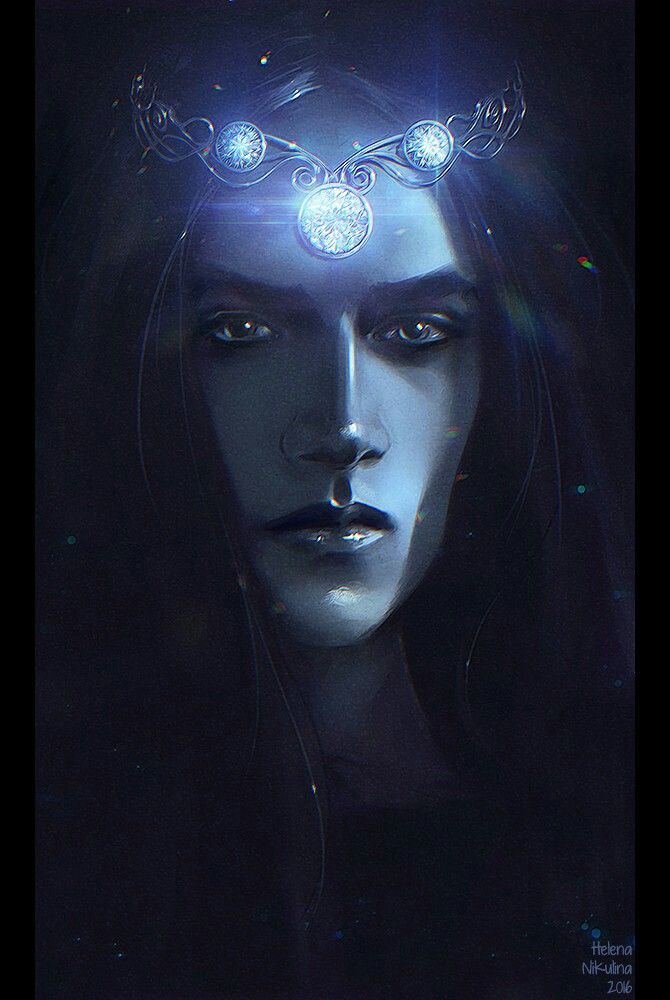
“Thus with lies and evil whisperings and false council Melkor kindled the hearts of the Noldor to strife; and of their quarrels came at length the end of the high days of Valinor and the evening of its ancient glory. For Fëanor now began openly to speak words of rebellion against the Valar, crying aloud that he would depart from Valinor back to the world without, and would deliver the Noldor from thraldom, if they would follow him.”
Welcome back to another Blind Read! This week we inch forward through the history of the elves and get a deeper glimpse into the transgressions of Fëanor.
Last week we learned a bit about the Fëanor’s lineage and how much he progressed beyond his fellow elves. We dig down deeper into Fëanor this week and understand why his wife, Nerdanel, finally ended their relationship.
It’s important to know that Fëanor, the “heart of fire,” emerged as one of the most brilliant of the Noldor, not only in intelligence but in construction, learning much and creating even more. It’s at the beginning of this chapter that we discover a new and exciting revelation:
“In that time were made those things that afterwards were most renowned of all the works of the Elves. For Fëanor, being come to his full might, was filled with a new thought, or it may be that some shadow of foreknowledge came to him of the doom that drew near; and he pondered how the light of the Trees, the glory of the Blessed Realm, might be preserved imperishable. Then he began a long and secret labor, and he summoned all his lore, and his power, and his subtle skill; and at the end of all, he made the Silmarils.”

Ah, here it is! I’ve been waiting to see what the Silmarils are and what they have to do. But unfortunately, we don’t get much information, even in this chapter of their creation. Still, it’s good to know that Fëanor created them, using all the guile he developed from the Valar, and harnessing the light of the two trees of Valinor:
“And the inner fire of the Silmarils Fëanor made of the blended light of the Trees of Valinor, which lives in them yet, though the Trees have long withered and shine no more.”
The Valar were so taken with the “wonder and delight at the work of Fëanor” that “Varda hallowed the Silmarils, so that thereafter no mortal flesh, nor hands of unclean, nor anything of evil will might touch them” and also that “the fates of Arda, earth, sea, and air, lay locked within them.“

So we know immediately that something of that magnitude must have others who crave its power. “Then Melkor lusted for the Silmarils, and that very memory of their radiance was a gnawing fire in his heart.”
Melkor had been released on “good behavior” from his imprisonment but still held that anger in his heart (which we saw last week), but he doesn’t come right out and wage war to get the stones. Instead, he uses a much more subsumed tactic and begins spreading rumors amongst the Noldor:
“Visions he would conjure in their hearts of the mighty realms that they could have ruled at their own will, in power and freedom in the East.“
These visions were the first wedge in the rift between the Eldar and the Valar. Rumors abounded that the Valar were jealous of the Eldar ruling themselves, and that’s why they were brought to Valinor so that they might be subjects instead of free people.
In addition to that, the Eldar (elves) didn’t know about the coming of Men, so Melkor used this lack of knowledge and put thoughts within the Eldar’s heads that the Valar would call Men to the world to supplant them.
This Melkor did to the Elves in general because of his hatred for them, but Fëanor was the focus of his ardor because of the Silmarils, which Fëanor would flaunt and wear; he kept them to himself. In fact, “Fëanor began to love the Silmarils with a greedy love and grudged the sight of them to all save to his father and his seven sons; he seldom remembered now that the light within them was not his own.“
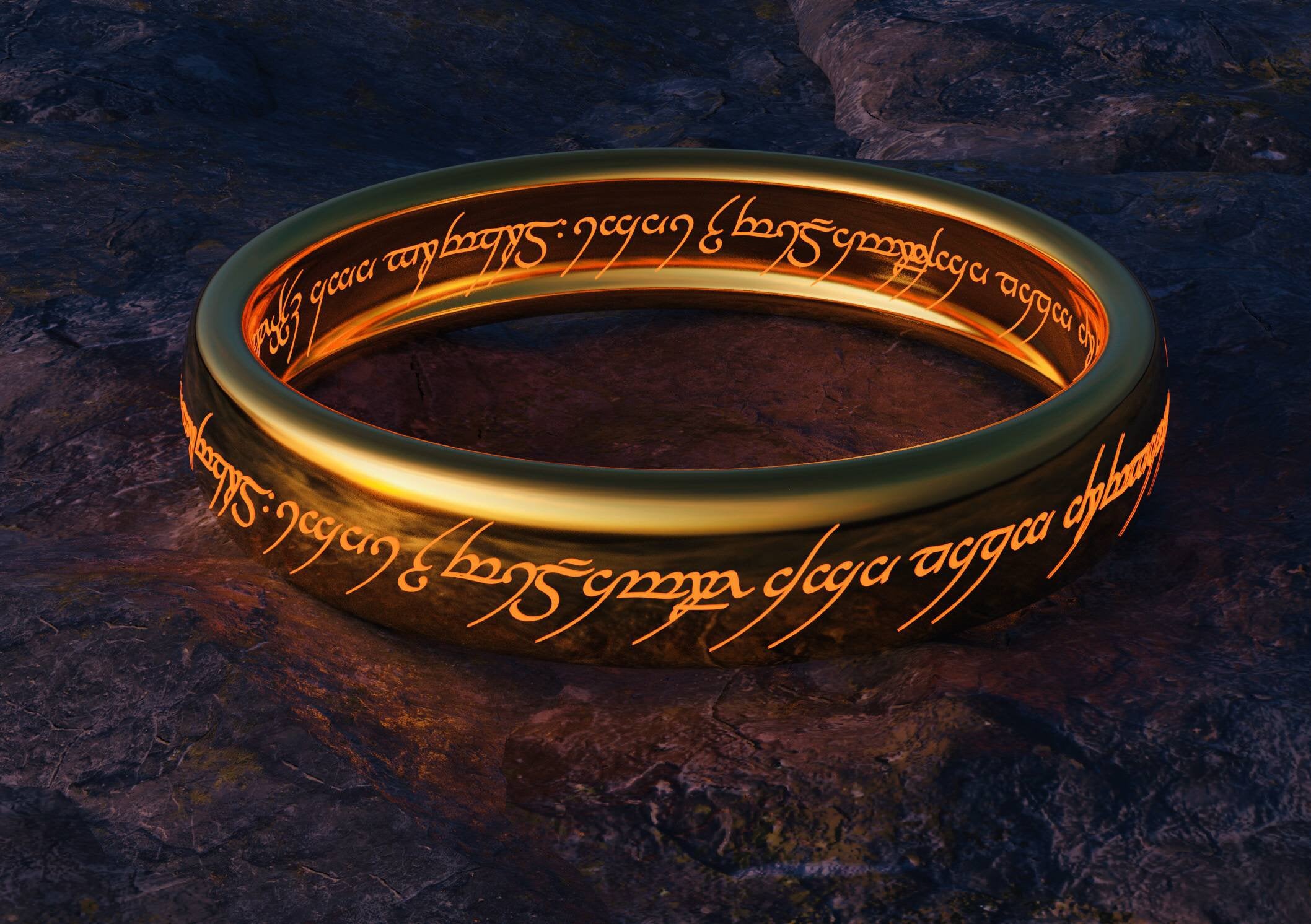
This passage reminds me of something else we’ll see later in the Second and Third Ages. The One Ring. Something with such power and wonder makes people subject to its will.
The influence of the Simarils and the whisperings of Melkor caused the quote at the beginning of this essay. Fëanor created incredible weapons and armor at his secret forge and spoke out against his half-brother Filgolfin and drove him from the house.
Strife billowed out from the house of Finwë (Fëanor’s father), and finally, the Valar understood the unrest brewing within the Noldor. The problem was “since Fëanor first spoke openly against them, they judged that he was the mover of discontent.“
They held a council and found that Melkor was indeed who began the conflict. However, Fëanor still had to answer for the strife he caused, so he was moved to the north of Valinor into the mountains where he had a vault any Dwarf would be proud of, complete with an iron vault that held the Silmarils. This incident was the beginning of the rift between the sons of Fingolfin (Elrond’s ancestor) and Fëanor, which lasted for generations.

Melkor, trying to extend his deception and get a hold of the Silmarils, went to Fëanor and tried to continue his illusion. Still, if you remember from the last chapter, Fëanor held only hatred for shifty Valar, and he banished Melkor (whom Fëanor named Morgoth) from his home. Not having much choice, Melkor fled Valinor back to Araman, giving false hope to all those who dwelt in Valinor, for the shadow moved beyond their vision and grew. To what end?
Next week, let’s find out while we review the chapter “Of the Darkening of Valinor.”
Blind Read Through: J.R.R. Tolkien, The Silmarillion; Of Fëanor and the Unchaining of Melkor

“Then he looked upon their glory and their bliss, and envy was in his heart; he looked upon the Children of Ilùvatar that sat at the feet of the Mighty, and hatred filled him; he looked upon the wealth of bright gems, and he lusted for them; but he hid his thoughts, and postponed his vengeance.“
Welcome back to another Blind Read! This week we focus on an individual and witness the beginning of the rift, which brought the first age to a close.
The chapter begins right where the previous one left off. The Elves were all brought together in Valinor, seemingly happy and together for the first time since the sundering. “This was the Noontide of the Blessed Realm, the fullness of its glory and its bliss, long in tale of years, but in memory too brief.”
This quote seems very appropriate for Elvenkind because they live forever (unless killed), but time does the same thing to everyone. Life passes by quickly, unbeknownst until the time is already gone. I wonder if there is a bit of autobiography here with Tolkien and if his feelings about life and time commingle with the complexity of Middle-earth and Elves.
We soon dive into the reasoning behind this feeling of how long and beautiful and how fleeting life can be.

“In that time was born in Eldamar, in the house of the King in Tirion upon the crown of Tùna, the eldest of the sons of Finwë, and the most beloved. Curufinwë was his name, but by his mother he was called Fëanor, Spirit of Fire; and thus he is remembered in all the tales of the Noldor.”
Thus began days of bliss, but “bearing of her son Míriel was consumed in spirit and body,” and she soon realized that, “Never again shall I bear child; for strength that would have nourished the life of many has gone forth into Fëanor.” She left for the gardens of Lórien to rest but instead passed from the world of Aman.
There is considerable foreshadowing in this sequence. The first is Finwë’s name, Fëanor, because it means Spirit of Fire. The other being that we know of so far in the whole book who has a connection with fire is Melkor; and even created servants for himself through the Maiar made from the deepest of flames – the Balrog.

We also have a trope that Tolkien is introducing. Fëanor has lost his mother and has to deal with the knowledge that his birth pulled the life force from his mother. His internal guilt fuels that Spirit of Fire within him, but beyond that, Finwë then finds another wife not of the Noldor but the Vanyar. Fëanor then has two siblings from a different sect of elves and has a new stepmother.
Finwë did try hard; in fact, we are told, “All his love he gave thereafter to his son.” Fëanor soon “became of all the Noldor, then or after, the most subtle in mind and the most skilled in hand.” Fëanor even “discovered how gems greater and brighter than those of the Earth might be made with skill.”
This essay is a Blind Read, so the only knowledge I have of the world is from the public ethos and reading The Lord of the Rings (which I read before the movies came out). Nevertheless, I remember hearing that the Silmarils (which is what this book is based upon…The Silmaril-lion) were gems the Elves held dear. Could this be the first time we see them?

There is also a connection with the avian creatures which pop up. However, again, “The first gems that Fëanor made were white and colourless, but being set under starlight they would blaze with blue and silver fires brighter than Helium; and other crystals he made also, wherein things far away could be seen small but clear, as with the eyes of the eagles of Manwë.” So there must be some connection between the sentience of the eagles and the gems produced by the Noldor.
Getting back to the story, Fëanor eventually marries Nerdanel, “daughter of the great smith named Mahtan.” “Nerdanel also was firm of will…and at first she restrained him when the fire of his heart grew too hot; but later his deeds grieved her, and they became estranged.” Fëanor and Nerdanel had seven children together, but even that connection was not enough for Fëanor, and his temperament burned too intensely.
Fëanor hotly disliked his two new siblings, Fingolfin and Finarfin, who sired Elrond and Galadriel, as we saw last week. As we move deeper in the story, we can assume this might be where the rifts came from between Fëanor and Nardanel and Fëanor and the rest of the Noldor.
We soon came to the end of the Noontide of Valinor, as Melkor came up for parole (or rather, the Valar gave him a definite “term for his bondage“). However, still, “hatred filled him” and “envy was in his heart.”
How could the Valar possibly do such a thing, you might ask? Nevertheless, Manwë was the one who gave Melkor his release because he believed “that the evil of Melkor was cured.“
How could he possibly believe that imprisonment had cured Melkor? “For Manwë was free from evil and could not comprehend it, and he knew that in the beginning, in the thought of Ilúvatar, Melkor had been even as he; and he saw not the depths of Melkor’s heart and did not perceive that all love had departed from him forever.”
So now Melkor was free. He knew that some of the Valar, like Ulmo, did not believe his repentance, but he hid his vengeance well. He hated the Eldar with everything he had, so he started corrupting them. The Vanyar, however, “held him in suspicion,” but the “Noldor took delight in the hidden knowledge that he could reveal to them; and some hearkened the words that it would have been better for them never to have heard.”
Uh oh. Now we have Melkor released and Fëanor with his soul filled with fire. Would these two spar together and become a new power rising? No.
“Melkor indeed declared afterwards that Fëanor had learned much art from him in secret, and had been instructed by him in the greatest of all his works; but he lied in his lust and his envy, for none of the Eldalië ever hated Melkor more than Fëanor son of Finwë, who first named him Morgoth.“
Apparently, “Fëanor was driven by the fire of his own heart only, working ever swiftly and alone.”
This is where the chapter ends, but we have the beginnings of a wonderfully epic confrontation between the Noldor and Morgoth. From what I understand, Morgoth was the antagonist of the First Age, and it seems as though I may have been wrong. Maybe the power of the fire of Fëanor’s soul is the only thing that saved the Eldar from the matching fire of Morgoth.
Next week, let us find out how the fight began in “Of the Silmarils and the Unrest of the Noldor.”
Blind Read Through: J.R.R. Tolkien; The Silmarillion, Of Eldamar and the Princes of the Eldalië
“The Noldor afterwards came back to Middle-earth, and this tale tells mostly of their deeds; therefore the names and kinship of their princes may here be told, in that form which these names later bore in the tongue of the Elves of Beleriand.“
Welcome back to another Blind Read! This week we delve into an even more thorough history of the Elves and I come to an understanding that a regular Blind Read may not be enough to fully grasp everything going on.
Tolkien is so intricate in adding details pertaining to the history of the land, that we get extemporaneous facts built in for flavor, but they don’t necessarily pertain to the core of what we’re looking for. A great example of this is in the first paragraph of this chapter as Vanyar and Noldor (the Elves whom sailed to Valinor) come to the western shores – the shores looking out at Valinor: “In the north these shores, in the ancient days after the Battle of the Powers, bent ever westward, until in the northernmost parts of Arda only a narrow sea divided Aman, upon which Valinor was built, from the Hither Lands; but this narrow sea was filled with grinding ice, because of the violence of the frosts of Melkor.”

Ulmo, the Valar who ruled the seas, came to the Vanyar and Noldor and convinced them that they could make the trip and thus they left and went to Valinor. The point is we spend nearly a paragraph describing the fear of the icy sea, only to have that overturned in a sentence or two. This does two things. It establishes yet another effect of the power of Melkor, and it gives a snippet of history for the land (for flavor), but that’s the extent of it.
These chapters have been filled with these types of details, and it can be difficult to differentiate which are going to be important in the future of the land, and what is to give flair to Aman.
We hear very little of the Vanyar and Noldor for a while because the histories focus on the Teleri, who “dwelt in East Beleriand far from the sea, and they heard not the summons of Ulmo until too late;” so they ended up staying in Middle-Earth and made “Olwë, Elwë’s brother,” their king. They settled by the sea and had a great love for the waters, but eventually, Finwë, who was the king of the Noldor, requested Ulmo to bring his brethren to Valinor. Many of the Teleri went, but those that stayed on the shores of Beleriand were known as “the Falathrim, the Eleves of the Falas, who in after days had dwellings at the havens of Brithombar and Eglarest, the first mariners in Middle-earth and the first makers of ships.” I have a sneaking suspicion that those Falathrim will be of importance later.
But instead of following them, we stay on Beleriand and find that “friends of Elwë were left behind; and they called themselves Eglath, the Forsaken People. They dwelt in the woods and hills of Beleriand, rather than by the sea.”
Among these Terelri whom remained behind on Beleriand (Middle-earth), there were still a contingent whom wanted to see the light of the trees of Valinor, but because of the sundering of the elves, (between the Noldor, Vanyar and Teleri) they stayed on the edges of the Isle at the Bay of Eldamar, called Elvenhome, also known as the Lonely Isle. Despite being so close and “among the radiant flowers of the Tree-lit gardens of Valinor they longed at times to see the stars; and therefore a gap was made in the great walls of Pelóri (The Mountains separating Valinor), and there in a deep valley that ran down to the sea the Eldar raised a high green hill: Túna it was called.” and “There bloomed the first flowers that ever were east of the Mountains of Aman.”

There, on Túna, the city of Elves was built: Tirion. Also upon that land Yavanna made a lesser tree in the image of Telperion, named Galathilion. This is mentioned because Galathilion had seedlings, and the most notorious of these was Nimloth, the White Tree of Númenor.
So we know of the three main tribes of Eleves we’ve seen so far. The Vanyar whom reside in Valinor, the Teleri whom stayed in Beleriand, and the Noldor. Aparently the Valar named, Aulë, loved the Noldor, so much that he came amongst them often. The Noldor were first and foremost students: “Great became their knowledge and their skill; yet even greater was their thirst for more knowledge, and in many things they soon surpassed their teachers.” Reading this, I couldn’t help but think that Tolkien was describing himself as a Noldor. They had a love for knowledge, and an even greater love for language; “and sought ever to find names more to fit for all things that they knew or imagined.” We even get the opening quote of this essay indicating that the Noldor are the focus of the tales.
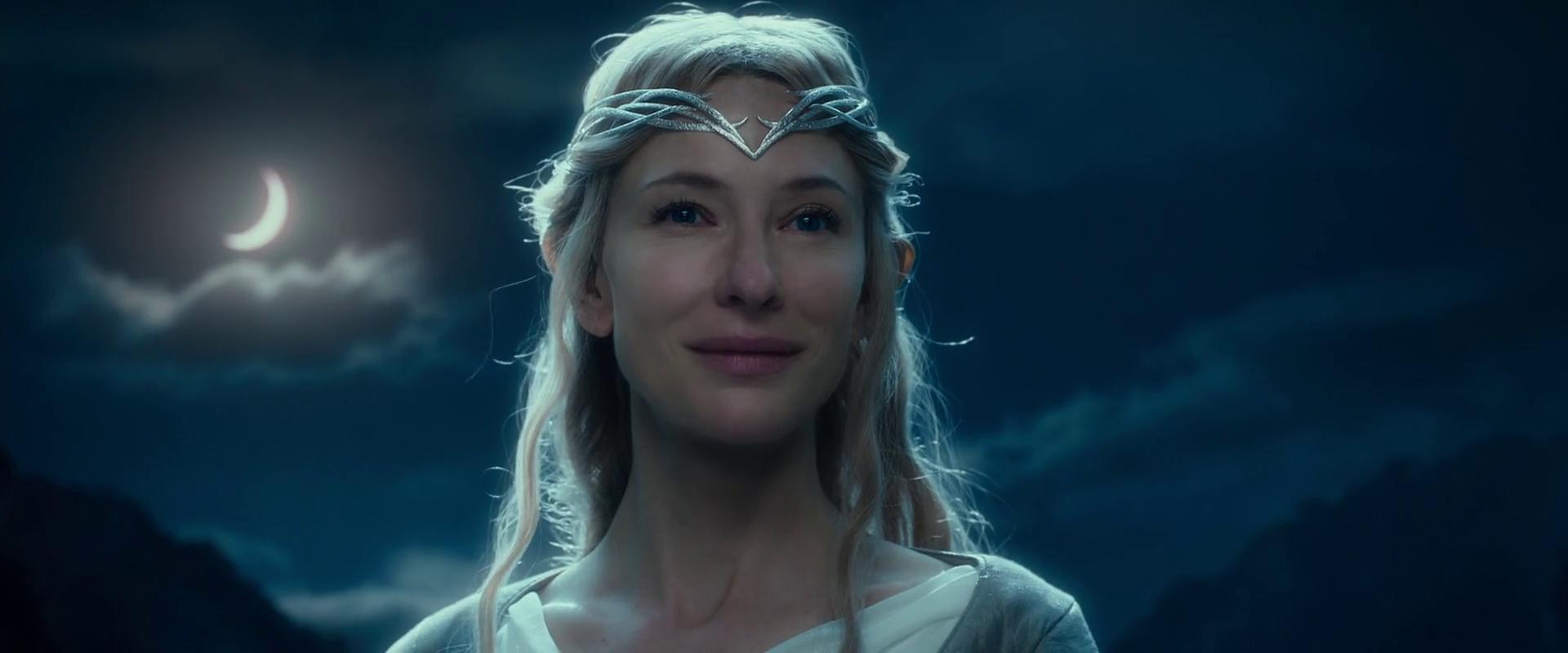
We n learnof Finwë, whom was the king of the Noldor. He had multiple children; two from a Noldor and one from a Vanyar. Seeing this trope we immedialty know that the Vanyar child, named Fëanor is going to be more a black sheep. He was the mightiest son, “in skill of word and of hand, more learned than his brothers; his spirit burned as a flame.” Whereas his brothers, Fingolfin (the ancestor of Elrond), the strongest, most steadfast, and the most valient; and Fingolfin (the ancestor of Galadriel) was “the fairest, and most wise of heart.” We spend a few paragraphs learning about their progeny in a very biblical sense (he begat they, and they begat she….etc.), but the picture is coming into place as to why the Elves are as they are when we move into other ages of the world. Much like humans, Elves are the result of their ancestor’s predelictions and concepts of the meaning of life.

We find that the Vanyar love Valinor and they eventually move into the land proper, but the Teleri whom some eventually made their way to Valinor lived in Tirion. Ironically some of the first Elves to head back to Beleriand, The Noldor, are what the majority of the remaining histories are about
So join us next week as we delve deeper into the lineage of those Noldor with “Of Fëanor and the Unchaining of Melkor.”
Post Script:
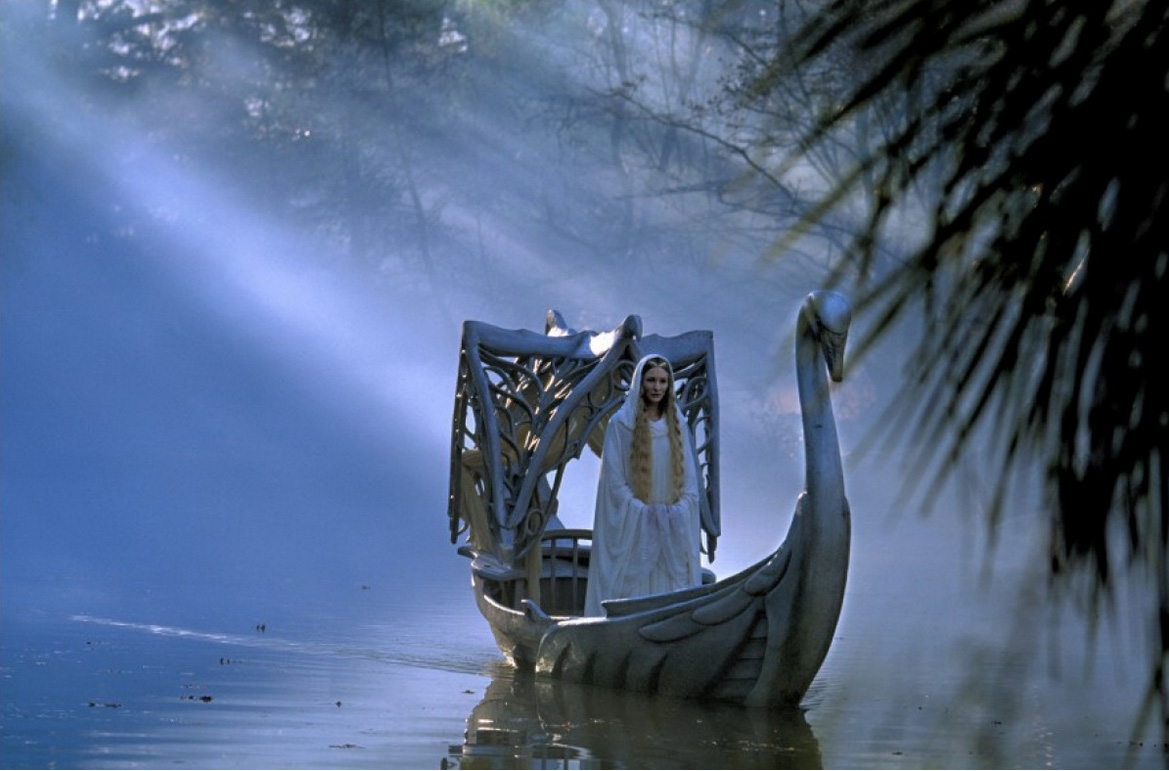
I find it extremely interesting that a few chapters ago we saw birds gain sentience from the music of the Valar, and part of the reason the Teleri were trapped on Beleriand, away from their kin, was that the ocean winds had stopped. What is the solution the Valar come up with? They got swans to tow the Teleri ships from Beleriand to Aman. I have yet to begin my rewatch and re-read of the The Lord of the Rings (I don’t know if I can muster up the strength to watch the Hobbit movies), but I’m pretty sure there were some swan like details on the boats at the end of Return of the King when Frodo was going off to Valinor. I wonder how much the sentient creature/ bird theme will run in these histories. Only one way to find out!
Blind Read Through: J.R.R. Tolkien; The Silmarillion, Of Thingol and Melian

“In after days, he became a king renowned, and his people were all the Eldar of Beleriand; the Sindar they were named, the Grey-elves, the Elves of Twilight, and King Greymantle was he, Elu Thingol in the tongue of that land.”
Welcome back to another Blind Read! This week we have a concise chapter, so I thought it would be the perfect time to review and dig into theories about what we’ve read so far in The Silmarillion.
This chapter follows Melian, a Maiar (the servants of the Valar), and Elwë, the Lord of the Teleri, whom we saw in the last chapter.
Melian “dwelt in the gardens of Lórien, and among all his people there were none more beautiful than Melian, nor wiser, nor more skilled in songs of enchantment.” She came to middle-earth at the same time as Yavanna, “and there she filled the silence of Middle-earth before the dawn with her voice and the voices of her birds.”
The Teleri who “tarried on the road.” across Middle-earth to Valinor were led by Elwë and Olwë, two brothers. Elwë Singollo, which surname we found in the previous chapter signifies Greymantle, heard the song of the lómelindi (the Nightingales), and in that song he heard the beautiful voice of Melian.
He set out to follow that song, and in doing so, “He forgot then utterly all his people and all the purposes of his mind,” and he was lost in the forest. He met Melian there, lost under the twilight stars, “and straightaway, a spell was laid on him.” He had fallen deeply in love with her and stayed with her in eastern Beleriand, starting their own faction of Eldar, which is what we see in the opening quote of this essay. He became Elu Thingol, King Greymantle of the Sindar, where Olwë, his brother, assumed kingship of the Teleri in his absence and took them to Valinor.

“And of the love of Thingol and Melian there came into the world the fairest of all the Children of Ilùvatar that was or shall ever be.” Namely the Sindar, or Grey-elves.
That is the chapter; not a lot to it, but there are some key points here to latch onto and I’d be remiss if I didn’t touch on them. First, we are currently discovering the creation of the peoples of Middle-earth at this point known as Beleriand (from my basic knowledge, Beleriand was sundered in the wars of the first age, which I’m sure will be covered in the remaining text of the Silmarillion.)
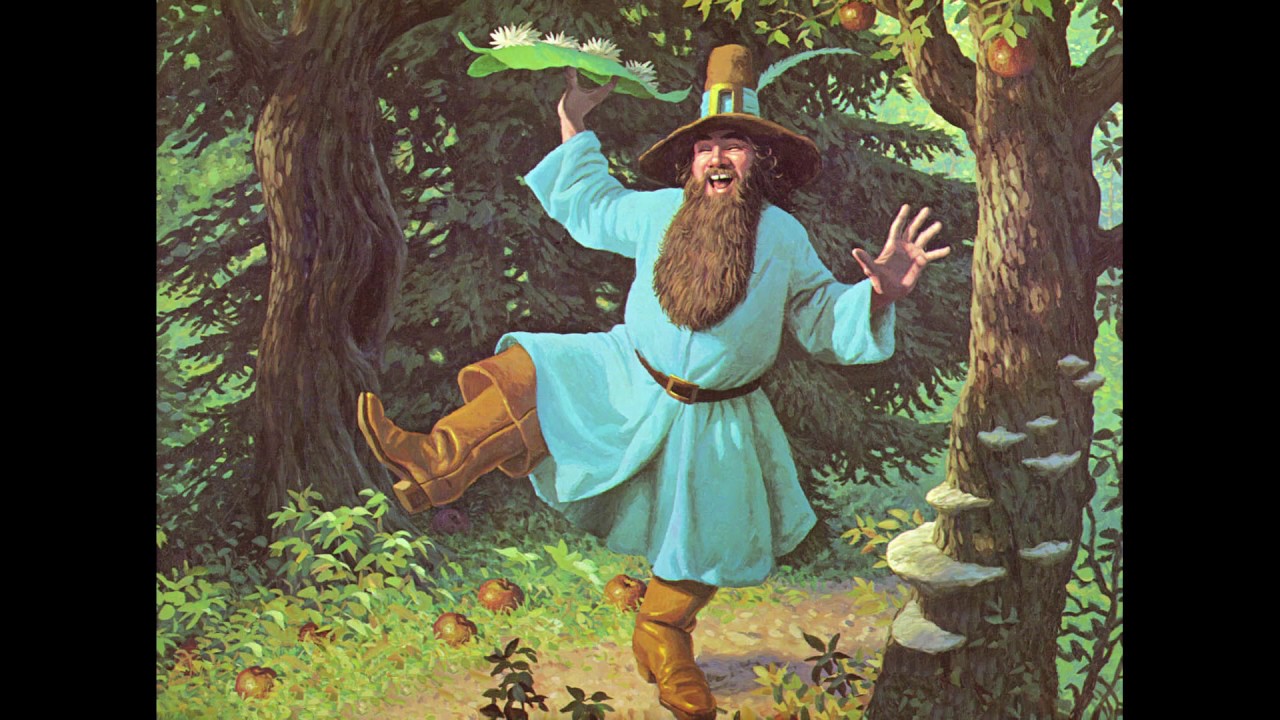
The first point I’d like to discuss is song. There was much made of music and song in Peter Jackson’s seminal trilogy and even more in the text of the books. There were characters like Tom Bombadil who basically spoke in music (and I’m inquisitive to see if we get a glimpse of where he came from), poems, and songs sung throughout the books, culminating in Pippin’s song near the end of Return fo the King.
Song and music are rampant throughout Tolkien’s world, and it wasn’t until I began this journey into The Silmarillion that I began to notice that there is a reason behind this. Music is the cornerstone of life; it’s what brings the people of Middle-earth life and happiness and sorrow. Indeed the entire world was built by song…The song of the Valar and Ilùvatar. The music that we’ve all experienced while traversing this incredible creation is an offspring of this idea. The old themes are sung to elicit feeling and emotion and give a glimpse of the past and the future. There is a theory that all music is derivative; all music comes from just a few early and core songs. This shows more gloriously here than anything else because all music portrayed echoes past, an echo of the songs sung by the Valar as the world was being created. One must assume that they all have their own tone and theme incorporated into their song, as varied as a love of nature to the agony of war. The pieces of this music are what create the world and the destination of those within it. I’m so excited to see what other music or song is incorporated moving forward.
The second point I wanted to touch on was language. Tolkien famously created this world based on language, and everything else came from that. This is what makes The Silmarillion so hard to read because there are multiple names for each character and sobriquets based upon whom they interact with. However, the more I dig into the history, the more I’m beginning to understand the language (with the help of the index, of course). Once you come across a name (like Beleriand, the land beyond the bay of Balar), if you’ve paid attention to the core of the word, there’s a good chance you’ll understand where the story is going to go surrounding that character.
The best example of this I can imagine is the introduction of Elwë Singollo. Immediately we are told that Singollo indicates the Greymantle, then everything that follows points towards the creation of the Grey Elves. The Nightingales sing at Twilight, the grey mist when Thingol and Melian meet, right down to their children and followers tribe name…Sindar, which is a derivative of Singollo. They are the Grey Elves, not because of their skin color, but because they were not of the light, meaning that they never went to Valinor, nor are the Sindar from the Dark; they are Elves of Twilight, both of time and location. It is these nuggets I’ll work to uncover as we continue on throughout this blind read.
What will we uncover next?
Join me next week as we move into “Of Eldamar and the Princes of the Eldalië!”
Blind Read Through: J.R.R. Tolkien; The Silmarillion, Of the Coming of the Elves and the Captivity of Melkor

“Yet be sure of this: the hour approaches, and within this age our hope shall be revealed, and the Children shall awake. Shall we then leave the lands of their dwelling desolate and full of evil? Shall they walk in darkness while we have light? Shall they call Melkor lord while Manwë sits upon Taniquetil?“
Welcome back to another Blind Read! This week the First of Ilùvatar’s Children (Elves) awaken, Melkor is thwarted, and we get some in-depth understanding of the creation of Middle-Earth, its peoples, and its antagonists.
We begin this chapter of the history of Middle-earth by finding that the Valar grew comfortable with their creations. Melkor was defeated, and they put him out of their minds, staying away from his lands and “the evil things that he had perverted.” Melkor created a stronghold, commanded by his lieutenant, Sauron (sound familiar?), named Angband. It was here we find the perverted things including the Maiar who followed him: “those spirits who first adhered to him in the days of his splendour, and became most like him in his corruption: their hearts were of fire, but they were cloaked in darkness, and terror went before them; they had whips of flame. Balrogs they were named in Middle-earth in later days.”
This is where we get the opening quote of this essay. The Valar, on their seats in Valinor, had a great debate on what to do with Middle-earth and the impending Awakening of the first Children of Ilùvatar, the Elves.

Varda, Manwë’s spouse, decided that the Elves should not be born into the darkness that blanketed Middle-earth, so she created the stars (which is why the Elves then called her Elentári in their tongue means ‘Queen of Stars’). I’ll leave the passage for this in the postscript because several names aren’t pertinent to this portion, but I have a sneaking suspicion they will be later!
Anyway, the Elves woke next to Cuiviénen (a lake in Middle-earth, otherwise known as “The Water of Awakening“), and the first thing they saw were the beautiful stars and “Long they dwelt in their first home by the water under the stars...” They even developed their own speech, then naming themselves the Quendi, “signifying those that speak with voices” as the Valar had no need for voice.
These Children of Ilùvatar were “stronger and greater than they have since become;” and the Valar decided that they needed to get these children to join them in Valinor, so Oromë had them follow him back, and those that did he named the Eldar, or the people of the stars.
But why didn’t they all follow Oromë, you ask? Melkor put stories into their heads to scare them off from the great hunter. Reports of “a dark Rider upon his wild horse that pursued those that wandered to take and devour them.” Melkor was able to ensnare some of these unfortunate Elves by this deception, and “those of the Quendi who came into the hands of Melkor, ere Utumno was broken, were put there in prison, and by slow arts of cruelty were corrupted and enslaved; and thus Melkor breed the hideous race of the Orcs in envy and mockery of the Elves, of whom they were afterwards the bitterest foes.“
So Melkor created Orcs from the Elves, but not just from the Elves… from the Quendi, who were stronger and greater than what the Elves later became. So it makes sense why the Orcs are thought of as so terrifying.

Understanding that Melkor was gaining in power the Valar decided that they must do something about it, so they decided to ride out against Melkor and capture him; to save the Quendi from the spread of his darkness. Apparently little is known of this battle because it didn’t take place in the view of the Quendi, except that “the Earth shook and groaned beneath them, and the water moved, and in the north there were lights as of mighty fires.”
The battle was so savage that the shape of the land itself was altered permanently, but eventually Melkor “was bound with the chain Angainor that Aulë had wrought, and led captive; and the world had peace for a long age.” The Valar discovered and defeated many of the ranks of Melkor, but they never did find his lieutenant, Sauron.
The world was at peace, and after long years of discussion, the Valar decided that the Quendi should join the Valar in Valinor far to the west. They sent for Ingwë, Finwë, and Elwë, who were ambassadors of the Elves and later became their kings, but free will got in the way.
“Then befell the first sundering of the Elves.”
The kindreds of these ambassadors followed Oromë to the west and became known as the Eldar. The ones who stayed behind loved their home of Middle-earth, the seas, the trees, and the stars and they refused the summons. These Elves became known as the Avari, or the Unwilling.
But beyond this first sundering, even the Eldar split as well. The three different ambassadors had their own followers, each with their own predilections. The followers of Ingwë were known as the Vanyar, or the Fair Elves, who are closest to the Valar and few men have ever seen.

Then there are the Noldor, the people of Finwë, otherwise known as the Deep Elves, who were known as great fighters and laborers.
Lastly there were the followers of Elwë Singollo (Singollo signifies Greymantle. I have a feeling we’ll find more out about that next week!), who were named the Teleri, who “tarried” on the roads and were the last to appear in Valinor. They are known as the Sea Elves, or Falmari, because of their love for the sea and making music beside the breaking waves.
These three kindreds of Elves who made it to Valinor are called the Calaquendi, or Elves of the Light (or a very literal translation, “Those who speak of the light“)
These Elves do not take much part in the story of the Silmarillion, but rather those they left behind, those that the “Calaquendi call the Umanyar, since they came never to the land of Aman and the Blessed Realm.” These Umanyar and the Moriquendi (or the Elves of Darkness who came later and “never beheld the Light that was before the Sun and Moon.” are who the remaining history of Middle-earth pertains to.
The Nandor, who were led by Lenwë and “forsook the westward march, and led away numerous people, southwards down the great river, and they passed out of the knowledge of their kin for long years were past.” until years later Denethor (not to be confused with Denethor II the steward of Gondor from the Third Age. Aka, father to Boromir and Faramir), son of Lenwë, decided to lead his people west over the mountains and into Beleriand (the westernmost land of Middle-earth).
We have finally gotten past the rich history of gods and angels and are getting into the creation of Middle-earth as we know it. I’m most curious to see where the coming of men, the second of the Children of Ilùvatar, come into play as the Elves begin to build their roots in the land. Do you have an idea of where we’re headed?
Let’s find out next week as we discover “Of Thingol and Melian.“
Post Script:
As promised, here is your passage…
“Then Varda went forth from the council, and she looked out from the height of Taniquetil, and beheld the darkness of Middle-earth beneath the innumerable stars, faint and far. Then she began a great labor, greatest of all the works of the Valar since their coming into Arda. She took the silver dews from the vats of Telperion, and there-with she made new stars and brighter against the coming of the First-born; wherefore she whose name out of the Deeps of Time and the labours of Eä was Tintallë, the Kindler, was called after by the Elves Elentári, Queen of the Stars. Carnil and Luinil, Nénar and Lumbar, Alcarinquë and Elemmírë she wrought in that time, and many other of the ancient stars she gathered together and set as signs in the heavens of Arda: Wilwarin, Telumendil, Soronúmë, and Anarríma; and Menelmacar with his shining belt, that forbodes the Last Battle that shall be at the end of days. And high in the North as a challenge to Melkor she set the crown of seven mighty stars to swing, Valacirca, the Sickle of the Valar and sign of doom.”
Blind Read Through: J.R.R. Tolkien; The Silmarillion, Of Aulë and Yavanna
“But I will not suffer this: that these should come before the Firstborn of my design, nor that thy impatience should be rewarded. They shall sleep now in the darkness under stone, and shall not come forth until the Firstborn have awakened upon Earth; and until that time thou and they shall wait, though long it seem. But when the time comes I will awaken them, and they shall be to thee as children; and often strife shall arise between thine and mine, the children of my adoption and the children of my choice.”
Welcome back to another Blind Read! This week we continue on the journey through the Quenta Silmarillion, learn about a few new races of beings, and discover the evolution of life in Middle-earth!
This second chapter is short and answers a question I’d been wondering since we started the journey through this history: Where did Dwarves come from?

Through the first few chapters as we got to know the beginning of Middle-earth we came to understand that Ilùvatar created his own children, the Elves and Men. There were so many other races not represented here which had me questioning their origins, none more than Dwarves. The Dwarves of Middle-earth are a prideful and powerful bunch and knowing just a bit about their history with Elves, I wondered where and how they came into the story.
Well this chapter starts us off in the first sentence: “It is told that in their beginning the Dwarves were made by Aulë in the darkness of Middle-earth; for so greatly did Aulë desire the coming of the Children, to have learners to whom he could teach his lore and his crafts, that he was unwilling to await the fulfillment of the designs of Ilùvatar.“
So Aulë created the dwarves at the same time Elves and Man were being created, and “because the power of Melkor was yet upon the Earth” he made the Dwarves “stone-hard, stubborn, fast in friendship and in enmity.” He also made their lives long, longer than Men, but not eternal like the Elves.
When he created them (in the true fashion of Prometheus disobeying Zeus and giving humans fire), Ilùvatar was angered, because he had yet to finish creating his own children; but when Aulë showed that he was willing to smite them with his hammer, Ilùvatar took pity on them and we get the opening quote of this essay.

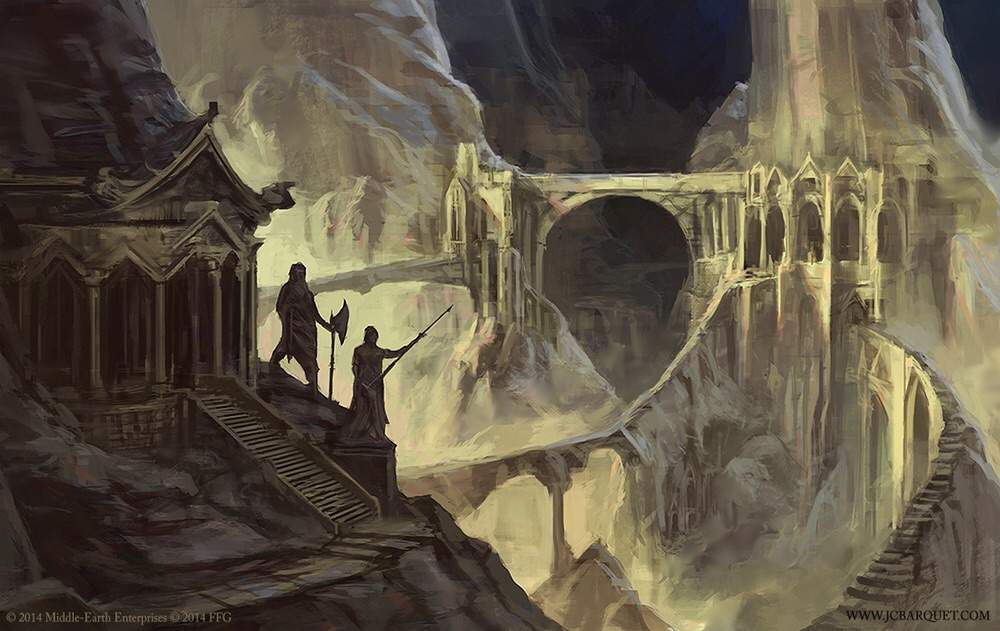
Aulë had promised the Dwarves they would sit at the End of the World with the Children of Ilùvatar, led by the Seven Father’s of Dwarves, “of whom Durin was the most renowned in after ages, father of that kindred most friendly to the Elves, whose mansions were at Khazad-dûm.” In case you don’t recognize this name from either the books or the movies, the better known name for Khazad-dûm is The Mines of Moria.
So now we know the Dwarves were created by Aulë as the “Second Born.” and were sequestered in Moria to await the coming of the First Born, aka the Children of Ilùvatar, aka Elves and Men.
But what of Yavanna? We’ve only spoken of Aulë and the chapter head has both of their names! Well, because Aulë kept his creations a secret even from Yavanna, the Dwarves ended up not caring much about her creations, instead, “they will love first the things made by their own hands, as doth their father. They will delve in the earth, and the things that grow and live upon the earth they will not heed.“
Yavanna was afraid for her great creation…nature. The bountiful trees and the beautiful forests were potentially in danger, because of the nature of Aulë, the smith, he instilled in his children that they should be desirous of making their own creations through industry. If Melkor got his desires into these industrial Dwarves, what was to stop them from cutting down Yavanna’s beautiful forests to use in their production?
Yavanna went to Manwë, the Valar of Wind and Sky and spoke her fears:
“Because my heart in anxious, thinking of the days to come. All my works are dear to me. Is it not enough that Melkor should have marred so many? Shall nothing that I have devised be free from the dominion of others?” They discussed it for a while until Manwë finally responded, “When the Children awake (the Dwarves), then the thought of Yavanna will awake also, and it will summon spirits from afar, and they will go among the kelvar (the fauna of Middle-earth) and the olvar (the flora of Middle-earth), and some will dwell therein, and be held in reverence, and their just anger shall be feared.”
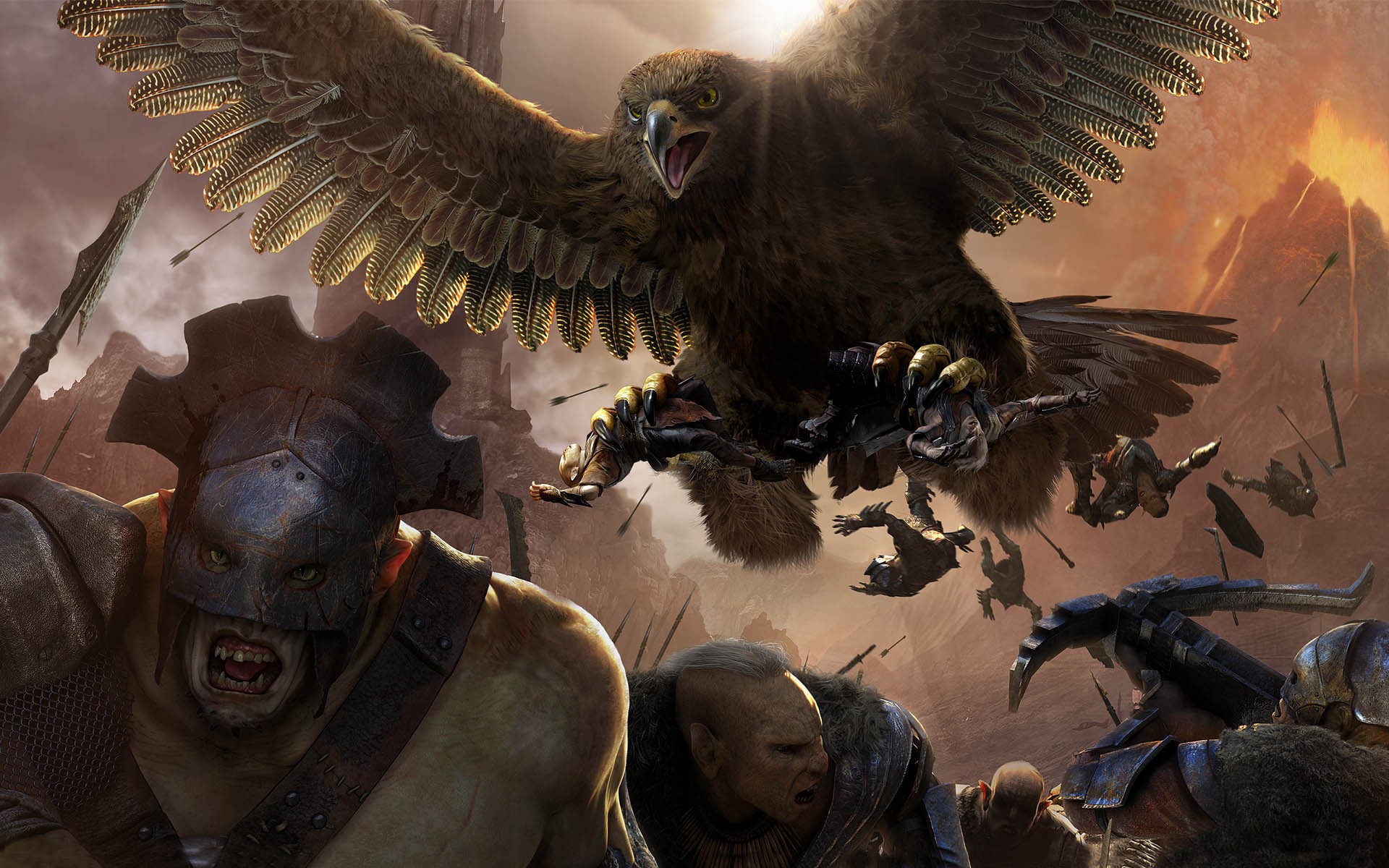
This breath of spirits and life created two powerful and fascinating beings, The Great Eagles and the Ents. Yavanna was able to work with Manwë to build a defense system into her creations, thus bringing sentience to the Great Eagles (which you’ll remember from the end of The Lord of the Rings, when Gandalf speaks with them and gets them to assist in gathering up the Hobbits) and the Ents (Yay Treebeard!) as guardians, so that even if Melkor’s influence encroaches upon the Children (both first-born, Elves and Man, and Second Born, Dwarves) and they foster a desire to mar the land further than even Melkor was able to, these sentient beings would be there for protection.
We are finally getting a broader understanding of how the world came into being, but what transpired to bring the Children to wake into the world? Let’s find out next week as we unfurl “Of the Coming of the Elves and the Captivity of Melkor.”
Blind Read Through: J.R.R. Tolkien; Valaquenta
“Among those of his servants that have names the greatest was that spirit whom the Eldar called Sauron, or Gothaur the Cruel. In his beginning he was of the Maiar of Aulë, and he remained mighty in the lore of that people. In all the deeds of Melkor the Morgoth upon Arda, in his vast works and in the deceits of his cunning, Sauron had a part, and was only less evil than his master in that for long he served another and not himself. But in after years he rose like a shadow of Morgoth and a ghost of his malice, and walked behind him on the same ruinous path down into the Void.”
Welcome back to another Blind Read! This week we dive deeper into the world of the Valar to get a better understanding of who those angels are, all the while understanding more and more about Tolkien’s process.
We jump right into the thick of things. Tolkien as I’m sure anyone who is reading this right now knows, was first and foremost a linguist, and famously created the Elvish language on it’s own. Once he had it he wanted to use it so he created a story around it, and thus arose The Lord of the Rings. Knowing this I figured that The Valaquenta was the story of the Valar, because quenta seems to be Tolkien’s etymology for story or history, and so to tell the story of the Valar would be the Valaquenta. Much like the first history in the book The Silmarillion, Ainulindalë, is about the land (dalë) that the Ainur created.
There is quite a bit of re-hashing of Ainulindalë in the Valaquenta as the Ainulindalë was almost a biblical genesis story, the Valaquenta is the story of the Valar; the Ainur who went down to Ëa (the Earth) and lived invisibly amongst the Children of Ilùvatar (namely the Elves and Men). This is much more of a introduction to these Valar whom I’m sure will be more important later. In fact this history even begins with the title “Account of the Valar and Maiar according to the lore of the Eldar.”
The first two paragraphs paraphrase the events in Ainulindalë, but then we get into more of a diversity of the Valar and who they are. We find that “The Lords of the Valar are seven; and the Valier, the Queens of the Valar, are seven also.” We also find that “Melkor is counted no longer among the Valar, and his name is not spoken upon Earth,” despite the fact that Melkor was the strongest of the Ainur. His fall from grace has surrendered his name from the ranks of the Valar. Because of this, Manwë is the next in line.

“Manwë is the dearest to Ilùvatar and understands most clearly his purposes. He was appointed to be, in the fullness of time, the first of all Kings; and with Manwë (The Lord of the Breath of Arda) dwells Varda, Lady of the Stars.” The two of them reside in Valinor (the great resting place of the elves, and in general the home of the immortal Valar. Also known as Aman). “Of all the Great Ones who dwell in this world the Elves hold Varda most in reverence and love.”
Next we are introduced to Ulmo who we already know is the Lord of the Seas, but what we find is that “He is alone.” There is no Valier which resides with him, and though “the arising of the King of the sea was terrible,” “Ulmo loves both Elves and Men, and never abandoned them.“
Then there is Aulë who has “lordship… over all the substances of which Arda is made.” Aulë is “a smith and a master of all crafts.” The elves (The Noldor, the second clan of Elves) “learned most of him” which created a larger rift with Melkor, because Aulë was a friend of the Children of Ilùvatar and Melkor wasn’t. Aulë’s spouse is Yavanna who is also known as the Queen of the Earth, or Kementári in the Eldarin tongue.
There is Námo and Irmo, who are bretheren, and known as the masters of spirits; whom are better known by the names of their homes, which are Mandos and Lórien. The two brothers are known as the Fëanturi, which on a quick glace looks to me a lot like Fae, or the magical creatures from a different realm. Kind of makes sense, especially when we get more information about them. Mandos is “the keeper of the Houses of the Dead, and the summoner of the spirits of the slain.” while Lórien is “the master of visions and dreams.” This falls right in line with the style of magic the classic Fae utilize.

Both brothers have spouses who are also involved in these Fae type works. Vairë is Mandos’ wife who “weaves all things that have ever been in Time into her storied webs.” Estë is Lórien’s wife and she is the “healer of hurts and weariness.” But beyond these two, in Lórien there is a mightier Valier than Estë… Nienna. “She is acquainted with grief, and mourns for every wound that Arda has suffered in the marring of Melkor. So great was her sorrow, as the music unfolded, that her song turned to lamentation long before its end, and the sound of mourning was woven into the themes of the world before it began.” I can almost hear “shadows of the past” conducted by Howard Shore as I contemplate what this means. Melkor not only caused strife, but on top of that, grief and sorrow were not known emotions in the Children of Ilùvatar until Nienna felt them and sang them into existence. All because of Melkor’s revolts.

Next we have the great hunter Oromë, who is “a hunter of monsters and fell beasts, and he delights in horses and hounds; and all trees he loves, for which reason he is called Aldaron, and by the Sindar Tauron, the Lord of Forests.” And of course a great hunter must have a great horn, which he calls The Valaróma. Vána, “The Ever-young” is his spouse, and is the Lady of spring.
Then the last of the Valar is Tulkas, the “Greatest in strength and deeds of prowess.” He came to Arda to aid in the battles against Melkor and his spouse is Nessa; fleet of foot and lover of dance.
Next we spend some time covering the the Maiar, whom came with the Valar to Arda, and were servants to the Valar. They were: Ilmarë a handmaiden of Varda, Eönwë whom is the banner-bearer of Manwë, Ossë whom is a vassel of Ulmo and protected the Númenóreans, Uinen who has a delight in violence, Melian who served Vána and Estë, and finally Olórin who learned pity and patience.

But there were other Maiar. Maiar who were drawn to the horrible splendour that was Melkor, and they were corrupted “to his service with lies and treacherous gifts.” These were known as the Valaraukar (a verbal amalgam of Melkor and Valar), “the scourges of fire that in Middle-earth were called Balrogs, demons of terror.”
The last among these Maiar, is obviously the most infamous and we see that in the opening quote of this essay: Sauron, or Gorthaur the Cruel. The Maiar that would later become the scourge of the Third Age and little Hobbits everywhere.
These two histories were obviously notes of a larger narrative in which Tolkien was building. They overlap and expound upon the previous one to show more and more of what the world of Arda really is, but they don’t have a through line or story to grab a hold of. I do, however, get the feeling that all of these names and places are going to be extremely important moving forward as we delve deeper into the lost tales.
So join me next week as we begin our journey into the Quenta Silmarillion!
Blind Read Through: J.R.R. Tolkien; Ainulindalë
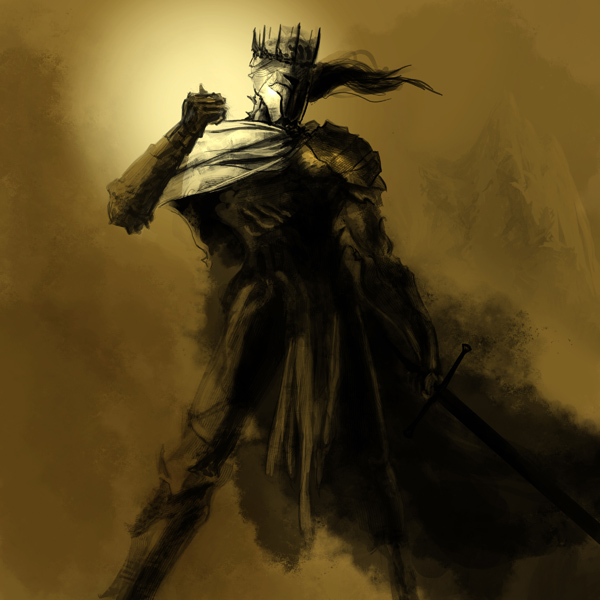
“For the Children of Ilúvatar were conceived by him alone; and they came with the third theme, and were not in the theme which Ilúvatar propounded at the beginning, and none of the Ainur had part in their making. Therefore when they beheld them, the more did they love him, being things other than themselves, strange and free, wherein they saw the mind of Ilúvatar reflected anew, and learned yet a little more of his wisdom, which otherwise had been hidden even from the Ainur.”
Welcome back to another Blind read! It’s been a while, but we’ve now completed all of H.P. Lovecraft and here is the first J.R.R. Tolkien! This week we dive into the origins of Middle-Earth as we begin our journey through “The Silmarillion.”
What I didn’t realize getting into this was that “The Silmarillion” is actually only a portion of the whole book. Theres’ this entrance, Ainulindalë, then the Valaquenta, and then it gets into the Quenta Silmarillion which is the bulk of the book. All told this story is, “an account of the Elder Days, or the First Age of the World.” Where The Lord of the Rings takes place at the end of the Third Age, this is the genesis story of how that land came to be.

We begin with “Eru, the One, who in Arda is called Ilùvatar.” I’m sure more will come clear as we move forward, but Arda is what the Elves call Earth, not Middle-Earth, so at some point in the future there must have been a rift which caused a separate world or just continent to come about. That may be because of the first Dark Lord, Melkor, who’s introduced in this history.
So Ilùvatar created the first beings to inhabit the world and the stars, and these beings were called Ainur, The Holy Ones. They “were the offspring of his thought, and they were with him before aught else was made.”

Ilùvatar “spoke to them, propounding to them themes of music; and they sang before him, and he was glad.” If that sounds like a bible verse, it’s intentional. Ilùvatar teaches them three themes of music. Bear in mind that he doesn’t teach them songs, but themes. The important distinction is that Ilùvatar is looking to create more than just the Ainur, he wants to see life expand, so the Ainur in turn use these themes to create Arda. The three themes, sung into verse, created different aspects of the world, and began to shape the history of what was to come. The Ainur were content to build this world, and revel in is splendor… except for one exception… Melkor.
“But as the theme progressed, it came into the heart of Melkor to interweave matters of his own imagining that were not in accord with the theme of Ilùvatar; for he sought therin to increase the power and glory of the part assigned to himself.”
To do so, Melkor “Had gone often alone into the void places seeking the Imperishable Flame; for desire grew hot within him to bring into Being things of his own.”
Melkor began to sing discordantly and outside of the themes Ilùvatar laid our for the Ainur, “until many of the Ainur were dismayed and sang no longer.” Ilùvatar then rose, “and he lifted up his right hand, and behold! a third theme grew amid the confusion, and it was unlike the others.” This third theme was the creation of Ilùvatar’s children… The Elves and the Men.
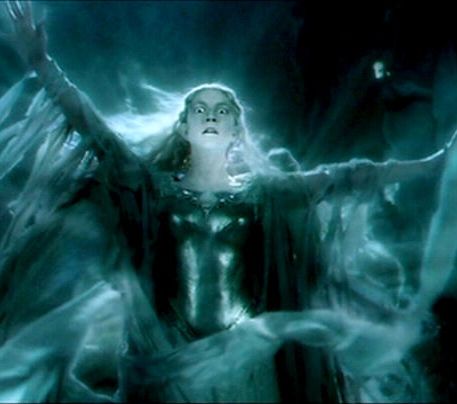
The music was discordant, with many battling melodies led from Melkor’s tones, until Ilùvatar stood, “and his face was terrible to behold.” This nearly reminds me of the influence of the one ring on Galadriel, to the point that I had to put the book down and contemplate where the power of that One Ring came from… could Ilùvatar be the source?
Ilùvatar shuts the Ainur down and shames Melkor: “And thou, Melkor, shall see that no theme may be played that hath not its uttermost source in me, nor can any alter the music in my despite.”
This is a very Old Testament thing to do. Ilùvatar created the Ainur from his thought and then gave them the themes to create the world. In text this seems to indicate that Ilùvatar wanted them to run with the themes and create the world (Arda) with the essence of the themes, but to create through their own lens. Melkor takes this a step too far, but Ilùvatar seems surprised that Melkor “The mightiest among them (Ainur)” might be able to actually take that step further. Then Ilùvatar tells them that they need to calm down; that they have no free will, because anything that they create with their music, was already foreseen by him. That everything they create is of him. That they cant in fact create anything that isn’t of his mind.
This seems to me the first big lie of Arda. If, indeed, Ilùvatar felt that this was true (the Ainur only being able to create what he could conceive) then why did he stop them? Why did his anger grow so much that he was “terrible to behold?” It’s because he had a specific vision and Melkor was leading a charge to alter that vision.
This strange reaction embarrasses Melkor and shames him, which only builds to bring out the darker side of desire.
Once Ilùvatar creates his Children (the elves and men), he decides he needs a place to house them, so “he chose a place for their habitation in the Depths of Time and in the midst of innumerable stars.” Which he names Ëa and it houses Arda.
The Ainur, once seeing the creation of Ëa, “…bent all their thought and their desire towards that place.” and this is where Melkor really begins his Satanesque fall. The Ainur are basically Angels (we’ll get into that a bit more in a minute) of which Melkor is one, but because of Hubris and desire, he creates a rift in the Ainur. He, much like many of the other Aniur who went to Ëa to assist in creation of that world, went “to go thither and order all things for the good of the Children of Ilùvatar…” but soon realizes that his jealousy and desire for power brought him there instead to “subdue to his will both Elves and Men,” because of “envying the gifts with which Ilùvatar promised to endow them.” A story which echoes the fall of the Lightbringer very closly.

The other Ainur who went to Ëa, were soon to become known as the Valar. There was Ulmo whom turned his thought to water and who “of all most deeply was he instructed by Ilùvatar in music.” It is because of this teaching that “it is said by the Eldar that in the water there lives yet the echo of the music of the Ainur more than in any substance else that is in this Earth.” (also another interesting aside. This is the only time in this history that Tolkien calls Ëa “this” Earth. Meaning that this was meant to be a history of our own world, which could also account for the very Christian backstory). There is Manwë, “the noblest of the Ainur” who was of the airs and the winds. Aulë who “Ilùvatar had given skill and knowledge scarce less than Melkor” took to the “fabric of Earth.”
These Valar were named “The powers of the world” and shaped Ëa in Ilùvatar’s ultimate vision, “but Melkor too was there from the first.”
Melkor finally had his fall. He claimed Ëa for his own, “This shall be my own kingdom; and I name it unto myself!” but again he was foiled because Manwë “called unto himself many spirits both greater and less, and they came down into the fields of Arda and aided Manwë.” to drive Melkor away.
There was peace for a time and the Valar, whom were imperceptible to the Eldar (the first of Ilùvatar’s children, the Elves) decided they wanted to walk among them, so they clothed themselves to look like Men and Women, but when Melkor perceived this and “His envy grew then the greater within him; and he also took visible form, but because of his mood and the malice that burned in him that form was dark and terrible.“
Again this follows the idea that these Valar are angels and Melkor is the fallen. They are invisible, except for when they wish to walk amongst the mortals and they can clothe themselves in our skin. They are beholden to Ilùvatar (God) and follow his instructions on creating a world for the Children of God, who are given more than they. But it is the Jealousy of Melkor which is the primary forge to create what the world could be. What’s fascinating in this respect is that Ilùvatar gave Melkor more intelligence and ability than any of the other Ainur, but if what he says is true and nothing can be created without his influence, then Melkor’s fall was known and, “Thus began the first battle of the Valar with Melkor for the dominion of Arda.” Of this battle little is known because the Valar struggled to keep the machinations of the Ainur from the Eldar, but Melkor fought against the Valar, and extended the creation of the world.
The only reason we know the outcome of that battle is because we know the world was created so we know Melkor failed in taking over the land, though the next history in the book is the Valaquenta, which is the account of the Valar from the perception of the Eldar, so I anticipate finding more out about these godlike beings and what they have done on Ëa!
Join me next week as we dive deeper into the history of Middle-Earth as we read through Valaquenta!
Updates 08/26/21

Hello everyone!
I anticipated releasing the conclusion of Lurker at the Threshold today, but due to a WordPress blip, half of the essay was gone when I logged on this morning. So that essay will be coming to you next week while I re-write it, followed by an essay on some final thoughts of H.P. Lovecraft. What I want to spend the rest of this update doing is letting you know what’s coming after that!
Blind Read Series:

I’m going to transition directly from H.P. Lovecraft to J.R.R. Tolkien (I didn’t think there were enough initials in my titles!). I read The Hobbit as a child and loved it, but when I started to read The Lord of the Rings, I was stuck at Tom Bombadil. I eventually read that massive tome in three sections, but I’ve always been interested in Tolkien’s lost tales and histories. I know many people are, but the text itself is daunting, so I intent on continuing the Blind Read series and reading, analyzing, demystifying, and connecting all of Tolkien’s side tales and histories of Middle Earth. In three weeks from today I’ll release the first section of the Silmarillion!
Short Stories:
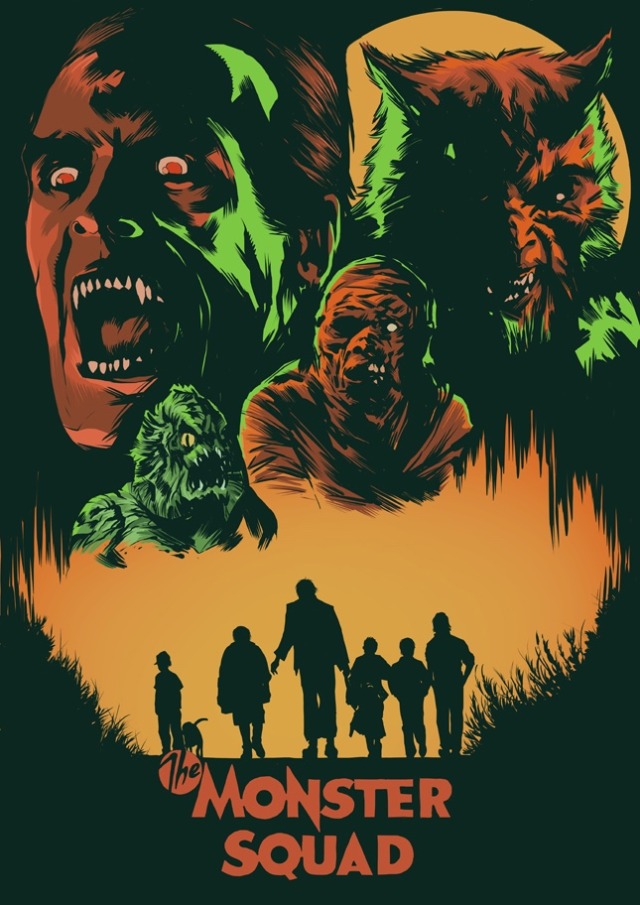
The weather is cooling and the spooky season is coming. I intend to write a number of short shorts (somewhere in the ballpark of 1000 words) to release periodically in the fall months. These are going to be similar to the Universal Monster shorts I did last year, but Halloween will be the connecting factor this year. This is a call back to all those terribly awesome 80’s horror/schlock films such as The Monster Squad, Fright Night, and Hocus Pocus (I know, I know, that one is the 90’s). So come join me for some kinda, maybe not so scary fun!
Elsie Jones Adventures:
Get ready for a new look of Elsie Jones! I’ve been passively looking for a new Illustrator to take over the series, but this fall I’ll continue in earnest. Get ready for a new authors edition of Elsie Jones and the Book Pirates, and a cleaner Elsie Jones and the Captain’s Guard. Twelve of the 15 books are written, so I anticipate a good release schedule! If you’re curious you can purchase any of the first three books here!

The Legacy:
Currently in it’s fourth edit. This is my adventure novel I finished last October. Think if Dan Brown partnered with Indiana Jones this is what you’d get! I’ve always loved the intrigue and the adventure of following the clues to discover and uncover a mystery! Inspired by the incredible Oak Island (research it if you don’t know about it). I’m hoping to have this published in some fashion in 2022.
The Monster in the Woods:
This is the first book in my Revolution Cycle. I’ve been stewing on this series for 20 years or so, and I’m finally getting it to where I want it. I’ve already written two novels that’s I’ve been unhappy with and consider exploratory novels into the world, but I’ve been spending quite a bit of time outlining everything that will go into this 10 book series. The first book is very heavily inspired by The Goonies (I’m catching a 80’s inspiration thread here), but the larger story is told with the backdrop of impending war, and how the group from the first book will deal with it. The Monster in the Woods is a Heist/Gooniesesque adventure, with a few twists along the way.
That’s all for now, with much more on the way!



 Sean McBride
You must be logged in to post a comment.