Blind Read Through: J.R.R. Tolkien; The Book of Lost Tales, part 2, Túrin’s first tragedy
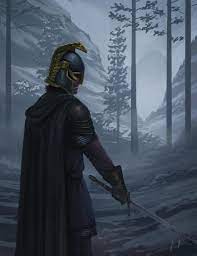
“To ease his sorrow and the rage of his heart, that remembered always how Úrin and his folk had gone down in battle against Melko, Túrin was for ever ranging with the mosst warlike of the folk of Tinwelint far abroad, and long ere he was grown to first manhood he slew and took hurts in frays with the Orcs that prowled unceasingly upon the confines of the realm and were a menace to the Elves (pg 74).”
Welcome back to another Blind Read! This week, we begin to learn a bit about Túrin and experience his first tragedy of character while trying to understand Tolkien’s purpose in the themes of this tale.
Tolkien spends much of his time in this early version of Turmabar, striving to show the differences between Men and Elves (the more Tolkien created, the less he described Elves as Gnomes. It seems like he started to think of Gnomes as anything fay-like, as the moniker became a catch-all). Men tended to be less unkempt, more creatures of passion, whereas Elves were much better groomed and stoic.
Through this time, Tolkien was still developing his story, language, world, and its peoples, and these lost tales were written as an exploratory first draft to get the world out of his head and onto paper, but, as evidenced by The Silmarillion, Tolkien was not happy with these early drafts. They lacked cohesion and a thematic goal.

An example of this is as follows: “Now Túrin lying continually in the woods and travailing in far and lonely places grew to be uncouth of raiment and wild of locks, and Orgol made jest of him whensoever the twain sat at the king’s board; but Túrin said never a word to his foolish jesting, and indeed at no time did he give much heed to words that were spoken to him, and the eyes beneath his shaggy brows oftentimes looked as to a great distance (pg75).”
Túrin is a Man (as in every other Blind Read; read this as Human whenever capitalized), and Men are described as much more feral creatures. This classification was the original intent of Men, specifically because of Tolkien’s experiences in The Great War, he distrusted human instinct and saw humans as impetuous and violent creatures. Violent and feral is a very apt description of how Túrin (and almost every other Human in this story thus far) is described. He is animalistic; he “seemed to see far things and to listen to sounds of the woodland that others heard not (pg 75).” “He was moody (pg 75).”
One function of this could be because the majority of Men in these early stories that came from Hithlum were captured by Melko and held as thralls and slaves for many years, and Túrin (in The Book of Lost Tales, not The Silmarillion) is no exception, but more realistically Tolkien initially created Men this way because they were not born of the gods the way the Eldar were. Their lives are short; thus, they are much more emotional and prone to reaction because they need to feel the depths of emotion and experience much quicker than their immortal brethren.
This version of Turambar is much less tragic and much more vicious. Orgof, the Eldar we saw above who was a playground bully of Túrin, takes the place of Saeros. In the later Silmarillion version, Saeros is still a bully, but when Túrin finds him in the wilds, he turns the tide and strips Saeros naked, intending to embarrass the bully. Saeros, terrified, tries to jump a Fjord and falls to his death. This accidental death is the first event that makes Túrin an outlaw, but in this version, nearly everyone in Doriath sympathizes with Túrin and tries to get him to come back, but his conscience is what pushes him further into exile.

This earlier version is entirely different:
“Then a fierce anger born of his sore heart, and these words concerning the lady Mavwin blazed suddenly in Túrin’s breast so that he seized a heavy drinking vessel of gold that lay by his right hand and, unmindful of his strength, he cast it with great force in Orgof’s teeth, saying: ‘Stop thy mouth therewith, fool, and prate no more.’ But Orgof’s face was broken and he fell back with great weight, striking his head upon the stone of the floor and dragging upon him the table and all it’s vessels, and he spake nor prated again, for he was dead (pg 75).”
Túrin’s actions were murder in this earlier version. It was an act of a feral and impetuous being, as we should expect from any Human in these early tales of Tolkien.
To take that a step further and show the difference between Elves and Men, Tinwelint and his court show incredible understanding. “Yet they did not seek his harm, although he knew it not, for Tinwelint despite his grief and the ill deed pardoned him, and the most of his folk were with him in that, for Túrin had long held his peace or returned courtesy to the folly of Orgof (pg 76).”
Meanwhile, Túrin runs away and joins a group of people in the woods described as “wild spirits (pg76).” Again, Túrin is a Human and feeds into his animalistic tendencies. His emotions are so high that he cannot understand that there could be clemency for him in Doriath because he does not hold any for himself. His emotions again overpower him, and he runs off to the only place where he feels at home, in the forest with ruffians.
This kind of childish behavior is endemic to Men in early Tolkien, and it isn’t until the later versions (I believe The Silmarillion is either the Third or Fourth draft) that they begin to get more depth and character. The whole point of these stories evolved from being a general history of our world to actual ages of time, and this time was the Age of the Eldar. Tolkien’s main goal, however, was leading his fairy tale, through Eriol and The Cottage of Lost Play, to the fourth Age. The Age of Men.
Join me next week as we introduce one of The Silmarillion’s best characters, Beleg, and discover Túrin’s second tragic act.
Blind Read Through: J.R.R. Tolkien; The Book of Lost Tales, Part 1, The Coming of the Valar

“In this dimness the Gods stalked North and South and could see little; indeed in the deepest of these regions they found great cold and solitude and the rule of Melko already fortified in strength; but Melko and his servants were delving in the North, fashioning the grim halls of Utumna, for he had no thought to dwell amongst the others, howso he might feign peace and friendship for the time (pg 69).”
Welcome back to another Blind Read! This week we move forward in the Book of Lost Tales and start on the third chapter, “The Coming of the Valar and the Building of Valinor.”
This chapter has three distinct cut points, so we’ll divide that up into three separate essays. The first will be about the entrance of the Valar into the tale and the theory behind Valinor, the second will be about the lamps of Valinor and the Vala dwellings, and the final will be about some new material we haven’t seen before.

We pick back up with Eriol, the human traveler, speaking with Rúmil, the storyteller of Tol Eressëa. Eriol asks Rúmil, “I would still hear many things of the earliest deeds within its borders (Valinor); of the labours of the Valar I would know, and the great beings of most ancient days (pg 64).”
Rúmil regales Eriol with the names, purpose, and works of the Valar throughout this chapter, and it’s not an easy read. However, the first few chapters of the Silmarillion and The Book of Lost Tales are about the beginning of time, and they frame everything that comes after.
This chapter is so tricky because Tolkien goes for pages upon pages and describes the various Valar. Still, once we begin to get into the stories of the Eldar, which comprise the majority of The Silmarillion, the Valar don’t play much of a part.
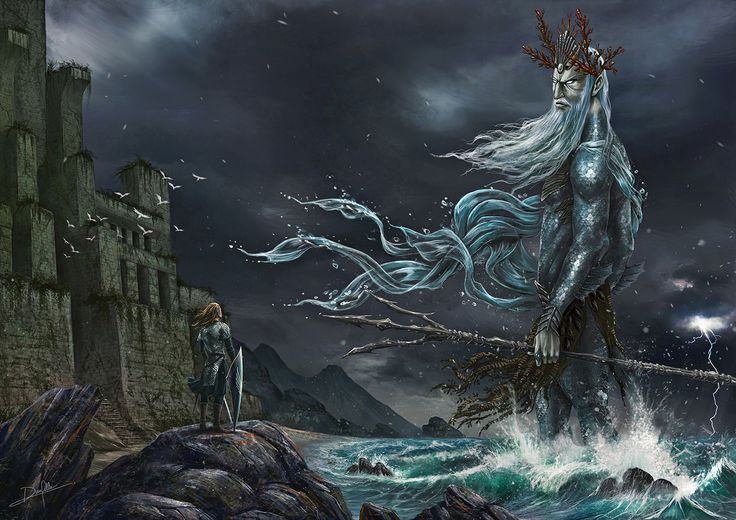
In the Book of Lost Tales, Tolkien spends more time describing the various Vala and their roles. Some of their names change slightly between when the writing of this book (remember that The Book of Lost Tales is an amalgamation of editions edited by Christopher. In the appendices for this chapter, Christopher even mentions that he collected and put together the best story he could from notebooks and even scraps of paper his father used for notes.), and the publication of The Silmarillion.
In later works, Tolkien had differing power levels for the Valar, almost like rankings. The Aratar (Exalted Ones) were the most powerful of the group in this iteration, who comprised most of the Valar, whom Tolkien calls gods during the Book of Lost Tales, but we’ll discuss this more in a moment. Many Valar had children considered lesser Vala, and Tolkien eventually formed the title Fëanturi for them. There was also a third ranking of these gods in Valinor, whom Tolkien later got rid of entirely, which were very similar in every aspect of the Eldar, except in conception:
“About them fared a great host who are sprites of trees and woods, of dale and forest and mountain-side, or those that sing amid the grass at morning and chant among the standing corn at eve. These are the Nermir and the Tavari, Nandini and Orossi, brownies, fays, pixies, leprawns, and what else are they not called, for thier number is very great: yet must they not be confused with the Eldar, for they were born before the world and are older than its oldest, and are not of it, but laugh at it much, for they not somewhat to do with its making, so that it is for the most part a play for them (pg 66).”
Tolkien later eliminated the fae and streamlined the Valar by re-facing lesser Vala (Lórien and Mandos) as the Fëanturi, Sindarin for “Masters of Spirits,” no longer children of the Aratar. He decided that the Valar would no longer be gods because Ilúvatar was the one God, and the Valar were his servants, who had free will to use their music to create and adjust life on Eä. The conception took the Valar from gods to angels, and the angels of the lesser degree were the Maiar, better known as the servants of the Valar. The best-known Maiar are Sauron, a servant of Melkor (also known as Morgoth), and the Istari, the wizards. You may know them as Gandalf, Radagast, and Saruman.
Tolkien’s primary objective was to create a fantasy world that would eventually become our world in later epochs. He studied mythology and fairy tales his entire life and felt as though England didn’t have appropriate myths. The most famous tale at the time as a mythology for England was The Faerie Queen, and obviously, this is where Tolkien started.

I believe that over time he wanted to distance himself from Edmund Spencer (also, from everything I’ve read, I don’t get the feeling he liked The Faerie Queen that much), so getting rid of the fae was always going to happen, but he didn’t get rid of them entirely. If we dig down into the quote above and remove specific verbiage: “for they were born before the world and are older than its oldest, and are not of it, but laugh at it much… (pg 66),” it brings to mind a specific character.
In The Fellowship of the Ring, we are introduced to Tom Bombadil, “the oldest being of Middle-earth, ” constantly laughing and merrymaking. The Council of Elrond even considers giving him the One Ring for safekeeping but decides against it because he is so old that the Ring’s power would be boring to him. Tolkien filtered down the fae creatures in The Book of Lost Tales to Tom Bombadil in later works. He wanted to keep the concept of a fae creature, but he also needed to distance himself from what came before so that he might have a complete mythology.
So now we have the fourteen Valar (eight in the Silmarillion), but we still don’t know anything about their home. So come back next week for the second section of “The Coming of the Valar and the Building of Valinor!”



 Sean McBride
You must be logged in to post a comment.