Blind Read Series: H.P. Lovecraft; The Music of Erich Zann

“On the night I arrived I heard strange music from the peaked garret overhead, and the next day asked old Blandot about it. He told me it was an old German voil-player, a strange dumb man who signed his name Erich Zann, and who played evenings in a cheap theatre orchestra; adding that Zann’s desire to play in the night after his return from the theatre was the reason he had chosen this lofty and isolated garret room, whose single gable window was the only point on the street from which one could look over the terminating wall at the declivity and panorama beyond.”
Welcome back to another Blind Read! I cannot tell you how excited I am to be discussing this short story! It is without a doubt my most favorite Lovecraft story to date, filled with creepy ambiance (brimming with classic, though augmented, Lovecraftian tropes) and a terrifying climax . This one is not to be missed!
We start, yet again, with our classic unreliable narrator. Everything seems above board with this gentleman except for the fact that he lived in an apartment on a road that he has since been unable to find. We can brush off the absurdism and take that as Lovecraftian madness, or we can take this story at just face value…an entertaining fiction the narrator weaves for us.
“I have examined maps of the city with the greatest care,” the narrator tells us, “yet have never again found the Rue d’Auseil.” We are transported to France, a brand new locale for a Lovecraft story. It’s a nice changeup from our New England home base, because we can now see that these types of events (which we saw on a much broader scale in The Call of Cthulhu) happen around the globe.
The narrator tells us that the French (possibly Parisian) alley “..was always shadowy along that river, as if the smoke of neighboring factories shut out the sun perpetually.” It also stank: “The river was…odorous with evil stenches which I have never smelt elsewhere...” These things in and of themselves are not indicators to anything particularly nefarious. Remember that Lovecraft was writing in the early 20th century and much of the poorer areas of the world had to deal with these types of issues. We were neck deep in an industrial revolution and laws were slim. There were factories which spouted smoke and exhaust with abandon, and rivers were usually run off for toilets. What Lovecraft is doing is just setting up the scene, much like he does in “The Dunwich Horror” by creating a space where the poorer people of the world deal with this kind of degradation that the rich never has to condescend to understand. These types of things just happen with more frequency in the poor areas because the poor doesn’t have any power or recourse to deal with them. So the rich can live in a sunny and perfumed estate, and the poor people have to deal with their smoggy and “odorous” runoff.
The narrator “had never seen another street as narrow and steep as the Rue d’Auseil.” It was “closed off to vehicles, consisting in several places of flights of steps, and ending at the top in a lofty ivied wall.”
The Rue d’Auseil is cut off from the world. It is dirty and difficult to access, but so far we’ve not seen anything really out of the ordinary. Until this sentence:
“The houses were tall, peaked-roofed, incredibly old, and crazily leaning backward, forward and sidewise. Occasionally an opposite pair, both leaning forward, almost met across the street like an arch...”

This is where we get Lovecraftian. Much like in “Dreams in the Witch House” architecture plays a large part in the mythos. Strange, non-Euclidean geometry in structures is an indication that it’s a location for a portal to the outside world. These types of places in Lovecraftian fiction are used as a terminus of power. The off-putting architecture means that magic is stronger in the rue d’Auseil and could potentially be a locus of summoning Elder beings.
After getting the description of the building and finding out that our narrator gains a flat on the fifth floor, we get the quote which opens this essay…our introduction to Erich Zann and what our narrator means when he calls Zann “dumb” is just a sobriquet for mute, a matter of much importance for the denouement of the story.
The narrator gains access to Zann’s apartment by being nice, and Zann plays him some music: “He did not employ the music-rack, but offering no choice and playing from memory, enchanted me for over an hour with strains I had never heard before; strains which must have been of his own devising…They were a kind of fugue, with recurrent passages of the most captivating quality, but to me were notable for the absence of any of the weird notes I had overheard from my room below on other occasions.”
So now we have evidence of not only architecture being odd and off-putting, but now music which is discordant. I was riveted when Lovecraft jumped into this realm. Music is known to open one’s mind, to help with memory, to assist with focus, even to repair parts of the brain. I am, in fact, listening to music right now as I write this. If we consider the power music can hold and that it can be used in conjunction with magic, this opens up whole new worlds within the cosmic horror field! It seems to me that Lovecraft is setting up that Zann is an old man who has experienced too much, and possibly had been part of some Cthulhu cult at one point in his life After reading The Call of Cthulhu we know how pervasive they are). He learned the music from them and is using it in some form or another that deals with these eldritch gods…but more on that soon.
When our narrator inquires about the discordant music, Zann glanced “...toward the lone curtained window, as if fearful of some intruder – a glace doubly absurd, since the garret stood high and inaccessible above all adjacent roofs, this window being the only point on the steep street… from which one could see over the wall at the summit.”
Ah and there it is. We have an alley that has strange non-Euclidean architecture, and a mute man (is he mute? Or has he seen things so terrible because of his “duty” that he can no longer speak? Is it something else?) playing strange, discordant music in a gambrel room which is the only room in the alley that can see over the wall to the city beyond. That window is always curtained. A diligent reader will tell immediately that this is going to be the…summit…of the story. The focus is too heavy on the window to not understand that something will come from that portal to beyond the wall.
Zann leaves with pleasantries, but when our narrator asks him to play some of the strange music he has heard late at night, Zann’s “...bony right hand reached out to stop my mouth and silence…” him. This reinforces the theory that Zann might not really be mute, but a gatekeeper that knows his voice may cause something to come through that curtained portal.
Zann shakes our narrators hand and he leaves as friends, but doesn’t “speak” to the narrator for some few days. Our narrator, intrigued by the man, listens at his door and hears the man’s cello wail.
“It was not that the sounds were hideous, for they were not; but that they held vibrations suggesting nothing on this globe of earth, and that at certain intervals they assumed a symphonic quality which I could hardly conceive as produced by one player.”
The narrator eventually gets in and talks to Zann and gets him to write down his experience. Over an hour the old man writes before the narrator “half fancied I heard a sound myself; though it was not a horrible sound, but rather an exquisitly low and infinitiely distant musical note, suggesting a player in one of the neighboring houses, or in some abode beyond the lofty wall over which I had never been able to look.”
Zann, terrified, “seized his viol (cello), and commenced to rend the night with the wildest playing I had ever heard from his bow save when listening at the barred door.”
and “It was more horrible than anything I had ever overheard, because I could now see the expression on his face, and could realise that this time the motive was stark fear.”
And “In his frenzied strains I could almost see shadowy satyrs and Bacchanals dancing and whirling insanely through seething abysses of clouds and smoke and lightning.”
Then “The shutter rattled more loudly, unfastened, and commenced slamming against the window. Then the glass broke shiveringly under the persistent impacts, and the chill wind rushed in, making the candles sputter and rustling the sheets of paper on the table where Zann had begun to write out his horrible secret.”
A gust comes in through the window and Zann plays furiously, his eyes wide and terrified. The narrator looks to the window where he “might see the slope beyond the wall, and the city outspread beneath… but only blackness of space illimitable; unimagined space alive with motion and music, and having no semblance to anything on earth.”
The cello brays behind him and the candles flicker out leaving them in pitch. The narrator flails, trying to figure out what’s going on and “Suddenly out the blackness the madly sawing bow struck me, and I knew I was close to the player.” but when he finally gets a glimpse of Zann, he reaches out to the madly playing musician and “I felt of the still face, the ice-cold, stiffened, unbreathing face whose glassy eyes bulged uselessly into the void.”
The story comes to a close as our narrator flees the scene.
So what does it all mean? Instantly I think of two things and both make for a spectacular story. The first is that Zann died while doing everything he could to stop whatever eldritch horror was trying to make it’s way through the portal and his body was kept animate by whatever secret drive he had written into the lost note to the narrator (or by whatever task he was given by an otherworldly being).
The second, and the version I like better, is that Zann was dead all along. The narrator is unreliable and insane and imagines the whole thing. He has a psychotic episode and that’s why he is never able to find Rue d’Auseil again. That’s why Zann never spoke. That’s why the papers Zann wrote blew away and the narrator never got to read them. That’s why the room was otherworldly. Zann was a corpse all along and everything else is in the narrators head. This version is just so deliciously creepy that I cant help but to prefer it.
But there is a third possibility. This entire story could have taken place in the dreamlands. The rue d’Auseil is not on any map because it doesn’t exist in the waking world, only in the mysterious dreamlands. It’s also fairly reminiscent to “The Strange High House in the Mist” because, there too, we have a caretaker guarding a house against something evil and huge just outside it.
In any case this is a fast paced, unique tale that’s perfect for anyone looking to get into Lovecraft.
Which version do you prefer?
Join me next week as we discuss “The Picture in the House”!
Post Script:
If anyone knows the truth of this please leave a comment! I researched and tried to find rue d’Auseil and even tried to do a translation, but was unable to uncover anything as to it’s meaning. This may be another indication of Lovecraft intending this to be a dreamland tale, but it could also be him trying to expand his own universe. We spend quite a bit of time in New England, but there are a few tales which we go out into the world and in every locale Lovecraft creates fake cities, or roads, or houses, or geographic features. We know that Lovecraft wanted other writers to take his stories beyond what he created… maybe this was his way of creating a parallel universe that’s very similar to ours, but has these eldritch truths which we cannot see in our world. Maybe he was trying to build out enough to ensure his legacy. To ensure his Yog-Sothothery. What do you think?
Blind Read Through: H.P. Lovecraft; Sweet Ermengarde
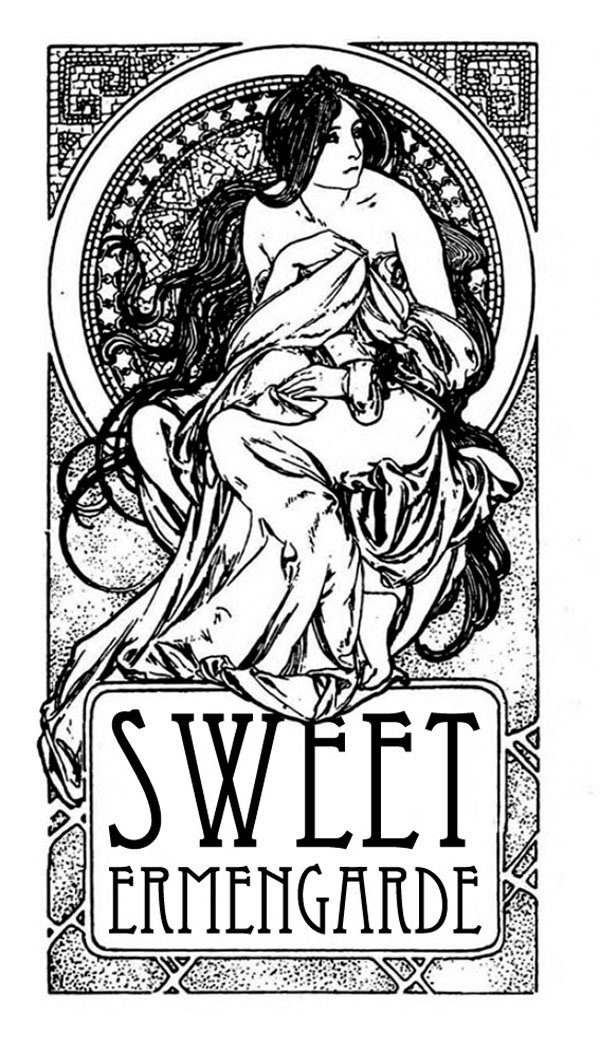
“Thus only a week after his advent to the Stubbs family circle, where he lurked like the vile serpent that he was, he had persuaded the heroine to elope! It was in the night that she went leaving a note for her parents, sniffing the familiar mash for the last time, and kissing the cat goodbye – touching stuff!”
Welcome back to another Blind Read! This week we’re talking about the satiric and absurdist piece, “Sweet Ermengarde.” This is a literature genre that I’m not super familiar with (at least it’s history), but this story seems to bite off the comedic nature of some of his contemporaries, while calling back to some of those classical authors like Shakespeare, or even further back, Aristophanes.
Calling on Vaudeville, Lovecraft tells a story of Ethyl Ermengarde Stubbs, whom “...her father persuaded her to drop the praenomen after the passage of the 18th Amendment, averring that it made him thirsty by reminding him of ethyl alcohol” This is the beginning of our tale, setting us up to understand what we’re getting ourselves into.
Ermengarde is a “Simple Rustic Maid” who “confessed to sixteen summers, and branded as mendacious all reports to the effect that she was thirty.” and had “light hair which was never dark at the roots except when the local drug store was short on supplies.” This sets our maid up as duplicitous from the start. These examples, of course are not devious in any way, but they give an indication that things are not actually what they seem. If we know anything about Lovecraft we know this will eventually pay off, because he tends to be very exacting in his prose, never leaving the slightest detail to chance.
We soon learn that Ermengarde had two suitors, “‘Squire Hardman, who had a mortgage on the old home (The Stubbs farm), was very rich and elderly.” and “the handsome Jack Manly, whose curly yellow hair had won the sweet Ermengarde’s heart...”
Nearly Dickensian isn’t it? We have the dastardly vaudevillian villain, Hardman (he’s a “hard man” to love…he is a “hard man” with a hard heart, only caring about money and prestige) who could frequently be seen “viciously twirling his moustache and riding crop, and kicking an unquestionably innocent cat who was out strolling (Lovecraft loves cats).” Meanwhile we have the Jack Manly, who was a young heartthrob and was the romantic love interest who frequently whispered secret nothings to Ermengarde. We immediately know we are supposed to root for “Manly” and hate “Hardman” despite the over the top affections Lovecraft writes in to fan the flames of absurdism in the tale.
Then, just to add another nail in the ridiculous coffin, when the first chapter ends Lovecraft puts “Curtain” as a stage direction indicating the end of a scene; though this is very obviously a story and not a play. It’s just yet another call back to the vaudeville stage plays, with their moustache twirling villains and hooks to pull the players from the stage after a gaff.
The second chapter begins with Hardman going after the Stubbs unknown “vein of rich GOLD!” He plans on foreclosing the Stubbs farm unless Ermengarde disavows her “Manly” lover and marries him. Jack, being the man he is (and after his “Tears flowed like white ale“), he decides he is going to go off to the city to gain a fortune and buy the mortgage from Hardman. Queue more over the top PDA.
Hardman, not to be foiled, decides to kidnap Ermengarde only to realize (after deciding she was being too “Difficult” that it would just be easier to foreclose! Why then he could just take the gold! But, in the mean time, a few hunters find the gold and make an attempt to garner sweet Ermengarde’s affections.
And, believe it or not, ANOTHER suitor comes into play, the indominable Algernon Reginald Jones; the perfidious “city chap” who came down to work on the foreclosure which brings up to the quote at the beginning of this essay. That was all pure Lovecraft: all at once vilifying and romanticizing the exit. Pure satire.
But then our resourceful young (well, as long as the hair dye held out) lady finds a love note from another woman in Algernon’s breast pocket! Well I never! She just had to leave that scoundrel behind!
So she heads off and gets lost “Alone in the Great City.” She looks for her “Manly” suitor but fails. She looks for a job and only finds only a “fashionable and depraved cabaret; but our heroine was true to her rustic ideals and refused to work in such a gilded and glittering palace of frivolity – especially since she was offered only $3.00 per week with meals but no board.”
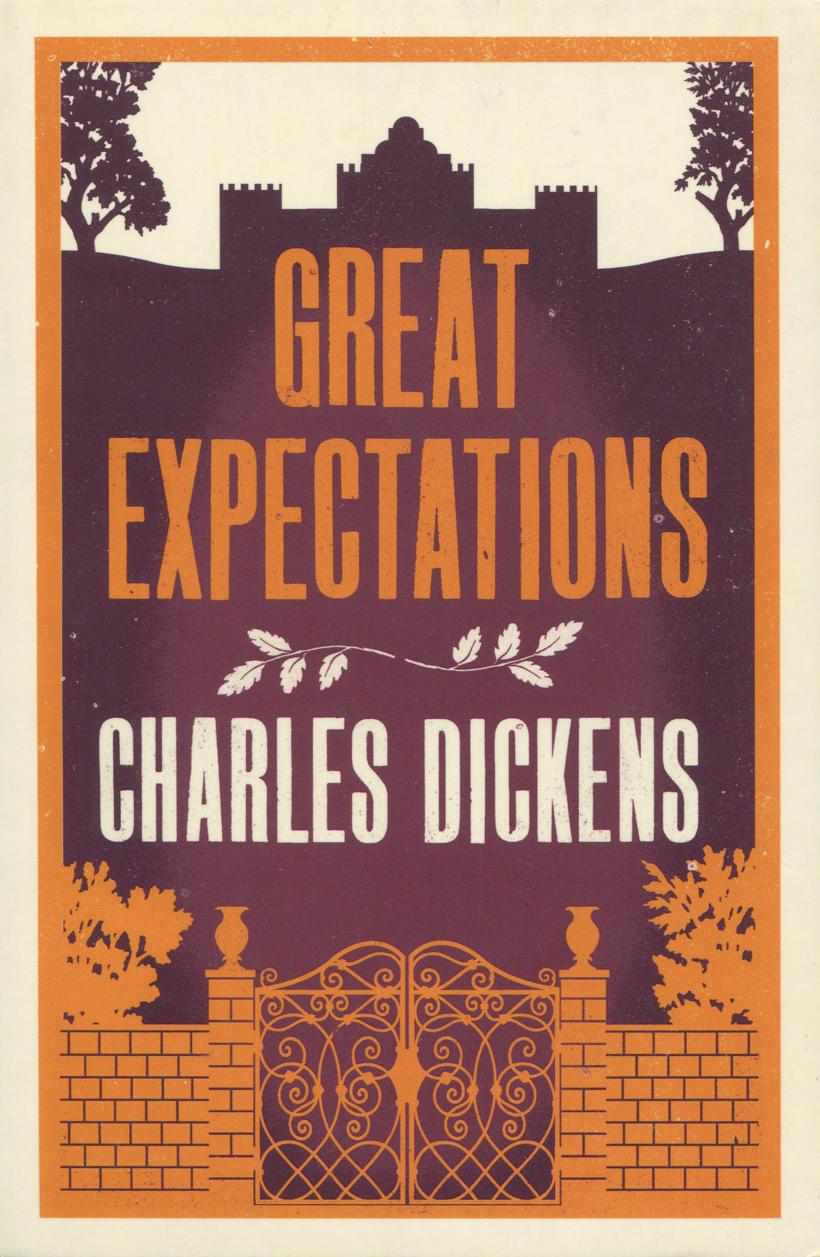
She wanders and finds an ornate bag in the park. Soon after finding that the the owner is a Mrs. Van Itty, a clever play on words and very much a replacement for Havisham of Great Expectations fame. Mrs. Vanity, sorry… Van Itty is so pleased with our heroine that she takes her on as a ward, and then everything begins to come up Millhouse.
Van Itty hires a chauffer who turns out to be the down and out Algernon. remember the note from the woman in his breast pocket? She stole all his land and money from him.
Algernon drives Van Itty and Ermengarde to Hogton (another fun play on setting and words), Ermengarde’s home, and there they find that Manly has become a beggar. Van Itty sees Ermengarde’s mother and realizes that she was a maid who stole Van Itty’s babe from her crib some 28 years previous (“How could she get away with the sixteen-year-old-stuff if she had been stolen twenty-eight years ago?”). So Ermengarde was really Van Itty’s child all along! With this incredible revelation our intrepid heroine decides to take Hardman up on his offer and foreclose on her faux parent’s house and take the vein of gold for herself. Hardman, “The poor dub did…” what she asked and became subservient, and Ermengarde was suddenly the devious rich heiress.

We come to the end of the tale and find there is a bit of a Lovecraftian twist and role reversal going on. Ermengarde is a play on a contemporary Frances Hodgson Burnett’s character in The Little Princess (P. 1905), of the same name. In that story Ermengarde is a “fat child who is not in the least bit clever…” and that’s who we are meant to believe this Ermengarde is (mentally, not physically), but this is Lovecraft and he’s never pleased with leaving things simple so he flips expectations on their head multiple times. Manly becomes a bum. Algernon becomes a pauper. Hardman becomes a cull. Van Itty becomes a loving mother.

Taking an “As You Like It” type of approach, Lovecraft excels in his humor and construction to give us the surprise ending, but he does leave clues along the way.
Her father, the elder Stubbs, is a bootlegger and loves alcohol so much that he has to drop his daughter’s first name, lest he become a lost drunk. Hardman makes poor decisions and cant figure out that he can just foreclose on the property to get the gold until it’s too late. Algernon let’s things happen to him, rather than making things happen for himself. Manly is nothing but a pretty face and curly hair. These are the types of details you must pay attention to in Lovecraft to be informed on where he’s going next, both in this absurdist romp, and the normal horrific fare.
This is not your normal Lovecraft, but it is spectacular and hilarious. If you’re a fan of classic literature the references and the humor will hit you in exactly the right way. This is a must.
Join me next week as we delve into an underground Lovecraft classic “The Music of Erich Zann!”
Post Script:

I have one last reference I wanted to call up. Algernon Reginald Jones (and the whole tale in total) seem to be a call back to the tales of Horatio Alger, the classic rags to riches author. Alger wrote about “Street Boys” who lived the American Dream. They worked hard and worked their way up the ladder to become pillars of their community or leaders in business. Alger(non) was a play on those classic characters, but with the classic Lovecraft twist.
It’s truly amazing the depth and intelligence that Lovecraft writes with. It makes me a bit sad that I started here and not with Lord Dunsany or other contemporaries, because even as I delve deeper, I find that his work is founded on so many others. His ideas are built from the seeds of his predecessors and I feel as though I’ve missed so much by not understanding fully his foundation.

This post has been a bit English Teachery (and I get rid of that idea by using a word like teachery!) but there is so much more enjoyment when you catch the threads and really get into the man’s head!
Blind Read Through: H.P. Lovecraft; The Terrible Old Man
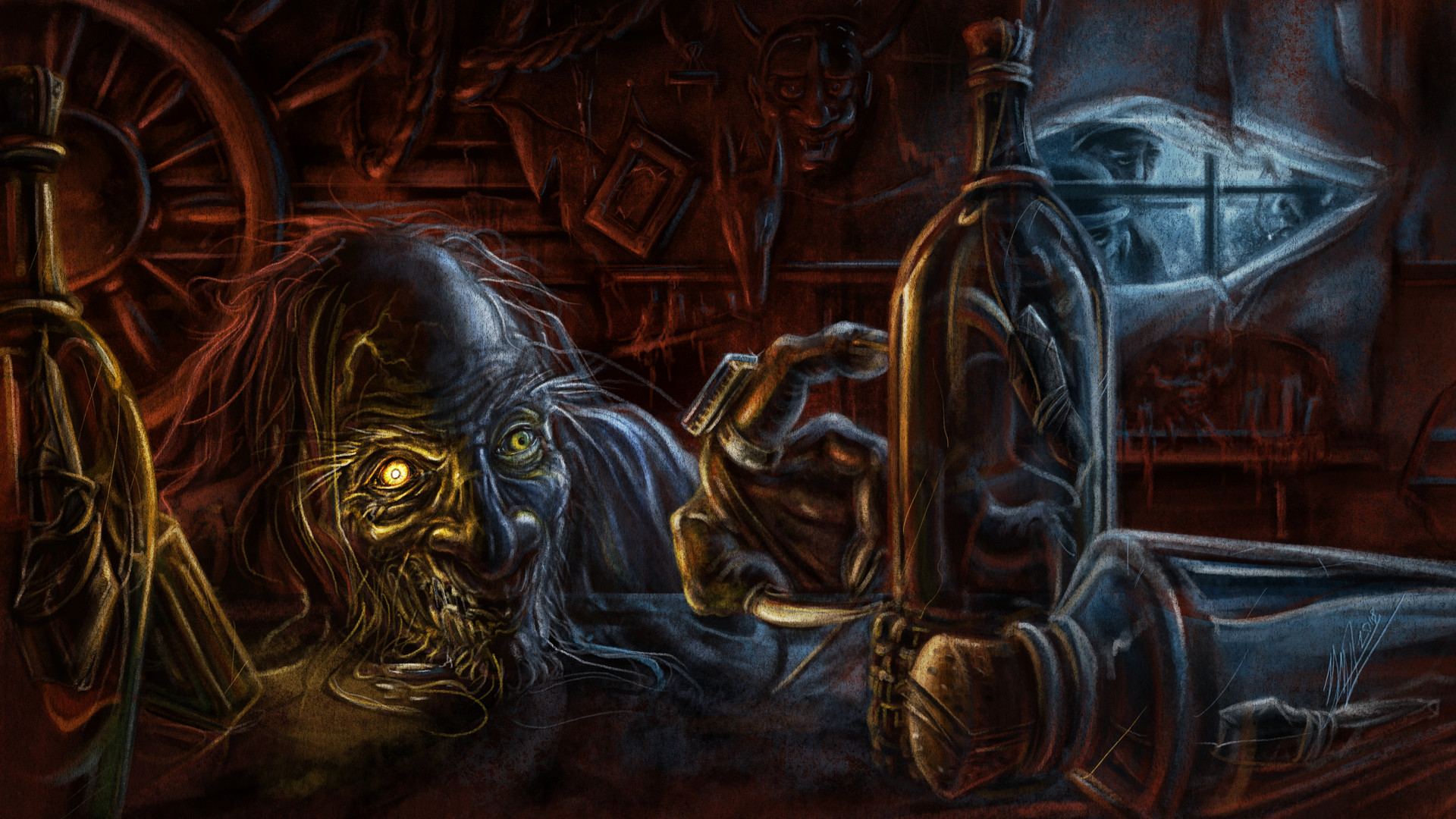
“Little things make considerable excitement in little towns, which is the reason that Kingsport people talked all that spring and summer about three unidentifiable bodies, horribly slashed as with many cutlasses, and horribly mangled as by the tread of many cruel boot-heels, which the tide washed in.“
Welcome back to another Blind Read! This week we’re talking about “The Terrible Old Man”, a wonderful short story, but seemingly short on depth. I chose this one because I wanted a bit of a reprieve from the magnitude of Call of Cthulhu and I wanted to get some of these shorter stories out of the way. My intention is to finish on the last longer pieces “The Shadow out of Time” and “The Whisperer in the Darkness.”
This short story feels a bit more like an introduction to Kingsport, one of Lovecraft’s infamous coastal cities, than a fully thought out story; a kind of a character study if you will. We revisit Kingsport a few more times, and we even get to meet up with the Terrible Old Man again in another story, but more on that later.
The tale begins with three immigrant men, one of Italian descent, one of Portuguese, and one of Polish, who decide to call on the Terrible Old Man. Quickly we are told, “This old man dwells all alone in a very ancient house on Water Street near the sea, and is reputed to be both exceedingly rich and exceedingly feeble…”
So why do these three men want to visit with him? Because thier “…profession was nothing less dignified than robbery.” It makes sense that they’d go after what they thought, being new to Kingsport, would be easy pickings.
It’s believed that the Terrible Old Man was “...a captain of East India clipper ships...” and through his captaincy developed a “...fortune of indefinite magnitude…” which he houses on his property. Property which is neglected with “gnarled trees” and “…a strange collection of large stones, oddly grouped and painted so that they resemble the idols in some obscure Eastern Temple.”
Now it may be that I’m fresh off of “The Call of Cthulhu” but the reference to “idols in some Eastern Temple” peaked my spidey senses. This is not the exact description of the Cthulhu idols, but this story was written years before the development and cohesion of his mythos, so I contend that these rocks and idols were one of two things: a construct to Dagon, or a tribute to Cthulhu. Dagon, however has taken up residence in a different town, which we come to understand in “The Shadow over Innsmouth” so if the Terrible Old Man wanted to worship Dagon, he would have gone the few miles down the road to Innsmouth, because well, Dagon lives there.
Not to mention the fact that R’lyeh is sunken in the Pacific somewhere and if the Terrible Old Man was part of the East India Company then it’s more than likely that at some point in his career he came across remnants of a cult which held the Cthulhu idols themselves. I’d contend the reason for the vague description is because Lovecraft himself hadn’t solidified what Cthulhu looked like and only attributed him to “some Eastern Temple.“
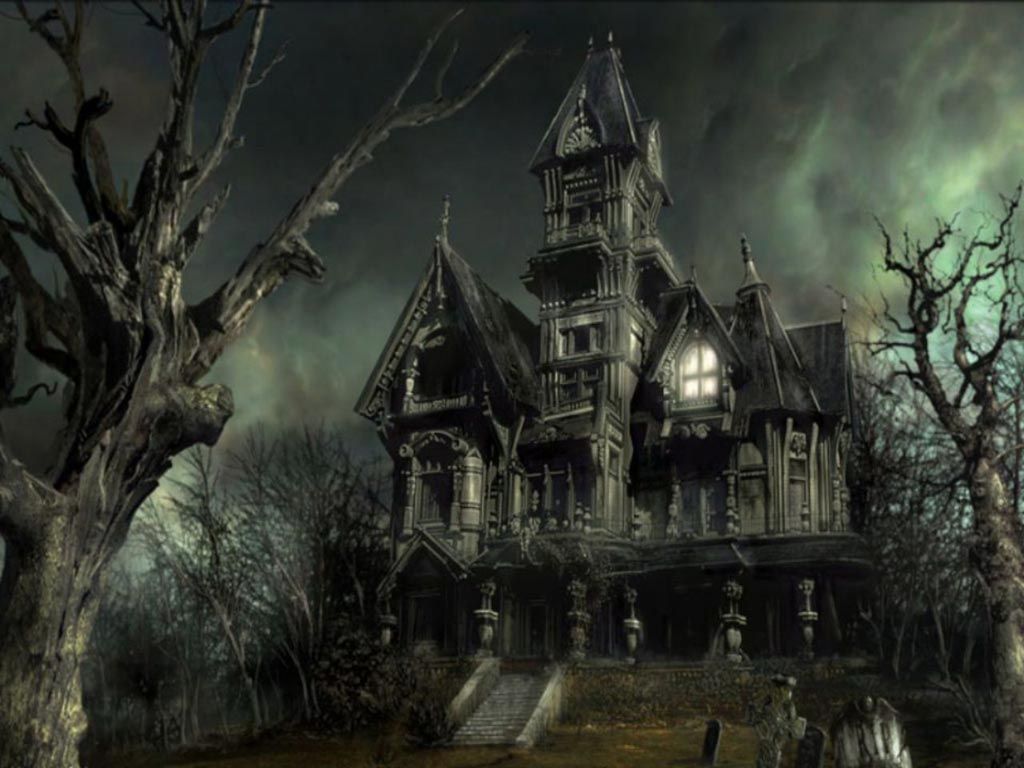
Kingsport is also the absolute best Lovecraft location to read about around Halloween time (Which I can attest to because that’s when I read this one!). The imagery is spectacular and the atmosphere elicits those classic spooky New England vibes. Take “The Festival” for example. The description of the ramshackle houses, strange noises that literally go bump in the night, and odd chanting coming from unknown location; the strange architecture, and the meandering streets.
In the Terrible Old Man, as the three thieves approach the house, Lovecraft describes it preeminently as a haunted house: it’s decrepit, the trees are gnarled, and there are rocks set about in ritual fashion amongst the rotten overgrowth in which strange idols sit about. “This collection frightens away most of the small boys...” and also, “there are other things which frighten the older and more curious folk who sometimes steal up to the house to peer in through the dusty panes…on a table in a bare room on the ground floor there are many peculiar bottles, in each a small piece of lead suspended pendulum-wise from a string.“
Here we have a reminiscence to another story. In “The Case of Charles Dexter Ward” Curwen would take the essence of people from their graves which he called their “saltes” and he would use them to raise these people from the dead. The Terrible Old Man talks to these bottles, calling them by what can only be his old shipmates names (with names such as Scar-Face, Long Tom, Spanish Joe, Mate Ellis, and…Peters). As he speaks with them the bottles and the lead make “definite vibrations as if in answer.” Could the lead in these bottles actually be “saltes” of his old shipmates?
Beyond that there is also the connection that the Terrible Old Man pays for everything with “Spanish gold and silver minted two centuries ago.” Which is exactly what Curwen did as well.
Incidentally this Spanish gold and silver is what our trio of thieves is after, so their strategy is to send in Ricci and Silva to force the Terrible Old Man to give them the riches, while Czanek stays outside as a look out.
Czanek could hear gut wrenching screams coming from the house which we’re meant to believe they’re the screams of the Terrible Old Man, but this is Lovecraft and we know better.
Czanek hears the front gate open and goes to look, but instead of finding his fellow robbers, he finds “…only the Terrible Old Man leaning quietly on his knotted cane and smiling hideously.” Then we are given one last indicator of the Terrible Old Man’s malevolence. “Mr. Czanek had never before noticed the colour of that man’s eyes; now he saw that they were yellow.”
We come to the quote which opens this essay, and find that the three men were torn up with cutlass slashes, which “...so ancient a sea-captain must have witnessed scores of things much more stirring in the far-off days of his unremembered youth.”
Now the question is: did the Terrible Old Man actually kill these men? I’d wager the answer is no. Remember what happened in “The Case of Charles Dexter Ward?” Curwen brought the dead back to life to be slaves using their essential “saltes”. I believe that’s what’s in those jars. The “saltes” of his old crew. I think he called those crewmen back from the grave and the old crew cut up the robbers and disposed of them in the ocean. Unlucky for some.
I hope everyone enjoyed that spooky story, but join me next week as we read “Old Bugs”
Post Script:
One of the most enjoyable things in doing this project is gathering the connections between the stories. For example The Terrible Old Man is also Thomas Olney’s guide in “The Strange High House in the Mist.” Where he is still a curmudgeon, but eventually Olney gets him to loosen up a bit. The greatest part of that story to me is the fact that he is still called the Terrible Old Man, but there is no indication as to why. Olney peruses him because he’s so curious about what the house is, and eventually gets him to open up about his dark knowledge which leads to Olney’s terrifying adventure in that story.

As mentioned earlier, Kingsport is also where my favorite Lovecraft story takes place, “The Festival.” where we dont get to see a Terrible Old Man, but we do get to see a Sinister Old Man, who leads our narrator astray. I like to think that they are the same Old Man (we never actually get his name, and somehow that makes him even more esoteric), but it is possible that everyone in Kingsport has had some kind of strange within them. The town reminds me so very much of Collinsport from the old show “Dark Shadows.” That was a sinister old town where every resident had a secret to hide.
Kingsport also plays a key role in the stories “The Dream Quest of Unkown Kadath” and “The Silver Key” as well as a brief mention in “The Case of Charles Dexter Ward” where we are told of the strange rituals which take place there.
Taking all that information in, it’s safe to say that the ocean is not a safe place in a Lovecraft story. Both the costal cities in Lovecraft country (Innsmouth and Kinsport) have a very gothic and sinister undertone, and that mainly comes because all the sailors that come in from the sea, bringing in with them the terrible things that dwell there.
One has to almost wonder, because this is cosmic horror, if Lovecraft lived and wrote now, would the sea still have such a draw? Now that we have space travel, would the space ports be where a modern Lovecraft would focus on? In the 20’s the ocean was still feared. The Ocean was still a place where the unknown was just around the corner. A place where unknown things could dwell and infect and inflict upon weary travelers. In a modern world space now holds that place as the great unknown. The Final Frontier as it were. Would, in fact, a modern Lovecraft have Kingsport be a spaceport instead of a coastal city?
Blind Read Through: H.P. Lovecraft; The Call of Cthulhu pt. 2

“There lay Great Cthulhu and his hordes, hidden in green slimy vaults and sending out at last, after cycles incalculable, the thoughts that spread fear into dreams of the sensitive and called imperiously to the faithful to come on a pilgrimage of liberation and restoration. All this Johansen did not suspect, but God knows he soon saw enough!”
Welcome back to another Blind Read! I was planning on concluding the illustrious “The Call of Cthulhu” this week, but it turns out I had waaaay to much to say, so we’re going to push the conclusion to next week!
Last week we finished with a few thoughts about Cthulhu himself (itself? herself? theirself?), and the beginning of Detective Legrasse’s story. Remember how he went into the swamps of Louisiana and found a bunch of cultists effecting a ritual around a ring of fire and in the center of that ring was a monolith with a statue of Cthulhu on it’s apex? Well there was a tussle as the police broke up the ritual, “Wild blows were struck, shots were fired, and escapes were made…”
In the end the police captured “forty-seven sullen prisoners” and “The image on the monolith (the idol of Cthulhu)…was carefully removed and carried back by Legrasse.”
Initially the police thought this gathering was just a particularly nefarious voodoo cult. They let their prejudice guide them in their approach because, “Most were seamen, and a sprinkling of negroes and mulattoes, largely West Indians or Brava Portuguese from the Cape Verde Islands, gave a colouring of voodooism to the heterogeneous cult. But before many questions were asked, it became manifest that somethign far deeper and older than negro fetichism (sp) was involved.”
The police did everything they could to get more information out of the worshippers beyond that they prayed to “The Great Old Ones who lived ages before there were any men,” and that “This was a cult,” who “...had always existed and always would exist… until the time when the great priest Cthulhu, from his dark house in the mighty city of R’lyeh under the waters, should rise and bring the earth again beneath his sway.”
The cultists said they were innocent of any killing. All those missing people, all the dead bodies that led the police to execute the raid were denied. The cultists said the ritual “…killing had been done by Black Winged Ones which had come to them from their immemorial meeting-place in the haunted wood.”
This strikes me as incredibly atmospheric. The thought of the old Spanish Moss trees, hanging down over the swampy foggy ground where hidden dark winged aeon old creatures lurk, just tickles my imagination in the best possible way. The description of the raid is short, but the set up is effective enough and then as we continually look back at the events surrounding the raid, it gives you a more and more grotesque point of view of what they actually walked into.
They finally get one of the cultists, “Old Castro,” to give them a bit more information. “There had been aeons when other things ruled on the earth, and They had had great cities. The remains of Them… were still to be found as Cyclopean stones on islands in the Pacific” (this is important later in the story), and “there were arts which could revive Them when the stars had come round again to the right positions in the cycle of eternity.” because “They had, indeed, come themselves from the stars, and brought their images with them.“
That is an interesting statement. “Brought their images with them.” Castro tells us that the Great Old Ones “had shape… but that shape was not made of matter.” Then he gives us the most important and interesting line of the story:
When the stars were right, They could plunge from world to world through the sky; but when the stars were wrong, They could not live.
Shortly there afterward we get “the much discussed couplet” from the Necronomicon:
That is not dead which can eternal lie, And with strange aeons even death may die.

Lets put all this together. We are told that Cthulhu and the other Great Old Ones are dead and trapped in their great city of R’lyeh under the Pacific Ocean somewhere, because at some point on ancient history the city sunk. How can They be asleep but dead and have form but no matter?
The Great Old ones are immortal so we know that even though we are told Cthulhu is dead under the ocean, He is also immortal thus he cannot die. We also know that They are from the stars and made from the stars. So then we go back to what Old Castro told us, “They brought their images with them.”
The Great Old Ones came from the stars with form, but those forms were just shells, just fantastic images of what they projected themselves as. What we think of as Cthulhu, dead and sleeping under the ocean is in actuality just a shell. Cthulhu and the Other Great Old Ones ascended back to the stars at some point, and because they are formless (and maybe just concepts?) they left their shells to remain on Earth for the time when they need or want to come back. So that’s why Cthulhu can be both dead and sleeping at the same time. It is just the shell and He can be awoken through a ritual when the stars align, giving Him a causeway to earth.
When reading through Lovecraft the couplet is in many stories, and is something which always confused me. This story made it terribly obvious. Cthulhu is immortal, thus eternal, thus he cannot die; “That is not dead which can eternal lie,” ok that makes sense, but then what does the second part mean? “And with strange aeons even death may die.” Oh. Given time and multiple universes (and dream worlds) even death, the ultimate absolute can die. Cthulhu and the other Great Old Ones, are more powerful than what we understand as the ultimate absolute.
Cultists for these types of beings never really made sense to me before. There is certain subset of the anarchists who want to set the world on fire, but Castro describes the resurrection of The Great Old Ones this way:
“The time would be easy to know, for then mankind would have become as the Great Old Ones; free and wild and beyond good and evil, with laws and morals thrown aside and all men shouting and killing and revelling in joy. Then the liberated Old Ones would teach them new ways to shout and kill and revel and enjoy themselves, and all the earth would flame with a holocaust of ecstasy and freedom.“
So I can see how there might be a very small amount of people who could believe that this is the way to go. But the volume of people? That ceremony that Legrasse broke up was hundreds of cultists. They all want to burn the world?
Then while digesting this story and the infamous couplet brought me to a realization. Yes, there are people that want to burn the world, but there are a far higher population which are terrified of death. If the return of the Great Old Ones means that the followers will be granted eternity, than there probably is a huge amount of the population who would be willing to take part, damn the consequences. Death is supposed to be the absolute, but what if it didn’t have to be?

Beyond this the couplet brings up what Lovecraftian horror really means. Cosmic horror is a difficult concept to wrap your mind around and it’s specifically built that way. The couplet gives us a glimpse into what this really means; where we truly stand in the world. I remember showing my wife the reboot of the show “Cosmos” narrated by Neil Degrasse Tyson. When they showed the earth in comparison to the galaxy and then in contrast with the universe, she made me turn it off because it gave her the willies. It was too much for her to understand that our entire world means absolutely nothing in the grand scheme of things. This is the same concept with cosmic horror except more theologically. Death is where we all head, but there are things so far beyond that. Things that are “miles tall” that cannot die. Things which have lived billions of years and will live for billions more.
It’s no wonder Lovecraft was agoraphobic, if he just sat around thinking about these concepts all day.
Join me next week for the conclusion of “The Call of Cthulhu!”
Post Script:
Just a few more thoughts if you’ll indulge me. While reading about the section on the raid I had a conceptual thought about Lovecraft in general. In the story Lovecraft uses a thematic approach that describes the action in a single line, then when recalling the events Legrasse goes into much greater detail. After reading as much Lovecraft as I have, I can say that he did this because he’s not great at writing action, however his strength is in the feel of the piece. Legrasse is able to go far more into detail and flush out his feelings at the time and his disgust with the cultists, but during the raid all he could muster was direct and emotionless fact.
Our human brains work this way. When we look back on a time frame or an event, it almost always comes out more emotional that it was during the event. If it was traumatic, the events are colored much darker when you recall them. If it was inconsequential or happy, the events usually are colored much brighter and happier while recalling them. This is known in psychology terms as the reminiscence bump.
I’ve been reading Lovecraft now for nearly two years. I do a critique and analysis on a story every week (or, as in this case, over multiple weeks). I saw a thread on Twitter asking people what their favorite Lovecraft story was and I couldn’t come up with one. I thought back on nearly every story with fond memories, even though I know for a fact that I didn’t always like the stories that much while I was reading them. That’s the reminiscence bump.
Lovecraft is a master of atmosphere, despite his terrible action sequences and dialog. But atmosphere is what you truly remember when thinking back on a story. How the story made you feel. Individual action sequences and dialog are no longer aren’t what stick in long term memory, so what bubbles to the surface is the atmosphere you experienced while reading. When I think back on Lovecraft’s works I feel almost universal love. That’s a really strange thing to say, because about six months into this project it felt like a slog and I remember feeling bored, but now I cant remember which story I was bored with because I liked them all so much!
The more you read Lovecraft the more you like it. He’s insidious in that way. At first the language is a bit of a barrier, but once it starts to flow, your mind creates and atmosphere and experience greater than you read on the page.
Blind Read Through: H.P. Lovecraft; The Call of Cthulhu Pt. 1

“It represented a monster of vaguely anthropoid outline, but with an octopus-like head whose face was a mass of feelers, a scaly, rubbery-looking body, prodigious claws on hind and fore feet, and long narrow wings behind.”
Welcome back for another Blind Read! This week we’re diving into the most classic Lovecraft story in the catalog. Between the board games, the role playing games, and the video games (not to mention the plushies!), Cthulhu and the perennial trope of a detective investigating an eldritch mystery while fighting off evil cultists has burned its way into our culture. This Great Old One was so popular that he took over from Yog-Sothoth, transferring the mythology from Yog-Sothothery to The Cthulhu Mythos.
What I find so fascinating about this tale is that it’s more of a creepy mystery than a horror story. Lovecraft wrote far scarier stories, but with this one he found just the right mold to make it everlasting.
We kick off the story with the best opening paragraph in Lovecraft:
The most merciful thing in the world, I think, is the inability of the human mind to correlate all it’s contents. We live on a placid island of ignorance in the midst of black seas of infinity, and it was not meant that we should voyage far. The sciences, each straining in its own direction, have hitherto harmed us little; but some day the piecing together of dissociated knowledge will open up such terrifying vistas of reality, and of our frightful position therein, that we shall either go mad from the revelation or flee from the deadly light into the peace and safety of a new dark age.
Much of this opening chapter is written in this theosophist cadence, delivering some of the best writing of Lovecraft’s career. Not only is it beautiful prose, but it also deftly communicates not only the direction the story is going to undertake, but the theory behind the mythos itself. It really is no wonder Cthulhu became the center of Lovecraft’s world (at least in his audience’s point of view).
The actual narrative starts with a realization of our narrator, “That glimpse, like all dread glimpses of truth, flashed out from an accidental piecing together of separated things – in this case an old newspaper item and the notes of a dead professor.” The professor, the narrators grand-uncle George Gammell Angell, was ninety-two years old and happened upon a man (epithet from the original text redacted) whom reminded him of some strange past. Whatever it reminded him of dropped the professor by a heart attack right then.
Angell was a Professor Emeritus of Semitic languages at Brown University, and because of his interests, he had many archaeological artifacts. Upon his death the narrator and the executor of his estate find a strange box. Beyond the barrier of the box there is an odd bas-relief and a number of papers.
The papers have strange hieroglyphics “which only a diseased fancy could conceive.” Our narrator tells us they look like, “...simultaneous pictures of an octopus, a dragon, and a human caricature…A pulpy, tentacled head surmounted a grotesque and scaly body with rudimentary wings…“
Well hello Cthulhu.
In case there is any question, we next find a document entitled “Cthulhu Cult” which talks about “Dream and dream work of H.A. Wilcox” and the “Narrative of Inspector John R. Legrasse.” This sets up the rest of the narrative, as the story is cut into three parts. The first focuses on Wilcox’s story, the second on Legrasse, and the third of a strange sea voyage. (Because of the volume of text to unravel here, we’ll only be covering Wilcox and the first half of Legrasse in this essay.)
Wilcox just showed up one day at Angell’s study “bearing the singular clay bas-relief“. Wilcox was a young man who was studying sculpture and was an excitable, anxious youth, in fact he even called himself “Psychically hypersensitive.” He visited Angell many times, seemingly testing the waters to see if Angell would believe his outlandish tale, before finally diving into a larger, very odd story. What struck Angell more than the youth’s frantic nature, was the bas-relief, because “…the conspicuous freshness of the tablet implied kinship with anything but archaeology.“
Wilcox seemly changes over the time he’s dealing with Angell (starting on March 1st and ending on Arpil 2nd). He gets more and more frantic, his claims becoming more and more deliriously strange. Finally Wilcox gives in and tells Angell, “It is new (the bas-relief), indeed, for I made it last night in a dream of strange cities; and dreams are older than brooding Tyre, or the contemplative Sphinx, or garden-girded Babylon.”
Wilcox the sculptor tells a rambling tale which began with a slight earthquake which Wilcox thinks triggered his imagination. He dreamed, “...of great cyclopean cities of titan blocks and sky-flung monoliths, all dripping with green ooze and sinister with latent horror.” He heard “a voice that was not a voice” which said “Cthulhu fhtagn.”
Angell worked more and more with Wilcox to try and get to the bottom of this strange youth’s obsession. To understand where his psychosis came from. As Angell worked with him the words Wilcox repeated most often were “Cthulhu” and “R’lyeh.” He even mentioned of a “...gigantic thing ‘miles high’ which walked or lumbered about.”
Then suddenly, despite the youth getting worse and worse, devolving into a miasma of despair, Wilcox one day was perfectly fine with no trace of anxiety or psychosis.
Angell, perturbed researched and found that many people in New England were acting strangely, much like Wilcox, “...always between March 23rd and April 2nd…” The narrator even gives us more examples of how others went “hysterical“, but still the narrator holds onto rationalism, as though Angell was searching for signs and he saw what he wanted, not the actual truth. It is only when we get to the second chapter of the story that the true cultural cataclysm begins.

That chapter begins with Inspector Legrasse travelling all the way from New Orleans to speak directly with professor Angell and brings with him, “a grotesque, repulsive, and apparently very ancient stone statue whose origin he was at a loss to determine.”
The good inspector came across this fetish when he broke up a supposed voodoo meeting down in Louisiana. The quote at the start of this essay is the description of the idol he confiscated from that cult meeting and is an actual description of Cthulhu himself. All those art pieces you’ve seen online gain their inspiration from the few paragraphs in this story, and I have to say, their depictions are pretty perfect.
Lovecraft does a really interesting thing here. He is famous for not describing the creatures from the cosmic horror arena, but yet he does go to great lengths to describe Cthulhu here. Why would that be? Why would Lovecraft subvert his theme of not describing the horrific creatures in his mythos in this story? Then I came to a realization, but more on that in a bit.
The confiscated idol was researched and was not found to be made of earthly origin and the subject and writings on the fetish, “belonged to something horribly remote and distinct from mankind as we know it…“
Angell collected professors to view the idol and to see if anyone had any kind of insight as to what it was, or what it might mean. Unanimously they were at a loss … except for one man, Professor of Anthropology William Channing Webb. Years before while on an expedition in Greenland Webb came across a native tribe praying to some kind of idol very similar to this fetish. He said they were chanting:
“Ph’nglui mglw’nafh Cthulhu R’lyeh wgah’nagl fhtagn.”
Which roughly translates to: “In his house at R’lyeh dead Cthulhu waits dreaming.“
Excited, Legrasse tells his tale. His precinct knew of a place in the swamps of Louisiana where squatters and voodoo practitioners liked to occupy. They generally stayed clear of the “…black haunted woods where no dweller ventured...” but there were reports of women and children missing in the area, and speculation that a voodoo cult was behind it. They heard there was going to be a big voodoo meeting so Legrasse compiled a force of twenty policemen to head down to the swamps to break up this cult meeting. This group of cultists used the same chant as Professor Webb had heard in Greenland, but something horribly unique happened down in those swamps. In a natural glade, “...leaped and twisted a more indescribable horde of human abnormality than any but a Sime or an Angarola could paint.” These monstrous creatures danced around a “ring-shaped bonfire” which had an eight foot monolith in the center with the Cthulhu statuette on the top.
They captured a few of the cultists only to find that they were praying to their head priest Cthulhu.
What a minute. This took me a minute to compute. Cthulhu is only a priest? This is a creature so powerful and so corruptible that it has the capability of destroying the world… and it’s only a priest to a much higher being?
Then I realized this is what Cosmic Horror is all about. This is why Lovecraft doesn’t describe these beings very often, but that’s what also makes this story so memorable and powerful. We DO get to see Cthulhu here, and his visage is enough to drive men to death. Cthulhu is miles tall, nearly formless, but somehow has form of a terrible amalgamation of things which are at the roots of all fear. Just looking at a idol of him gives people the willies. But when we learn here that Cthulhu is just a mere priest it means that Cthulhu prays to beings which are epically more powerful than he is. It’s like the perspective of the universe seen from your living room. This story really strikes home the fact that we dont matter in the grand scheme of things. That there is so much more to the world than our minds could ever comprehend. Why doesn’t Lovecraft describe his Cosmic Monsters? It would be like trying to describe the scale of the universe to an agoraphobic infant.
This is what the narrator is slowly beginning to realize as he puts together the tale of Wilcox and Legrasse, and we can only wager that Angell guessed at the truth, because when he saw that (epithet redacted) sailor, the man mirrored the Cthulhu cultists so much that it made his heart stop in terror. At this point, we can only guess that, but things get so much deeper, so much more grand that our narrator will come to see the possible impact of what this creature is and the havoc these cultists could wreck upon the world.
Join me next week for the conclusion of “The Call of Cthulhu!”
Post Script:

Trypophobia? “The abnormal feeling of discomfort or revulsion at the sight of clustered holes or bumps?” That’s a real thing and it keeps coming up again and again in Lovecraft. Why do I bring it up here? Well the root of this phobia comes from strange things in nature. The images we see root down into our subconsciousness and inform our conscious mind. Are you scared of spiders? You probably suffer a little from this phobia. Think about their clusters of eyes. If you see a cluster of bumps or holes, your subconscious mind attributes this to a close up of the cluster of a spiders eye, and triggers that fear of spiders. Octopus? Their tentacles have suckers that look like clusters of holes or bumps. Again, this is something rooted into your subconsciousness. When Lovecraft describes Cthulhu as having tentacles, it isn’t the idea of a whip like beard that’s scary, I mean no one is truly scared of tails. It’s the suckers on those tentacles and what they could possibly do to you if they attach is which make the tentacles eerie. Lovecraft is tapping into those deeper fears, the fears of which we dont even realize that we have, which make his writing so effective.
Blind Read Through: H.P. Lovecraft; Pickman’s Model
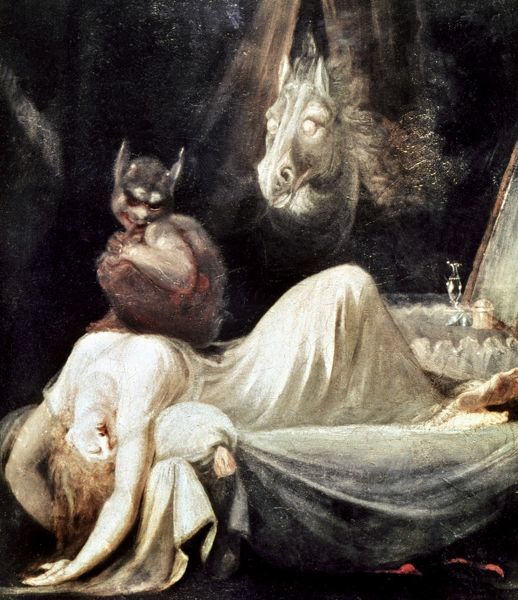
“Any magazine-cover hack can splash paint around wildly and call it a nightmare or a Witches’ Sabbath or a portrait of the devil, but only a great painter can make such a thing really scare or ring true.“
Welcome back for another Blind Read! This week we’re diving into Pickman’s Model; a singularly unique Lovecraft story. We get not only the classic Lovecraft tropes; Witchcraft, summons, and people going beyond their ken to gain power or knowledge, but we get some insight into the man himself and his personal tastes (hint, they’re just as weird as his writing is).
We know exactly how the story will end within the first few paragraphs, and yet, this is one of Lovecraft’s finest works (at least in my opinion). The previously mentioned themes of Lovecraft are in the background (though obviously present), and two facets of Lovecraft’s personality come through, the love of New England (specifically Boston) and his love of art. His prose transcends much of his normal exposition because he’s describing, what is in his opinion, high art. He isn’t only trying to create horrors, but he’s lifting up some of his favorite artists and some of his contemporaries. It reads as though he was having a blast writing, which some of the stories he wrote (I’m looking at you Herbert West – Reanimator) feel contrived.
The story is simple. We follow an art curator who had Richard Upton Pickman as a resident in his Art Club, to a gruesome conclusion. He begins the story by telling us “…I cant use the subway or go down into cellars anymore.” and that “Morbid art doesn’t shock me…” We know all of Pickman’s art is morbid because the narrator tells us that the only piece that wasn’t wholly grotesque, the one that people could actually palate, was the piece entitled “Ghoul Feeding” which was hung in the narrators Art Club.
The narrator goes to great pains to explain that “Pickman’s forte was faces.” and how he had “latent instincts” for “the proper colour contrasts and lighting effects to stir the dormant sense of strangeness.“
To give example the narrator says “…Fuseli really brings a shiver while a cheap ghost-story frontispiece merely makes us laugh.” because “There’s something those fellows catch – beyond life – that they’re able to make us catch for a second. Dore had it.“
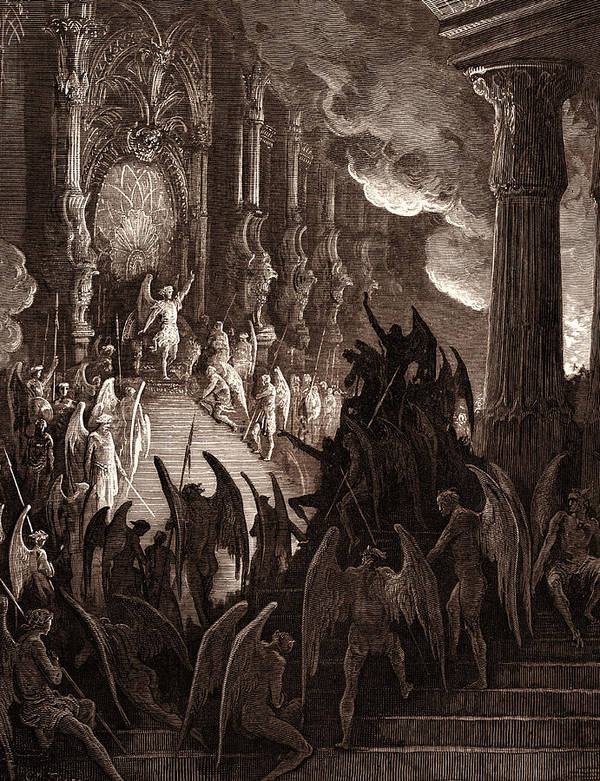
Indeed Dore was lauded as the most iconic realist artists of in his time. His black and white drawings had more depth of character of anything I’ve had ever seen either (I have “The Rime of the Ancient Mariner” by Samuel Coleridge, illustrated by Dore and it is everything). His mostly religious vistas brought humanity to his angels and devils. Dore endeavored to show his audience that humanity could be all of these things. We were the angels. We were the devils. We were everything in between. We came to realize, through his art, that WE were better or worse than anything we could actually dream up.
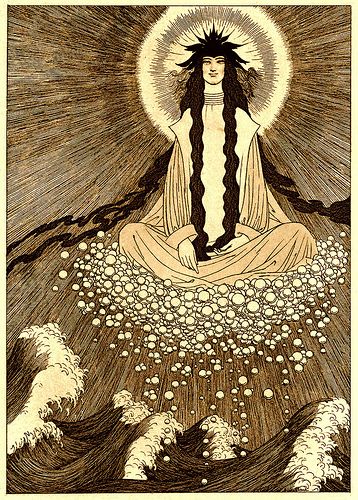
Then our narrator mentions Sime. Sidney Sime was a fantasist and a satirist who relied on his outrageous concepts to elicit emotion. Famously he partnered up with Lord Dunsany (is it any wonder that Lovecraft liked Sime?) to illustrate Dunsany’s “The Gods of Paegana.” Dunsany famously quoted “I tried to account for the Ocean and the Moon. I don’t know whether anyone has ever tried that before.” Dunsany is Lovecraft’s inspiration for stories like Dagon, and with images like “Slid” is it really any wonder?
Art is the centerpiece of this masterful story, but either because Lovecraft is channeling the art or because of it’s inspiration; we get some of the best, most atmospheric writing he’s done. While explaining that Pickman’s relatives were cast out of Salem in 1692 (we’ve heard that one before!), the narrator describes how they treaded through the North End:
“When we did turn, it was to climb through the deserted length of the oldest and dirtiest alley I ever saw in my life, with crumbling – looking gables, broken small – paned windows, and archaic chimneys that stood out half-disintegrated against the moonlit sky. I don’t believe there were three houses in sight that hadn’t been standing in Cotton Mathers time – certainly I glimpsed at least two with an overhang, and once I thought I saw a peaked roof-line of the almost forgotten pre-gambrel type, though antiquarians tell us there are none left in Boston.”
This is a classic Lovecraft technique. We go from some normal vista to an area that is just a little off. Something that shouldn’t be possible. There’s nothing outwardly menacing about the neighborhood the narrator suddenly experiences, but the mention that “antiquarians tell us there are none left…” indicates that we have passed into another world, or we have transcended into an underworld where normal people don’t pass.
The narrator tells us again and again that he is not weak of heart, that he has seen horrible paintings, but “It was the faces…those horrible faces, that leered and slavered out of the canvas with the very breath of life!” He sets us up for the denouement when we finally reach Pickman’s vault.

The vault is filled with paintings; “…the ones he couldn’t paint or even shew in Newbury Street…” The narrator tells us “There was none of the exotic technique you see in Sidney Sime, none of the trans-Saturnian landscapes and lunar fungi that Clark Ashton Smith uses to freeze the blood.” No, these were more hyper realistic than his public “Ghoul Feeding” painting that turned everyone’s blood. It seems that most of these paintings had a backdrop of Copp’s Hill burying ground, which had a number of figures who “…were seldom completely human, but often approached humanity in varying degree.” and “They were usually feeding.”
Our narrator is disgusted, but he allows Pickman to take him into the next area where things get even more atmospheric. We get depictions of art with creatures coming up from cracks and holes in the ground, and strange angles and spaces that should not be possible. Here again, Lovecraft is making an effort to seep into our subconscious without us ever knowing it. There is a very real fear called Trypophobia which states that people are scared of honeycombs or groups of regular holes (I wont scar anyone with pictures…but if you’re curious click here) . To envision hellish creatures coming from these holes is just one more way to make the reader feel ill at ease. It’s an atmospheric addition in which Lovecraft uses to perfection. Likewise his “strange geometry” which we’ve seen before as well. Remember back in “Dream in the Witch House” where the “sorcerer” used the strange geometry of the house to better conjure up horrors? Lovecraft is setting the scene for the climax. Building the tension, making the reader feel… off. The first step is setting the stage that Pickman is somehow odd and descended from witches. The next is heading into a place that even historians say doesn’t exist. The final step is giving the audience a glimpse of strange and off-putting artwork – artwork that’s hard to look at because it shouldn’t be possible. Art work that is too horrible to look at without screaming.
As we digest this, the narrator sees a camera. When asked, Pickman “…told me that he used it in taking scenes for backgrounds...” and our narrator sees a paper crumbled up next to a painting. He makes an effort to unravel it, when he is distracted by Pickman taking him deeper into his studio, so the narrator puts the crumpled paper into his pocket.
When they get into a bricked up room Pickman shows the narrator a work in progress so terrifying that it makes our narrator scream. This, right here, is what’s so wonderful of Lovecraft’s work. He’s painstakingly told us that Pickman had a horrible realism to his work. Then we get possible examples that are close, but not quite as terror inducing as anything Pickman had the ability to exude. We get a few examples of his lesser works as well, just to give the reader some dread as to what is coming – “The Lesson” about dog-like things that are teaching stolen children how to eat like them…”Subway Accident” which portrayed “a flock of vile things…clambering up from some unknown catacomb through a crack in the floor of the Boylston Street subway and attacking a crowd of people on the platform.” – also an unnamed drawing that depicted “a vast cross-section of Beacon Hill, with ant-like armies of the mephitic monsters squeezing themselves through burrows that honeycombed the ground.“
All of this anticipation and then Lovecraft purposely keeps the description of the painting which finally puts the narrator over the edge because Lovecraft knows that whatever we’ve been building in our minds is far more terrifying than anything he could possibly put to page. Lovecraft does this time and again in his work, where he describes just enough to make the psyche of his reader take off and make of what they are reading that much worse.
The scream causes Pickman to start. He produces a revolver and ushers our narrator out of the room. He makes up an excuse that there’s a rat nest in the walls, but when he’s hidden from sight something more devious happens. Our narrator heard, “a sharp grating noise, a shouted gibberish from Pickman, and the deafening discharge of all six chambers of a revolver...”
That ends the narrators adventures with Pickman. He leaves to go home and is terribly off put by the realism of the paintings, the detail Pickman is able to get from the photos he takes for the backgrounds, the realistic faces Pickman is able to create out of nothing. But then, when he gets home, he feels the paper in his pocket. It isn’t a paper at all. It’s a photograph. A photograph of “the monstrous being he was painting on that awful canvas.”
And oh reader, “It was the model he was using – and it’s background was merely the wall of the cellar studio in minute detail…It was a photograph from life.“
Join me next week as we tackle the infamous “History of the Necronomicon!”
Post Script:
There is another painting in Pickman’s vault which gives us and interesting peek into Lovecraft’s social landscape.

A scene in an unknown vault, where scores of beasts crowded about one who held a well-known Boston guide-book and was evidently reading aloud. All were pointing to a certain passage, and every face seemed so distorted with epileptic and reverberant laughter that I almost thought I heard the fiendish echoes. The title of the picture was “Holmes, Lowell, and Longfellow Lie Buried in Mount Auburn.”
This is a seeminly deviant view at first. It’s just demons looking at a…guidebook? But then we get answers when we get the title. Mount Auburn is a well known cemetery in Boston and it’s the main resting place for the Boston Brahmins (nomenclature penned by the doctor and writer Oliver Wendall Holmes…yes the same Holmes).
So why are the demons laughing at the guidebook? Well the Boston Brahmins are heavily associated with the Boston Aristocracy and Anglicism. Two things that Lovecraft railed against.
So what is Lovecraft saying here? The demons have a guidebook. The demons are looking for this place, because they are going to collect the Boston elite and religious, because, to Lovecraft, those two things are worse than being a murderer. The demons, using the guidebook, have finally found their way to the elite to procure thier pound of flesh. Death and the cemetery wont save them.
That right there is what’s so wonderful about Lovecraft. These little gems that you can extract, only if you look close enough, to the overall narrative.
Blind Read Through: H.P. Lovecraft; The Dunwich Horror

“Dr. Armitage, associating what he was reading with what he had heard of Dunwich and it’s brooding presences, and of Wilbur Whateley and his dim, hideous aura that stretched from a dubious birth to a cloud of probable matricide, felt a wave of fright as tangible as a draught of the tomb’s cold clamminess.“
Welcome back for another Blind Read! The week we’re diving into one of the creepier, lugubrious, and plodding stories to date – The Dunwich Horror (check pronunciation notes in the post script!).
Lovecraft intersperses some interesting socio-political factors into this, one of his more visceral tales, all the while giving some first hand looks at what some of these cosmic creatures look like – breaking from his standard of building fear by occluding our sight of these terrible creatures. The story is slow developing, but there’s more in this story to build the Mythos than any other story I’ve read from him.
That being said, let’s dive in shall we?
Despite the fact that we divert from Lovecraft’s held tenet of showing his creatures, we begin the story with an old standby, an introductory chapter to set the stage and atmosphere of Dunwich. Lovecraft leans into his overbearing descriptions in an effort to make sure the reader understands the place; “Without knowing why, one hesitates to ask directions from the gnarled, solitary figures spied now and then on crumbling doorsteps or on sloping, rock-strewn meadows…” and “It is not reassuring to see, on a closer glance, that most of the houses are deserted and falling to ruin, and that the broken-steepled church now harbours the one slovenly mercantile establishment of the hamlet.” In fact the town has “…gone far along the path of retrogression…” that “They have come to form a race by themselves, with the well-defined mental and physical stigmata of degeneracy and inbreeding.”
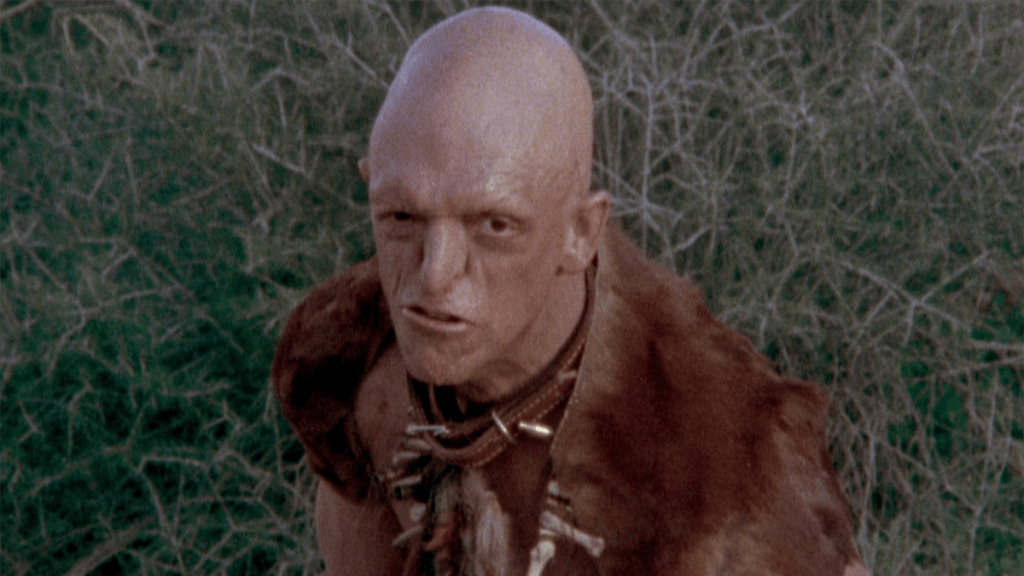
We’re shown a run down shambles of a town with all the quaint elegance of “The Hills Have Eyes.” But that’s what sets this story apart from his other works. Much of Lovecraft has affluent characters, using their influence and money to dive down into these rabbit holes of terror. The Dunwich Horror is the opposite, it has backwater folks living in the abandoned hills of New England experiencing the insidious horror.
The saddest aspect of this comes in the first chapter of the story: “The old gentry, representing the two or three armigerous families which came from Salem in 1692…” and though they “…have kept somewhat above the general level of decay…” they themselves have degenerated. This is not “The Case of Charles Dexter Ward” where we get to gallivant around the globe researching and finding clues to the highest peaks of godhood. No. This is the story of the underside. This is the story of people who had the knowledge (they came from Salem, just like Curwen did in that story) of cosmic wonder, and let it degrade into something foul. I’d wager that’s why we get to see a bit of the creature here…Lovecraft wanted to solidify how dirty, how incredibly unclean this place really was.
But that also raises that sociological aspect I mentioned earlier. Throughout this story Lovecraft is disparaging to the townsfolk. Their speech is degraded, their hygiene is terrible (“Dunwich folk have never been remarkable for olfactory immaculateness.“), and their living situations are deplorable. They cant even solve their own problems, they need to get help from the more affluent Arkham people. The whole book almost feels like Lovecraft is saying ‘this is what happens when you live in poverty. You stop caring and you devolve.’ The deceit here is that it doesn’t matter what your fiscal situation is, in Lovecraft, there will always be some fanatic who delves into the unknown and causes unrest.
But I digress. Back to the story!
We are introduced to the Whateley clan, more specifically the “goatish looking” infant Wilbur Whateley, his albino mother Lavinia, and Old Whateley, who are all inbred and have odd looks with no chins. Lavinia gave birth to Wilbur without anyone knowing his parentage, many speculating inbreeding because he was “exceedingly ugly despite his appearance of brilliancy; there being something almost goatish or animalistic about his thick lips, large-pored, yellowish skin, coarse crinkly hair, and oddly elongated ears.“
Wilbur grows at preternatural rates; walking at 8 months, talking at 11 months, reading the tomes of Old Whateley at the age of a year and seven months, and by the time he was four and a half years old he already looked 15.
This is where the slog hits in the story, where page after page goes by with familiar themes and normal Lovecraft happenings. We find sores on Old Whateley and Lavinia, cattle are sent to the house frequently, paid for with gold of an extremely ancient date (who even accepted it as a form of payment?), evidence of vampirism, strange odors no one is able to recognize, and odd rituals on May-eve and All-Hallows up on Sentinel Hill led by Old Whateley amongst strange rock formations and a rock altar. Old Whateley and Wilbur re-build the house, to make the inside space larger, and to give it some of the same strange architecture as can be found on the hill. These are all integral to the story and all instances which come up in Lovecraft again and again.
Then one day Old Whateley dies and tells Wilber, “Open up the gates to Yog-Sothoth with the long chant that ye’ll find on page 751 of the complete edition…“
Wilbur heads to Miskatonic University library to search out The Necronomicon as the Old Whateley’s volume is not complete. He seems to get the information he needs and heads back home. That Halloween there is some kind of kerfluffle and his mother is never seen again.
Dr. Armitage of nearby Arkham hears of Wilbur’s visit and looks over his shoulder at page 751 translated. Here we get more information about the Old Ones than we’ve gotten in nearly all of Lovecraft, and all in one page (It’s so provocative that I’ll set a link here for you to read it, but it’s so long that it will just take up too much space, so you may read it…at your own peril!). That page of the Necronomicon leads directly into the opening quote for this essay.
There is also another interesting connection with other Lovecraft here, and that’s “Facts concerning the Late Arthur Jermyn and His Family“, where Wilbur’s movement is considered “Gorilla like” along with his “albino mother,” and if you’ll remember the story a princess was pulled from a temple in the jungle and it was found out that she was basically an albino gorillaesk figure. Could it be that this is what happens to people as they take on aspects of the Old Ones? Did at one point in our evolution, we humans diverted from the cosmic skein while our hominid ancestors were closer to those outer deities? Something to ponder.
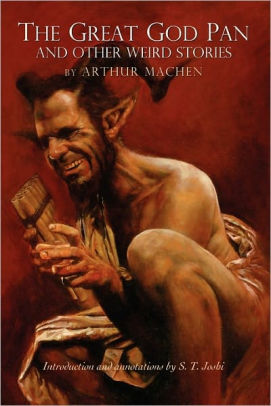
Armitage makes a crack that inbreeding could not have caused the physical features displayed by Wilbur, “Shew them Arthur Machen’s Great God Pan and they’ll think it a common Dunwich scandal!” Armitage already knows something is amiss.
Later that year Armitage, along with two fellow compatriots hear a dog howl and smell the horrible odor connected to the cosmos. They find a dog had jumped through the window and killed Wilbur Whateley, though this was not the Wilbur Whateley everyone had known…”...with very man-like hands and head, and the goatish, chinless face had the stamp of the Whateley’s upon it…though it’s chest…had leathery, reticulated hide of a crocodile or alligator. The back was piebald with yellow and black, and dimly suggested the squamous covering of certain snakes. Below the waist, though, it was the worst; for here all human resemblance left off and sheer phantasy began. The skin was thickly covered with coarse black fur, and from the abdomen a score of long greenish-grey tentacles with red sucking mouths protruded limply…whilst in lieu of a tail there depended a kind of trunk or feeler with purple annular markings…“
Yikes!
Strange things begin to happen in Dunwich and they all seem to surround a large invisible creature who is destroying houses and killing people. Armitage delves into research to figure out how to dispel the creature and comes across the “Dho-Hna” formula and a singular terrible phrase written in Wilbur’s crooked scrawl: “I wonder how I shall look when the earth is cleared and there are no earth beings on it.”
Double yikes!
Wilbur obviously began his transformation into some sort of cosmic avatar, whether that be the servant Shoggoth, or something else, he was actively looking to wipe the earth clear of humanity. From everything I’ve read in Lovecraft thus far, this is the first instance where it is absolutely clear the destruction of the human race is the point of the fanatic study. Usually it is just a lust for power or eternal life or knowledge beyond what they should be able to understand.
Dr. Armitage, along with Professor Rice and Dr. Morgan head to Sentinal Hill with a special sprayer which will show the invisible creature (clever if trite plot device). Again we are shown a description. Lovecraft does a fairly good job at this though, because he just throws out a few vague discordant descriptors and lets our mind construct the monstrosity. It is readily apparent that the invisible monster is a Shoggoth. Here it is in clear terms from one of the villagers:
Bigger’n a barn…all made o’ squirmin’ ropes…hull thing sort o’ shaped like a hen’s egg bigger’n anything, with dozens o’ legs like hogsheads that haff shut up when they step…nothin’ solid abaout it – all like jelly, an’ made o’ sep’rit wrigglin’ ropes pushed clost together…great bulgin’ eyes all over it…ten or twenty maouths or trunks a-stickin’ aout all along the sides, big as stovepipes, an’ all a-tossin’ an’ openin’ an’ shuttin’…all grey, with kinder blue or purple rings…an’Gawd in heaven – that haff face on top!…
I find this description particularly interesting, not only because we finally get to see what a Shoggoth looks like (It was a terrible, indescribable thing vaster than any subway train—a shapeless congeries of protoplasmic bubbles, faintly self-luminous, and with myriads of temporary eyes forming and un-forming as pustules of greenish light all over the tunnel-filling front that bore down upon us, crushing the frantic penguins and slithering over the glistening floor that it and its kind had swept so evilly free of all litter. – description of a Shoggoth from “At the Mountains of Madness”) with a bit more clarity, no the more intriguing thing here is that section about a ‘half face.’
The Shoggoths are the work horses of the Old Ones (Like the actual workers. They tend to whatever the Old Ones need. Do the dirty work as it were.) and this story seems to be indicating that humans can become Shoggoth, and all they need to do is breed with them…
The story concludes with the trio from Arkham banishing the Shoggoth creature to whence it came. This would probably be a satisfactory conclusion, but Lovecraft takes it a step further. In the last paragraph we find the truth of where the creature came from. This entire story, the Whateley’s were building bigger and bigger spaces. It was unclear as to why, just a vague mention by Old Whateley on his death bed: “More space, Willy, more space soon. Yew grows – an’ that grows faster.”
But oh god, the creature had half a face. “That face with the red eyes an’ crinkly albino hair, an’ no chin, like the Whateleys...”
Remember that Wilbur grew at an abnormal pace? This was because of his connection with the cosmic deities. Why would the Shoggoth grow at the same pace? We finally see that this monster was not something Wilbur or his grandpappy summoned. Lavinia gave birth to Wilbur and the no one knew who the father was, well it turns out that the monster “…was his twin brother, but it looked more like the father than he did.”
One only has to wonder…did Old Whateley willingly give up Lavinia to birth cosmic deities?
Triple Yikes!
Join me next week as we jump into Herbert West – Reanimator!
Post Script:
Here’s just a fun rejoinder about the pronunciation of Dunwich.
My brother and his family live in Providence, RI and he is adamant that the real pronunciation of Dunwich is Dunnich. Because RI was a colony they took on the English pronunciation and that’s what is used today (Hence Greenwich village is pronounced Grennich village. What’s interesting in this story is that Lovecraft goes to far lengths to use onomatopoeia to make the speech of the villagers precise to their dialect. He does this to the point that some of it is neigh on impossible to read because he focuses so much on pronunciation to show their destitution. I mention this because there’s one instance where a villager, in dialogue, calls the town Dunwich. Therefore we know, without a shadow of a doubt, that it is the Dunwich Horror, not the Dunnich Horror.
Blind Read Through: H.P. Lovecraft; The Colour out of Space
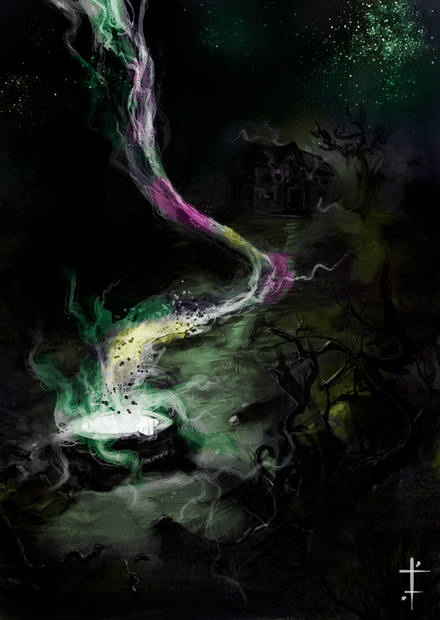
“All the while the shaft of phosphorescence from the well was getting brighter and brighter, bringing to the minds of the huddled men a sense of doom and abnormality which far outraced any image their conscious minds could form.”
Welcome back to another Blind Read! I’ve been thinking about this story for quite some time because of the recent Nicholas Cage movie (of which I’ve not watched. I wanted to have a fresh vision of what the story was without any preconceived noise in my head). Lovecraft didn’t disappoint because where there is a nice celestial feel to the story, it is decidedly different from just about every Lovecraft story I’ve read (and at this point I’ve read quite a bit!). This story has an interesting facet that adds to the malevolence of the elder gods. In pretty much every other Lovecraft story there is some kind of bad actor who is making an effort to bring about these older gods (even a story like The Shadow Over Innsmouth, because cultists brought Dagon forth), but in this story everything that happens is far outside of any of the characters desires or abilities to stop it; showing how devastating the pantheon can be to us who are bound to the mortal coil.
But we’ll get into that in a minute, let’s jump into the story shall we?
We start, much like all Lovecraft does: with an old man telling a story to a younger narrator. The old man, Ammi Pierce, told of strange happenings west of Arkham, Massachusetts where “The hills rise wild, and there are valleys with deep woods that no axe has ever cut.”
The point of the visit for our narrator is he is scouting out a place where they want to create a new reservoir, a place where the people of Arkham told him “the place was evil…” He assumes because Arkham “is a very old town full of witch legends…”
The place they were referring to was specifically a place called the “Blasted Heath”. When our narrator gets to the location he looks upon the Blasted Heath and offers a curious perspective: It must, I thought as I viewed it, to be the outcome of a great fire; but why had nothing new ever grown over those five acres of grey desolation that sprawled open to the sky like a great spot eaten by acid in the woods and fields?
Lovecraft wrote this novellette in the late 20’s and one cant ignore the similarities to the descriptions of the blasted heath in the story with the Tunguska event in Siberia in 1908. The Tunguska event is still argued over, but the foremost thought is that a meteor hit the earth in Siberia, creating massive devastation which resulted in something similar to the “Blasted Heath”, while also producing an earthquake and so much radioactivity, that (I didn’t do any research into this, but I’m pretty sure this is true) it will still make a Geiger counter go crazy…over a hundred years later. I seriously wonder how much of Lovecraft’s full line of fiction came from this idea. A meteor came down from the heavens with a piece of eldritch godhood and created all the disturbance we see in his fictional Massachusetts. Disturbances of an accord, just like radioactivity would cause mutations, death, and strange visions. This might be something to keep in the back of your mind as we delve deeper into this story.
Our narrator is spooked and heads back to the village and speaks with old Ammi about what happened there. Ammi tells the story of the colour out of space which may indicate why the people of Arkham and the surrounding environs tended to be a locus for such otherworldly influence, but we’ll touch on this again at the conclusion.
Ammi tells us of Nahum Gardner, who was a farmer who had “fertile gardens and orchards”, until a meteor fell from the sky and landed down in the middle of his land. It immediately shrinks and Nahum and his family take a specimen to nearby Miskatonic University to figure out what it is. The professors at first thought it was a silicon, or plastic of some sort, but “when upon heating before the spectroscope it displayed shining bands unlike any known colors of normal spectrum...” The professors tell him that it is metal without a doubt , but they think that it’s from some unknown source, or it’s a brand new element.
They pry the metal open and inside “They had uncovered what seemed to be the side of a large coloured globule imbedded in the substance.” They take the globule out of the metal and put it in a beaker, but the next day the globule and the beaker are gone, replacing them is a burn mark on the counter.
Nahum goes home and finds in the next couple of weeks that the fruit and veggies are of a similar strange “colour” and larger than normal size. The crop seemed to be flourishing, but whenever he took a bite he found that, “for of all that gorgeous array of specious lusciousness not a single jot was fit to eat.”
Animals started acting strangely shortly there after. They seemed to mutate and do things they weren’t normally wont to do.
There are two strange phenomena going on here. The first is the fact that the meteor shrinks, and the second is that the produce grows. Why wouldn’t they both grow? Why wouldn’t they both shrink? The answers come just a few months later when Nahum’s crops begin to turn to grey dust, just as Nahum’s family begins to act strangely.
Nahum locks his wife in the attic because she begins to rant and seems to lose her mind. In her words; “she was being drained of something – something was fastening itself on her that ought not to be…nothing was ever still in the night – the walls and windows shifted.”
Nahum’s children also go either missing or die. Ammi tells Nahum that something is off in their well water, but Nahum tells Ammi he wont stop drinking from it. The animals die with “grey dust” in thier heads, along with the land dying in larger and larger circles emanating out from the well. Even the insects began to turn to grey dust.
Nahum’s littlest even “…Fancied they (his mother and brother) talked in some terrible language that was not of this earth.”
While all this was happening Ammi paid a visit to Nahum. He found a grey looking Nahum, barely able to move spouting nonsense before he eventually died.
The grey circle continued to expand until one day there was an explosion and a flash of that otherworldly “colour” blasted out into space, which we see in the opening quote.
After this explosion Ammi, tells the narrator, there is still some of that strange colour left in the well. The grey area of the blasted heath is also still expanding, though slower. These are all indications that something is still there, however nothing else ever happened.
The story ends as the narrator speculates that when they created the reservoir and covered those lands with water, that Ammi never left. He recalled something the old man said to him, which Nahum told Ammi…”can’t git away…draws ye…ye know summ’at’s comin’, but ’tain’t no use…“
Huh. Let’s go back to the beginning of the story, shall we? We know that “The old folk have gone away, and foreigners do not like to live there.” We also know that Arkham (which is in Massachusetts) is “a very old town of witch legends.”
(Note: this is theory! Not that these essays are based on the first time I’ve read these stories. I am trying to get the most out of them, but if I get something wrong please let me know! Otherwise we can discuss it!)
This story was written during one of the most prolific time periods of his life. What if this was supposed to be the origin of his Providence Yog-Sothothery? There are two basic tenants in the Mythos from what I understand. There are the Gods that have home on the earth (Cthulhu, looking at you), then there are the Cosmic gods.
The Gods of the earth have the history. Mad Alhazred wrote down eldritch truths in the Necronomicon, and the Pnakotic manuscripts are even before that, but those seem to be necromantic tomes with only partial notation of their elders (like in The Case of Charles Dexter Ward, where they use Yog-Sothoth {Cthulhu’s grandfather) in ritual, but only to gain an aspect of his power latent in the earth with Chthulhu.
The Cosmic gods are what we only see in the dreamlands, because they are so far removed from earth that the only way to get to them is by dreaming (Azathoth, etc.). I believe that this story is these cosmic gods coming down to earth to take a piece of our consciousness and see where we are at in our evolution. The reason for this theory goes back to why the globule shrank in the metal and grew the harvest.
The material of the gods (the globule) needed to feed, but it was also looking for information. It was hungry and got no food, and thus would shrink until it fed. When it got into other things it shone through them. Temporarily expanding them (with it’s own girth) until it sucked all knowledge and life from it’s host, turning that life into grey ash (remember in The Case of Charles Dexter Ward when they used Grey Ash as “Saltes” in a ritual to bring back old knowledge?).
When something with intelligence got the substance in them, it exposed them to the cosmic wonder of the universe, “It was nothing of this earth, but a piece of the great outside; and as such dowered with outside properties and obedient to outside laws.”
That’s why all the animals and people went crazy, because they saw beyond what the mortal mind can comprehend outside of dreams. So far that it enabled them to speak different languages and see far away sights. It opened a doorway between worlds, because as it was letting Nahum and his family see the eldritch truth, it was looking into our world at the same time. Once it gained what it was looking for it closed the door, ate the life out of the creature and moved on.
This is also why people couldn’t leave. The human mind is inherently inquisitive, (i.e. people running towards danger…tornadoes, hurricanes, volcanoes, murderers…you get the idea) because we want to understand. We’ve talked about this many times before and this is where the horror of Lovecraft comes in, because no matter how much we want to be able to put everything in a nice neat box to reduce our fear of them, there are things in this world that we can’t possibly understand, in fact aren’t meant to understand.
Come back next week as we cover another Lovecraft classic “The Dunwich Horror!”
Blind Read Through: H.P. Lovecraft; The Case of Charles Dexter Ward Conclusion

“Dr. Willett was thinking deeply and rapidly, and his thoughts were terrible ones. Now and then he would almost break into muttering as he ran over in his head a new, appalling, and increasingly conclusive chain of nightmare happenings.“
Welcome back for the conclusion of “The Case of Charles Dexter Ward!” This week we follow Dr. Willett as he uncovers the truth of the preceding events. Though this was a fun chapter, containing a ton (for Lovecraft at least) of action, the whole thing is fairly predictable. It does, however, deliver a satisfying end to the whole story. Let’s begin shall we?
The first section of the chapter is exposition heavy, and reveals basically what we’ve been suspecting all along: “They were robbing the tombs of all the ages, including those of the world’s wisest and greatest men, in the hope of recovering from the bygone ashes some vestige of the consciousness and lore which had once animated and informed them.” and “…preparing from even the most antique remains certain “Essential Saltes” from which the shade of a long-dead living thing might be raised up.”
So it turns out Curwen’s coven was in fact raising the dead and collecting them to find some ancient information, but what information are they endeavoring to decipher?
The question deepens in the next paragraph. “Joseph Curwen had indubitably evoked many forbidden things, and as for Charles…What forces “outside the spheres” had reached him from Joseph Curwen’s day and turned his mind on forgotten things?”
We are also posed the question, “Was daemonic possession in truth a possibility?”
As we consider these questions the text jumps into the meat and potatoes of this chapter. The action begins as Dr. Willett and the elder Mr. Ward go to Charles’ place. They find a trap door in the floor and open it, causing Mr. Ward to faint; “…the mephitic blast from the crypt had in some way gravely sickened him.”
Willett steels himself and heads down into the abyss. Down there, lit by his flashlight, he finds Ward’s study. All the documents he has heard about (Letters from Prague and Rakus between Orne, Hutchinson, Ward, and Curwen, the cyphers, etc.) are present and he stuffs them in his valise. He finds much of Charles’ handwriting, but he also finds much of Curwen’s, and at this point he thinks that Ward was ghost writing for Curwen: “If he had indeed come to be the leader, he must have forced young Ward to act as his amanuensis.“
Willett continues to search, finding strange thing after strange thing, building suspense as we know that something strange or horrible will happen.
The suspension of disbelief in Lovecraft is great, and his lyrical style brings the reader into the story. This novel is framed as such that we get heavy atmosphere, layered on with epistles to make us feel as though we are the antiquarians who are working to solve the riddle.
Framing the story in this way is important because, as I’ve noticed in reading Lovecraft so far, he follows the tenant that to write a convincing story, the person telling it must live to tell the tale. Through all the Lovecraft I’ve read, the narrator witnesses horrid things and gets into situations where they should absolutely not make it out, but they always survive (sometimes the worse for wear). This should take away some of the suspense, because we know as readers the narrator will make it out. The brilliance of Lovecraft’s stylizing is that his lyrical style, though the language is not the most accessible, eventually draws you into the experience of the characters. In “The Case of Charles Dexter Ward” this is done through atmosphere and epistles, and this last chapter does it better than any other.
A perfect example is the ending of the second section of this last chapter. We get two “formulae” which are the summons that Curwen’s group (and Ward) were using to raise these long dead people. We see these formulae through Dr. Willett’s eyes as a horrible sound of crying or mewing comes from unknown depths beneath him. The formulae he finds seems to call out to something called Yog-Sothoth (whether it’s to please it, or it’s a call for help, we don’t really know. More on that later). The first formula has a symbol meaning a “Dragon’s Head” and the second formula has a symbol for a “Dragon’s Tail”.
We can almost feel the dread in this section. The whole novel has been a slow build to this moment where we finally get to see what has actually been happening all this time. The dank cavelike office. The ancient tome written in almost alien text. The horrible mewing of either pain or hunger coming from somewhere in the cavernous abode. What is Willett going to find down there!
Well, we’ve been getting the re-occurring theme that one must take care not to bring up what you cant put down, and now we seem to have found the two rituals. The Dragon’s head brings up and the Dragons Tail (this is actually Dragon’s Head written in reverse) puts down what was brought up.
Willett, terrified, then finds an altar that has carved into it some disturbingly unfinished creatures. The mewling gets louder and he is compelled to see (or rather to gather evidence) what is making the sound, so he follows the horrible noises until he finds a pit. When he looks down he sees, “What the thing was, he would never tell. It was like some of the carvings on the hellish altar, but it was alive. Nature had never made it in this form, for it was too palpably unfinished.”
Here is another brilliant choice by Lovecraft. What makes his horror so palpable, is that he relies on imagination to create fear. He never truly describes any of these horrors because the idea behind them is that they are so terrifying that the human mind cannot conceive of words to bring comprehension. If he spent a bunch of lines really describing the creatures in detail, we’d be able to compartmentalize what the creatures are and thus they’d be less scary. Your mind can wander and create any terrible thing that’s “Unfinished” and then the monster becomes your monster. It becomes something you’re scared of, thus making it more personal for the reader.
Willett, dealing with his terror of these unfinished creatures goes even further and we finally figure out what’s really happening. He finds leaden jars (read as urns) in two differing Grecian styles. We have finally found the elusive “Saltes” that have been used to call up the dead.
As Willett is terrified as he inspects the laboratory. To assuage his fears he finds himself gently repeating the “Dragon’s Head” as he somehow finds it soothing. While he is doing so a figure appears out of the shadows. The figure have a beard and immediately we recall the nefarious Dr. Allen. Willett is scared for his life and faints and the creature who looks like Dr. Allen takes hold of him.
Willett wakes the next day in a room with Mr. Ward looking over him. They struggle to understand what’s actually going on, until they find a false beard and glasses which were very obviously Dr. Allen’s.
We are led through several pages of confusion. Who is Allen? Is Allen Ward? Is Allen Curwen? Is Allen either Hutchinson or Orne? What were those “Unifinished creatures” in the pit?
Then we get the opening quote. Dr. Willett suddenly understands. Dr. Allen was in fact Curwen…that is until he transposed bodies with Charles Dexter Ward! Curwen changed bodies, that’s why Ward’s speech changed, his memory was wiped, and his writing changed. Curwen took over Ward’s body, and put Ward’s soul into Dr. Allen’s body, then “put down” Allen.
Willett, unknowingly called Ward back up (and for some reason he was still wearing the fake beard) unknowingly because quoting the Dragon’s Head calmed his nerves as he investigated the horror lab. He just happened upon Ward’s “Saltes” and brought him back.
Meanwhile the “unfininished” wretches in the pit, were undoubtedly the men who charged the farm all those years ago. This was Curwen’s method giving them penitence for deigning to stop him of his nefarious ends…to give them unending torment. He brought them back unfinished (because he didn’t use all the essential “Saltes”), so he might complete his ritual of long life and find the information he was searching for.
Why did he need them to complete the ritual? The text doesn’t actually say, but we know that Yog-Sothoth is a deity of information, and to do a ritual which goes beyond life and death, and possibly beyond the cosmos like the one Curwen was attempting, I think the missing essential “Saltes” were put into either the altar, or into Curwen himself for added strength. That seems to be the only reason why depictions of the “unfinished beasts” would be on the Altar in the first place. It was signifying that those creatures were the “sacrifice” needed to get to the next step of ascension.
Dr. Willett was just lucky enough to call back the young Ward, who saved him and took him home. There is a hilarious moment when Willett makes the connection. “The article was a photograph of the luckless son, on which he now carefully drew in ink the pair of heavy glasses and the black pointed beard which the men had brought from Allen’s room.”
Willett goes to Ward (Curwen) in the institution for the climax. “The patient quailed, conscious that since the last visit there had been a change whereby the solicitous family physician had given place to the ruthless and implacable avenger.”
Willett uses “the cryptic invocation whose heading was the Dragon’s Tail, sign of the descending node–” and put Curwen down “…scattered on the floor as a thin coating of fine bluish-gray dust“, ending the horrible nightmare.
The novel is a horror story first. Indeed the only mention of anything cosmic is the name Yog-Sothoth itself, so hang on we’re going to get meta here for a minute!
What I mean by a horror story is that we have those classic horror tropes we started to identify in the third chapter and just when I expected something cosmic to erupt at the end of the novel, Lovecraft kept it about reanimation and zombies and vampires and witches…or did he?
Yog-Sothoth in the greater mythos is considered an all-knowing deity and grandfather to Cthulhu. The whole novel we have all the characters (and because of how the book is structured, the reader) striving for knowledge. The idea of striving for this eldritch knowledge is at the core of Yog-Sothoth’s interests, because it is all knowing. Curwen went to it to find out about all the weird things that lie at the edge of our known world. So the coven of three were praying to Yog-Sothoth, not Satan, and that’s how they got to understand the powers that they did. The reason they resurrected the “Great minds” of yesteryear, was because they fell into the pit-fall of all Lovecraftian antagonists…they wanted to know how to commune and interact with the cosmic dieties, and thus transcend their own mortal beings. Well, I guess it was cosmic after all!
The next logical step that I would take, is that this novel was written in 1927, and it’s the first time Yog-Sothoth was mentioned in any of Lovecraft’s stories. Lovecraft didn’t call his created universe and the deities it contained “the Cthulhu Mythos,” that was actually a creation of August Derleth (his friend and publisher). Lovecraft actually called it Yog-Sothothery. Meaning that every story he wrote had these creatures, these deities in the background, and it was this novel that solidified the scope of the idea for him. Everything after (that he wrote himself, there are one offs he co-wrote) had a distinct connection with this cosmic approach, and because Yog-Sothoth was about knowledge, he was able to tie every story written before into this as well.
Another reason he called it Yog-Sothothery was because of the idea of the deity itself. Nearly every story he wrote was about the characters seeking something beyond their ken. Seeking ancient or forbidden knowledge. Yog-Sothoth for Lovecraft was the owner of that knowledge, so it makes sense that his stories in his mind would all have to deal with this celestial god.
I think this is also why he wanted other authors to continue on with telling the stories of the Mythos after he died, because he knew it was such broad universe of ideas and he simply didn’t have the time or the overall perspective to produce it.
Well, that’s all for this week! Thanks for sticking around for this longer post!
Read along and join me next week as we discuss “The Colour Out of Space”!

Donations!
If you've enjoyed reading along in the blog, please leave a donation! Every little bit will help me get better content and more content for you! Thank you so much!
$1.00
Blind Read Through: H.P. Lovecraft; The Case of Charles Dexter Ward, pt. 4
“Important sections of Charles Ward’s store of mental images, mainly those touching modern times and his own personal life, had been unaccountably expunged; whilst all the massed antiquarianism of his youth had welled up from some profound consciousness to engulf the contemporary and the individual.”
Welcome back to another Blind Read! This week we delve even deeper into the mystery of Charles Dexter Ward as we take a look at chapter four, “A Mutation and a Madness.”
This penultimate chapter gives us some much needed information, and sets us up for the final chapter “A Nightmare and a Cataclysm.” I have a feeling because of the direction the text is taking, and the title of the last chapter we are going to get a much more intimate view of what that attack on Curwen’s farm house looked like; with Ward taking place of the antagonist, but that’s for next week.
This week we continue to follow Ward down the rabbit hole. What Lovecraft does so well in this novel is heighten the mystery and suspense by not fully showing us what’s actually happening. He’s brought in all these other horror tropes (as mentioned last week), so the reader is left wondering what’s going on. Is this magic? Are Curwen and his fellows actually witches? Are they vampires? Did they tap into some eldritch energy? Based upon my reading so far in Lovecraft’s oeuvre it could be any of these options. We don’t get a specific answer in this chapter, but things are certainly clarifying, so lets dig into it as much as we can!
We start, right off the bat, with Ward acting subdued after the event on Good Friday where his mother collapsed. Ward seemed to regress back to the antiquarian activities of his youth. He was subdued for months. What was he doing during this time? We know he was dabbling in Curwen’s personal documents, so was Curwen biding his time before coming into being? Or was Ward trying to fight him off?
Those few months go by and it seems as though we have the answer: “The youth was arguing or remonstrating hotly with himself, for there suddenly burst forth a perfectly distinguishable series of clashing shouts in differentiated tones like alternate demands and denials…” then a curious statement was overheard from Mrs. Ward: “…must have it red for three months…”
Curwen had been biding his time. There was something they were working on which took time, some incantation, and Ward was either an unwilling or reluctant participant in it. We know this because Ward’s mother listened all night and “...as long as she had remained awake she had heard faint sounds from the laboratory above, sounds as if of sobbing and pacing, and of a sighing which told only of despair’s profoundest depths.”
Ward was being compelled and I think that something happened during the “Good Friday” kerfluffle that ended the last chapter which took hold of Ward. It’s almost as if a part of Curwen had been injected into Ward’s subconsciousness and they were two beings fighting for one body. That would certainly explain “clashing shouts in differentiated tones.”
The next day we find there had been more body snatching from the cemetery the night before Ward’s lamentations. The body of Ezra Weeden, the young man who courted Eliza Tillinghast who became Curwen’s wife and then led the charge on the farm house, was exhumed and then shortly there after there were “…shrieks of a man in mortal terror and agony.” followed by, “strange and unpleasant odours…”
This entire novel there has been grave robbing. In previous chapters, I assumed it was because Curwen was trying to gain access to the knowledge of his ancestors. What I now am coming to realize is the reason Curwen (and by extension Ward) needs the “Saltes” of the past, is not to resurrect them (although I do believe that they do resurrect the bodies, which makes the hypothesis all the more gruesome), but to feed on them. Curwen and his coven have abnormally long life and to do that you must have a source to fuel you.
This makes exhuming Weeden seem cruel and vicious, as though Curwen is exacting revenge on the man for storming his farmhouse all those years ago, but maybe there is something deeper going on here. If they in fact do gain the knowledge from these poor souls they bring back, maybe Curwen is trying to figure out how Weeden succeeded in convincing the townsfolk to attack. Maybe Curwen is trying to stop that from happening again, against Ward.
This still doesn’t change that they seem to not only be feeding on the dead but also the living, because vampirism begins taking place concurrently, and we already know that Hutchinson has survived thus far as a “Transylvanian Count” who lives off blood. Around this time there is also stories of people being attacked by …”a lean, lithe, leaping monster with burning eyes which fastened its teeth in the throat or upper arm and feasted ravenously.”
Enter Dr. Allen, a mysterious man who suddenly appears and has become Ward’s companion. This companion, along with a man servant, move into a new house…the center of the vampiristic attacks…and they become reclusive with each other.
Ward “grew steadily paler and more emaciated even than before, and lacked some of his former assurance when repeating to Dr. Willett his old, old story of vital research and future revelations.”
Could it be that Dr. Allen is the vampire and he is actually feeding on Ward? Or is it Curwen, through Ward’s body that is effecting the exsanguinating attacks?
The answer is unclear, but at this time Ward makes a deal with a local abattoir and has abnormal amounts of blood and meat sent to him. There is concurrently a caravan headed to Ward’s abode that is hijacked by thieves. Thieves who promptly drop the cache in horror as they realize it’s grisly (dead bodies) contents.
The small coven of three is slowly building power. Power in blood and power in knowledge. The three men move into the old Farm House complete with it’s hidden catacombs of Curwen’s making. It does not seem strange to me that they had to find a “man servant” to join Dr. Allen and Ward, because years before Curwen had to be joined with Orne and Hutchinson to be a coven of three. What did Allen and Ward promise this young man to join them?
Once at the farmhouse Ward realizes that he’s in over his head and decides to take a last stand. He sends a letter to his Alienist (Psychiatrist) Dr. Willett which states, “Instead of triumph I have found terror, and my talk with you will not be a boast of victory but a plea for help and advice in saving both myself and the world from a horror beyond all human conception or calculation.” Yikes. It’s here that Lovecraft begins to transcend the run of the mill horror. He has conceded that things like zombies, witches, and vampires exist in the world, but they are a means to an end for a deeper and more horrible truth to come. They are mosquito’s pecking at someones skin, when the whole time there is something deeper, insidious, and ruthless, like a virus which will do much more damage, just waiting to be let free.
As if to emphasize this, the post script is a desperate attempt at redemption, “Shoot Dr. Allen on sight and dissolve his body in acid. Don’t burn it.”
What a strange and horrifying thought. Ward is so scared of Dr. Allen coming back from the grave, that he knows you must absolutely destroy the body; that way the “Saltes” cannot be restored. This also makes sense because in previous letters, Orne told Curwen not to bring up what you cant put down, which coincides with Curwen’s collecting acids. He must have used those acids to “put down” whatever horrible thing he “brought up.”
Soon after this letter, Charles Dexter Ward goes absent. His nefarious companions state that he is just out and about and must not be disturbed. They say he is OK and just doing very important research. Charles’ dad calls, inquiring after his son and hears Dr. Allen for the first time and “…it seemed to excite some vague and elusive memory which could not be actually placed…” It stands to reason that the voice was one he heard Ward utter in a different tone while he argued with himself on that infamous Good Friday. Then we get into the last and probably most important question of this chapter.
Who is Curwen and how is Dr. Allen involved?
Dr. Willett and Ward’s father visit and Ward himself tells them, “I am grown phthisical,” (I had to look it up too) which means that he’s become consumptive, that his speech is hoarse and gravelly. Ward has become a shell of who he formerly was.
We call back to the beginning of the chapter and remember that Ward had stopped being his normal self. His memory was wiped and any knowledge of anything current was cleared for items of antiquity. His speech had even changed cadence to represent a previous dialectical time. He even makes statements like this one:
There is no evil to any in what I do, so long as I do it rightly.
I believe Curwen has taken over Ward. The text leads to some question of that, in fact the last few paragraphs actually seem to state that Dr. Allen was Curwen. What if that was true? What if Allen was Curwen? Allen disappears about the time Ward makes this transition, so it may well be that Allen was Curwen (they even slant rhyme) in Ezra Weeden’s expired body. When the body began to give out (because it required too much blood for upkeep) Curwen began the transition into Ward’s body. That was why Ward was absent for those few days, because it took that much time to make the transition.
The conflict will come because Willett and the elder Ward believe that Allen is Curwen, so we’ll have to to just wait for the final chapter to see how it all pans out!
Will Ward make it through? Will Curwen summon something he can’t put down? Will Hutchinson and Orne re-appear?
Join me next week for the finale of The Case of Charles Dexter Ward!
Blind Read Through: H.P. Lovecraft; The Case of Charles Dexter Ward, pt.3
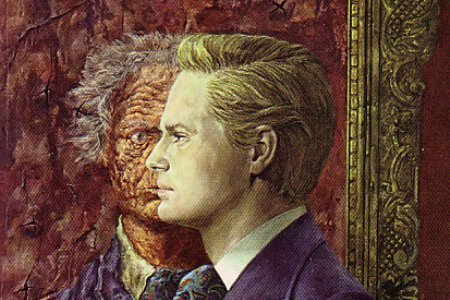
“There were chanting’s and repetitions, and thunderous declamations in uncanny rhythms; and although these sounds were always in Ward’s own voice, there was something in the quality of that voice, and in the accents of the formulae it pronounced, which could not but chill the blood of every hearer.”
Welcome back to another Blind Read! This time we’re jumping into chapter 3 “A Search and an Evocation.” There are some very interesting concepts in this chapter and I’ve begun to wonder if Lovecraft is using this novel to incorporate all horror within his mythos, as there are many horror tropes in this chapter. It feels as though he is trying to say that these tropes were actually created from his own “Yog-Sothothery.” We’ll get a little more into this later, but this chapter jumps forward and we are reunited with our titular character as we follow him in his descent into madness.
The majority of this chapter is the “Search” of the title. Ward is fascinated with his ancestor and researches to find more information about him. At the start of the chapter he is open about his curiosity and what information he discovers. His family is slightly disturbed by his findings, but they generally don’t seem to care that much.
Ward asks consistently to travel abroad to dig deeper, but his parents reject that idea, telling him instead to stay state-side. He decides the best thing for him to do is research Salem.
He finds “Curwen’s only close friends had been one Edward Hutchinson of Salem-Village and one Simon Orne of Salem.” We already know from the previous chapters that Simon has practiced some kind of spell craft or alchemy which had given him such prolonged life that he had to take another name and act as though he was his own son, Jedediah. So we understand that they have some connection with the occult.
Ward continues to research and finds a curious letter which speaks of strange things: “And of ye Seede of Olde shal One be borne who shal looke Backe, tho’ know’g not what he seeke“
Obviously this pertains to Ward. It’s curious that this passage tells us that Ward is compelled to research despite not knowing why he has the urge, nor knowing what he’s looking for, and it is this passage which tells him that he doesn’t have a choice. This is a staple of Lovecraft and horror in general. There’s a reason why people run back into houses whilst being chased by monsters and murderers. There’s a reason people don’t move out of haunted houses. It can sometimes be jarring when you watch or read a character do something like this, but there’s a reason it’s one of the oldest horror tropes. People feel compelled to understand. Think about magic tricks. How many people will watch someone do a magic trick and then immediately ask how the magician did it? It’s that unknown that drives their worst fears and if we can just comprehend what’s going on, we can correlate it to something tangible and make it less scary. That’s the brilliance of Lovecraft. He uses creatures and themes that are so beyond the realm of our ken that it is not possible to correlate them.
This is why the people of Salem and Providence were so scared of Curwen and his coven of three. Because they were doing things; chants that weren’t in a known language, smells that were beyond comprehension, and anti-aging, that the people instantly feared them because these actions were outside of the norm.
This brings me to the second classic horror trope, the Witch. We’ve been playing at the witch for this entire book so far, with references to Salem and casting spells, but this is the first time we get a small, secluded house, hidden in the woods where a coven of three practice their incantations. To Lovecraft these incantations are not witchcraft as we know it, but direct conversation with the Great Old Ones. That’s truly where magic comes from, not from the earth, or Satan, or anything else. Witchcraft is Yog-Sothothery.
But back to the story. After spending time in Salem, Ward comes home excited about his found evidence of Curwen. During this time he also figured out where Curwen’s house on Olney Court was, so the next portion is his investigation goes there.
We get the feeling that Ward took on some aspect of Curwen as he was travelling in Salem, because when he sees the house on Olney Court and the changes made to it, he feels a pang of fear and regret. Almost as if that portion of Curwen’s history was dissolved.
He digs into the house and scours it for information finding three interesting items. The first was a portrait of Curwen which was hidden behind the wall. Ward contracts some workers and an artist to take the painting out and restore it, then he puts it up in his attic study to ostensibly overlook his work. He also finds two documents: a lost journal by Curwen with a strange inscription: “To Him Who Shal Come After, & How He May Gett Beyonde Time & ye Spheres…” and a cipher which he hopes will translate a note he found from Hutchinson with a similar language.
Ward takes these documents and heads back to his room. He begins to pull back from his parents, (“At night he kept the papers under lock and key in an antique cabinet of his, where he also placed them whenever he left the room.”) and spends his time under the gaze of Curwen’s portrait. “…he inaugurated a dual policy of chemical research and record-scanning; fitting up for one laboratory in the unused attic of the house.” Remember how Curwen would get the “Saltes” of his ancestors to bring them back and ask for information? Well during this time Ward’s research is about where Curwen is buried. There is evidence that he may have found the grave, and possibly more evidence that Curwen’s body was not in it. But more on that later.
He continues to ask his parents to travel abroad, and where they resist for a while, they finally agree to let him. He wanders through Eastern Europe and at first, sends frequent letters. Soon however the letters slacken and then nearly stop by the time he gets to Transylvania. He visits with Baron Ferenczy, and “…the situation of Baron Ferenczy’s castle did not favor visits. It was on a crag in the dark wooded mountains, and the region was so shunned by the country folk that normal people could not help feeling ill at ease.”
What a strange description. To me this is a perfect depiction of Dracula’s castle, yet another reference to a classic trope that Lovecraft is incorporating in this novel. To top that off, the experience of Ward is similar to that of Jonathan Harker as well. He goes to the castle, then becomes so consumed (see what I did there?) with work, that he doesn’t readily respond to correspondence. Could this possibly be Lovecraft trying to subsume these tropes? Was Dracula meant to be part of the mythos? Think about all those coffins that Curwen “imported” in the last chapter. Could it be that some of those creatures weren’t actually vampires, but vampiric constructs that Curwen, using Yog-Sothothery, resurrected? Or is this just a nod to Stoker?
It may in fact be a nod because the next few paragraphs, those of Ward returning to Providence from his time abroad, are wonderful homages to Poe. The language suddenly shifts, and the focus on atmosphere takes center stage;
“When the coach crossed the Pawcatuck and entered Rhode Island amidst the faery goldeness of a late spring afternoon his heart beat with a quickened force, and the entry to Providence along Reservoir and Elmwood avenues was a breathless and wonderful thing despite the depths of forbidden lore to which he had delved.”
Ward gets home and is noticeably changed. He has prematurely aged and has become far more withdrawn. In fact, “…Dr. Lyman’s assign to Ward’s European trip the beginning of his true madness.” The most disturbing aspect of this is the next trope that we come across. Thirty years before this book was written, Oscar Wilde published “The Picture of Dorian Gray”. Here Lovecraft throws another bone out to the horror community. Ward’s visage begins to take on the physiognomy of the portrait of Curwen. Ward has been striving to find his ancestor, but maybe there is something more going on here. Could he have been possessed by Curwen in Transylvania? or is it the magic, the Yog-Sothothery, bringing them together? The fact that the concept and usage of the portrait is so similar to Wilde’s tale I’d intimate the latter.
Ward retreats to his attic lab and we see the opening quote of this essay, where he delves into his experiments. Strange noises and smells emanate from the lab (remember how Curwen’s farm house had strange smells that latched onto it’s attackers?), and his parents take note. His mother tries to spy on him and notices four men bringing a coffin like box into the lab. This coffin could be the body of Curwen, or even more likely Curwen’s “Saltes”, because what comes after is startling.
Ward begins a strange chant in an even stranger dialect and the weather goes south. The strange smell (possibly Brimstone?) wafts throughout the house as Ward’s experiment proceeds and it gets to the point that his mother faints. Once the ceremony concludes, Ward promises his father that he will discontinue that type of experiment in the attic and move on, but right at the end of the chapter we find that “the portrait of Joseph Curwen had resigned forever its staring surveillance of the youth it so strangely resembled, and now lay scattered on the floor as a thin coating of fine bluish-grey dust.”
The transformation was complete, or rather the “evocation” was complete. I wonder if Curwen didn’t actually die in the raid on his farmhouse, but instead transposed himself, or at least his soul, into the painting. When the four men brought the coffin with the mortal and tactile “Saltes” (remains) of Curwen, all that was left was the ritual to bring him back. The essence of the portrait seeped into Ward, and he took on the aspect of Curwen.
That’s how the chapter ends, but before I let you go I’d remiss if I didn’t mention that is some beautiful language in this chapter, far better than I’ve seen in the previous ones. My favorite line pertains to Ward’s mother when asked what she saw to make her faint:
“Memory sometimes makes merciful deletions.”
Yikes. This just adds to the mystique and horror of the tale, especially with only two more chapters. We know something is going to begin to come together and I think some major knowledge is going to be dropped in the next chapter.
I wonder if we’ll continue to receive those classic tropes. Keep an eye on them if you’re reading along because I wonder if there may be some underlying meaning behind this novel. So far we’ve come across Witches, Zombies, Vampires, Dorian Gray, and a little bit of Poe stuck in there. What might we find next?
Let’s find out next week for an analysis of Chapter 4 “A Mutation and a Madness.”
Blind Read Through: H.P. Lovecraft; The Case of Charles Dexter Ward, Pt. 2
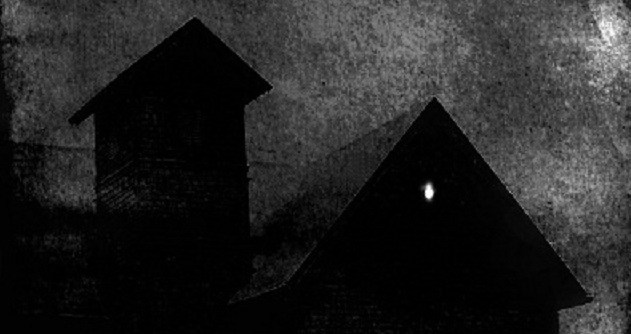
“All that can be told of their discoveries is what Eleazar Smith jotted down in a none to coherent diary, and what other diarists and letter-writers have timidly repeated from the statements which they finally made – and according to which the farm was only the outer shell of some vast and revolting menace, of a scope and depth too profound and intangible for more than shadowy comprehension.”
Welcome back for another Blind Read! This week we tackle chapter two “An Antecedent and a Horror,” of The Case of Charles Dexter Ward (apparently I’ve read too much Robert Louis Stevenson because I consistently want to call this “The Strange Case of Charles Dexter Ward,” in reference to “The Strange Case of Dr. Jekyll and Mr. Hyde.”).
We take a bit of a hard right turn in this chapter after learning about Ward in the previous one; it makes sense however because of the title of the chapter. We know that we’re learning of Joseph Curwen, the antecedent (and ancestor) of Charles Dexter Ward in this long chapter from the first line: “Joseph Curwen, as revealed by the rambling legends embodied in what Ward heard and unearthed, was a very astonishing, enigmatic, and obscurely horrid individual.”
There is evidence to suggest that Curwen practiced witchcraft in Salem at the height of that age and fled directly before the hunt began to weed out the witches. This flight led him directly to Providence, “-that universal haven of the odd, the free, and the dissenting-“. I kind of love that Lovecraft has a statement about Providence in here because the narrative is decidedly opposite; the people of Providence revolt against the odd and the dissenting. It is, however, obvious how much Lovecraft adored Providence , and this statement is more from his perspective, the author, rather than the narrators perspective. This is why his writing and his livelihood flourished here… because he felt accepted.
Anyway, back to the text. Curwen moves to Providence and we already know something is odd about him. He’s an antiquarian, just like Ward, but he also dabbles in drugs and acids and strange metals, and he is preternaturally old, but doesn’t look it: “At length, over fifty years had passed since the strangers advent, and without producing more than five years’ apparent change in his face and physique.”
This makes the people of Providence weary of him, but to make matters worse, he contacts a local apothecary and also a local literary and scientific fanatic hermit, John Merritt, to bring him books from all over the world. Lovecraft spends nearly a page of text naming the works, from historical to literary to religious, until “upon taking down a fine volume conspicuously labelled as the Qanoon-e-Islam, he found it was in truth the forbidden Necronomicon of the mad Arad Abdul Alhazred…”
Merritt sees a passage which sheds a little light on some of the things that the Necronomicon can actually do: “The essential Saltes of Animals may be so prepared and preserved, that an ingenious Man may have the whole Ark of Noah in his own Studie, and raise the fine Shape of an Animal out of it’s Ashes at his Pleasure; and by the lyke Mothod from the essential Saltes of humane Dust, a Philosopher may, without any criminal Necromancy, call up the Shape of any dead Ancestour from the Dust whereinto his Bodie has been incinerated.”
So here we find what Curwen is striving for (though the motive is still absent). He is just trying to understand life and gain what knowledge his ancestors had. He is a pre-eminant scholar, but even though he’s dabbling in these strange and forbidden arts, there is zero evidence that he’s done any harm to any living being (other than livestock and being a slave owner. The slave owner thing is completely unforgivable, but in terms of the time period this story is taking place in, it was a commonplace practice, so he’d be no different from the townsfolk in terms of morality).
Despite the knowledge of his “dark arts” he joins the church and tries to become a contributing member of society. He might be trying to get people to relax about his strange dealings, or he could be trying to ingratiate himself to certain members of society to gain favor…
A few years later we find Curwen looking to marry. He finds his ideal wife… the daughter of a ship-Captain, Dutee Tillinghast. The text itself shows no real nefariousness, but Lovecraft does spend a bit of time describing how old Curwen is and how submerged into witchcraft he is, before suddenly switching the narrative and talking about how he got Tillinghast to agree to marry off his daughter, Eliza (Not Peggy). This sudden switch from his witchcraft to his courting is curious. Is it to indicate that Curwen magically charms Tillinghast to give away his daughter? Or does Curwen just pay enough of a bride price to satisfy Captain Tillinghast? In either case this infuriates Eliza’s young gentleman sailor caller, Ezra Weeden, because he wanted to marry Eliza. Little does Curwen know it, but his choice of bride becomes his undoing.
Ezra, angry at being shunned, “…began a systemic study of the man and his doings…” certain that the old wizard was up to something. Certain that his lovely Eliza could not choose Curwen under her own volition, despite the fact that Curwen set Eliza up at a separate house and gave her everything she wanted or needed and didn’t spend too much time with her, or intrude upon her. Truly we don’t know, because there is nothing in the narrative to tell differently, but Eliza never seemed unhappy or in danger at any time from Curwen. Still, there is no storm worse than a lover scorned.
Ezra continues to watch and notices strange cargo going to Curwen’s farmhouse. “The cargo consisted almost wholly of boxes and cases, of which a large proportion were oblong and heavy and disturbingly suggestive of coffins.” Of course we infer what they are and so does Ezra. The issue is he’s a sailor and he’s often gone with his ship, so he hires Eleazar Smith to watch while he’s gone (The young man from the opening quote).
Eleazar finds prisoners in an extensive tunnel system under Curwen’s farmhouse. These prisoners are of a horrid physiognomy, and we can only infer that they are the resurrected ancestors that Curwen has been importing in those strange coffins. We know from Merritt and his glace at the notated portion of the Necronomicon that Curwen is bringing these ancestors back to life “from their Salte” to grill them for information:
“Once, for example, an alternately raging and sullen figure was questioned in French about the Black Prince’s massacre at Limoges in 1370…”
Weeden and Smith gather many important town figures. They want to get the law involved. Once they do, the group decides to confiscate some of Curwen’s mail. They find all sorts of crazy evidence, but one line stands out as important and foreshadowing: “doe not call up Any that you can not put downe…”
This is all the evidence the group needs. They form a mob to raze the farm house and all that dwell within it. Bringing a Frankensteinian vibe, they storm the farmhouse. There is an incredible battle where many of the men are killed or maimed and Curwen eventually dies. During the middle of the fight there was a blast in the farmhouse. “This blast had been followed by a repetition of the great shaft of light from the stone building,” namely Curwen summoning creatures to aid in the fight. The narrator doesn’t go into detail, but talks of fire creatures and strange smells that stick on the men in the raid.
Right at the end of the chapter there is a passage that leads me to believe that Curwen was actually killed by creatures he called up rather than the attackers:
“I say to you againe, doe not call up any that you can not put downe; by the Which I meane, Any that can in Turne call up somewhat against you, whereby your Powerfullest Devices may not be of use. Ask the Lesser, lest the Greater shall not wish to Answer, and shall commande more than you.”
Curwen called up a power that was just a little to strong for himself and in turn it killed him. I do, however, wonder what the scent is and why it’s mentioned. I wonder what the firey creatures are. I wonder how this correlates to Ward’s transition. Again, there isn’t any indication in the text… yet, but I’m sure we’ll soon find out!
What really intrigues me about this chapter has to do with fear and anger. The whole downfall of Curwen was spawned by a young man’s jealousy, because Ezra went a little far in trying to prove Curwen was evil. Without a doubt Curwen was doing some terrible things, however he was not doing them to the living, so there is a bit of a moral question here. Does that merit death?
The through line is that Curwen came from Salem. The witch trials were all about fear. Innocent people died because people were so afraid of what they didn’t understand that they committed atrocious acts against others. The same here. The mob was formed because they stole Curwen’s mail and didn’t understand what they were reading. Rather than just reaching out to Curwen, or even arresting him, they decided that because they didn’t understand what was going on, they were just going to eliminate him. We come to realize that though Curwen is monstrous, the real monsters were the people of Providence, feeding off that fear. All because a young man felt cheated.
One last note for this chapter which I absolutely loved, and I believe it’s more a reflection on the novel as a whole, is that Lovecraft is writing it as though we ourselves are antiquarians looking back at Ward. Throughout the book thus far, we have been given snippets of text from books, articles, and letters that the characters are looking at. Thus it’s as though we as readers are doing the research to understand what happened to Ward. This is a wonderful Juxtaposition of Ward looking back on Curwen, and in turn Curwen looking back at his ancestors. It is a brilliant structural organization because it brings the reader more into the story. It makes the reader empathize with both Ward and Curwen as we delve deeper and unfold more layers of the mystery. We ourselves have become the antiquarians…
Join me next week for chapter 3, “A Search and an Evocation”!
Postscript:
I would feel remiss if I didn’t add in this portion about racism. I have argued with people over the past year and a half as I’ve read through Lovecraft’s works, saying that he was merely xenophobic and agoraphobic and not just outright racist. This story has unequivocally proven me wrong.
In previous stories he rails against the culture of others. I have seen that nearly across the board, and where it’s jarring, it’s also fleeting so I’m able to gloss over it. There is a passage in this chapter (I will not repeat it. Look it up yourself if you’re curious) that is abhorrent. It speaks about appearance, not culture. I can no longer in any way defend what I’m reading. I almost stopped the project all together when I came across that passage. I still may, but I do believe that there is enough time and understanding that has passed since the authorship of these works that I can be impartial. What I mean by this is that with recent art like “Lovecraft Country” coming to HBO (and the book, though I haven’t read it), Lovecraft’s legacy can be about his creation, not the hatred he himself had. I feel it’s OK to continue on because others of races and creeds are benefiting from his creations. That being said the passage rocked me a bit, and left a bad taste in my mouth. I’m hoping the rest of this novel will be free of such prejudice.
Blind Read Through: H.P. Lovecraft; The Case of Charles Dexter Ward pt 1.
“He bore the name Charles Dexter Ward, and was placed under restraint most reluctantly by the grieving father who had watched his aberration grow from a mere eccentricity to a dark mania involving both a possibility of murderous tendencies and a profound and peculiar change in apparent contents of his mind.”
Welcome back to another blind read! It feels like it’s been a long drought since the last time we covered one of Lovecraft’s more popular pieces, and I gotta tell you, I was very excited to jump into this one.
Right from the start we enter into familiar territory. The POV is much more omniscient than much of Lovecraft (the majority of his stories seem to be told from a much more limited 3rd person, and much of that is from the perspective of an unreliable narrator), however the omniscient narrator spends this chapter describing the character of Ward, whom is a young man who has gone down a path that has led him to the strange.
We find that Ward is an inquisitive youth. He’s described as “a scholar and antiquarian”, but at some point (specifically at his last year of Moses Brown School, the feeder school to Brown University) “he suddenly turned from the study of the past to the study of the occult.”
Ward, while doing research into his past, found that one of his ancestors had some connection to the occult. One Joseph Curwen, “who had come from Salem in March of 1692, and about whom a whispered series of highly peculiar and disquieting stories clustered.” It was in this research of his ancestor that Ward began to go down the rabbit hole of the occult.
Whatever he did had strange consequences. It changed, not only his mind and the psychology behind it, but his actual physiology. There is a really fascinating section early on in the story where Lovecraft describes Ward’s “Organic processes”. The entire point of this is to show that Ward had tapped into something that changed him, but the brilliance of this section is that it encompasses the horror of Lovecraft perfectly:
“Respiration and heart action had a baffling lack of symmetry; the voice was lost, so that no sounds above a whisper were possible; digestion was incredibly prolonged and minimised, and neural reactions to standard stimuli bore no relation at all to anything heretofore recorded, either normal or pathological. The skin had a morbid chill and dryness, and the cellular structure of the tissue seemed exaggeratedly coarse and loosely knit.”
This was the most fascinating section to me because when you read the passage, something about what he’s describing feels off. You know that Ward has been effected by something, but as a reader, you are uncertain what it is. You know he’s still human, but you know that whatever he got himself into has done something to him, and it’s that word… something… that creates real fear. This ambiguous description is the cornerstone of Lovecraft’s genius of horror. He pontificates, but doesn’t out and out recount what is truly going on.
It wasn’t that Ward had become some creature (although he could… this is only the first chapter), just that there was something wrong with him. I see this all the time in bad horror, where the author tries too hard for the scare, and in doing so, usually describes the creature or describes in lurid detail what is happening to the character. When we actually get to see something our brain is able to put it in a box, and where that box may not be pleasant, it’s the first step in understanding. Lovecraft’s point is that we can never understand these types of horrors. He lets the reader’s mind do the work for them.
Even the titles elicit this with stories like “The Thing in the Moonlight” or “The Unnamable” prove that he understood what’s truly scary to people is what they don’t know, not what they do know. He describes things that are a little strange to unsettle the reader, but not to outright terrify. Lovecraft wants to do what his creations do, he wants to be that insidious pulling at the back of your unconscious that tells you something isn’t right, even though you don’t understand what that is.
The brilliance of this story is he places Ward into such a realistic place. He goes into great detail describing Providence, RI. So much in fact that there is criticism (actually from Lovecraft himself) that the novel is a “cumbrous, creaking bit of self-conscious antiquarianism” because of the detail he uses in describing Providence. Now, where he sees this as self aggrandizing, I find it a wonderful juxtaposition to the oddity that is Ward. The realism of his illustration of Providence grounds us, which makes the possibility of the unseen horrors corrupting that reality all the more… well… horrible.
Come back next week and read along as we cover chapter 2 “An Antecedent and a Horror” in The Case of Charles Dexter Ward!
Blind Read Through: H.P. Lovecraft; The Thing in the Moonlight

“Presently I heard a swishing in the sparse grass toward the left, and saw the dark forms of two men looming up in the moonlight.”
Welcome back to a very strange blind read!
This wasn’t really a story and in fact when I researched Lovecraft’s bibliography it isn’t represented at anywhere. As it turns out, this is actually a letter that Lovecraft once sent about a dream he had to a colleague. The letter was then taken and a beginning and end was tacked onto it. It’s curious why someone would do this, because the text doesn’t make sense and doesn’t sound ANYTHING like Lovecraft. Let’s break it down a little. Here’s the opening, obviously not written by Lovecraft:
“Morgan is not a literary man; in fact he cannot speak English with any degree of coherency. That is what makes me wonder about the words he wrote, though others have laughed.
“He was alone the evening it happened. Suddenly an unconquerable urge to write came over him, and taking pen in hand he wrote the following:”
So, so many things wrong here. First of all why name him Morgan? Without any characterization this is just a failed attempt to change something that doesn’t need to be changed. The very next line starts “My name is Howard Phillips.” so there is no reason to adjust it, other than either an attempt to make it their own (which I don’t believe because it’s published in a Lovecraft book), or they wanted it to seem more like a story rather than a letter. It’s an uninspired and useless tactic.
Next “he cannot speak English with any degree of coherency.” What? If you read the following letter, the man writing it obviously has an expert’s grasp of the language; as it’s written far better than this opening salvo. I mean, the writer (I refuse to say author here for this anonymous hack job) tacks on a fragment to end the sentence that makes zero sense in the context!
Then we get into Lovecraft’s actual (letter) writing. This letter is brilliant and terrifying (it might be some of the scariest he’s written), and packs so much into just two pages that I would consider it a must read for any fan (just ignore the two opening paragraphs and the closing paragraph).
The narrator describes finding a strange aged trolley car on a plateau. The narrator goes inside and sees two figures approaching. One screeches and the other goes to all fours and runs around wolf-like. The description of the screamer is terrifying, and now I understand why people say “Silent Hill” is Lovecraftian: “…but because the face of the motorman was a mere white cone tapered to one blood-red-tentacle…”
The scene repeats itself with a feeling of foreboding and anxiety that the dreamer will eventually be caught by this mysterious motorman. The story ends with the ominous, “God! When will I awaken?”
This letter was written in the last few years of Lovecraft’s life, and I wonder if this was almost a cry for help. He created this verdant field of wonder and fear, and one has to wonder if drugs (laudinam or opium) caused some of this nightmare fuel to seep into his head.
Then again what if this was a metaphor? The bestial nature had left him (the conductor was the one who went wolf-like and ran around; ostensibly away. Cone-head was the real nemesis) as the conductor ran off, and he was left being haunted by the strange and otherworldly motorman. I find it interesting that the conductor, the one who was meant to drive the vehicle (or in this case drive the consciousness?) went feral and directionless, whereas the motorman – the one who powers and builds the craft – became the staying force. The motorman whom changed and became something otherworldly. It almost feels like this is Lovecraft’s ID and this letter is the realization that maybe there is something off about him internally. Something otherworldly?
Much like many of his narrators he sees this truism and is terrified by it, and we as readers have to wonder… How much time did Lovecraft spend dreaming, and in the end did he succumb and transcend into his own dreamlands?
Join me and read along next week where we’ll cover the first chapter of “The Case of Charles Dexter Ward!”
Blind Read Through: H.P. Lovecraft; The Book

“It was a key – a guide – to certain gateways and transitions of which mystics have dreamed and whispered since the race was young, and which lead to freedoms and discoveries beyond three dimensions and realms of life and matter that we know.”
Welcome back to another blind read! I was excited to read this one because I thought it might have to do with the Necronomicon, but soon found out that the eponymous book was yet another tome of outlandish sorcery – but more on that later.
This fragment starts out with the old Lovecraft standby – the unreliable narrator. This one doesn’t mince words though, our narrator comes right out and says, “wow this is crazy, I don’t even know where I am, or even who I am half the time!”
Think I’m exaggerating? Here’s the beginning: “My memories are confused…I am not even certain how I am communicating this message…My identity, too, is bewilderingly cloudy.”
I’ve been debating on where to put this critique, but every other story is pretty jam packed with content, whereas this is a shorter fragment, so I think I’ll talk about this here…
I’m not thrilled about this unreliable narrator that Lovecraft loves to use. It’s fine every once and a while, but when you consistently re-use the same themes, it feels more like bad writing than a trend. I understand it for sure. Lovecraft is trying to set the stage and each unreliable narrator tends to have a different reason for their unreliableness (totally a word). This narrator is confused because of “… that worm riddled book…” he discovered. He delved so deep into it’s mysteries that it has altered his reality so that he’s not sure as to which reality he’s actually in.
The issue this creates is that the story is now forever stuck in the fantasy realm. The wonderful nature of Lovecraft is the creepy realism he develops with his mythology. He takes us to real places with dirty people (literally and figuratively) who are just trying to make a living, and these extraordinary things happen to them. By telling the story by an unreliable narrator it takes away some of the stakes. Could all of this insanity all be in their head? Could they just be lying? Are they under the influence of something like Opium of Peyote? All of these choices are fine for a story or two, but when we start out nearly every story with the narrator saying something along the lines of “I don’t even know where I am right now!” It becomes more about fantasy than horror and the stakes are lowered for the reader. Lovecraft dances this line superbly in most of his works, but it would be a better choice had the narrator understood what was happening, rather than telling us at the beginning of each story that it might not be true.
Just had to get that off my chest, but back to the story…
The narrator finds the old “wormy” book in some old book store and the shop keep is grateful to be rid of it (or is this some ploy? Could the shop keep with his “curious sign with his hand” be in on it?). When the narrator reads it he finds that, as the starting quote says, it is a key; a gateway to other worlds. I thought for sure this was the classic Grimoire I mentioned earlier but, “… the hand of some half-crazed monk, had traced these ominous Latin phrases in unicals of awesome antiquity.” So we know it’s not the Necronomicon because that tome was written by the Mad Arab Alhazred and he’d be writing it in either Arabic or Aramaic, so it must be something else. The first few pages are burned away, so no one really knows what the book is, however there are references to many other things within: “But still I read more – in hidden, forgotten books and scrolls to which my new vision led me…” So we know there is more to Lovecraft’s old forgotten mystery tomes than the Necronomicon and the Pnakotic Manuscripts.
This fragment was written just a few years before Lovecraft died, so who knows what he would have created as he expanded his universe (I’m sure other authors, like Clark Ashton Smith and August Derleth did, along with a multitude of others who followed, but I’m not there yet).
We even get a glimpse of some strange square building which terrifies the narrator into giving up his research and becoming a hermit. There’s mention that he has gone back in time, could this strange square building have been a Cthulhu temple in R’lyeh? The narrator doesn’t know, so we wont either.
But that’s all. This one is a fairly contained story, but there isn’t a whole lot to it. It feels like this is actually a character sketch for a future story, or that he was trying to work out what another old tome could be. Who knows? Maybe I’ll read another story during this blind read and come across a book which is a “key” somewhere else! Anyone out there, know which book this story is referencing?
I’ve purposely kept some of the better known Lovecraft stories for last. I wanted to try to get as much experience within the framework of his oeuvre before jumping into larger and more popular stories. To that end, I have just one more fragment to get to, “The Thing in the Moonlight” which will be next week (reading from the beautifully Michael Whelan illustrated Del Rey books), before heading into “The Case of Charles Dexter Ward.”
Come join me! Lets read along!
Blind Read Through: H.P. Lovecraft; The Descendant
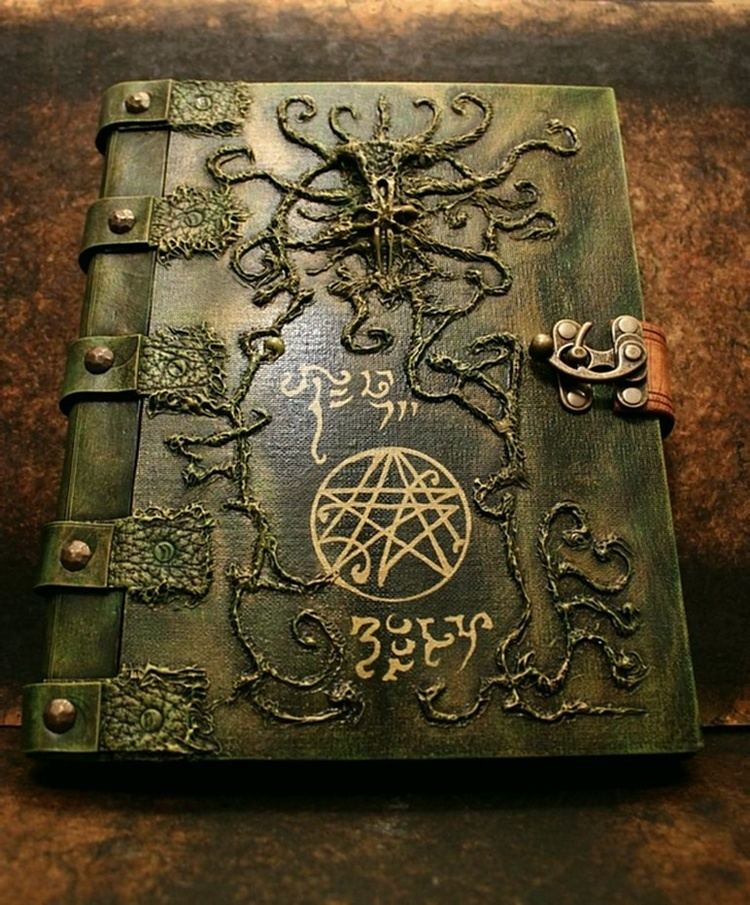
“There rose within him the tantalizing faith that somewhere an easy gate existed, which if one found would admit him freely to those outer deeps whose echoes rattled so dimly at the back of his memory.”
Welcome back to another Blind Read! I’ve finally finished with the Juvenilina and I can’t say how happy I am to be back with the fragments. These are some of his later story ideas and, well, fragments of stories that Lovecraft never got to finish and oh my lord what a wealth they are.
These fragments contain more Yog-Sothothery than any of the individual short stories that I’ve read so far and I wonder if these works were his way of organizing his thoughts. He packs so much information into these few pages, while the rest of his short stories are vague and only hold a little indication of where he wanted his mythos to progress. I wonder if this is how all of his stories started and then he pared back on the lore, so that he might be able to focus more on the. After all, to me, the greatest strength of Lovecraft is how he lets the reader develop the horror in their own minds.
Anyway, back to the story. This story starts out like many of his other stories where the narrator tells us of a man (here in London instead of New England) who walls himself off from friends and family. He has been traumatized by something in his past and we get a page or two glimpse of how he lives his current life, then we peel back the onion to stare directly into the trauma.
The man strives to stay away from anything that makes him think. In fact the only books he has are brain candy: “His room is filled with books of the tamest and most puerile kind, and hour after hour he tries to lose himself in their feeble pages.” No! Lovecraft wasn’t elitist, I swear! (as a side note, I’m really curious to see who he thought was “puerile.” That would be an interesting post in and of itself!)
The point is, something happened to the man and he wants to make sure his brain doesn’t delve deeper into whatever past experiences he had. That’s either a coping mechanism not to relive the trauma, or it’s because he has something hidden in his brain that he’s scared to bring back out.
Eventually a young man named Williams enters his life. This young man is a scholar and has a feeling that the old man knows something more than he tells. He picks and prods and eventually gets a bit of information out of the old man about his past.
Seemingly unprompted, though one might believe that he inferred about the terrible book from the conversations he had with the old man, Williams brings home the Necronomicon. “…the infamous Necronomicon of the mad Arab Abdul Alhazred.” which he sought out from a local rare bookseller.
The old man sees the book and, “…one glimpse he had had of the title was enough to send him into transports, and some of the diagrams set in the vague Latin text excited the tensest and most disquieting recollections in his brain.”
We learn that the old man is Lord Northam, whose lineage goes back to Roman times. In fact, one of his Roman ancestors actually found evidence of the Old Ones; “Gabinius had, the rumour ran, come upon the cliffside cavern where strange folk met together and made the Elder Sign in the dark…”
During the Hellenistic period and slightly before there were cave dwelling hierophants who practiced something called the Eleusinian Mysteries, which were basically rituals to Hades and Demeter. We already know that Lovecraft gets much of his inspiration from Greek and Roman culture and it seems as though he is adopting these Hierophants as his own to represent his Cthulhu cult (I.E. praying over the ocean). He also infers R’lyeh, “a great land in the west that had sunken, leaving only the islands with the roths and circles and shrines of which Stonehenge was the greatest.”
The story abruptly ends while telling about Lord Northam’s childhood, and one gets the feeling that if Lovecraft was able to actually finish it, this story would be one of the most complete and comprehensive histories of his Mythology.
We get so much of the origins of the cult that surrounds the mythos, including a great understanding of where in our world much of these places are and the events that happened within them. Lovecraft was absolutely anglified, making the majority of his major events happen in England, New England, and in the sea between, but he also holds a special place in his heart for the mysteries of Greece and Arabia. There is much that he didn’t understand about those worlds and I think he was drawn to culture mainly because of the desert. It was something that he couldn’t have imagined being in, or being around (whether that be because the of the temperature, the vast miles of nothingness, or the emptiness of humanity) and thus it grew in mystery within his brain. I believe that’s why he posed the people of the mysteries as cultists and why artifacts of the Old Ones power (The infamous Mad Arab, and even the narrator from The Transition of Juan Romero) seem to come from there. Because the culture was so vastly different, that in a way he vilified it.
Once again we are shown brightly Lovecraft’s xenophobia, as he subsumes it within the mythos he created. Transposing real world people and events into horrors which we don’t understand and cannot contemplate.
Come back next week for another Blind Read! We’ll be covering the fragment, “The Book.”
Blind Read Through: H.P. Lovecraft; The Transition of Juan Romero

“Upon investigation it was seen that a new abyss yawned indefinitely below the seat of the blast; an abyss so monstrous that no handy line might fathom it, nor any lamp illuminate it.”
Welcome back to another Blind Read! This week we delve into the last of the juvenilia from the Del Rey book “The Tomb and Other Tales.” If you want to follow along, we’ll be covering the last three fragments at the end of that book in the next three weeks!
This story has a bunch of interesting lore involved, and where it isn’t specifically Yog-Sothothery, it’s a good basis for his cannon.
The story starts with Lovecraft’s classic unreliable narrator. He is unwilling to give much background but we know that he fought in the Anglo-Indian wars, as he “…was much more at home amongst white-bearded native teachers than amongst (his) brother officers.” Which to me indicates maybe he was of mixed race, Indian/English who never felt at home. He was an outcast in his homeland and I get the feeling that he chose to go to India to fight, not our of civic duty, but of a desire to prove he belonged.
He leaves India, but instead of going home, he heads to the American West and takes on a new name: “…a life wherin I found it well to accept a name – my present one – which is very common and carries no meaning.” indicating that his name had meaning before he started his new life in America. He is an outsider that somehow holds some sort of unforeseen talent or power and just hasn’t realized it yet.
His new life consists of being a miner at the Norton Mine, looking for gold along with his fellow miner, Juan Romero. During the dig, they do some blasting and they blow out a huge abyss with no end (see opening quote).
That night there are strange sounds; drumming from the deep (which is almost the exact same line from Tolkien. I half wonder if Tolkien stole it for the Mines of Moria), some wolves howl, and Juan Romero freaks out. He goes to the edge of the abyss: “and with a wild outcry he forged ahead unguided into the cavern’s gloom.”
Romero yells “Huitzilopotchli,” which is the Aztec god of war, the sun, and human sacrifice, before heading into the maw. I first thought this an odd inclusion the tale, because why would the deity which watches over Tenochtitlan be buried in a huge abyss underneath the American West? The more I thought about it however, I realized that this was probably just a manifestation of what Romero thought might be down there. There is another possibility which I’ll cover later, but I prefer this one, so we’ll leave that here.
There are some strange lights, “at first I beheld nothing but a seething blur of luminosity;” then he sees Romero through the diverging forms in that light. Romero has changed! We don’t know into what; in fact Lovecraft has his popular non-descriptors which made his horror so palpable. He doesn’t describe it, which makes the idea that much more terrifying: “but God! I dare not tell you what I saw!” He allows the reader to formulate in their own mind what this terror could possibly mean. The brilliance of this is that each reader will come up with their own interpretation of what the horror is which hits the hardest for them.
Some kind of deific power comes down and collapses the cavern, filling in the abyss to the point that the drillers are never able to find it again. Our narrator is not sure how he got away, but he”…noticed the unaccountable absence of my Hindoo ring from my finger,” which he doesn’t believe is a coincidence: “Somehow I doubt if it was stolen by mortal hands, for many strange things were taught to me in India.”
So what does this all mean? Did Lovecraft get confused and believe that the Indian sub-continent had the same deities as the South American? How could these two different deities interact? Juan Romero sees an Aztec god, however the narrator’s Hindu ring (Shiva?) was gone after the event. How could an Aztec God possibly be effected by a talisman from a Hindu God? What was Lovecraft getting at?
I believe Lovecraft knew what he was doing. Lovecraft himself seemed too versed in religions and he tended to research and ask questions, so I very highly doubt he confused the deities of two very separate religions. What I think is more likely is that Lovecraft is taking a more unifying approach.
Lovecraft was not religious; in fact he seemed to despise religion. So why would there be two religions in one story? There wasn’t. The characters believed they were two different beings, but we are one people, and there’s a reason so many of our religions are so similar. Think about all the cultures which have a flood myth. Lovecraft is saying that we are of one culture and the true deity which was nearly released was a cthonic god. A God which was the basis of all world religions. Their moniker is only what a culture called them based upon their experience. That’s why the Hindu ring worked on an Aztec god. They were one and the same, buried under our earth much like Cthulhu is in his lost city of R’lyeh.
What do you think?
Blind Read Through: H.P. Lovecraft; The Street
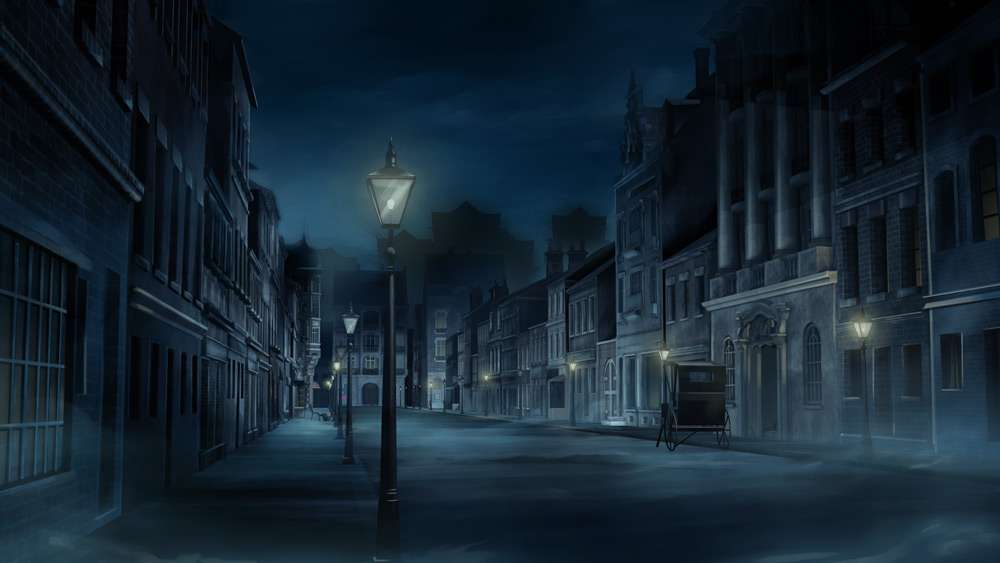
“There be those who say that things and places have souls, and there be those who say they have not; I dare not say, myself, but I will tell of the Street.”
This is the best opening line I’ve seen from Lovecraft in all that I’ve read of him (Despite the weird piratey feel), and this even comes from one of his Juvenilia!
I wasn’t really sure where Lovecraft was headed with this one. This short story felt like a bit of a ramble; as if he had a basic idea of what he wanted to accomplish, but he wasn’t sure how he wanted to get there. The writing is much more sophomoric than much of his other writings, but the story itself is far more controlled and succinct than The Poetry of the Gods was (which I’ve since been told the majority of which not actually written by Lovecraft).
In this story we follow the history of a street from the dawn of time when magic ruled, to the present day. The “soul” that Lovecraft is talking about is the Street’s history; the mystery and magic that’s inherent to an individual location. This is such a through line with all of Lovecraft’s writings, but I don’t think I’ve seen it so blatant in any other story than it is here.
The Street has a soul. Through time events happen. People coalesce around the Street and form it into a community. They build it into a town. The nation forms around the Street. There are wars to defend locations and ideals, including skirmishes with “natives” and battles with soldiers wandering the streets. There is even mention of the Declaration of Independence as the world changes around the Street.
The Street, however, never loses its core. It never loses it’s spirit. Things around it can change, “the air was not quite so pure as before, but the spirit of the place had not changed.”
Lovecraft believed that the way the world was headed was a detriment to the human mind. I think that’s why he ultimately wrote about what he wrote about. It was his goal to keep things unchanged and his Yog-Sothothery was that old magic that was too powerful (both in good and evil and ambivalence) to change. Many of the people in his stories are trying to bring back those old gods…trying to bring back that old magic…to a time before humans gradually destroyed the world. That’s why he loved New England, because it held onto the traditions of old, unlike places like New York which thrived on change (See the stories HE and The Horror at Red Hook).
Overall there isn’t much to this story but that theme. That theme is such a powerful one in his writings, however, that this is an incredible addition to his works because we can gain a greater understanding of his oeuvre as a whole.
One last thing before I let you go. I noticed something strange in this story, and where it is a blind read (meaning that it’s the first time I’ve read it, so I could have easily missed some context), I think that there may be more to his legacy than I previously thought.
I’ve always heard that Lovecraft was a notorious racist. Now, because of the day and age that he lived in, I’m sure that this was true (not to mention some of the wording he uses to describe minorities, also not using this as an excuse to forgive racism), but reading his works in such a bulk and analyzing them like I have, I think that he’s a bit more of a Xenophobe and an Agorophobe. I think he equally was scared of and disliked any people who were different, or had differing cultures than he did. It actually makes me pity him more than vilify him because fears drove him as we see in his literature. (Qualifier: I am not giving him a pass. I am not saying racism in any form is ok, in fact I think treating anyone different because of melanin or cultural differences is pretty abhorrent. I’m not saying that we should look past it. It’s just an observation that it seems like he fears everyone outside of his comfort zone, not just minorities. In fact in The Horror at Red Hook the evil person is dutch. He does have terrible language which is detrimental to the world as a whole.)
Lines like; “But it felt a stir of pride one day when again marched forth young men, some of whom never came back. These young men were clad in blue.”
It seems as though he’s talking about the Civil War here. If he is, then he was firmly in the Union side (which makes sense because he lived in Providence). I want to hope that he was pro Union because of the slavery issue, that he was still a humanist, but it could be that I love his writing and I’m looking for an excuse.
I guess I’d have to read his letters to get a better understanding of the man himself.
What do you think?
Blind Read Through: H.P. Lovecraft; Poetry and the Gods
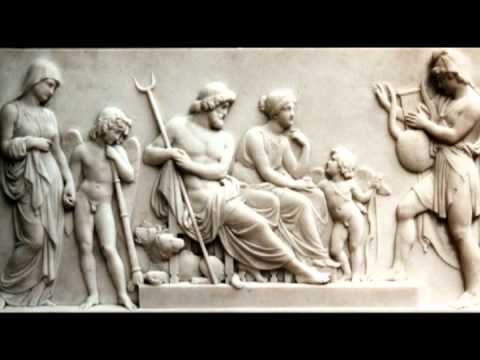
“It was only a bit of vers libre, that pitiful compromise of the poet who overleaps prose yet falls short of the divine melody of numbers; but it had in it all the unstudied music of a bard who lives and feels, who gropes ecstatically for unveiled beauty.”
Welcome back for another Blind Read! This time we’re diving into a co-op between Lovecraft and Anna Helen Crofts. This story is a divergence from what we have seen so far in Lovecraft’s fiction so if you’re looking for a horror story, look elsewhere. What we do get to see here is an interesting genesis of Lovecraft as an author and potentially his position, much like Marcia in the story, as a herald to the gods.
The story follows the aforementioned Marcia, who lives in an austere mansion and suffers from general malaise because of, “…some greater and less explicable misplacement in time and space, whereby she had been born too late, too early, or too far away from the haunts of her spirit ever to harmonize with the unbeautiful things of contemporary reality…” This quote strikes me. It feels almost as if Lovecraft is using Marcia to be a stand in for himself (or potentially Ms. Crofts).
He was not born at the right time.
Lovecraft craved mystery, and the strange, and mysticism. Contemporary culture of the time just didn’t fit with these amorphous constructs. We see this time and again (especially in the stories such as HE or Shadow over Innsmouth) Lovecraft wanted magic in the world of technology.
We go along with Marcia as she’s approached by Hermes and brought before Zeus. Zeus is looking for a mortal to herald the coming of the gods and brings Marcia there to do so.
The text itself is interesting because the exposition is cut up by poetry, as if to expose how brilliant Marcia is, but it also displays how bad poetry can halt magic from happening.
This is pretty much everything you get out of the story. It’s disjointed and strange, but it tries to hover between the mega weird of Lovecraft and softer, more realistic fiction. It doesn’t hit the nail on the head. It leaves you with the feeling that either one, or both of the authors were trying to show off how important and how amazing they were, but the self aggrandizement comes off as cheap and smarmy. It makes the story feel useless.
Where my interest in this story lies is how similar the Greek gods of the story were with Lovecraft’s original cannon. I’ve mentioned before that Greek gods and culture were a heavy influence on Lovecraft in general, and this story solidifies this.
There is a bit of the Dream-Quest as Marcia is brought to Olympus and sits before Zeus, as he tells her, “..the time approaches when our voices shall not be silent. It is a time of awakening and change.”
There is even evidence of the Pnakotic Manuscripts or the Necronomicon with “…reading from a manuscript words which none has ever heard before, but which when heard will bring to men the dreams and fancies they lost so many centuries ago, when Pan lay down to doze in Arcady, and the great Gods withdrew to sleep in lotos-gardens beyond the lands of the Hesperides.”
So much correlation that it’s hard not to read into it. From stories such as The Tree, The Tomb and What the Moon Brings, we catch such a huge influence from Greek culture that I now truly believe that his Yog-Sothothery is based upon these gods. He just puts a slightly more nefarious tint to them.
What do you think??
Blind Read Through: H.P. Lovecraft; The Alchemist
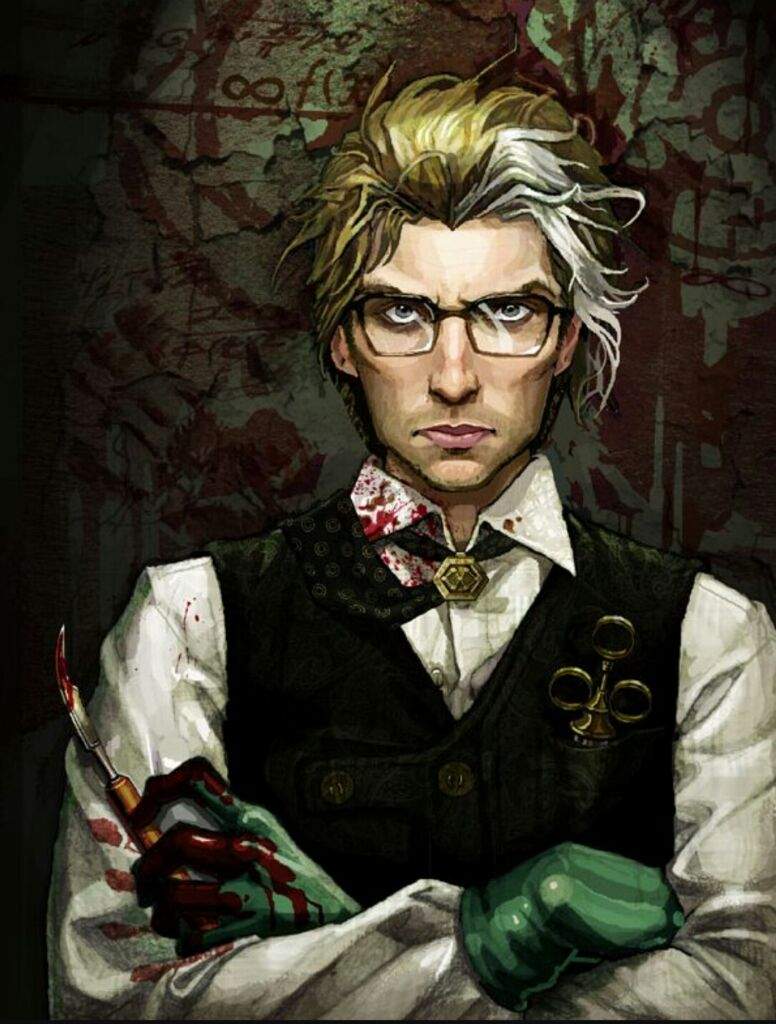
“At this time, my belief in the supernatural was firm and deep-seated, else I should have dismissed with scorn the incredible narrative unfolded before my eyes.”
Welcome back to another Blind Read! We’re diving back into another one of H.P. Lovecraft’s Juvenilia… The Alchemist. This was the first story I’ve read from Lovecraft that I truly feel that he had not gained his writing chops before starting. The narrative is obviously unpracticed and the plot is loose, with a number of issues.
The major thing that jumps out at me is that, unlike his other stories where he relies on inference for horror and terror, in this one he goes right to it and calls a spade a spade. The antagonists are father and son and they are evil. Flat out. Lovecraft even goes so far as to state that the father “…burnt his wife alive as a sacrifice to the Devil, and the unaccountable disappearance of many small peasant children were laid at the dreaded door of these two.” OK. That’s bad enough. We can probably leave it there. We know that these two are corrupt and irredeemable. We know they are the antagonists, but Lovecraft takes it a step further.
“…the evil old man loved his offspring with fierce intensity, whilst the youth had for his parent a more than filial affection.”
OK eww.
I hope I misunderstand this quote, and I hope it means something other than physical love, though I don’t know what else would be more than filial. Even more bothersome, Lovecraft states “…through the dark natures of father and son ran one redeeming ray of humanity,” meaning that their “more than filial love” is seen as a redeeming quality. Hmm. Mayhaps we’ve seen a little into why Lovecraft became such a recluse.
But let’s dig into the story, shall we?
A young man is locked away in a tower because the “…restriction was imposed upon me because my noble birth placed me above association with such plebeian company.” (though really it was because of the curse, but more on that later) Because of this isolation our narrator spends the majority of his time reading over old archaic tomes, but “Those studies and pursuits which partake of the dark and occult in nature most strongly claimed my attention.”
Through these tomes he reads of a man by the name of Michel Mauvais and his son Charles, also known as Le Sorcier. Mauvais, an evil sorcerer who strove for “such things as the Philosopher’s Stone or the Elixir of Eternal Life.” Meanwhile the Count, our narrator’s ancestor, finds one day that his son is missing and immediately goes to Michel Mauvais’ house and kills him for the murder Godfrey, his son. It is later found that Godfrey had just wandered off and eventually came back, though too late to save Mauvais. Le Sorcier curses the count and his ancestors, stating that every man in his lineage will die at the age of 32.
The tome tells how each ancestor of our narrator dies at that age. Eventually on the narrator’s 32nd birthday, Le Sorcier appears and says that it was actually he that had lived these past 600 years and had killed every one of the Narrators kin on their 32nd birthday to ensure the curse continues. He takes the Elixir of Life to help him in this capacity. Here the tale concludes.
We know the narrator wins the inferred scuffle, because he lives to tell the tale. We also know he steals the Elixir of Eternal Life from Charles Le Sorcier because the narrator tells us that the events he described were 90 years prior.
There are two possible outcomes here. The first is how the narrator tells it: he kills Le Sorcier, takes the drought, and lives forever in his tower. The second is that the narrator is none other than Le Sorcier himself, and the earlier story of being holed up was a hoax. Neither one of these are well thought out conclusions however. Either one of these outcomes leave a large number of plot holes, even in this seven page story. Unfortunately I felt this was Lovecraft’s weakest story of which I’ve read so far.
What do you think?
Blind Read Through: H.P. Lovecraft; The Beast in the Cave

“Cautiously advancing, we gave vent to a simultaneous ejaculation of wonderment, for of all the unnatural monsters either of us had in our lifetimes beheld, this was in surpassing degree the strangest.”
Welcome back to another Blind Read! This week, we’ll be diving into some of Lovecraft’s “juvenilia,” as it’s called. This is one of the last stories he wrote as a young man (The Alchemist being the last), before taking a break from writing these types of fictions. He returned to fiction years later and wrote the rest of his better known bibliography
This is a good story with echoes of future works tucked inside of it. Now, where there isn’t much in terms of cosmic horror or a Mythos connection, there is a slight thread (though far fetched) that we’ll be examining in a bit.
The story is a simple one and very straight forward. Lovecraft doesn’t leave much to the imagination, but he does create a great little horror story. The story begins with our narrator taking a tour through some strange caverns. He gets separated from his group and ends up fighting (really just throwing rocks at) some kind of creature that rose up from the depths of the cavern system.
He thinks he kills the creature with the rocks and tries to inspect it. He finds that it’s a white haired ape like creature, but it’s too hard to see because his torch extinguished in the time he wandered, lost. When the tour guide eventually finds him, flashlight en tow, they see that the creature was actually a man, assumed to be down here so long that he has mutated (I wonder if Gollum comes from this story).
It’s fun and short, and what you’d expect from a young man’s fiction. But what if this were the seed for so much more?
So the obvious connection is The Facts Concerning the Late Arthur Jermyn and his Family, because that is a story of a man intermarrying a Portuguese woman, who eventually turned out to be a Congan Ape Goddess. Arthur Jermyn and his family all had apish aspect because they were offspring of the Ape Goddess. Maybe the beast in the cave was actually a Jermyn?
But then we can go deeper. There are a few mentions of the people of Congo praying to this Ape Goddess “Under the Congan moon”, and inference that potentially the moon could have been where the Ape creatures came from (see What the Moon Brings and The Dream Quest of Unknown Kadath). Could this be the mythos connection? Could these creatures have been somehow been connected with the moon-beasts?
Even in stories such as The Doom that Came to Sarnath have this moon connection, where it seems as though something has come down from the moon and taken over, or corrupted life on our planet. This could be the cosmic connection we’re looking for, because the vast majority of Lovecraft’s mythos come from the stars.
Of course, this is a tenuous connection to say the least, but I like to think that Lovecraft’s beginnings could have had this kind of influence, at least subconsciously, over his later work. His vague mythos (which from what I understand, he didn’t want to have much connectivity), may have actually been more connected than we really thought of previously.
What do you think?
Blind Read Through: H.P. Lovecraft; The Evil Clergyman
“His build and lower facial features were like any other clergymen I had seen, but he had a vastly higher forehead, and was darker and more intelligent looking – also more subtly and concealedly evil-looking.”
Welcome back to another Blind read! This time we’re reviewing the very short and to the point, “The Evil Clergyman.”
There isn’t a whole lot to this one. It’s pretty straightforward, dealing with our classic un-reliable narrator, with themes of cosmic horror and sanity. This story doesn’t add to the cannon of mythos (unless there is something that I’ve missed, or something that I haven’t read yet), but it’s a fun little off shoot story.
We start off with our narrator looking an attic apartment. The man who is offering the apartment makes illusions to one of the previous tenants, and references what he did. We don’t know what it is, but we can tell that it is severe. It seems as though the narrator is not moving into the apartment, but he is rather there for research into “That abominable society…” whom he was a part of, and stayed there. I half wonder if this is the same he from the story with the name HE. They do have similar descriptions.
The man giving the apartment up (or perhaps the narrator is a working lodger) gives a number of requests: “I hope you wont stay till after dark. And I beg of you to let that thing on the table – the thing that looks like a match-box – alone.”
Whatever the previous tenant did we know it was terrible, and potentially had something to do with the thing that looks like a matchbox…which immediately made me think that the item could have potentially been a talisman with an elder sign on it. As far as I’ve seen so far, Lovecraft doesn’t have any elder signs in his fiction, so they are probably a creation of one of his acolytes, but this could have been the genesis of it.
Our narrator takes a “Flashlight” out. He delineates that this flashlight shines purple, not white light, so immediately we know that he’s either testing something, or hes doing his own nefarious experiments.
There is a familiar vacuum sound, a description that Lovecraft has used frequently to indicate summoning, and before the narrator a newcomer appears. The titular Evil Clergyman gets ready to hang himself and seems to peer into our narrator.
At first I wasn’t sure if this was a dream story, or reality, but as the Clergyman starts to hang himself he looks devilishly at our narrator, and our narrator is overcome with fear. He does the only thing that he can think of …”and drew out the peculiar ray-projector as a weapon of defense.”
This scares the Clergyman and breaks the spell. The man who offered the warnings at the beginning comes back and lets us know “Something very strange and terrible has happened to you, but it didn’t get far enough to hurt your mind and personality.”
We find that this is not the first time this has happened and that others have died in this room by their own hand. The Evil Clergyman was trying to take over our narrators body, and in fact, partially succeeds, “This is what I saw in the glass: A thin, dark man of medium stature attired in the clerical garb of the Anglican church, apparently about thirty, and with rimless, steel-bowed glasses glistening beneath a sallow, olive forehead of abnormal height.”
Our narrator had become the Evil Clergyman.
I read this story as two different meanings. The first is the purely horrific, Lovecraftian story where we have an outside being forcing his way into our world. A Clergyman who vied for more power and ended up being taken over, body and soul, by a malevolent cosmic horror being. It follows that their goal is to take over a new form and enter our world. That makes it a fun little story.
There could be deeper meaning here though. The specific mention of Anglican garb gives me a bit of pause, because of Lovecraft’s notable hatred of religion. I wonder if there is a piece of Lovecraft that said that if you let religion enter you, it would destroy your life. You would become beholden to the religion and lose a sense of your own creativity and end up killing yourself, who you are, and your very soul, by letting the religion take you over.
If this is the case, that means the people in the attic are against religion too, and they worry that in the dark of night, when terrors abound, the narrator (as many in the past have as well) might turn to religion.
There are two instances which could make this reality. The first is the description of the room contains strange geometry, much the same as in The Dreams in the Witch House. This strange geometry is a conduit for connecting one world to another. The second, is the people who stopped the Evil Clergyman in the past were “That abominable society.” Why would an abominable society be trying to stop something evil cross over? Could it be that the abominable society were in fact Cthulhu cultists, or something of that sort and they were trying to stop religion from coming into the world?
What do you think?
Blind Read Through: H.P. Lovecraft; Azathoth
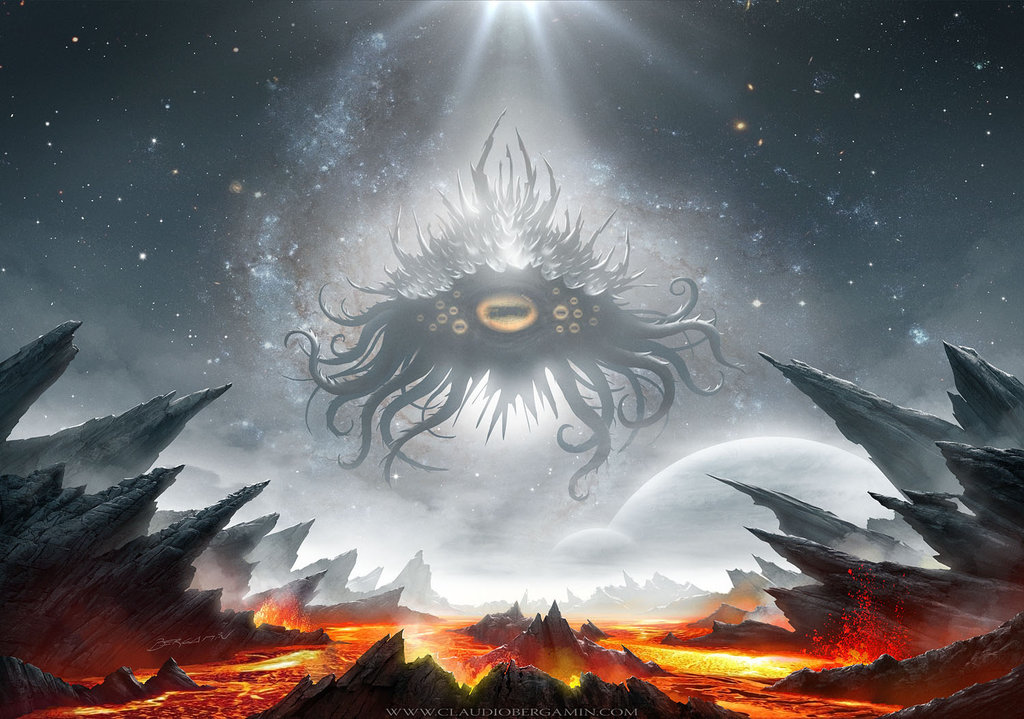
“And because mere walls and windows must soon drive to madness a man who dreams and reads much, the dweller in that room used night after night to lean out and peer aloft to glimpse some fragments of things beyond the waking world and the greyness of tall cities.”
Welcome back to another Blind Read! We’re going to be tackling a fragment from later in Lovecraft’s career, that gives indication for the expansion of the Dream Lands and his pantheon of gods. This short was thought to be the beginnings of a novel that never truly came to fruition, and instead became what we know as “The Dream Quest of Unknown Kadath”https://seanmmcbride.com/2018/05/11/blind-read-through-h-p-lovecraft-the-dream-quest-of-unknown-kadath-pt-1/ (check out my Blind read of that story here). Azathoth is mentioned in a few other stories as well, but is basically known as the chaos at the center of the universe. A god of gods, something that the narrator of “The Dream Quest” knows that if he views Azathoth straight on, he will lose his sanity. A quavering mass of teeth and eyes and malevolence. He is also known as the Dream God. Some think that Azathoth creates dreams, or at least created the dream lands. He is, however, ignorant of this. Also known as the Blind Ignorant god, Azathoth himself is not actually malevolent in his intentions. He may be a force of chaos, but he is not truly evil. He’s just dreaming and moving through existence, but because he is beyond the understanding of humans, a view of Azathoth means a view of the entirety of the universe, which is too much for a mere moral to withstand. Thus madness.
This short was the first time in the oeuvre of Lovecraft that we get to hear of Azathoth and there is one really interesting mention. Opiates.
Lovecraft was rumored to either use Opium or some such subsidiary, and some say that many of his stories were opium dreams. I prefer to believe that he may have dabbled early on and had some crazy visions. This led him to believe that Opium may be a drug to alter existence. Lovecraft at his core was a terrified man. I don’t believe by the indications of his writing that he would give himself over to an addiction of a drug this powerful; he’d be too scared to lose himself. He was a well known recluse and a well known bigot. These things developed (of course he must have had an early life redolent with them), out of fear of the unknown. If you’re scared of something, you’re going to vilify it, instead of trying to understand it.
I believe this is why he wrote about the subject matter that he did. Writing about fears and horrors was an outlet for him. He was unable to deal with these types of fears in real life, so he fought them in his dreams and with his pen. Fears do not always have to be about monsters.
The loss of innocence was big for him. He believed that the world had moved on, and the drive for the 9 to 5 (or at this time in our history, more like 7-9) took something away from you. Took away part of your soul.
For example:
“It is enough to know that he dwelt in a city of high walls where sterile twilight reigned, and that he toiled all day among shadow and turmoil, coming home at evening to a room whose one window opened not on the fields and groves but on a dim court where others windows stared in despair.”
Lovecraft lived in a world of fantasy. As we saw in “He” https://seanmmcbride.com/2020/05/08/blind-read-through-h-p-lovecraft-he/ Lovecraft’s narrator hates New York because it has lost its whimsy. Lost it’s fantasy, and become a “city with high walls where sterile twilight reigned”. Twilight, the mystery and magic of it, is sterile there. He believed that to have emotion, to have a reason, you needed that fantasy, and that’s what he gained from New England. He was scared of the loss of innocence. He was scared of losing his fantasy. His fear of the sterility of life in the city is what drove him to such excess in his fiction.
Many of Lovecraft’s stories are about the search for this lost innocence. The search for this lost magic. What Lovecraft realized from his own isolation, was that the search could be a fine line. The creation of the Outer Gods, was an example of going too far in the wrong direction. As in “The Dream Quest of Unknown Kadath” the journey is the key. If you become too incessant about uncovering the whole truth, you’ll find that there is horror there. The horror may just be that there is no point. The horror may just be, that if you get to the answer you were desperate for, you find that you are only in a …”dim court where other windows stared in despair.”
They key to avoiding this? Live in your dreams. Live your dreams.
…”and for days not counted in men’s calendars the tides of far spheres bore him gently to join the dreams for which he longed; the dreams that men have lost.”
I’d love to hear what you think!
Join me next week for another Blind Read!
Blind Read Through: H.P. Lovecraft; He

“For a full three seconds I could glimpse that pandemoniac sight, and in those seconds I saw a vista which will ever afterward torment me in dreams.”
Welcome back to another Blind Read! I had to take the series on hiatus for a little while for work reasons, but we’re back and I’m determined to finish with the rest of H.P. Lovecraft!
This is the story He, written in 1925 at the height of his “fame” (it’s in quotation marks because Lovecraft was not popular while he was alive. The majority of his fame came from August Derleth, continuing on his legacy after he died). Despite his vast vistas explored in such stories as At the Mountains of Madness, this, for me, was his most atmospheric piece. It is also his first work in a city that takes place outside of New England.
We follow our intrepid narrator who is excited to go to New York. It is a place he’s heard a lot about and has read about extensively, and he has an expectation in his head. An image of New York of yesteryear. He imagines walking through the boroughs and seeing the history first hand. He wants to be inspired by the muse of New York, by the poetry of the city. When he gets there he is disappointed because the world has moved on. New York is, well, new. Buildings are built up, there is no nostalgia. There is only the bustle of the city, the history is dead and gone.
Our narrator goes into a depression, desperate to leave the city, but decides to take one more excursion. He tries to go as deep into the heart of the city as he can, escaping down alleyways, and travelling through slums. He soon becomes lost and meets up with a strange man. The man takes him even further into the depths of the city and they end up in a room the man (the titular He) leads them to. The man knows what our narrator is looking for. The man becomes the muse.
The room is decorated as an 18th century library, and the man takes our narrator to a window with a yellow curtain (I cant help but think of the short story by Charlotte Perkins Gilman The Yellow Wallpaper) . He peels the curtain aside and shows the narrator various vistas. They start off small and verdant field, followed by cities. Our narrator asks the man if he can take him further. The man, properly egged on, uses his magic to take them to a far off place…but something goes wrong. The man takes in too much of the other world energy and it instantly transforms him into a blubbering creature, eventually nothing but a ball with eyes and arms. Our narrator flees, and lives to tell the story.
This is the story of Lovecraft getting the most out of a difficult situation. Lovecraft was a homebody, nearly a hermit. I truly believe that when he went to New York (which I’m sure he did), he had much the same experience. He went for the nostalgia, he went for the muse, he went to write poetry, but instead found a cinderblock and steel city, devoid of the wonder he craved. This story was his effort to extract that wonder. The world had moved on from him and his mythos, so he needed to create a character to bring that back. He wanted a way to bring that wonder back to New York.
But New York had already moved on. The narrator accepted it, as Lovecraft had. So this elegiac tale was about dreams. He dreamed that there was someone strong enough to take him backwards. Take him back through the nostalgia. No one, however is strong enough to take him forward. No one can withstand the steady, unrelenting march of time. not even this incredibly old magician. He too succumbed to time, and was reduced to nothing more than a ball with eyes. Something that had no power, except to watch as the world moved on.
I’d love to hear what you think!
Join me next week as we do a blind read of The Horror At Red Hook!
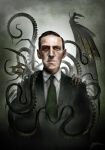



 Sean McBride
You must be logged in to post a comment.