Blind Read Through: J.R.R. Tolkien; The Book of Lost Tales, Part 1, The Hiding of Valinor
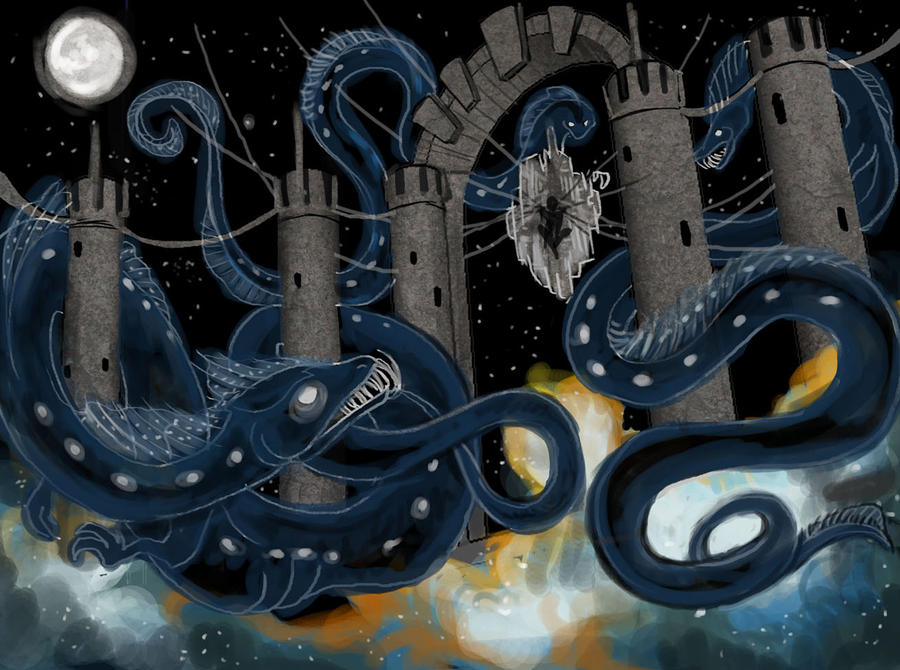
“‘Lo, all the world is grown clear as the courtyards of the Gods, straight to walk upon as are the avenues of Vansamírin or the terraces of Kôr; and Valinor no longer is safe, for Melko hates us without ceasing, and he holds the world without and many and wild are his allies there’ – and herein in their hearts they numbered even the Noldoli, and wronged them in their thought unwittingly, nor did they forget Men, against whom Melko had lied of old. Indeed in the joy of the last burgeoning of the Trees and the great and glad labour of that fashioning of ships the fear of Melko had been laid aside, and the bitterness of those last evil days and of the Gnome-folk’s flight was fallen into slumber – but now when Valinor had peace once more and its lands and gardens were mended of their hurts memory awoke their anger and their grief again (pg 207-208).”
Welcome back to another Blind Read! This week we reveal the cowardice of the Valar, the mystical side of Tolkien, and an overcorrection I’m sure everyone will be glad removed!
The tale of The Hiding of Valinor is connected intrinsically to the Tale of the Sun and the Moon, and, as it’s told in The Book of Lost Tales, seems to be an aside as the end of that chapter.
Vairë continues telling the tale of the history of the world to Eriol and quickly reveals that the Valar had become cowards in their efforts to protect their own little space of the world:
“The most of the Valar moreover were fain of their ancient ease and desired only peace, wishing neither rumour of Melko and his violence nor murmur of the restless Gnomes to come ever again among them to disturb their happiness; and for such reasons they also clamoured for the concealment of the land (pg 208).”
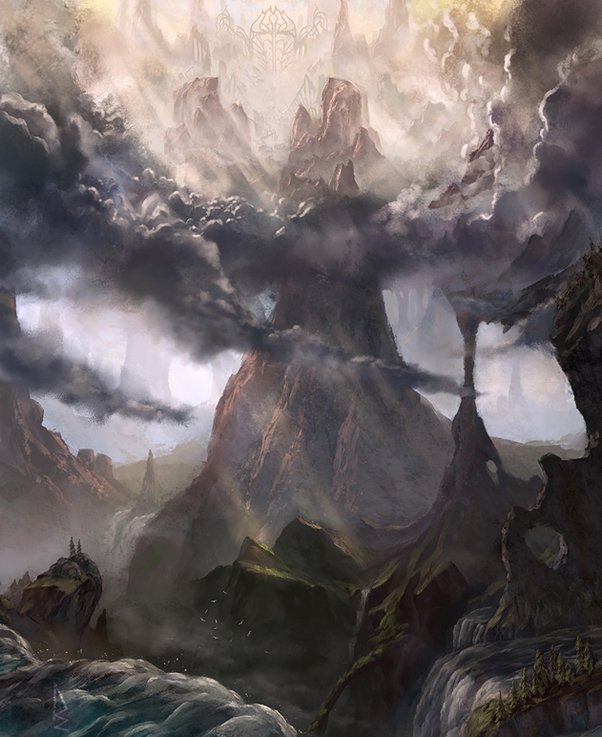
The Valar were tired of strife. They believed their creation was to create beauty and harmony; that is all they wanted to see.
Events like the Elves’ slaughter at the Haven of Swans and Melkor’s revolt against his kin caused the Valar to throw a temper tantrum and close their door against anything they felt uncouth. The sad aspect of this is that they created the world, so, in essence, the Valar are embarrassed that the things they made (except for Melkor) could be capable of such horrors that they want to cover their eyes on the issues.
Tolkien even calls them out in the voice of Vairë:
“Now Lórien and Vána led the Gods and Aulë lent his skill and Tulkas his strength, and the Valar went not at that time forth to conquer Melko, and the greatest ruth was that to them thereafter, and yet is; for the great glory of the Valar by reason of that error came not to its fullness in many ages of the Earth, and still doth the world await it (pg 209).”
It was cowardice and childishness that caused them to close off Valinor, nothing more. They wanted to believe their world was perfect and decided to disregard the rest of the world and let the Eldar (Gnomes in this [early] version) deal with a god themselves (Melkor).
This belief is the true folly of the Valar because they, with the help of the one creator Ilúvatar, were the only ones who could stop Melkor. And they did so in such a cosmically horrific way that Lovecraft would be proud.
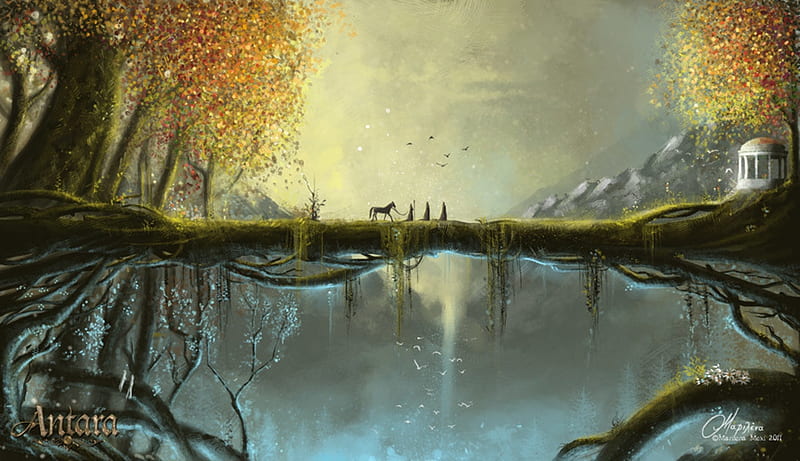
At the beginning of this book, Tolkien mentions a bridge to the Dream World, built on rainbows (many of our beloved pets know about this rainbow bridge). This bridge, called Olórë Mallë (The Path of Dreams), was built at this point in Valinor’s history when the Valar were trying to hide the island, but they also understood that they might need to get in and out of the land. At this time, as they tried to build in their protections from all sides, they created The Door of Night, a decidedly Lovecraftian concept.
“they drew to the Wall of Things, and there they made the Door of Night (Moritarnon or Tarn Fui as the Eldar name it in thier tongues). There it still stands, utterly black and huge against the deep-blue walls. It’s pillard are of the mightiest basalt and its lintel likewise, but great dragons of black stone are carved thereon, and shadowy smoke pours slowly from their jaws. Gates it has unbreakable, and none know how they were made or set, for the last secret of the Gods; and not the onset of the world will force that door, which opens to a mystic world alone. That word Urwendi only knows and Manwë who spake it to her; for beyond the Door of Night is the outer dark, and he who passes therethrough may escape the world and death and hear things not yet for the ears of Earth-dwellers, and this may not be (pag 216).”
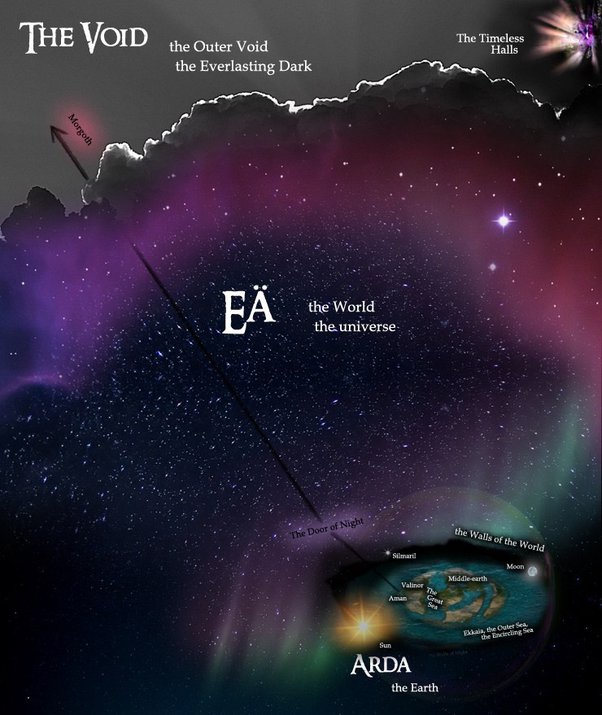
Ok, there is a lot to break down there. The world Tolkien built to this point (called Eä, otherwise known as Earth) was constructed on a vast ocean named Fui, which had outer and inner waters. The entirety of the world was built upon the internal waters, and the only Vala who even visited the extreme seas was Ulmo because he was the Valar in charge of water.
Even heaven and hell (called Vefántur and Fui, named after the Vala who created them) were contained within the inner waters. The outer waters were what was mentioned in the quote above (“for beyond the Door of Night is the outer dark, and he who passes therethrough may escape the world and death and hear things not yet for the ears of Earth-dwellers.”), which is a very Lovecraftian concept.
The concepts and creatures are so profound, beyond anything our minds can imagine, that no earthly being would be able to comprehend them. As far as I know, the only person who ever went beyond the Door of Night was when Ilúvatar and the Valar defeated Melkor, which ended the First Age, and imprisoned Melkor on the other side of the Door of Night, shunning him into the vacuum for eternity.
It seems like a fitting end for the Dark Lord of the first age, but Melkor was not as evil as even his apprentice, Sauron. What if Melkor ever got a chance to come back from the other side of the Door of Night, gaining all the terrible knowledge and madness in the outer dark? Then. Then he would genuinely be a Dark Lord to be reckoned with.
Join me next week for some closing thoughts on “The Hiding of Valinor!”
Elsie Jones and the AI debate!

Hey everyone! There is some new and mixed information about the publication of the first book and series. The first three books are written and nearly done being edited (in fact the first twelve books are written), and I’ve been playing around with artwork for a while now.
Because these first three books are going to be different than the originals (the first book will have a completely different plot, the second book will have minor changes, and the third book will be completely re-edited for content and be much longer), I originally wanted to get some new artwork for them so everyone would be able to tell the two different editions apart.

I reached out to a few people, but the price was either going to be too high, or the job was going to be too encompassing. Kind of like signing on to a Marvel character knowing that you have to be involved for the next ten years of your life, the series is 15 books long and each book will require three to four pictures plus a color cover which is quite a bit of work. I can understand where someone would look at that and turn it down.
I then reached out to a friend of mine who is a little more techy than I am, and we decided to work together to try and get some AI artwork together to make the books come to life. I was never really thrilled about this prospect (the discussion of AI art is for a different blog, and is a much longer conversation), because I loved the funky feel of my original artist Jesse Velasquez’s drawings, and how they brought Elsie to life.

The concession I made was that each of the books has a different theme and each one of the books takes place in a different time period and space, so I thought it might be kind of interesting to have each book change slightly in it’s artwork; for example “Elsie Jones and the Captain’s Guard” takes place in “The Three Musketeers” so having a Baroque style art for that book, but when she travels to “The Casebook of Sherlock Holmes” the artwork would be Victorian in style.

Ultimately I wasn’t super happy with the results that we were getting because Elsie Jones is a character in my head and the AI generators that we were working with made the character look a little too much like a public figure, or she looked different in every picture (All the examples are spread throughout this post).

I got very close to including these pictures, but ultimately I just couldn’t do it, but that put me at a loss. All of a sudden, I was back to no artwork, but a bunch of incredible books, so I made a decision. I reached out to Jesse (the original artist) and asked him if he would mind me using the original art again for the new books. It wasn’t something I wanted, because the books are new and they deserve something new.
Luckily Jesse agreed and said he would get the art over to me so we could move forward and hit that August 1st publication date.
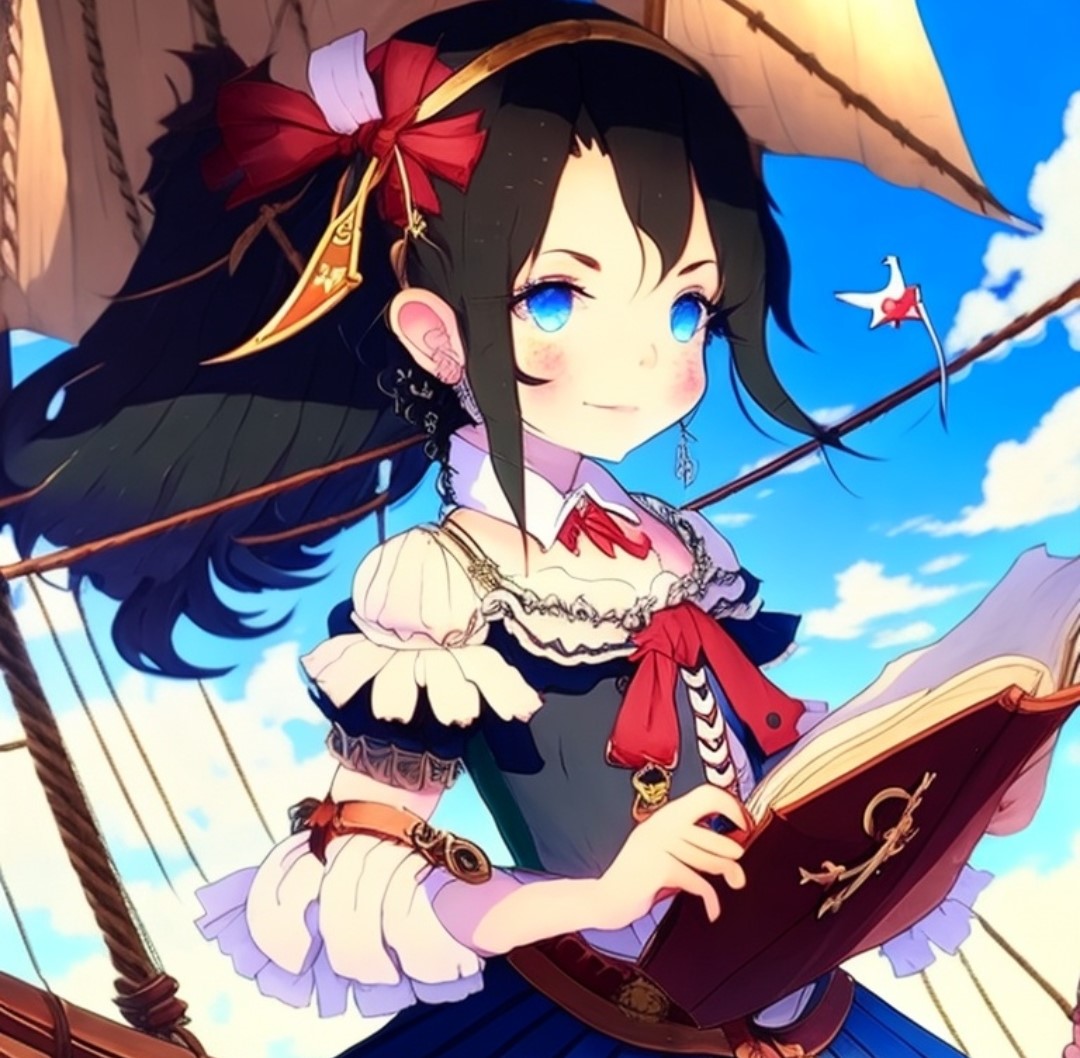
The wrinkle came this past week as we were talking and he asked me if I had any interest in getting new artwork for the books since they were going to be different. We talked back and forth about it, and came to the conclusion that we were going to do it. We were going to change the art and make this the new project that it deserves to be, and completely different from the original publications, August first publication date be damned (I mean, I’m self publishing them, so it’s a self-imposed date, but still).
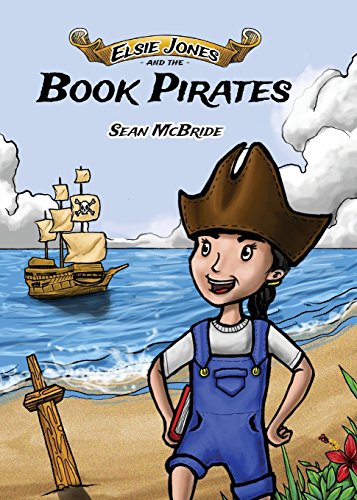
So that’s both the bad news and the good news. We’re going to have to wait a little longer to get the books, but they are going to have some incredible new art work, from an incredible artist. I CAN NOT State how absolutely happy I am that Jesse is willing to stay on board, because the world needs to both read these books and see an incredible artist and not some computer generated pictures.
Blind Read Through: J.R.R. Tolkien; The Book of Lost Tales, part 1, The Tale of the Sun and the Moon, part 2

“Everywhere did its great light pierce and all the vales and darkling woods, the bleak slopes and rocky streams, lay dazzled by it, and the Gods were amazed. Great was the magic and wonder of the Sun in those days of bright Urwendi, yet not so tender and so delicately fair as had the sweet Tree Laurelin once been; and thus whisper of new discontent awoke in Valinor, and words ran among the children of the Gods, for Mandos and Fui were wroth, saying that Aulë and Varda would for ever be meddling with the due order of the world, making it a place where no quiet or peaceful shadow could remain; but Lórien sat and wept in a grove of trees beneath the shade of Taniquetil and looked upon his gardens stretching beneath, still disordered by the great hunt of the Gods, for he had not had the heart for their mending (pg 189).”
Welcome back to another Blind Read! This week we conclude the Tale of the Sun and the Moon, and while doing so, we’ll talk about worldbuilding, and Tolkien’s penchant for detail.
We left off last week with the Valinor getting the fruit of knowledge from Laurelin and seeing that it held the light of the tree that once illuminated Valinor. It is a revelation for the Valar, but they still don’t have any way to make the illumination more global.
They contemplate for a bit while until Aulë takes Tulkas’ earlier idea:
“‘Then said Aulë: ‘Of this can I make a ship of light – surpassing even the desire of Manwë.’ (pg 186)”

Thus Aulë created the sun, and it sailed through the sky, illuminating the world, but “Ever as it rose it burned the brighter and the purer till all Valinor was filled with radiance and the vales of Eúmáni and the Shadowy Seas were bathed in light, and sunshine was spilled on the dark plain of Arvalin, save only where Ungweliantë’s clinging webs and darkest fumes atill lay too thick for any radiance to filter through (pg 188).”
They realized they had created an issue, a sun that never truly set, and the light bathed the world. One of the most central tenets of Tolkien (if you’ve read anything he had written) is that there can’t be light without darkness. The Valar recognized this as they saw that too much of a good thing (I.E., perpetual sun) eventually hurt them. They harkened back to when they had the two Valinor trees created with Ilúvatar’s themes; they sang into existence and decided to do something with the light of Silpion (the twilight tree).
Lórien sang to Silpion and touched the wound where Ungoliant sucked the life from it, and that little bit of music stirred something in the tree and got the sap moving. A single rose bloomed, holding the silver light of Silpion.
Lórien, proud of their work, “would suffer none to draw near, and this he would rue for ever: for the branch upon which the Rose hung yielded all its sap and withered, nor even yet would he suffer that the blossom to be plucked gently down… (pg 191).”
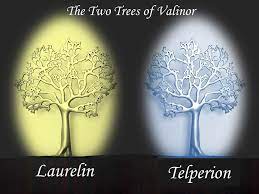
Both of these instances I wrote about earlier matter when we talk about the Valar. They show their ignorance, Hubris, and their childishness. Aulë has no problem stealing ideas from Tulkas and making them his own, notwithstanding that he also claimed to create the Sun. However, that was a group effort to stumble upon a solution, and Aulë only built the last portion, which would sail across the sky.
Meanwhile, the pranks of Melkor lead him to be imprisoned, but because the other Valar are creating and not pranking, they are above reproach.
Tolkien, as Ilúvatar, created these Vala in his image, just like the Christian God. By extension, these attributes were transferred to the Children of Ilúvatar, the Elves, and Men (technically, the Dwarves were created by Aulë, so they wouldn’t be considered one of the Children).
We also see the avarice of Lórien, guarding the Rose of Silpion, not letting anyone else get the benefits out of fear that they would destroy it. This reminds me of a child playing with a toy they don’t allow their friends to touch. Predictably, the branch holding the rose withers, and the rose falls from the tree, and they use the rose to make the Moon.
The result is the creation of the Sun and the Moon and the alternating cycles of celestial illumination. Tolkien matched the movement of these ships sailing the ether to our own, making his mythology nearly complete.
We’ve mentioned before that his main goal was to create a mythology for England, and at this point, he had his early history created. The Elves who went to Middle-earth have an account of murder and violence in their journey to find solace, and humans are yet to be born.
Tolkien puts both sun and night with the corresponding feelings they contain:
“‘and in memory of the waxing and waning of these Trees for twelve hours shall the Sunship sail the heavens and leave Valinor, and for twelve shall Silpion’s pale bark mount the skies, and there shall be rest for tired eyes and weary hearts (pg 191).”
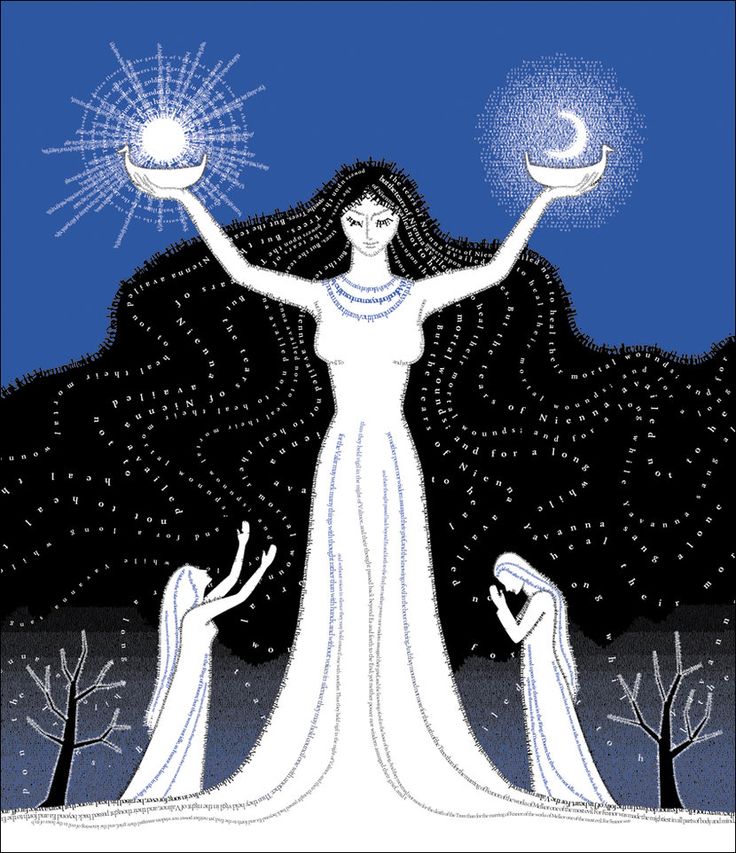
The Sunship brings hope and opportunity, but if that hope and desire fail, or if one were amidst the trials, Silpion’s bark will rise in the Sunship’s place and give melancholy solace.
There is only one more point that Tolkien has to hit before he has his early mythology complete. The story of the world’s creation, moving into the first age of Middle-earth, needs one more step: to hide away the gods from the mortals before they are born.
Join me next week as we move to the penultimate chapter, The Hiding of Valinor.
Blind Read Through: J.R.R. Tolkien; The Book of Lost Tales, part 1, The Tale of the Sun and the Moon

“Then there was silence that Manwë might speak, and he said: ‘Behold O my people, a time of darkness has come upon us, and yet I have it in mind that this is not without the desire of Ilúvatar. For the Gods had well-nigh forgot the world that lies without expectant of better days, and of Men, Ilúvatar’s younger sons that soon must come. Now therefore are teh Trees withered that so filled our land with loveliness and our hearts with mirth that wider desires came not into them, and so behold, we must turn now our thoughts to new devices whereby light may be shed upon both the world without and Valinor within (pg 181).'”
Welcome back to another Blind Read! This week we get back into Tolkien’s religious background as we cover the Tale of the Moon and the Sun.
We’ve come to a point in the story where Melkor has killed the Trees of Valinor, and the Noldor killed many of their kin to steal ships to chase Melkor to Middle Earth.
The Vala faced the difficulty of what they should do. Melkor had left Valinor in darkness, and the trees were dead. What should their first action be? To go after Melkor and imprison him again, or try to figure out how to bring light back to Valinor.
The Spoke to Sorontur (who later became Thorondor), the King of Manwë’s eagles, and asked him to spy on Morgoth.
“…he tells how Melko is now broken into the world and many evil spirits are gathered to him: ‘but,’ quoth he, ‘methinks never more will Utumna open unto him, and already is he busy making himself new dwellings in that region of the North where stand the Iron Mountains very high and terrible to see (pg 176).'”
So the Valar doesn’t have to worry about Melkor for the time being because he will be spending all his time trying to make a home for himself. After hearing the Eagle’s report, it’s their opinion that Melkor will not be returning to Valinor, so he is now the Noldor’s problem, which they deserve because of the transgressions they laid on their fellow kin.
So that brings them back to their other issue. How do they deal with the loss of the light of Valinor? They decide that they must build a great ship and use the remainder of the light of the Trees, and this new ship can be like the stars, but it will travel the sky and light Valinor once again.
The prospect of the ship is exciting because it calls to mind the Greek God Helios, who rode a great chariot across the sky, and that is how the sun was to rise and set. Remember that Tolkien’s ultimate work was to create new mythos and mythology for England because Spencer’s work was sub-par (to Tolkien). This ship across the sky, built by gods, was a way that he could make things unique enough to fit within his landscape of fantasy. He even had a reason for the ship to rise and set:

“Now Manwë designed the course of the ship of light to be between the East and West, for Melko held the North and Ungweliant the South, whereas in the West was Valinor and the blessed realms, and in the East great regions of dark lands that craved for light (pg 182).”
But while they built this idea, he collected mythology from other areas and brought it into his ethos. Eventually, the ship was a failure. The downfall shows that Tolkien believed he was writing the ultimate mythology because the portion he took from another culture ultimately failed.
The Vala went back to Yavanna, who had created the Trees in the first place, but she had run through the energy needed. She poured everything she had into the trees, but it was Vána (another Valar who only appears in these early iterations) who made the most significant difference:
“Now was the time of faintest hope and darkness most profound fallen on Valinor that was ever yet; and still did Vána weep, and she twined her golden hair about the bole of Laurelin and her tears dropped softly at its roots; and even where her first tears fell a shoot sprang from Laurelin, and it budded, and the buds were all of gold, and there came light therefrom like a ray of sunlight beneath a cloud (pg 184).”
The tears of love brought Laurelin back to life enough to get those sprouts. “One flower there was however greater than the others, more shining, and more richly golden, and it swayed to the winds but fell not; and it grew, and as it grew of it’s own radient warmth it fructified (pg 185).”

The fruit that grew from the tree of Laurelin grew from tears, death, and rebirth. This fruit was, for Tolkien, his introduction to the Christian ideal of the Fruit of Knowledge. Still, instead of one of the Valar eating it and causing sin, the sin has already been created. The knowledge of death, destruction, jealousy, and Hubris has already taken hold of the peoples of Middle-earth because of Tolkien’s fallen Angel Melkor.
“Even as they dropped to earth the fruit waxed wonderfully, for all the sap and radience of the dying Tree were in it, and the juices of that fruit were like quivering flames of amber and of red and its pips like shining gold, but it’s rind was of a perfect lucency smooth as a glass whose nature is transfused with gold and therethrough the moving of its juices could be seen within like throbbing furnace-fires (pg 185).”
The Valar had found the fruit of knowledge that could shine the light on the land and destroy the darkness. The fruit knew what came before, and its sole meaning was to shine the morning so that others didn’t have to carry the burden of its dark understanding.
Join me next week as we complete the Tale of the Sun and the Moon.
Elsie Jones is Coming on 08/01
Hey everyone! I’m taking a week off from writing the Blind Read Blog and focusing on some extra editing, and I wanted to give everyone a special sneak peek of the upcoming Author’s editions of the New Elsie Jones Adventures, which will kick off with Elsie Jones and the Book Pirates on 08/01 of this year!
The Elsie Jones Adventures are a children’s chapter book series where Elsie Jones finds a mysterious secret room in her local library. In that room are fifteen books that, when she reads them, she is transported into their world and adventures with those characters.
Every book has action, humor, adventure, and fun little facts, so join me on this fun adventure!
Check out that special sneak peek below:
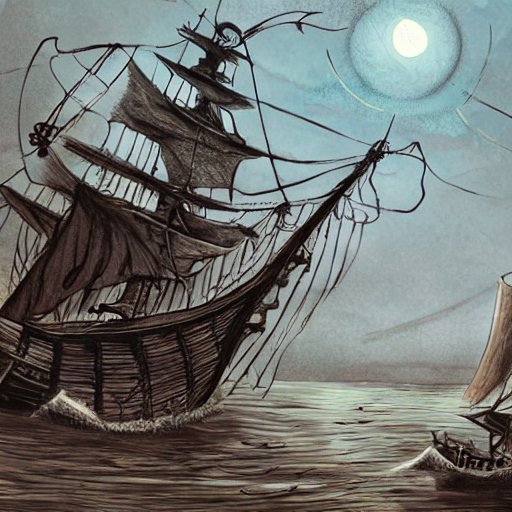
Beyond the door was an old wooden rickety staircase leading down. The walls on either side were brick, which was unlike the rest of the library. It looked so much older than everything else.
Elsie looked around to see if she could ask anyone if she was going in the right direction. When she didn’t see anyone, she considered returning to the main desk and getting her dad to accompany her.
“But I’m in the library,” she said to herself. “Nothing ever goes wrong in the library!”
“Shhhhh!” The person hissed again.
She took a deep breath and one more look around before walking down the steps. At the bottom of the staircase, she found another room filled with books. These books, however, were far older than any of the ones upstairs. Their covers were all shades of brown and red, and the titles faded on their spines. The other thing about this room was that the smell was different too. It smelled like old books. It reminded her of her grandfather’s office, and the memory made her smile.
She scanned the shelves, looking from history book to history book. She saw all kinds of interesting books. She ran her hand across the spines, enjoying the feeling of the old bindings when something odd happened. One of the books on the shelf had a red seven on the spine, just above the title, and when she touched the book, the red seven began to glow.
She pulled her hand back as if the book was hot and then looked at the title: Treasure Island by Robert Luis Stevenson.
“Why is there an adventure about Pirates in the history section?” Elsie asked.
She turned around, expecting the person to shush her again but didn’t hear anything. In fact, she thought she was alone down here in this old History section.
She paused just before touching the book again, but her curiosity got the better of her. It had a faded brown spine, the same as the ones next to it, but on the book’s cover, another bright shiny red seven glowed in the upper right corner.
“Whoa!” she exclaimed.
Excited, she flipped the cover open and saw an intricate drawing of a giant Pirate ship and a pirate with a pegleg and a large hat who held a sword in his hand.
The book was heavy, so she laid it on the ground for a better look. As she leaned over and flipped through it there were awesome color pictures of pirates fighting with swords, burying treasure, and sailing through storms. She also saw photos of a young boy doing all these things with the pirates.
“Oh, that would be so cool!” Elsie said.
“Squire Trelawney, Dr. Livesey, and the rest of these gentlemen having asked me to write down the whole particulars about Treasure Island,” She read.
Then something strange happened; the moment she spoke the pages started to turn on their own, flipping faster and faster until the pictures seemed to move. The pirates jumped on the ship and fought each other with their cutlasses. Elsie leaned back in surprise. One of the pirates turned to her and waved his hand, gesturing for her to join them.



 Sean McBride
You must be logged in to post a comment.