Blind Read Through: J.R.R. Tolkien; The Silmarillion, Of the Return of the Noldor pt. 1
“The hearts of the Noldor were high and full of hope, and to many among them it seemed that the words of Fëanor had been justified, bidding them seek freedom and fair kingdoms in Middle-earth; and indeed there followed after long years of peace, while their swords fenced Beleriand from the ruin of Morgoth, and his power was shut behind his gates. In those days there was joy beneath the new Sun and Moon, and all the land was glad; but still the Shadow brooded in the north.”
Welcome back to another Blind Read! This week we delve into the lore of the Noldor Elves and begin to see that despite the chapter name’s promise, Valinor is now beyond the reach of our supposed protagonists.
I began this chapter assuming that the title “Of the Return of the Noldor” would have to do with them returning to Valinor; however, as the chapter progressed, I realized that the name intended to show that the name’s meaning was the Noldor had returned to Beleriand to stay.
This chapter shows many great struggles over the land of Beleriand between the Eldar (the elves) and Morgoth, including two different “wars for Beleriand.“
We begin by rehashing previous chapters, the landing of Fëanor and his sons “on the outer shores of the Firth of Dengrist.” They “made their encampment” in Mithrim, in the northwest of Beleriand. Morgoth, seeing the flames of the ships they burned to stop Fingolfin from following them, anticipated their arrival and brought a host of foes to attack them. The skirmish is “the Second battle in the Wars of Beleriand,” and in Elvish, Dagor-nuin-Giliath, or “The Battle Under the Stars.”

We have jumped around in time in telling these histories because this battle took place before the creation of the Sun and Moon that we saw a few chapters ago. The altercation is known as “The Battle Under the Stars” because neither the Sun nor Moon had risen. Any light in Beleriand came from the stars of Valinor.
But Morgoth made an error in judgment because he didn’t truly comprehend the fury of Fëanor and his vast hatred for Morgoth:
“The Noldor, outnumbered and taken unawares, were yet swiftly victorious, for the light of Aman was not yet dimmed in their eyes.”
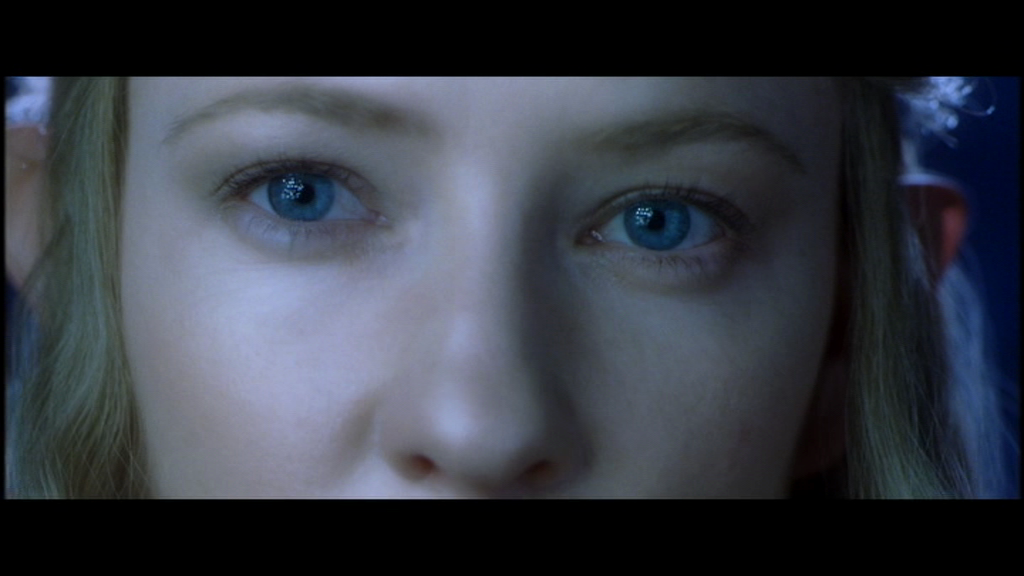
The starlight is the same light you see in Galadriel’s eyes in the movie, as she is the last of the Noldor who had lived to see the stars of Valinor.
Fëanor pushed Morgoth’s forces back to Ard-galen (above the mountains at the very north of Beleriand) and his stronghold at Angband. The Noldor had won, but Morgoth struck a victory because “Fëanor, in his wrath against the Enemy, would not halt, but pressed on behind the remnant of the Orcs, thinking so to come at Morgoth himself.“
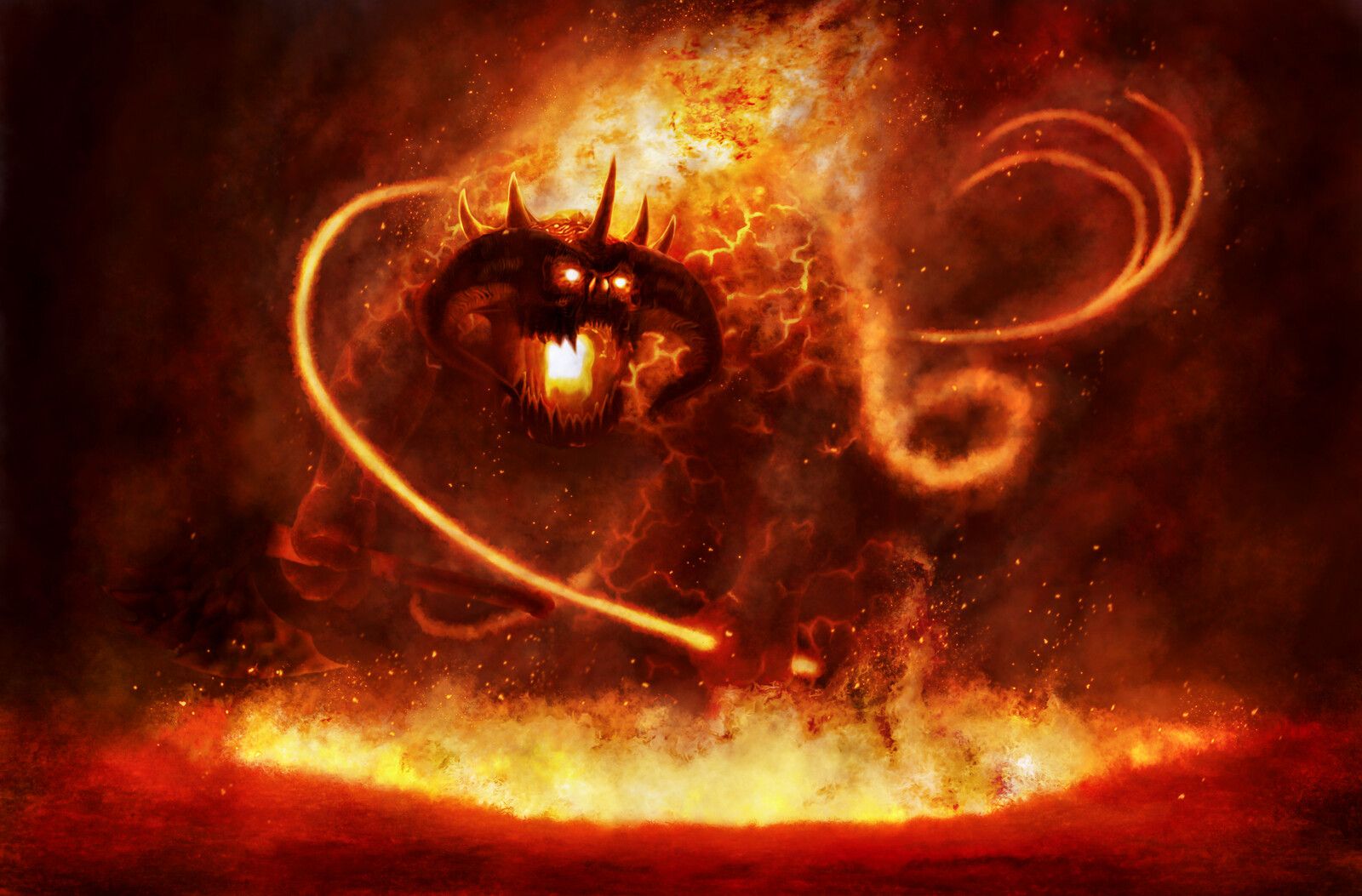
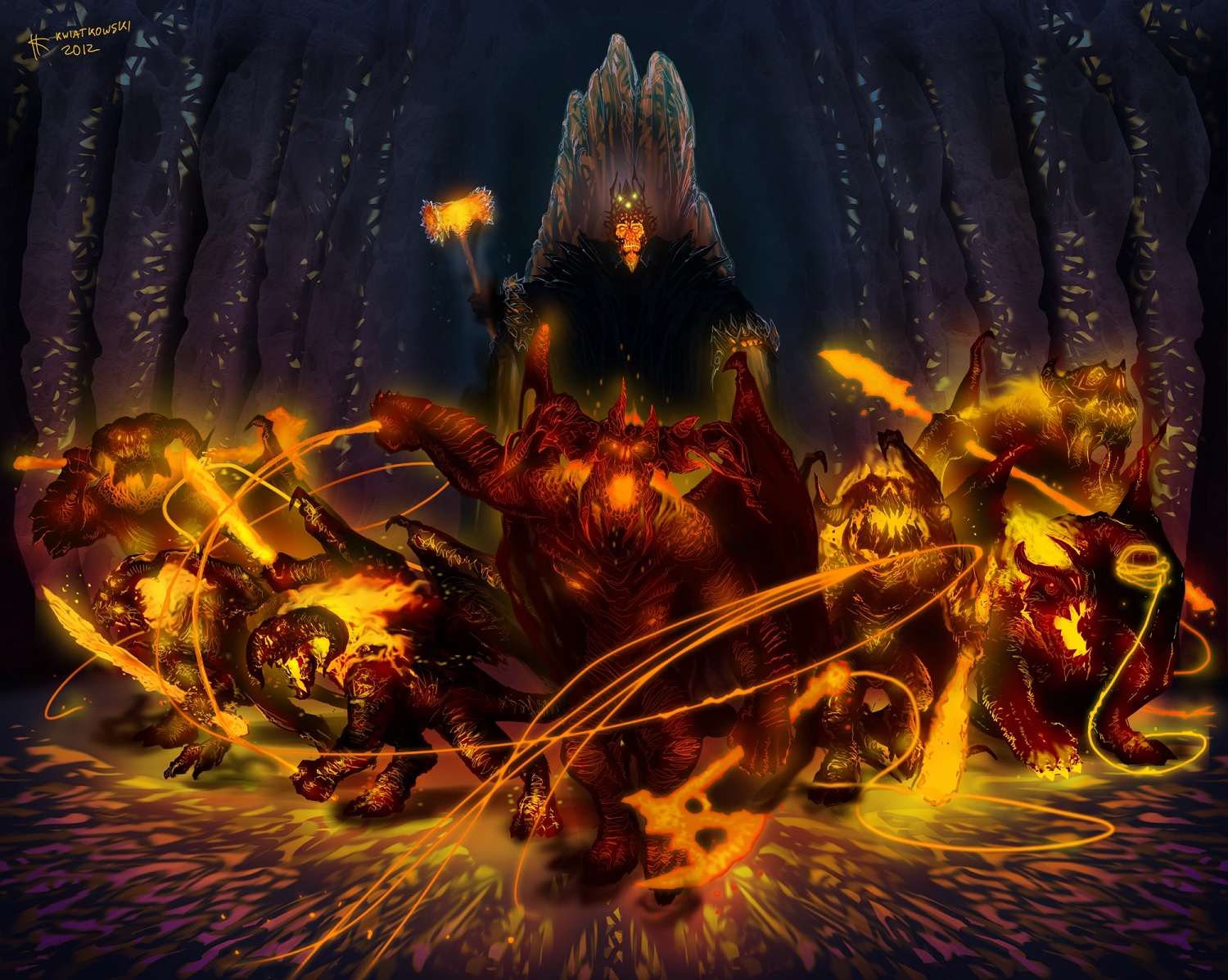
Fëanor became surrounded by Balrogs, and “at the last he was smitten to the ground by Gothmog, Lord of the Balrogs.“
Fëanor’s sons rescued him from Gothmog and the Balrogs, but the blow was fatal and knew, just before “his body fell to ash, and was borne away like smoke” that “no power of the Noldor would ever overthrow” Angband.

Maedhros, Fëanor’s eldest son, took control of the Noldor and accepted terms from Morgoth, “acknowledgeing defeat, and offering terms, even the surrender of a Silmaril.” Still, it was a trap, and Maedhros was captured, his host slaughtered.
Maedhros’ brother’s retreated to regroup, and at this time, Fingolfin made his way across the icy torrential pass between Valinor and Beleriand. At this time, the Sun rose in the sky, and the dark loving host of Morgoth retreated to the darkness of Angband and its surrounding mountains.
Fingon, the son of Fingolfin, saw more similarities between the Eldar than differences and made a daring plan to save Maedhros and try to bring the Elves together. First, he went to Angband. “Then in defiance of the Orcs, who cowered still in the dark vaults beneath the earth, he took his harp and sang a song of Valinor that the Noldor made of old, before strife was born among the sons of Finwë; and his voice rang in the mournful hollows that had never heard before aught save cries of fear and woe.“
Maedhros hears this song and cries out for him to end him and his torment, but Manwë (the Valar) also hears this song of hope and sends help. “There flew down from the high airs Thorondor, King of Eagles, mightiest of all birds that have ever been, whose outstretched wings spanned thirty fathoms; and stayed Fingon’s hand he took him up, and bore him to the face of the rock where Maedhros hung.“

Strife and distrust continued for many years, but there was gradual acceptance between the different tribes of Elves in Beleriand. The Dwarves, also distrusting, agreed to assist in light of the terror of Morgoth’s influence over the land.
The one hold out was King Thingol, who was safely interred in his “girdle of enchantment.” However, Thingol gave leave for the Noldor and the Naugrim (Dwarves) to stay in the surrounding lands:
“In Hithlum the Noldor have leave to dwell, and in the highlands of Dorthonion, and in the lands east of Doriath that are empty and wild; but elsewhere there are many of my people, and I would not have them restrained of their freedom, still less ousted from thier homes.“
I get the feeling that Thingol will play a much more significant role in things to come, but thus far, he has decided to hole up and take an isolationist stance against Morgoth. We see this echoed in The Lord of the Rings, as initially, the elves want nothing to do with the war against Sauron. Will Thingol change his mind?
Next week, let’s find out as we cover the second half of the chapter “Of the Return of the Noldor.”
Blind Read Through: J.R.R. Tolkien; The Silmarillion, Of Men

“To Hildórien there came no Vala to guide Men, or to summon them to dwell in Valinor; and Men have feared the Valar, rather than loved them, and have not understood the purposes of the Powers, being at variance with them, and at strife with the world.“
Welcome back to another Blind Read! This week we learn of a new species born into Beleriand, Men, and how they came to inherit the world.
This chapter is unique because it gives us a basic overview of how Men (Tolkien uses Men as a stand-in to mean Human-kind) came into being, but Tolkien does not expound upon the History of Middle-earth. Instead, this feels more like his effort to understand the motivations (and potential weaknesses) of Men as unknowing Children of Ilùvatar.
Tolkien tells us: “At the first rising of the Sun the Younger Children of Ilùvatar awoke in the land of Hildóren in the eastward regions of Middle-earth; but the first Sun arose in the West, and the opening eyes of Men were turned towards it, and their feet as they wandered over the Earth for the most part strayed that way.”
Men were called Hildor, otherwise known as the followers, not because they were sheep, but because they were born after Elves and Dwarves. They also had many other names, “the Usurpers, the Strangers, and the Inscrutable, the Self-cursed, the Heavy-handed, the Night-fearers, the Children of the Sun.“
Men were born after the glory of Valinor, and they knew only the cold, complex beauty of Beleriand. They awoke without the knowledge of the Valar or Ilùvatar, which was the Quendi birthright. They were born without knowledge of the light of the Trees of Valinor. All they had was the Sun.
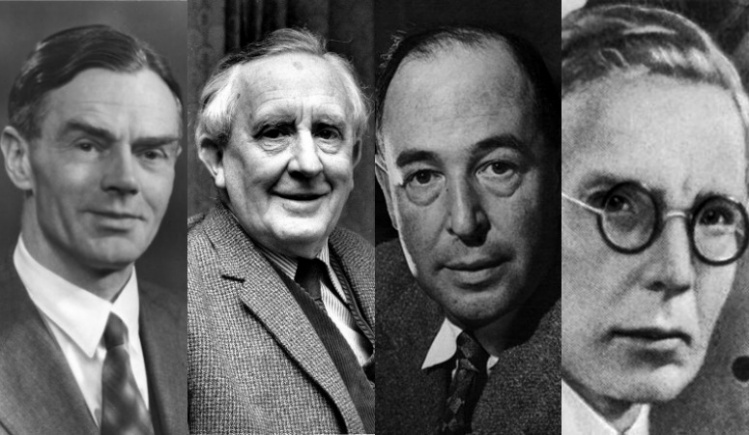
Tolkien fought in World War I, and where he contends that he doesn’t use or like allegory, much of his work is informed by the experiences of his life. In addition, he was a religious man, even co-sponsoring a writing group called the Inklings with C.S. Lewis. The concept of religion and God in The Great War led to his description of Men in The Silmarillion. A few chapters ago, I mentioned that Tolkien’s primary idea with these histories was to eventually tie it back to our Earth (which we caught glimpses of in the chapter last week (Of the Sun and the Moon and the Hiding Valinor). In this chapter, Tolkien tells us how humans were born into a world of ignorance and darkness, yet they strove for the light. As we saw in the quote earlier, Men went west following the Sun, despite their ignorance of its origin.
On top of that, Ulmo tried to get them messages without actually coming back to Middle-earth to inform Men: “and his messages came often to them by stream and flood. But they have not skill in such matters, and still less had they in those days before they had mingled with the Elves. Therefore they loved the waters, and their hearts were stirred, but they understood not the messages.“

I have never met a person who could stand before the Ocean and turn away. The waters bring life to us, and they stir our souls to peace. This connection to the water is what Tolkien was looking for to glue our world with Aman.
Beyond that, Tolkien tells us, “Men were more frail (than the Eldar), more easily slain by weapons or mischance, and less easily healed; subject to sickness and many ills; and they grew old and died.“
We also catch a glimpse of a story yet told; “None have ever come back from the mansions of the dead, save only Beren son of Barahir, whose hand had touched a Silmaril; but he never spoke afterward to mortal Men. The fate of Men after death, maybe is not in the hands of the Valar.”
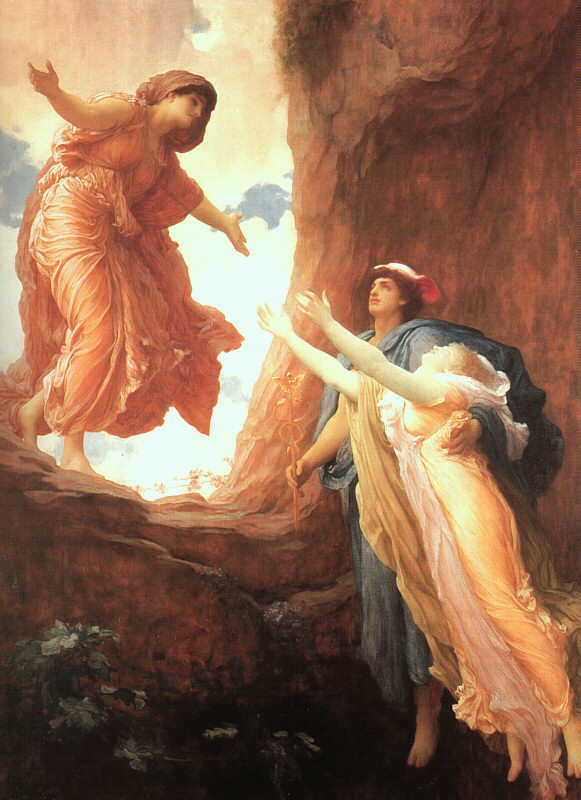
This paragraph shows Tolkien’s framing of an afterlife, with a Persephone-like callback. Beren dies and then comes back because he has more profound knowledge of the world because of his connection with the Silmaril, which garners its power from The light of the Trees of Valinor. Beren is brought back from the dead through the power of Heaven.
We end the chapter by Tolkien telling us, “those of the Elven-race that lived still in Middle-earth waned and faded, and Men usurped the sunlight.“
Men, the ignorant, had now taken over the world. The magic of the world (the Music of Ainur) began to fade, and a feeling of hard-and-fast reality began to occur.
This chapter is fascinating and tragically beautiful. It is very short (which is why I wanted to discuss various theories rattling around in my brain), but there is perhaps more weight in this chapter than in any previous one.
And where do we go from here? Join us next week as we progress in the story in the next chapter: “Of the Return of the Noldor.”
Blind Read Through: J.R.R. Tolkien; The Silmarillion, Of the Sun and Moon and the Hiding of Valinor

“Isil the Sheen the Vanyar of Old named the Moon, flower of Telperion in Valinor; and Anar the Fire-golden, fruit of Laurelin, they named the Sun. But the Noldor named them also Rána, the Wayward, and Vása, the Heart of Fire, that awakens and consumes; for the Sun was set as a sign for the awakening of Men and the waning of the Elves, but the Moon cherishes their memory.”
Welcome back to another Blind Read! Instead of continuing on the tale of the Wars of Beleriand, Tolkien takes a step back this week and gives us some worldbuilding. We are prepping for the coming of Man, and this chapter paves the way for that to happen.
The chapter opens by returning us to Valinor and the council of Valar as they try to discern a course of action in the wake of the death of Telperion and Laurelin (the Trees of Valinor).

Yavanna goes to the trees, mourning their passing until she realizes that “Telperion bore at last upon a leafless bough one great flower of silver, and Laurelin a single fruit of gold.“
Manwë then hallowed them, and Aulë made a vessel to hold and protect them and their light. These vessels were to “become lamps of heaven,” so the Valar “gave them power to traverse the lower regions of Ilmen.” Ilmen is their word for the sky or the heavens (specifically, Tolkien called it “The region above the air where the stars are” in the name index).
The Valar did so to bring light back to Middle-earth, but also because “Manwë knew also that the hour of the coming of Men was neigh.” Since the Valar went to war with Melkor over the Quendi, they decided that they must then do something for the subsequent children of Ilùvatar. Men were to be mortal, whereas the Elves were not, so as a gift to them, these “lamps of heaven” were to become the Sun and the Moon, which we see in the opening quote of this essay.
We get two understandings from creating these two celestial bodies—the knowledge of mortality and the future sign of the Elves.
We know that Men are mortal, though, in Middle-earth, they had very long lives. But why would men be mortal when all other creatures are immortal (in Aman, beings can be killed at any time, Men are the only ones who have a definitive end to their life span)?
It’s the coming of time.

Before creating the Sun and the Moon, there was no absolute distinction of the passing of time. These started a day and an evening before Men even existed, thus establishing time benchmarks.
Men came into being knowing that there were absolutes, and where Tolkien doesn’t come out and say so (at least not yet), there is little coincidence here because Tolkien chose his wording very carefully.
It is also the first time we see “Earth” in the text instead of using Aman or Eà. I had heard somewhere that Tolkien’s main goal was to tie the history of Middle-earth into our own, so it would make sense that this is an origin story of mythological levels.
The second understanding we get here is the sign of the Elves. The Leaf of Telperion becomes the sign for the Moon or of Twilight. The Elves in Middle-earth prefer to live in Twilight, and we even see this in “The Lord of the Rings” with Arwen, also called Arwen Evenstar. Remember that Tolkien was a linguist, so knowing how we think about language, the phrase “Evening Star” could become the contraction of Evenstar.
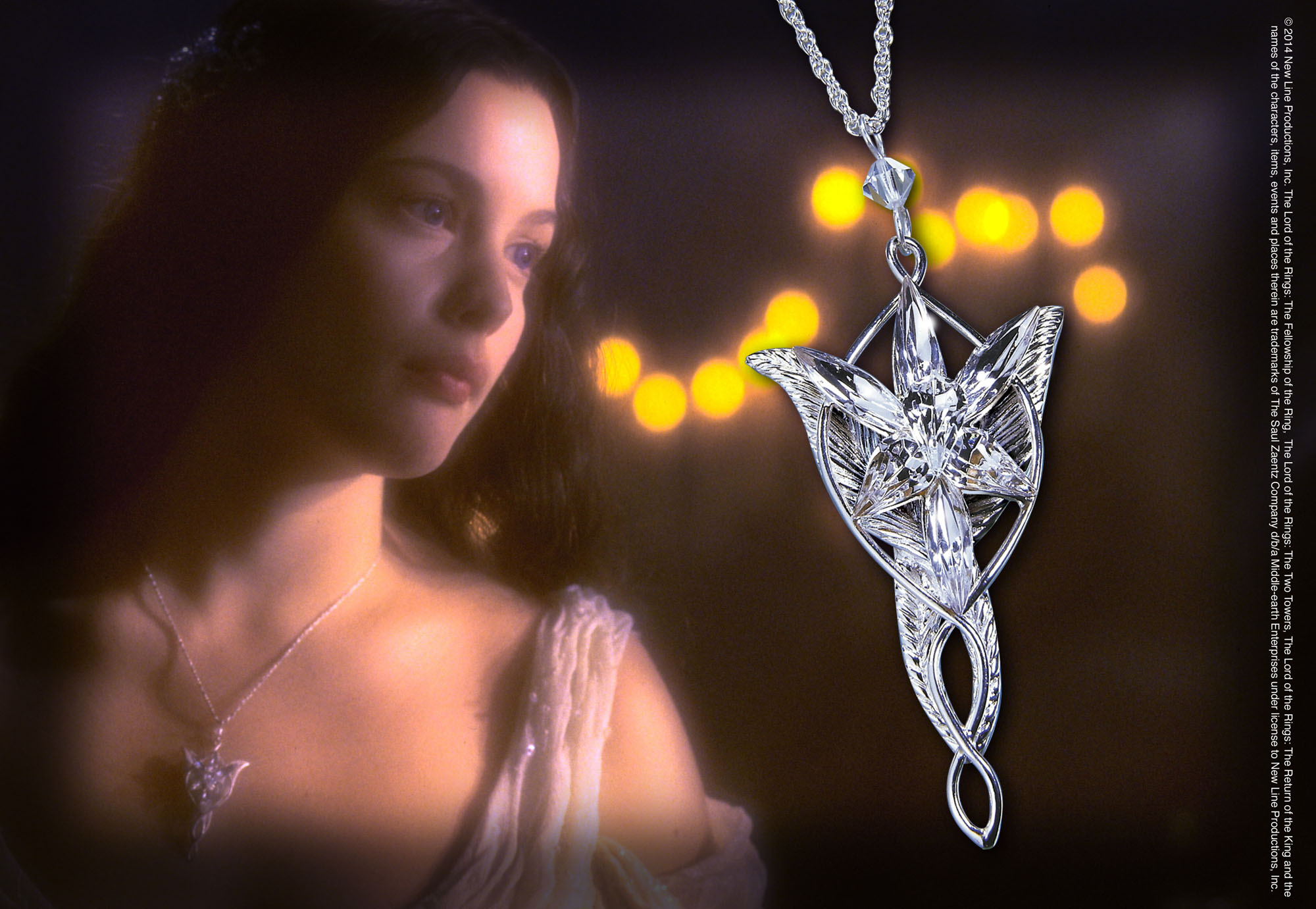
The Evenstar is quintessentially recognizable because it’s the trinket that holds her essence, which she gives to Aragorn.
Peter Jackson took some liberties with the movie because here in the text of The Silmarillion; it’s told that the Evenstar, the sign of the Elves, is a “Flower of Silver.“
There is a certain melancholy associated with the Elves because “Evening, the time of the descent and resting of the Sun, was the hour of greatest light and joy in Aman.”
The Elves didn’t like the light; they preferred the Twilight, which could be why they called the land in Valinor “The Grey Havens.” It was not to indicate depression, but of a final blessing, the last light to be with the Valar in Valinor where they are meant to be. The Grey Havens are almost a moniker for Heaven. The phrasing is so close that it’s hard to refute.

But it was also during this time that Heaven became challenging to attain. The Valar became concerned for Valinor because of Morgoth’s wrath. He settled into his rage, and the Valar finally came to realize that Morgoth was intractable; thus, they created a barrier around Aman:
“But in the Calacirya they set strong towers and many sentinels, and at its issue upon the plains of Valmar a host was encamped, so that neither bird nor beast nor elf nor man, nor any creature beside that dwelt in Middle-earth, could pass that leaguer.“
Thus the creed of Mandos we saw two chapters ago became true:
“Thus it was that as Mandos foretold to them in Araman the Blessed Realm was shut against the Noldor; and many messengers that in after days sailed into the West none came ever to Valinor – save one only: the mightiest mariner of song.“
So how does Fëanor take this? Does he get along with the new children of Ilùvatar, Men?
Find out next week in “Of Men.”
Blind Read Through: J.R.R. Tolkien; The Silmarillion, Of the Sindar

“And when the building of Menegroth was achieved, and there was peace in the realm of Thingol and Melian, the Naugrim yet came ever and anon over the mountains and went in traffic about the lands; but they went seldom to the Falas, for they hated the sound of the sea and feared to look upon it. To Beleriand there came no other rumour or tidings of the world without.”
Welcome back to another Blind Read! This week we take a step back from the Noldor and look at their Kin, the Sindar, who remained in Beleriand and forsook the light of Valinor. We also get a look at a brand new race, only glanced over in previous chapters.
This chapter looks to fill in the blanks from what transpired on Beleriand during the ages of Melkor on Valinor. In the first few sentences, Tolkien informs us of another famous legend of Middle-earth; a child of Eldar and Maiar. Next, we find that “at the end of the first age of Melkor… there came into the world Lùthien, the only child of Thingol and Melian.”
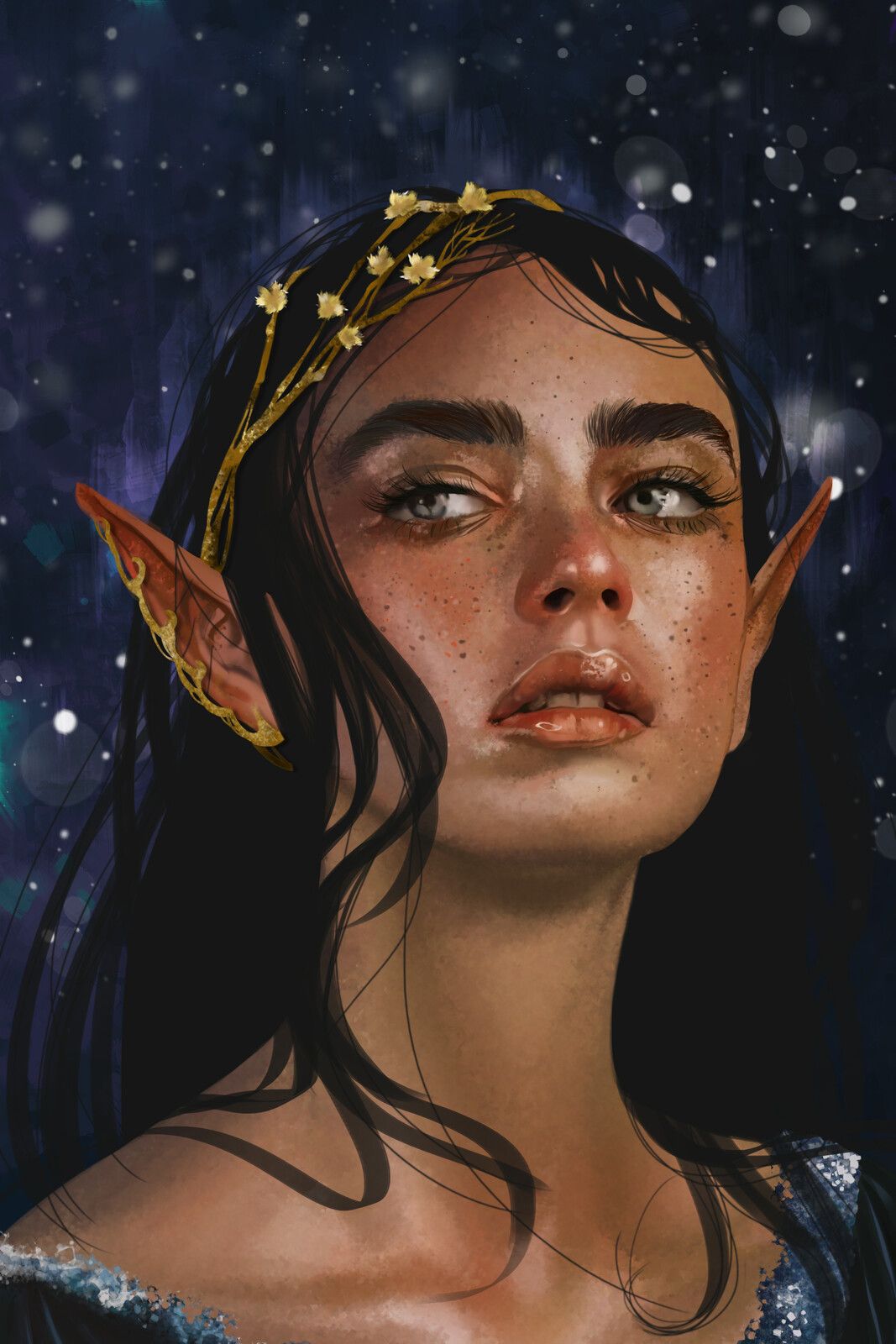
I don’t know much about Lùthien, but I know that she loved Beren and had such a well-known story; it’s even told during “The Lord of the Rings.” The good news is we won’t have to wait long because their tale is Chapter 19 in The Silmarillion.
This chapter goes back to the more complex language, as it’s more exposition than storytelling; however, I find it fascinating how many little details Tolkien inserts throughout the text. They are barely mentioned, but they give flavor to the world and take higher importance in “The Lord of the Rings.” For example:
“and there in the forest of Neldoreth Lùthien was born, and the white flowers of niphredil came forth to greet her as stars from the earth.”
The niphredil is a white flower that bloomed only in the moonlight with Lùthien’s birth, but they were also in Lothlorien during “The Fellowship of the Ring.”

These are the connections I was hoping to find in this project. They may be small and seemingly insignificant, but they bring together the world in such a way that makes it a cohesive history rather than just a series of tales. I’ll continue to point these little nuggets out as best as I can from my current understanding of the history of Middle-earth and its environs.
Back to the story:
“It came to pass during the second age of the captivity of Melkor that Dwarves came over the Blue Mountains of Ered Luin into Beleriand. Themselves they named Khazâd, but the Sindar called them Naugrim, the Stunted People, and Gonnhirrim, Masters of Stone.”
The Dwarves earned that name because they delved into the mountains, more specifically Ered Luin on the eastern side of Beleriand. There they built (or instead dug) their massive cities, Gabilgathol and Tumnunzahar, but the “Greatest of all the mansions of the Dwarves was Khazad-dûm, the Darrowdelf, Hadhodrond in the Elvish tongue, that was afterwards in the days of its darkness called Moria.”
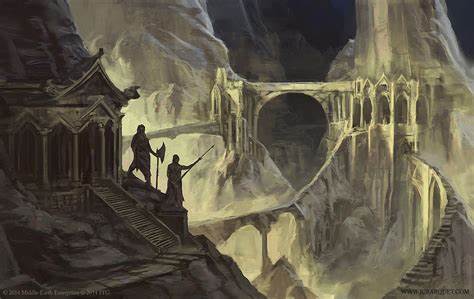
If you are reading this essay, you know what Moria is and will be, as it’s central to The Fellowship of the Ring, but what’s noticeably absent is the animosity the Dwarves and Elves feel for each other. There is even a passage where Tolkien tells us: “but at that time those griefs that lay between them had not yet come to pass…”
The Dwarves were eager to learn the Elvish tongue, and even though the Naugrim (Dwarven) tongue was “cumbrous and unlovely.” the Elves learned it back as well.
They trafficked goods with each other and praised one another. Then, after years of this communion, Melian “councelled Thingol that the Peace of Arda would not last for ever.”
So Thingol sought council with the Dwarves, and they agreed to dig him out of a dwelling for protection against a possible incursion from Morgoth and his minions. They called this underground mansion Menegroth or the Thousand Caves.
They did it at the right time because “…ere long the evil creatures came even to Beleriand, over passes in the mountains, or up from the south through the dark forests.”
Of course, there are Orcs, but we also see new creatures, Wolves and Werewolves. Seeing these new and horrid creatures, the Dwarves made for the Elves armor, which”surpassed the craftsmen of Nogrod, of whom Telchar the smith was greatest in renown.”
The Sindar drove off the creatures of darkness with the help of the “war-like” Dwarves. For a time, there was peace. Then, Denethor gathered the Elves who did not make the journey into Beleriand (no, not that Denethor. This is an Elf, Son of Lenwë, and a chieftain of nomadic/hunter-gather elves.) and brought to Menegroth.
During this gathering and goodwill, Morgoth and Ungoliant were busy fleeting Valinor and soon headed east to clash with King Thingol and the Thousand Caves. Orcs descended upon Menegroth in ferocity, and there was “fought the first battle in the Wars of Beleriand.“
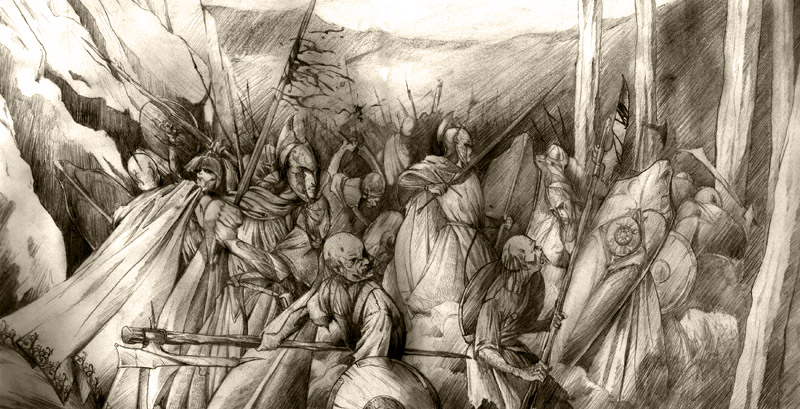
The Elves were victorious, but so brutal and quickly spawning the Orcs were, that Melian had to use some of her Maiar powers and formed “the Girdle of Melian, that none thereafter could pass against her will or the will of King Thingol.” They were thus protected, but unfortunately, outside of the field, the creatures of Morgoth roamed free.
But across the seas, things were stirring. It was just after the Girdle of Melian was created that Fëanor and his host made their way to Beleriand.
Now we have three forces coming together, and thinking back on the “Questionable decisions” Fëanor made that forced his wife from him, I have to wonder if this firey elf caused the Wars of Beleriand. Could he be the reason the Dwarves and Elves dislike each other? Could he be the cause of the Wars of Beleriand altogether?
Next week, let’s find out in “Of the Sun and Moon and the Hiding of Valinor.”
Post Script:
I had some difficulty with this chapter because my time frame kept getting confused. That’s because Tolkien uses “ages” as a time sobriquet. This chapter had the “first age of Melkor’s chaining.” which is different from the “first age of the Valar” and even more different from “the first age of man” or the “First age of Èa.”
It takes a minute to dig down into what’s happening, but this is Tolkien’s definition of time. The way he wrote these histories they were short stories he framed (or rather his son, Christopher, did) into a larger spectrum. So for his brain to formulate the times, they were ages, and the events could happen within those ages. We haven’t gotten to the language or time of Tolkien, but both of those will need individual essays.
Blind Read Through: J.R.R. Tolkien, The Silmarillion; Of the Flight of the Noldor
“Fëanor was a master of words, and his tongue had great power over hearts when he would use it; and that night he made a speech before the Noldor which they ever remembered. Fierce and fell were his words, and filled with anger and price; and hearing them the Noldor were stirred to madness. His wrath and his hate were given most to Morgoth, and yet well nigh all that he said came from the very lies of Morgoth himself; but he was distraught with grief for the slaying of his father, and with anguish for the rape of the Silmarils.”
Welcome back to another Blind Read! This week we delve into the mindset of the Noldor as they divest themselves from the rest of the Eldar. We’ll also catch a glimpse of a very well-known Noldor, and we’ll get a greater understanding of Fëanor’s motivations.
We begin this chapter right where the last one left off. Melkor and Ungoliant killed the Trees of Valinor and fled Aman. Yavanna, the Valar who created the Trees, mourns them but comes to realize, “The Light of the Trees has passed away and lives now only in the Silmarils of Fëanor. Foresighted was he!”
Yavanna asks him to give up his Silmarils because “had I but a little of that light I could recall life to the Trees.”
He was excited at this prospect, but many Valar pressured Fëanor to relinquish his prized creations. Still, Fëanor ponders this option until the deception of Melkor, which we learned of in chapter 7, comes back into Fëanor’s mind; it was all a trick. Wasn’t Melkor, now Morgoth, Valar as well? Was this just an elaborate scheme to get Fëanor to give up his creation?
But it was not a trick, and in the darkness, Morgoth returned and “slew Finwë King of the Noldor before his doors, and spilled the first blood in the Blessed Realm.” This single act solidified Morgoth’s transition to evil as he broke into the stronghold of Formenos and stole the Silmarils.
He then fled with Ungoliant across the frozen strait of Helcaraxë, which separated Aman (Valinor) from Middle-earth. Ungoliant demanded that Morgoth feed her the gems he stole, but he held back the Silmarils, and as punishment to him, “she enmeshed him in a web of clinging thongs to strangle him.” He was stuck there in a land which would be called Lammoth, “for the echoes of his voice dwelt there ever after, so that any who cried aloud in that land awoke them, and all the waste between the hills and the sea was filled with a clamour as voices in anguish.”

These cries woke the Balrogs who rested beneath Angband (Morgoth’s domain) and came with their flame whips to “smote the webs of Ungoliant asunder” and frightening her enough to flee.
She took shelter in Nan Dungortheb in the north of Middle-earth (then Beleriand) and mated with the giant spider creatures which lived there. After that, it is unknown what happened to Ungoliant, though “some have said that she ended long ago, when in her uttermost famine she devoured herself at last.“
On the other hand, Morgoth fled to Angband and grew his army of Orcs (made from corrupting Elves) and demons and beasts and made himself a crown of iron which he inlaid the Silmarils.

“His hands were burned black by the touch of those hallowed jewels, and black they remained ever after; nor was he ever free from the pain of the burning, and the anger of the pain.“
This pain fueled his hatred and made him an even more significant threat to the tenants of Ea.
Here we catch a page break and switch gears. Here, the quote that begins this essay appears, and we spend the rest of the chapter discovering why the Noldor left Valinor and the strife that arose amongst them.
What is interesting about this chapter is that Fëanor, who hates Morgoth more than anything else in the world, falls right into his trappings. All the lies Morgoth whispered to the Noldor somehow seep into his mind, and he stands before his kin and starts a revolution. He does from anger because of the loss of his father and the loss of his creations, the Silmarils. Remember in the chapter that describes the design of the Silmarils. These gems have much the same hold over people as the One Ring does in the Third Age. We have not yet seen the power that they can produce, but could it be that the loss of these gems has clouded Fëanor’s mind? Could this be their power represented without Tolkien coming right out and telling us?
In any case, Fëanor rallies his kin to take “…an oath which none shall break, and none shall take, by the name even of Ilùvatar, calling the Everlasting Dark upon them if they kept it not; and Manwë they named witness, and Varda, and the hallowed mountain of Taniquetil, vowing to pursue with vengeance and hatred to the ends of the World Vala, Demon Elf or Man as yet unborn, or any creature, great or small, good or evil, that time should bring forth unto the end of days, whoso should hold or take or keep a Silmaril from their possession.”
But there was friction amongst their ranks. The sons of Fëanor were staunchly in his corner. Still, Fëanor’s brothers, Finarfin and Fingolfin, disagreed with his harsh sentiments, but they stayed true to their course since they had already joined him in their departure. So they left Valinor, but they and their host left the company of Fëanor and his followers.
This chapter is much more accessible than previous chapters because the dialogue reveals Noldor’s desires. First, they bicker and argue about the best way to do things, and eventually, they split; though the endgame of their intentions is to destroy Morgoth, they go about it differently.
Fëanor uses some of his firey drive and uses the questionable decisions his wife left him for and stole the only ships which can make their way to Beleriand. In the process, they murder some of the Teleri who created the ships, only to flee the land.
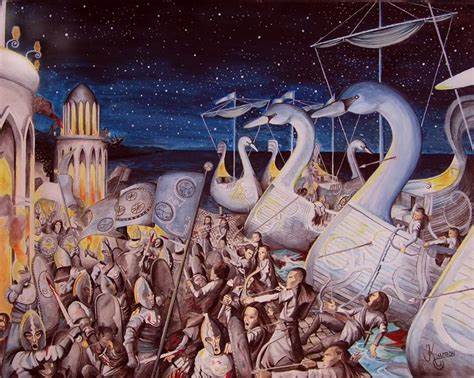
His kin is left with no other option but to take the same path as Morgoth and Ungoliant and travel across the frozen pass, Helcaraxë. Unfortunately, many of them die from the passage through the icy straits, which deepened their disdain for Fëanor.
The Noldor became outcasts because of this sundering. They left the land they struggled so hard to get to because of misunderstanding, fear, and desire, and we are left wondering what is to come of the Noldor afterward because of a passage delivered by Mandos, a herald of Manwë:
“Tears unnumbered ye shall shed; and the Valar will fence Valinor against you, and shut you out, so that not even the echo of your lamentation shall pass over the mountains. On the house of Fëanor the wrath of the Valar lieth from the West unto the uttermost East, and upon all that will follow them it shall be laid also. Their Oath shall drive them, and yet betray them, and ever snatch away the very treasures that they have sworn to pursue. To evil end shall all things turn that they begin well; and by treason of kin unto kin, and the fear of treason, shall this come to pass. The Dispossessed shall they be forever.”
Some tales delve deeper into every transgression the Noldor did during this time. They are collected in a “lament which is named Noldolantë, the Fall of the Noldor.” Still, I’m beginning to wonder if these little offshoots are actually written down in other books like “The Book of Lost Tales” or if this is just a little flavor of history that Tolkien wanted to tell but never got around to completing. In any case, I’m very excited to see where the story goes next because we’ve transcended the Biblical style voice the beginning of this book held and have transitioned into a more storyteller fashion.
Will we finally get to see the fate of Fëanor and the Noldor next week? Join me as we review “Of the Sindar.”
PostScript.
I promised that we’d see a familiar face, and I was shocked at the character-building Tolkien was able to instill in a single paragraph:

“Galadriel, the only woman of the Noldor to stand that day tall and valiant among the contending princes, was eager to be gone. No oaths she swore, but the words of Fëanor concerning Middle-earth had kindled in her heart, for she yearned to see the wide unguarded lands and to rule there a realm at her own will.“
Galadriel held a wonder of the wider world to see, experience, and travel. Her curiosity about what life truly means drives her to leave Valinor to go to Beleriand.
It’s more than that, however. Galadriel wanted to be a queen in her own right. She had grown up and seen how the Noldor clung to history and tradition, even to their detriment. This was Galadriel’s time to make a mark. Unfortunately, I’ve not seen her past outside of the books and movies, and it’s been so long since I’ve read the books that I’m sure I’m missing something there, but even so, I hope she is a feature in the remaining story.



 Sean McBride
You must be logged in to post a comment.