Blind Read Through: J.R.R. Tolkien; The Book of Lost Tales, part 2; Beren and Lúthien

“One day he was driven by a great hunger to search amid a deserted camping of some Orcs for scraps of food, but some of these returned unawares and took him prisoner, and they tormented him but did not slay him, for thier captain seeing his strength, worn through he was with hardships, thought that Melko might perchance be pleasured if he was brought before him and might set him to some heavy thrall-work in his mines or in his smithies. So came it that Beren was dragged before Melko, and he bore a stout heart within him nonetheless, for it was belief among his father’s kindred that the power of Melko would not abide for ever, but the Valar would hearken at last to the tears of the Noldoli, and would arise and bind Melko and open Valinor once more to the weary Elves, and great joy should come back upon Earth (Pg 14-15).”
Welcome back to another Blind Read! This week we travail the beginning of the quest for a Silmaril and the humble beginnings of the story in The Book of Lost Tales.
We left off last week with Beren heading out to get the Silmaril from Melkor’s crown to curry favor of Tinwelint and acquire Tinúviel’s hand in marriage. Immediately Beren is in dangerous land:
“Many poisonous snakes were in those places and wolves roamed about, and more fearsome still were the wandering bands of the goblins and the Orcs – foul broodlings of Melko who fared abroad doing his evil work, snaring and capturing beasts, and Men, and Elves, and dragging them to their lord (pg 14).”

Beren was nearly captured by Orcs numerous times, battling all manner of creatures on his way to Angamandi (Melkor’s hold in the Iron Mountains). “Hunger and thirst too tortured him often, and often he would have turned back had not that been well neigh as perilous as going on (pg 14).”
These travels lead us right to the quote that opens this essay. Beren angered Melkor because he represented the kinship between Elves and Men “and said that evidently here was a plotter of deep treacheries against Melko’s lordship, and one worthy of the tortures of Balrogs (pg 15).”
Beren gave Melkor a speech that seemed inspired by the Valar and moved Melkor. Rather than killing him, Melkor decided that he should be sent to the kitchen and become a Thrall of Tevildo, Prince of Cats.
I want to step back here and review what changes Tolkien made to the tale over time.
The framework of the story is the same; however, In The Silmarillion, Beren left Neldoreth (The forests of Thingol and Melian) and made his way to Nargothrond to garner the help of Finrod Felagund, Elven King. He recalled Finrod’s vow to help Barahir’s (Beren’s father) kin, and Finrod agreed to help Beren in his quest for the Silmaril.
Finrod gathered a group and disguised them all as Orcs to get close to Angband, but Sauron, the future Dark Lord, became suspicious of the group and captured them. He sent them to a deep pit and sent werewolves to kill them, which Finrod killed with his bare hands. However, he was mortally wounded and thus ended one of the great Elven Kings of legend.

Tolkien’s process of bringing in Finrod fills out the whole Legendarium much more because The Book of Lost Tales is just that, tales; disparate and singular. These are a collection of stories rattling around in Tolkien’s head which built the history of a world, but he needed connective tissue (and a lot of editing) to bring everything together.
Finrod and Fëanor’s sons, Curufin and Celegorm, become the connective tissue, rather than Tevildo, the Lord of Cats, who doesn’t appear beyond The Book of Lost Tales.
So now that Beren is in captivity, Lúthien can feel that something has gone wrong, so she goes to her mother Gwendeling (Melian) and asks her to use her magic and see if Beren still lives:
“‘He lives indeed, but in an evil captivity, and hope is dead in his heart, for behold, he is but a slave in the power of Tevildo Prince of Cats (pg 17).'”
So she went to her Father, Tinwelint, who was angered that she would want to go after Beren. She also asked her brother Dairon, who scoffed at the idea of her heading off into the wilds, so he went to Tinwelint and tattled on his sister (Daeron in The Silmarillion was an unrequited lover instead of brother, and went to Thingol (Tinwelint) to stop her, and hopefully save her. Tinwelint, in his anger, put her as far away from danger as punishment as he could:
“Now Tinwelint let build high up in that strange tree, as high as men could fashion thier longest ladders to reach, a little house of wood, and it was above the first branches and was sweetly veiled in leaves (pg 18).”
Stuck in the tree, with servants bringing her food and water and then removing the ladders so she couldn’t follow, Tinúviel’s yearning for Beren grew. She stayed up there for a while until she got a vision from the Valar that Beren was still alive and held in captivity, a thrall to Tevildo tasked with hunting for the great cats. Horrified that he was there because of her, and more importantly, the love that kept growing because she could not stop thinking of him, she devised a plan.

“Now Tinúviel took the wine and water when she was alone, and singing a very magical song the while, she mingled them together, and as they lay in the bowl of gold she sang a song of growth, and as they lay in the bowl of silver she sang another song, and the names of all the tallest and longest things upon Earth were set in that song… and last and longest of all she spake of the hair of Uinen the lady of the sea that is spread through all the waters (pg 19-20).”
Remember that the whole point of writing these tales was to build a mythology for England. You can see from reading them that Tolkien was heavily influenced by other fairy tales he read, both in preparation and for study.
Tinúviel rubbed her head in the mixture, and her hair grew to great length, much like Rapunzel did to escape her tower.
Unlike Rapunzel, Tinúviel fashioned a rope out of her hair. She refused anyone from coming up to her little tree house until she finished. Then dressed in a black cloak, she escaped and headed north to go and rescue Beren.
This part of Lúthien’s story is the tale of Rapunzel, except that Tolkien flipped the script and created a strong woman to go and rescue her man.
Join me next week as we continue the story, find the differences with The Silmarillion, and generally have a great time!
Blind Read Through: J.R.R. Tolkien, The Silmarillion; Of the Flight of the Noldor
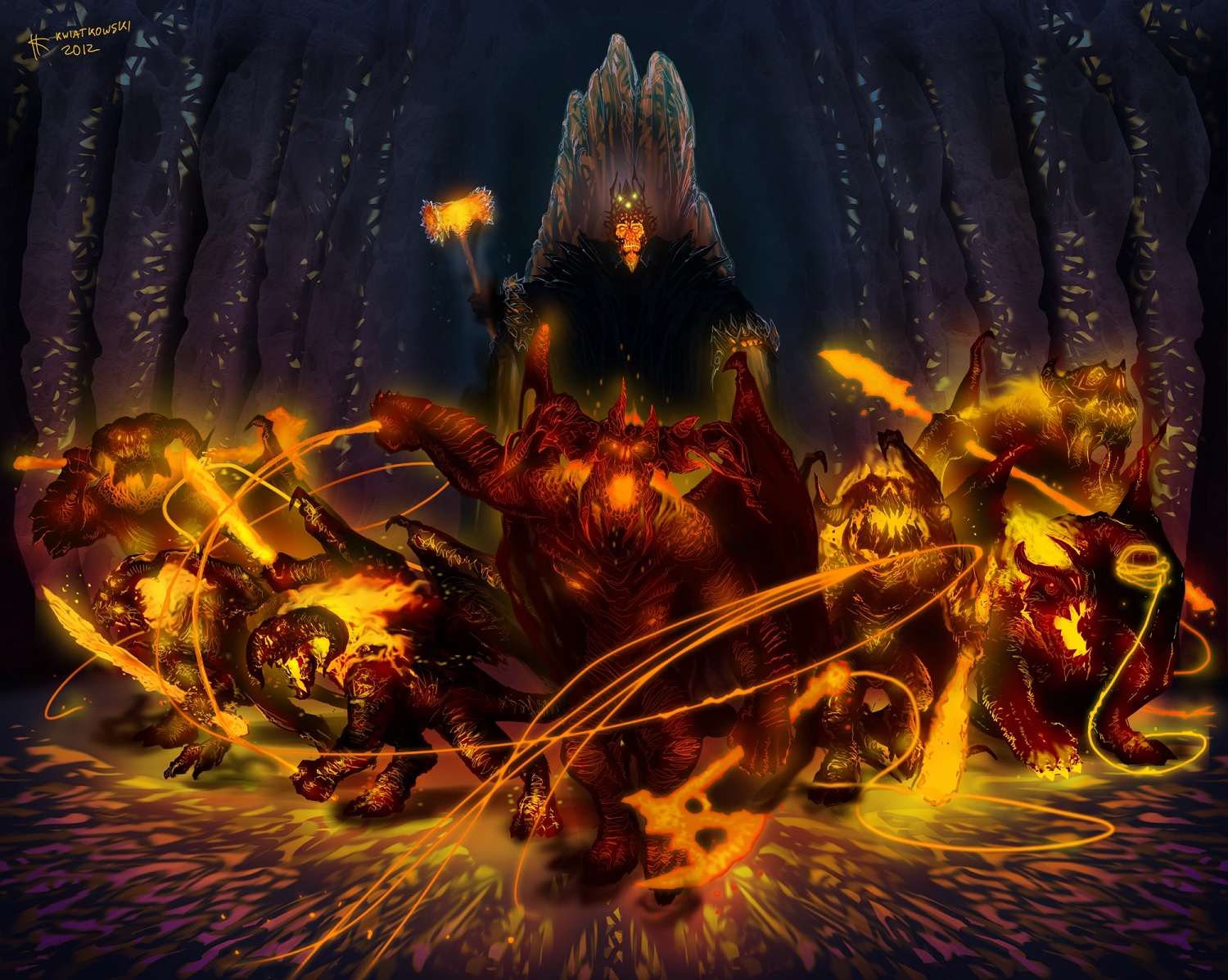
“Fëanor was a master of words, and his tongue had great power over hearts when he would use it; and that night he made a speech before the Noldor which they ever remembered. Fierce and fell were his words, and filled with anger and price; and hearing them the Noldor were stirred to madness. His wrath and his hate were given most to Morgoth, and yet well nigh all that he said came from the very lies of Morgoth himself; but he was distraught with grief for the slaying of his father, and with anguish for the rape of the Silmarils.”
Welcome back to another Blind Read! This week we delve into the mindset of the Noldor as they divest themselves from the rest of the Eldar. We’ll also catch a glimpse of a very well-known Noldor, and we’ll get a greater understanding of Fëanor’s motivations.
We begin this chapter right where the last one left off. Melkor and Ungoliant killed the Trees of Valinor and fled Aman. Yavanna, the Valar who created the Trees, mourns them but comes to realize, “The Light of the Trees has passed away and lives now only in the Silmarils of Fëanor. Foresighted was he!”
Yavanna asks him to give up his Silmarils because “had I but a little of that light I could recall life to the Trees.”
He was excited at this prospect, but many Valar pressured Fëanor to relinquish his prized creations. Still, Fëanor ponders this option until the deception of Melkor, which we learned of in chapter 7, comes back into Fëanor’s mind; it was all a trick. Wasn’t Melkor, now Morgoth, Valar as well? Was this just an elaborate scheme to get Fëanor to give up his creation?
But it was not a trick, and in the darkness, Morgoth returned and “slew Finwë King of the Noldor before his doors, and spilled the first blood in the Blessed Realm.” This single act solidified Morgoth’s transition to evil as he broke into the stronghold of Formenos and stole the Silmarils.
He then fled with Ungoliant across the frozen strait of Helcaraxë, which separated Aman (Valinor) from Middle-earth. Ungoliant demanded that Morgoth feed her the gems he stole, but he held back the Silmarils, and as punishment to him, “she enmeshed him in a web of clinging thongs to strangle him.” He was stuck there in a land which would be called Lammoth, “for the echoes of his voice dwelt there ever after, so that any who cried aloud in that land awoke them, and all the waste between the hills and the sea was filled with a clamour as voices in anguish.”

These cries woke the Balrogs who rested beneath Angband (Morgoth’s domain) and came with their flame whips to “smote the webs of Ungoliant asunder” and frightening her enough to flee.
She took shelter in Nan Dungortheb in the north of Middle-earth (then Beleriand) and mated with the giant spider creatures which lived there. After that, it is unknown what happened to Ungoliant, though “some have said that she ended long ago, when in her uttermost famine she devoured herself at last.“
On the other hand, Morgoth fled to Angband and grew his army of Orcs (made from corrupting Elves) and demons and beasts and made himself a crown of iron which he inlaid the Silmarils.

“His hands were burned black by the touch of those hallowed jewels, and black they remained ever after; nor was he ever free from the pain of the burning, and the anger of the pain.“
This pain fueled his hatred and made him an even more significant threat to the tenants of Ea.
Here we catch a page break and switch gears. Here, the quote that begins this essay appears, and we spend the rest of the chapter discovering why the Noldor left Valinor and the strife that arose amongst them.
What is interesting about this chapter is that Fëanor, who hates Morgoth more than anything else in the world, falls right into his trappings. All the lies Morgoth whispered to the Noldor somehow seep into his mind, and he stands before his kin and starts a revolution. He does from anger because of the loss of his father and the loss of his creations, the Silmarils. Remember in the chapter that describes the design of the Silmarils. These gems have much the same hold over people as the One Ring does in the Third Age. We have not yet seen the power that they can produce, but could it be that the loss of these gems has clouded Fëanor’s mind? Could this be their power represented without Tolkien coming right out and telling us?
In any case, Fëanor rallies his kin to take “…an oath which none shall break, and none shall take, by the name even of Ilùvatar, calling the Everlasting Dark upon them if they kept it not; and Manwë they named witness, and Varda, and the hallowed mountain of Taniquetil, vowing to pursue with vengeance and hatred to the ends of the World Vala, Demon Elf or Man as yet unborn, or any creature, great or small, good or evil, that time should bring forth unto the end of days, whoso should hold or take or keep a Silmaril from their possession.”
But there was friction amongst their ranks. The sons of Fëanor were staunchly in his corner. Still, Fëanor’s brothers, Finarfin and Fingolfin, disagreed with his harsh sentiments, but they stayed true to their course since they had already joined him in their departure. So they left Valinor, but they and their host left the company of Fëanor and his followers.
This chapter is much more accessible than previous chapters because the dialogue reveals Noldor’s desires. First, they bicker and argue about the best way to do things, and eventually, they split; though the endgame of their intentions is to destroy Morgoth, they go about it differently.
Fëanor uses some of his firey drive and uses the questionable decisions his wife left him for and stole the only ships which can make their way to Beleriand. In the process, they murder some of the Teleri who created the ships, only to flee the land.
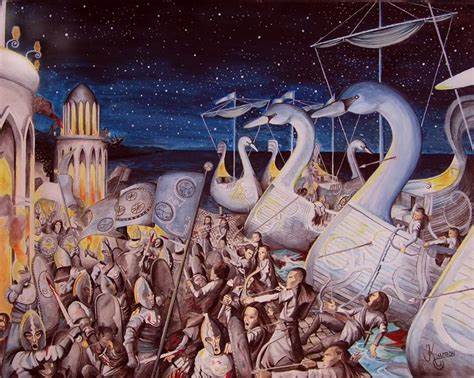
His kin is left with no other option but to take the same path as Morgoth and Ungoliant and travel across the frozen pass, Helcaraxë. Unfortunately, many of them die from the passage through the icy straits, which deepened their disdain for Fëanor.
The Noldor became outcasts because of this sundering. They left the land they struggled so hard to get to because of misunderstanding, fear, and desire, and we are left wondering what is to come of the Noldor afterward because of a passage delivered by Mandos, a herald of Manwë:
“Tears unnumbered ye shall shed; and the Valar will fence Valinor against you, and shut you out, so that not even the echo of your lamentation shall pass over the mountains. On the house of Fëanor the wrath of the Valar lieth from the West unto the uttermost East, and upon all that will follow them it shall be laid also. Their Oath shall drive them, and yet betray them, and ever snatch away the very treasures that they have sworn to pursue. To evil end shall all things turn that they begin well; and by treason of kin unto kin, and the fear of treason, shall this come to pass. The Dispossessed shall they be forever.”
Some tales delve deeper into every transgression the Noldor did during this time. They are collected in a “lament which is named Noldolantë, the Fall of the Noldor.” Still, I’m beginning to wonder if these little offshoots are actually written down in other books like “The Book of Lost Tales” or if this is just a little flavor of history that Tolkien wanted to tell but never got around to completing. In any case, I’m very excited to see where the story goes next because we’ve transcended the Biblical style voice the beginning of this book held and have transitioned into a more storyteller fashion.
Will we finally get to see the fate of Fëanor and the Noldor next week? Join me as we review “Of the Sindar.”
PostScript.
I promised that we’d see a familiar face, and I was shocked at the character-building Tolkien was able to instill in a single paragraph:

“Galadriel, the only woman of the Noldor to stand that day tall and valiant among the contending princes, was eager to be gone. No oaths she swore, but the words of Fëanor concerning Middle-earth had kindled in her heart, for she yearned to see the wide unguarded lands and to rule there a realm at her own will.“
Galadriel held a wonder of the wider world to see, experience, and travel. Her curiosity about what life truly means drives her to leave Valinor to go to Beleriand.
It’s more than that, however. Galadriel wanted to be a queen in her own right. She had grown up and seen how the Noldor clung to history and tradition, even to their detriment. This was Galadriel’s time to make a mark. Unfortunately, I’ve not seen her past outside of the books and movies, and it’s been so long since I’ve read the books that I’m sure I’m missing something there, but even so, I hope she is a feature in the remaining story.



 Sean McBride
You must be logged in to post a comment.