The art of cohesion
Currently, I’m in the middle of writing the tenth book in the Elsie Jones Adventures (The first of which will release in the spring of next year), and I’ve been thinking more and more about process. The closer I get to the fifteenth book (The concluding book of the series) , the more difficult it is to write the books because there is so much more that goes into them.
The first three were pure adventures. They each had a beginning middle and end, and for the fifteen book arc, I could act like a writer from the TV series Lost and make up anything I wanted to. Books four, five, and six got to explore the over all story arc while still being complete adventures, but I still didn’t have to bring things together. Then in books seven, eight, and nine, realizations began to take place and the over all story arc became clear. Now writing book ten I’m having trouble with a clear vision to the end.
My writers group, The Live Poets Society, contains a mixture of writing concepts. There are those that write only what’s on their mind at the time and then go back later and bring it all together, there are those that write from start to finish with an arc in mind, and then there’s me, who comes up with a complete outline before writing a single word in the story.
I know the main contention to writing an outline first. People tell me all the time.
“I don’t want to be contained. If I get into some good writing I don’t want to have to keep it to the outline.”
Believe me I felt the same way before I had a writing contract.
Writing an outline first is like doing your due diligence in a research project. The outline is the creative outlet. when you’re writing an outline, you get to come up with the plot line. You are not bound by having to deal with language or grammar, you are not bound by having to keep your own thoughts out of the text. You can do whatever you want to, then when you’re done, you have a complete story arc, not just a beginning, and end and some random scenes you really want to write.
When I first started writing Elsie Jones I wrote from the cuff. I had a vague idea of what I wanted and I wrote what came to me, flowing through my fingers onto the screen. Now I have the outline to make sure that things don’t get too screwy.
Do I always stick to the outline with zeal? No. Things always come up when you’re writing, but outlining is a great way to brainstorm and keep your thoughts linear. When you have a complicated subplot that ranges over fifteen books, but each book has to be a contained adventure all it’s own you get a bit bogged down in the minutia. The only way out of it is to outline.
Give it a shot. Do some outlining of your own. See how it strikes you. I guarantee your stories will be better and more cohesive.
The Rise of Literary Reading
I’ve recently read a couple of articles which have struck cords with me. The first was from the Washington Post (https://www.washingtonpost.com/news/wonk/wp/2016/09/07/the-long-steady-decline-of-literary-reading/) and the second was from a website called read it forward (https://www.readitforward.com/essay/article/list-books-saved-life/). The Washington post article was basically talking about how people don’t read literature anymore and the second article was how literature saved the authors life.
We’ve become such an interesting society that everything has to be an all or nothing. You have to either read literature or not. You have to like a political candidate or you have to hate them.
This is a topic which could go on for a long time, but I’m going to narrow the focus to follow along the lines of literature.
In my opinion, society needs literature, and I don’t say that because I’m a writer and I think that it’s survival is necessary to my survival as a writer, or because of some nostalgic feeling I have. Society needs literature because literature makes you think, and that is something that is seriously lacking in our culture at the moment.
We take things as people give them to us. You read an article from the Washington Post and all of the sudden you’re worried about books being in decline; and yes, at a quick glance it does seem disturbing that there are virtually no literary authors on the top money lists. HOWEVER, you must understand that the money lists which are written out by Forbes are entirely skewed.
The idea of a money-list is ridiculous, and also the idea of a books purchased list is equally absurd. The reason is availability and accessibility. You can say that literary reading is in decline since the 1800’s because no body reads those types of books anymore. That’s wrong for two reasons. 1. Dickens in his time was considered popular fiction…NOT literature, and 2. How many times do you walk into an airport and find Proust on the shelf?
Literary reading is on the rise, not the decline. Just look at Jonathan Franzen, who is holistically a literary author. When he wrote “The Corrections” and famously snubbed Oprah Winfrey, he was one of the top grossing authors of the year. The only reason he was however was because Oprah mentioned him and people ran out in droves to read it, that and the millions he won from literary awards.
The problem isn’t literature and its rise or fall, but in how the media perceives it. If the Washington Post came out with an article saying how more people than ever were reading literature and three titles were amongst the top (for my own edification I’ll say these three “Freedom” by Jonathan Franzen, “A Hologram for the King” by Dave Eggers, and “Cloud Atlas” by David Mitchell {runner up to “Art of Fielding” by Chad Harbach}) then those three titles would be best sellers.
Once that happened then more people would be writing articles like Jonathan Russell Clark wrote about how literature and reading saved his life. People would think more. People would analyze situations better. People wouldn’t be so trusting of one source, but they would look for the counter argument.
You heard it here first. Literature is on the rise. There is a reason Barnes and Noble is still around, years after E-readers saturated the market. I challenge you to read a literature title. One that makes you think. One that makes you analyze it’s meaning. One that makes you question your own reality.
A New Spring
“I don’t need to tell you that writers sometimes get ideas which practical-minded individuals regard as chimerical” – Henry Miller
I just finished reading “The Grapes of Wrath” for the first time (I know, I know, I’m way to old and love Steinbeck way too much not to have read this earlier, but bear with me), and while I was reading it people kept saying “Oh man, Steinbeck is SOOOOOO depressing!” Every-time this happened I would give a demure smile and a slight nod, because I half believed them. I love Steinbeck because of his readability, his tone, and his brief and wonderful, bright bursts of beautiful, insightful writing, but people don’t get this from him because of his content.
As my eyes scanned over the last few words of “The Grapes of Wrath” and I shut the book, my mind began to scan for potential meaning behind the final few pages. Were they depressing? Yes. Was the book dark and dreary? Probably. But there is an image which sticks in my mind, even now, hours after finishing it. It’s such a small thing that most people who read the book probably will focus on the death and uncertainty which is prevalent…and they wouldn’t be wrong. The Joads go through so much throughout this book, that I actually felt like each chapter was going to end in another heartbreak, another setback. Then there was that image right there at the end, which changed the tone of the entire book.
Ruthie found a flower.
That was it. Ruthie found a flower.
What stuck with me was the symbolism of it. Steinbeck writes this book alternating chapters between the story of the Joads and a social commentary, and the downer of this book comes to an end with that flower. The last couple of the lines of the last bit of the commentary are as follows: “And the women sighed with relief, for they knew it was all right-the break had not come;and the break would never come as long as fear could turn to wrath.
Tiny points of grass came through the earth, and in a few days the hills were pale green with the beginning year.”
Spring is a time of re-birth. The breaking of spirit would not come, because through the depths of despair comes the realization that you’re alive. Sometimes you have to hit rock bottom before you realize what you have in front of you. The harder the winter, the darker and colder it gets, the brighter the spring. The ground needs the snow and the cold to be able to have a re-birth, to bring about spring and spring is hope.
Sometimes horrible things happen to you. Sometimes life is depressing. Sometimes life is almost too much to overcome. But as long as there is determination, as long as there is hope; one day while you’re walking on the broken pieces of what you thought your life should be, you’ll find a flower, and a new spring will bloom.
Top Ten Autumn Books
I read these stupid posts, from these blog sites who want to be real news, and every time I think to myself, “I can compile a list so much better than that!” Half of the books seem to be listed because they’re popular, not because of the subject matter, and it seems as though the author of the article hasn’t even read them. And the other half seem to come out of left field.
So here is my foray into the world. It could be horrible, it could be insightful, I just hope it inspires people to read some books that they might not have read before.
I’m choosing my top ten books to get in the spirit of Fall, mostly because it’s my favorite time of year, but also because of the broad range of books that will fit. This is the time of changing seasons, of baseball, of melancholy, of the beginning of school. This is the time where you take that last trip to that browning mid-west field, that last trip to the tire swing at the lake, before it gets just too cold. This is the time of year for nostalgia. These ten books will have some or all of these qualities.
10. “West of Here” by Jonathan Evison
This is a beautifully written novel portraying a life of the town Port Bonita. There is some jumping around between time frames, but you get the feeling of a wonderful Autumnal read. Broad sweeping landscapes including everything from watermills and flumes, starting from people trying to live a life in the old west, to the modern time and how people just want to disappear. The novel drips with nostalgia, and is a perfect read for early September, to get you in the mood to sit next to the fire and dream of the soft, colorful, chilly fall.
9. “Lonesome Dove” by Larry McMurtry
I don’t think this list could be complete without this epic western. Every time I drive through the country of California and see the broad waves of grain and browning fields, this novel always comes to mind. It’s about a cattle drive to the north, which starts in the late summer and goes through fall and into winter. There is death and despair, there are shootouts and classic western dialog, but this novel won a Pulitzer for a reason; it is a perfect slice of life of Americana, and it will bring you into Autumn.
8. “The Book of Lost Things” by John Connelly
I personally have to have a book on this list which has a bit of magical realism and a bit of fairy tale. This is a slightly tragic tale of a young boy who takes solace in his books, so much so that he is brought into them; into a sort of fairy tale land and has adventures. My first instinct in creating this list was to include “The Lion, the Witch, and the Wardrobe”, but I thought I could find a book that had that autumnal feel without going down an overused road, and “The Book of Lost Things” is it.
7. “Midnight in the Garden of Good and Evil” by John Berendt
This is the only non-fiction book on here, and where there could be some which are better, I cant think of a better setting to move into October and the fall, than Savannah. There is old magic in Savannah and that is part of this books charm. There is even a scene where the narrator heads into a cemetery and interviews (or tries to at least) a “witch woman”. Filled with intrigue and dripping with atmosphere, you cant go wrong with this one.
6. “Needful Things” by Stephen King
Yep, there is a bit of horror on this list, though this one I wouldn’t really consider all that scary. This is the “last Castle Rock story”, where the devil comes to Castle Rock and opens up a curio shop. This story is another that you can really curl up by a fire and get into fall. It’s a small town feel, with incredible description and unforgettable characters, then you have the magic of a curio store called, yep you guessed it, “Needful Things”, and if there was ever a secondhand store that didn’t have a nostalgic feel, I don’t know what does.
5. “Water for Elephants” By Sara Gruen
Train jumping, The Dust Bowl, a traveling circus and a tragic love story. This isn’t much more you need for a good Autumn book. The atmosphere is all consuming and the characters are full and lush and the story is beautiful. You can actually (figuratively) see the changing of the leaves while reading this one.
4. “Bethany’s Sin” By Robert McCammon
This one piggy backs the King book. It is the last horror story on the list. This is the story of small town. It’s beautiful, socked in by trees, the neighbors are nice and come to your doorstep with pies. This is the quintessential small town nostalgia, perfect for fall. On top of that it has all the hidden secrets and horrors that a small town needs to have to be a good autumn book. It all starts with the sounds of horses hooves pounding through the town at night…
3. “Old School” by Tobias Wolff
The easiest comparison to this novella would be to “The Dead Poets Society”. This book takes place in a preparatory academy, and really, what is a list about autumnal books without having a book about going to school? This is a beautiful and literary book and will only take you an afternoon to read it, but just wonderful.
2. “For the Love of the Game” by Michael Shaara
So if an Autumn list isn’t complete without a book about school, then it really isn’t complete without a book about baseball. This is a wonderful novella told through the course of one game. It tells of a lifetime of ups and downs. A life time of love and loss. A lifetime of baseball, and where we head into October and the playoffs, I cant think of a better book to read.
1. “The Cider House Rules” by John Irving
This had to be my number one book for a seasonal book. Even though the book takes place over a much longer time period than one season, there is such feeling and melancholy layered in this book. Apples are finally ripe in the fall and this book centers around an orphanage and a cider house. You can see the colors while you’re reading through the book and on top of that Irving has such a deft pen, that you get to know these characters like no other. This book is the ultimate and will get you in the spirit of fall.
The stylizing of reading
I worked in a bookstore for a number of years and during that time I wondered what people bought books for. The conclusion I have drawn over all this time is that people read books for three reasons. The first is that they don’t want to miss out on what’s popular (a condition my wife lovingly calls a FOMO…fear of missing out. This is an oversimplification of the category, but I think you understand the meaning.), this is how such shlocky writing such as 50 Shades of Gray came into popularity. It wasn’t that it was original, nor was it good (or even OK writing, frankly the chapter I read was just plain, bad. Poor character construction, poor grammar, poor sentence construction, etc, etc.), but it was brought up on a morning talk show and it blew up in popularity.
The second reason people pick up books is the travel read. Though i call this the travel read, it’s real range is much farther. This is the book that people pick up to read on the airplane yes, but it’s also the book that people pick up as mindless entertainment (as much as reading can be mindless). This is the category for such authors as James Patterson. People pick him up because it’s easy to read, with super short chapters and simple language. This is the largest reading group, because it’s about simple entertainment. This is the reality TV category of reading. When you want to read, but you don’t want to think and just want the story to be laid out for you in a simple and entertaining fashion. Most times these books are flat but accessible. The characters are one note tropes (the detective that just has one last case before retiring, the ambitious journalist who just needs to get that story, etc.), and the dialog is trite and simple, but they hit all the right notes that the readers want. These are the definition of cookie cutter.
The last group is the serious reader. This is cut up into two categories. The first is the “Librarian reader” and the second is the “Academia reader”.
The Librarian reader is the reader who just loves to read. This is the person who prefers reading to watching TV. This is a person who is an indiscriminate reader. This person will read anything from the Twilight Series to “Huckleberry Finn”. From “The Girl on the Train” to “Little Women”. This is the category I fall under. It’s the category of person who just loves to read and partially studies the reading. It doesn’t really matter what the Genre is, this person will read anything. Personally I go so far as to finish everything. Even if I hate it. I look for anything redeeming about the book. I look for plot sub-devices, I look for character development and depth, I look for subsumed nuances in theme, I look for grammatical and paragraph structure acumen. This may seem strange to some people, but it’s because I love the medium so much. I love everything about reading and writing, and most times when I get to sit down and read or write, it’s the highlight of my day. I understand that I’m a strange subset of this Librarian reader because I straddle the line of the Academia reader.
To that end, the Academia reader is the person who studies the text. This is a person who reads only Philosophy (if you’re reading this you know someone like this); the person who looks down on James Patterson and abhors E.L. James. The person who studies the text and looks for extra nuance. The person who has read “Notes from the Underground” and “Atlas Shrugged” 42 times. This is a person who can quote text from Schopenhauer, Shakespeare and Cicero. They look less for the structure of the book and more for the meaning. They look at Grammar as subtext instead of an interesting way to structure. This person is a philosopher at heart and will stay with a book for a year at a time. They may not read a lot of books, but they know more about what they know than anyone.
So which is it? Which category do you fall under? What type of reader have you always wanted to be? What type of reader do you aspire to? And for all those writers and people who want to be writers, which is the category you think is the most important to be a writer?
I just can’t put it down!
It’s late in the day and with all the construction that’s been going on in my house, I’ve only now had a chance to sit down and write tonight. I thought I might pick a few genre’s and pick a book that I feel is a must read in that category. Disagree? Lets talk about it over twitter,Facebook, or Goodreads (or respond to the blog!)!
https://www.facebook.com/seanmmcbrideauthor/
https://www.goodreads.com/author/show/1553528.Sean_McBride
Literature: John Irving “A Prayer for Owen Meany”
I’m convinced that this is the best of Irving’s many works. Irving has an amazing capacity to make a character realistic, more so that any other author out there. What’s more amazing is that he makes you love them. His characters are always flawed (which is probably what makes them so real), but because of those flaws the characters become your friends. Owen Meany is no different, but what makes this book stand out is it’s structure. Like Chekhov said if there’s a gun in the first act it has to go off by act five. This book opened my eyes to what real literature should be. Read it.
Fantasy: Brandon Sanderson “Mistborn, The Final Empire”
This is the first book of a trilogy (and a much broader spectrum of books under the mantle of Mistborn), but you can read this one as a stand alone. What starts off as a heist book, evolves into something so unique, epic and beautiful that it’s hard to put down, even with its 500 plus pages. People talk all the time about book hangovers. Where you put the book down and you are so satisfied that you are actually a little depressed because you didn’t want it to be over. This is that book.
Horror: Richard Matheson “Hell House”
In a genre where things have gotten so trite and the writing so dime store, it has gotten very hard to find a good horror book (and believe me I try every October. I try to read 3 or 4 of them in that month in honor of Halloween). This, from the grandfather of horror, is probably the best written and the scariest. While reading it you want to put it in the freezer to hide it away like Joey from “Friends” does, but it’s so engrossing that you really cant stop. Matheson was the creator of the trope (He wrote for Twilight Zone which most of his short stories are produced on screen, and most of his books have been made into movies multiple times; the most recent being “I Am Legend”), giving a group of scientists a chance to try and disprove a haunted house. Get ready for a roller coaster.
Science Fiction: Orson Scott Card “Ender’s Game”
Many people have had to read this book in high school, and where I never had to I think it could have been a good addition. This is a fabulous coming of age book, in addition to a treatise on war and society. The Eponymous Ender is a brilliant Hero (I use a capital because he’s a Campbell mythic hero) who does what needs to be done to get farther in life. With teenage angst, pain of family and friends and more drive than many characters do in the genre. Another can’t put it down.
Classics: Fyodor Dostoevsky “The Gambler”
I wanted to add a classic that many people might not have read. This is a preamble to James Bond in both feel and character (James Bond in the Books that is). This is the story of a man who develops an addiction to gambling because of the influence of the young girl he’s chasing after (It’s a little ironic because Dostoevsky himself was a gambler and partially wrote this book to pay off gambling debts). It’s a great realistic tale. The characters a horribly flawed and they make realistic decisions. In the end the gambler finds his reason for being after being lost in the black hole of a gambling addiction and you see light at the end of the tunnel, but Dostoevsky weaves it so beautifully that there is reason to doubt. If you’d like to read a Russian classic (they are some of the best after all), but are daunted by Brothers Karamazov, Anna Karenina or War and Peace check this one out…might open some doors for you.
That’s all for now! What are your favorites in these genres?
JK Rowling and how to sell books
I just recently finished reading “A Casual Vacancy” by J.K. Rowling (if you want to read the review check out my goodreads page:
https://www.goodreads.com/review/show/1682813893?book_show_action=false)
and it got me to thinking about why certain things become famous and have a huge following and others do not.
Throughout my writing career I have always thought (and fought against) that if you wanted to be successful you needed to create a cookie cutter plot with predictable characters. One of those novels that appeals to the masses (think James Patterson, Dean Koontz, or anything in the romance section of Barnes and Noble), because they can get into a familiar mode and have a nice escape from the strain of their lives, but yet something that they don’t have to work to hard at.
“The Casual Vacancy” opened my eyes to a new reality.
In general the book was panned. People flocked to it, but not because it was critically received, more so because it was the next novel of the phenom who created Harry Potter. I experienced a wonderful, realistic novel. A novel where there was sex and violence and rape and drugs and expletives around every corner. A novel seeming so innocent (much like its characters), but with a sinister undertone which threatens the status quo and propriety.
What jumped out at me was the depth of character and place.
What made Harry Potter popular? Was it the fact that it was a young reader novel about a wizarding school? Was it because it followed the archetype of the Joseph Campbell hero? Was it timing? Did Rowling sell her soul to the devil for fame and fortune?
No.
It was her incredible ability to tell a story. It is her depth of character. It’s her ability to make the characters three dimensional, with quirks, flaws, and complexes. It’s her ability to make her characters just like your friend or neighbor, your mother or brother.
It’s also her use of language. She and another author, Stephen King, have the ability to tell a story. Not write a novel, not to tell a story of place, not to tell a story of a person, but to tell a tale. These two are the epitome of readability, because while your reading the books you can nearly see yourself sitting around a camp fire while they stood before a group and told their story. It’s the readability that they share and that makes them so popular.
This is a hard thing to pin point, because it’s not about how to place a verb, it’s not about how to construct a sentence. It’s about how everything flows off the page, and lights up in your mind like the TV screen.
It’s these two things that create popularity. Readability and realistic characters. And luck, a whole lotta luck. If you can get it into the hands of the right people and you have these characteristics you have that international bestseller.
The Construction of the Craft
I’ve been hard at work for approximately ten months now developing a children’s chapter book series called The Elsie Jones Adventures. I’m having a blast writing them, and coming up with the concepts for each individual book, however it is the hardest thing I’ve ever had to do, because everything in the series has to be cohesive. It’s a fifteen book series and each book is a stand alone (except for maybe the 15th), but each book also pushes the overall plot line forward for the series.
While I’ve been writing this series I’ve been continuing and completing a number of long running series of books. Most of these series are in the save vein, where they have stand alone books, but each volume pushes the larger story farther towards the completion of the series.
This is what’s scary, hard and, oddly enough, rewarding in both process of reading and writing a large series: Making sure that the whole story makes sense, and you eliminate continuity errors.
The first few books don’t seem to be that much of an issue because you can keep adding plot points, but as the series progresses, you need to begin to close the loopholes (creators of LOST didn’t understand this simple point).
So I’ve thought a lot of the process of all this over the past few years, and if anyone has any feedback regarding it, it would be fun to talk about.
My process has evolved over the past year, much more than it has in the ten years previous.
When I first started writing I would just sit down and let the story take over. This is a big argument within the writer community because nearly half of all writers do it this way, where the other half are outliners and planners. I thought I could be a free story writer, where the story and the characters told me where the story was going and the story would tell itself, however I have found over time that I get lost in the middle of the story and the characters and the plot lose their way.
I have become a planner because of this, and developing Elsie Jones, I’ve become a planner more and more.
The biggest contention to outlining that I’ve heard (and said) is that free writers feel as though they are trapped within the outline. However almost all writers know how the story begins, maybe a few plot points int he middle, and then how the story ends. This is nearly the same as outlining.
Just because you’ve created an outline doesn’t mean that you cant change it if the character comes alive and the outline no longer makes sense. You still will probably have the same ending, but the path to the ending is fluid (it’s like Game of Thrones. Weiss and Benioff don’t know the path Martin is going to take to get to the end, but they know the end. So the books and the show will diverge, more than likely from this point out, but they will end the same way). Then through subsequent drafts you can hone the story, tighten it up into a beautiful little story. If you consider yourself a free writer, try this. Sit down and have a brainstorm session and write it down. I even put in dialog and description of the events which are particularly vivid to me. Then the first draft can be about the construction of the book and developing the voice and life of the character instead of worrying about the path of the book.
The reason this is so particularly on my mind now is I’m in the middle of book 9 of The Elsie Jones Adventures (Take a look at my books page of this blog for more info) and I have quite a few plot points that I need to bring back together to finish up the story. I’ve had to go one step beyond the mere outlining and create diagrams and lists and character sketches. I’ve had to do this because if I just free wrote the rest of the books, I would leave a bunch of hanging loose ends and have plot points which didn’t make sense.
So I wonder at what other people think. I wonder how other people write. Lets start a dialog and improve the writing in the world.
Write What You Know
I read books from every genre and from every literary background, and I hope everyone else does too. The more I read, however, the more I think about the motivations to write in a specific way, or specific genre.
What is the draw to writing Horror? Why does creating a fantasy world appeal to some people? What is the difference between the two and what are the similarities?
The more I think about it, it comes down to drive, talent and interest.
There is a phrase in the writing community where you should always “write what you know”. I’ve always thought that was a strange concept, because many of the things that I was interested in growing up, and in fact still to this day, have no basis in reality, so what does that really mean?
Writing what you know to me doesn’t have anything to do with writing what happened to you today (though for some people, that’s exactly what that means), it means writing what your interest is.
Growing up and going to creative writing classes there is a great disdain for genre writing. (I was told many times, why didn’t I just write something real? Why was I wasting my time?) These people wanted to play with form and they wanted to be artistes (as Joyce would put it), but really unless you have incredible talent, at a high school level, or as a freshman in college you wouldn’t be able to produce anything of value anyway (look at Pynchon’s “Slow Learner”. The title says it all).
So I wrote what I knew. I wrote what I was interested in. What is amazing is how your abilities grow the more you use them. If you look at any of my earlier work, I am most definitely a slow learner, but writing is like woodworking, the more you do it the better you get. you start to notice pitfalls, you start to notice your own eccentricities.
To layer on that you need to study other’s works. The more you read the more you see how other authors have honed their craft. How they have perfected their voice. You take all this information and you mold it in your own work and eventually you get your own style.
So your interest gets you started and you can perfect your talent.
The only think left is drive.
One can go from being a genre hack to being a very respected author, whether they stay within their genre or not. Everything there comes down to drive. What is it that propels you into the writing world? Is it money? Is it fame? (Get a reality check if it’s either of these) or is it the love of telling stories?
If it’s money or fame, you’ll never progress beyond hack level (Palahniuk, I’m looking at you), but if it’s the love of telling stories you develop a drive. That drive gets stronger and stronger with every success that you have, because you begin to realize that others are willing to listen to your stories. You strive to do more, so you get better and better. You develop a specific voice. Those interests you once had broaden, and you start believing that everything you have is literature. You develop depth and passion. Your genre writing now can be read by anyone and it’ll be looked at as joining a club (just look at George R.R. Martin’s success…assuming he ever finishes his series).
So write what you know. Read everything and write every day. Have fun and don’t worry about what others think. You may write one story that people never see. You may write a thousand, but eventually you’ll write that one that’ll break the barrier and you’ll get to start sharing with the world.
What is talent?
“We are all apprentices in a craft where no one becomes a master.” Ernest Hemingway.
Six years ago I was working on my first book. It was a self published book of short stories and I got confirmation from the publisher before I had a definite idea of what I was going to actually do.
The was to be a book of short stories which I had written over the years. The problem was I had ten stories and four of those were just too horrible to publish. I was so dead set on publishing something, that i just decided to write like crazy and do all the things that I ever wanted to do to experiment with writing. I was writing a blog on Myspace at the time (can you believe that site is still around?) and I carried around a notebook in San Francisco, faking that I was a beat writer. I loved the glamour of it, but at the same time I understood I wasn’t very good. Then one day I was sitting outside of Java Beach Cafe and i wrote down this prose:
Why is there that dreadful despair?
That meandering distraction?
I think I could be good.
I think I have potential to be a good, if not great writer.
It’s such a difficult process, and yet
for many people it just flows,
As if their body excreted talent.
Art.
I have potential.
Many people have potential.
There are plenty of cases of first publish at first go.
There are also those who have no potential,
or to be frank,
people who don’t know what their doing.
I’m in a middle group,
between the ignorant and the talented.
I have potential.
I study art.
I’m no artist.
I contemplate it. I assimilate it. I gorge in it, and
I fake it.
To people with talent. It’s a drive.
It’s ever present, forceful.
It becomes deleterious in it’s absence.
The ignorant don’t understand at all.
they see a great piece of fiction
and they don’t know what it means.
It needs to be spelled out.
It is after all…work.
They don’t feel the drive so it doesn’t make sense.
It’s a wonderment.
I have potential. I study it. I see art.
I appreciate art. I love art.
I am not artistically inclined.
I do not have talent, I have potential.
I rambled on for a little while longer, but I think the idea is prevalent here. The idea that I didn’t elucidate here was the amount of work that you have to put in. NOthing in this field comes easily, and where there are people like Dickens, Proust, King, and Shakespeare, who apparently can just sit down and pour out their creativity, for most of us it’s work. We need to write, and re-write, and edit and re-write again. I finished off that prose-poem, by saying that I wanted to fool the world into thinking that I have talent. I think my talent has grown, but that’s because of the work that I’ve put in.
So for everyone out there who wants to be a writer? Just sit down and tell some stories. It doesn’t matter how good they are, how literary they are, how robust. As long as they come from your heart, you can continue and you too will develop that talent.
The Meaning
I recently watched a TED talk (I know, I know, but it was for my other job OK?) where the speaker (Simon Sinek) spoke about how leaders become leaders. How some people excel and how others don’t. Of course I immediately started to think about writing.
Mr. Sinek says in his talk, that people or groups fail because they talk about what they do. The people or groups who succeed talk about why they do it.
This is something I’ve always struggled with. When people ask what my book is about, or what I’m writing about, I ramble on about some such theme, or some kind of similarity to something else, to try and give them an understanding of what it’s about and if they think they’ll like it.
But all I’m doing is boring people with what I’m writing. What is going to make them pick up my book over someone else’s? What makes my Twilight Zone inspired short story collection unique from someone else’s Twilight Zone inspired short story collection? What makes my Children’s Chapter book series different from someone else’s? Content? Ability? Character?
No.
Marketing is always something I’ve struggled with because I’ve always thought about what I’m doing. I’ve always described what I was doing to people. I’ve never discussed why I did it.
This still isn’t a easy subject to broach, because for the most part, I’ve never thought about it myself. I’ve always said I write because I love to tell stories, but is this the truth? Is there something more?
The more I think about it, everything comes back to Belief.
I believe in myself. I believe in my writing. I believe in what writing stands for.
I believe that if I can write a children’s chapter book series about literature, than I will inspire a child to go out and read some of that literature.
I believe that that child will be once of the next leaders of the world.
I believe that by writing a science fiction story that pushes a character past the limits of their imagination, then the reader will believe that they can do something past their own.
I believe writing improves the world. That is the meaning behind what I do. I strive to make the world better one person at a time.
That is why I’ll succeed. Because I wont stop. I believe it too hard to give up.
The Best You’ve Never Heard
Back in college one of my best friends turned this phrase about a band he was listening to. I believe the band was “Failure” and indeed I had never heard of them before, and indeed the band was truly great.
Since then I have taken to that phrase and I use it to describe authors, movies and music that I’ve discovered and most people have never heard of it. I’ve a penchant for posting music periodically on my Facebook page ( https://www.facebook.com/Sean-McBride-Author-293451414004074/?fref=nf ), but I thought I’d take a moment to post some authors that you probably haven’t heard of, but are tremendous talents.
Arthur Nersessian.
This guy is like a mixture of J.D. Salinger and Jack Kerouac, but for a modern crowd. Anyone who liked “The Perks of Being a Wallflower”, you need to read “The Fuck-Up” by Nersessian. He speaks of New York in such a real way, he echoes Paul Auster, who is known for his books about New York. Description aside, he writes angst, despair, hope and happiness with such pith, that you really feel for the characters, instead of being told how to feel about them. Truly a wonderful author, check him out.
Kevin Brockmeier.
He follows in the footsteps of the magical realists, where he takes these strange premises and adds in some kind of supernaturality, or magic. For example in “The Illumination” whenever anyone gets hurt, or cut, their injury lights up. What Brockmeier does so well is let you infer what is actually going on. Your imagination blooms when reading him. He writes with such incredible heart and poise and grace. Everything he does is short, but if you can sit back and really think about what he’s trying to say it’ll blow your world.
Carlos Ruiz Zafon
Zafon is a little more well known than the first two, but there are still so many people who have never had the absolute joy of reading one of his books. As of the writing of this blog he has three adult books, which are semi-sequels in the Cemetery of Forgotten Books sequence, and five children books which easily read as adult. Zafon has been linked to being up on Umberto Eco’s level, and his writing is so lyrical is really does sing to your soul. Of course having Lucia Graves translate it from it’s native Spanish just elevates it that much more. With echoes of Shakespeare, Goethe, Dickens, Proust, Eco and so many more, they are just beautiful stories “The Shadow of the Wind” being my favorite book of all time. If you’ve ever considered yourself a writer then you must read either “The Shadow of the Wind” or “The Angels Game”. They will change your life.
Mark Danielewski
And now for something completely different. You may not recognize the name, but many of you will probably recognize his epic first novel “House of Leaves”. At turns creepy, vivid, and evocative, Danielewski plays with form like nobody ever has. If you’re a fan of Palahniuk because of his form, drop that hack’s shock jock bilge and pick up anything by Danielewski (And really if you’re the fan of the shock value, pick up Bret Easton Ellis, or Irvine Welsh). You’ll find yourself turning the book around and reading from back to front, but you’ll also find yourself biting your fingers, crying, laughing and just down right flabbergasted. Just as deep as everyone else on this list, but because of form, not because of prose. Try out “House of Leaves”, it may take you a year to read, but you’ll find yourself going back to it.
That’s all for now, but I’ll be sure to post more later!
In Memorium
“Noal would die with honor. Once, Mat would have thought that kind of thing foolish-what good was honor if you were dead? But he had too many memories of soldiers, had spent too much time with men who fought and bled for that honor, to discredit such notions now.”- Brandon Sanderson/Robert Jordan “Towers of Midnight”
This is a sensitive subject, but one necessary as we come through memorial day. As most of us enjoy having a bit of time off of work and the impending beginning of Summer we have this holiday.
Perhaps the most important holiday.
I have quotes to bookend this little narrative to try and illustrate the pride and truth of what the holiday really means. Your Facebook will have been filled with pictures of military graveyards, or pictures of soldiers helping others, or of the Flag flowing in the wind.
But what do these symbols really mean to people who weren’t there? What does the semi-amorphous meaning of country mean?
It is nothing without brotherhood.
Men and women fight and die for their friends and family and for that kinship. The idea goes far beyond ideals and faithfulness to a country or to a flag. The true meaning of heroism comes from love and friendship. To people and to each other. This is what this holiday is really about. Honoring the men and women who gave their lives so that we might live in a better world. Our brothers and sisters (both metaphoric and blood) who have changed the world to try and save us.
People go to war for an ideal or a country. They die to protect their brothers and sisters.
That is the most honorable thing in the world.
I use words to try and give that honor back, though it falls short, it is all I have.
Thank you my brothers and sisters who have died to save me.
“God’s peace! I would not lose so great an honour
As one man more methinks would share from me
For the best hope I have. O, do not wish one more!
Rather proclaim it, Westmoreland, through my host,
That he which hath no stomach to this fight,
Let him depart; his passport shall be made,
And crowns for convoy put into his purse;
We would not die in that man’s company
That fears his fellowship to die with us.
This day is call’d the feast of Crispian.
He that outlives this day, and comes safe home,
Will stand a tip-toe when this day is nam’d,
And rouse him at the name of Crispian.
He that shall live this day, and see old age,
Will yearly on the vigil feast his neighbours,
And say “To-morrow is Saint Crispian.”
Then will he strip his sleeve and show his scars,
And say “These wounds I had on Crispin’s day.”
Old men forget; yet all shall be forgot,
But he’ll remember, with advantages,
What feats he did that day. Then shall our names,
Familiar in his mouth as household words—
Harry the King, Bedford and Exeter,
Warwick and Talbot, Salisbury and Gloucester—
Be in their flowing cups freshly rememb’red.
This story shall the good man teach his son;
And Crispin Crispian shall ne’er go by,
From this day to the ending of the world,
But we in it shall be remembered-
We few, we happy few, we band of brothers;
For he to-day that sheds his blood with me
Shall be my brother; be he ne’er so vile,
This day shall gentle his condition;
And gentlemen in England now a-bed
Shall think themselves accurs’d they were not here,
And hold their manhoods cheap whiles any speaks
That fought with us upon Saint Crispin’s day.” -Shakespeare Henry V
Game of Thrones, Storytelling, and closure
Before you say anything, yes. I have read the books. I almost wish I had not at this point because who knows when GRRM will ever put out another one, but I digress. The point of this blog post isn’t to point fingers, but to point out how good the books, and by proxy, the show really are.
I don’t mean they’re good because they’re shocking. I don’t mean they’re good because the characters are cool. I mean these are just good old fashioned storytelling. With all long epics like this you begin to worry after a while, because usually authors start with a shtick, but by the time the end really needs to come together it’s to daunting to do. A perfect example of this is the Wheel of Time, by Robert Jordan which was finished by Brandon Sanderson. You have this big sweeping epic and an author who is to close to the story to feel it ending appropriately, so bringing in another talented author to complete it is necessary. GRRM seems to be doing this with Benioff and Weiss.
There are five books and five and a half seasons of the show, and now that the show has pulled ahead we are starting to see some of that storytelling come to fruition. A large problem shows that contain mysteries have, is they focus on expanding the mystery to the point it is so untenable that it becomes too loose and no longer entertaining. Game of Thrones (and the book alternative A Song of Ice and Fire), after Sunday night’s episode is seeming to be eliminating some of these issues.
We are finally getting explanations to why the characters are the way they are. We are finally getting information about the forces in the world trying to destroy it. We are finally getting some closure.
That’s what good storytelling is really all about. Anyone could be like the show Lost and come up with all these crazy ideas, but the trick to good storytelling is being able to bring them all back together in a nice cohesive bundle. Story telling is cyclical, your ending must hearken back to the beginning and pay off the events that happened that got your story started, and it appears as though GRRM did in fact have a plan, from the beginning, as to what he was going to do. That gives me hope for a good show. That gives me pride in a great book series.
And it all came with the realization of a characters name.
The Drifter

Today in honor of finishing one of my books which is based upon poetry, I’m submitting some poetry of my own. I wrote this one a few years ago, but I never published it here. Enjoy!
Driftwood finds it’s way to sand, how is it that it’s so hard for me to find land?
and this state of constant wonder, leads me divided; torn asunder
in this horrid devil’s playground in my head…
My fingers tell the story, of the broken trumped up glory
when my mind refused to listen, drowned out by broken pistons
the silence beating louder than my heart…
The darkened frozen night glows, and the turgid sky just bellows
of my time examining seams, on the boulevard of broken dreams
as words flow down as kindling for my hearth…
But those wounds of empty pages, who speak louder than the ages
as the clock runs down to zero, I’m not a battered, broken hero,
just a man who wont give up until he wins…
Where my nerds at?
Marvel has brought an interesting resurgence of popularity to the movie theaters which has been lacking lately. So why are these movies so poplar? What has Marvel tapped into to bring such popularity to their movies?
Their writers are brilliant and timely. Marvel has brought hope in the form of superheroes at a time where apathy and drama are the norm.
So why is it Marvel and superheroes which dominate the market instead of something else? Because we all have a tendency towards nerddom.
The last time there was a spike in, what people would call a movie for nerds, was “The Star Wars”. This movie came about when people were distrustful of their government and life had become so much harder and, frankly, more real. You had Vietnam. You had the Civil Rights movement. You had Nixon and Goldwater. Who could you trust? What could you believe in?
Is it any wonder “The Star Wars” was later re-titled “A New Hope”? This brought a generation of people who were told that hard work could get you where you wanted to go, and to imagine a young farm boy who worked hard and was able to throw over a galactic empire as part of a rebel alliance was what brought them together. It was topical, it was timely. It was something people could hope for.
We’re in a similar time now, except the ideals of the populace are slightly skewed. Now the movie going generation is the millennials. A generation who grew up with the previous disenfranchised generation as parents. These parents wanted the best for their children and they didn’t want them getting hurt like they did, so protection became paramount. Making playgrounds safer. Making food safer. This is the generation who lived in a bubble. And what do they have to think about? What do they have to hope for? The generation who was told that if they just did what they were supposed to do, then everything would work out for them?
This is a brand new world in ever shifting priorities. Now instead of outright war, we have terrorism. We have fear of going to our work, of the movies, of going to dinner and getting killed by some crazy loon with a gun. All the sudden the life the “Star Wars” generation wanted for their kids is in jeopardy. no matter how much they do for them, there is still an outside factor making things tougher. Making life dangerous. So what do they turn to now?
Superheroes. Superheroes who would make sure that the status quo is kept. It’s no longer a plucky farm boy who people can relate to because the feeling is that there is nothing you as an individual can do. You need something more. You need something bigger to make the change. Enter the superhero.
This is the societal fantasy. This is why people who are considered nerds and the things they like are so pervasive. These types of movies are escapist and they lash out against the Kardashian reality. These things strike a chord so deep in the social consciousness that we don’t even notice it as it’s happening, but we can feel that hope in our heart, we feel that rush as these superheroes do what we want to do, to effect the change that we as a culture wish. These are the new difference makers in our culture.
The Real Writing
There has been a lot of talk of editing lately on the social media channels and I thought I’d throw in my two cents here. The bottom line?
If you don’t edit, you’re not a writer.
Being a writer is work and the more you put into your world or your stories the more you and everyone who reads it will get out of it.
The best and most fun part of writing is coming up with the story. This is what everyone wants to do when they first start writing. It doesn’t matter if you’re a poet, a genre author, or a serious literature progeny, the desire to write come from the love of creation. Your mind blossoms around ideas and, in general, the only way your mind will leave you alone is when you get those blossoming gems down on paper (or on the computer screen).
This process makes you creative, it does not make you a writer.
Editing makes you a writer. Editing is the work that needs to be put in. Writing professionally (it doesn’t matter if you make 500 or 5 Million a year, if you make money by your craft you’re a writer) is work, like it or not, and if you’re going to put your work out there, why would you not want it to be the best possible version of itself that I could be? If you were a handyman working on tile, would you want the tile crooked and mislaid? Could you be proud of that?
People edit in different ways, and editing means different things to different people, but since this is my blog, I’ll give you my process.
The first draft is an intensive and detailed outline. This outline is the creative version and generally the part I like the most. This will include dialog and notes to myself for what I want the story to contain and motivations for characters.
The second draft is what most people think of the first draft. This is the full story, with exposition and dialog and is fully fleshed out.
The third draft is the first edit. I go through and edit content. I streamline for readability, I clean up the dialog, I correct any grammar that catches my eyes, I double check my characters motivations, and ensure there are no continuity errors.
The fourth draft is the line edit.
Then there are about five more drafts where others will read it and give feedback and things will change around.
But the editing is the work. The editing is making sure that everything is perfect (lets be real nothing is ever perfect for a writer, but as close as possible). The editing is what makes the story real.
So if you don’t edit, you’re not a writer. You’re too lazy to be respectful to your reader. You’re showing them that you don’t really care about what you’ve created. You’re showing them that you don’t really care about the money or the time they’re going to spend on you.
Be a writer. Edit. Streamline. Work.
A question of importance
Sorry I’ve been away so long, but I’ve been gearing up for a new book series I have coming out. If I might be so bold as to plug it, it’s The Elsie Jones Adventures a children’s chapter book series surrounding literature and history. It’s been all consuming since last year, and honestly, it’s been one of my favorite creations.
The publisher has recently asked me to do an interview surrounding the series and my process and where I wont bother you with the details of what happened, because I know you all care, I do want to talk about one question that was asked.
What would you say is the most important thing for an aspiring writer to do?
The answer that immediately came to me was the most obvious and the answer that most authors will give.
Write every day.
This is true because the more you write the more fleshed out your writing gets, the more alive. But I didn’t want to give this answer because it’s trite, and frankly, not exactly true. The best answer is, like the best things in life, a little more elusive. Writing every day will (without taking another step) only help those who write text books. No, there’s a better answer for those who want to be a writer.
Read every day.
Yep, reading everyday is the basis of every great writer.
The most interesting and the hardest thing about becoming a writer is finding your own voice. You need to experiment and push to find your sound. Its the same (I imagine) as anything else artistic. You need to be your own unique self. But this only scratches the surface.
When you first start to read you read for story. You enjoy the characters and you’re entertained. The more and more you read, you begin to notice subtleties in character. You begin to become critical of how an author infuses individuality into their characters.
Then you move onto language.
The causal reader doesn’t care about language, but a writer does. You begin to start paying attention to what words authors use. This is directly correlated to the voice, because just like speech patterns, people all have certain phrases, or words they prefer to use.
Once you noticed the verbiage, you move on to structure. Are you a James Patterson staccato writer? Or are you a Tom Rob Smith who stretches out his sentences? Neither one of these are wrong, neither one are right, but both infuse voice.
When you first start to write you’ll copy the stylings of authors, but then as you continue to write and continue to read, the form and grace of the written word will blend in your mind and your true self will emerge. It takes time and it takes repetition, but there is nothing better than having your true voice emerge and begin to speak with a will of its own.
Taking the Path more traveled.
I recently just spent about two weeks with my wife in New England. We traveled through Providence, RD; Boston, Mass; Portsmouth, NH; and Portland, MN. I was struck by the history of the area, where here in California things really only go about 50 years back before they get remodeled or replaced. We went to Concord and saw the place where the shot heard round the world took place, to start off the Revolution. We went to Walden Pond. We went to Emerson’s house and looked at his personal collection of books, which still held his liner notes. We went to the Old Manse where Emerson and Hawthorne lived. There was so much history and culture here, but it’s just the memory of history and culture.
These things only matter to those who care.
What would visiting the Old Manse matter to someone who had never heard of Transcendentalism? What would visiting this old decrepit house matter to someone who had never been blown away by Hawthorne’s beautiful prose?
These places made me sit back and contemplate on what we as a society are doing. Are we moving forward? Are we towing the line? Are we causing problems for our future generations?
There are two stories which struck me and have weighed heavily on my mind, one of which was told to my wife and I in the Old Manse and the other happened at a seminar I attended for my day job.
While we were in the Old Manse the tour guide told us a story in which Waldo Emerson wrote “Nature” at a desk which faced the window looking out at his garden and the woods beyond. He did so because it inspired him. A few years later Hawthorne moved into the house and tried writing at the same desk as Emerson did. But he found that nature was far to distracting for him, so he had a desk build which faced a wall, to eliminate those distractions. Here he wrote “Mosses from an Old Manse”.
The seminar I attended was about education and what people (specifically young people) needed to succeed in the world after school. I was on a panel with adults ranging from their late twenties to their early sixties and resoundingly I heard that the younger generations had no etiquette. They had no sense of responsibility. They had no attention span. Ostensibly, that “these kids have no respect.”
I listened and in turns was disgusted and agreeable. I think that some of these people didn’t realize how young I was and I think I held a unique perspective to them. I have encountered many young people who have respect. I have encountered many people who have a sense of responsibility, who have an attention span. I have also encountered many older people who have no respect, have no sense of responsibility nor respect.
There’s a lot to be said for people who spend the time and develop themselves. Take responsibility for themselves and I don’t think that the younger generations are given enough respect themselves. It is true that most people take the road more traveled. They want to live easily, they don’t want any hardships, they don’t take responsibility for the hardships which do occur in their lives. Yet there are those who embrace their lives and strive for their dreams. These people take the road less traveled and they grow and become more empathetic and wise and respectful.
I think the story of Emerson and Hawthorne is apropos to this story because Emerson wanted a space where he could be inspired by nature. Instead of complaining that there were too many distractions (for Hawthorne is was the garden and the animals and the forest, for me and my generation it is the internet and cell phones, Hawthorne decided to make a change for what he needed and made strides to make it happen.
There are always distractions. There are always diversions. It doesn’t matter if you live now, 50 years earlier or 150 years earlier. It doesn’t matter what type of phone, or computer, or car, or yard, or television you may have. There is no easy road to get to your dreams, no matter what those dreams are. But if you chance it, if you take that first step through the brush, you just might find the right path to your dreams.
The Road Not Taken
by Robert Frost
Two roads diverged in a yellowed wood/And sorry I could not travel both/And be one traveler, long I stood/And looked down one as far as I could/To where it bent in the undergrowth;
Then took the other, as just as fair/And having perhaps the better claim,/Because it was grassy and wanted wear;/Though as for that the passing there/Had worn them really about the same,
And both that morning equally lay/in leaves no step had trodden black./Oh, I kept the first for another day!/Yet knowing how way leads on to way,/I doubted if I should ever come back.
I shall be telling this with a sigh/Somewhere ages and ages hense:/Two roads diverged in a wood, and I-/I took the one less traveled by, And that has made all the difference.
On Writing Versus Storytelling
The first book I ever read was “The Bachman Books” (so technically the first book I read was “Rage”, the first book in “The Bachman Books”) by Stephen King writing as Richard Bachman. I was in sixth grade. I had previously tried to read other books such as “The Hobbit” and “Something Wicked This Way Comes”, but there was something in the language of those novels in which I was having trouble accessing. So I had to write a book report and my parents brought me into B. Dalton books (anyone remember those?) and I looked at the gruesome cover and I thought it was cool.
Throughout my life I have said that Stephen King is my favorite writer. But then I started getting into writing myself late in high school. I loved being able to tell a story, just like Mr. King. I loved being able to evoke emotion out of the people who read my writing, but I never considered myself a wordsmith. I never considered myself literary.
In college my love of writing deepened and I began to expand my reading repertoire. I read everything under the sun and I practiced writing in styles of these writers. I soon came to the realization that there was an inherent difference between being a writer and being a storyteller and I attribute Stephen King to creating the difference in modern popular culture.
I would not consider Stephen King a literary writer (and when I say writer this is what I’m talking about) and I think that he would probably say the same thing about himself (he has often spoken out against the literati crowd. Specifically people like Jonathan Franzen who purport that they are disparaged for writing in a literary vein.). He writes stories which capture your imagination through character and place such that I’ve never really experienced in another writer. His characters jump out of the page at you and no matter how ridiculous the situation King brings reality by making the characters human. I would not call his writing beautiful the same way I would Thomas Pynchon or or John Irving, or in a more modern literary crowd Kevin Brockmeier or Paul Auster. However you cannot discount his stories or his characters.
The writers of the world focus more on subterfuge and the aspects of the words used. It is the difference between utilitarian and aesthetic. Are you writing to make the language beautiful or are you writing to make sure the story is clear? Both of these mediums (and yes they are different mediums. Most people who read King will never read a Pynchon book and vise versa) are acceptable and both of these mediums are beautiful.
Characters Welcome
First and foremost I have to print a retraction from the previous post. I said that TNT was the network which had the slogan “Character’s Welcome”. The correct network was USA.
To that note however, because of my propensity for writing more character centric, I thought I’d comment on how our television media has changed into what I would consider a new “Golden Age” of television.
I’ve thought back onto where all this began and I’ve traced it back to one show that really got the ball rolling. To one man, really, who broke from conventional archetypes to create a new type of character. Something more than the classic Hero/Antihero standard which we had been working with. For better or for worse, whether you like him or not, Joss Whedon is this man. He was a writer for many movies before he wrote the screenplay for Buffy the Vampire Slayer as a feature length movie. The point was to flip the horror trope of a blonde teen girl running down the alley and being chased. He wanted a character who would take charge of the situation, to empower while blending horror, humor, suspense and coming of age into one movie.
Being just a script writer, he had no power over the end result and has been purportedly upset over the result. His response was to develop a TV show to encapsulate his original vision and the WB network signed him on. Buffy the Vampire Slayer premiered in 1997. Before this television was primarily sitcoms and formula dramas (think Law and Order).
Buffy went on for seven years, featuring a spinoff. The WB network also held other less popular shows like Charmed and Smallville which tried to help corner the market on the teen ratings.
These shows captured the imaginations, but the situations went beyond the everyday occurrences and production values began to rise. Suddenly a show that had more to do than just police procedure were getting budgets which would make the shows a bit more realistic than the old Hercules special effects debacle.
Then despite the success, the WB went against these shows and other networks took on the character mantle. They began to understand that television could do more for us than just to give a cheap laugh or thrill. In 2001 other networks took up the mantle of the “Character”. As the WB fell into obscurity, USA network began to emerge as the leader of interesting character centric programming. USA came up with the slogan “Character’s Welcome” and came out with a with a new spin on the police procedural with Monk in 2002 and then a multi-layered drama called Burn Notice in 2008.
You may ask, why had HBO not been mentioned here? After all they did start out with their original programming in 1997 with OZ and continued on with shows like The Sopranos at the same time.
The most interesting thing with HBO is budget. They have far more budget to deal with the characters that creators want to create. For example Deadwood had two very well funded seasons before they started to have to worry about ratings. The difference is that the people who watch HBO pay for that right. Because they do HBO creators can be much less discerning about what the audience wants because they’re going to get what is put out. This is not the case with network television.
Then in 2011 at the pinnacle of the reality TV push (thanks a lot Fox), Netflix announced it would release it’s own shows. Netflix has put the budget where it matters and the production value has never been higher. Now all other networks are pushing through their own shows to match these budgets and are working on coming up with new and unique concepts.
Now the question is, will it become a battle of the premium cable networks (of which Netflix is included because you pay for it) or are the remaining networks going to continue with provocative shows?
Singing the Mid-Story Blues
I’ve been working hard on “The Book of Antiquity”. I’ve worked through a second draft (a second draft of a 550 page book) and now I’m working on a third. I have recently started a writers group to help me in this process, which I have to say is maddening, difficult and frustrating, but it’s also one of the most rewarding experiences I’ve had.
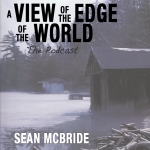
I worked on my first book “A View of the Edge of the World” by myself. I wrote all the stories through various means. I have outlined. I wrote and let the voice of the story take me where it wanted to go. I wrote plot heavy stories. I wrote character heavy stories (thanks TNT, now all I can hear is “Characters Welcome” when I think about character driven stories, but that’s a discussion for another time). I wrote character sketches. I wrote histories of place. I wrote to shock. I wrote to pull on heart strings. I wrote to scare. I wrote to provoke. In all this time I spent writing and re-writing and editing it was always about what the end product was like. I seemed to have lost focus on what writing should really be about. Namely the love of writing.
I quote Stephen King a lot because I respect him as a storyteller (I’ll have to get into my rant about the difference between a storyteller and a writer later on) and I’m in awe of his ability to focus. He’s been said to be able to sit in front of the computer for hours knocking out story after story, or page after page of novel. He never seems to have a problem with where the story is going to go, but instead is very vocal about letting the character dictate where the plot will go (This could also explain why so many people hate the ending of his novels, because sometimes they feel as though they weren’t thought out). In fact he is said to have sat in his chair writing for hours just after being hit by a truck and bleeding out. Blood dripping down into a pool on the ground underneath him because a stitch broke while he was writing, but he had such focus he didn’t notice.
I have often thought about this focus and why I seem to lack it. Does it have something to do with personality? Is it the fact that Stephen King has an addictive personality and he gets addicted to writing and cant quit? Is it because he comes from another generation? A generation without MTV, without “Real Housewives” and without twitter where people could stick around for more than 140 characters? Is there a focus gene that people are born with? Is this a nature versus nurture issue?
I know for a fact that others whom I’ve spoken to have this same issue. They have trouble with focus and writing a outline feels as though it’s cheating, or its a crutch, or it’s too strict for the natural course of the novel. I have talked to people at length about the mid-story blues, where they know where the story starts and where the story ends, but when they get past the beginning and wade into the proverbial deeper end of the pool; into the darker second and third acts, they get lost and writers block settles in. Suddenly twitters 140 characters rules your life and you burn the midnight oil with Facebook as a companion instead of your protagonists.
Is this truly an endemic? or is this a shift in perspective?
I work full time to support my writing habit. I have a wife and a dog. I have a house which constantly needs work (and I am never endingly grateful for all of these, don’t get me wrong). I think about all of these things when I sit down to write. I think about my life, I think about the lives of others, I think about money. I think about promotions. I think about what my wife wants for dinner. I wonder if I fed our dog that morning. Then I stress myself out and think that I have to write the Great American Novel, so I can do all of these things while doing what I love and not worry about any other type of working.
I focus so much on getting just right what the potential agent, or publisher, or future reader might think, that I think about them instead of my character and what they are thinking about. This is why the mid-story blues hits so strong for me. I’m worrying about all the other things that might happen instead of just enjoying my time with the characters and trying to force something amazing to happen to them.
I’m taking the character pledge. I’m going to write for the character and the world they live in instead of writing to improve my own. I’m writing for the love of the story instead of the love for what the story can bring me.
Its a new dawn, a new day, a new life, for me
There’s been a lot going on in the past two years. I got married, started a new job (no not the writing gig I’ve always hoped for, but a pretty sweet deal to pay the bills), moved to a new city and moved into a new house. Needless to say that I’ve let the site go by the wayside for good or for ill. Now that life has finally slowed down and I can feel a rhythm on the horizon, I decided I need to get back to roots. Now where I’ve never stopped writing (because, come on, those who write know that; to stop means to stop living) I’ve slowed down a bit. However in the past four or five months I’ve picked the pace back up enough to warrant the blog to continue. So in the future, you will see poetry and some new fiction, as well as lots and lots of book reviews and in depth writers critiques, as well as editorials. So I thank whomever has stuck with it over the long haul and lets get back at it again!
Poetry Recommendations
I’ve been having some trouble streamlining my new essay, so while I work out the kinks, i thought I’d pass on a few classical poetry recommendations. If you’ve never read Auden, do it now. He’s the most brilliant poet ever. I have a busy week, but hopefully I’ll be able to finish that essay and present it here next week. Enjoy!
Samuel Taylor Coleridge: With feral longing and melancholy (The Nightingale) ST Coleridge paints beautiful dark poems. They range from esoteric (Kublai Khan) to the downright epic (The Rime of the Ancient Mariner). His surprising rymes make him a joy to read and his bipolar views that range from perverse to quintessential love make him a perfect read for any occason.
W. H. Auden: Probably the best poet to ever live (much better than the poet laureates who don the stage now [no offense to those who like Billy Collins or Charles Simic]) he has a way with language which stays with you long after the poem is finished. His verse is so layered you can re-read many times and come out with something new each time. Notables are The Shield of Achilles; At the Grave of Henry James; who stands, the crux left of the watershed; Under which Lyre; and In memory of W.B. Yeats.
William Blake: If you’re interested in dark literature, with a hint iof redemption read Blake. The nice thing about him is he was also an artist so you can view the horrors he depicted in words and through his own eyes. If you’ve ever heard of Hannibal Lecter, you’ve serripticiously heard of William Blake. Does the poem and paiting Red Dragon ring a bell?
John Keats: The Most read in high school and also the least appreciated. Everyone knows the classic Ode to a Grecian Urn but what about Ode to a Nightingale, or On the Sea or even On sitting down to read King Lear Once Again? He has a beautiful and resonant flow, ebbing with emotion and description. There is a reason high schoolers have to read him, he is one of the best poets at extracting emotion.
Edgar Allan Poe: Poe has beautifully dark and resonant poems, but with an almost juvenile rhyming scheme and whereas everyone knows The Raven, try out others such as the melancholic (and probably his best) Tamerlane, or such melodic gems as Annabel Lee and The Bells. If you long for the nostalgia of reading The Raven try out the poem (which is actually much better, though little known) which inspired its creation, Lenore.
Langston Hughes: You will never find a more melodic human being. He infuses jazz in everything he writes. Think slam poetry, but good (you know those annoying people who get up and read at open mike nights and make a bunch of hand gestures and say absolutely nothing.). Even when his writing is depressing, there is nothing more hopeful or empowering than Hughes. If you’ve never read him, you’re missing out.

 Sean McBride
You must be logged in to post a comment.